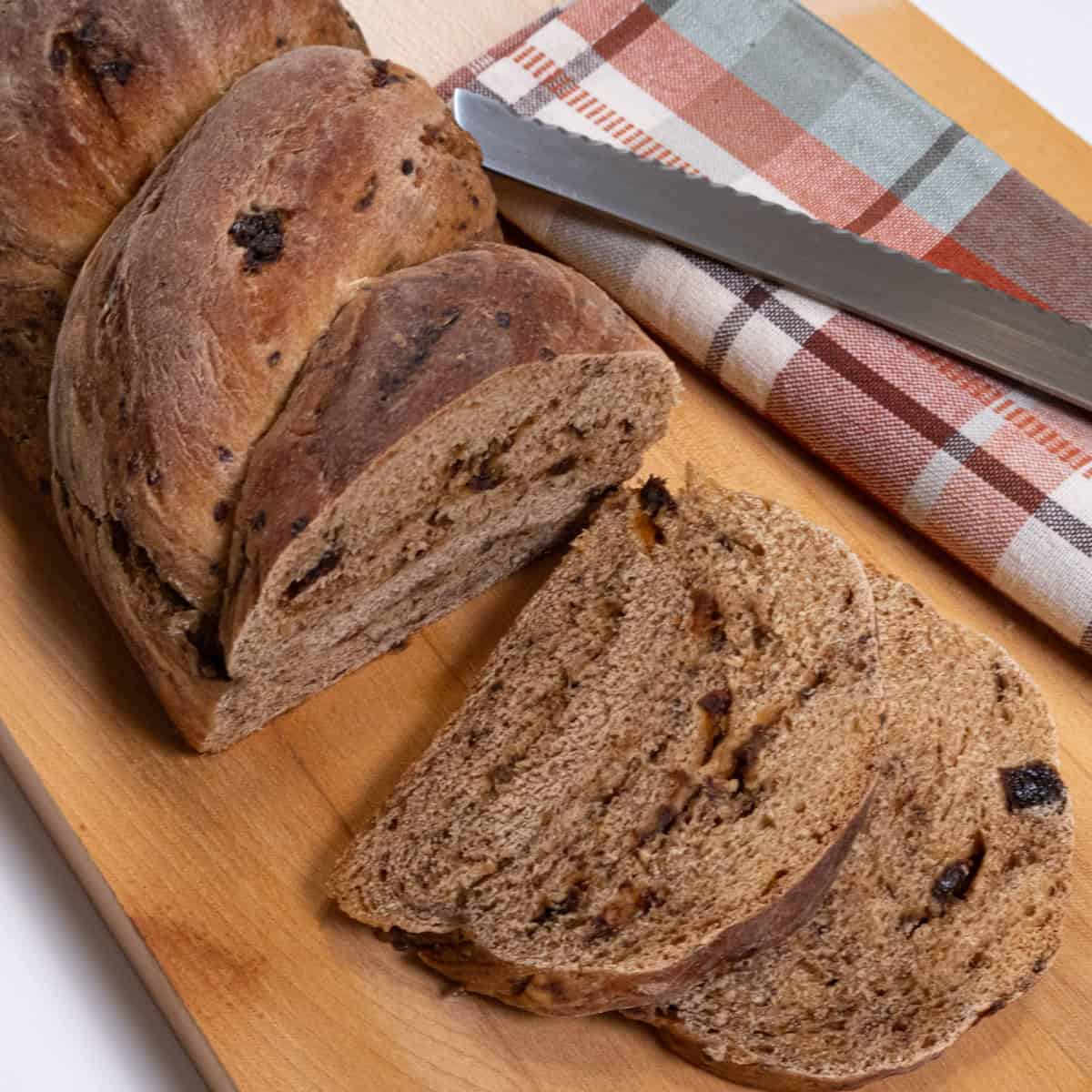
Rye Raisin Bread With Bakery-Style Flavor
Imagine a Rye Raisin Bread chock full of flavor from the earthy rye flour with beer, raisins and a hint of orange that requires only a wet mixture and a dry mixture combined to achieve. No complicated steps, no long waits, just a bread that feels both rustic and refined.
Servings: 12 servings
Calories: 162kcal
Equipment
- 1 9x5 loaf pan
Ingredients
- 2/3 cup dark raisins
- 1 1/8 cups dark beer (1 cup + 2 Tablespoons)
- 2 1/4 teaspoons instant yeast (1 packet)
- 2 tablespoons vegetable oil
- 2 tablespoons molasses
- 2 teaspoons orange zest (from 1 large orange)
- 2 cups bread flour (280 grams)
- 1 cup +3 tablespoons rye flour (140 grams)
- 2 tablespoons brown sugar (packed)
- 1 1/2 teaspoons salt
Instructions
- Soak the raisins in very hot or boiling water. Set them aside while prepping the rest of the ingredients.
- Place the beer in small saucepan and bring to a boil for 1 minute. Remove from the heat and allow to cool to room temperature.
- In the meantime put the bread and rye flours as well as the salt in the bowl of a processor. Pulse several times to mix. Add the brown sugar and orange zest. Pulse again several times.
- Add the yeast, oil and molasses to the beer, stirring well. Let it sit for a minute or two. Pour it over the dry ingredients in the processor and process to bring the dough together.
- Squeeze as much water from the raisins as you can and add them to the processor. Pulse several times to cut them in. Do not over process. Some whole raisins are fine.
- The dough may be slightly sticky. If it is, just knead it 5 or 10 times to make a smooth ball. Spray a container at least twice its size with a non-stick baking spray and place the dough in it. Turn it over so both sides are oiled. Cover with plastic wrap, and put a lid on the container or cover with a tea towel.
- Because this bread uses rye flour it rises more slowly than one made with just bread flour. As such it is to your advantage to use a proofer. Just put it in a container sprayed with a non-stick baking release cover it with a tea towel and put it in the oven with the light on. After about 30 or 40 minutes, check the temperature of the oven so that it doesn't exceed about 85°F. If it does, prop the door open with a wooden spoon. If you don't have a light in your oven, put the covered dough in, turn the temperature to 350°F for 1 minute. Turn it off and don't open the door for about an hour. Let the dough double in size before using or holding overnight in the fridge.
- Spray a 9x5 inch loaf pan with a non-stick baking spray, Set aside,
- To shape the dough, deflate it and divide it in half (about 420 grams each). Roll each piece into a 16" rope and place them side by side. If there is not enough tension to roll out the ropes without them springing back, put a few drops of water in the palm of your hands. Wipe them quickly together. They should just be damp. Starting at the middle of the rope, roll it out in both directions, stretching it as you go. You do not want a lot of water, just enough to set up tension on the work surface and your hands. So do not flour the surface. Rewet your hands as needed.
- Place the ropes side by side. Twist them together. Dab a bit of water on the very top and bottom pieces and pinch them together tucking them underneath.Place the twist into the prepared pan and let it rise until about doubled. Use the proofer again if desired.
- Shortly before the bread is completely risen, heat the oven to 350°F. If you are proofing it in the oven, be sure to take the bread out of the oven when it is preheating.
- Bake for 35 to 40 minutes until the bread is deeply browned and hollow sounding when tapped. Leave it in the pan for about 5 minutes and turn it out onto a rack to cool completely
- The wrapped bread wlll stay good for several days or it can be frozen for several months.
Notes
There is always an abundance of photos to guide you in the post above. If you have questions, look at the photos or read the header of the article. Many of them will be answered there.
As always, I recommend using a scale for accuracy and consistency. Flour, in particular, is difficult to measure by volume. For my recipes, I use 140 grams per cup of unsifted all-purpose, bread or whole wheat flour and 125 grams of cake flour. Others may use different weights so use whatever they suggest.
Unless otherwise noted, salt refers to table salt.
Nutrition information provided is an estimate and will vary based on cooking methods and brands of ingredients used.
_____________________________________________________
The dough will be sticky coming from the processor. Do not use additional flour. Use a bench scraper to pick it up from the table and turn it over and continue kneading until it is soft and comes together. A little sticky is fine.
If there is not enough tension to roll out the ropes without them springing back, put a few drops of water in the palm of your hands. Wipe them quickly together. They should just be damp. Starting at the middle of the rope, roll it out in both directions, stretching it as you go. You do not want a lot of water, just enough to set up tension on the work surface and your hands. So do not flour the surface.
Because I once made a loaf of bread where the instant yeast did not dissolve and I had little bumps of yeast on the surface, I make it a habit to add the yeast to a liquid just to moisten it. It doesn't need to dissolve.
Soaking the raisins in really hot or boiling water softens them making and yields more flavor. It is important to squeeze all the water out of them before adding to the bread dough.
Light or brown sugar can be used.
Bread flour is important for it's ability to lift the dough higher, especially when using rye flour which has little to no rising ability on it's own.
Rye flour comes in colors - light, medium or dark and then pumpernickel, the darkest of all. I used medium. But either the light or dark would also work.
The use of beer in this recipe is one of the main flavor ingredients. Water can be used but it won't taste the same. Burning the alcohol off as required in the recipe makes just an ingredient.
Nutrition
Serving: 12servings | Calories: 162kcal | Carbohydrates: 30g | Protein: 4g | Fat: 3g | Saturated Fat: 0.4g | Polyunsaturated Fat: 1g | Monounsaturated Fat: 1g | Trans Fat: 0.01g | Sodium: 297mg | Potassium: 176mg | Fiber: 2g | Sugar: 5g | Vitamin A: 2IU | Vitamin C: 1mg | Calcium: 17mg | Iron: 1mg
