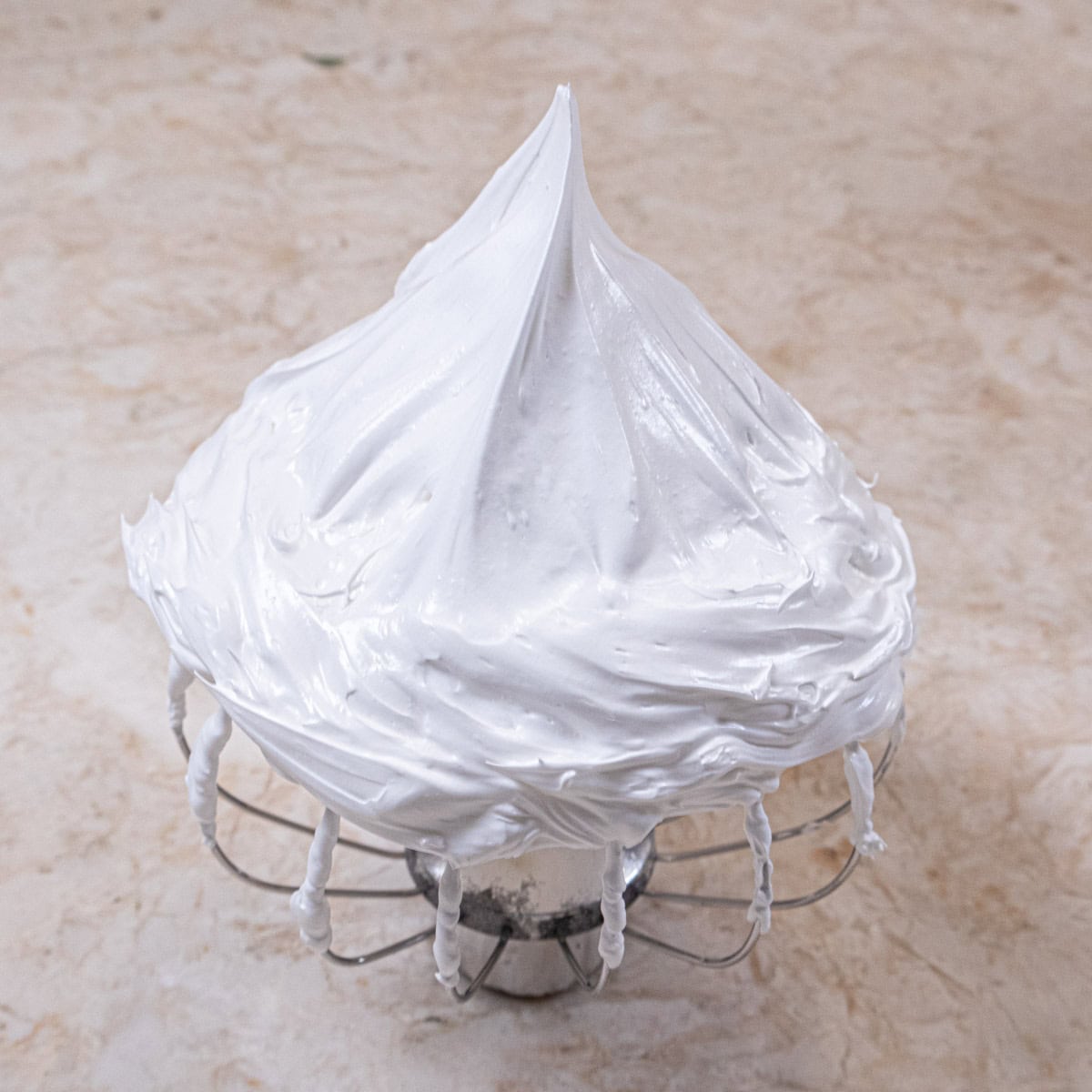
Modern Meringue Made Easy
We used this method at the bakery with great success. No more standing patiently waiting (or not) spooning sugar in by the dribbles.
Ingredients
Baker's Sugar
- granulated sugar, any amount
Basic Meringue
- 4 large egg whites (128 grams)
- 1 cup baker's sugar (200 grams)
- 1/2 teaspoon cream of tartar
Instructions
Baker's Sugar
- Place granulated sugar in the bowl of a processor. Process for 20 to 30 seconds until noticeably ground smaller into baker's sugar.
Basic Meringue
- Combine the egg whites, cream of tartar and all of the sugar in the bowl of a mixer. I prefer a stand mixer but a hand mixer will also work. It will just take longer.
- Start beating on medium low. When they become foamy, raise the medium high and then to high, beating until they are stiff.
- This can be used to pipe cookies, top a pie, marshmallows or marshmallow cream or wherever a recipe calls for a stiff meringue.
- Follow the directions in the individual recipes.
Notes
There is always an abundance of photos to guide you in the post above. If you have questions, look at the photos or read the header of the article. Many of them will be answered there.
As always, I recommend using a scale for accuracy and consistency. Flour, in particular, is difficult to measure by volume. For my recipes, I use 140 grams per cup of unsifted all-purpose, bread or whole wheat flour and 125 grams of cake flour. Others may use different weights so use whatever they suggest.
Unless otherwise noted, salt refers to table salt.
Nutrition information provided is an estimate and will vary based on cooking methods and brands of ingredients used.
__________________________________________________
Always use a clean, grease free, glass or stainless steel bowl. If in doubt wash it with warm. soapy water, dry it and your. ready to go. Do not use plastic bowls as they may have nicks in them that houses oil or grease.
Avoid humid days. Humidity ruins meringue because sugar is hygroscopic On rainy or muggy days, the meringue acts like a sponge, drawing in airborne water. This extra moisture prevents stiff peaks from forming, makes the texture sticky, and causes the finished meringue to soften, collapse, or "weep".
If you still want to bake on a damp day, consider these tips
Add a stabilizer: Mix 1 teaspoon of cornstarch into your sugar to absorb excess moisture.
Use baker's sugar: It dissolves faster, creating a stronger, more stable structure before the humidity interferes.
Bake low and slow: You may need to dry the meringue out in the oven for longer at a low temperature to counteract the moisture in the air.
Store properly: Once cool, store the meringues in an airtight container immediately.
There is myth that you can't over beat egg whites including meringue.Yes you can. The meringue will then be dull and grainy instead of glossy and smooth
Contrary to popular belief, a spec of egg yolk in the whites will not doom the meringue. I am not talking about a quarter of a teaspoon - just a spec. it may take a bit longer to reach it's volume but it will get there.
The sugar must be dissolved completely for a meringue to be successful which is why baker's sugar is your best friend here.
Although every recipe I have looked at online or in a book, tells you to use room temperature egg whites. I prefer to use cold egg whites because they beat up with smaller, tighter bubbles which are less prone to breaking when folding into another mixture.
