
While I have titled this Modern Meringue Made Easy, this method has been around for a while but no one seems to be picking up on it. We used this at the bakery with great success. No more standing patiently waiting (or not) spooning sugar in by the dribbles.
This is going to be a deep, deep dive into meringue - all kinds of meringues for cookies, cake layers, to fold into other ingredients, decorations, topping pies and as a frosting for cakes. Once you have a thorough understanding of making meringues success is at your doorstep.
"Practical, usable advice/recipe! As always, Helen is a wonderful teacher! Thank you for the confidence to try hard things. :) — Chris"
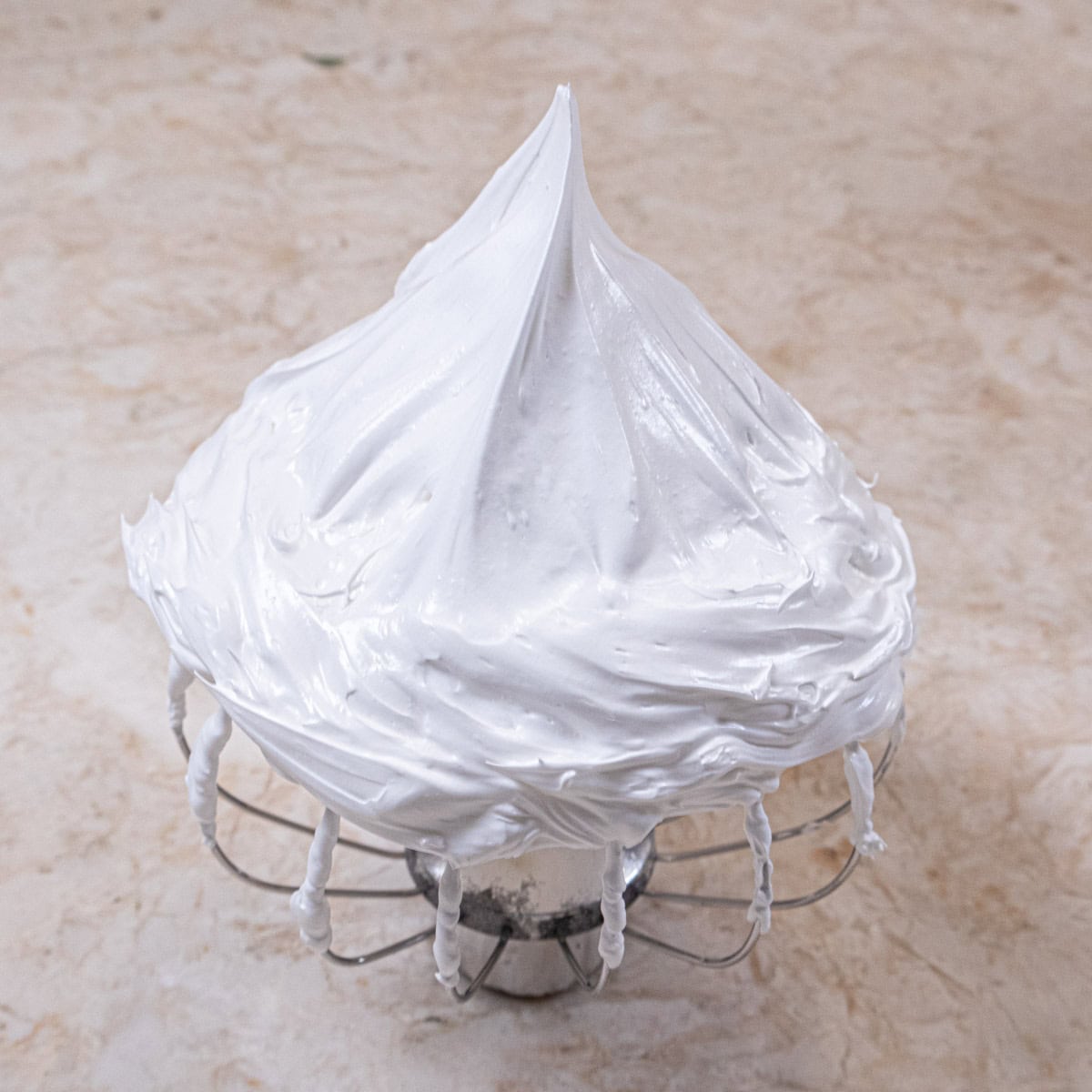
I'm including some tips that will help ensure a successful outcome with a few simple ingredients.
Jump to:
- What is Meringue
- Nutted Meringue
- Baker's Sugar vs. Granulated Sugar
- Separating the Eggs
- Room Temperature or Cold Egg Whites
- Flavoring and Coloring Meringue
- Drying the Meringues
- Where and How to use Meringue
- Types of Meringues
- Can Meringue be Over beaten
- How to Tell When Crisp Meringues are Done
- Recipe Ingredients
- Step by Step Instructions
- Recipe FAQ'S
- Storage
- Expert Tips
- Modern Meringue Made Easy
What is Meringue
A basic meringue consists of 3 ingredients. Egg whites, fresh or fresh whites that have been frozen and thawed in the fridge. Do not use egg whites in cartons. They are pasteurized and the meringue will not beat up as high or be as stable.
Baker's sugar or granulated sugar. More on that below.
An acid which will help stabilize the mixture. Cream of Tartar is usually recommend but lemon juice or even white vinegar will work. Cream of tartar is preferred as it doesn't add liquid to the whites. The acid helps the coagulate and helps the proteins from tightening too much. A meringue can be made without any acid but adding acid ensures that it will be successful.
Other add ins can be finely ground nuts, cocoa, ground up freeze dried fruit, vanilla, almond or other extracts.
Nutted Meringue
Dacquoise is a type of meringue that has finely ground nuts folded into it. It is also the name of a dessert. Broyage, Japonaise, and Nutted Meringues are all the same thing. Broyage is the Swiss name for nutted meringue and Japonaise is the French word for Japan – I have no idea how this came about. What I do know is they are all delicious.
The nuts should be toasted and cooled. Placing them in the processor with a little sugar to prevent a paste from forming makes easy work out of finely chopping them.
If piping, use a larger, open star tip to prevent the nuts from getting clogged in a type B tip.
Baker's Sugar vs. Granulated Sugar
Granulated sugar takes longer and does not always dissolve completely in the egg whites. This is crucial to the successful out come of meringue.
Baker’s Sugar is a staple in bakeries. It is a professional-grade ingredient featuring smaller, uniform granules that dissolve quickly. It is highly prized and used in baking because it improves the creaming process with with butter or when combining eggs or yolks with sugar. It creates stable air bubbles for higher volume, and yields a moist, finer cake. Egg whites in particular, especially for meringues, call for superfine or baker’s sugar.
As a super-fine granulated sugar, the tiny crystals blend quickly and seamlessly into batters, mousses, and meringues, ensuring a consistent caramelization and a smoother texture.
It is simply granulated sugar that has been ground very, very fine so it dissolves quicker and easier. While it can be hard to find in grocery stores and is expensive, it's a cinch to make at home.
Just place granulated sugar in a processor bowl and process 10 to 20 seconds until very, very fine. I process a 4 pound bag of sugar (not all at once) and keep it in a container so I have it whenever I need it. That's so much easier than doing it every time.
Baker's sugar weighs 200 grams per cup or 7 ounces, the same as granulated sugar.
Separating the Eggs
One of the most revered rules for meringues is that not a spec of egg yolk must be present in the whites. While this is preferable, a spec is fine. It might take longer for the meringue to reach a stiff peak but it will get there.
When separating eggs, it is easiest done when they are cold. Divide each egg into a separate bowl before adding it to the mixing bowl. That way, if the egg doesn't separate well, you haven't ruined the entire batch. While on the subject of separating eggs, I know recipes tout separating eggs using your hand. I don't adhere to this method because there is often natural oil on hands that can affect the outcome. And it seems unhygienic to me.
Room Temperature or Cold Egg Whites
There is some controversy over whether egg whites should be room temperature or cold when whipping. Either way works but there are differences.
Room temperature egg whites whip up a bit faster but with bigger air bubbles which can break more easily when folding in ingredients. If the egg whites are cold, the air bubbles are smaller making for a firmer meringue in which the air bubbles stay intact better, everything else being equal. At the bakery and for home cooking, I am in the beat them cold camp.
Flavoring and Coloring Meringue
Extracts, oils and powders can all be used for flavoring. However when they are added is important.
Extracts and powders can be added initially. However, oils must be added at the end of beating the meringues when they are high and stable or the oil will prevent the egg whites from expanding.
Coloring should always be added at the last. Gel colors should be used as liquid colorings, particularly dark ones, can add too much liquid into the beaten whites, deflating them and make them too soft to hold an edge.
Drying the Meringues
Meringues are always dried on very low heat (200°F to 225°F) as they are being dried out not baked. Some recipes call for leaving the meringues in the oven overnight but with the proper proportions of sugar to egg white, I haven't found that to be necessary.
Where and How to use Meringue
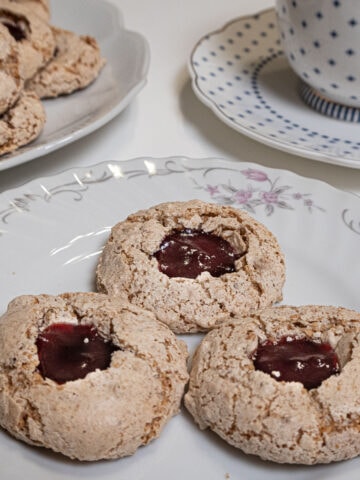
- A crisp meringue can be used for cookies or cake layers such as the Marjolaine, Daquoise with Raspberry Mousse. and Meringue Shells. This is also the meringue used for one of Australia's most famous desserts, the Pavlova.
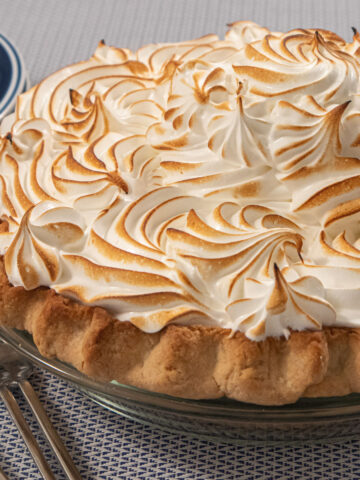
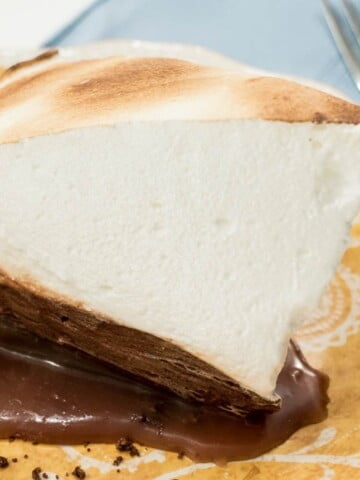
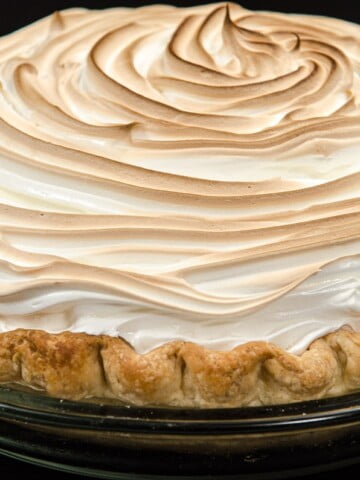
- A soft meringue can top a Lemon Meringue Pie, or Sky High Salted Caramel Chocolate Pie with billows of toasted meringue.
- Medium meringues are most often used to fold into other mixtures such as cakes or mousses. Think of sponges, such as my Lemon Butter Sponge, Orange Chiffon Cake, Coconut Cream Cake featuring the white chiffon, and the Double Chocolate Mousse Cake featuring a chocolate chiffon cake
- Marshmallow Cream which is a form of meringue can be used multiple ways including as a finish on the How to Make a S'mores tart and Chocolate Marshmallow Cream Horns
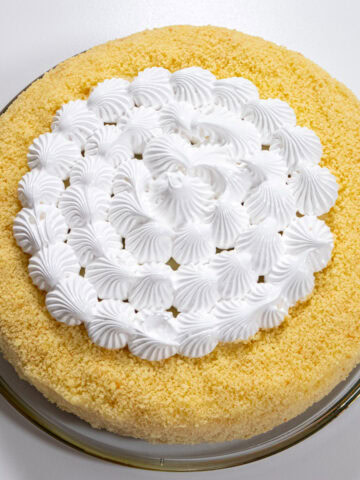
- A stiff meringue can be used to finish a cake as in the Triple Lemon Cake - Revised, the Lemon Meringue Cake and the Individual Island Baked Alaska.
- Marshmallows are another form of Meringue and are featured in the Simple Salted Peanut Chews and Hazelnut Crunch Bars
- Marshmallow Fondant which combines marshmallow cream and powdered sugar.
- The classic Buche de Noel features meringue piped into the shape of mushrooms as an important part of the decoration.
Types of Meringues
French Meringue
This is considered the easiest to make as it combines egg whites, sugar and cream of tartar. Depending upon the stiffness of the meringue being used it can make cookies, top pies and tarts and be used for meringue shells or pavlova.
Italian Meringue
This meringue is considered to be the most stable of all. A sugar syrup is brought to 250°F then is slowly poured into the egg whites that have been beaten to the soft peak state. The meringue is then beaten to cool it and used as directed.
After it is beaten until cooled, if butter is added a bit at a time it becomes Italian Buttercream. This the buttercream we used for the majority of our wedding cakes as it can hold crisp edges when piped and, in my opinion, the best there is.
Swiss Meringue
For this meringue the egg whites and sugar are placed in a mixing bowl. The mixing bowl is placed over simmering water and the mixture is brought to 160°F. At this point the sugar has liquified into the egg whites. The bowl is place on the mixer and then beaten until cooled and onto whatever stiffness is desired.
Swiss Meringue becomes Swiss Buttercream by adding softened butter a little at a time until it is a smooth, light and can easily be piped.
Can Meringue be Over beaten
While I've seen many articles saying it can't, it indeed can be over beaten resulting in a a grainy, dull mixture that loses its glossy sheen. Properly whipped meringue should have stiff peaks but remain shiny, moist, and smooth.
How to Tell When Crisp Meringues are Done
Crisp meringues such as cookies and cake layers will be light in color. In addition, they will be airy and very light in weight. In addition, they can be lifted easily from the parchment paper. If they don't remove cleanly, bake a little longer and test until they do.
Recipe Ingredients
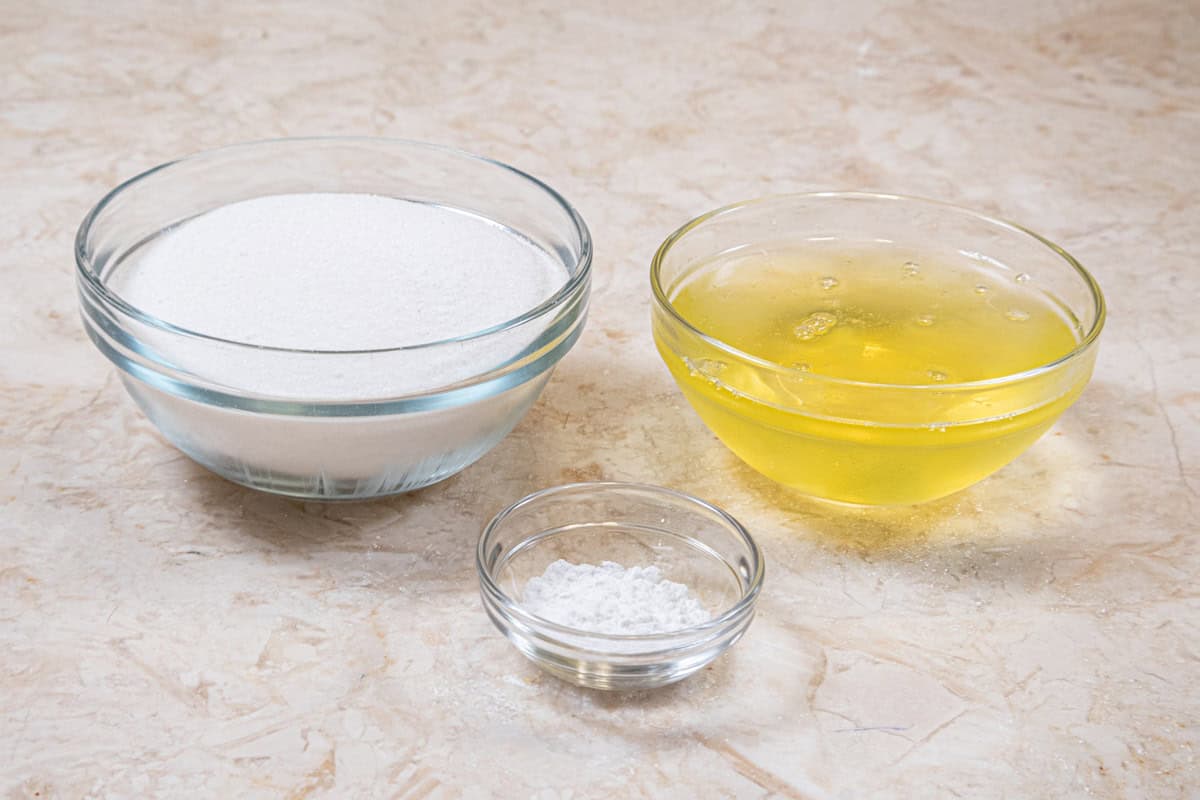
FRONT ROW: Cream of tartar
BACK ROW: Baker's sugar, egg whites
Be sure to see the recipe card below for the full ingredients and instructions.
Step by Step Instructions
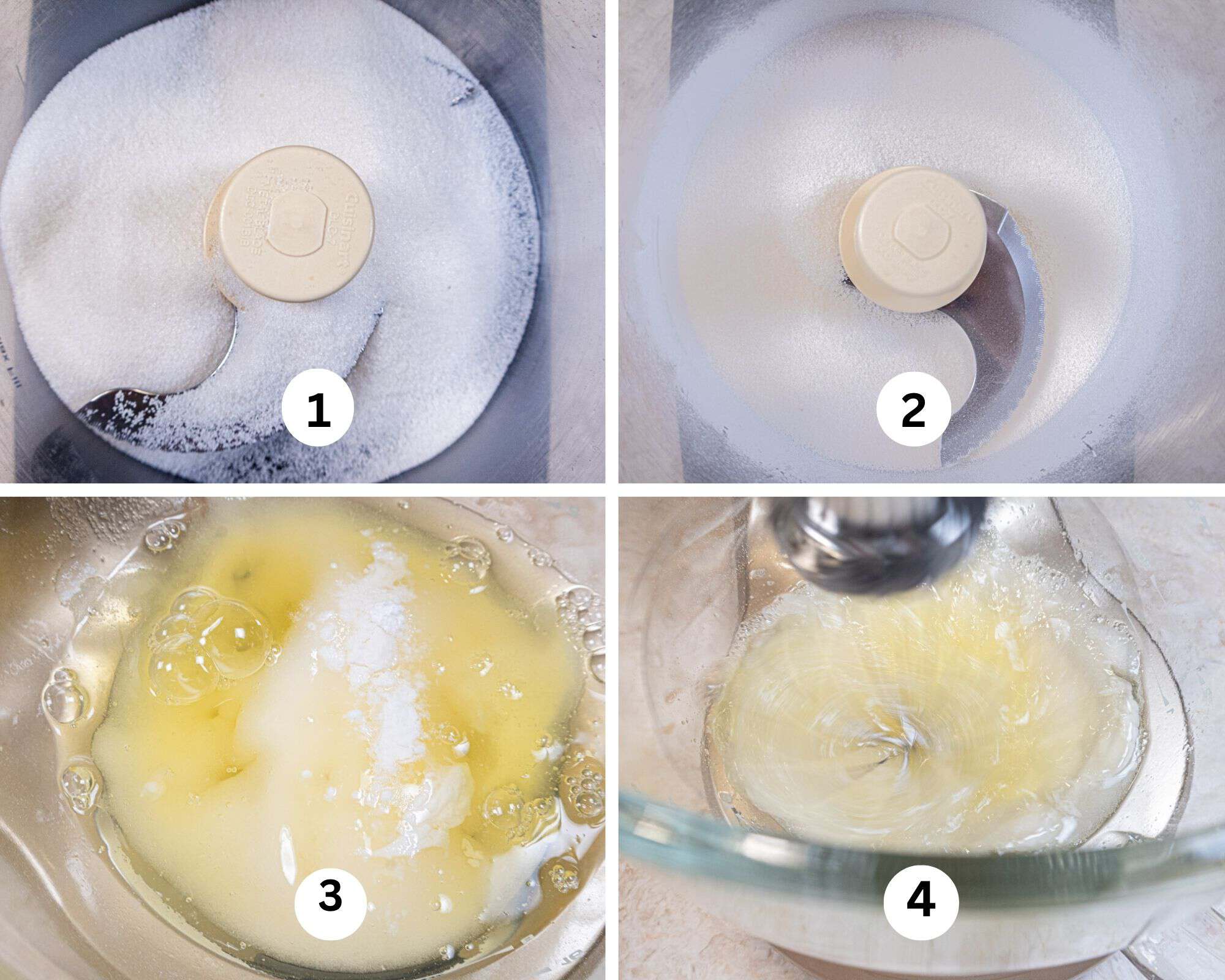
Step 1. Place granulated sugar in the bowl of a processor. Step 2. Process for 20 to 30 seconds until noticeably ground smaller into baker's sugar. Step 3. Place the egg whites, baker's sugar and cream of tartar in the bowl of a mixer. Step 4. Start whipping on medium low and as the volume increases raise the speed until it is maxed out.
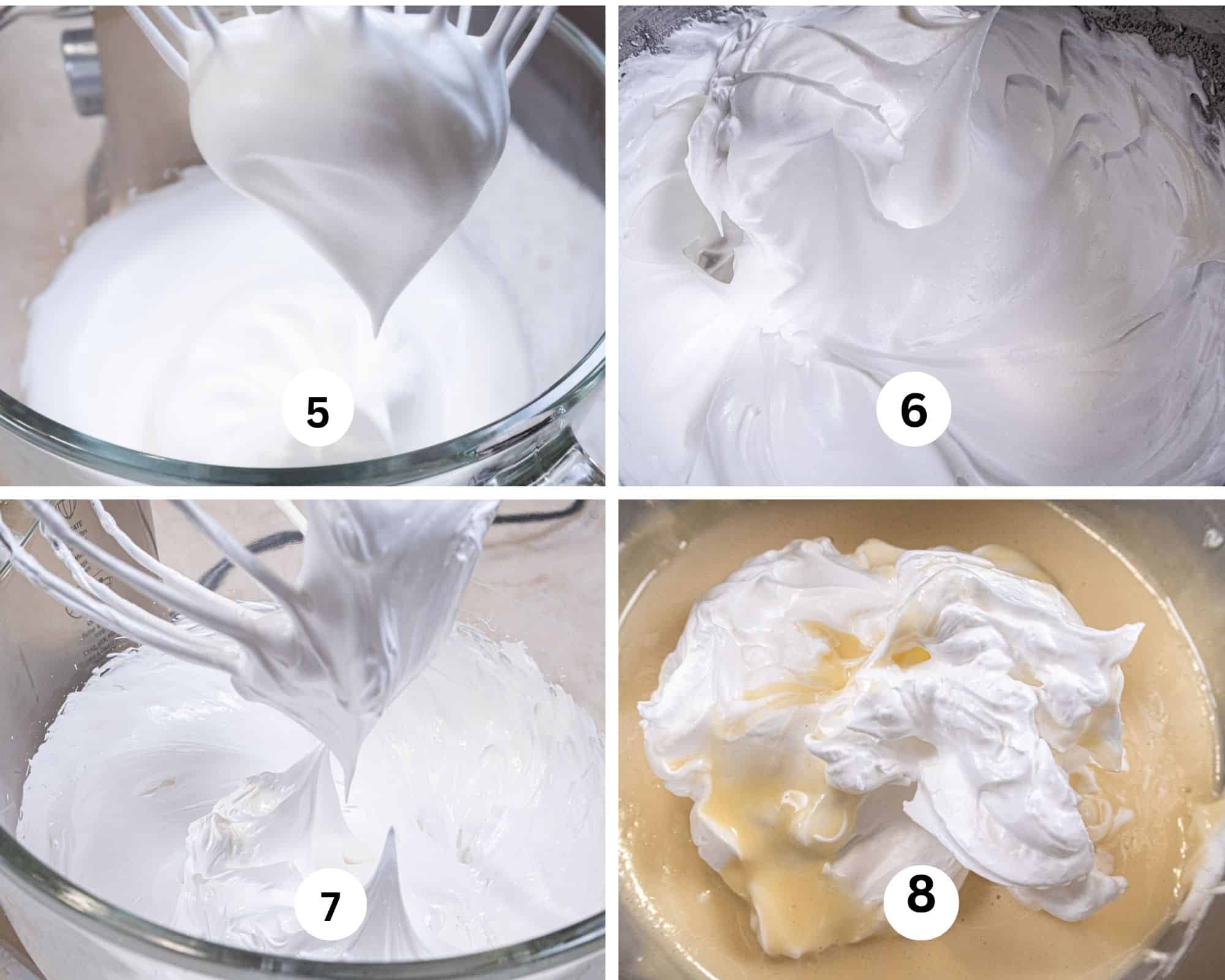
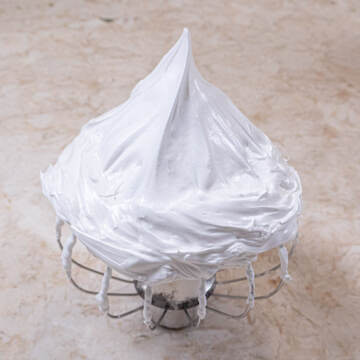
Step 5. This meringue has been beaten to soft peaks. The peak will droop or curl under. Step 6. This has been whipped to medium peaks where they are stiffer . Step 7 This meringue has been beaten to stiff peaks where the peaks are noticeably stiffer and stand straight up. Step 8. The medium stiff peaks are added to a cake batter to be folded in.
Recipe FAQ'S
This happens when the sugar isn’t fully dissolved before the meringue kisses are baked. This is called “weeping”. The sugar grains melt in the oven and draw moisture from the meringue, forming beads of liquid.
There are 2 main reasons. The first is they have been underbaked. To correct this, test one when you think they should be done. If they are not perfectly dry inside, give them ore time in the oven.
The second reason is humidity. Meringues need to be made on dry days with very little humidity. Sugar is hydroscopic which means it attracts water which will prevent the meringue from whipping up properly and drying in the oven.
The French meringue which uses just egg whites, granulated or preferably baker's sugar and cream of tartar is the easiest by far. There is no heating the egg whites and sugar as in the Swiss meringue or using a hot sugar syrup as for the Italian meringue.
Storage
After drying the meringues, cool them and then store them in an airtight container where they can last for weeks.
Expert Tips
- Always use a clean, grease free, glass or stainless steel bowl. If in doubt wash it with warm. soapy water, dry it and your. ready to go. Do not use plastic bowls as they may have nicks in them that houses oil or grease.
- Avoid humid days. Humidity ruins meringue because sugar is hygroscopic On rainy or muggy days, the meringue acts like a sponge, drawing in airborne water. This extra moisture prevents stiff peaks from forming, makes the texture sticky, and causes the finished meringue to soften, collapse, or "weep".
- If you still want to bake on a damp day, consider these tips
- Add a stabilizer: Mix 1 teaspoon of cornstarch into your sugar to absorb excess moisture.
- Use baker's sugar: It dissolves faster, creating a stronger, more stable structure before the humidity interferes.
- Bake low and slow: You may need to dry the meringue out in the oven for longer at a low temperature to counteract the moisture in the air.
- Store properly: Once cool, store the meringues in an airtight container immediately.
- There is myth that you can't over beat egg whites including meringue.Yes you can. The meringue will then be dull and grainy instead of glossy and smooth
- Contrary to popular belief, a spec of egg yolk in the whites will not doom the meringue. I am not talking about a quarter of a teaspoon - just a spec. it may take a bit longer to reach it's volume but it will get there.
- The sugar must be dissolved completely for a meringue to be successful which is why baker's sugar is your best friend here.
- Although every recipe I have looked at online or in a book, tells you to use room temperature egg whites. I prefer to use cold egg whites because they beat up with smaller, tighter bubbles which are less prone to breaking when folding into another mixture.
A lot of work goes into each of my recipes and my only ask is that if you like the recipe or even the looks of it, please leave me a star rating to help me rank better. It’s important and I appreciate it and I appreciate you.
Modern Meringue Made Easy
Ingredients
Baker's Sugar
- granulated sugar, any amount
Basic Meringue
- 4 large egg whites (128 grams)
- 1 cup baker's sugar (200 grams)
- 1/2 teaspoon cream of tartar
Instructions
Baker's Sugar
- Place granulated sugar in the bowl of a processor. Process for 20 to 30 seconds until noticeably ground smaller into baker's sugar.
Basic Meringue
- Combine the egg whites, cream of tartar and all of the sugar in the bowl of a mixer. I prefer a stand mixer but a hand mixer will also work. It will just take longer.
- Start beating on medium low. When they become foamy, raise the medium high and then to high, beating until they are stiff.
- This can be used to pipe cookies, top a pie, marshmallows or marshmallow cream or wherever a recipe calls for a stiff meringue.
- Follow the directions in the individual recipes.
Notes

KiKi says
As always , I have learned more from the impeccable Helen ! Holiday nuts chopped - great tip ! The meringue … all of it. Thank you again.
KK
Helen S Fletcher says
You're welcome Kki. Happy I could help.
Alexander Price says
I enjoy when side content feels connected to the main world instead of being added only to fill time.
Helen S Fletcher says
Helping to understand the hows, whys and techniques is what I most enjoy doing. With knowledge comes success. Thanks for your kind words.
SusanPark says
Can I make small meringue cookies either this recipe?
Helen S Fletcher says
Hi Susan - absolutely. Simply pipe them, put them in a 225°F oven. I can't give you a time because I don't know the size of the cookie. Mine which arw about 2" take about 2 to 2/1 hours. They shouldn't color too much but test them to make sure they come off the parchment easily and feel light.
Chris says
Practical, usable advice/recipe! As always, Helen is a wonderful teacher!
Thank you for the confidence to try hard things. :)
Helen S Fletcher says
Thank you Chris. Aside from baking, teaching about baking and pastry rewards me when I know that I have helped. They can be scary but when broken down into small, understandable segments it's easier to understand. And if you ever get stuck, email me and I'll see if I can't unstick you.
Mary B says
Very informative and practical article. Thank you!
Linda W says
Thank you for all the great tips, especially the one about making bakers sugar. I really appreciate your thorough explanations and photos. Any recipe of yours that I have tried has always been a success! I've always felt like my sugar wasn't totally dissolving when making meringue and wondered if it was a factor in the meringue weeping on pies. I am also trying to master macarons, and there are so many views on whether or not to age egg whites or to use room temperature vs cold eggs. When I have used aged egg whites, they seem to be more watery, so I will try cold egg whites next time.
Helen S Fletcher says
Hi Linda - a lot of the information online is just repeating what others or "influencers" have said. Having been a professional baker for 39 years, it gives me an insight that others may not have. When you bake professionally you don't have time for some of the stuff out there. Aging egg whites doesn't make sense to me but baker's sugar does. It is a game changer when it comes to meringues or creaming.
SallyBR says
Absolutely adore this post - a few years ago, I don't remember where I saw it, but I think it was on youtube, and someone was demonstrating why there is no need to add the sugar little by little - I started doing that when making macarons, and actually adding all the sugar from the get-go, made it a lot smoother, sometimes I would detect small crystals of sugar at the bottom of the shells, indicating it was not fully dissolved, probably the sugar added in small amounts later in the mixing did not have a change to dissolve. So your post is like music to my ears - I will do the food processor trick soon!
Helen S Fletcher says
Hi Sally - it's all in the sugar!!
Beth says
This is great information! Thank you
Helen S Fletcher says
Hi Beth - Thank you I appreciate you taking the time to comment.
Mary says
I used to add all the ingredients together but had was brainwashed by reading every recipe that said to add sugar spoon by spoon. After reading your recipe I shall go back to my old ways. :))
Many thanks!
Helen S Fletcher says
Hi Mary - I know - there are so many myths about how you have to do this and that with meringue. It's not very hard and I am happy to be able to share this. You're welcome.
Mary says
When the sugar is processed, is the resulting sugar very fine? I buy a product called castor sugar which is fine but not as fine as confectioner’s sugar, which we call icing sugar. Different countries, different names.
Helen S Fletcher says
Hi Mary, I can't really say, I have never seen orused castor sugar. I have seen it referred to but if it is finer than American granulated sugar it's fine.