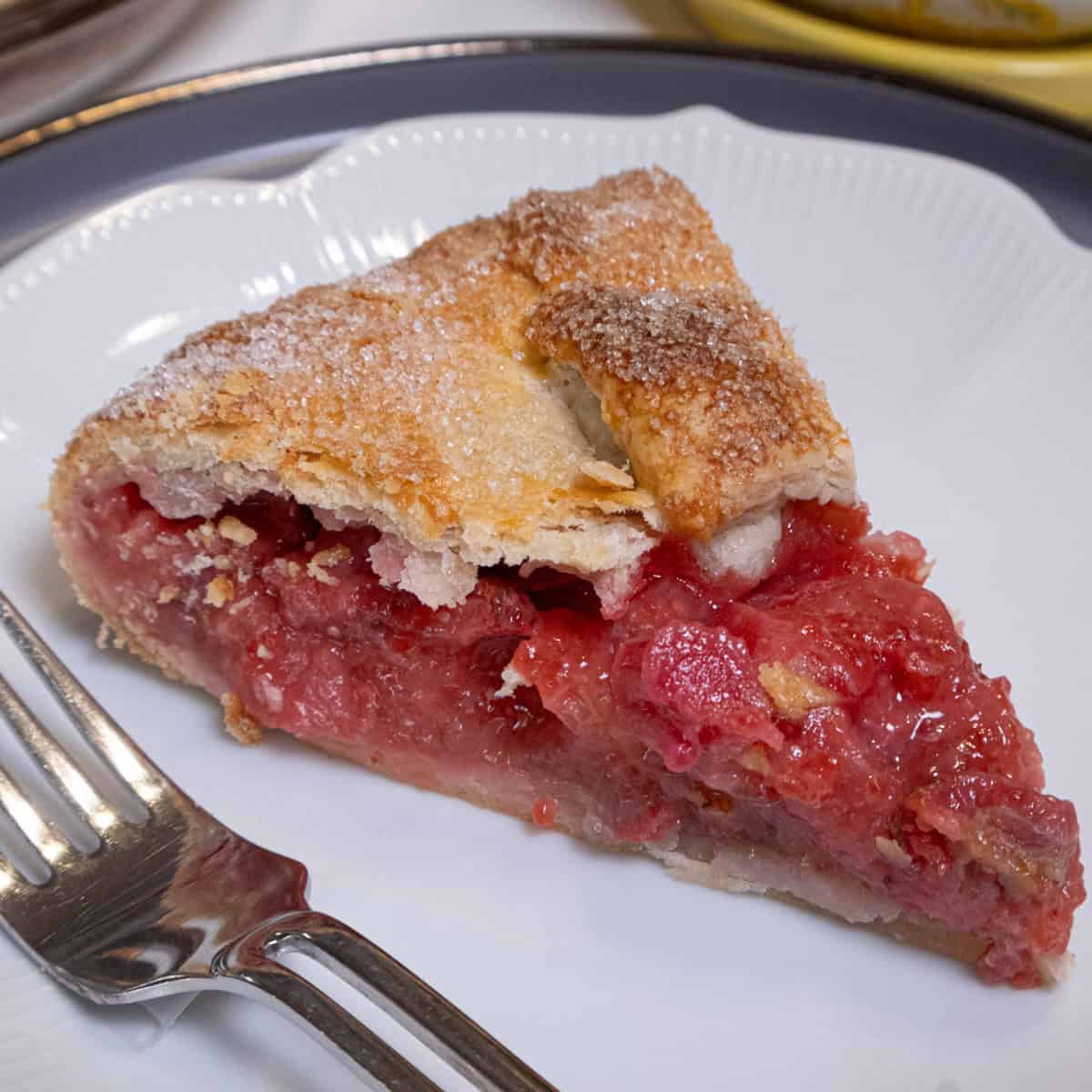
Strawberry Rhubarb Galette
It's Rhubarb season again and this Strawberry Rhubarb Galette is a perfect way to highlight these long, red, tart stalks. To make it easier, the filling is placed in the middle of a pastry crust and the sides of the crust are brought up around it. There is no top crust or crimping.
Servings: 8 servings
Calories: 357kcal
Equipment
- 9" Pie plate
Ingredients
Pie Crust
- 9 tablespoons unsalted butter (130 grams)
- 1/4 cup shortening (60 grams)
- 2 1/4 cup cake flour (280 grams)
- 1/2 cup all-purpose flour (70 grams)
- 1 1/2 tablespoon table salt
- 3 tablespoons beaten egg
- 1 1/2 teaspoons lemon juice
- 7 to 9 tablespoons ice water
Strawberry Rhubarb Filling
- 3 cups strawberries, coarsely cut (about 380 grams)
- 3 cups rhubarb, cut in 1/2" slices (about 380 grams)
- 3/4 to 1 cup granulated sugar (150 to 200 grams)
- 3 tablespoons minute tapioca
- 3 tablespoons all-purpose flour
- 2 tablespoons unsalted butter, (30 grams), optional
- 1 egg well beaten
- Sanding sugar, optional
Instructions
Pie Crust
- Cut the butter in half lengthwise and then cross cut. Freeze them until rock hard.
- Measure out the shortening in 4 tablespoons and freeze until also rock hard.
- Combine the cake all-purpose flours and salt in th ebowl of a food processor. Pulse several times to mix well.
- Place the frozen butter over the flours. Pluse severaltimes to cut the butter into large chunks.
- Add the frozen shortening and repeat the pulsing until the butter and shortening are the size of large peas. Do not over process. Use short bursts.
- Combine the egg, lemon juice and 7 tablespoons of water. Pour it over the contents of the processor. Pulse until it forms clumps. Take a bit of the dough and press it between your fingers. If it holds together and doesn't feel dry youre done. If not, add more water a tablespoon at a time.
- Pour it onto a lightly floured work surface. Push the clumps togwether to form a cohesive mass.
- Knead it 4 or 5 times to bring it together into a smooth dough. Shape it into a 1" round. Wrap it in plastic wrap and refrigerate overnight. It can also be frozen ate this point well wrapped. Thaw in the fridge and continue.
- Preheat the oven to 375°F or 350°F if using a glass pie plate.
- Roll the crust into a 15" circle. Trim to a 14" round.
- Place the crust in the pie plate letting the excess dough overhang the edge of the pan evenly.
- Fill the plate with the strawberry rhubarb filling.
- Describing the pleating process is a bit difficult in words. However, there are pictures in the Step by Step Section that are very helful.
- To start pleating, take a section of the overhang and bring it up over the filling.
- Continue in this manner, folding the dough in pleats as you go around. Place on a foil lined half sheet pan to make it safer to move in and out of the oven.
- Beat the egg until the yolk and white are completely mixed. Brush the crust with the egg.
- Sprinkle with the sanding sugar if using.
- Bake for about 1 hour and 15 to 20 minutes or until the crust is browned and the filling is bubbly. Tent the top if it is browning too quickly.
- Allow to sit until warm or room temperature. Cut and enjoy!
Notes
There is always an abundance of photos to guide you in the post above. If you have questions, look at the photos or read the header of the article. Many of them will be answered there.
As always, I recommend using a scale for accuracy and consistency. Flour, in particular, is difficult to measure by volume. For my recipes, I use 140 grams per cup of unsifted all-purpose, bread or whole wheat flour and 125 grams of cake flour. Others may use different weights so use whatever they suggest.
Unless otherwise noted, salt refers to table salt.
Nutrition information provided is an estimate and will vary based on cooking methods and brands of ingredients used.
____________________________________________________
Minute tapioca is used as part of the perfect thickener for the filling. Do not use regular tapioca. Be sure to see my post Thickeners as used in Baking and Pastry.
Cake flour is important to the final flaky outcome of the crust while remaining tender.
The filling should be made before the crust is rolled out so the tapioca can soften and everything can blend together.
Keep the dough chilled. This is important to keep it flaky. If it begins to soften when rolling out, fold it gently and return it to the fridge. After the galette is filled, freeze it for 15 to 20 minutes to get the dough cold again.
Let the pastry rest after coming from the oven so the filling can set completely. It will be loose coming from the oven but will thicken up.
Make sure the butter and shortening are frozen rock hard before processing. There should be pea size pieces of them in the flour.
The pastry should remain cold while working with it so the butter does not become incorporated into the flour or it won't be flaky. The butter and shortening have to melt to create the steam necessary to form the thin, light layers.
See the photos in the Step by Step Instructions to help with the pleating of the crust.
Nutrition
Serving: 8servings | Calories: 357kcal | Carbohydrates: 37g | Protein: 3g | Fat: 23g | Saturated Fat: 12g | Polyunsaturated Fat: 3g | Monounsaturated Fat: 7g | Trans Fat: 1g | Cholesterol: 62mg | Sodium: 1322mg | Potassium: 240mg | Fiber: 2g | Sugar: 22g | Vitamin A: 564IU | Vitamin C: 36mg | Calcium: 59mg | Iron: 1mg
