Pastries Like a Pro

  • Home
  • Recipes
  • About Helen
  • Mother's Day
  • Subscribe
  • Contact
menu icon
go to homepage
  • Home
  • Recipes
  • About Helen
  • Mother's Day
  • Subscribe
  • Contact
    • Facebook
    • Instagram
    • LinkedIn
    • Pinterest
    • Twitter
  • subscribe
    search icon
    Homepage link
    • Home
    • Recipes
    • About Helen
    • Mother's Day
    • Subscribe
    • Contact
    • Facebook
    • Instagram
    • LinkedIn
    • Pinterest
    • Twitter
  • ×
    Home

    Lemon Butter Sponge Cake

    Modified: Jul 30, 2025 · Published: May 29, 2014 by Helen S Fletcher · This post may contain affiliate links · 19 Comments

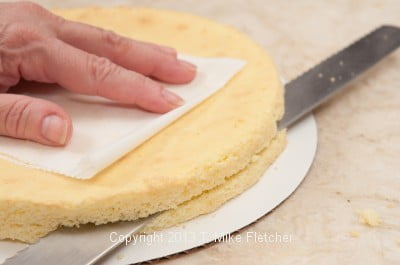
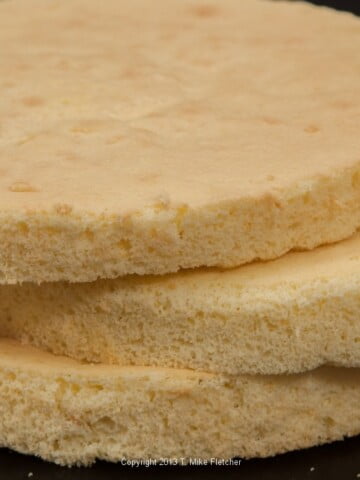
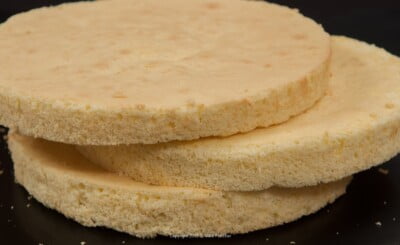
    Finished photo of 3 layers
    Finished photo of 3 layers

    By definition, a sponge cake is a light. Airy tender cake of the foam variety, meaning the egg whites are beaten separately, and the egg yolk base is folded into the whites along with flour.  It can be varied easily and is used as a base for many fillings.  The name comes from its open structure, which resembles a sponge.  The plain sponge cake on its own is rather neutral and doesn't have a lot of flavor which is why recipes often brush the sponge cake layers with liqueur based washes..  However, by enhancing it with lemon zest and adding a little butter, it becomes a more flavorful vehicle for fillings.  By omitting the zest, you have a basic Butter Sponge Cake.  By omitting the butter, you have a basic Sponge Cake.

    Another characteristic of the sponge is that it doesn't contain shortening, except in the Butter Sponge Cakes.  Sponge cakes can be dry if the egg whites are over beaten.  It is better to under beat them than get them too stiff.  When the whites are too stiff, it is difficult to fold the flour in without deflating the whites.

    [Read more...]

    A French Pastry Crust with a Salmon Tart

    Modified: Jul 25, 2025 · Published: May 15, 2014 by Helen S Fletcher · This post may contain affiliate links · 10 Comments

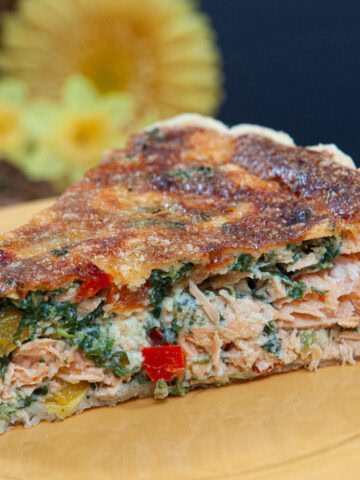
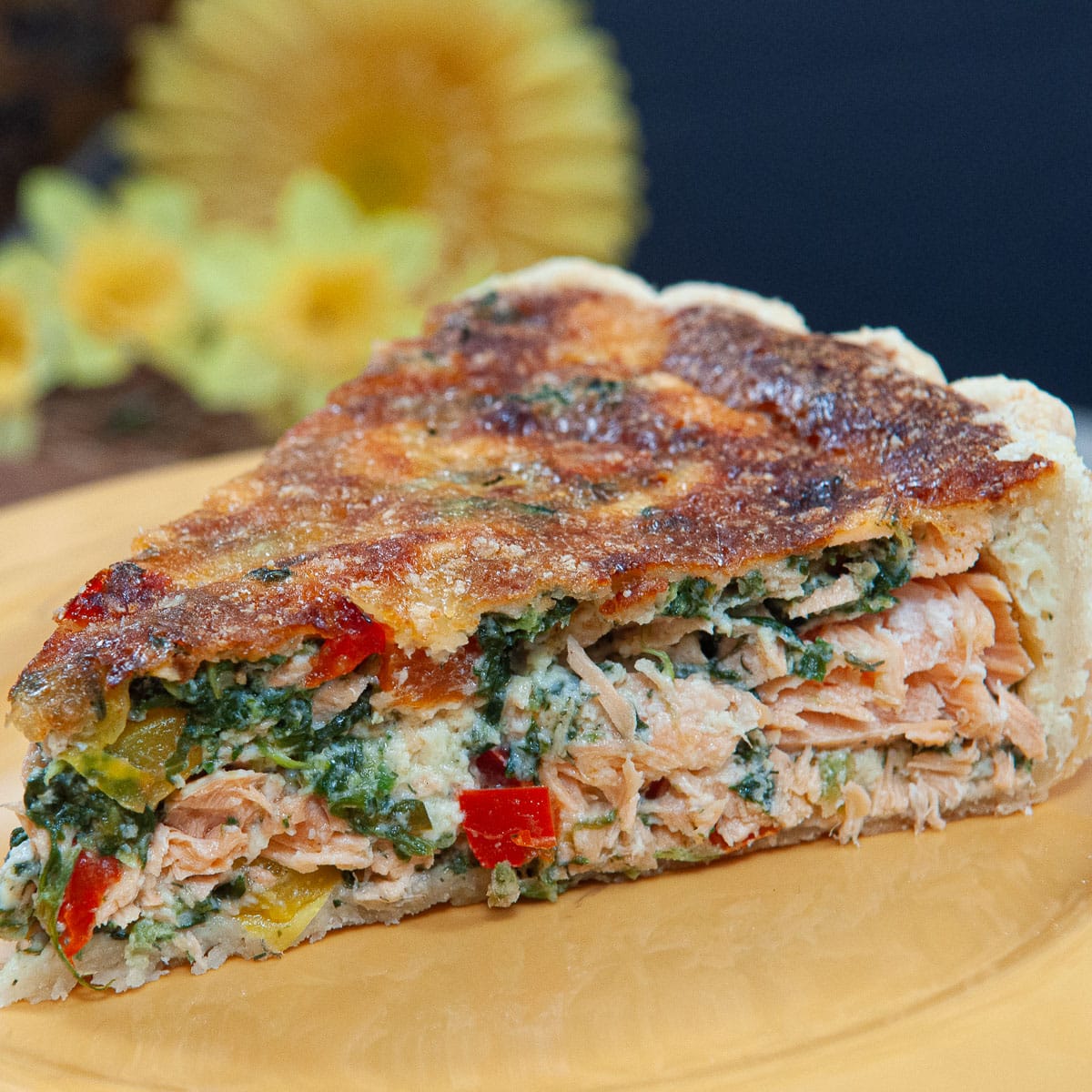
    This Salmon Tart features a pate brisee crust filled iwth salmon and vegetables.
    This Salmon Tart features a pate brisee crust filled iwth salmon and vegetables.

    Pate Brisee a l'Oeuf pastry crust is known as one of the, if not the, finest pastry crusts to be found.  Made with all butter and, if made correctly, it will be flaky and crisp yet tender.  The word pate means pie and a l'oeuf means with egg.

    The use of the food processor almost guarantees a perfect pastry crust.  The key is not to over mix or it won't be flaky - tasty, but not flaky.   The butter must be very, very cold.  Put it in the freezer after cutting if desired.  It is important to keep the pieces of butter in pea size chunks when processing with the flours.  While speaking of flours, I have used both all purpose and cake flour to make pastry flour which has a lower gluten or protein count.  This will make a more tender pastry crust.  A two to one ratio of all purpose to cake flour is what we used at the bakery for our pastry flour as we lacked the room to store another canister of flour and we didn't use it that often.

    Two tablespoons of egg is one half of a large egg.  Mix it well so the yolk and white are throughly combined so it divides well.  The egg will help keep the pastry crust crisp while the lemon juice will tenderize it and help keep it from becoming tough.  Make sure the water is ice water.  I usually put a few ice cubes in a half cup of water while I prepare the other ingredients.

    You might have noticed everything is kept very cold and that is how it should be.  If, at any point, the pastry crust warms, scoop it up and put it in the refrigerator to chill.

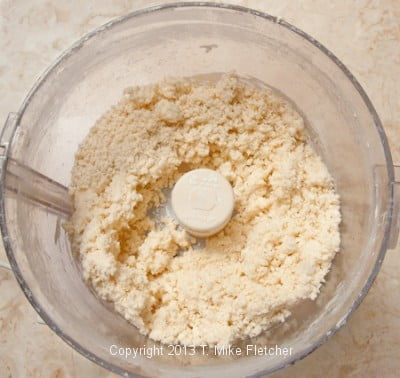
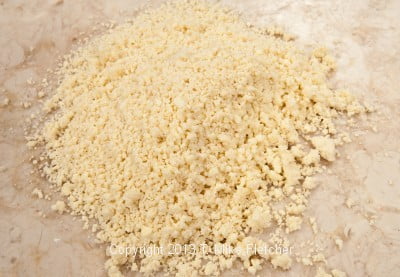
    When it comes from the processor, the pastry crust should be in lots crumbs.  You are going to push these together to make a dough.  As you do you will see bits of butter throughout the dough.  This is very important.  As long as the butter stays really cold when it hits the heat of the oven, it will melt under the heat, causing steam that will lift the dough into layers.

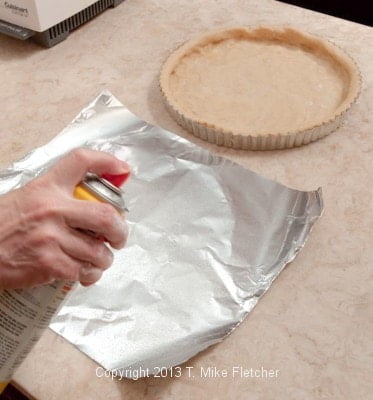
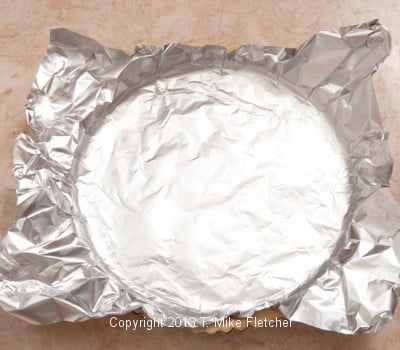
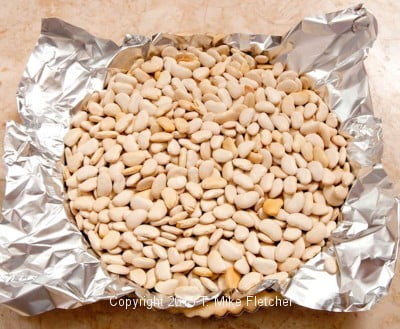
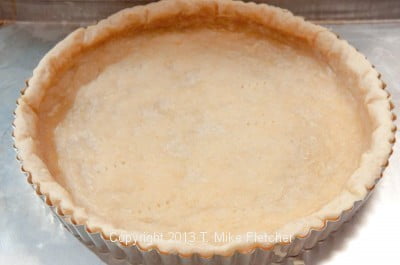
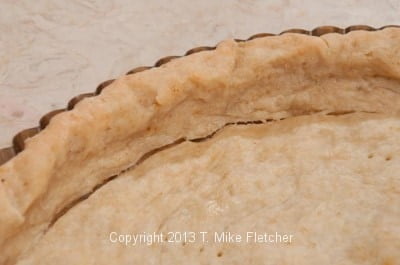
    If the pastry crust is being baked blind (without a filling), prick the shell well with a fork.  Chill it very well.  Spray a piece of foil that will fill the shell completely and place it, sprayed side down, into the pastry crust.  Fill it to the top with beans to hold the crust in place and bake for abut 20 minutes.  Remove the foil and beans and bake until the bottom is set.  If the pastry crust is to be completely done, bake until medium golden brown.

    The salmon tart came about when we had some of the absolutely most delicious poached salmon left after a party.  I was asked to do something with it.  The salmon tart mated perfectly with the pate brisee a l'oeuf pastry crust.  I've made it several time since.  I'm beginning to think they have leftovers on purpose!  But it's well worth making.

    This pastry crust can be used in quiches and tarts, sweet or savory. However, it not sturdy enough for an American pie.

    Ingredients

    Pate Brisee a l'Oeuf Pastry Crust
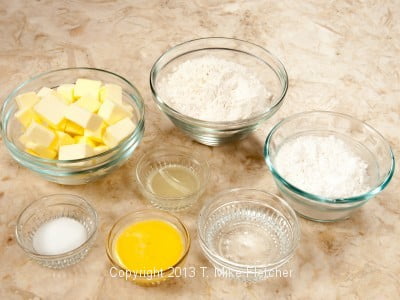
    7 tablespoons butter, cut in small pieces and  frozen (105 grams or 3 ½ ounces)
    ½ cup + 1 tablespoon all-purpose flour (85 grams or 3 ounces)
    ⅓ cup cake flour (40 grams or 1 ¼ ounce)
    ½ teaspoon salt
    2 tablespoon beaten egg
    1 teasoon lemon juice
    2 tablespoons ice water

    Preheat oven to 375 degrees. Line a baking sheet with parchment paper.

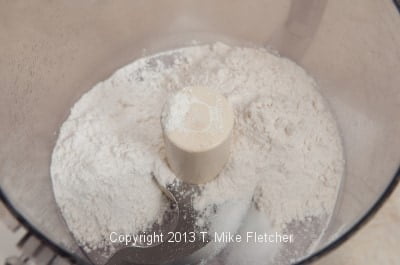
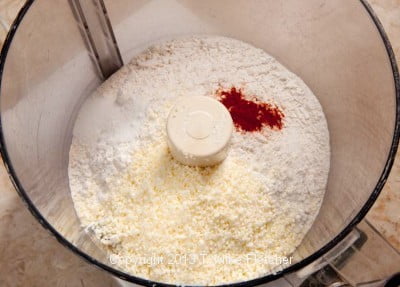
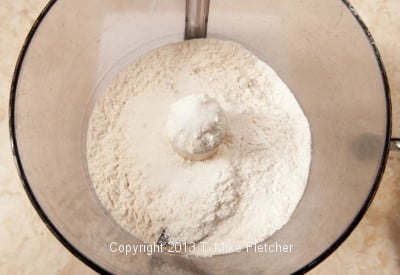
    Flours in processor
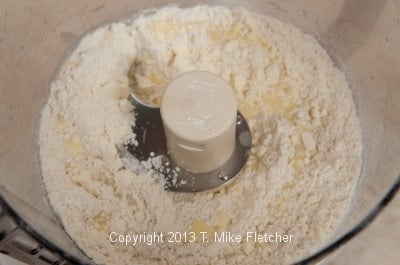
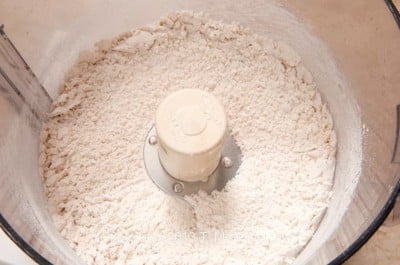
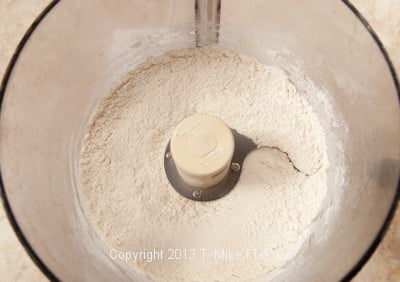
    Flours mixed
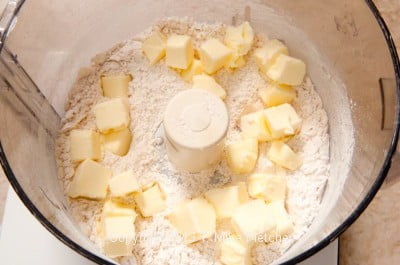
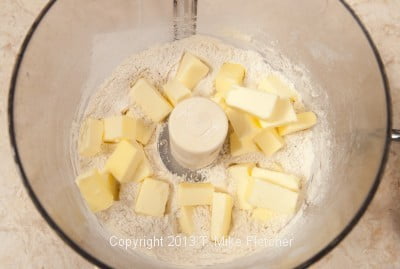
    Butter in
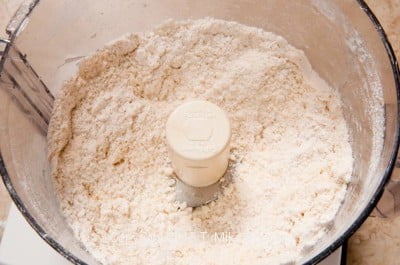
    Butter cut in

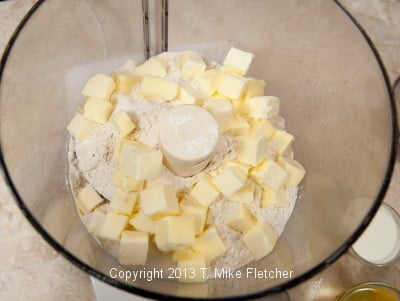
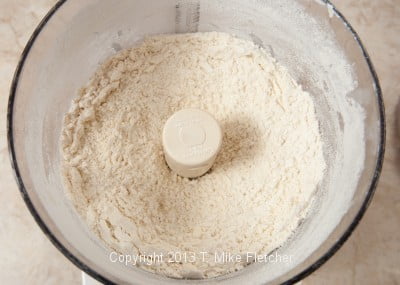
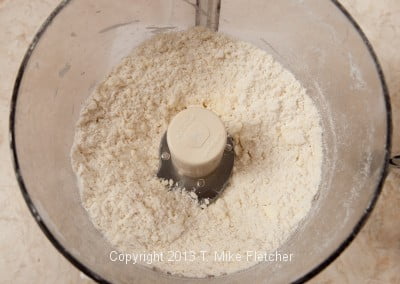
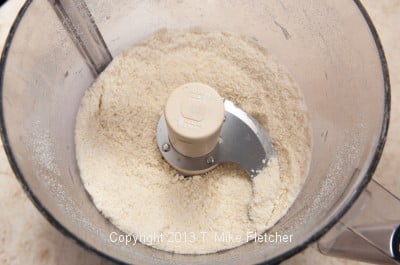
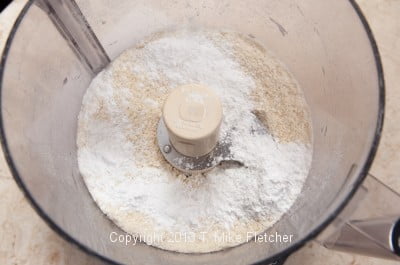
    In a processor bowl fitted with the steel blade, combine the flours and salt; process briefly to mix.  Add the butter and place in a circle over the flours.  Pulse until the butter is cut into large pieces.

    Liquids in
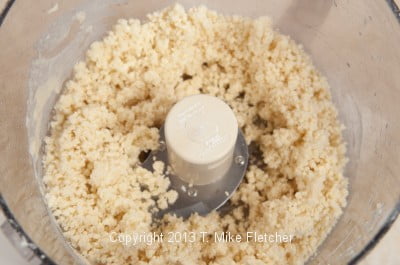
    Pate Crumbs in processor bowls
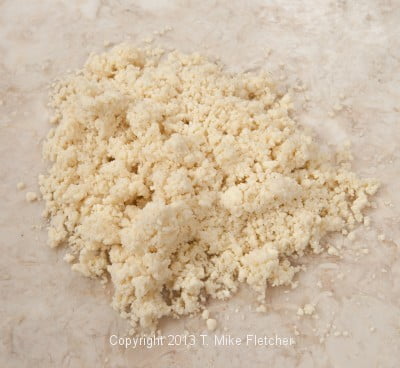
    Crumbs out
    Pushed together
    Shaped into a disc

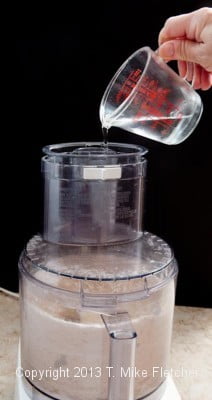
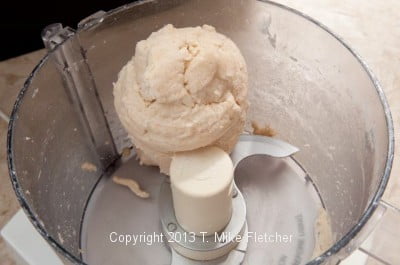
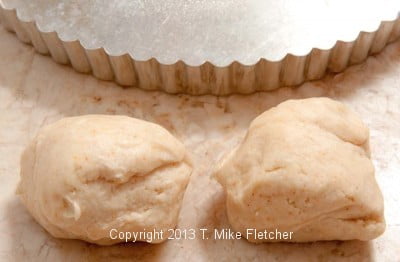
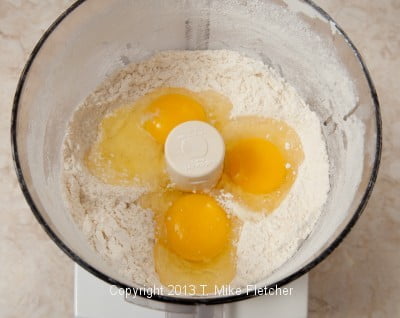
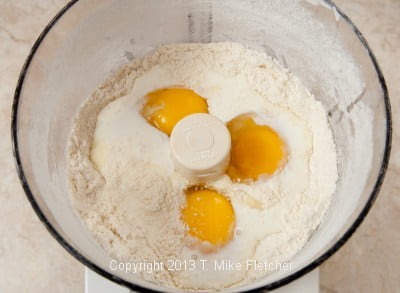
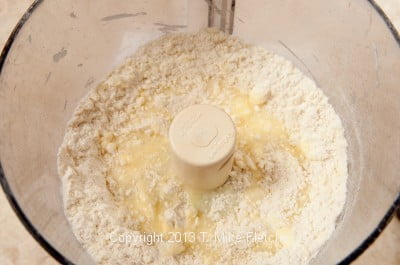
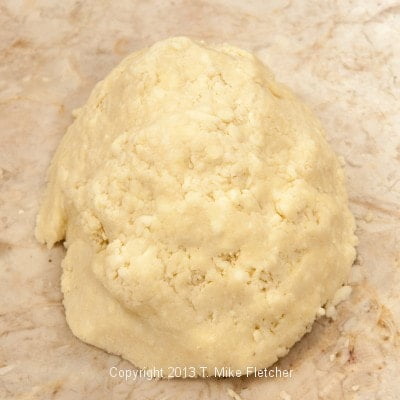
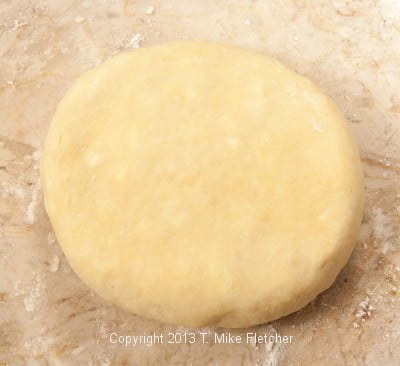
    Mix the egg, lemon juice and ice water.  Pour over the flour/butter mixture and pulse until it lumps together in its about the size of peas.  Do not over-procress and especially don’t let it form a ball.   Pour it out onto a work surface lightly dusted with flour and push together into a ball.  Form into a thick disc.  Wrap in plastic wrap and refrigerate for at least 30 minutes before rolling.

    Rolled out
    Placing in pan
    Setting into edge of pan 1
    Setting into edge 2
    Removing excess dough

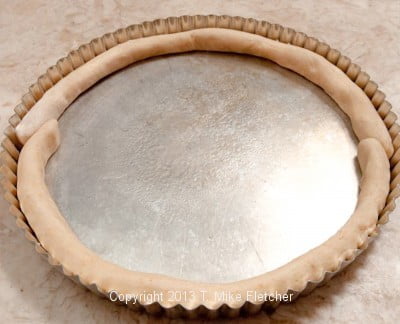
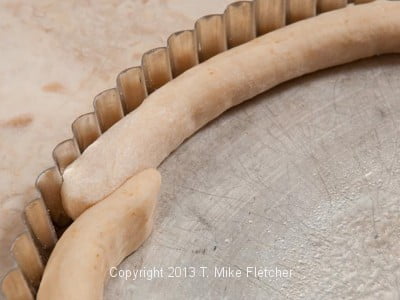
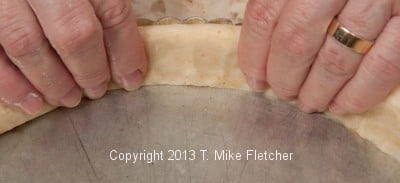
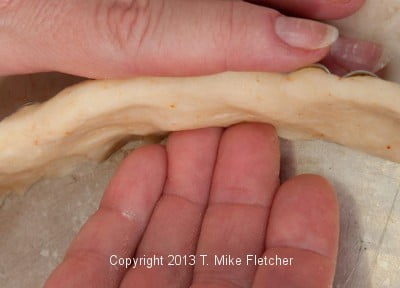
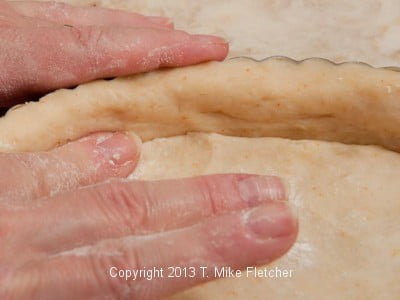
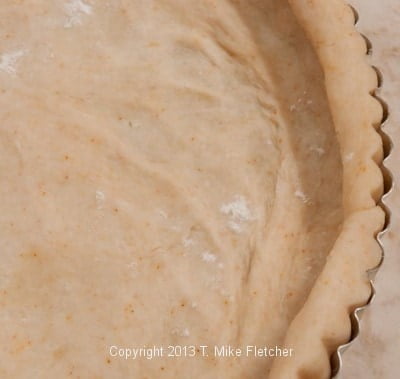
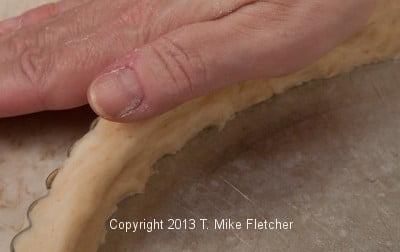
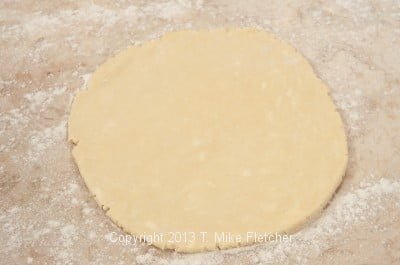
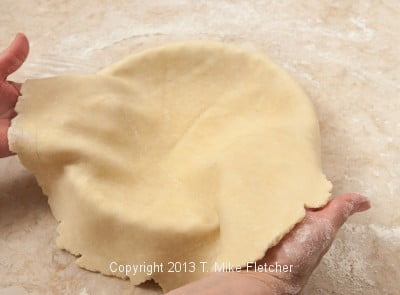
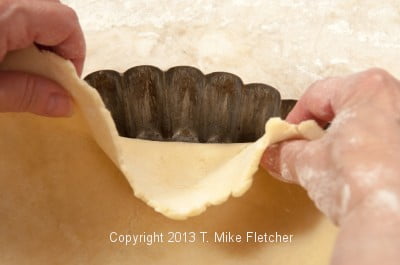
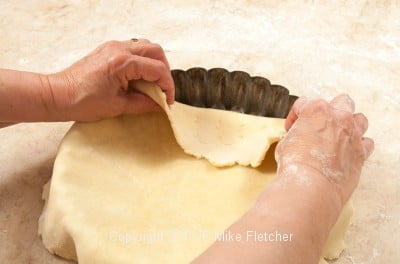
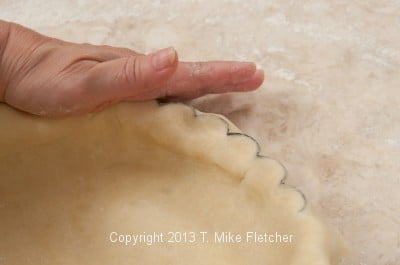
    Roll into a round about 11 inches.Place it in a 9x2 inch tart pan with a removable bottom.Seat it into the edges by lowering the pastry into the shell and pulling the edge toward the center of the pan.  Seat the pastry into the edges making sure it is at a 90 degree angle.Continue around the pan until the pastry is well seated into the pan.  Remove the excess dough with the palm of your hand pressed against the top of the pan.  Refigerate about 30 minutes or until it is firm. In the meantime while the crust if chilling prepare the salmon filling.

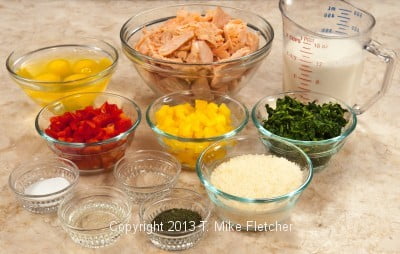
    Salmon Ingredients

    Salmon Filling

    1 to ¼ pounds poached or roasted salmon fillet
    ¾ cup red pepper
    ¾ cup yellow pepper
    1 tablespoon vegetable oil
    1 cup frozen spinach, squeezed dry (10 oz. chopped spinach, thawed)
    1 ½ teaspoons salt
    1 ½ teaspoons dried dill
    ½ teaspoon white pepper
    ½ cup parmesan or sharp asiago cheese
    4 eggs
    1 ½ cups half and half

    Poach or roast the salmon.  Chill.  Remove the skin and any brown under the skin.

    Preheat the oven to 350 degrees.

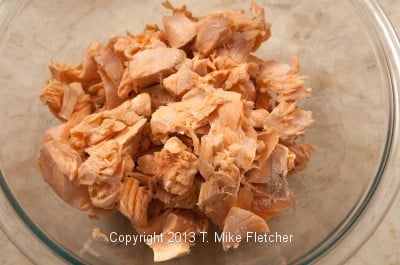
    Salmon in bowl

    Place in a large bowl and break into large pieces.  Set aside.

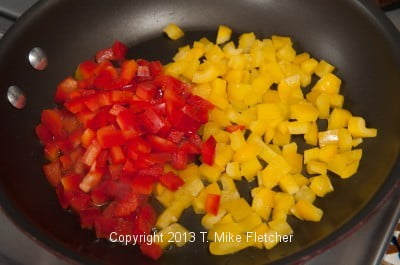
    Pepper in pan
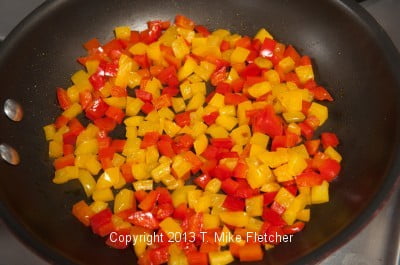
    Cooked peppers
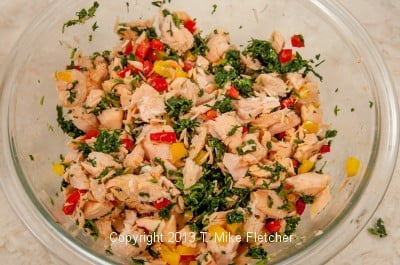
    veggies and salmon

    Dice the peppers and sauté in the oil until just softened.  Add to the salmon along with the spinach, salt, dill and pepper.

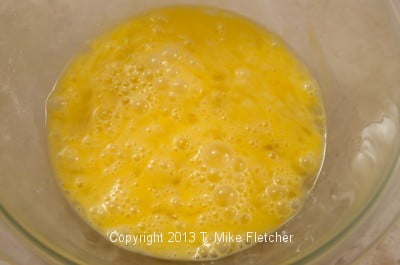
    Eggs beaten
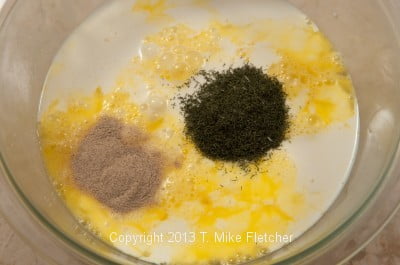
    Liquid mixed

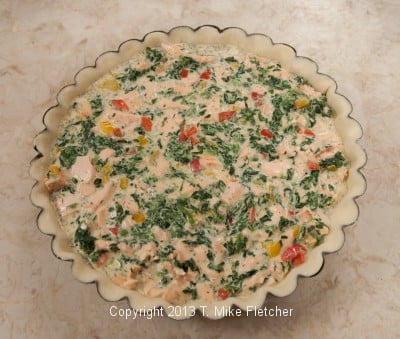
    Whisk the eggs to mix, add the half and half and seasonings; whisk together.Add to the salmon mixture.  Pour into the prepared shell.

    Filling in shell
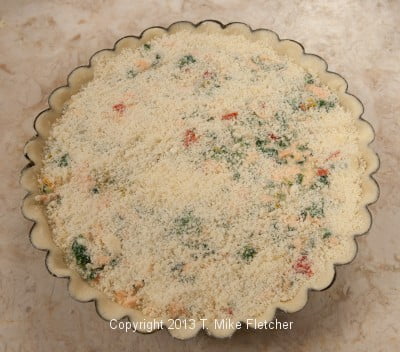
    Parm on

    Top with the grated parmesan or asiago.

    Place the tart on a rimmed baking sheet and place on the bottom rack of the oven.  Bake for 45 to 50 minutes minutes until deeply browned and set.  Let it rest for about 10 to 15 minutes before cutting.

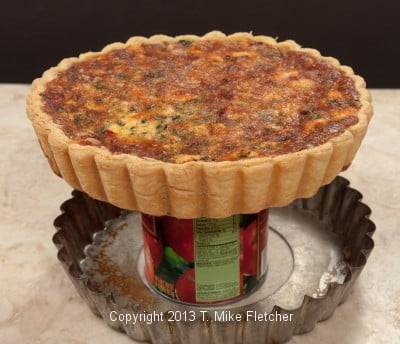
    Side of tart pan down

    Place the tart on a fat can and let the sides fall down.  Remove it from the bottom of the tart pan and place it on a platter or cardboard round.   Serves 8.

    Sour Cream Cheesecake

    Modified: Feb 25, 2020 · Published: May 1, 2014 by Helen S Fletcher · This post may contain affiliate links · 16 Comments

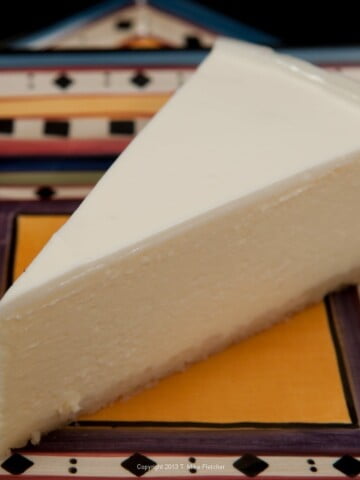
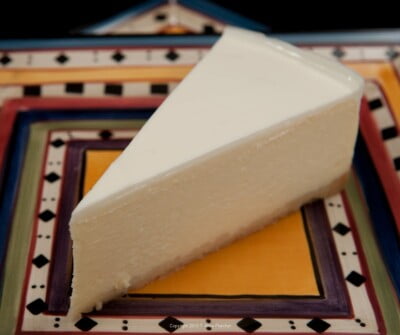
    Finished slice

    Finished slice


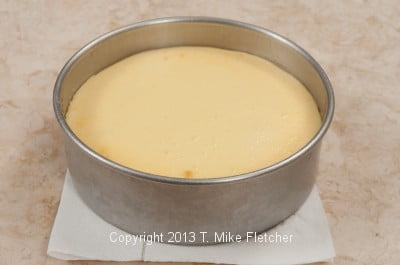
    This Sour Cream Cheesecake is the basic cheesecake we sold at the shop with many variations.  It is one of the most elegant desserts to be found.   For the holidays, we topped it with a candied cranberry sauce that added the perfect contrast to the richness of this cheesecake.  We also used this as the base for our Eggnog Cheesecake.

    Cheesecake is the number one dessert in the country.  There are literally hundreds of different flavors.  Most cheesecakes have a graham cracker crust.  However, this one is so delicate I used a shortbread crust in order not to overpower the cheesecake.  It is important not to over bake the crust in the initial step as it will bake for about 90 minutes and then cool in the oven for another 60 minutes.

    Because we made 18 cheesecakes at a time at the bakery, we made them in one of our large mixers.  Since this is a single recipe, I have included the processor and mixer method of making it. [Read more...]

    Traditional Carrot Cake - An American Classic

    Modified: Sep 9, 2025 · Published: Apr 24, 2014 by Helen S Fletcher · This post may contain affiliate links · 12 Comments

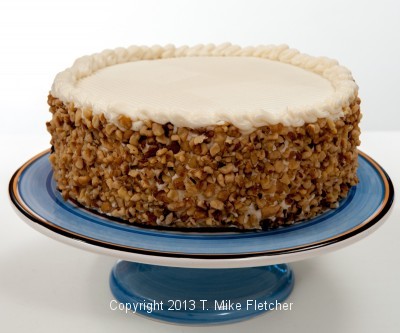
    Finished whole
    Finished whole

    Carrot Cake is truly an American Classic cake. With both fruit and nuts, it can have a bevy of add ins including coconut and pineapple. This is the carrot cake that we made at the bakery.

    When I opened my bakery I was making more European cakes than American ones. I preferred Italian buttercream to finish my cakes and most of the American cakes used powdered sugar as the base.   It didn't take me too long to figure out my clients were going to my competition to get the carrot cake as well as a good old American chocolate cake.

    So I went into the carrot cake testing phase.  Some were too sweet, some too dry, some didn't hold up five days in the refrigerator - a must for selling wholesale.  As much as you want to believe all of your desserts are flying out of the restaurant, they'll usually be around for a few days.  So it is really important they have a shelf life so they won't dry out.

    [Read more...]

    Sweet and Hot Macadamia Brittle

    Modified: Apr 23, 2026 · Published: Apr 17, 2014 by Helen S Fletcher · This post may contain affiliate links · 6 Comments

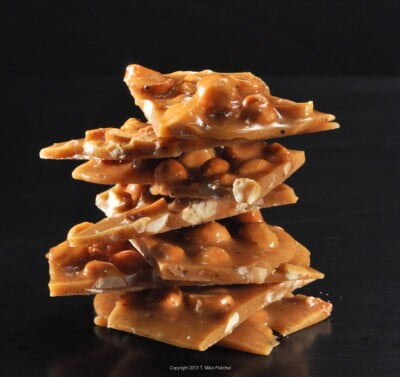
    Finished photoMacadamia brittle is a treat anytime, but add a bit of heat and it becomes Sweet and Hot Macadamia brittle, a candy not to be forgotten.

    I recently had to make a brittle for one of the desserts at the restaurant.  It didn’t take me long to remember why I wasn’t a candy maker!  Five pounds of sugar, umpteen nuts, cups of corn syrup and my frustration only grew. Some recipes used butter and vanilla, others not so much.  Some used baking soda, but I didn’t want the opaque, spongey look.  All of them used corn syrup but it seemed any amount went.  One recipe used so much butter it told you to blot the excess off after it cooled!

    So back to the drawing board I went.  Sugar, nuts and some kind of heat were a given. Butter was added for richness and the key came down to the amount of corn syrup used.  Using too little, still allowed granulation of the sugar and didn't allow the mixture to be stirred. So a two to one ration of sugar to corn syrup worked perfectly.

    The mixture could be stirred and no matter what, wouldn't granulate. To make things easier this recipe does not require the use of a candy thermometer.  All the ingredients are in the pan and the mixture are cooked to color.

    [Read more...]

    The Glaze -A Fundamental of Pastry

    Modified: Jul 25, 2025 · Published: Apr 10, 2014 by Helen S Fletcher · This post may contain affiliate links · 10 Comments

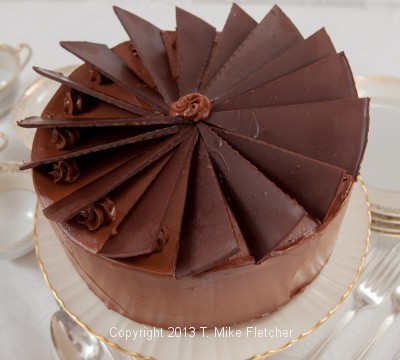
    Finished Ultimate
    Finished Ultimate
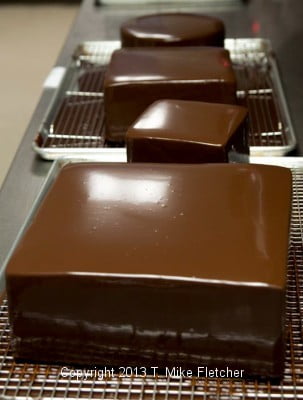
    Large Glazed Cakes

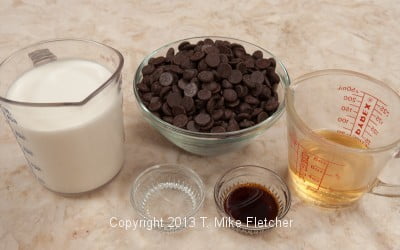
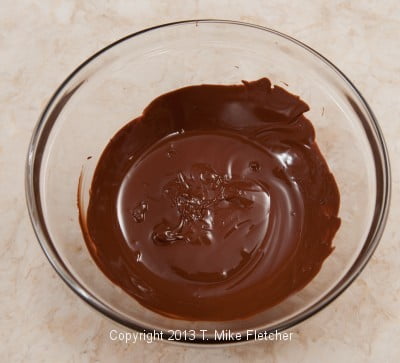
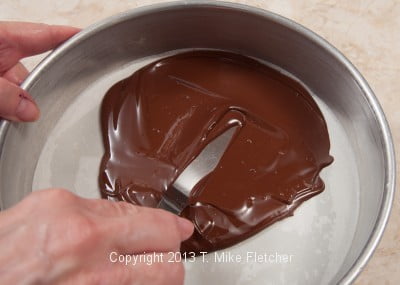
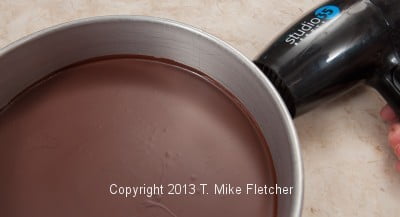
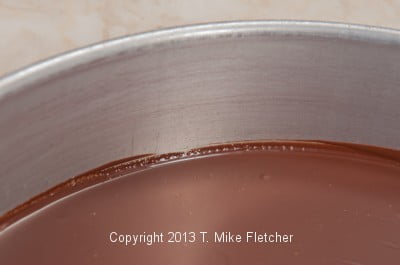
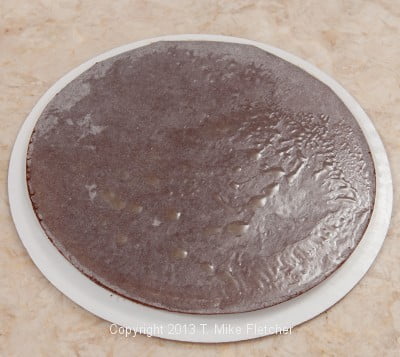
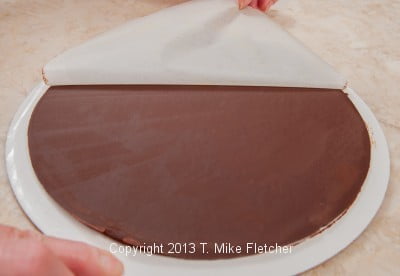
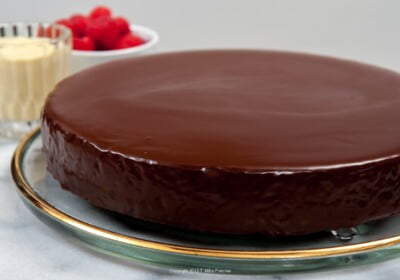
    Last week the Ultimate Chocolate  Fudge Cake used a glaze.  This week I want to go more in depth as the glaze is one of the important techniques in pastry making and quite easy once it has been mastered.  This liquid brown coating has an intense flavor since it has no sugar other than that in the chocolate.  We glazed small single layers or individual cakes to four layer wedding cakes as seen below. After setting it has a beautiful sheen and the glaze itself is set softly but firmly.  However, if you touch it a fingerprint will be left.  It cannot be used as a coating for chocolates as it is too soft.  For this discussion, we are using a dark chocolate glaze.

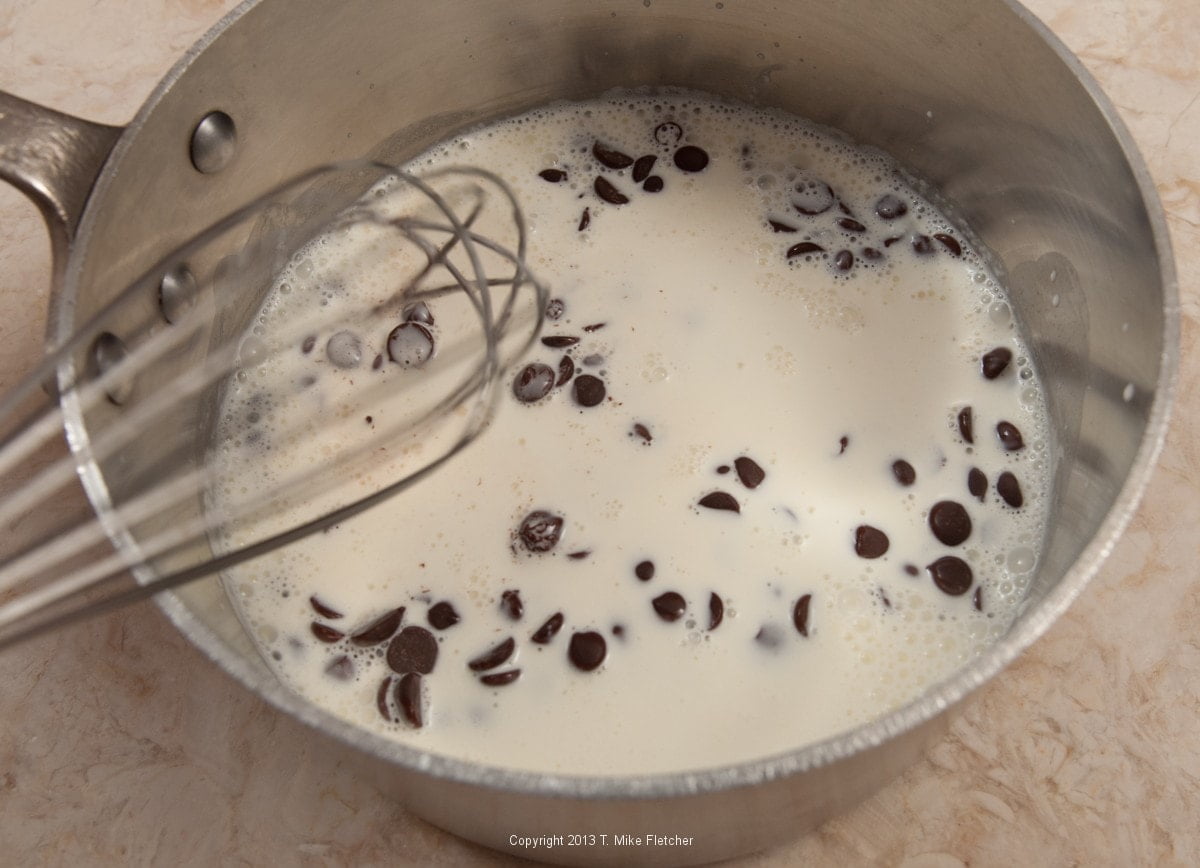
    The glaze is dark chocolate and cream to which other ingredients such as cornsyrup, butter and flavorings can be added.  Our Cream Glaze, consisting of cream and chocolate, was used for almost everything we glazed with the exception of one cake that required a butter instead of cream.   The glaze can also be set out at room temperature to firm up.  We did this often and used it as a filling for cakes as well as to undercoat cakes that were to receive no other finish, such as decoratifs, vermicelli or sprinkles - all the same by different names.  Once set up, the finished item can be held at room temperature.  See sprinkles blog.

    [Read more...]

    Crème Anglaise - A Classic Dessert Sauce

    Modified: Jul 28, 2025 · Published: Mar 27, 2014 by Helen S Fletcher · This post may contain affiliate links · 8 Comments

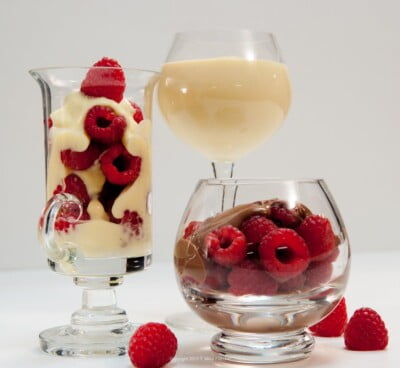
    Finished 2

    Finished 2

    Well, Crème Anglaise has certainly been an interesting trip through the internet as well as books (remember those?).  While everyone seems to agree that this “English Cream” or custard sauce contains some kind of cream or milk, egg yolks, sugar and flavoring – no one seems to agree on the amounts.

    Custards, including crème brulee are nothing more than variations of the amount of ingredients used in crème anglaise.  While custards are baked in an oven with a water bath to prevent curdling, crème anglaise is referred to as a stirred custard and is cooked on top of the stove.  A water bath may be used here also to prevent overcooking. [Read more...]

    Orange Almond Madeleines - A Petit Four

    Modified: Mar 1, 2014 · Published: Mar 13, 2014 by Helen S Fletcher · This post may contain affiliate links · 15 Comments

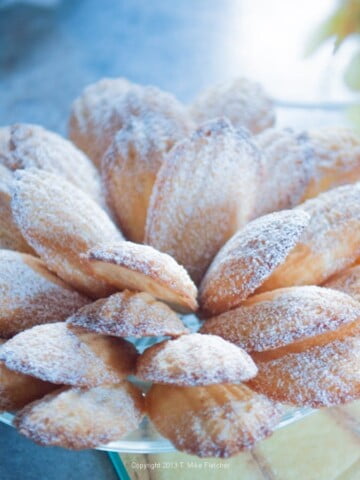
    Finished Photo

    Finished PhotoMadeleines were said to be the favorite of Proust. These shell shaped petit fours  were originally made of sponge cake and to me, rather tasteless.  They dried out quickly while sitting on display and lacked any definitive flavor.

    However, the Orange Almond Madeleines and the fudgey Chocolate Madeleines we made at the bakery are a special treat that lasts on display or in a tin and can be frozen for later use.  These were a very popular petit four.  Orange and almond is a favorite flavor combination than never fails to deliver in the taste department.

    There are two kinds of petit fours, petit four sec which is any small one or two bite cake, tart, or other pick up dessert.  Petit four glace are the fondant covered little cakes.  At the bakery, we  made the petit four sec and had a box of assorted ones that were very popular. [Read more...]

    Better Butter for Baking

    Modified: Apr 20, 2026 · Published: Feb 27, 2014 by Helen S Fletcher · This post may contain affiliate links · 2 Comments

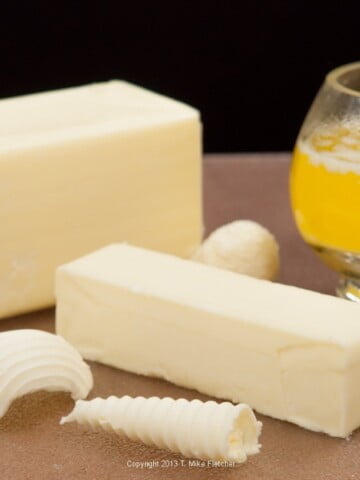
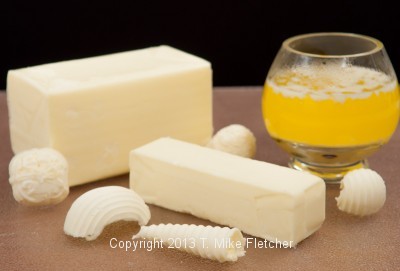
    Butter

    ButterButter has long been known for its qualities in baking.  When it comes to baking, there is no fat as flavorful, rich and satisfying.  There is no other fat that can duplicate its properties when baking.

    Butter is literally made from the cream that rises to the top of milk.  It has been around from the beginning of recorded history.  It's story goes back about 4000 years ago when a nomad tied a bag of cream to this horse.  After a day of riding, the cream had been jostled all day and when he opened the bag – low and behold – butter!

    Butter is made by beating or churning cream until the it separates into a semisolid and a liquid.  If you care to experiment, it can be made at home by whipping 40% or heavy cream until the cream separates and it turns into a solid and a watery component.   I was renowned at one position for having turned 16 quarts of cream into butter by simply forgetting it while it was whipping.  It became known as “Helen’s Butter”.   While the chef was initially, shall we say irritated, the good news was, we used every bit of it!  So all turned out well and I was back in his good graces.  In fact, he loved telling the story! [Read more...]

    Marjolaine - A Classic Flourless Pastry

    Modified: Apr 23, 2026 · Published: Feb 20, 2014 by Helen S Fletcher · This post may contain affiliate links · 6 Comments

    Finished Photo

    Finished Photo (1 of 1)Ahhh, Marjolaine (pronounced  mar zjoh lenn).  This naturally flourless cake is perfect to celebrate graduations, wedding rehearsals or showers and is a knock out for birthdays.

    Fernand Point, was a French restaurateur and is considered to be the father of modern French cuisine according to Wikipedia and other sources.  At his three Michelin star restaurant, La Pyramide, he trained many of Frances most influential chefs including Paul Bocuse, Alain Chapel, Louis Outhier, Georges Perrier and Jean and Pierre, the Brothers Troisgros.

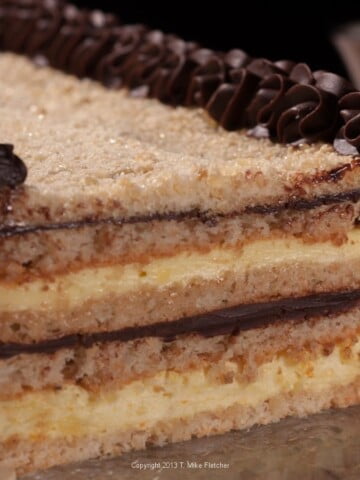
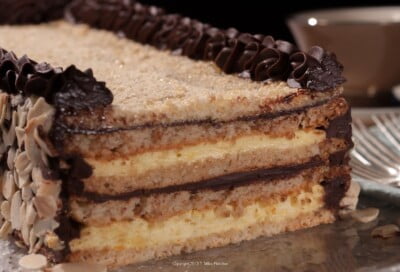
    One of his signature dishes was the Marjolaine and it seems it took him years to perfect.  A combination of nutted meringues, pastry cream, and a hint of chocolate.  As with any classic, there are a number of variations some of which include cake layers and German Buttercream.  I used a lightened version of pastry cream and a sour cream ganache instead of making creme fraiche.  While the original recipe added the almond praline to one of the pastry creams, I used it to finish off the top where it adds a pleasant crunch and doesn't get lost. [Read more...]

    Banana Caramel Tart with Rum Pastry Cream and Praline

    Modified: Jul 24, 2025 · Published: Feb 13, 2014 by Helen S Fletcher · This post may contain affiliate links · Leave a Comment

    Banana Tart with Rum Pastry Cream

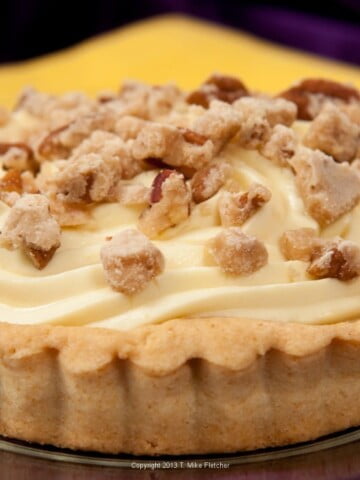
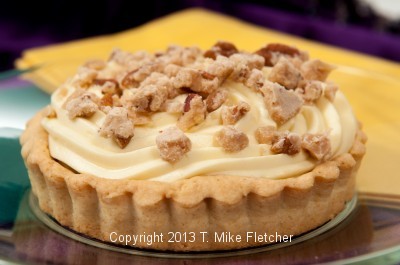
    Banana Tart with Rum Pastry CreamI was recently asked for a “New Orleans type dessert” at the restaurant. I was excited to come up with these Banana Caramel Tarts with Rum Pastry Cream and Pralines.  The first bite will take you to Mardi Gras.

    This praline is one of the best things I have ever eaten. And eat it I did!  Once it cools, it has an opaque, almost grainy look.  When the pecans have been added, the candy sets up almost immediately,  so get it onto the prepared sheet pan and spread it out right away.

    These tart shells are of the "cookie crust shells".  We used this recipe at the bakery for our 11" tart shells as well as individual shells.  The reason I liked them is they didn't require rolling out.  They are crisp and stay that way.  We would press these into shells at the bakery, bag them and store them in the freezer to be baked off later. Do not try to freeze the baked shells, as they will crack in the freezer if not filled.  This is one of the main shells in my book, "European Tarts". [Read more...]

    Individual Tart Shells

    Modified: Jul 24, 2025 · Published: Jan 30, 2014 by Helen S Fletcher · This post may contain affiliate links · 8 Comments

    Finished baked shell

    Finished baked shellIndividual tarts are the quintessential dessert.  What's more flattering than getting your own dessert?  Almost any full size tart can be turned into an individual tart by making individual tart shells. Wherein lies the problem.  Most shells are one half to three fourths inch tall.  By the time you get a regular pie or tart pastry in them, they shrink when baked and there is almost no side left to hold the filling.

    I ran into this problem when I had my bakery.  We did a lot of European Tarts, the name I gave to the shorter tart to distinguish it from a deep dish tart, which we also did.  It was important the crust did not have to be blind baked.  When producing a bunch of tarts, it is simply too time consuming to line them with foil, fill them with beans, bake them, take out the beans and finish baking them if it is a fully baked crust.  Just writing about it is too time consuming! [Read more...]

    Cinnamon Raisin Bread

    Modified: Aug 25, 2025 · Published: Jan 23, 2014 by Helen S Fletcher · This post may contain affiliate links · 14 Comments

    Cinnamon Raisin Bread

    I originally posted this six years ago. Recently however, I overhauled it to make it even better with a softer crumb and a longer shelf life. Yeast doughs have always been a favorite of mine, and I continue to learn how to make them better and pass that on to you.

    Fall is synonymous with baking and sweet breads are always a favorite. This recipe has several more modern methods of making.

    A slice of Cinnamon Raisin Bread.
    Ingredients

    Basic Sweet Yeast Dough
    1 cup milk
    4 tablespoons butter, cut into pieces (60 grams or 2 ounces)
    ¼ cup honey
    ¼ cup potato flakes (14 grams or ½ ounce)
    1 teaspoon salt
    1 egg
    1 teaspoon vanilla
    1 package active dry yeast (2 ¼ teaspoons, 7 grams or ¼ ounce)
    ¼ cup water (90 to 100 degrees)
    3 cups bread flour (454 grams or 1 pound)

    Butter melting
    Honey being added
    Potato Flakes in
    Liquids mixed

    Heat milk to simmering.  Remove from the heat and add the butter; stir until melted.  Add the honey  and potato flakes.  Whisk all together.  Let cool to lukewarm.

    Eggs, vanilla in
    Liquid in eggs

    In the meantime, break the egg into the mixing bowl, add the vanilla and whisk to blend completely.   I just use a hand whisk here.    Add the milk mixture when cooled to lukewarm.

    Yeast risen in cup
    Yeast added to liquid in mixing bowl
    Flour in wet ingredients
    Mixing in bowl
    Kneading in mixer 1
    Kneading in mixer 2
    Dough in bowl, ready to rise
    Covered with time on it
    Dough risen

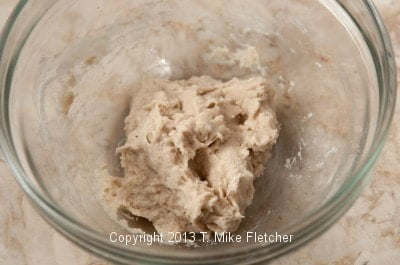
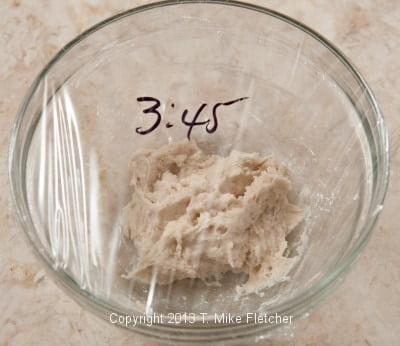
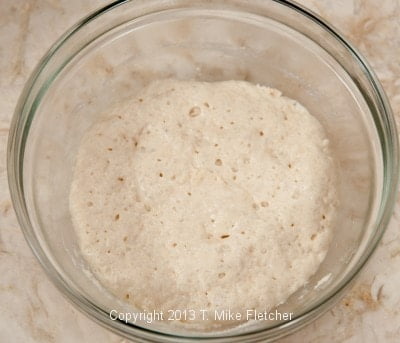
    Dissolve the yeast in the water and add it to the liquid in the mixing bowl.Fit the mixer with a dough hook.  Add the flour and salt all at once and mix on medium until it forms a dough; continue mixing to knead the dough for 3 more minutes.   The dough will clean the side of bowl.The dough will be very soft and may  more like a batter; this is as it should be.  Do not add additional flour.  Spray a bowl at least twice the size of the yeast dough with cooking spray.  Shape the dough into a ball and place it in the bowl and spray the top lightly. Cover the bowl with plastic wrap, mark the time on it and let rise for 1 ½ to 2 hours in a wam place or until doubled in bulk.

    Risen dough deflated

    Punch the dough down and reshape into a ball.  At this point the dough can be used immediately or it can be punched down and refrigerated up to 2 days before using.  The dough will probably rise again in the refrigerator; punch down, cover the surface tightly and directly with film.   Then cover the bowl itself with film.   Use when cold.

    Food Processor Version – A slight change in the way the dough is put together gets the job done in a matter of minutes. All of the ingredients remain the same.  However, the butter should stay very cold and be cut into about 8 pieces.  Keep in the refrigerator until needed.  Continue as in above recipe omitting the butter in the hot milk but keeping everything else the same.  Cool the mixture completely.  Add the egg and dissolved yeast.

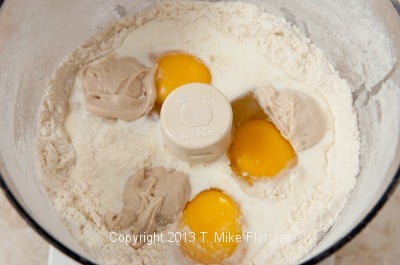
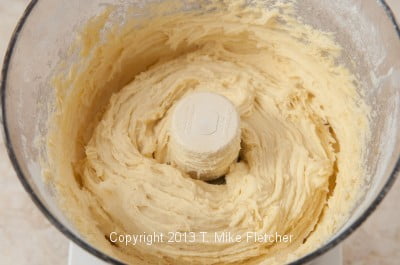
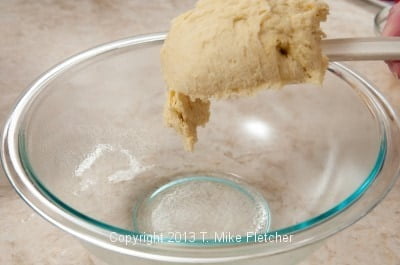
    Place the flour and salt in the food processor fitted with the steel blade.  Pulse 3 or 4 times to mix.  Place the cold butter in a circle over the flour and process until it is so finely cut in it is indistinguishable.  With the machine running, pour the liquid mixture down the feed tube; process until mixed.  Process for 1 minute to knead.  Remove the dough and knead 10 to 15 times by hand to smooth out.   Place in a sprayed bowl and continue as directed.

    Cinnamon Bread Ingredients

    Cinnamon Raisin Bread

    ¾ cup packed brown sugar (150 grams)
    2 tablespoons cinnamon
    ¾ cup raisins
    3 tablespoons butter, melted (45 grams or 1 ½ ounces)
    1 recipe Basic Sweet Yeast Bread, above
    2 teaspoon butter, melted, optional

    Spray a 9x5 loaf pan and line the bottom with parchment.  Spray the parchment.  Set aside.

    Cinnamon Sugar in bowl

    Divide the brown sugar into two bowls (75 grams or 2 ½ ounces each) and mix thoroughly with 1 tablespoon cinnamon each.  Set aside.

    Cinnamon Sugar mixed
    Dough Rolled out
    Brushing with butter
    Cinnamon sugar spread
    Raisins on
    Rolling up 1
    Rolling up 2
    Rolling up 4
    Rolling up 5
    Pinching 1
    Pinching together 2
    Pinched 3
    Pinched
    Pinching end

    Divide the dough in half (about 445 grams so just short of a pound each).  Roll one piece into a 11x14 inch rectangle.  Brush with half the butter and spread  half the sugar/cinnamon and sprinkle with half the raisins.  Roll tightly from the short end.   Pinch the edges together and also the ends.  Place in the refrigerator while you repeat this with the rest of the ingredients.

    Pinching ends together
    Twisting 2
    Twisting 3
    Twisting 3
    Pinching twisted ends together
    In pan 3
    Pressed in pan 3
    Covered 3

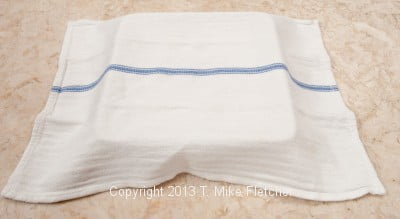
    Place the two rolls next to each other and pinch the top edges together.  Twist the two rolls together and pinch the ends together.   Place in the pan.  Flatten the roll to fill out the pan.  Cover with a towel 

    Shaped risen bread

    and let rise for 1 to 1 ½  hours until doubled.

    Preheat the oven to 350 degrees.  Bake for 45 to 50 minutes until the top is deeply brown and the loaf sounds hollow when thumped.  You can also use a thermometer to make sure it is 180 degrees inside.  Tent the top lightly if it is browning too much.

    Brush the top with the 2 teaspoons of butter if desired.  Cool in the pan for about 30 minutes, release and cool on a rack completely.

    Finished whole loaf

    This freezes well.   Wrap well  to freeze.

    Baklava - Phyllo at its Finest

    Modified: Aug 9, 2025 · Published: Jan 16, 2014 by Helen S Fletcher · This post may contain affiliate links · 4 Comments

    Baklava

    BaklavaMy mother was a fantastic baker and cook.  She could take nothing and make something wonderful from it.  Unfortunately, I didn't appreciate it when I was growing up.  They practically had to force feed me like those poor geese for foie gras.  But what I did love, was anything my mother baked and is why, in hindsight, I went into the baking business.

    My mother and grandparents were immigrants from what was then, Yugoslavia.  Just as in this country, different parts of the country had different assets.  Mother lived in an area rich in dairy with butter, eggs and cream at their disposal.  I would watch my mother and grandmother on Sunday's, spread a clean, white tablecloth over a large, round table over which freshly made phyllo would be stretched.  I could scarcely understand a word as they chatted away in Serbian.

    My job was to sweep up the scraps after the thick edges were removed and some of the paper thin dough fell to the floor.  While most people can't imagine a dough being stretched so thinly a newspaper could be read through it, I thought everybody made it.  After it had been stretched to transparency, a spoon would be dipped into melted butter and I can still see my mother and grandmother  holding it  high and waving it over and over  the transparent dough as the golden drops of liquid fell from the spoon dotting the surface.  It would then be folded upon itself and more butter would be drizzled. [Read more...]

    Caramel - A Building Block of Pastry

    Modified: Sep 27, 2025 · Published: Jan 9, 2014 by Helen S Fletcher · This post may contain affiliate links · 4 Comments

    Cooled Caramel in a bowl.

    Caramel is one of the basic building blocks of pastry - also known as component parts or foundations.  It can be used as a part of a recipe, as a sauce or a candy.  There are several ways of making caramel.  This is the caramel used in many of the recipes on this blog.

    Cooled Caramel in a bowl.

    The simplest way of making caramel is the dry method where sugar is placed in a heavy pan and liquified over heat until it becomes deeply golden and then cream is added.  Truthfully, I was never successful with this method.

    But taking a different route offers an easier, deeper, richer caramel. The wet method starts with water, sugar and clear corn syrup. The corn syrup is the key to a perfect caramel that will not granulate over time. After it reaches a deep golden brown, cream and butter are added and then back on the heat it goes to reach the desired temperature.

    Temperatures for Different Caramel

    This recipe can be cooked to different temperature for different outcomes. Just follow this guide to obtain the caramel you need.

    Caramel Syrup - 215F°F to 220°F

    Caramel that stays soft at room temperature - 230°F to 234°

    Caramel to top cakes, tarts - 232°F to 236°F

    Soft caramel - 240° to 245°F

    Hard Caramel - 300°F to 315°F

    Ingredients

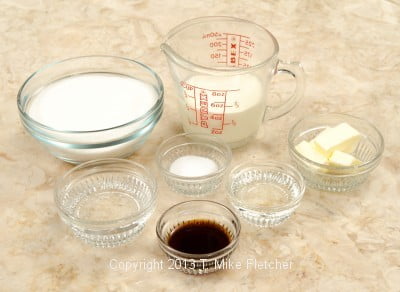
    Water, sugar, cream, butter, vanilla and corn syrup to make the caramel

    Back Row: water,granulated sugar and cream. Front Row: butter, vanilla, corn syrup

    Granulated Sugar is the most commonly used and the one I recommend for this recipe. Brown sugar is sometimes also used.

    Corn Syrup is the key to a perfect caramel. Clear corn syrup is an invert sugar and, used in the correct proportions, will prevent the caramel from becoming grainy.

    Unsalted Butter is recommended even when making salted caramel. The unsalted butter lets you control the amount of salt you add.

    Heavy Cream can also be referred to as 40% cream, meaning that it contains 40% butterfat. It is preferred over whipping cream which has less butterfat.

    Instructions

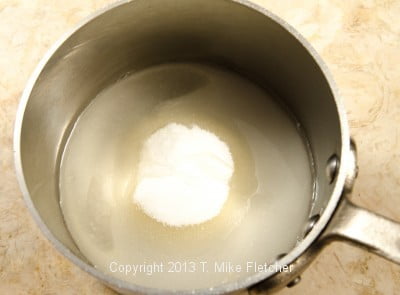
    Water, sugar and cornsyrup in saucepan

    Step 1. Water, granulated sugar and corn syrup in pan before boiling.

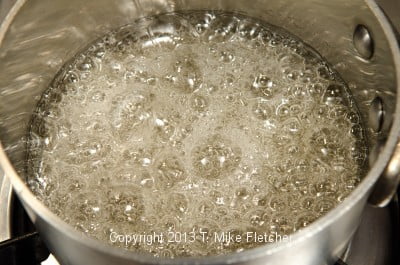
    Sugar-water-cornsyrup boiling in pan

    Step 2. Granulated sugar, water and corn syrup boiling over high heat.

    Pan covered so the condensated water will wash down the sides of the pan.

    Step 3. A lid is placed on the pan for 3 to 4 minutes to wash down the sides so no sugar granules remain to make the caramel grainy. Alternatively, the sides can be washed down with a pastry brush and cold water.

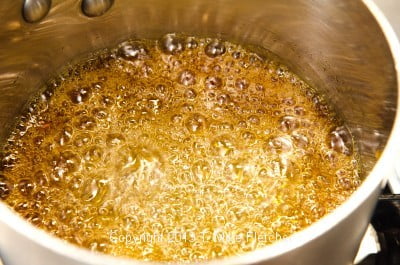
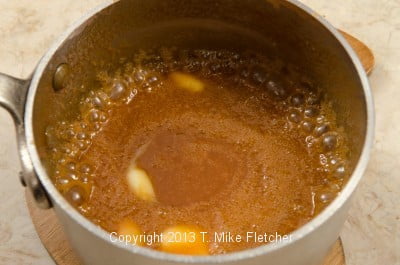
    Syrup boiled t.o a medium golden brown

    Step 4. The sugar is boiled until it reaches a deep golden color. Remove from the heat.

    Butter is added to the hot golden syrup

    Step 5. Butter is melted in the hot, golden syrup before adding the cream.

    Cream and Butter added to caramel.

    Step 6. Cream and vanilla is added before returning the caramel to the heat. Clip a thermometer onto the pan if possible.

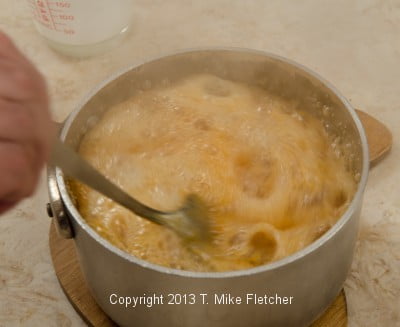
    Caramel in the last stages of boiling.  It is a dark golden brown and it has risen quite high in the pot.

    Step 7. The caramel in the last stages of boiling. At this point it just has to be taken to the degree called for in the recipe.

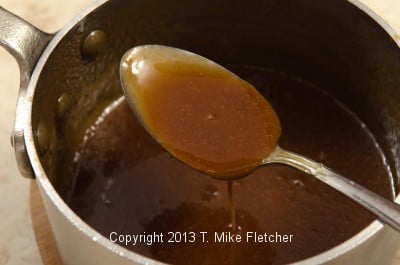
    Cooked caramel cooling in the pan before storing.

    Step 8. Cooked caramel cooking in the pot before storing in a container.

    Special Equipment

    Deep pot or pan that is at least 3 times the depth of the ingredients. The caramel will rise very dramatically after the butter, cream and, vanilla have been added and the mixture is returned to the heat..

    A Candy Thermometer that goes to at least 350°F/180C. Depending upon the use of the caramel, the degree to which it is taken will change. The lower the degree the softer the caramel. The higher the number the harder the caramel.

    Storage

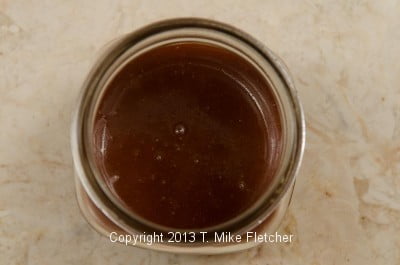
    After cooling the caramel, pour it into a storage container. It can be stored several days at room temperature. For longer storage, refrigerate it. It will last indefinitely in the refrigerator.

    To use the caramel, microwave it briefly to warm it up to the desired consistency. Alternatively, place it over direct heat set on low. Watch it carefully, stir often.


    Cooled Caramel in a bowl.

    Caramel - A Building Block of Pastry

    Helen S. Fletcher
    An easy to make homemade caramel that goes from sauce to hard candy with just a change to the degree to which it is cooked.  You'll never go back to bought caramel again!
    No ratings yet
    Print Recipe Pin Recipe
    Prep Time 10 minutes mins
    Cook Time 35 minutes mins
    Total Time 45 minutes mins
    Course Candy, sauce
    Cuisine American
    Servings 2 cups
    Calories 1339 kcal
    Prevent your screen from going dark

    Ingredients

    • 1 cup water
    • ½ cup corn syrup
    • 1 ¼ cups sugar (250 grams or 8 ¾ ounces)
    • 4 tablespoons butter (56 grams or 2 ounces)
    • 1 cup heavy cream
    • 2 teaspoons vanilla

    Instructions
     

    • Heat the cream until hot to make it easier to mix with the sugar syrup.  Set aside.
    • Place the water, sugar, and corn syrup in a 2-quart saucepan.
    • Stir over heat until the sugar is dissolved completely. Bring to a boil. Cover the pan with a tight fitting lid for 3 minutes.  Remove the lid and continue boiling.  Alternatively wash the sides of pan down with a natural bristle pastry brush dipped in cold water.
    • Boil without stirring until the mixture becomes a medium golden color.
    • Off heat, immediately add the butter to the saucepan and stir until it is melted.
    • Pour the cream in all at once and stir.  If some of the cream lumps up, don’t worry.
    • Clip a thermometer onto the side of the pan if possible.
    • Return to medium high heat and bring to a hard boil.
    • Cook to the correct temperature on a candy thermometer as directed in the recipe.  Cool in the pan then pour into a storage container.
    • This may be made weeks ahead and refrigerated. To use, bring to room temperature.  If still a bit stiff, microwave, briefly to soften.

    Notes

    It is important to wash down the sides of the pan after the sugar, water and corn syrup initially boil.  If any granules of sugar are left undissolved there is a risk of the caramel becoming grainy upon cooling or after it is stored.  
    This recipe can be cooked to different temperature for different outcomes. Just follow this guide to obtain the caramel you need.
    Caramel Syrup - 215F°F to 220°F
    Caramel that stays soft at room temperature - 230°F to 234°
    Caramel to top cakes, tarts - 232°F to 236°F
    Soft caramel - 240° to 245°F
    Hard Caramel - 300°F to 315°F

    Nutrition

    Serving: 1batchCalories: 1339kcalCarbohydrates: 194gProtein: 4gFat: 66gSaturated Fat: 42gPolyunsaturated Fat: 3gMonounsaturated Fat: 17gTrans Fat: 1gCholesterol: 195mgSodium: 273mgPotassium: 129mgSugar: 194gVitamin A: 2449IUVitamin C: 1mgCalcium: 102mgIron: 0.2mg
    Tried this recipe?Mention @helensfletcher or tag #pastrieslikeapro!

    Salmon Wellington with Lemon Asparagus Risotto Cakes

    Modified: Jul 25, 2025 · Published: Dec 26, 2013 by Helen S Fletcher · This post may contain affiliate links · 3 Comments

    Salmon Wellington cut open to expose the filling on a plate
    Salmon Wellington cut open to expose the filling on a plate

    The recipe for the Salmon Wellington  is based on one that Marlene Sorosky, a food writer I have long admired, developed long ago.  I have changed a few things about how it is put together mainly to remove some of the bulky dough when it is folded over.  The combination of artichokes and mushrooms is a sure winner wherever it is used but by putting the salmon under it, is inspired.  Being a baker, I love the idea of wrapping anything in dough.  It's like a surprise package for your mouth!  Because of all the wrapping, turning and cutting, I have included a ton of pictures to help guide you.  This may seem like a lot of work, but it is actually done over several days and is amazingly easy for such a fantastic presentation.

    These are particularly good for entertaining as they must be frozen solid -  so you can make them a month in advance, wrap well and tuck away in the freezer.  By freezing them solid, the salmon won't  overcook in the time it takes to bake the puff pastry.   It makes a perfect entrée for entertaining.  Thank you Marlene!

    I am including the recipe for the Lemon Asparagus Risotto cakes I designed to go with the Salmon Wellington for a completely make ahead entree.

    Salmon Wellington
    4 - 5 to 6 ounce salmon fillets
    Purchased puff pastry sheets (preferably butter puff pastry)
    1 egg yolk mixed with 1 tablespoon milk for glaze

    Arrtichoke Filling ingredients

    Mushroom Artichoke Filling

    1 ½ tablespoons butter or margarine
    4  ounce canned artichoke quarters
    ½ small onion
    ½ pound mushrooms
    2 tablespoons Maderia
    Salt and Pepper to taste

    Cutting Onion 1

    To dice the onion, remove the paper skin and cut them in half from stem end to root end.  Lay them down on the flat side.  Make 4 or 5 horizontal cuts in the onion as big as you want  your dice  from the bottom to the top.  

    Cutting the onion vertically

    Slice vertically 4 to 5 times as big as  you want your dice.

    Onion, cut

    Dice onion by cutting from the top to the bottom however big you want the dice.  Set aside.

    Artichoke quarters

    Coarsely cut the artichoke quarters.

    Artichokes chopped
    cutting bottom off mushroom

    Remove the stems from the mushrooms by cutting or de-stemming.

    mushroom stemming
    mushrooms, sliced

    Slice the mushrooms.  Then coarsley chop.  Set aside.

    Butter in pan
    Artichokes, onions sauteeing
    Artichokes, onions, mshrooms sauteeing

    Melt the butter in the saucepan.  Saute the onions and artichokes until slightly browned.  Add the mushrooms and Maderia and cook, sitrring, until most of the liquid is evaporated.  Season to taste with salt and pepper.  Remove to a bowl and chill.  Can be made the day before assembly if desired.

    Assembly
    Salmon Fillets
    Puff Pastry
    Mushroom Artichoke Filling
    Egg Wash

    film over round
    stuffed salmon unwrapped
    stuffed salmon wrapped 1

    Line a perfectly flat plate with film letting it extend on both sides.  Place the salmon on the film. Salt and pepper the fillets.  Divide the filling between the four  fillets.  Place one portion of filling on top of one fillet, pressing somewhat to compact it and make it fit the entire top of the fillet.  Repeat with the other two. Wrap the film around the salmon and freeze at least overnight.

    stuffed salmon, wrapped 2
    Puff cut in half
    Stuffed salmon on puff

    Cut the puff pastry into  7 ½” x 10” sheets.   Place one frozen fillet,  filling side down, on the pastry. 

    Trimming excess puff
    Egg washing edge of dough
    Wrapped with flour

    If the puff pastry is too big, trim it so not more than 1 inch overlaps when both sides are folded. Fold one end over the salmon.  Brush excess flour off pastry.  Egg wash the edge of the opposite side. Fold it overlapping the other side. Brush excess flour off.

    Brushing flour off
    Trimming excess dough
    Egg washed V cut

    Trim the top layer only of excess dough in the shape of a V.  Repeat on the other side.Egg wash the bottom piece so it will stick when folded.

    Wrapped salmon
    Scoring the first time

    Fold both ends in to completely enclose salmon. Turn the package over and with a very sharp knife, lightly score the top in a cross hatch design.  Do not go through the pastry.

    Scoring in opposite direction

    Score the pastry in the opposite direction.

    Egg washing
    Completely egg washed

    Glaze the top of the pastry with egg wash.  After glazing all, go back and glaze again.  Freeze overnight.  For longer storage in the freezer, wrap in film, then overwrap in foil.  They will last several weeks stored in  this manner.

    Baking

    Baked, whole (1 of 1)
    Ingredients Lemon Asparagus Risotto Cakes

    DO NOT THAW. It is important these be frozen hard so the salmon doesn’t overcook before the pastry gets done.    Place on a baking sheet in a preheated 375 degree oven for 40 to 45 minutes.  Let rest 5 to 10 minutes before serving.  Serve hot.


    Lemon Asparagus Risotto Cakes

    1 pound trimmed asparagus (4 cups cut)
    1 tablespoons olive oil
    2 large shallots
    2 tablespoons olive oil
    2 cups Arborio rice
    ¼ cup dry white wine
    5 cups chicken stock
    1 ½ teaspoons salt
    ¾ teaspoon white pepper
    1 cup (4 ounces) grated parmesan or sharp asiago cheese
    Zest from 2 medium lemons
    2 tablespoons lemon juice
    Flour, as needed
    2 eggs, well beaten
    1 cup dried bread crumbs
    ½ cup grated parmesan or sharp asiago
    Vegetable oil, as needed

    Asparagus Lemon Risotto Cakes
    Slicing a shallot for the Lemon Asparagus Risotto Cakes
    Slicing shallot for the Lemon Asparagus Risotto Cakes
    Slicing shallots for the Lemon Asparagus Risotto Cakes
    Sliced shallots for the Lemon Asparagus Risotto Cakes
    Shallots sautéing in oil for the Lemon Asparagus Risotto Cakes
    Rice added to pot for the Lemon Asparagus Risotto Cakes
    Stock added to pan
    Pan covered for Lemon Asparagus Risotto Cakes

    Preheat oven to 400 degrees.

    Cut asparagus into 2 inch pieces. Toss with 1 tablespoon olive oil. Line a baking sheet with foil or parchment and spread in a single layer on a baking sheet. Roast for 8 to 10 minutes or until somewhat softened but they still have crunch to them. Remember they will continue to cook on the hot tray.

    In the meantime, dice the shallots finely.  Heat the 2 tablespoons olive oil and sauté the shallots until softened, about 5 minutes. Add the wine and cook until the wine evaporates.  Add the rice and saute briefly.   Add the stock all at once, stir well, cover the pan and cook at a low boil or simmer for 20 to 25 minutes until the mixture is creamy and the liquid has been absorbed. Stir frequently and keep covered while cooking. This should be more firm than normal risotto so it will retain its shape when molded. Set aside.

    Ingredients added to the risotto for the Lemon Asparagus Risotto Cakes
    Risotto covered with film for the Lemon Asparagus Risotto Cakes
    Risotto being pressed into mold for the Lemon Asparagus Risotto Cakes
    Removing mold for the Lemon Asparagus Risotto Cakes
    Breading station for the Lemon Asparagus Risotto Cakes
    Risotto cake in flour for the Lemon Asparagus Risotto Cake
    Dipped in egg for the Lemon Asparagus Risotto Cakes
    Second side of risotto cakes dropped in egg
    Risotto cake dipped in crumbs for Lemon Asparagus Risotto Cake
    Risotto cake dipped in breadcrumbs for the Lemon Asparagus Risotto Cakes
    Frying risotto cakes for the Lemon Asparagus Risotto Cakes
    Frying risotto cake for the Lemon Asparagus Risotto Cakes

    When the risotto is cooked, add the 1 cup parmesan or asiago, lemon zest and juice along with the asparagus; stir until completely mixed. Re-season if necessary.   Place plastic wrap directly on top of the risotto and cool completely.

    Rinse a 3”x 1” or deeper ring mold in cold water and shake off excess. Press ½ cup risotto into the mold and flatten. Remove mold. Continue in this manner until all of the cakes have been formed. Refrigerate until very cold and set.

    Assembly

    Assemble the breading station as follows: Place flour in a shallow bowl. Place the  well beaten eggs in a shallow bowl to the right.  Lastly, mix the crumbs and remaining ½ cup cheese in the third shallow bowl, placing it to the right of the eggs.

    Dip the risotto cake into the flour, covering the edges completely; shake off excess. Dip into the egg, covering completely, then into the breadcrumb mixture. Heat ¼” oil in a sauté pan. Place risotto cakes in pan without crowding and sauté until golden brown. Turn and sauté the other side also. Drain on paper towels. Continue until all cakes are browned. Cool completely. Place on a foil or parchment lined baking sheet or pan. Cover and refrigerate until needed.

    To serve, heat oven to 350 degrees. Heat for 25 to 30 minutes until crisp and heated through.

    Yield: 7 or 8 risotto cakes.

    Lemon Asparagus Risotto Cake

    Note: These may be made two days ahead and kept chilled.

    Pfeffernusse Cookies

    Modified: Apr 23, 2026 · Published: Dec 5, 2013 by Helen S Fletcher · This post may contain affiliate links · 9 Comments

    Finished photo
    Finished photo

    I’m not sure why Pfeffernusse cookies are relegated to the Christmas season, but they seem to be.  They come from the German repertoire of cookies, and the word pfeffernusse translates to  “pepper nut”.   While everyone seems to agree they have molasses, pepper and spices, just which spices seem to vary.  I have seen recipes with nuts, lemon rind, candied fruit, a list of spices a mile long, brown sugar, granulated sugar, molasses, honey or molasses and honey.  However, this is the Pfeffernusse cookie I remember from the first time I tasted them and fell in love with their spicy, sweet flavor.

    These Pfeffernusse cookies are like a fine wine - they need time to develop their flavor.  As such, plan ahead to give them at least a week, preferably several.  If eaten when first baked, they are rather uninspiring.  However, left in an airtight tin for a week or several weeks deepens the flavor and melds the spices, so they are not so individual and sharp.  The second flavor to all the spices is anise, a favorite German flavoring and one I love.  I have seen recipes without it and if you are not an anise fan, substitute vanilla.

    As with many European cookies, Pfeffernusseare cookies are simplicity itself to make.  They are straight forward and take little time for the reward they offer.  I must admit they are perfect for the holidays as you can start them right after Thanksgiving and they will be ready for your holiday entertaining.  They are also perfect as gifts since they can be made and held for so long.  These cookies can be bagged and tied with festive bows and put away to give weeks later.

    Molasses, one of the key ingredients for the Pfeffernusse flavor, is a thick, heavy syrup made from sugar or beet cane, although it can be produced from other products as well.  It is time consuming to make, requiring cutting the cane, stripping it, mashing it and boiling it a number of times.  The number of times it is boiled, determines the strength of the flavor.  There are basically three strengths of molasses.  Light molasses, sometimes called mild, is just that, the most mild of the three and comes from the first boiling.  Dark molassess is more pronounced in flavor and color and comes from the second boil.  The third and most intense in flavor is blackstrap molasses.  It is very thick and very strong made from the third boiling.  For this recipe I use the light or mild molasses.

    I have thought about making these Pfeffernusse Cookies year round, but have decided to leave them for the holidays.  The anticipation of eating Pfeffernusse cookies is very much in the holiday spirit.

    German cookies are not to be missed. Always full of flavor. Here are a couple of more you might enjoy. Zimtsterne or German Cinnamon Stars are meringue based with a beautiful snow white frosting. Murbteig is one of the best lemon butter cookies you will ever find.

    Pfeffernusse Ingredients

    Pfeffernusse Cookies

    2 ¼ cups flour (315 grams or 11 ounces)
    ½ teaspoon cloves
    ½ teaspoon nutmeg
    ½ teaspoon cinnamon
    ½ teaspoon ginger
    ½ teaspoon cardamom
    ½ teaspoon black pepper
    ½ teaspoon baking soda
    ½ cup butter, softened (114 grams or 4 ounces)
    ¾ cup brown sugar (150 grams or 5 ¼ ounces)
    ¼ cup light molasses
    1 egg
    1 teaspoon anise extract
    2 cups sifted powdered sugar (180 grams or 6 ⅓ ounces)

    Preheat the oven to 325 degrees.  Line baking sheets with parchment.

    Dry ingredients 1

    Whisk together the flour, cloves, nutmeg, cinnamon, ginger, cardamom, black pepper and baking soda.  Set aside.

    Dry ingredients, mixed
    Brown sugar and butter creamed
    Molasses in
    Molasses beaten in
    Egg in

    Cream the butter and brown sugar in a mixing bowl until light and fluffy.  Add the molasses and beat until light.  Add the egg and anise extract, beating well.

    Egg, anise beaten in
    Flour mixture in
    Dough mixed

    Add the flour mixture and mix until completely combined.  If the dough is really soft, refrigerate it for 20 to 30 minutes until it is firm enough to shape.

    Cookies dropped
    Tray of Baked Cookies

    With a number 70 disher or scooper drop the cookies onto parchment lined baking sheets.
    Lacking a disher,  use1 tablespoon per cookie and roll it into a ball.  Place on the baking sheets.  Double pan the cookies (see Double Panning) and bake for 13 to 15 minutes until the cookies are set and firm.Cool 10 minutes, then cover in powdered sugar.

    Cookies in P sugar 1
    Cookies in P sugar 2
    Knocking off excess P sugar

    Remove the excess sugar by picking them up in your hands and, with your fingers open, shake the cookies.  Cool completely and place in an airtight tin to age.

    Yield:  About 44 cookies

    Tri-Chocolate Pate

    Modified: Jul 25, 2025 · Published: Nov 28, 2013 by Helen S Fletcher · This post may contain affiliate links · 2 Comments

    Finished Photo
    Finished Photo

    Tri-Chocolate Pate is  a spectacular, showy dessert that is easy to make and can be done well  ahead  of time.

    Consisting of white, milk and dark chocolate,  each layer is highlighted with a complimentary flavor.  This was a catering favorite at the bakery.  The chocolate used will determine the underlying flavor of the pate.  The chocolate we used was a 58 to 62%.  If one of the newer, chocolates is used it may alter the outcome as they are much more liquid when melted.

    Do not let the layers firm up completely before adding the next one.  If you do, they will not bond when you add the layer on top.  When you slice it the layer will separate.  Not a big deal, just push it back together on the plate.  However, it is best to have them bonding.  The white layer is the biggest offender as there is not whipped cream to soften it.

    [Read more...]

    Chocolate Dipped Sweet and Salty Butter Cookies

    Modified: Apr 3, 2023 · Published: Nov 21, 2013 by Helen S Fletcher · This post may contain affiliate links · 8 Comments

    Round butter cookies finished with chocolate on an orange and white plate.
    Round butter cookies finished with chocolate on an orange and white plate.

    These Chocolate Dipped Sweet and Salty Butter Cookies are one of the simplest cookies to be found.  However, they are addictive in their simplicity.

    Normally, I roll the cookie dough into logs and then cut them about ¼ inch thick. After cutting, I dip the tops in coarse sanding sugar, then pop them into the oven. The sugar adds a nice crunch, and they glisten on a tray.  However, these can also be rolled out and cut with cookie cutters.  I have done it both ways, depending upon my needs.  It is easiest to roll between two pieces of waxed paper.

    Recently, I glazed these cookies in chocolate then sprinkled them with a mixture of sanding sugar and sea salt.  Truly does bring them to another level.  The amount of salt is determined by taste and the salt you use, which is why I told  you which one I used.  I have given you measurements for the sugar and salt, but I encourage you to add the salt a little at a time and taste as you go.  You may prefer more or less and there is no right or wrong.   With these cookies, you taste the cookie and the aftertaste is the salt, which is what I prefer.

    However you decide to make them, they will be a great addition to any cookie collection.

    [Read more...]

    Croissants - Queen of Breads in France

    Modified: Jul 13, 2025 · Published: Nov 14, 2013 by Helen S Fletcher · This post may contain affiliate links · 18 Comments

    Croissant


    Croissant Queen of Breads is the preface to the Croissant chapter featured in my book, "The New Pastry Cook", published by Wm. Morrow Co., in 1986.  It is usually available on ebay and sometimes through Amazon.com.  

    My teaching assistant brought in a pristine copy he got on www.half.com. I have updated the technique for the final rise to more closely approximate a professional proofer in temperature and moisture.  I also now recommend instant yeast, sometimes known as bread machine yeast which was unavailable at the time.

    Of all the pastries thought of as French, the flaky, buttery rolls, called croissants have gotten to be the best known in America.  The word means crescent, and the French give croissants a special place of honor at their breakfast table.

    With any layered dough such as croissant dough or puff pastry, the most important process is to get the butter between the layers of dough but not to incorporate it into the dough. When the butter has been properly layered, it will melt in the heat of the oven, forming steam that separates the layers, causing the dough to expand and achieving the much sought after flakiness.

    Traditionally, for croissants, this has been done by making a bread dough and rolling it out in a rectangle, two thirds of which is buttered.  The dough is then folded and turned.  The rolling, folding, and turning are repeated several more times, forming hundreds and hundreds of layers of butter and dough.  In this method, the most traumatic occurrence was having the butter break through the dough.  It gave many aspiring at-home pastry chefs a complex they never got over.

    In 1982, I developed my processor method of cutting frozen butter into chilled dough.  This technique, along with controlling the rising, yields the flakiness that is the standard by which good croissants are judged.  In addition, altering the traditional method of making the folds produces a croissant ready to eat in 4 ½ to 5 hours, start to finish--a far cry from the 18 to 36 hours it used to take.

    Ingredients for Croissant

    Although any yeast product is best eaten the day it is made, slight changes I have made in the formula provide a dough that is tasty and acceptable the second day as well as the first.  Bread flour (simply stirred before measuring) is used for its high gluten content, which makes it a strong flour capable of supporting the rapid expansion, caused by the yeast and by the method of layering the butter, when the dough is baked.

    While bread flour provides the structure that allows the croissants to rise to their fullest potential, to provide the tenderest possible dough, buttermilk has replaced the traditional milk and water.  The acid in the buttermilk tenderizes the gluten and allows the use of a strong flour without sacrificing texture.

    Along with unsalted butter, there is also a small amount of oil in this formula, which lubricates the gluten strands, allowing them to stretch without breaking.  In addition, the oil keeps the dough pliable when it is cold and facilitates rolling out. By allowing the pastry to rise only once, after the croissant is shaped, a bready texture is avoided and time is saved.

    Keeping the Dough Chilled

    Croissant pastry must be kept chilled.  The basic flour dough is first chilled in the freezer for about an hour after it is made.  It is then returned to the processor along with the frozen butter, and the two are cut together.  Chilling the dough and using frozen butter prevents the butter from being incorporated into the dough.  The dough is then rolled out and given a double turn, or four-fold (folded into four layers), as opposed to the traditional three-fold.  

    Therefore, the number of times the dough must be rolled and folded can be reduced from four single turns to three double turns, making is possible to complete the rolling and folding in one fell swoop and eliminating the long rest formerly needed between turns.

    Buttermilk Powder

    It is the cook's good fortune to have available dry powdered buttermilk, usually found in supermarkets near the regular dry milk or in the dairy section.  It is my first choice for this recipe.  If buttermilk powder is not available, regular buttermilk can be used, but, because of the difference in viscosity, it is necessary to dilute it with water.  It is also very important that any liquid be cold when it is added to the flour in the processor, to avoid fermentation taking place before desired.  Cold tap water or refrigerated buttermilk are fine.

    Keeping the Croissant Dough Cold

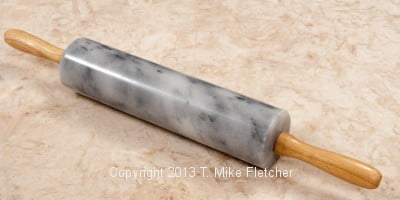
    A chilled marble rolling pin and a marble surface are best for rolling the dough, as they will stay cold.  However, a wooden rolling pin and a Formica surface are also acceptable. The least desirable are a wooden rolling pin and a wooden rolling surface, as they have a tendency to soften the dough.  

    Should the dough become too soft or elastic to roll, put it on a baking sheet and place in the freezer to firm up.  As long as the dough remains chilled, a light sprinkling of flour uder and on top of the dough should suffice when rolling out.

    Baking

    Other departures from the traditional method of making croissants will be found in the baking.  Several of the recipes call for the pastries to be "double- panned" and also baked in the upper third of the oven.  This simply means that two baking sheets are used, one directly on top of the other.  This prevents the bottom of the pastry from burning during the time it takes to finish the baking, and it is done even when heavy professional baking sheets are used.  

    However, if you are using insulated baking pans, do not double-pan. For croissants I have also found that lowering the usual baking temperature to 350 degrees and baking for a longer priod of time (25 minutes) provides a completely baked product without sacrificing any of the flakiness.

    BASIC CROISSANT DOUGHCroissant Ingredients

    1 cup + 2 tablespoons water, about 75 degrees
    2 tablespoons vegetable oil
    3 cups bread flour (420 grams or scant 15 ounces)
    ¼ cup powdered buttermilk*
    1 tablespoon instant yeast
    2 tablespoons sugar
    1 ½ teaspoon salt
    ½ pound (2 sticks or 8 ounces) unsalted butter

    *If using whole buttermilk, use ⅞ cup buttermilk and ¼ cup water in place of the water and dry buttermilk powder.  Everything else remains the same.

    Combine the water and oil.  Set aside.

    Ingredients in processor
    Water being poured down feed tube
    Dough balled up
    Kneading dough 1

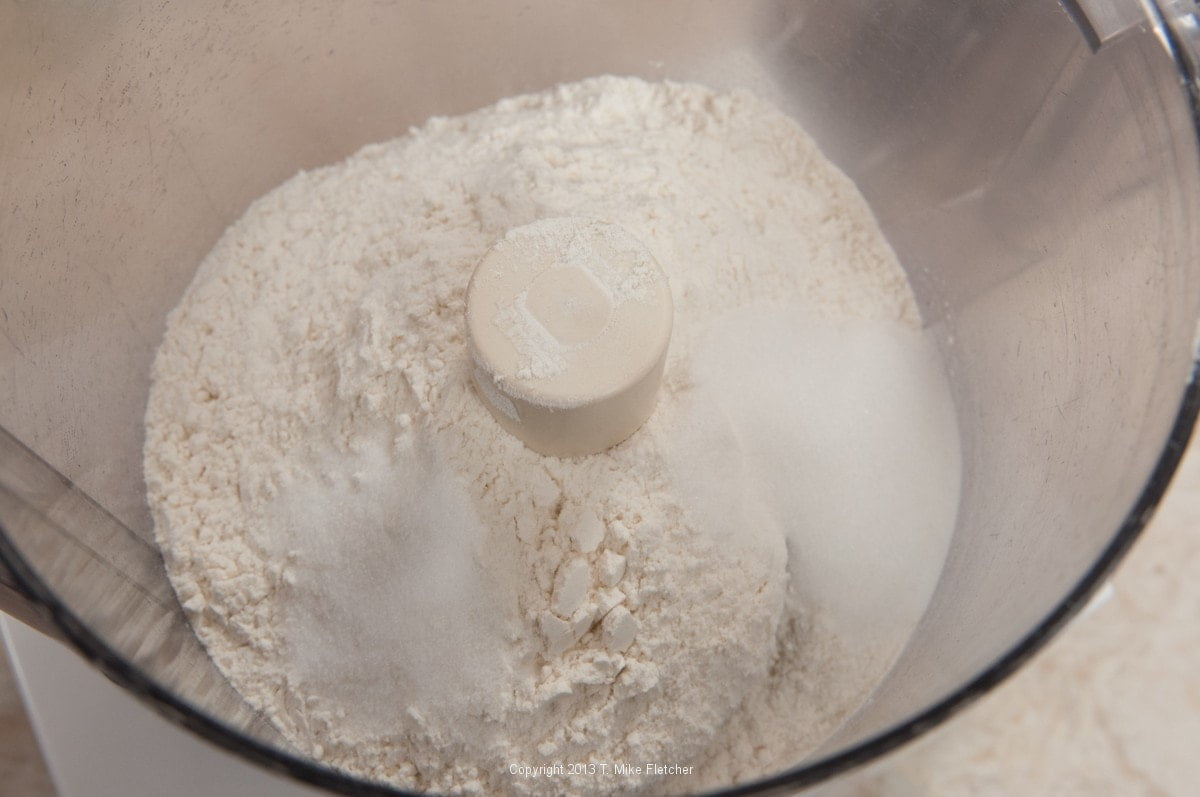
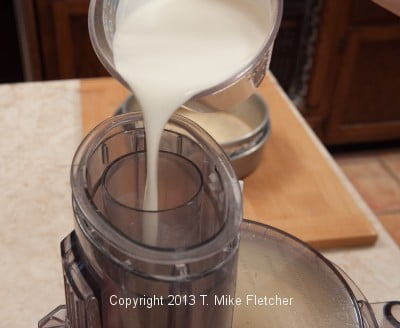
    With the steel blade in place, add the flour, powdered buttermilk, instant yeast, sugar and salt to the bowl of a food processor.  Process about 5 seconds to mix everything.  With the machine running, pour the liquid down the feedtube;process until a ball forms.  Continue processing for 30 seconds more to knead the dough.  The dough should ride the blade and clean the bowl but remain soft.  Remove from the bowl.  If it is slightly sticky (and it may be), knead by hand 5 or 6 times,

    Kneadinag 2
    Kneaded, balled up
    Flattened
    Wrapped for Freezer

    then flatten into a disc ½ inch thick.  Wrap in plastic wrap and chill in the freezer for 60 to 90 minutes, or until the edges are very firm about ½ inch in all the way around.

    If using a marble rolling pin, put that in the freezer also.

    Butter cut

    Cut each stick of butter into 8  pieces and then in half lengthwise.
    Return to the freezer to keep hard.

    Dough in quarters
    Dough cut in 12 pieces
    Dough/btr in processor
    dough/btr cut in processor
    dough-butter cut together

    Remove the dough from the freezer.  Divide the disc into fourths and each fourth into 3 pieces.With the steel blade in the bowl, place 3 pieces of dough in the processor with ¼ of the butter.  Process until the butter and dough are cut into varying sizes.  Turn out onto work surface.  Repeat in quick succession 3 more times.

    dough patted togeher
    First Roll 18 inches
    Squaring edges
    Wiping rolling pin

    On a lightly floured surface, shape the mixture into a rectangle about 6x4x2 inches. Lightly flour the top of the dough and roll it into a rectangle about 18x6 inches, keeping the ends as square as possible and the sides as straight as possible.  Use your hands to even it out and keep the butter from scooting out.Wipe the rolling pin frequently with paper toweling and scrape the work surface to prevent the dough from sticking.

    Scraping table (1 of 1)
    Brushing dough
    First rollout, folded in half
    First roll completed

    Brush the excess flour from the dough with a soft brush so the pastry will adhere properly.  Fold into fourths by bringing the top and bottom ends of the dough to the center.  Brush the excess flour off again, then fold in half.  Turn the dough so the folded edge is to the left.  This completes the first double turn.

    Second roll completed
    Finished Dough

    Repeat rolling, folding, and turning in this manner for the second turn and once more for a total of 3 turns.  Because the butter is frozen and the dough well chilled,  it should be possible to complete all 3 turns without chilling the dough between turns.  However, if necessary, place the dough on a baking sheet and put it in the freezer for 15 to 20 minutes, then proceed. With each turn the dough will become smoother but still with butter visible.  If desired, the dough may be refrigerated between turns.

    After the third turn, place the dough in a plastic bag and put in the freezer for about 30 minutes before shaping.  If the dough is not to be used immediately, remove from the freezer after 30 minutes and refrigerate up to 3 days before using.  Or the dough may be frozen after completion for 3 to 4 months.  In this case, defrost 24 hours in the refrigerator before using

    Croissant Rolls

    1 recipe Basic Croissant Dough
    1 egg, well beaten

    Fill a 9x13 inch pan half way with the hottest tap water available. Place on the bottom of the oven or the lowest shelf possible. Place an oven rack in the upper third of the oven. Close the door.

    Finished dough cut in half
    Layers of dough
    Dented cold dough
    Dented dough
    Dough quartered
    Stretching top of dough for roll

    Line 2 baking sheets with parchment paper.  Divide the dough in half. Return half the dough to the refrigerator. On a lightly floured surface, dent the dough with a rolling pin several times to make it easier to roll.   Roll the dough into an 8x124 inch rectangle. Cut into 4 pieces 6x8 inches.  If it is difficult to get it to 24 inches, roll to at least 18".Cut each of these rectangles in half on the diagonal.  Each piece will have one square and two pointed corners. Pull the square corner gently to the side to even up the triangle somewhat.
    Starting the roll at top
    Pulling the tail
    Roll straight out
    Shaped Roll

    Roll it up lengthwise stretching the dough gently to lengthen it more once the initial roll is started.  Place on an ungreased baking sheet and tuck the “tail” corner well underneath. Bend the ends down and in toward the center to form the crescent shape.

    8 on a try before baking

    Cover the rolls with a towel and place the croissant on the rack in the oven.    Let proof until doubled – about 1 hour.

    Remove the croissant from the oven and remove the water. Preheat the oven to 350 degrees. While the oven is preheating, brush the croissant with the beaten egg.  Double pan and bake in the upper third of the oven for about 25 minutes, until golden brown and firm to the touch.

    To Make Ahead: Freeze after baked and completely cooled. To serve, place directly from the freezer onto baking sheets and heat in a preheated 350 degree oven for about 10 minutes.

    Other laminated doughs: A Better Kouign Amann, Pithiviers, and Sunny Side Up Apricot Pastries.

    Cranapple Pie with a Pleated Crust

    Modified: Oct 21, 2022 · Published: Nov 7, 2013 by Helen S Fletcher · This post may contain affiliate links · 8 Comments

    Cranapple Pie with a Pleated Crust ready to eat.
    Cranapple Pie with a Pleated Crust ready to eat.

    This Cranapple Pie was one of of the favorite dessert combinations at the bakery.   The only change I have made is the crust and how it is finished before baking.  This pie uses a galette style crust which is a  usually freeform and  finished in one piece, without an upper crust.  This leaves the filling exposed and makes a beautiful presentation.

    Before picking over the cranberries, pour them into a rimmed baking sheet.  When I first started working with cranberries at the shop, I just dumped them out onto my work area ----where they rolled off and promptly under everything.  We were still finding dried cranberries six months later under hard to get to shelves!   By containing them, you won't have to chase them all over the kitchen.   There are usually a few wrinkled or soft berries in the packages - just pitch those. Cranberries have a ton of natural pectin, so they will thicken quite nicely without any help.  There is no sugar in the cranberry portion as it is all with the apples. I use Gala apples in this pie as I like the consistency and the taste.  They stay together nicely when baked and don't get mushy.  You want to have 1 ½ pounds of apples, after they are cored and peeled. Because this pie has no upper crust, it is really quick and easy to put together.

    I used a 9" glass pie plate because I like to see the color of the bottom crust. The filling will come to the top as it finishes baking where it will bubble away.  However, it will sink as it cools.  I wanted you to be aware of this so you don't think you made a mistake with your Cranapple Pie with a Pleated Crust.

    Pie Crust - Use the Double Crust from my American Pie Crust recipe.  Put it together exactly as in the photos.  It can be made the day ahead and refrigerated.  I like to do this so it is cold when I want to roll it out.

    Cranberru omgredoemts

    Cranberries

    1 12 ounce bag of cranberries, picked over
    85 grams raisins (3 ounces)
    ½ cup water

    Pour cranberries into a rimmed baking sheet. Pick through them to remove any iffy ones.

    Cranberries on tray

    Place in a sauce pan with the raisins and water.

    Cranberry ingred. in pan

    Bring to a boil in a medium saucepan.  Reduce heat and simmer 3 to 5 minutes until softened.

    Cranberries boiling

    Cranapple Filling

    Cranapple filling

    350 grams sugar (1 ¾ cup sugar or 12 ¼ ounces) 
    ⅓ cup flour (45 grams flour)
    ½ teaspoon nutmeg

    3 liquid ounces brandy

    1 ½ pounds peeled and sliced apples (about 6 medium apples)

    Cooked Cranberries

    Cranapple Filling

    Combine the sugar, flour, salt and nutmeg.  Stir in the brandy and apples.  Add the cranberry mixture  Let sit for 10 to 15 minutes.

    Assembly - This is a bit difficult to explain.  The photos will help where words fail.
    Pie Crust
    Filling
    1 egg, beaten

    Coarse sugar, optional

    Preheat oven to 375 degrees. or 350 degrees if using glass. Roll the piecrust into a 15 inch round.

    Dough

    Cut it into a 14 inch round and place in a 9 inch pie pan and let the the excess dough overhang the pan

    Dough in pie plate

    Fill  the pie shell with the cranapple filling.

    Filling in pie plate

    Turn the very top of the dough down over the filling

    Turning Crust in

    Pleat the crust from the right by folding it down and over the first piece you turned down.

    Turning crust 2

    Keep turning the pie plate so the unpleated part is on top.  Continue pleating until you get to the end.

    Turning Crust in 4
    Turning Crust in 6
    Turned crust

    Beat and egg until the yolk and white are completely mixed.

    Beaten egg

    Brush the crust with the egg and sprinkle with coarse sugar if desired.

    Brushing with egg
    Brushed with egg

    Place on a foil lined rimmed baking sheet (this just makes it easier to get into and out of the oven).

    On pan to be baked

    Place on a foil lined rimmed baking sheet (this just makes it easier to get into and out of the oven). Bake for about 1 hour and 10 to 15 minutes. Cover the top loosely if browns too much.

    Allow to sit until lukewarm. Cut and enjoy! Vanilla ice cream is particularly good when this is served warm.  This has a serious yum factor!!!

    Lemon Gooey Butter Cake in a Brioche Crust

    Modified: Aug 25, 2025 · Published: Oct 31, 2013 by Helen S Fletcher · This post may contain affiliate links · 4 Comments

    Slice
    Slice

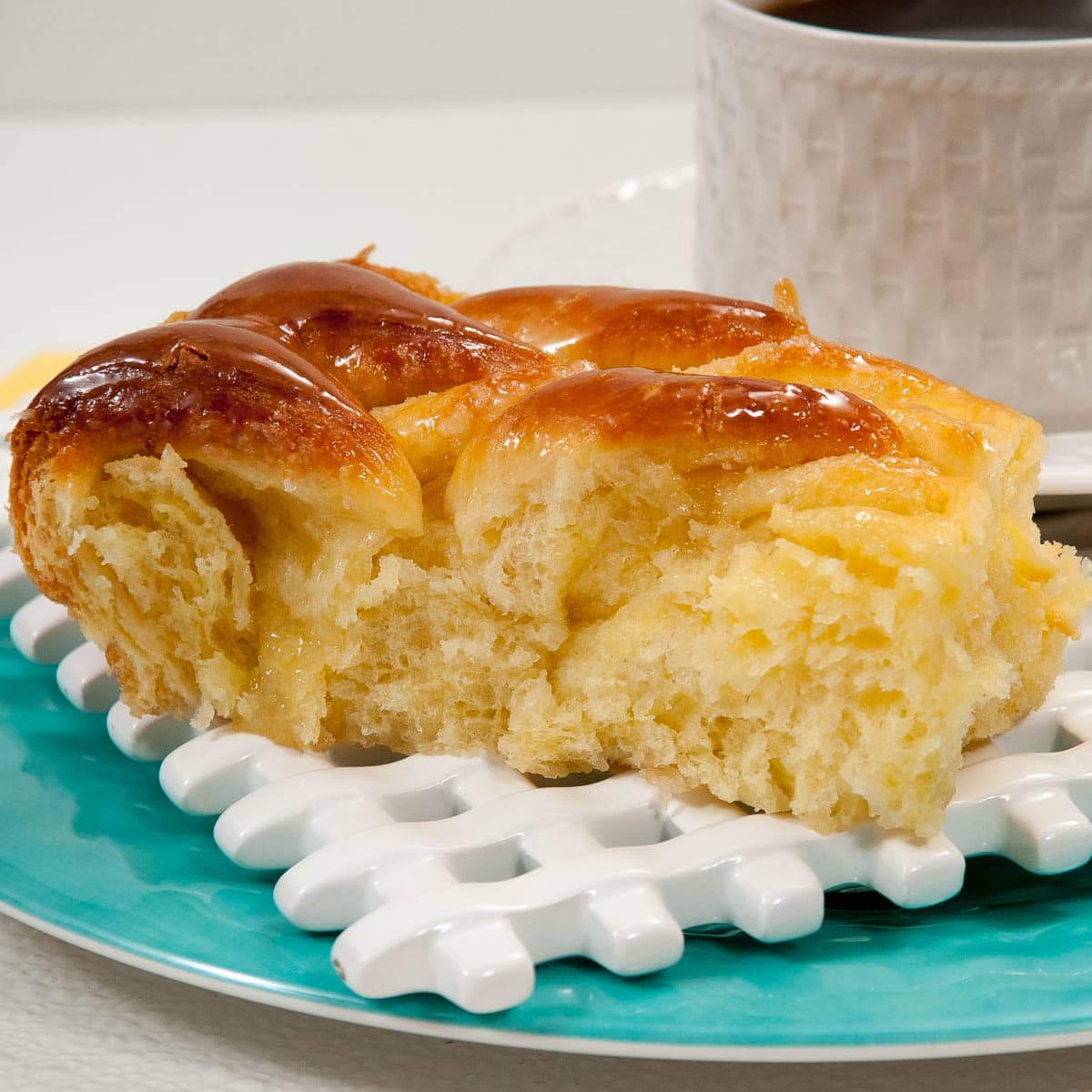
    Gooey butter cakes are a specialty of St. Louis.  Lemon Gooey Butter Cake in a Brioche Crust takes this homey cake into another realm.  The original gooey butter featured a yeast raised crust.  It was later changed to a yellow cake by some.  I  have skirted the issue by using a rich brioche dough that is so easy to make you won't believe it.  I came up with this method years ago and it was featured on the cover and in a 10 page article in Bon Appetit magazine where it was used in 12 recipes I developed.  It is also one of the chapters in my first book, The New Pastry Cook.  The name 60 Second Brioche comes from the fact it takes about that long to mix  in a food processor.

    Because the dough is very rich in eggs and butter, a starter is used to multiple the number of yeast cells available to the finished dough.  See Yeast as it Relates to Bread.

    Gooey butter cakes are very rich. This Lemon Gooey Butter Cake is no exception.  To help cut the sweetness of the filling I have paired it with a lemon curd.  The curd cannot be made in a smaller amount so only half of it is used.

    To make this Lemon Gooey Butter cake an even more remarkable dessert or coffeecake, it can be made in its entirety and frozen.  Thaw it in the refrigerator overnight, then briefly heat it in a 350 degree oven for 10 to 15 minutes just to take the chill off.

    I have included instructions for making the brioche in a mixer if there is no processor available.

    [Read more...]

    Apple Crisp Cheesecake

    Modified: May 1, 2026 · Published: Oct 24, 2013 by Helen S Fletcher · This post may contain affiliate links · 25 Comments

    A slice of the Apple Crisp Cheesecake sits on a tan oplate with a fork on the plate and a napkin in the background.

    Apple Crisp Cheesecake says fall to me in a way few other desserts do. You will love the way the oat, walnut, brown sugar and cinnamon crisp goes with the creamy cheesecake under it with the apple filling on top of the graham cracker crust.

    A slice of the Apple Crisp Cheesecake sits on a tan oplate with a fork on the plate and a napking in the background.

    Although looking at the recipes, it seems to have a lot of parts, they are all so easy and the reward so great, there is really no reason not to make this. particularly love this cheesecake as it requires no water bath. It is perfect for Thanksgiving. It can be frozen and thawed for several days in the refrigerator.

    Other cheesecakes for you to enjoy: Easy Pina Colada No Bake Cheesecake, White Chocolate Mocha Cheesecake, Triple Chocolate Cheesecake, and the Pumpkin Cheesecake with a Salted Caramel Sauce.

    If you love festive holiday baking, you'll also enjoy my Updating Holiday Baking post.

    [feast_advanced_jump_to]

    What Kind of Apples Are Best?

    I'm often asked what kind of apples are best for an apple pie. Hands down, it Northern Spy apples. It's what we used at the bakery and I miss them terribly in my grocery store. There must be two dozen varieties but not a Spy around. So my next choices are a mixture of Granny Smiths and one of the following: Honey Crisps, Pink Ladies or Gala appes.

    Is it best Made it in a Mixer or Food Processor?

    Quite by accident one day at the restaurant, I found that making cheesecakes in the food processor produces the creamiest cheesecake to be found. The reason is it doesn't incorporate air into the mixture as does a mixer when it's beaten. As far as I've found, this method works on any cheesecake.

    Why This Apple Crisp Cheesecake Works

    • Although it has 4 parts, they are all easy.
    • It's especially easy to use a food processor.
    • Each part is delicious by itself but combined it is extraordinary .
    • The entire cheesecake can be made ahead of time and frozen.
    • Thanksgiving is the perfect holiday for this dessert.

    Recipe Ingredients

    Apple Filling

    The apple filling for the Apple Crisp Cheesecake includes apples, raisins, brown sugar, flour, cinnamon, and nutmeg.

    FRONT ROW: Cinnamon, nutmeg

    MIDDLE ROW: All-purpose flour, raisins, brown sugar

    BACK ROW: Apples (Not pictured is 2 tablespoons of white wine)

    Crisp Topping

    Ingredients for the crisp topping include: regular oats, brown sugar, walnuts, cinnamon, all-purpose flour, and unsalted butter.

    FRONT ROW: Cinnamon

    MIDDLE ROW: Unsalted butter, walnuts

    BACK ROW: Old Fashioned Oats, all-purpose flour, brown sugar

    Cheesecake Crust

    The crust includes graham crackers and unsalted butter.

    FRONT ROW: Unsalted Butter

    BACK ROW: Graham Crackers

    Cheesecake Layer

    The cheesecake includes, cream cheese, granulated sugar, cornstarch, sour cream, eggs, heavy cream and vanilla.

    FRONT ROW: Vanilla, cornstarch

    MIDDLE ROW: Sour Cream, heavy cream

    BACK ROW: Cream Cheese, eggs, granulated sugar

    Be sure to see the recipe card below for the full ingredients and instructions.

    Step by Step Instructions

    The first collage for the Apple Crisp Cheesecake shows two different cheesecake pans one  with a spring release and one without, the ingredients for the apple filling in a bowl and then mixed.

    Step 1. There are two basic types of cheesecake pans.This one features is a springform pan and has a clasp that opens the side to remove the product. It is the most used by consumers. It also has a waffled bottom plate with a rim on it. Step 2. This is the second type and is used by professionals for several reasons. There is no clasp or springform to break. There is no rim on the edge of the bottom plate to make removing the product difficult. There is no waffling on the plate for the crust to get stuck in. It is just a round piece of aluminum with a solid bottom plate. It is easier to release the product and I show you how at the end of these instruction. There is no right or wrong- just what you are comfortable with. The brand I use is Parrish's 9 x 3" Cheesecake pan with a removable bottom. They are also referred to as Parrish's Magic Pan. Step 3. Soak the raisins in boiling water while preparing the rest of the crust. Peel and cut the apples in thin slices. Place in a large bowl and add the brown sugar, flour, cinnamon and nutmeg. Step 4. Stir well and set aside.

    Graham Cracker Crust

    This collage shows the crust being made:  the grahamm crackers are in the bowl of a food processor then moved to a bowl, the melted butter is added, the crumbs are tossed with a fork to coat with the butter and thenn pressed into the cheesecake pan.

    Step 5. Place the graham crackers in the bowl of a food processor. Process until crumbs form. Remove to a bowl. Step 6. Add the melted butter. Step 7. Toss with a fork util the crumbs are evenly coated. Step 8. Spray the cheesecake pan with a non-stick baking release and pour the crumbs into the pan. Distribute them evenly and press them into the bottom of the pan. Set aside.

    Apple Crisp Topping

    To make the crisp topping, the dry ingredients a put into the processor, they are processed, the cold butter is added in chunks and everything is processed until crumbs form.

    Step 9. Without cleaning the processor, add the dry ingredients for the apple crisp topping. Step 10. Pulse to mix briefly. Step 11. Cut the butter up into pieces and place over the dry ingredients. Step 12. Pulse until crumbs form. Do not over process or you will make a paste. Remove to a bowl and refrigerate.

    Cheesecake Layer

    This collage shows the cheesecake filling being made by putting the cream cheese, sugar and cornstarch in the processor, adding the eggs, then sour cream, heavy cream and vanilla and processed until mixed.

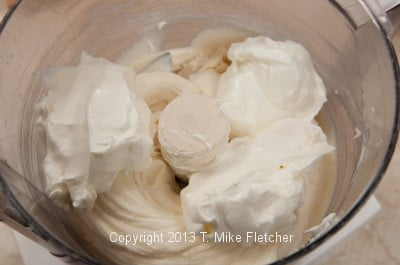
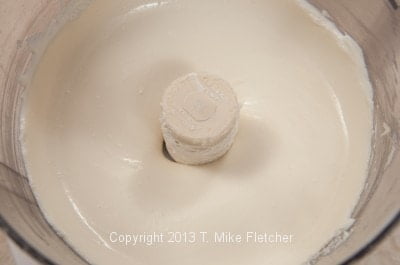
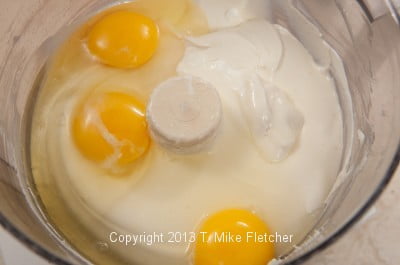
    Step 13. Wipe out the processor bowl. Add the softened cream cheese, granulated sugar and cornstarch to the processor bowl. Process to mix completely. Step 14. Add the eggs; process. Step 15. Add the sour cream, heavy cream and vanilla. Step 16. Process, scraping down as necessary, until completely mixed and creamy.

    Assembly

    This collages shows the assembly - the apples are added to the crust, the cheesecake filling is poured in and the apple crisp topping is added to the top.

    Step 17. Squeeze the water from the raisins and add stir them into the apples. Place them evenly over the crust. Step 18. Pour the cheesecake over the apples and smooth it out. Step19. Starting at the sides, add the crumbs over the cheesecake. Step 20. Fill in the center with the crumbs making sure they are evenly distributed. Bake as directed.

    Releasing the Cheesecake

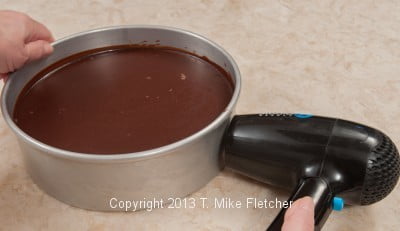
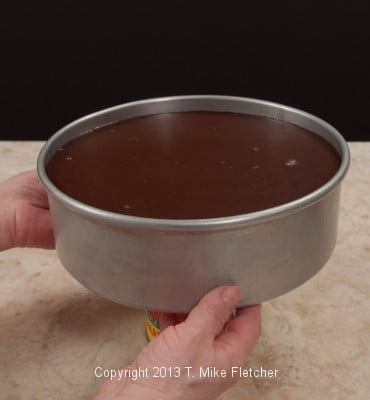
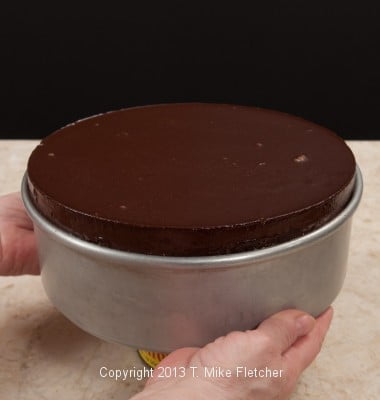
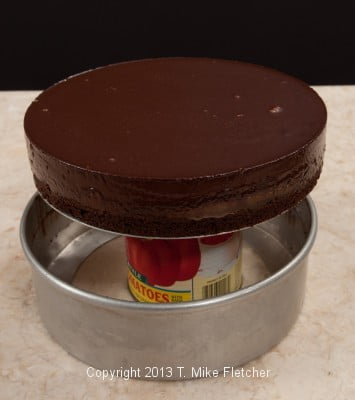
    The final collages shows the hair dryer next to the outside of the cheesecake pan, the cheesecake placed on a can, the bottom slid down and tow pancake turners under the crust to move it to a serving plate.

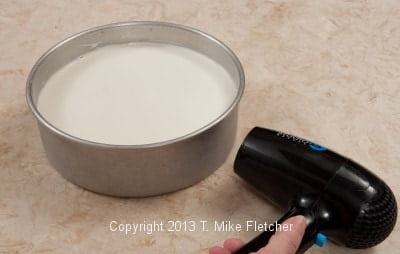
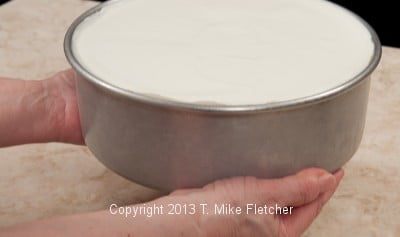
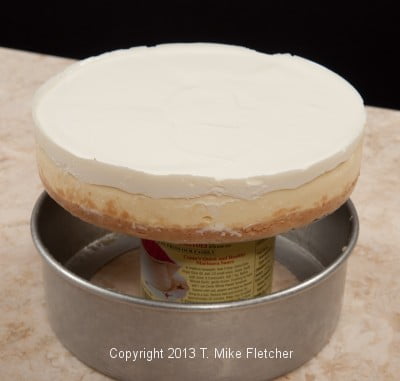
    Step 21. Place a hair dryer o n high about ¼" away from the side of the pan. Go around the pan slowly to heat the side. Step 22. Place the pan on top of a 28 ounce can. Step 23. Slide the side of the pan down. If it sticks, repeat heating. Step 24. Place the cheesecake on a work surface and place two pancake turners between the crust and the bottom plate of the pan. Go around the bottom to release it. Place one on each side of the cheesecake and lift it off onto a cardboard round or a serving plate. Refrigerate or freeze. Then wrap it well in foil.

    Recipe FAQ'S

    What's the difference between a crumble and a crisp topping?

    A crumble does not contain oats but can use nuts and is then referred to as a streusel but a crisp uses both oats and nuts. Why

    Why do cheesecakes often use water baths?

    The water baths provide a humid, stable, even heat so the cheesecake doesn't crack and the sides don't get overly baked before the center does.

    How do you make a water bath?

    Cheesecake pans and springform molds have removable sides so the pan has to be wrapped well in foil. After the pan is filled, place it in a larger pan, such as a roasting pan, and fill it with hot water half way up. If the cheesecake is baked at a low temperature, the water may need to be refilled. So check on it about ⅔ of the way through baking. There is a myth that opening the door will cause the cheesecake to crack. What causes the cheesecake to crack is running out of water to temper the heat.

    Storage and Freezing

    The cheesecake can be made several days ahead or frozen. If it is frozen, it will take a couple of days to thaw in the fridge.

    It is safest to leave it in the pan and then release it after it sits for a couple of hours at room temperature.

    In any case, if freezing, place it in the freezer and freeze it until hard. Wrap it securely in foil and return it to the freeze for up to 3 months.

    The cheesecake should be stored in the refrigerator but is best served cool but not cold.

    Expert Tips

    • This recipe must use a 9x3" deep pan with a removable bottom. It will rise to the 3" and cannot be turned upside down to release.
    • Use firm apples when baked as mentioned above so they don't turn mushy after baking.
    • Never line the bottom of the pan with parchment paper as it is next to impossible to remove. Just spray the pan with a non-stick baking release and it will come out easily.
    • During baking, the sides of the cheesecake may rise higher than the center, just press them flat immediately upon removing from the oven.
    • Bake about ⅔ of the way then tent the top loosely to prevent the crisp from over browning.
    • Be sure to squeeze all of the water from the raisins.
    • You will need 4 large apples to make up the 1 pound needed after peeling, coring and slicing.
    • Slice to apples thinly to make sure they bake well.
    • Old fashioned oats should be used.
    A slice of the Apple Crisp Cheesecake sits on a tan plate with a fork on the plate and a napkin in the background.

    In the Mood for More Cheesecakes

    • A slice of the Rocky Road Cheesecake sits on a white plate on a rattan server.
      Easy No Bake Rocky Road Cheesecake
    • Unbelievable Cheesecake
      Unbelievable Cheesecake Update!
    • Finished slice
      Sour Cream Cheesecake

    A lot of work goes into each of my recipes and my only ask is that if you like the recipe or even the looks of it, please leave me a star rating to help me rank better.  It’s important and I appreciate it and I appreciate you.  

    A slice of the Apple Crisp Cheesecake sits on a tan oplate with a fork on the plate and a napkin in the background.

    Apple Crisp Cheesecake

    Helen S. Fletcher
    Apple Crisp Cheesecake says fall to me in a way few other desserts do. You will love the way the oat, walnut, brown sugar and cinnamon crisp goes with the creamy cheesecake under it with the apple filling on top of the graham cracker crust.
    5 from 1 vote
    Print Recipe Pin Recipe
    Prep Time 1 hour hr
    Cook Time 1 hour hr 25 minutes mins
    Total Time 2 hours hrs 25 minutes mins
    Course Cheesecake
    Cuisine American
    Servings 12 servings
    Calories 606 kcal

    Equipment

    • 9x3 cheesecake or springform pan
    Prevent your screen from going dark

    Ingredients

    Apple Filling

    • ¼ cup raisins (30 grams)
    • 1 pound apples, cored and cut (454 grams) 4 large apples
    • ⅓ cup brown sugar (65 grams)
    • 2 tablespoons all-purpose flour (15 grams)
    • ½ teaspoon cinnamon
    • ¼ teaspoon nutmeg
    • 2 tablespoons white wine, optional

    Graham Cracker Crust

    • 1 ⅓ cups graham cracker crumbs (190 grams)
    • 6 tablespoons unsalted butter, melted (90 grams or ¾ stick)

    Apple Crisp Topping

    • ¾ cup old fashioned oats (60 grams)
    • ½ cup brown sugar (100 grams)
    • ½ cup walnuts (60 grams)
    • ½ teaspoon cinnamon
    • ⅓ cup flour (45 grams)
    • 6 tablespoons unsalted butter, cold (90 grams or ¾ stick)

    Cheesecake Layer

    • 1 ½ pounds cream cheese, room temperature (680 grams or 3- 8 ounce pkgs)
    • 1 cup granulated sugar (200 grams)
    • 2 tablespoons cornstarch
    • 3 large eggs
    • ¼ cup sour cream
    • 3 tablespoons heavy cream
    • 2 teaspoons vanila (Mccormick is fine)

    Instructions
     

    Apple Filling

    • Soak the raisins in boiling water while the rest of the ingredients are prepared.
    • Peel, core and thinly slice the apples. All of the 4th apple may not be needed. Pllce in a large bowl.
    • Combine the brown sugar, flour, cinnamon and nutmeg. Add to the apple mixture, stirring well.
    • Stir in the white wine if using. Set aside.

    Graham Cracker Crust

    • Spray the cheesecake pan with a non-stick baking release.
    • Break up the graham crackers between your hands and place them in the bowl of a food processor. Process to make crumbs. Remove to a bowl.
    • Melt the butter and pour over the crumbs. Toss with a fork to evenly coat the crumbs.
    • Pour into the prepared pan, even them out and press them firmly against the bottom of the pan. Set aside

    Apple Crisp Topping

    • Without cleaning the processor bowl, add the oats, brown sugar, walnuts, cinnamon and flour. Process briefly to mix well.
    • Cut the cold butter into 8 tablespoons, then cut those in half. Add to the processor. Pulse until fairly large crumbs form. Do not over process or a paste will form. Place in a bow and refrigerate while preparing the rest of te recipe.

    Cheesecake Layer

    • Wipe out the processor bowl. Place the cream cheese, granulated sugar and cornstarch in the bowl and process until smooth.
    • Add the eggs, processing until smooth, scraping down as necessary.
    • Add the sour cream, heavy cream and vanilla. Process until smooth, scraping down as necessary.

    Assembly

    • Preheat the oven to 400°F.
    • Squeeze all the water from the raisins. Stir into the apple mixture. Pour over the graham cracker crust.
    • Pour the cream cheese layer over the apples. Be sure to remove all of the cheesecake mixture as shown in the photos.
    • Smooth out the layer.
    • Starting at the edge of the pan, add the crisp topping over the cheese cake layer. Fill in the center with the remaining crisp.
    • Line a sheet pan with parchment paper. Place the cheesecake in the middle of the pan. Bake for 15 minutes.
    • Reduce the heat to 350°F. Continue baking for approximately 70 more minutes. Tent the top about ⅔ of the way through baking so the crisp doesn't get too brown.
    • The cheesecake will be done when it is barely wiggly in the center. Place on a cooling rack to cool. If the sides have raised up while baking, push them down with a large spoon to flatten them. This needs to be done as soon as it comes from the oven and before it sets up.
    • When cool, place in the fridge to set up.

    Releasing the Cheesecake

    • To release the cheesecake after it has set up, go around the outer edge slowly with a hair blower set on high. Center the cheesecake on a 28 ounce can and slide down the side.
    • Place two pancake turners between the crust and the bottom plate of the cheesecake pan. Slide them back and forth to make sure the bottom is free. Lift the cake onto a cake board or serving plate.
    • Store in the refrigerator for several days or freeze hard, wrap well in foil and hold in the freezer for up to 3 months. Thaw in the fridge for 2 days.
    • Serve cool but not cold.

    Notes

    There is always an abundance of photos to guide you in the post above.  If you have questions, look at the photos or read the header of the article.  Many of them will be answered there. 
    As always, I recommend using a scale for accuracy and consistency.  Flour, in particular, is difficult to measure by volume.  For my recipes, I use 140 grams per cup of unsifted  all-purpose, bread or whole wheat flour and 125 grams of cake flour. Others may use different weights so use whatever they suggest.
    Unless otherwise noted, salt refers to table salt.
    ­­­­­­­­­­­­­­­­Nutrition information provided is an estimate and will vary based on cooking methods and brands of ingredients used.
    _________________________________________________
    This recipe must use a 9x3" deep pan with a removable bottom. It will rise to the 3" and cannot be turned upside down to release.
    Use firm apples when baked as mentioned above so they don't turn mushy after baking.
    Never line the bottom of the pan with parchment paper as it is next to impossible to remove. Just spray the pan with a non-stick baking release and it will come out easily.
    During baking, the sides of the cheesecake may rise higher than the center, just press them flat immediately upon removing from the oven.
    Bake about ⅔ of the way then tent the top loosely to prevent the crisp from over browning.
    Be sure to squeeze all of the water from the raisins.
    You will need 4 large apples to make up the 1 pound needed after peeling, coring and slicing.
    Slice to apples thinly to make sure they bake well.
    Old fashioned oats should be used.
     

    Nutrition

    Serving: 12servingsCalories: 606kcalCarbohydrates: 59gProtein: 8gFat: 39gSaturated Fat: 21gPolyunsaturated Fat: 4gMonounsaturated Fat: 10gTrans Fat: 0.5gCholesterol: 141mgSodium: 268mgPotassium: 255mgFiber: 3gSugar: 40gVitamin A: 1286IUVitamin C: 2mgCalcium: 106mgIron: 2mg
    Tried this recipe?Mention @helensfletcher or tag #pastrieslikeapro!

    Cake Talk

    Modified: Jul 30, 2025 · Published: Oct 21, 2013 by Helen S Fletcher · This post may contain affiliate links · 2 Comments

    Epresso Fudge Cake
    Epresso Fudge Cake

    While the most important aspect of any cake is the taste and texture, there are other important features regarding cakes.  So we are going to address some of them.

    Preparing the Cake Pans - Cake Pan Prep for Flat Layers

    Splitting cake layers – As anyone knows who as been reading this blog, I like to bake the exact number of cake layers I need as opposed to splitting them.  However, I realize that not everyone has as many cake pans as I do.  There are many ways suggested to split cake layers.  Toothpicks marking where the cake should be sliced as well as an adjustable cake slicer are a couple.  However, one thing is not usually mentioned.  If the layers are partially frozen, they are easier to slice cleanly.  This is especially true of sponge and chiffon layers which are light and delicate.    A long, sharp, serrated knife can be a big help as it can go from one side of the cake to the other.

    Filling cake layers to avoid trimming them – This is a method we used at the bakery for a lot of our cakes, especially if they had wiggly fillings, like ganache, pastry cream, lemon curd, etc.  You will need a deep cake pan the same size as the layers.  In other words, we used 9x3 inch cheesecake pans to assemble 9 inch cakes.  Our pans had removable bottoms but that is not strictly necessary.  Place a cake layer in the pan,

    [Read more...]

    Sprinkles, Jimmies, Decoratifs or Vermicelli

    Modified: Jul 25, 2025 · Published: Oct 17, 2013 by Helen S Fletcher · This post may contain affiliate links · Leave a Comment

    Decoratifs

    Jimmies/DecoratifsSprinkles, Jimmies, Decoratifs or Vermicelli -  whatever you call them these little chocolate decorations can make or break a cupcake or cake!

    When I first started in business there was no internet and very little help for someone who was not a trained baker.  I had to learn everything on my own and very quickly.  One of the things that took me a while to find was the real chocolate sprinkles.

    Basically there are two different kinds of chocolate sprinkles.  The jimmies are made with cocoa and shortening,  can be dull and rather fat in comparison to those made with real chocolate. JimmiesThe Decoratifs by Guittard and Vermicelli by Cocoa Barry are made with real chocolate, are delicate and shiny.  They can add an elegant touch when it comes to finishing.  Looks-wise, they appear to be made by the same company and just packaged differently.Decoratifs [Read more...]

    Chocolate Spice Olive Oil Biscotti

    Modified: Jan 29, 2023 · Published: Oct 14, 2013 by Helen S Fletcher · This post may contain affiliate links · 10 Comments

    Three Chocolate Biscotti on a white tray with coffee in a cup.
    Three Chocolate Biscotti on a white tray with coffee in a cup.

    Chocolate Spice Olive Oil Biscotti cookies are an Italian specialty cookie that is a very exciting recipe for me.  I love the combination of chocolate and spice and chocolate and heat, which I combined here.  I first became acquainted with the spice combination from a cookie my mother made for Christmas, Honey Diamonds.  They contained no shortening and were soft and rolled in vanilla sugar.  I could easily eat the whole batch if allowed to. I have never forgotten the flavor, and it is comfort food of the highest order for me.  I used the same spices for these biscotti, plus a bit of cayenne for a marvelous warm finish.

    Biscotti are twice baked cookies and come to us from Italy.  They are not too sweet and are simply addictive.  To make things better, they are really easy to make. When we were shooting the photos for this blog, I looked at the number of ingredients in little bowls and almost panicked.  But then I realized you don't have to put them in all these little bowls, so it isn't nearly as bad as it looks!  The number of ingredients didn't bother me, just the number of bowls.  This stretched my tiny bowl collection to the max.
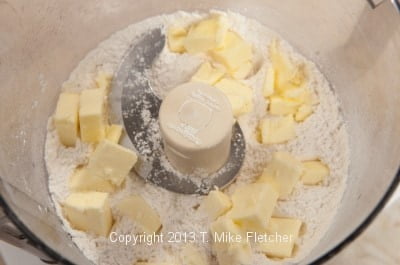
    As is my habit, the nuts for this recipe are toasted to bring out their flavor. If you use whole nuts, don't chop them too small.  Big pieces enhance the look of the biscotti as you can see in the photos.

    When I make chocolate products, I especially like to have melted chocolate in them.  The chocolate adds a depth of flavor that cocoa alone cannot sustain.  Here, both chocolate and cocoa are used to maximize the chocolate experience.

    I finished these by dipping in a quick tempering chocolate or drizzling with white chocolate, although I prefer them totally plain.  Half dipping cookies can be problematic if you don't make a lot of the glaze - especially if they are long as are these biscotti.  Here, I found a way to easily half dip by putting the chocolate mixture in a small, narrow glass, making it possible to easily dip only half the cookie.  If your kitchen is warm, refrigerate the dipped or drizzled cookies for 15 to 20 minutes to set them.  They should be fine at room temperature after that.

    These cookies are fairly zippy due to the cayenne.  If you're a mild sort of person, add the smaller amount the first time.

    Double panning slows the heat of the oven to the bottom of high burn risk products and keeps them from burning.  Baked goods with chocolate, honey, and brown sugar benefit from being double panned.  If in doubt, double pan.  It will add a few minutes to the baking process but will enhance the end product immensely.

    Although I am not a large coffee drinker, nothing is more perfect with these than some form of coffee, be it plain, a latte, or a cappuccino.

    Apricot Pistachio Biscotti is the sister to these chocolate biscotti and are easy to make and easier to eat.

    Ingredients (1 of 1)

    Chocolate Spice Olive Oil Biscotti

    ½ cup hazelnuts (60 grams or 2 ounces)*
    ½ cup almonds (60 grams or 2 ounces)*
    5 ounces semi sweet chocolate, melted (140 grams)
    2 tablespoons water
    1 teaspoon instant coffee
    1 teaspoon vanilla
    3 cups flour (420 grams or 14 ounces)
    ½ cup cocoa (40 grams or 1 ½ ounces)
    1 ½ teaspoon baking powder
    2 teaspoons cinnamon ½ teaspoon cloves
    ½ teaspoon coarse ground black pepper
    ¼ teaspoon salt ¼ teaspoon nutmeg ⅛ to
    ¼ teaspoon cayenne pepper
    ½ cup extra virgin olive oil
    1 cup sugar (200 grams or 7 ounces)
    3 eggs

    *All almonds or all hazelnuts can be used if desired.

    Preheat oven to 350 degrees.

    Place nuts on a jelly roll pan or a ½ sheet pan and toast for 8 to 10 minutes until fragrant and browned.  Cool completely.  Chop coarsely.

    Reduce the oven to 325 degrees.  Line a half sheet pan with parchment.  Set aside.

    Flavorings mixed
    Dry Ingredients
    Dry Ingredients whisked
    Olive and sugar mixing
    Eggs in (1 of 1)
    Eggs beaten in
    Flavorings in
    Chocolate in
    Dry ingred. in
    Mixing w/o nuts
    Nuts in

    Melt chocolate in a microwave for about 2 minutes at ½ power or by placing it in the top of a double boiler.  Set aside to cool. Combine water, coffee and vanilla.  Set aside. Whisk together the flour, cocoa, baking powder, cinnamon, cloves, black pepper, salt, nutmeg and cayenne pepper. Set aside. Place oil and sugar in a mixer bowl and beat until completely combined.  Add eggs one at a time, beating well after each addition. Add water, coffee and vanilla. Add the chocolate, then the flour mixture. Add the nuts.  Although I didn’t need to, if the dough is a bit sticky for shaping, refrigerate 20 to 30 minutes to firm.

    Flattening logs
    Double panned
    Baked on tray
    Slicing baked
    Slicing
    Baked slices

    Divide the dough in half (590 grams or 1 ⅓ pounds each).  Without flouring, if possible, roll each piece 14 inches long. Place in the parchment lined pan and flatten to 2 ½ inches wide. Double pan the biscotti. Bake for 25 to 30 minutes.  Cool for 10 to 15 minutes and then slice diagonally into ¾ inch slices. Bake again for 10 to 15 minutes. There is no need to double pan for this short time.

    Glaze ingredients

    Chocolate Dipped Biscotti

    12 ounces semisweet chocolate
    3 tablespoons crisco or other like shortening

    Dipping Biscotti
    Dipped biscotti 2 (1 of 1)

    Melt the chocolate and shortening together at half power in the microwave or in the top of a double boiler. Stir together completely. Pour into a narrow glass. Dip one half of the biscotti in the chocolate, wiping the bottom against the edge of the glass to scrape off most of the chocolate. Place on a parchment lined sheet and allow to set up.  If the room is warm, place the tray in the refrigerator for 15 to 20 minutes to set up.

    White Chocolate Drizzle

    2 to 3 ounces white chocolate (not coating chocolate)

    Drizzling with white chocolate

    Melt as above. Stir until smooth. Dip a spoon in the chocolate and, holding it above the biscotti, wave it back and forth. 

    Three Chocolate Biscotti on a white tray with coffee in a cup.

    Chocolate Spice Olive Oil Biscotti

    Helen S. Fletcher
    Biscotti are twice baked cookies and come to us from Italy.  They are not too sweet and are simply addictive.
    No ratings yet
    Print Recipe Pin Recipe
    Prep Time 20 minutes mins
    Cook Time 30 minutes mins
    Cooling Time 1 hour hr
    Total Time 1 hour hr 50 minutes mins
    Course Cookies, Dessert
    Cuisine American
    Servings 12 servings
    Calories 637 kcal
    Prevent your screen from going dark

    Ingredients

    Chocolate Spice Olive Oil Biscotti

    • ½ cup hazelnuts (60 grams or 2 ounces*)
    • ½ cup almonds (60 grams or 2 ounces*)
    • 5 ounces semi sweet chocolate, melted (140 grams)
    • 2 tablespoons water
    • 1 teaspoon instant coffee
    • 1 teaspoon vanilla
    • 3 cups flour (420 grams or 14 ounces)
    • ½ cup cocoa (40 grams or 1 ½ ounces)
    • 1 ½ teaspoon baking powder
    • 2 teaspoon cinnamon
    • ½ teaspoon cloves
    • ½ teaspoon coarse ground black pepper
    • ¼ teaspoon salt
    • ¼ teaspoon nutmeg
    • ¼ teaspoon cayenne pepper
    • ½ cup extra virgin olive oil
    • 1 cup sugar (200 grams or 7 ounces)
    • 3 eggs

    Chocolate Dipped Biscotti

    • 12 ounces semisweet chocolate
    • 3 tablespoon crisco or other like shortening

    White Chocolate Drizzle

    • 2-3 ounces white chocolate (not coating chocolate)

    Instructions
     

    Chocolate Spice Olive Oil Biscotti

    • *All almonds or all hazlnuts can be used if desired. Preheat oven to 350 degrees.
    • Place nuts on a jelly roll pan or a ½ sheet pan and toast for 8 to 10 minutes until fragrant and browned. Cool completely. Chop coarsely.
    • Reduce oven to 325 degrees. Line a half sheet pan with parchment. Set aside.
    • Melt chocolate in a microwave for about 2 minutes at ½ power, or by placing in the top of a double boiler. Set aside to cool. Combine water, coffee and vanilla. Set aside. Whisk together the flour, cocoa, baking powder, cinnamon, cloves, black pepper, salt, nutmeg and cayenne pepper. Set aside.
    • Place oil and sugar in a mixer bowl and beat until completely combined. Add eggs one at a time, beating well after each addition. Add water, coffee and vanilla. Add the chocolate, then the flour mixture. Add the nuts. Although I didn’t need to, if the dough is a bit sticky for shaping, refrigerate 20 to 30 minutes to firm.
    • Divide dough in half (590 grams or 1 ⅓ pounds each). Without flouring if possible, roll each piece 14 inches long. Place in the parchment lined pan and flatten to 2 ½ inches wide. Double pan the biscotti. Bake for 25 to 30 minutes. Cool for 10 to 15 minutes and then slice diagonally into ¾ inch slices. Bake again for 10 to 15 minutes. There is no need to double pan for this short time.

    Chocolate Dipped Biscotti

    • Melt the chocolate and shortening together at half power in the microwave or in the top of a double boiler. Stir together completely. Pour into a narrow glass. Dip one half of the biscotti in the chocolate, wiping the bottom against the edge of the glass to scrape off most of the chocolate. Place on a parchment lined sheet and allow to set up.  If the room is warm, place the tray in the refrigerator for 15 to 20 minutes to set up.

    White Chocolate Drizzle

    • Melt as above. Stir until smooth. Dip a spoon in the chocolate and, holding it above the biscotti, wave it back and forth. 

    Nutrition

    Calories: 637kcalCarbohydrates: 69gProtein: 10gFat: 37gSaturated Fat: 13gPolyunsaturated Fat: 4gMonounsaturated Fat: 18gTrans Fat: 0.5gCholesterol: 44mgSodium: 128mgPotassium: 430mgFiber: 7gSugar: 35gVitamin A: 101IUVitamin C: 0.4mgCalcium: 106mgIron: 5mg
    Tried this recipe?Mention @helensfletcher or tag #pastrieslikeapro!

    Looking for fresh ideas to update your holiday baking? Check out my Updating Holiday Baking post.

    German Buttercream and American Buttercream

    Modified: Jul 25, 2025 · Published: Oct 10, 2013 by Helen S Fletcher · This post may contain affiliate links · 10 Comments

    Flower Cupcakes
    Flower Cupcakes
    Flower Cupcakes finished with American Buttercream

    The German buttercream is based on pastry cream, into which butter is beaten after it is cold. Truthfully, I have never made this, so it was interesting for me to learn something new.  For this recipe, we are going to use my pastry cream but change the amounts of several of the ingredients slightly.  Maybe it was because I used my pastry cream, which is firm, so it can accept whipped cream folded in and still hold up, but I found this to be really, really heavy.  

    Also, maybe because I am used to very light butter creams that are full of flavor, I found this to be a strange combination where I could still taste the pasty cream, but with a lot of butter in it.  Personally, I will stay with the Italian, Swiss, or French buttercreams.  I will say that when I started, I couldn't imagine it working, but it did. While interesting, it just isn't my favorite.

    The American buttercream is the simplest of all.  For me to call this a buttercream, it has to contain all butter.  It is basically butter, powdered sugar, and flavoring - sometimes a bit of milk and cream to smooth it out.  You just put everything in bowl and beat it until it is light and fluffy.  We never used this for wedding cakes, but we did use it for cupcakes, mainly because they had to sit at room temperature for a long time. I also used it for the cakes we sent to restaurants.   One of our most popular cakes, the Espresso Fudge Cake, uses a great Mocha buttercream, and the Spirited Marble Cake, which I posted recently, is a great example of American Buttercream.

    [Read more...]

    French Buttercream

    Modified: Jul 30, 2025 · Published: Oct 7, 2013 by Helen S Fletcher · This post may contain affiliate links · 6 Comments

    Brown and White Cake
    Brown and White Cake

    French buttercream is distinguished by the use of egg yolks as well as whites.  A sugar syrup is used, and it is flavored with vanilla or other flavors of your choice.  The combination of egg yolks and egg whites will whip into a foam that does not need to be stabilized, as do egg whites alone.

    This buttercream is the last of the European buttercreams based on an emulsion.  This is considered to be the most stable of all of them as it uses whole eggs and yolks, not a meringue, as do the Swiss and Italian.   Although this is not as light as the Swiss and Italian, it is by no means heavy.  We are talking degrees here.   I think this buttercream has a richer, deeper taste due to the added richness of the yolks.

    If you research this along with the other two, you will find varying amounts of the eggs, yolks, and whites (for the Swiss and Italian), along with varying amounts of sugar and butter. There doesn't seem to be a definitive recipe as long as the proportions are correct.  The French buttercream requires a hot sugar syrup, as does the Italian.  However, because whole eggs and yolks are being used, they do not need to be stabilized as do egg whites alone.  Just beating them will obtain the desired effect.

    [Read more...]

    Swiss and Italian Buttercreams

    Modified: Jul 30, 2025 · Published: Oct 3, 2013 by Helen S Fletcher · This post may contain affiliate links · 8 Comments

    Yellow Birthday Cake
    Yellow Birthday Cake

    Many years ago, when I realized that pastry was to be a major focus in my life, I was fortunate to have Andre Gotti, a French pastry chef, as my mentor. Although I had no training except watching my grandmother and mother make pastries that were unparalleled - even in France- Andre saw someone with a burning desire to learn.  

    My mother made croissants, Schaum Torte, and Dobos Torte, to name a few, long before many people in America heard of them.  I used to watch my mother and grandmother make phyllo from scratch and pull it out so thinly we could read a newspaper through it.  In fact, the only time my grandmother was ever cross with me was when I sat on the resting phyllo that was covered on a chair.  We had special tablecloths that covered a big round table (the corners would tear the pastry).  It was my job to sweep up the paper thin crumbs that fell to the floor while being pulled.  

    When I talk about this, I guess my interest in pastry is not such a mystery.  I should also share that my mother and grandmother were from the now defunct country of Yugoslavia.  What I remember most is how they would chatter away in their native tongue, while I watched and waited for the phyllo to tear, which never, ever did.

    [Read more...]

    All Manner of Buttercreams

    Modified: Jul 30, 2025 · Published: Sep 30, 2013 by Helen S Fletcher · This post may contain affiliate links · Leave a Comment

    Buttercream blog photo

    Buttercream blog photo
    Key ingredients for European butter creams

    Italian, Swiss and French buttercreams have long been the finish that defined upscale cakes and wedding cakes. The Italian and Swiss buttercreams get their name from the type of meringue on which they are mounted.  They have also been one of the most feared techniques in pastry making.  But I don't know why!  They mainly consist of eggs of some kind, sugar and butter.  Although they do require more steps than the traditional American powdered sugar based frosting, the result is a smooth emulsion that literally melts on your tongue.  In the next few blogs, we are going to look at, not only the Italian, Swiss and French buttercreams, but also one based on creme anglaise and the American frosting, while sometimes a buttercream and sometimes not. I reserve the word buttercream for finishes using actual butter, not margarine or a plastic shortening like crisco.  Those are frostings to me. [Read more...]

    Wine and Cheese Baguettes- A Favorite bread

    Modified: Jul 13, 2025 · Published: Sep 26, 2013 by Helen S Fletcher · This post may contain affiliate links · 7 Comments

    Finished Baguettes

    Finished BaguettesWine and Cheese Baguettes are one of my all-time favorite breads. This bread couldn't be easier to make with the help of a food processor.  However, alternate instructions are given for the mixer.

    While gorgeous to look at this bread actually tastes of the white wine and swiss cheese. It has an almost silken texture and between my husband and myself, we could easily polish off both loaves in one sitting.  Due to the cheese and wine, this bread is a slow riser so plan accordingly.  However, after the initial rise, the dough may be refrigerated and shaped and baked the following day if that is more convenient.

    This originally was posted in my other blog, www.theardentcook.com.

    For an indepth  article regarding yeast, please see Yeast As It Relates to Bread. [Read more...]

    27 Layer Tuile Torte

    Modified: Apr 23, 2026 · Published: Sep 19, 2013 by Helen S Fletcher · This post may contain affiliate links · 8 Comments

    Finished Whole, Cut
    Finished Whole, Cut

    A variation of this magnificently layered Tuile Torte appeared in my first book, "The New Pastry Cook".  It is actually easy to make, but it is time consuming. The fact that most of it can be done ahead makes it very possible.  Fourteen layers of tuile and 13 layers of mousse are a show stopper anyway you look at it.  There is another view of a slice of the torte in the slide show above on my banner.

    A series of tulle layers made on the bottom of an upside down 9" round cake pan is the time consuming part.  How fast it goes depends upon how many pans you have and how fast you can spread the batter.

    When I first went into business, there was one caterer who loved this so much, he served it at every upscale party they had.  When I had to make 20 of them, I pulled this from the list of available desserts.  I heard about it on the day I closed.  But 280 layers isn't fast, no matter how many pans you have or how fast you are.

    [Read more...]

    Fluid Ounce Conversion Charts

    Modified: Apr 20, 2026 · Published: Sep 16, 2013 by Helen S Fletcher · This post may contain affiliate links · 4 Comments

    Wet Measures

    These Fluid Ounce Conversion Charts reduce the need to try to figure out differing modes of fluid ounces.  Liquid ounces or fluid ounces do not weigh the same as dry ounces.  The fluid ounce conversion charts below give you the amounts of fluid ounces in a number of forms.  It is important to note these conversions and measurements are as used in America.  Those used in the UK are different.  There a pint is equal to 5 cups or 20 fluid ounces.  

    Wet MeasuresCups to Ounces to Pints and Quarts - Wet measures usually have a lip for pouring along with a recessed top measure to help avoid spilling.  They can come in glass, plastic or metal.  Using glass or plastic makes it easier to see the measurement.

    CUPS

    FLUID OUNCES

    PINTS/QUARTS

    1 cup 8 fluid ounces ½ pint
    2 cups 16 fluid ounces 1 pint
    3 cups 24 fluid ounces 1 ½ pints
    4 cups 32 fluid ounces 2 pints or 1 quart
    5 cups 40 fluid ounces 1 ¼ quarts
    6 cups 48 fluid ounces 1 ½ quarts
    7 cups 56 fluid ounces 1 ¾ quarts
    8 cups 64 fluid ounces 2 quarts or ½ gallon
    16 cups 128 fluid ounces 4 quarts or 1 gallon

    Measuring spoonsTABLESPOON TO FLUID OUNCE and METRIC CONVERSION

    Measuring spoons come in metal or plastic although I have seen them in ceramic also.  The normal four are ¼, ½, and 1 teaspoon along with 1 tablespoon.  Recently a pinch, ⅓ and ¾ teaspoons have become available.

    TABLESPOON

    CUP

    FLUID OUNCE

    METRIC

    1 tablespoon 3 teaspoons ½ fluid ounce 15 ml
    2 tablespoons ⅛ cup 1 f fluid ounce 30 ml
    3 tablespoons     ------- 1 ½ fluid oz. 45 ml
    4 tablespoons ¼ cup 2 fluid ounces 60 ml
    5 tablespoons ⅓ cup 2 ⅔ fl oz.+1 t 80 ml
    6 tablespoons ⅜ cup 3 fluid ounces 90 ml
    7 tablespoons      ------- 3 ½ fluid oz. 105 ml
    8 tablespoons ½ cup 4 fluid ounces 120 ml
    10 tablespoons ⅔ cup 5 ⅓ fl oz. +2 t 160 ml
    12 tablespoons ¾ cup 6 fluid ounces 180 ml
    14 tablespoons ⅞ cup 7 fluid ounces 210 ml
    16 tablespoons 1 cup 8 fluid ounces 240 ml
          ------- 2 cups 16 fluid ounces 475 ml
          ------- 4 cup/1 quart 32 fluid ounces .95 liter
          ------- 8 cups/1 gallon 64 fluid ounces 3.8 liters

    Peanut Butter Cookie Pops

    Modified: May 8, 2023 · Published: Sep 12, 2013 by Helen S Fletcher · This post may contain affiliate links · 4 Comments

    Finished Photo of Cookie Pops
    Finished Photo of Cookie Pops

    What could be more fun than a cookie pop - a peanut butter cookie on a stick?  How about a peanut butter cookie with a snicker’s bar inside on a stick?  

    When I first opened my retail shop, there was a construction crew in the area, and we absolutely couldn’t make these fast enough.  As soon as the bakery sent over a case, we had to order another.  From a children’s party, to a shower, to tailgating, these fun treats fit in anywhere with children and adults alike.

    The rounded sticks for the Snickers can be found at craft or hobby stores.  Popsicle sticks work also, but it is harder to seal the dough around the stick.  These cookies couldn’t be easier.  Fun size snickers, peanut butter cookie dough, a few sticks and you have it.

    To measure the flour, stir the flour in the container, then spoon it lightly into a dry measure until it is overflowing if not weighing.  Sweep off the excess with a spatula or the backside of a knife.  Do not tap the measure down to level it, as this will give you more flour than the recipe calls for.  Brown sugar is nothing more than white sugarcoated with molasses.  The more molasses, the darker the sugar.  Because of this, it is fluffier and has to be packed into the measuring cup to obtain the proper weight or measure.  It doesn't make any difference if you use light, medium or dark.  We used medium.  Room temperature butter is about 72 degrees.  Don’t let the butter get mushy soft or runny.

    [Read more...]

    Pan Size Conversions

    Modified: Jul 25, 2025 · Published: Sep 9, 2013 by Helen S Fletcher · This post may contain affiliate links · 18 Comments

    Pan Size Conversions
    Pan Size Conversions

    Pan size conversion is one of the most confusing elements of baking whether it is substituting square pans for round pans or for the same shape pans in smaller or larger size.

    The easiest way to convert the amount of batter is to use square inches so long as the depth of the pans are the same.

    You will notice that square pans of the same size cannot be substituted for round ones if you wish the layers to be the same depth.  When converting from round to square pans it takes approximately ⅓ more batter for the square ones.

    If you are going from a 2” to a 3” pan of the same shape, increase the amount by ⅓.

    When you are changing the size, the temperature of the oven remains the same but the time may need to be adjusted up or down depending upon the thickness of the layers.

    In my recipes, I give the weights of the finished batter as well as how much should go in each pan.  For instance, if a base layer weighs 750 grams or 26 ounces, it can easily be divided into different size layers.   This allows you to use a base recipe with different fillings requiring a different number of layers without recalculating each time, making pan size conversions very easy.  Using the 750 grams you could make:

    2 - 9” layers at 375 grams or 13 ounces each
    3 - 9” layers at 250 grams each or 9 ounces each
    4 - 9” layers at 185 grams each or 6 ½ ounces each

    CALCULATING SQUARE INCHES FOR SQUARE OR RECTANGULAR PANS:    For the square pan, multiply two sides of the pan.  For instance for an 8 inch square pan, multiply 8x8 = 64 square inches.  For a rectangle, simply take the measurements of the long side and the short side of a rectangular one and multiply  them, i.e. 9x13=117 square inches.

    8” = 64 square inches
    9” = 81 square inches
    10” =100 square inches
    12” =144 square inches
    14” = 195 square inches
    16” = 256 square inches
    18” = 325 square inches
    20” = 400 square inches
    9”x13” pan – 9x13” = 117 square inches
    Quarter sheet pan - 9x13" =117 square inches
    Jelly Roll Pan - 10x15" - 150 square inches
    Half sheet pan - 18x13" = 234 square inches
    Full sheet pan - 18x26" = 468 square inches

    From this you can see that you can substitute two 8” pans for the 9”x13” one as  2x64 = 128 square inches which is close enough.

    CALCULATING SQUARE INCHES FOR ROUND PANS is a little more complicated.

    The formula is:  Divide the diameter of the pan in half to obtain the radius.  The radius is simply ½ the size of the pan.  Multiply that number by itself and then multiply that number by pi which is 3.14.

    For instance, the radius of a 9” pan is 4.5 inches.

    4.5x4.5 = 20.25 inches.
    20.25x3.14 = 63.58 which would round off to 64 square inches.

    8” = 50 square inches
    9” = 64 square inches
    10” = 79 square inches
    12” = 114 square inches
    14” = 154 square inches
    16” = 201 square inches
    18” =  254 square inches
    20” = 314 square inches

    You can see from these measurements, that the batter for a 9" square pan would make one 10" round one.  The numbers will not be exact, but as long as they are close they will be fine.

    A SECOND WAY to determine pan size is to measure the amount in a pan by cups. I have never used this method as weights are more exact and so much easier.

    SaveSave

    Spirited Marble Cake

    Modified: Jul 30, 2025 · Published: Sep 5, 2013 by Helen S Fletcher · This post may contain affiliate links · 8 Comments

    This Spirited Chocolate cake with white and chocolate swirls of cake is finished with a light chocolate buttercream in an easy design.

    This Spirited Marble Cake is one of my favorite cakes that dates back to my boys childhood, some forty years ago.  I've updated the cake to eliminate the need to beat the egg whites separately and fold them in.  Marble cakes for some reason have gone by the wayside in recent years, but I love the way they look and the bite of chocolate and white cake together.

    This is considered to be two step cake and I love the ease of putting it together.  I remember the creme de cocoa being a rather racy ingredient at the time.

    I call this finish a porcupine finish and it as easy as can be to execute but gives the cake a unique look.  The only caveat concerns beating the frosting.  It's a simple American buttercream but doesn't have the grittiness of some of the powdered sugar based frostings.  Just be careful not to over-beat it.  If it is too aerated, it won't spread smoothly or pull out when you go to finish it.  You will know  as soon as you start to finish the cake.  Just put the unused portion back on the machine, add a bit of milk and beat it again on medium.  That should solve the problem.

    This cake does not call for undercoating as some do, especially if you freeze the layers before putting the cake together.  They are much easier to fill and finish.

    Cake ingred. (1 of 1)

    Spirited Marble Cake
    4 large egg whites (135 grams or 4 ¾ ounces)
    1 cup milk
    2 tablespoons vanilla
    3 cups cake flour (300 grams or 10 ½ ounces)
    1 ½ cups sugar (300 grams or 10 ½  ounces)
    1 tablespoon + 1 teaspoon baking powder
    ¼ teaspoon salt
    12 tablespoons unsalted butter, softened (170 grams or 6 ounces)
    3 ounces semisweet chocolate, melted (85 grams)
    ¼ cup crème de cocoa

    Pan lined

    Preheat oven to 350 degrees. Line 2 nine inch round cake pans with parchment. Spray center only of each parchment.  See Cake Pan Prep.

    Cake liquids in bowl

    In a bowl, lightly combine the egg whites, ¼ cup milk and vanilla.

    Cake flours in bowl
    Cake flours in mixer
    Flour, butter, milk in mixer bowl
    mixing ingred. on low
    Cake mixing 2
    2nd liquid in
    Batter fully mixed

    In a large mixing bowl combine the dry ingredients and mix on low speed for 30 seconds to blend.  Add the butter and remaining ¾ cup milk. Mix on low speed until the dry ingredients are moistened.  Increase to medium and beat for 1 ½ minutes.  Gradually add the egg mixture in thirds, beating about 30 seconds each time. 

    Batter weights 1110 grams or 38 ½ ounces.

    Chocolate in half of batter

    Divide the dough in half (555 grams or 19 ⅓ ounces).  Into one half of the batter whisk in the chocolate and crème de cocoa until combined.

    Plain half of batter

    Leave the second half plain.

    Plain batter in 1st layer
    1st chocolate layer down

    In each of the two pans, place 4 dollops of white batter in a north, south, east and west design in the pan.  Place 4 dollops of dark batter between the white ones and one dollop and one in the center.

    Second layer of chocolate

    Place a second layer of dollops on top of the first.  Place four chocolate dollops on top of the white dollops.

    Second layer of white on chocolate

    Place the remaining four dollops of plain batter on top of the chocolate dollops and one in the middle.

    Swirling 1
    Swirling 2
    Swirling 3
    Cake layer smoothed

    With a small spatula, carefully swirl the batter to mix them somewhat.Smooth the top carefully to maintain the differences. Repeat with the second layer.  Bake for 18 to 20 minutes until the center springs back.  Cool completely.

    Frosting ingredients

    Spirited Chocolate Buttercream

    2 sticks butter, softened (225 grams or 8 ounces)
    3 ounces semisweet chocolate, melted (85 grams)
    1 ½ tablespoons crème de cocoa
    2 teaspoon vanilla
    ½  teaspoon salt
    4 cups unsifted powdered sugar (500 grams or 17 ½ ounces)

    Frosting ingred in bowl (1 of 1)

    Place all in a mixing bowl and beat on low to combine.  Raise mixer to high and beat until light and airy.

    Frosting ingred. in bowl
    Frosting mixed
    Brushing crumbs from side of cake
    Frosting on first layer

    Place one layer of cake on a cake board or cake plate.  Brush all crumbs from the side of the layer.Place about 1cup of frosting in the middle of the layer.

    Frosting spread on 1st layer

    Spread to the edge of the layer.

    First layer frosted
    Cake layer with parchment
    Removing parchment
    Second layer on
    Frosting side of cake
    Frosting overhanging top edge
    Smoothing side frosting
    Smoothing top of cake

    Release the second layer, remove the parchment.  Brush crumbs off side.Using a cake board as an aid, place the second layer on top.  Frost the side of the cake,then the top with the frosting overhanging the top. With a flat spatula, smooth the side of the cake, allowing the frosting to extend above the top of the cake.  With an offset spatula, pull the frosting at the side edges into the middle, raising the spatula gradually as you approach the center.

    Smoothing top 2
    Smoothing top 3

    Scrape the excess frosting off the spatula.  Continue all the way around until the frosting on top is smooth.

    Smoothing top 4
    Smoothed top
    Cleaning the board
    Channeling bottom

    At this point, clean the bottom of the board.  If you are going to move the cake off the cake board, channel the bottom so the cake can be lifted without disturbing the finish.  With a flat spatula, simply remove the barest amount of frosting from the bottom where it touches the board.

    Peaking sides
    Sides peaked
    Top Peaked

    Place the flat side of the spatula on the frosting on the side of the cake. Pull the spatula straight out so the frosting peaks out.  Continue around the side and then do the same thing on the top.

    This cake can be stored at room temperature or frozen if desired.

    Yield:  9" cake - 12 to 16 servings

    Flour As Used in Baking

    Modified: Apr 20, 2026 · Published: Sep 2, 2013 by Helen S Fletcher · This post may contain affiliate links · 11 Comments

    Flour Photo

    Flour PhotoFlour is usually the key ingredient in baking and much of pastry.  It is important to use the right flour for the desired outcome.  While flour can be made from various edible grains, for the purposes of this discussion I am going to stick with four types of wheat flour; all purpose, cake , bread  and pastry flour.  While bread baking can employ myriad other flours, these four are the basis of cakes and pastry.

    What differentiates them is the protein count in each of them.  The higher the protein count, the stronger the flour.  You will see by the chart below, that bread flour is the strongest which makes it ideal for yeast breads that call for a strong flour to support the expansion provided by the yeast.  While bread can be made with all purpose flour, bread flour will almost always result in a higher rising, lighter loaf with a better texture.  On the other end of the spectrum is cake flour, which is very low in protein and has virtually none of the elasticity found in all purpose and bread flour.

    Protein Counts for Flour:  Most flour is unsifted as used in current recipes.  It is best to stir it in the container, then measure.  Better yet, weigh it.  See Measuring for Baking https://pastrieslikeapro.com/2013/08/weights-and-measurements-in-baking/

                                    Grams of                  Weight per          Weight per
    Type of flour      Protein per cup            Cup, sifted      Cup, unsifted
    Bread Flour             12 to 15        125 grams or 4 ⅓ oz.      140 grams or 5 oz.
    All purpose flour     10 to 12        125 grams or 4 ⅓ oz      140 grams or 5 oz.
    Pastry Flour             8  to 10         125 grams or 4 ⅓ oz      140 grams or 5 oz.
    Cake Flour               5 to 8            100 grams or 3 ½ oz      125 grams or 4  ⅓ oz.

    To Make Cake Flour:  Per one cup of all purpose flour, remove two tablespoons and replace with 2 tablespoons of cornstarch.  Mix well.  This will lower the gluten content and make a softer flour.

    To Make Pastry Flour:  Combine ⅔ cup all purpose flour and ⅓ cup cake flour to make 1 cup of pastry flour.

    To Make Self Rising Flour:  Sometimes a recipe calls for self rising flour.  I don’t stock it in my kitchen and I bake a lot.  The main reason is I can’t control the amount of baking powder and salt in it.  It can easily be made by combining 1 cup all purpose flour, 1 ½ teaspoon baking powder and ¼ teaspoon salt for 1 cup.  Whisk together completely and use the amount called for.

    All purpose flour is a mixture of hard and soft wheat and comes bleached and unbleached.  It is used for breads,  quick breads, cakes and cookies.  Because the kernel and bran are stripped from the wheat when milled, the U.S. government requires iron, and four B vitamins (thiamin, niacin, riboflavin and folic acid) to be added to the flour to equal or exceed those found in whole wheat flour that is milled without stripping the vitamins.

    Cake flour is milled from soft wheat and is always bleached.  It is very fine and silky in texture.  It is used for cakes and, in combination with all purpose flour, makes pastry flour.

    Pastry flour falls between all purpose and cake flours.  We don’t get much pastry flour in our area so we make our own. Mixing ⅔ all-purpose and ⅓ cake flour is a good substitute for pastry flour.   I use pastry flour for pie crusts and laminated doughs such as puff pastry.  

    Bread flour is made from hard wheat.  It is unbleached. It is use it for breads, yeasted doughs and some cookies to provide chewiness.

    Bleaching flour can occur naturally if the flour is aged long enough or the flour can be chemically bleached.  Although I use unbleached flours, there is a problem if I am going to leave pastry dough in the refrigerator for a couple of days before using it.  If using unbleached flour, the pastry dough becomes gray.  There is not a problem with the taste or performance, just an off-putting color.  Bleached flour doesn’t become gray.

    Pillsbury and Gold Medal are now made by the same company and the flours are virtually identical.  King Arthur flours are stronger which is why some people swear by the King Arthur Bread Flour.  Because it is stronger than other bread flours, it will support more expansion leading to higher loaves of bread.

    In the south, they have a flour, White Lilly, which is a soft flour that I am told, makes the best biscuits in the world.   However, you wouldn’t use it for bread.   It is difficult to find outside of the south.  I use cake flour or a combination of cake and all purpose for biscuits to lower the protein count which produces a lighter, better biscuit.

    SaveSave

    Other posts of interest are: Weighing Ingredients Using the Tare/Zero, Measuring for Baking and How to be a Better Baker.

    Creamy Pound Cake with Strawberry Lemon Sauce

    Modified: Jul 30, 2025 · Published: Aug 28, 2013 by Helen S Fletcher · This post may contain affiliate links · 10 Comments

    Finished photo

    Finished photoMany years ago a friend of mine gave me the recipe for this Creamy Pound Cake.  I remember thinking this couldn't possibly work - as bakers we have been trained to preheat the oven.  This started in a cold oven. But because she was such a good cook I decided to give it a try exactly as it was given to me.  Wow! was I wrong!  This is a fantastic, easy pound cake.  The only caveat is to make sure the butter is really soft or it won't blend together with the large amount of sugar.  I find it fascinating that is rises as it does without the benefit of any kind of leavening which is why it is important beat a lot of air into the butter/sugar.  It is a dense cake, as pound cakes are, but it has a moistness and flavor that is incomparable.  It literally lasts for days under a cake cover and freezes well.

    Everyone I know who has made this has sworn by it and like me, finds the recipe fascinating.  In fact, the reputation of this pound cake is so great,  I was asked by a local magazine for the recipe to use in their yearly cookbook.

    Every time I make this I think of my friend, now gone, and what a wonderful gift she gave me. [Read more...]

    Measuring for Baking

    Modified: Oct 13, 2025 · Published: Aug 26, 2013 by Helen S Fletcher · This post may contain affiliate links · 6 Comments

    Scale
    Scale

    When it comes to baking , weights and measurements are critical and scales are the key to accuracy.  In cooking, it is easier to correct mistakes than in baking.  Recently, a reader made my Angel Food cake and wrote to tell me it didn't rise as she expected.  Could I tell her what she might have done wrong, she asked.  My first guess was she incorrectly weighed the flour.  I suggested she use a scale if possible, she did on the next one and happily it came out perfectly for her.  This is the best case I can make for scales.  Anyone who knows me, knows this has been my mantra in baking for years - scales, scales, scales.

    grams on scale

    They are easy to obtain (even Walmart stocks them) and cost around $20.00 to $30.00 - a small investment for peace of mind when measuring ingredients.  Make sure the scale will weigh in either grams or ounces.

    Scale 2

    Mine goes up to 10 pounds but it should go up to at least 5 pounds.  When you get your scale home, test it for accuracy by weighing a pound of butter.  Take the butter out of its carton first, turn on the scale and weigh it.  It should be 16 ounces or 454 grams.  We tested all of our scales at the shop this way.

    [Read more...]

    Peach Pizza

    Modified: Aug 11, 2025 · Published: Aug 22, 2013 by Helen S Fletcher · This post may contain affiliate links · 2 Comments

    Slice on trivet

    What a fantastic dessert this eye-catching Peach Pizza is for a summer's dinner. Juicy peaches are abundant this time of year and coupled with a rich, buttery, French pâte brisée crust and tangy goat cheese filling, you are sure to be on the receiving end of kudos from happy diners.

    A slice of Peach Pizza sits on a white lattice tray on a black background.

    Peach Pizza can be served warm or room temperature.

    [feast_advanced_jump_to]

    Why You'll Love This Recipe

    • The flavor is out of this world wonderful.
    • Be sure to cut it in front of everyone so they can see how gorgeous it is.
    • It's perfect for a simple grilled or barbecued dinner or a more formal sit down affair.
    • Every component of this dessert can be made ahead and assembled later.
    • It has a few component parts but all of them are easy to make.
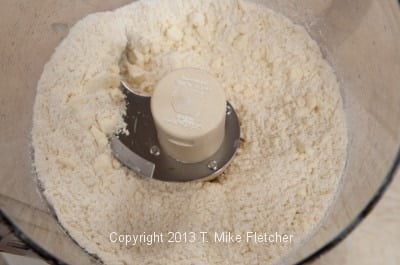
    • You'll look like a genius when serving this.

    Recipe Ingredients

    Amaretti Crumble

    The ingredients for the amaretti crumble are amaretti cookies, brown sugar, almonds butter and salt.

    COUNTERCLOCKWISE: Amaretti cookies, brown sugar, almonds, salt and butter

    Pâte Brisée Crust

    All-purpose flour, cake flour, salt, unsalted butter, egg, lemon juice and cold water make up the pâte brisée crust.

    COUNTERCLOCKWISE: Egg, cake flour, all-purpose flour, ice water, lemon juice, salt with unsalted butter in the middle.

    Poached Peaches

    The ingredients for the poached peaches include peaches, white wine, amaretto, sugar, honey, water and vanilla.

    COUNTERCLOCKWISE: Peaches, water, white wine, sugar, honey, vanilla and amaretto.

    Goat Cheese Filling

    Filling ingredients include, goat cheese, cream cheese, sugar, vanilla, and milk.

    BACK ROW: Goat Cheese, cream cheese

    FRONT ROW: Milk, sugar, vanilla

    • Use ripe peaches, but not overly ripe as they will turn to mush when poached.  Unfortunately, when you buy them they are not usually marked as such.  Cling free peaches simply have stones that don’t cling to the peach when you remove them.  Basically they look a lot nicer when stoned and cut.  All About Peaches has great information on this favorite fruit.
    • There is a goat cheese with honey that seems readily available that is perfect for this recipe. I also cut the goat cheese with a bit of cream cheese to reduce the astringency.
    • Amaretti cookies can be hard to find in grocery stores but I have great version of these Italian almond cookies that are very easy to make. One caveat - do not use home made almond paste for these. I have more information on this on my How to Make Almond Paste post.
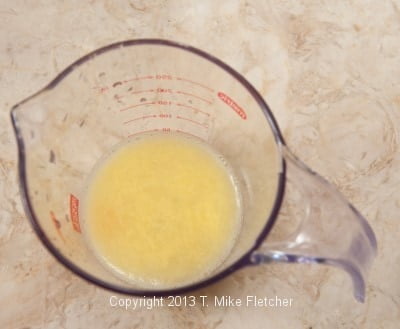
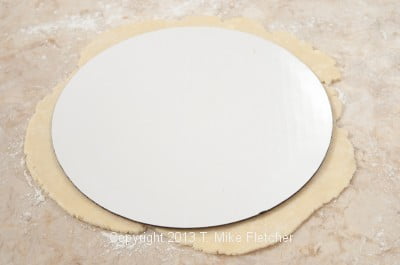
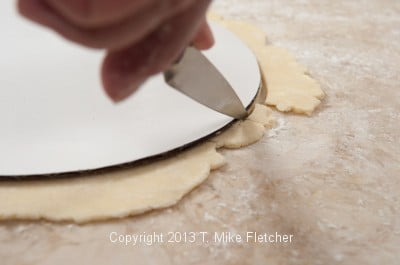
    • Tahitian Vanilla is my favorite for this recipe because of its floral flavor. However, any vanilla is fine.

    Be sure to see the recipe card below for the full ingredients list and Instructions.

    Step by Step Instructions

    Amaretti Crumble

    The amaretti cookies, almonds, brown sugar and salt are placed in the bowl of a processor.

    Step 1. Place all but the butter in the bowl of a processor.

    The dry ingredients for the amaretti crumbs are coarsely chopped.

    Step 2. Process to coarsely break up the dry ingredients.

    The butter is added to the processor for the crumble.

    Step 3. Add the butter to the crumbs in the processor.

    The butter is pulsed in to form crumbs.

    Step 4. The butter is pulsed in to form crumbs. Remove and refrigerate.

     Pâte Brisée Crust

    The flours and salt are processed briefly.

    Step 1. Place both flours and salt in the bowl of the processor. Pulse to mix.

    The butter is added to the processor with the dry ingredients.

    Step 2. Add the cold, cut butter to the processor.

    The butter is processed until it is the size of peas.

    Step 3. Pulse the butter in until it is the size of peas.

    The liquids are combined and poured over the ingredients in the processor.

    Step 4. Combine the liquids and pour them over the ingredients in the processor.

    The liquid ingredients are pulsed in until the ingredients clump together.

    Step 5 . Pulse the ingredients until they form clumps.

    The clumped up  dough is removed to a work surface.

    Step 6. Remove the clumped up dough to a work surface.

    The clumps of dough are pushed together and  shaped into a smooth flat round.

    Step 6. Shape the pastry into a smooth, flat round about 1" thick. Wrap in film and refrigerate for several hours or up to 3 days.

    The pastry has been rolled to a 14"circle and placed in the pan.

    Step 7. Roll the pastry to about a 14" round and place it in the pizza pan. Make sure the edges of the pastry are firmly intact with the pan and form a 90° angle at the edge.

    The crust is completed in the pan.

    Step 8. Trim off any excess pastry.

    The crust is pricked with a fork to prevent it from  bubbling up during baking.

    Step 9. The crust is pricked with a fork to prevent it from bubbling up when it bakes.

    A large sheet of foil lines the pastry crust and is filled with beans.

    Step 10. Spray a large piece of foil with a non-stick baking spray. Place it directly on top of the crust, making sure it fits into the edges. Fill with pie weights or beans.

    The crust is baked completely.

    Step 11. Bake the crust partially, remove the beans and foil and bake until golden brown and baked through. Set aside.

    Poached Peaches

    Blanched peaches are cut in half on a cutting board.

    Step 1. Blanch and peel the peaches then cut them in half.

    All of the poaching ingredients except the peaches are in a large sauce pan.

    Step 2. Place all of the poaching ingredients in a large sauce pan.

    The poaching syrup is brought to a rolling boil and the peaches are placed in it cut side down.

    Step 3. Bring the liquid to a rolling boil. Place the peaches, cut side down, reduce the heat and simmer for about 5 to 7 minutes.

    The peaches are turned cut side up in the liquid.

    Step 4. Turn the peaches cut side up and poach for another 5 to 7 minutes. Do not over cook them. They should have softened somewhat but retain their shape.

    The peaches have been removed from the syrup.

    Step 5. Remove the peaches from the syrup.

    The poaching syrup is brought to a hard boil to reduce it.

    Step 6. Bring the syrup to a hard boil to start reducing it.

    The syrup has been reduced to a thick jelly like mixture.

    Step 7. Reduce the syrup until it is a thick concentrate but still spreadable. Set aside.

    Assembly

    The ingredients for the goat cheese filling are in a bowl.

    Step 1. Stir all the ingredients for the goat cheese filling together.

    The goat cheese filling has been spread over the crust.

    Step 2. Spread the filling over the crust.

    The peaches are sliced and arranged over the filling.

    Step 3. Slice the peaches and arrange over the filling.

    The syrup has been drizzled over the peaches and the amaretti crumbs sprinkled on.

    Step 4. Drizzle the syrup over the peaches and sprinkle with the amaretti crumbs. Bake as directed.

    Recipe FAQs

    Can the liquor be omitted in the poaching syrup?

    Yes, but add a teaspoon of almond extract to make up for the flavor.

    What if I don't like goat cheese?

    Don't use it. Just add 5 more ounces of cream cheese.

    Is there a way to keep peaches from turning brown?

    Peaches, like apples and other fruits and vegetables oxidize when they are cut and hit the air. However, if you blanch, peel and cool them wrap them in plastic wrap tightly and refrigerated, they can be held for a day or so without turning brown.

    Expert Tips

    • When making the pâte brisée crust make sure the butter is cut and very cold so it doesn't become incorporated into the dough when processing.
    • The easiest way to peel the ripe peaches is to blanch them. The skins will slip right off.
    • Reducing the poaching liquid concentrates the flavors. If, after sitting, the concentrate is too thick to drizzle, add a bit of water at a time to get it to the correct consistency.
    • Each of the components can be made ahead so the pizza can be assembled several hours ahead of time. The pastry for the crust can be made up to 3 days ahead and held in the refrigerator or freeze for several months. Thaw in the refrigerator the day before using. Or it can be made, baked and then frozen on the pizza pan. The amaretti crumble, poached peach halves, the reduced sauce and goat cheese filling can be made up to 3 days before.
    Two slice of the peach pizza on a plate.

    More Summer Fruit Desserts

    • Slice of Blueberry Lemon Pizza
      Blueberry Lemon Pizza in a Brioche Crust
    • Sweet Cherry Calzone
      Sweet Cherry Calzones with Amaretti Crumble
    • finished-lemon-blueberry-cake.jpeg
      Lemon Blueberry Cake
    • Quick Hawaiian Sundae
      Easy Hawaiian Sundae

    Love this Peach Pizza or any other recipe on my website, please leave a 🌟 star rating in the recipe card and let me know how it went the in 📝 comments below. I appreciate each of you being here!

    Peach Pizza for Everything Peaches

    Peach Pizza

    Helen S. Fletcher
    This eye-catching Peach Pizza with its juicy peaches coupled with a rich, buttery, French pâte brisée crust and tangy goat cheese filling, is the perfect dessert for everything from a bbq to a sit down dinner.
    No ratings yet
    Print Recipe Pin Recipe
    Prep Time 30 minutes mins
    Cook Time 1 hour hr
    Cooling Time 2 hours hrs
    Total Time 3 hours hrs 30 minutes mins
    Course Dessert
    Cuisine American
    Servings 10 servings
    Calories 417 kcal

    Equipment

    • 12" pizza pan
    Prevent your screen from going dark

    Ingredients

    Amaretti Crumble

    • 6 to 7 amaretti cookies (25 grams)
    • 3 tablespoons toasted almonds (25 grams)
    • 3 tablespoons packed brown sugar (35 grams)
    • ⅛ teaspoon salt
    • 1 ½ tablespoons butter, cold, cut in small pieces (22 grams

    Pâte Brisée Crust

    • 1 ¼ cups all-purpose flour (175 grams)
    • ½ cup cake flour (50 grams)
    • 1 teaspoon salt
    • ¾ cup butter, cold, cut into small pieces (1 ½ sticks or 170 grams)
    • 2 tablespoons beaten egg
    • 1 teaspoon lemon juice
    • 5 tablespoons ice cold water, possibly a bit more

    Poached Peaches

    • 4 medium size peaches (about 1 pound)
    • 1 cup dry white wine (I use a chardonay)
    • 2 tablespoons Amaretto
    • 3 tablespoons sugar (35 grams)
    • 1 tablespoons honey
    • 1 teaspoon Tahitian vanilla or any other vanilla
    • ¼ cup water

    Goat Cheese Filling

    • 5 ounces goats cheese, room temperature (⅔ cup)
    • 2 ounces cream cheese, room temperature (¼ cup)
    • ¼ cup granulated sugar
    • 1 teaspoon Tahitian vanilla or any other vanilla
    • 2 teaspoons milk

    Instructions
     

    Amaretti Crumble

    • Make this first and just wipe out the processor to make the pate brisee crust.
    • Place all but the butter in the bowl of the food processor. Process to break up cookies and almonds. Add the butter in a circle and pulse to form crumbs. Do not over process or a paste will form.
    • Remove to a bowl and refrigerate while preparing the rest of the recipe. Wipe out the bowl and continue for the crust. The crumble will last a week in the refrigerator or months in the freezer.

    Pâte Brisée Crust

    • Place the flours and salt in the processor bowl. Process to mix. Arrange the butter in a circle on top of the flours and process until the butter is cut in the size of peas.
    • Mix the egg, lemon juice and water together. Pour over the flour mixture. Pulse the mixture until large clumps form. Do not let it ball up.
    • If it doesn't clump together, add a bit more water. If the flour is very dry, add additional water by the teaspoon.
      Pour out onto a work surface. Push together to form a ball. Lightly flour the surface and knead the dough together a few times until it is smooth. Do not over knead.
    • Flatten to a 1" round. Wrap in plastic wrap and chill for 60 to 90 minutes in the refrigerator or about 30 minutes in the freezer. This may be made the day ahead and refrigerated or up to a month ahead and frozen. Thaw in the refrigerator overnight to use.

    Poached Peaches

    • Bring a large pot of water to a boil. Add the peaches and blanch them for 4 to 5 minutes until the skins easily slip off as in the photo of the ingredients.
    • As soon as they come from the hot water, run cold water over them and slip the skins off. Cut them in half to remove the seed and set the peaches aside. Place the remaining ingredients in a medium size saucepan and bring to a boil.
    • Add the peaches, cut side down, reduce the heat and simmer for about 5 to 7 minutes. Turn them over and poach for another 5 to 7 minutes. They should have softened somewhat but still retain their shape. Cool.
    • Slice about ⅓ inch thick. Bring the syrup to a rolling boil and reduce to a syrup. Set aside.

    Goat Cheese Filling

    • Place all in a bowl and mix together with a spoon or whisk. Set aside.

    Assembly

    • Spray a 12 inch pizza pan and set aside. Preheat the oven to 400°F.
    • Roll the pastry to about 13". Place in the pizza pan.
    • Make sure it is pushed into the side of the pan. Cut off the excess. Prick with a fork and freeze for about 10 to 15 minutes. Spray a large piece of foil and place it, sprayed side down, directly on the pastry.
    • Fill to the top with pie weights or beans to weight down the crust as it bakes. Bake for 20 minutes, remove the foil and beans by bringing up the 4 corners of the foil and bake another 8 to 10 minutes until golden brown and fully baked.
    • Cool to room temperature. Leave the oven on if baking immediately. Spread the goat cheese filling over the crust.
    • Arrange the peaches on top of the cheese. Drizzle with the reduced poaching syrup. (If the syrup is too thick, add water to obtain the right consistency.) Top with the amaretti crumble.
    • At this point you can refrigerate it for several hours or bake it immediately. If baking right away, bake for about 15 to 18 minutes just until everything is very warm. Cool and serve at room temperature. If baking from the refrigerator, add a few more minutes. Store any left overs in the refrigerator.

    Notes

    When making the pâte brisée crust make sure the butter is cut and very cold so it doesn't become incorporated into the dough when processing.
    The easiest way to peel the ripe peaches is to blanch them. The skins will slip right off. 
    Reducing the poaching liquid concentrates the flavors. If, after sitting, the concentrate is too thick to drizzle, add a bit of water at a time to get it to the correct consistency.
    Each of the components can be made ahead so the pizza can be assembled several hours ahead of time.
    The pastry for the crust can be made up to 3 days ahead and held in the refrigerator or freeze for several months. Thaw in the refrigerator the day before using. Or it can be made, baked and then frozen on the pizza pan.
    The amaretti crumble, poached peach halves, the reduced sauce and goat cheese filling can be made up to 3 days before.
    Assemble several hours ahead and refrigerate.  Heat up until warmed through.  Serve warm or at room temperature.
    Store Leftovers in the refrigerator.
     

    Nutrition

    Serving: 10servingsCalories: 417kcalCarbohydrates: 41gProtein: 7gFat: 23gSaturated Fat: 13gPolyunsaturated Fat: 1gMonounsaturated Fat: 6gTrans Fat: 1gCholesterol: 64mgSodium: 478mgPotassium: 165mgFiber: 2gSugar: 23gVitamin A: 914IUVitamin C: 3mgCalcium: 53mgIron: 2mg
    Tried this recipe?Mention @helensfletcher or tag #pastrieslikeapro!

    SaveSave

    • « Previous Page
    • 1
    • …
    • 11
    • 12
    • 13
    • 14
    • Next Page »

    Hi, I'm Helen! Being a self-taught baker and owning a bakery for over 25 years, I found many ways to make baking more successful and less intimidating. Even busy people can bake as in many cases, recipes can be done over days. The goal is to make your baking life easier, more enjoyable, with great outcomes on a consistent basis.

    More about me →

    Subscribe to receive our free ebook

    SUBSCRIBE

    Spring Baking

    • Slices of the Strawberry Cake sit on a marble plate with fresh strawberries.
      Strawberry Cake - A Little Slice of Heaven
    • Irish Apple Cake dusted with powdered sugar on a white and green tray
      Irish Apple Cake
    • Blueberry poke cake is a 9x13" cake that has holes poked in it and filled with a blueberry compote. It is finished with whipped cream and blueberry filling
      Blueberry Lemon Poke Cake
    • An Individual Italian Tiramisu sits on a cream colored plate and dark beige and silver trim with a cup of tea and a plater of tiramisu in the background,
      Individual Italian Tiramisu
    • A whole coffee cake muffin sits on a wite plate with a colored mug on the plate and more muffins in the background.
      Coffee Cake Muffins (Bakery-Style & Moist)
    • Chocolate Strawberry Mousse Torte on a golden plate.
      Chocolate Strawberry Mousse Torte

    Popular Recipes

    • This Mini Pineapple Upside Down Cake features a pineapple slice with a cherry in the middle on top of a yellow cake sitting on a blue and white plate.
      Mini Pineapple Upside Down Cakes
    • A plate of Cuccidati, fig and nut filled Italian Cookies sprinkled with multi-colored nonpariels.
      Cuccidati - Italy's Finest Cookie
    • This picture shows a slice of the coffee cake on a white, lace edged plate on a marble counter.
      Apricot Crumb Coffee Cake
    • Langue de Chat cookies in a bowl.
      Langue de Chat
    • Angel food Cake
      Perfectly Easy Angel Food Cake
    • Large nut pieces for Chopping Nuts
      Chopping Nuts - A Quicker Way

    Available Now

    Available on Amazon, Barnes & Noble, Apple Books, as well as other sites and in book stores.
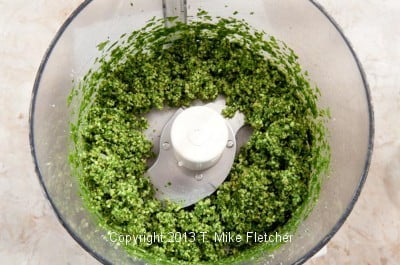
    AUTOGRAPHED COPIES ARE AVAILABLE
    Click here to purchase an autographed copy.
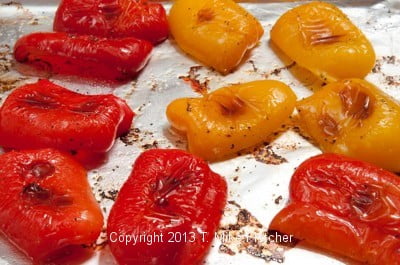
    Footer

    ↑ back to top

    About

    • About Helen
    • Privacy Policy

    Newsletter

    • Sign Up! for emails and updates

    Contact

    • Contact
    • Press
    • Facebook
    • Pinterest
    • Instagram
    • Threads
    • Bluesky

    COPYRIGHT © 2026 PASTRIES LIKE A PRO

    Rate This Recipe

    Your vote:


    A rating is required
    A name is required
    An email is required