Pastries Like a Pro

  • Home
  • Recipes
  • About Helen
  • Mother's Day
  • Subscribe
  • Contact
menu icon
go to homepage
  • Home
  • Recipes
  • About Helen
  • Mother's Day
  • Subscribe
  • Contact
    • Facebook
    • Instagram
    • LinkedIn
    • Pinterest
    • Twitter
  • subscribe
    search icon
    Homepage link
    • Home
    • Recipes
    • About Helen
    • Mother's Day
    • Subscribe
    • Contact
    • Facebook
    • Instagram
    • LinkedIn
    • Pinterest
    • Twitter
  • ×
    Home

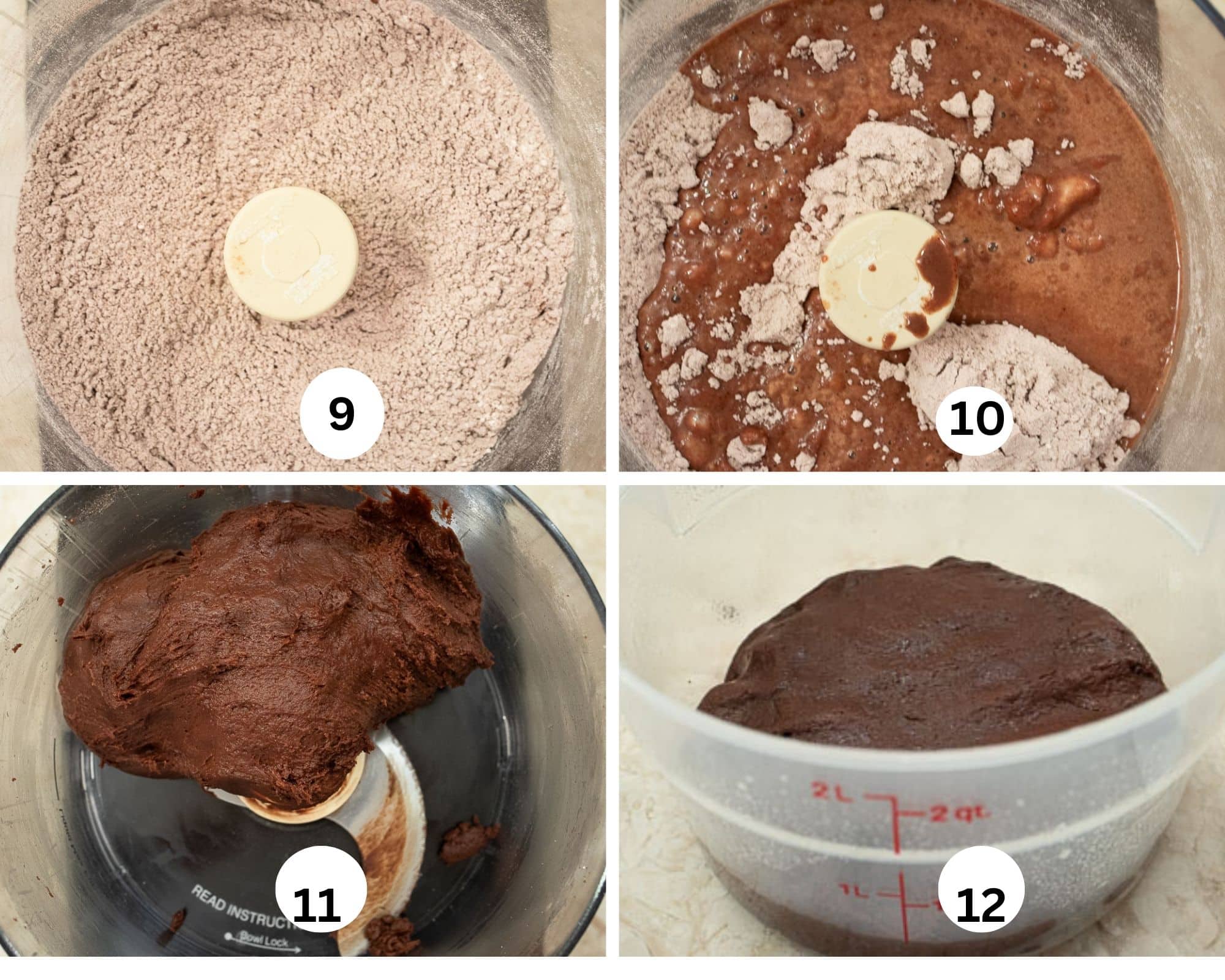
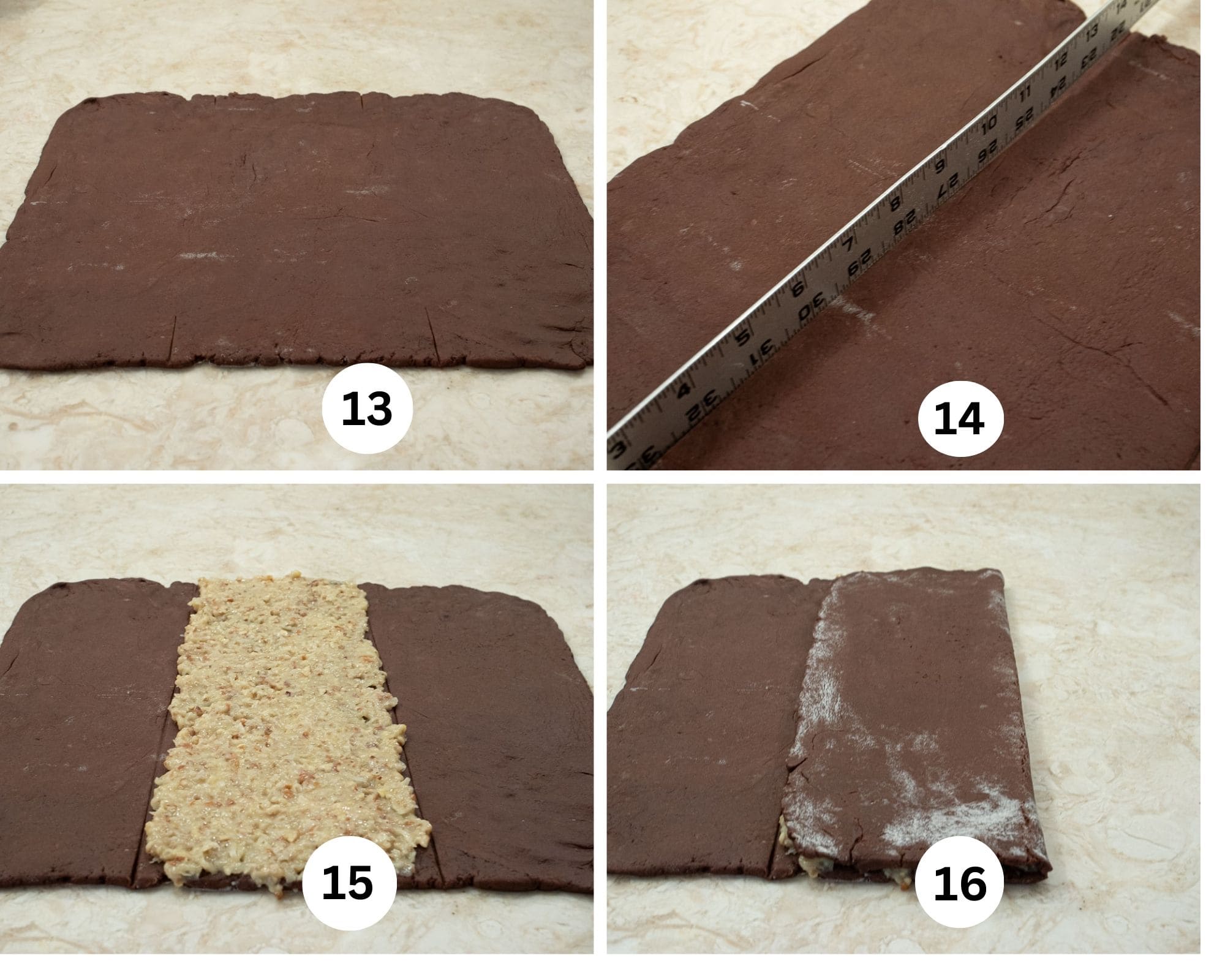
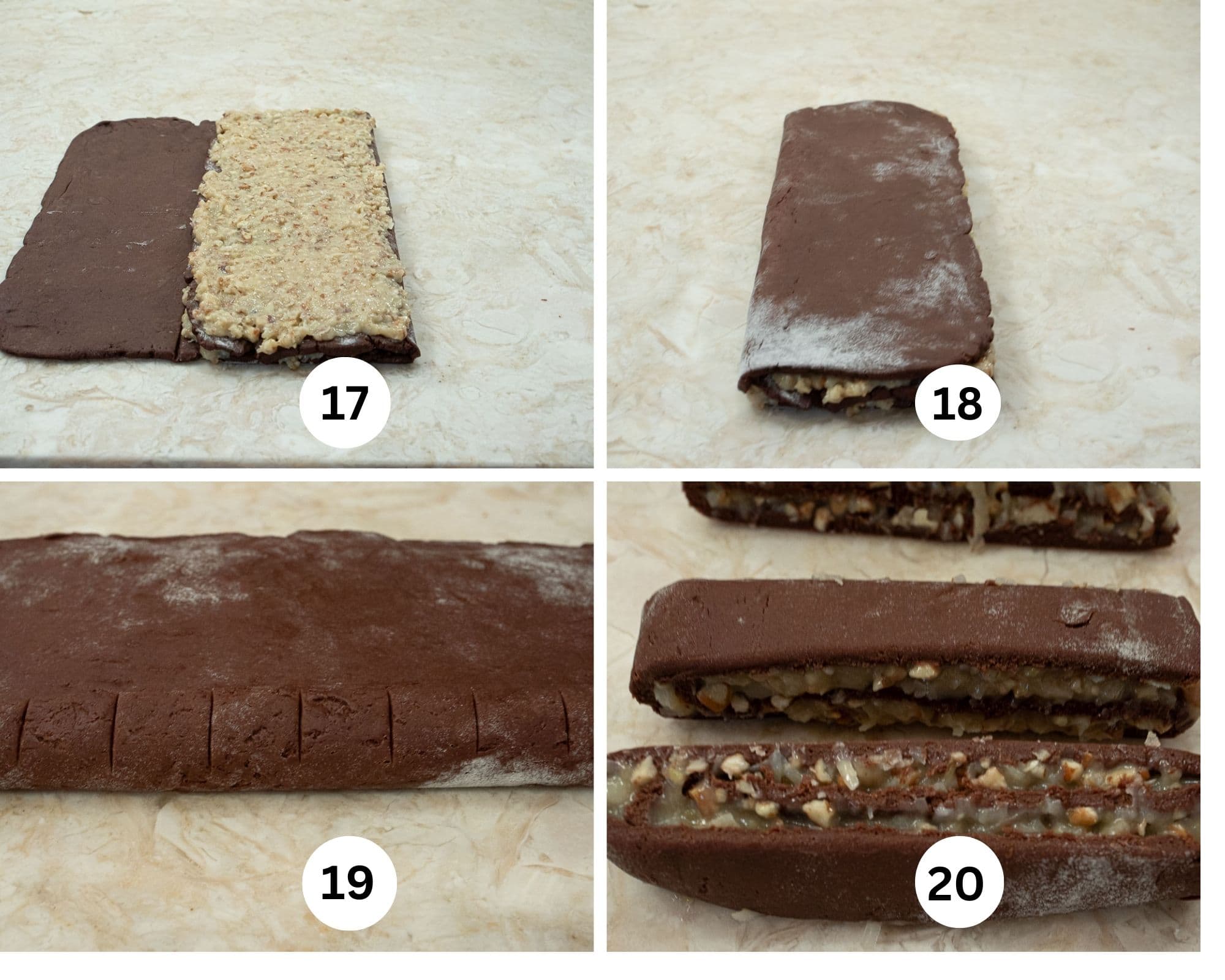
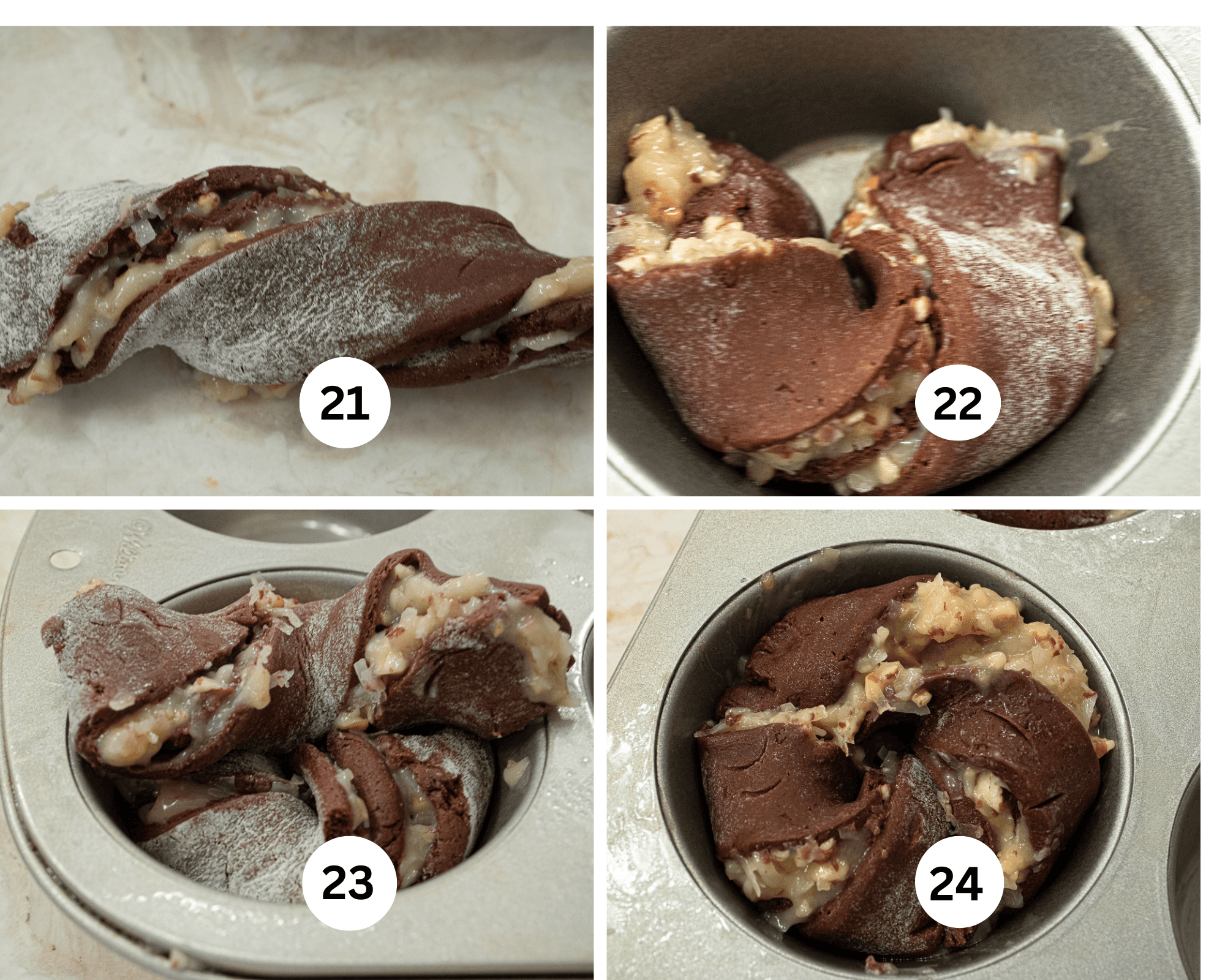
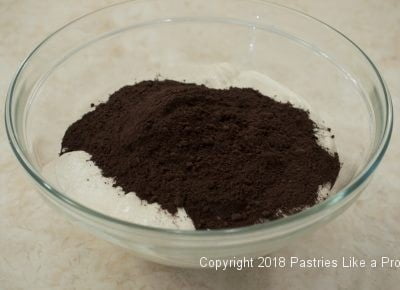
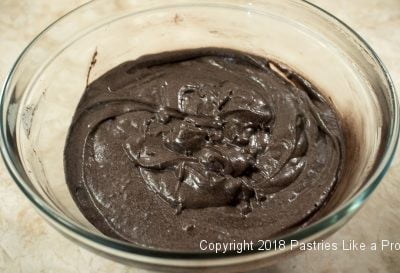
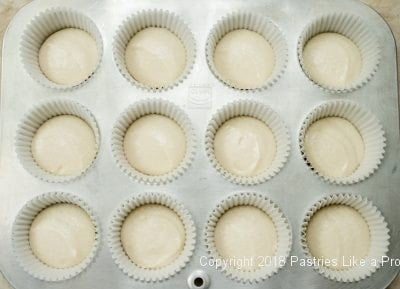
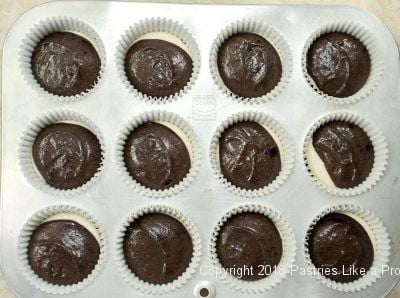
    Almost Oreos with Black Onyx Cocoa

    Modified: Dec 1, 2025 · Published: Oct 10, 2018 by Helen S Fletcher · This post may contain affiliate links · 6 Comments

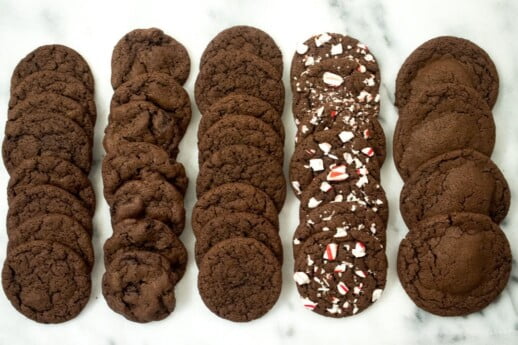
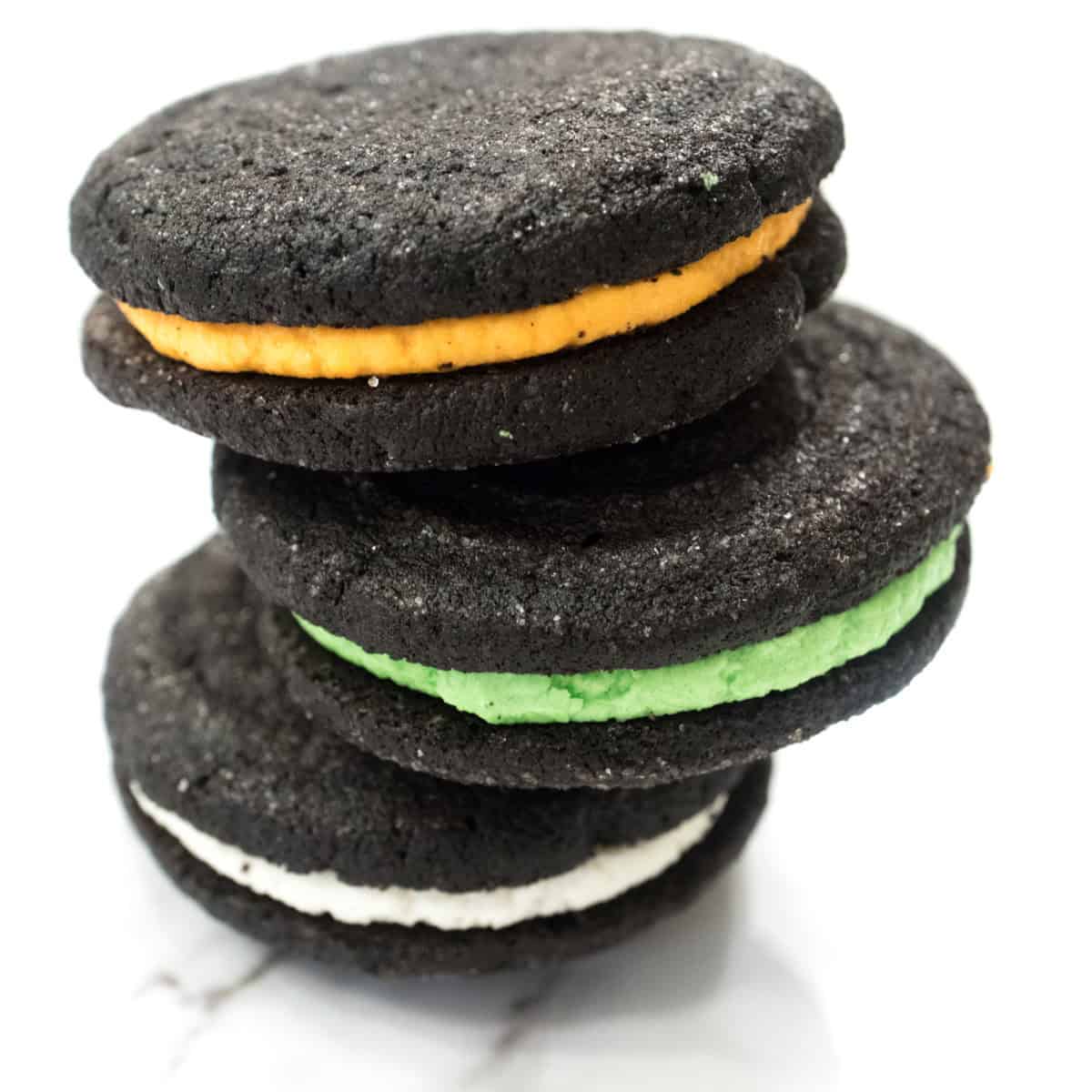
    I have been aware of Black Onyx Cocoa for a while, but my interest was peaked when I saw a recipe on King Arthur’s blog using it for Faux-Reos. The cookies were indeed as black as a moonless night far away from the city lights.  To say I was intrigued was an understatement.

    I went online and ordered a 1 pound container of Black Onyx Cocoa from Jellybean Foods.  There are several suppliers selling different amounts.  Black cocoa has been dutched to the extreme.  According to Savory Spice, “This cocoa powder has been alkalized to the extreme, producing a dark, purplish black cocoa that makes for an impressive black-as-coal baked good. This extreme alkalization neutralizes the natural bitterness, removing some of its chocolate flavor and a lot of its butterfat(10-12%).

    [Read more...]

    Traditional Apple Strudel

    Modified: Jul 24, 2025 · Published: Oct 2, 2018 by Helen S Fletcher · This post may contain affiliate links · 17 Comments

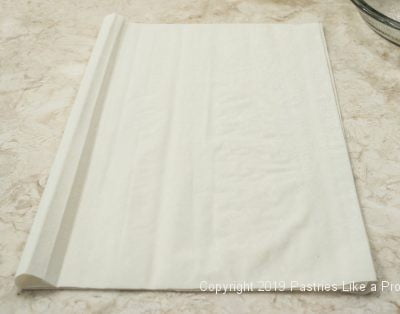
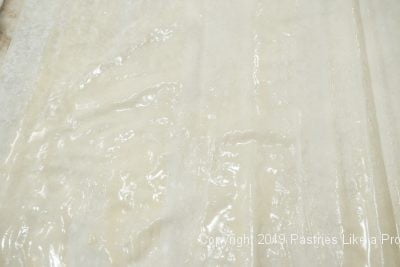
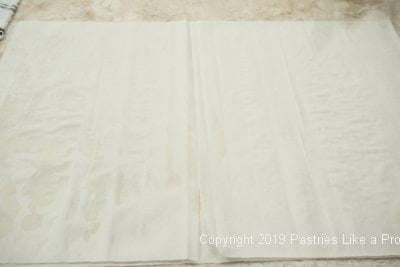
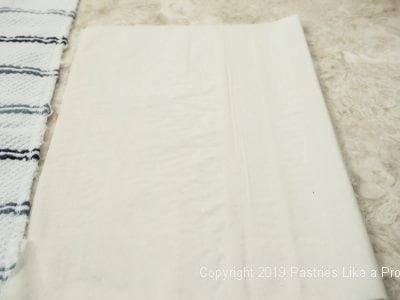
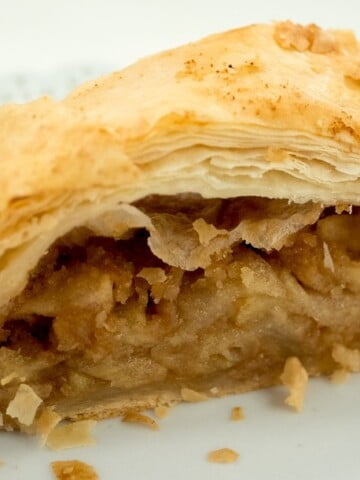
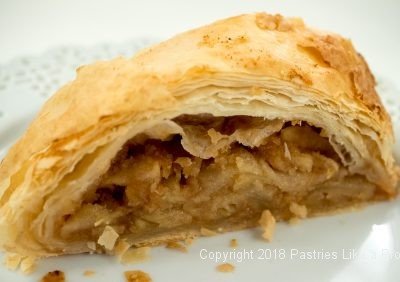
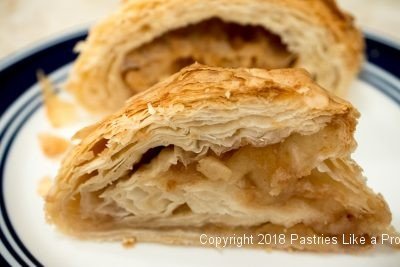
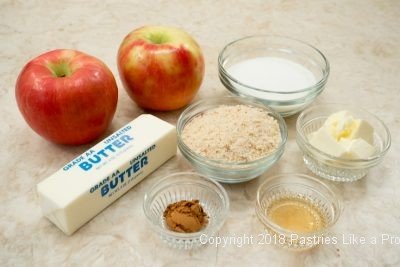
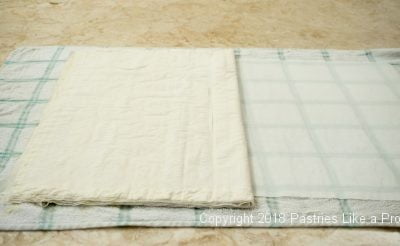
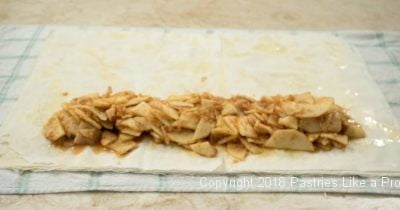
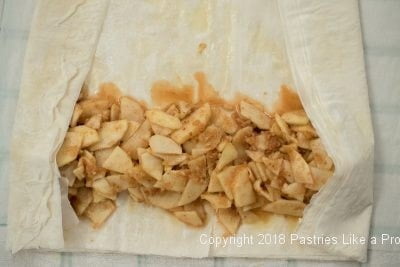
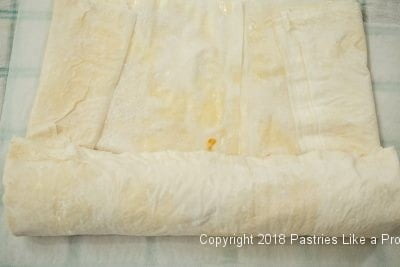
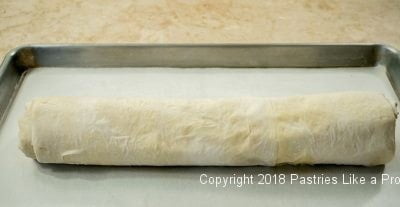
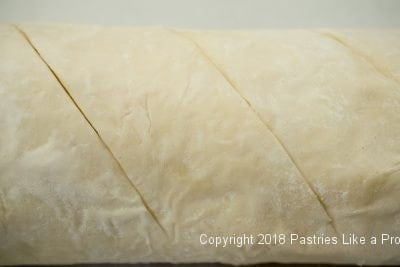
    Apple StrudelI grew up eating apple strudel.  My mother and grandmother, who came from Yugoslavia would make the strudel dough from scratch on Sundays’ and pull the dough out so thinly you could read a paper through it.

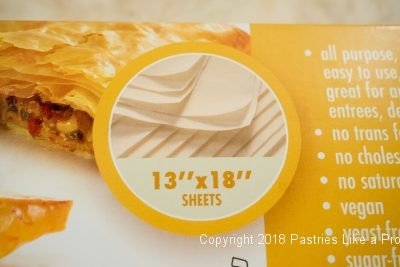
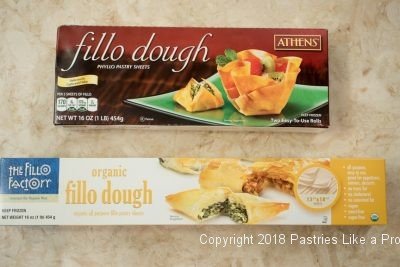
    There was a round table covered with fresh white tablecloths on which it was pulled.  My job was to sweep up the thin shards that would flake off as it was folded.  The large single sheet extending over the edges of the table was folded over and over on top of itself, filled and baked.  Fortunately, these days phyllo can be found frozen and I honestly cannot see any advantage to trying to make my own.

    Phyllo is the piecrust of Mediterranean and Middle East cuisine.  It can be used in sweet and savory dishes.  Many, many years ago when I first became interested in food writing, I wrote a book with every type of recipe imaginable using phyllo. Unfortunately, publishers were not much interested.  Phyllo is the correct spelling for this magical dough but it is also referred to as filo. [Read more...]

    Citrus Pound Cake

    Modified: Oct 11, 2025 · Published: Sep 20, 2018 by Helen S Fletcher · This post may contain affiliate links · 20 Comments

    Citrus Pound Cake

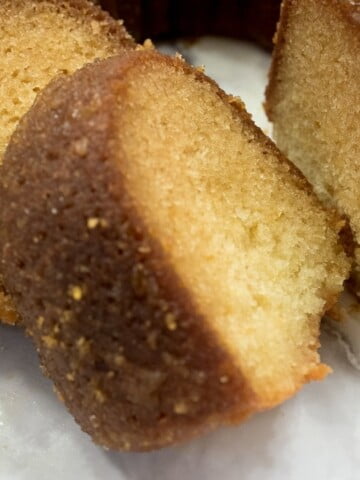
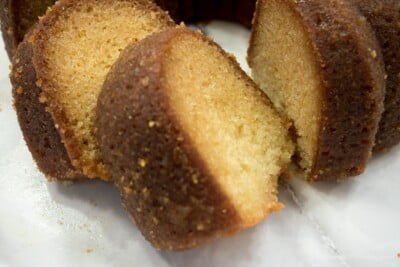
    Citrus Pound CakeThis Citrus Pound Cake is a simple sour cream cake enhanced with lots of orange and lemon zests.  It is straightforward, quick to make and yields a large, moist cake that is soaked two ways to ensure that the entire cake receives this benefit. It is soaked from the top and bottom.

    The cake is made in the original 10” bundt pan.  There is a good reason for this.  It is the only one I have! [Read more...]

    Brown Butter Tarts

    Modified: Jul 3, 2025 · Published: Sep 13, 2018 by Helen S Fletcher · This post may contain affiliate links · 15 Comments

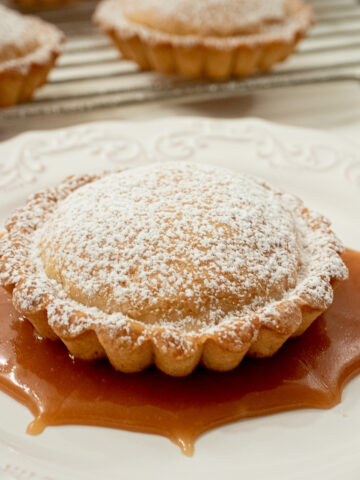
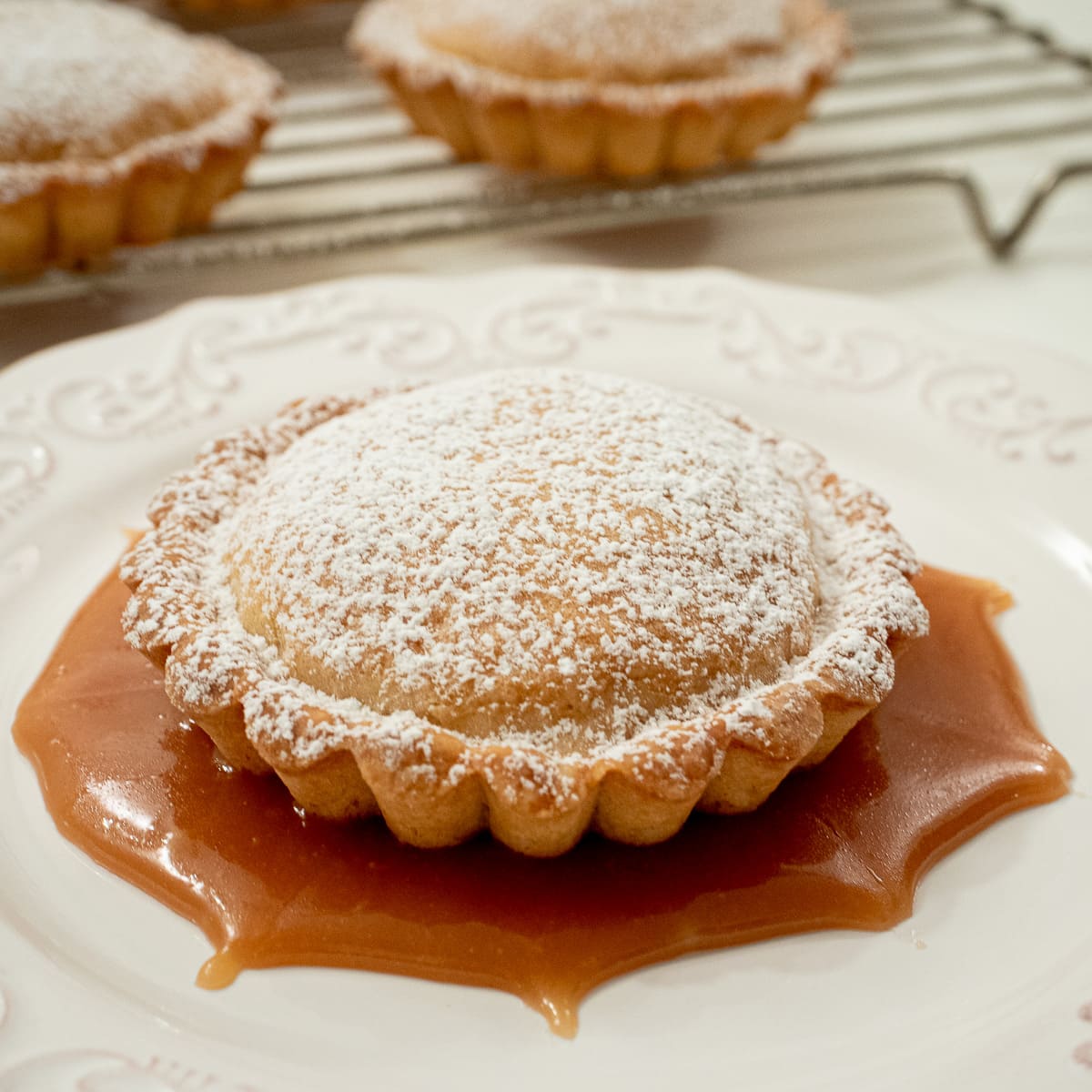
    These individual Brown Butter Tarts feature a butter crust filled with brickle bits and a browned butter filling. They are lightly dusted with powdered sugar and served with caramel sauce
    These individual Brown Butter Tarts feature a butter crust filled with brickle bits and a browned butter filling.  They are lightly dusted with powdered sugar and served with caramel sauce

    Brown Butter Tarts are the most sold desserts at the restaurant. They are not at all difficult but making as many as we sell, can be daunting.  I make these using 3 ¾  x  ½ inch tart shells with removable bottoms. However, at home, for my shells do not have the removable bottom and they work fine for these Brown Butter Tarts.

    This recipe features an updated version of the individual press in crusts that were used for the Banana Caramel Rum Tart.  It eliminates the need for two pieces of dough to make one shell lessening the possibility of the two pieces separating where they meet. The shells can be pressed in and frozen months ahead of time if well wrapped.  These tart shells require no rolling out.  They are simply pressed into the shell.

    Brown butter adds a depth of flavor that simply melting butter can’t.  There is a fine line between brown butter and burned butter.  When butter is browned, the milk solids in the butter are the browning element.  By heating the butter to the boiling point, lowering the heat and gently heating the milk solids the butter will become a nut colored brown.  Remove it immediately from the heat and pour it into another container to keep the butter from burning or pour it into the filling.

    Butter brickle is added to partially baked pastry shells, the filling is poured in and they are baked.

    Butter brickle which is the inside of the Heath Bars can be purchased at grocery stores in bags where it is already chopped up.

    At the restaurant, the Brown Butter Tarts are served with Salted Caramel Ice Cream.  I chose to serve these with the Salted Caramel Sauce from the best Apple Pie ala Mode you’ll find.  I have a pet peeve when it comes to sauced desserts in most restaurants.  The plates are drizzled with so little sauce it is hardly noticeable.  As you can see, I make a puddle of sauce and plunk the Brown Butter Tart in the middle so each bite has salted caramel with it.

    Press In Tart Shells – for how to photos go here.
    1 ¼ cups all purpose flour (170 grams or 6 ounces)
    ½ cup cake flour (60 grams or 2 ounces)
    ½ teaspoon baking powder
    ½ cup unsalted butter (114 grams, 4 ounces or 1 stick)*
    ¼ cup sugar (50 grams or 1 ¾ ounces)
    1 egg
    1 egg yolk

    *If making the dough in the processor, the butter needs to be cold and cut into small pieces before being added to the processor.

    If making the dough in the mixer, but butter needs to be softened so it can be creamed with the sugar.

    Preheat oven to 350°F.

    Food Processor Method (preferred):  Place the flours and baking powder in the food processor.

    Processor to mix briefly.  Place the cold butter in a circle over the flours.  Process until indistinguishable.  Add the sugar and process briefly.  Add the egg and yolk and process until a ball forms.  Divide the dough into 4 pieces, place back in the processor and process to bring it back to a ball.  This is done because the top of the dough hits the top of the processor cover and is not as well mixed.  Re-mixing ensures the dough is completely combined.

    Mixer Method:  Combine the flours and baking powder.  Set aside.  Cream the butter and sugar.  Add the egg, the yolk, and the vanilla. Beat to combine.  The mixture may curdle but that is fine.  Add the flour mixture and beat until it comes together.

    Place the tart pans on a rimmed baking sheet and spray the centers of the pans only.  Do not spray the sides.

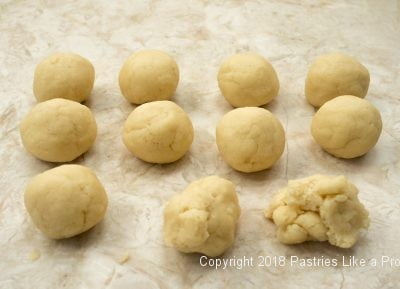
    If using the smaller tart pans, divide the dough into ten portions of 45 grams or 1 ½ ounce each.

    Dough balls for Browned Butter Tarts

    Roll into balls.If using the larger tart pans, divide the dough into six portions of 75 grams or 2 ⅔ ounces each.

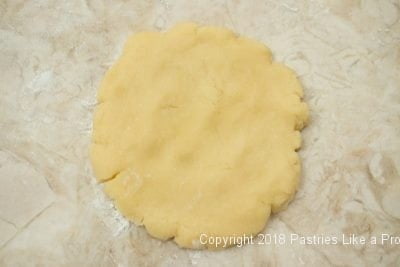
    Dough Flattened for Browned Butter Tarts
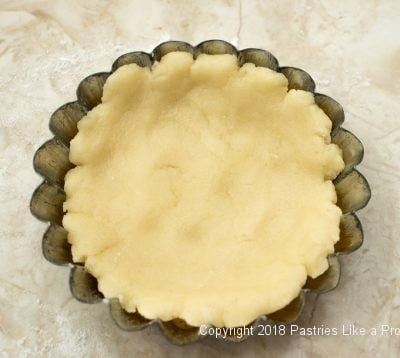
    Dough in tart pan for Browned Butter Tarts
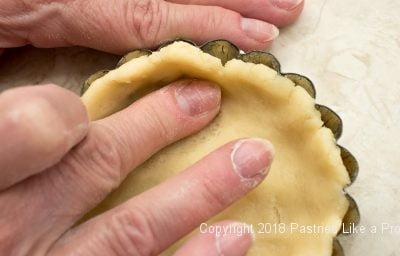
    Pushing dough into the edge of the pan for Browned Butter Tarts
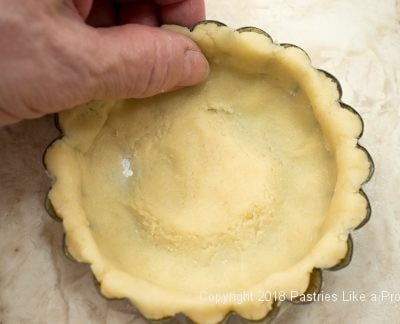
    Pressing dough into sides of pan for Browned Butter Tart
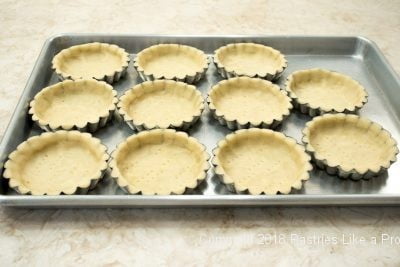
    Unbaked tray of tart shells for Browned Butter Tarts

    Lightly flour your work surface.    Flatten a small ball into a 4 inch round with the palm of your hand.  Place it evenly into the shell.  Press the dough up the sides of the shells.  Using your thumb, press the dough firmly into the sides.  Flatten the pastry on the bottom of the pan.  Prick with a fork.

    For the larger shell, flatten the large ball into an approximately 5 inch round.  Follow the instructions above.

    Repeat for the remaining tart pans.

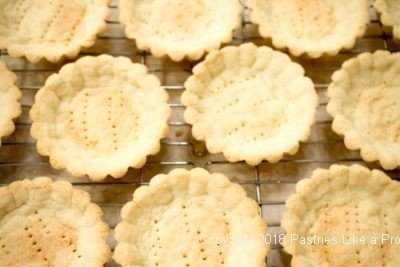
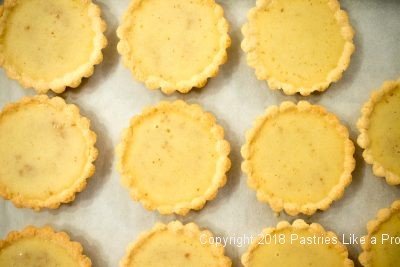
    Par baked shells for Brown Butter Tarts

    Freeze the tart shells for about 10 minutes.  Bake for 10 minutes, turn the pan and bake several more minutes until lightly browned.  The shells will be partially baked.

    Cool the shells until they can be easily handled.  Remove the shells from the pans and place them on a parchment lined rimmed baking pan.

    Leave the oven on.

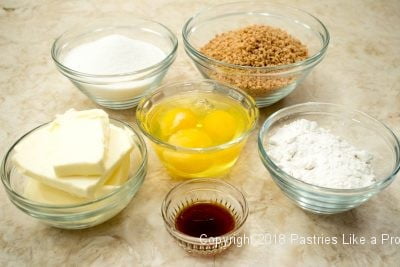
    Filling ingredients for Browned Butter Tarts

    Filling for Brown Butter TartsButter

    Brickle as needed
    6 tablespoons butter (90 grams or 3 ounces)
    ¼ cup flour (35 grams or about 1 ¼ ounces)
    ½ cup sugar (100 grams or 3 ½ ounces)
    1 egg
    1 egg yolk
    2 teaspoons vanilla
    Butter Brickle as needed

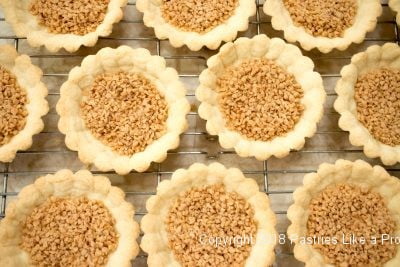
    Brickle in shells for Browned Butter Tarts

    For the small shells, place 1 rounded tablespoon brickle in the bottom of each pastry shell.  Set aside.

    For the large shells use 1 ½ rounded tablespoon brickle per shell.

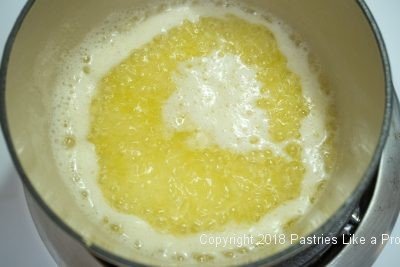
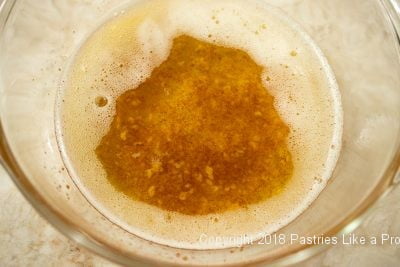
    Boiling butter for Browned Butter Tarts
    Browned butter for Browned Butter Tarts

    Brown the butter over medium heat until it comes to a boil. Reduce the heat and continue cooking until the butter browns to a medium brown on the bottom.

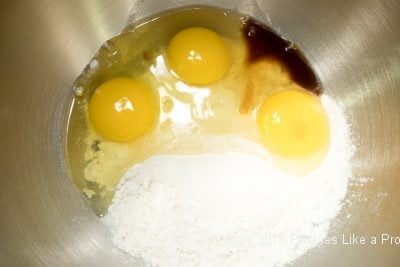
    Filling ingredients in a mixer bowl for Browned butter Tarts

    In the meantime, place the flour, sugar, egg, egg yolk and vanilla in the bowl of a mixer. Beat to combine all the ingredients.  Pour the hot, browned butter in and mix well.

    Filled shells for Brown Butter Tarts

    Fill the shells to the top.

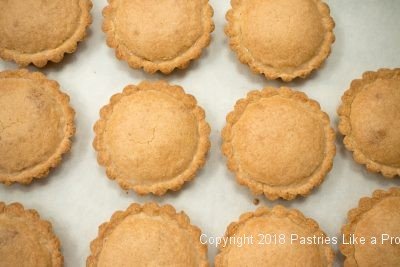
    Baked Brown Butter Tarts

    Bake for 15 to 20 minutes until the filling is a golden brown and set.

    The Brown Butter Tarts are best served slightly warm.

    Yield:  Larger tart shells maks 6 tarts.  Smaller tart shells make 9 to10 tarts.

    These tarts freeze extremely well so they can be made ahead.  Well wrapped they will last at least a month in the freezer. Thaw them on a rack.  Heat in a 350°F oven for about 5 minutes or until warmed through.  They should not be hot.

    Looking for another individual tart? The No Bake Chocolate Raspberry Tarts may be just the answer. Or how about the Individual Italian Tiramisu?

    SaveSave

    SaveSave

    SaveSave

    Kitchen Organization

    Modified: Apr 23, 2026 · Published: Sep 5, 2018 by Helen S Fletcher · This post may contain affiliate links · 6 Comments

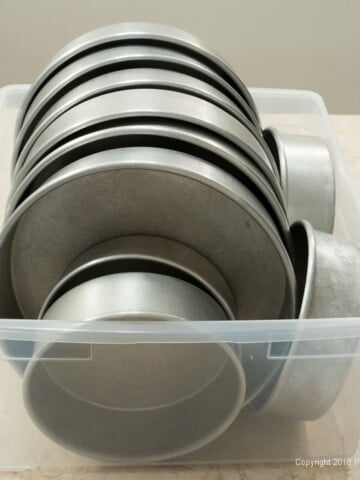
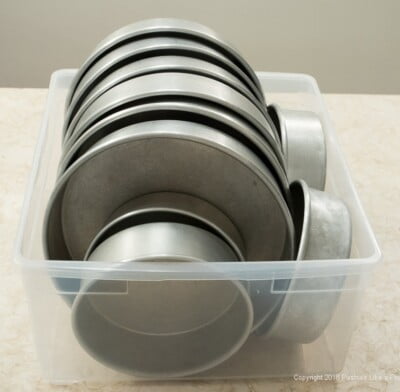
    Large storage box for Kitchen Organization

    Large storage box for Kitchen OrganizationKitchen Organization is really important to me.  Not only because I am in the kitchen all the time, but because I don't like clutter or a lot of things on my counters.  I have never wanted a large kitchen.  I prefer a smaller kitchen where everything is at hand and easily accessible when I need it.  Perhaps it is because the bakery was large and there was a lot of walking around.

    When we moved from the large house we lived in for 42 years to an apartment, we had a lot we couldn't take.  When I closed the bakery, I kept some of the many things I used professionally.  I had to get rid of at least two-thirds to three-quarters of that equipment when we moved. [Read more...]

    Apricot Slices

    Modified: Apr 23, 2026 · Published: Aug 28, 2018 by Helen S Fletcher · This post may contain affiliate links · 10 Comments

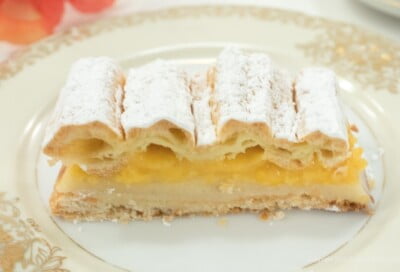
    Apricot Slices
    Apricot Slices

    Apricot Slices came by way of my love of curds – lemon and cranberry are two I have already blogged about.  This particular curd was one I developed years and years ago and, for some reason, really never used.

    However, these Apricot Slices are as comfortable for brunch as they are for dessert.  Easily made over a series of days, these are assembled at the last minute.  The Pate Brisee crust can be made to be baked off anytime.  The Apricot Curd can be made a week ahead and refrigerated or frozen for longer storage.   The chou paste top can be made, baked and frozen for a month.  Lightly drizzled with an almond glaze and topped with toasted pecans, these Apricot curd slices are an unusual start or end of the day treat.

    The Curd uses two different kinds of apricots.  Canned apricots in fruit juice and dried apricots to bump up the flavor make this apricot intense.  I already have a Thanksgiving dessert planned for this curd.  I have always thought of apricots as an elegant fruit.  I think you will find these Apricot Slices exactly that, but easy enough to make over and over.

    These Apricot Slices may be made in pieces and assembled shortly before serving.  While the recipe makes two, one may be assembled and the remaining parts frozen for later assembly.

    Apricot Curd – this needs to be made at least the day before or up to a week ahead. For how-to photos for Apricot Curd. Substituting the apricots for the cranberries.

    ½ cup, well-drained, canned apricots in fruit syrup from a 15 ounce can
    3 ounces (85 grams) dried apricots
    ½ teaspoon gelatin
    1 teaspoon water
    4 egg yolks
    ⅓ cup sugar (100 grams or 3 ½ ounces)
    ¼ cup freshly squeezed lemon juice
    6 tablespoons butter, cold, cut into small pieces  (90 grams, 3 ounces)

    Process the well-drained apricots until smooth.  Leave the apricot puree in the processor bowl.

    Place the dried apricots in a small saucepan.  Cover with water.  Simmer until most of the water is gone.  There shouldn’t be more than a teaspoon or so left.  Transfer to the processor and process along with the puree until smooth. In truth, the dried apricots will not puree completely but process them until they are as finely cut in as possible.

    Stir the gelatin into the water to mix completely.  Set aside.

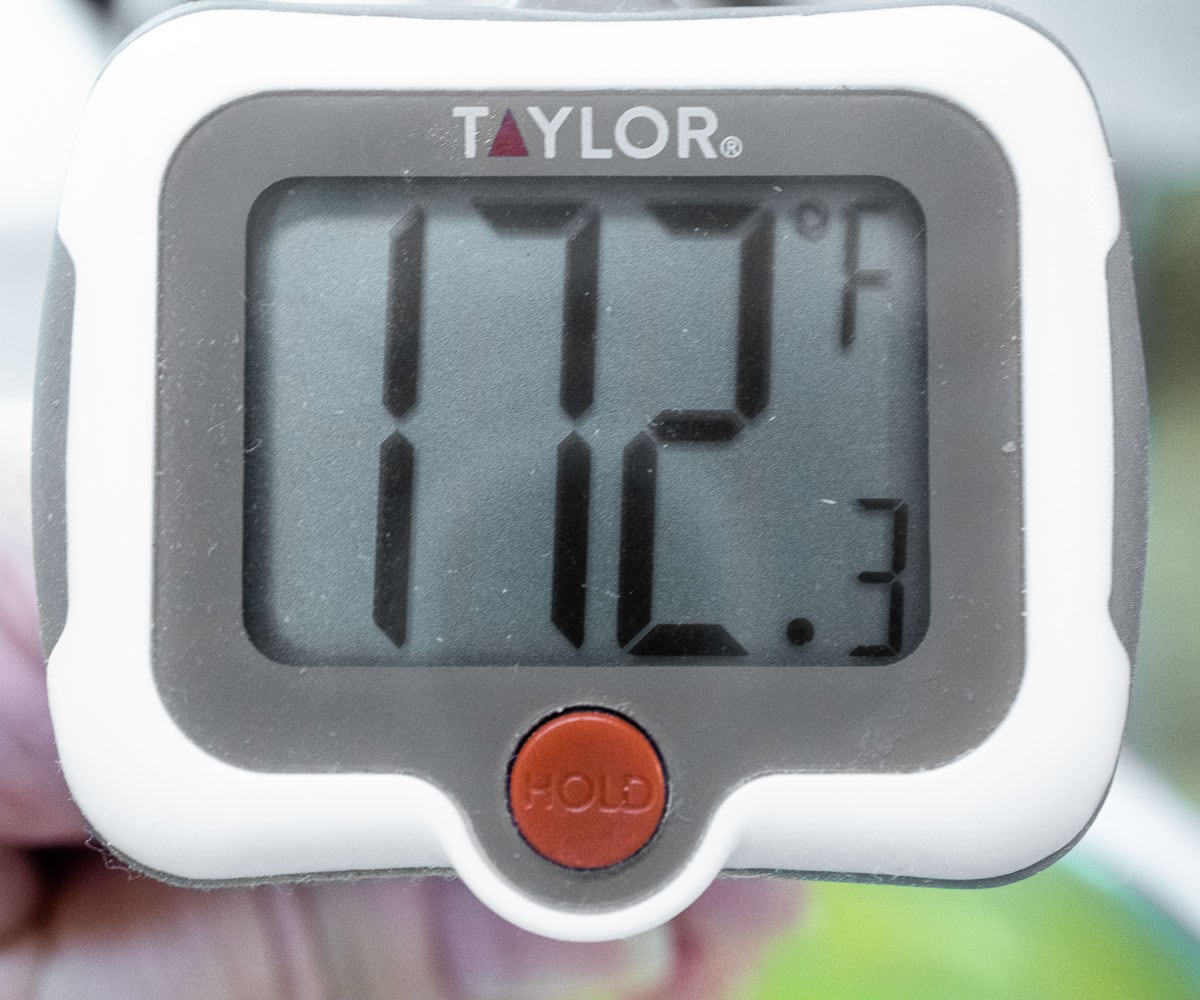
    Whisk together the apricots, egg yolks, sugar, and lemon juice in the top pan of a double boiler. If you don’t have a double boiler, place a bowl over a saucepan with simmering water.  Make sure the bowl fits well so no steam escapes while simmering. Add the butter.  Stir constantly until the mixture reaches 172°F on a thermometer.  Remove from the heat, tear the gelatin in a few pieces and add it to the hot mixture. Submerge the gelatin, wait for a minute or two and stir or whisk to mix it in completely.  There is no need to liquefy the gelatin first, as the curd is hot enough to melt it.

    Pour the apricot curd into a container and cover the top with plastic wrap.  Poke one or two holes in the wrap and let it cool to room temperature.  After it has cooled, refrigerate up to a week or freeze for several months.  Thaw in the refrigerator to use.

    Pate Brisee a L’oeuf  - this may be made, rolled out and frozen weeks ahead of time.  For how to photo's for Peach Pizza using the ingredients below.  Bake off when needed.

    ½ cup +1 tablespoon all purpose flour (85 grams or 3 ounces)
    ¼ cup cake flour (30 grams or about 1 ounce)
    ½ teaspoon salt
    7 tablespoons unsalted butter (105 grams or about 3 ⅔ ounces)
    1 tablespoon beaten egg
    1 teaspoon fresh lemon juice
    2 tablespoons ice water

    In a processor bowl fitted with the steel blade, combine the flours and salt; process briefly to mix. Add the butter and place in a circle over the flours.  Pulse until the butter is cut into large pieces.

    Mix the egg, lemon juice, and ice water.  Pour over the flour/butter mixture and pulse until it clump together about the size of peas.  Do not over-process, and especially don’t let it form a ball.   Pour it onto a work surface lightly dusted with flour and push together into a rectangle approximately 3x5 inches. Wrap in plastic wrap and refrigerate for at least 60 minutes before rolling.  It is easiest to work if it rests in the refrigerator overnight.

    Line a baking sheet with parchment paper.

    Cut the pate brisee in half. Roll each piece into a 13” x 4” rectangle.  Place on the baking sheet several inches apart.  Prick each with a fork every ¼”.  Freeze until solid, about 15 minutes.

    When ready to use, preheat the oven to 425°F.   Bake on the middle rack of the oven for 12 to 15 minutes until light golden brown. Cool on the baking sheet for a few minutes.  Slide off onto a rack to cool completely.

    Almond Filling– this may be made several days ahead and refrigerated or frozen for longer storage. Thaw in the refrigerator overnight.
    3 tablespoons soft butter (45 grams or 1 ½ ounces)
    ⅔ cup powdered sugar (85 grams or 3 ounces)
    ¼ teaspoon almond extract
    ⅔ cup almond flour or finely pulverized almonds (60 grams or 2 ounces)
    2 ounces almond paste (60 grams)
    1 tablespoon cream

    To make the filling, cream the butter and sugar until light. Blend in the almond extract, almonds, almond paste, and cream.

    Divide in half (about 120 grams or 4 ¼ ounces).  Wrap in film and refrigerate if making ahead.

    Yield:  Approximately 240 grams or 8 ½ ounces)

    Chou Paste - for how to pictures for gateau st honore
    ½ cup water
    4 tablespoons butter (60 grams or 2 ounces)
    ¼ teaspoon salt
    ¾ cup sifted bread flour (95 grams or 3 ¼ ounces)
    3 whole eggs

    Combine the water, butter, and salt in a heavy saucepan.  Heat until the butter is melted and bring to a rapid boil.  Pour all the flour in.  Stir until a large ball of dough forms that cleans the bottom and sides of the pan.  With the pan still over heat, mash and flatten the mixture with a spoon against the bottom of the pan. Stir, bringing the bottom of the mixture to the top and continue mashing for 1 full minute.  Remove the pan from the heat and flatten it again in the bottom of the pan.  Cool 5 minutes.  Transfer to a processor or mixer.

    Place the flour mixture in the bowl of a processor or mixer.  Add the eggs and beat until a smooth, creamy, shiny paste forms.

    Chou Paste Top
    Preheat the oven to 400°F. Line a half sheet pan with parchment.

    Templates for Apricot Slices
    Piped chou paste for Apricot Slices

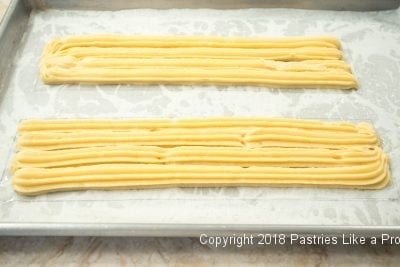
    Draw two rectangles 12” x 3 ½” on parchment paper 4” to 5” apart.  Fit a pastry bag with a ½” star tip and fill the bag with chou paste. Staying inside the borders, pipe 4 strips of chou paste touching each other to cover one rectangle.  Repeat with the remaining paste on the other rectangle.

    Sprinkle the chou paste heavily with water.  Bake for 10 minutes.  Lower the temperature to 350°F and bake an additional 20 to 25 minutes until deeply golden brown.  Remove the chou from the oven and make slits on both sides of the rectangles.  Return to the oven, prop the door open with the handle of a wooden spoon and leave in for another 10 minutes.  Cool completely.

    These may be frozen, well wrapped, for up to a month.

    Assembly– These should be assembled shortly before serving.
    Pate Brisee, baked
    Almond Cream Filling, room temperature
    Apricot Curd, room temperature
    Chou Paste Top, baked
    Powdered Sugar

    Spread half the Almond Cream on each of the Pate Brisee bases.  Top with the apricot curd and place the Chou Paste on top.  Sprinkle with powdered sugar just before serving.

    SaveSave

    Sheet Pans for Baking

    Modified: Jul 25, 2025 · Published: Aug 16, 2018 by Helen S Fletcher · This post may contain affiliate links · 25 Comments

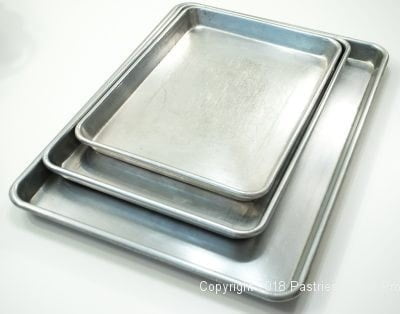
    Sheet Pans in baking

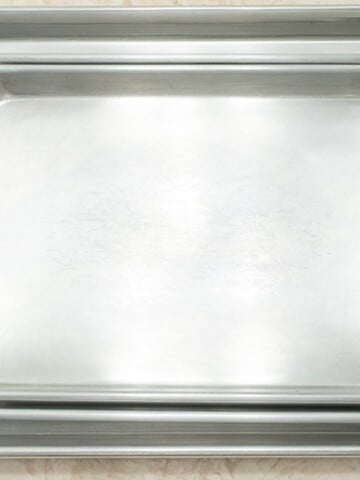
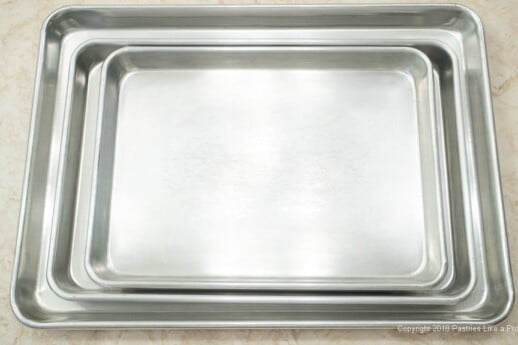
    Sheet Pans in bakingBefore I started baking professionally, I didn’t know what sheet pans were. I had cookie sheets which were flat with upturned ends on which I baked my cookies, breads, rolls, etc.

    When I opened my bakery, the first thing I learned was that full sheet pans were what professionals used for several reasons.  A sheet pan has rolled edges all the way around making it about ¾ inches deep. The most important reason for using sheet pans is when putting them in and out of the oven quickly, whatever is on the sheet pan won’t fall off. [Read more...]

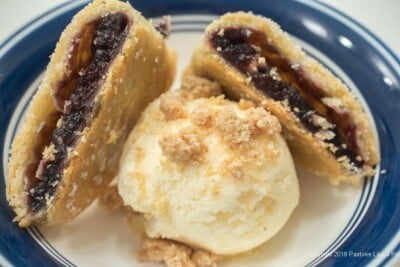
    Sweet Cherry Calzones with Amaretti Crumble

    Modified: Jul 24, 2025 · Published: Jul 31, 2018 by Helen S Fletcher · This post may contain affiliate links · 8 Comments

    Sweet Cherry Calzone

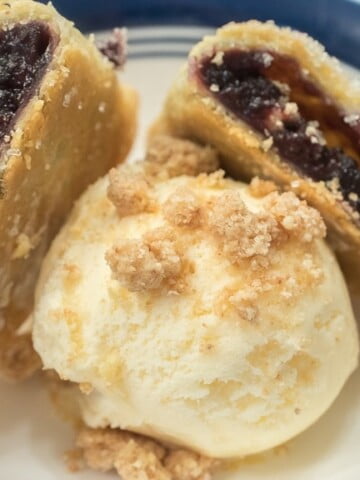
    Sweet Cherry CalzoneThese Sweet Cherry Calzones came about when I was asked for a new dessert featuring dark, sweet cherries.  I find it interesting that there are desserts using the sour cherries but not a lot using the dark sweet cherries.  I make them for the weekends and we consistently sell out the first night.

    While sweet cherries are in season, it is important in this recipe to use the frozen sweet dark cherries.  Thaw them completely so they juice out.  Fresh, pitted cherries will not have the same amount of juice.  The filling should be made at least a day ahead and refrigerated to completely set up.  While it will seem quite stiff when used in the calzones, it has a wonderful texture in the baked pastries. [Read more...]

    Heavy Cream - The Workhorse of Creams

    Modified: Jul 25, 2025 · Published: Jul 25, 2018 by Helen S Fletcher · This post may contain affiliate links · 10 Comments

    Whipped cream for Heavy Cream

    Whipped cream for Heavy CreamWith a variety of creams available, the cream of the crop is Heavy Cream, also known as 40% cream.  This is an update to my blog, Salvaging Whipped Cream.

    The main difference between a carton of whipping cream and a carton of heavy or 40% cream is the amount of butterfat in the cream.  Plain whipping cream has 36% butterfat while heavy cream or 40% cream has 40%.  Heavy cream and 40% cream are the same thing.  The higher the amount of fat, the better the cream whips and holds after whipping.  Both of those pictured below are heavy cream. [Read more...]

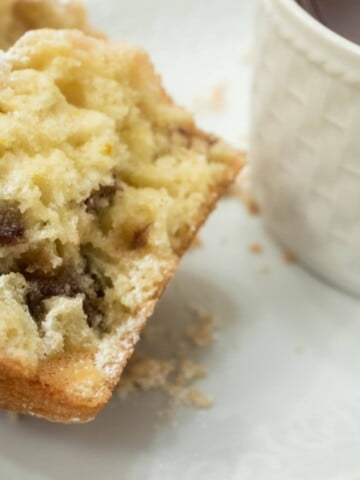
    Crumb Topped Orange Date Muffins

    Modified: Oct 19, 2025 · Published: Jun 28, 2018 by Helen S Fletcher · This post may contain affiliate links · 2 Comments

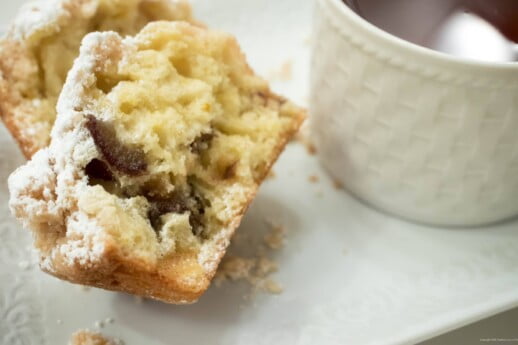
    Crumb Topped Orange Date Muffins
    Crumb Topped Orange Date Muffins

    Crumbed Topped Orange Date Muffins are a quick, easy treat for anytime of the day but in particular the morning with a cup of coffee or tea.

    Basically,  the dry ingredients are mixed in one bowl and the wet in another.  The two are combined and the dates are added.  Divided among mini cupcake pans, regular or Texas muffin pans, these are even better kept in a tin overnight.  Perfect for that morning treat.

    I thought it might be time for a simple treat and these Crumb Topped Orange Date Muffins fit that description to a tee.

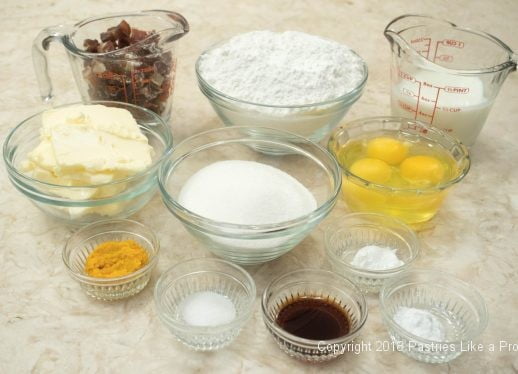
    Originally used 1 cup of dates but felt afterward that 1 ½ cups would be better which is why you see 1 cup in the photo.  Also, it is important to use the Medjool dates and not the precut ones in a package.  I have never found those to taste much like dates.

    So, without further adieu - Crumb Topped Orange Date Muffins.

    Crumb Topping - go here for how to photos using the ingredients below.
    ½ cup butter, softened (114 grams, 4 ounces or 1 stick)
    ⅓ cup granulated sugar (65 grams or about 2 ¼ ounces)
    ⅓ cup packed brown sugar (65 grams or about 2 ¼ ounces)
    1 ½ cups cake flour (Not self-rising) (185 grams or 13 ½ ounces)
    ¾ teaspoon ground cinnamon
    ¼ teaspoon salt

    Combine the butter and both sugars in the bowl of a mixer.  Cream until very light.

    Mix together the cake flour, cinnamon and salt.  Add all at once and beat on medium until it starts to form crumbs. Scrape the bowl well and beat again.  As it starts to form small crumbs, increase the speed somewhat and continue beating until larger crumbs form.  Do not overbeat or it will become a thick cohesive mixture.

    Store in the refrigerator while making the muffins.

    Ingredients for Crumb Topped Orange Date Muffins

    Orange Date Muffins

    1 ½ cups cut Medjool dates (225 grams or  8 ounces)
    2 ½ cups cake flour (310 grams or about 10 ¾ ounces)
    ¾ cup sugar (150 grams or 5 ¼ ounces)
    1 teaspoon baking powder
    ½ teaspoon baking soda
    ¼ teaspoon salt
    3 eggs
    ¾ cup butter (170 grams, 1 ½ sticks or 12 tablespoons)
    ⅔ cup buttermilk
    2 tablespoons orange zest
    2 teaspoons vanilla

    Powdered sugar as needed.

    Preheat the oven to 350°.  Spray whatever muffin pans you are using.  The recipe makes about 24 regular muffins, 12 Texas muffin cups or about 40 mini muffins.

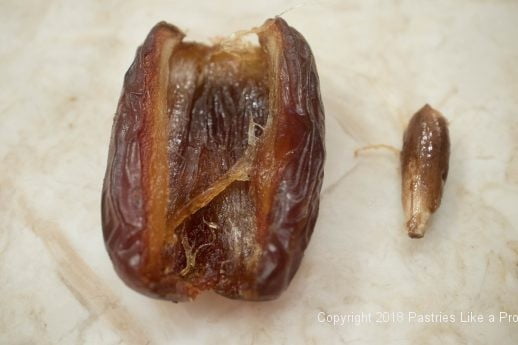
    Seeded date for Crumb Topped Orange Date Muffins
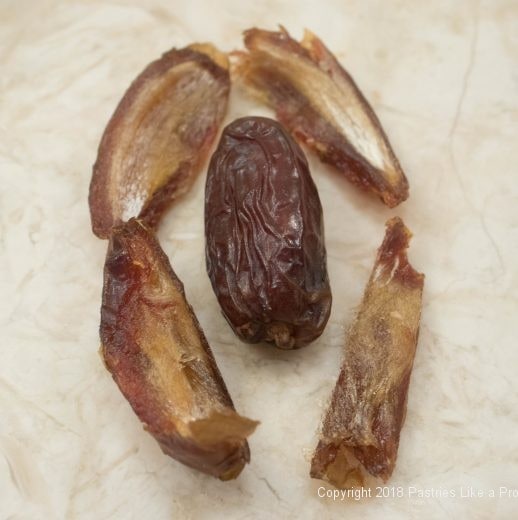
    Whole and cut date for Crumbed Topped Orange Date Muffin
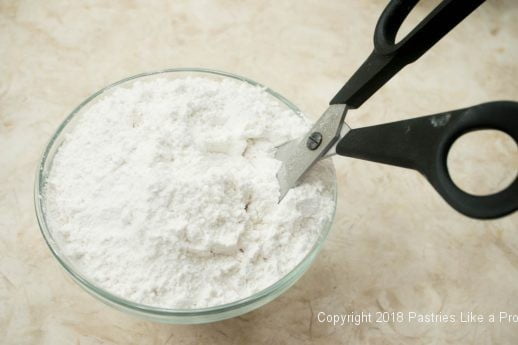
    Scissors in flour bowl for Crumb Topped Orange Date Muffins
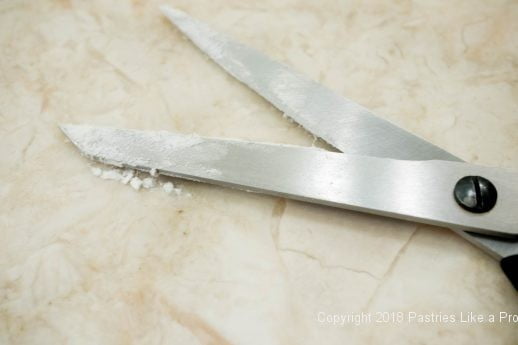
    Floured scissors for Crumb Topped Orange Date Muffins
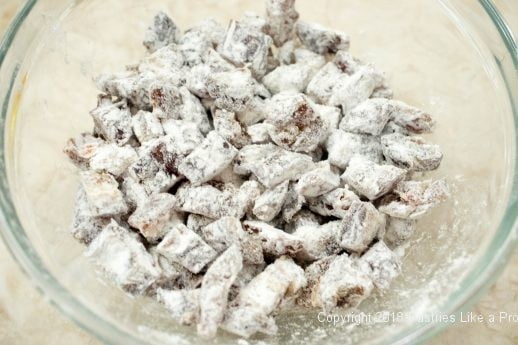
    Floured dates for Crumb Toped Orange Date Muffins

    Cut the dates in half and remove the seed. Cut the date into 4 lengthwise pieces.  The easiest way to cut the dates for me is with scissors.  I open them and coat them with flour by simply sticking them in the measured flour. When the scissors get sticky again, flour them again.  Stir a couple of tablespoons of flour from the measured flour into the dates and mix well.   This will help keep them from sinking to the bottom.

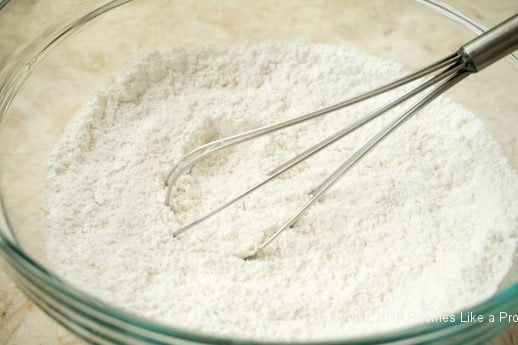
    Dry ingredients whisked for Crumb Topped Orange Date Muffins

    In a large bowl, whisk together the cake flour, sugar, baking powder, baking soda and salt.

    Wet ingredients mixed for the Crumb Topped Orange Date Muffins

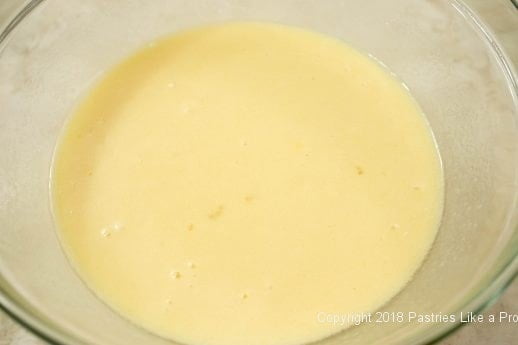
    In a separate bowl, whisk the eggs.  Add the butter, buttermilk, orange zest and vanilla, mixing well.

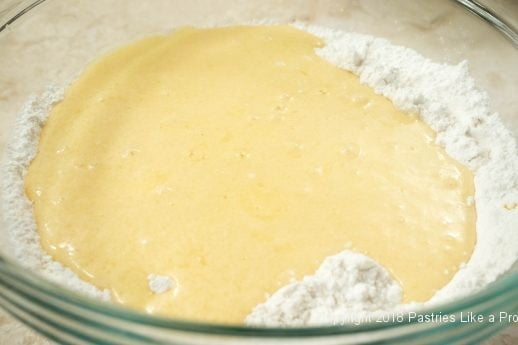
    Wet ingredients added to dry for Crumbed Topped Orange Muffins

    Pour the wet ingredients over the dry ingredients and mix gently with a rubber spatula.  Do not overmix. Some lumps are fine.

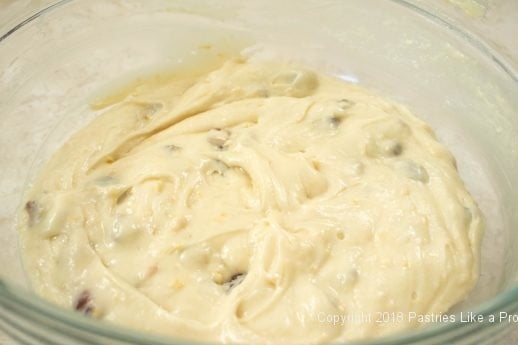
    Batter finished for Crumb Topped Orange DAte Muffins

    Stir in the dates.

    Fill the Texas Muffin cups about ½ full with the batter.  Top with ⅓ cup crumb mixture, pressing down lightly. Fill the regular muffin cups about ½ full.  Top with a heaping soup spoon of crumbs, pressing them down lightly.  The mini pans should be filled about half full. Top with crumbs to about the top of the pan.

    Bake the mini pans 12 to 14 minutes or until a tester comes out clean.

    The regular muffins should bake about 15 to 16 minutes.

    The Texas muffins bake 18 to 19 minutes.

    Cool completely and dust heavily with powdered sugar.

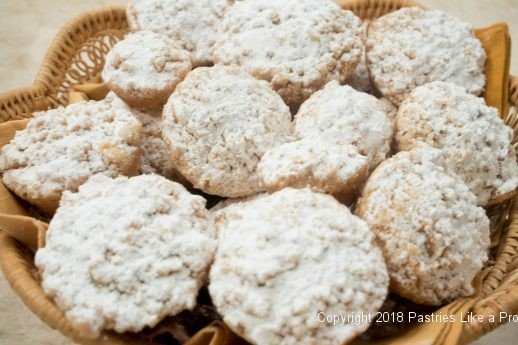
    Crumbed Topped Orange Muffins in a basket

    The muffins will keep well for several days in an airtight tin.  They can also be frozen without the powdered sugar for several months.  Thaw at room temperature and dust heavily with powdered sugar.

    Several other muffins worth consideration include: Basic Muffin Mix, PBJ Muffins, Best of All Strawberry Muffins and the Double Chocolate Truffled Muffins. And if you a lover of anything orange, check out my Orange Pistacho Loaf Cake.

    Father's Day Desserts for a Special Father

    Modified: Jul 30, 2025 · Published: Jun 12, 2018 by Helen S Fletcher · This post may contain affiliate links · 6 Comments

    Turtle Cake for Father's Day Desserts

    Turtle Cake for Father's Day DessertsFather's Day Desserts seems to be a more casual celebration than Mother's Day, but just as important.  I have gathered some blogs that will fit right into a barbecue, brunch or just a special treat.

    Several of these Father's Day Desserts are Gluten Free or can be made to be GF by substituting GF cookies for the bases.  Most of them are easy enough to have the children help so it is a very special treat for a very special dad made by those who made him a dad. [Read more...]

    Viennese Chocolate Punchtorte - Worth the Wait!

    Modified: Jul 30, 2025 · Published: Jun 6, 2018 by Helen S Fletcher · This post may contain affiliate links · 10 Comments

    Viennese Punchtorte
    Viennese Punchtorte


    This Viennese Chocolate Punchtorte is one of the most amazing cakes you will ever make.  I've updated it slightly from my first book, "The New Pastry Cook". Having baked for so many years there are few desserts I deem extraordinary.  This is definitely one of them.

    I love Viennese baking as they seem to have a love affair with their desserts. While they are known for their Sachertorte, I truly believe it can't hold a candle to this Viennese Chocolate Punchtorte

    There is a lot of waiting time with this Viennese Chocolate Punchtorte and you will never guess why.  When have you seen a cake that has to dry out before assembly?  A chocolate spongecake is made and then allowed to dry for 48 hours at room temperature after which you cut it into three layers with the middle layer being cut into half-inch cubes.

    A most flavorful soaking syrup is made of simple syrup, orange and lemon juices, apricot and raspberry jams with dark rum making the perfect "punch" to pour over the sponge cubes for your Viennese Chocolate Punchtorte.

    The cake is then assembled by sandwiching the soaked cubes of sponge between the other two layers of cake.  Three pounds of weight are stacked on top of the assembled Viennese Chocolate Punchtorte and left to sit that way for 24 hours when it will become one layer. The almost three inch sponge cake is now about one and a half inches tall.

    Viennese cakes are often coated with apricot jam before the final chocolate ganache is applied as is this one.  It gives a bit of a sharp contrast to the ganache that covers it.    After the jam is spread on, it waits again for several hours so the jam can dry to the touch.

    When the Viennese Chocolate Punchtorte is cut, the three layers have become a single, very moist cake packed with flavor.

    Viennese Punchtorte slice

    There is a variation in the way I fold flour into the egg mixture.  I add all of the flour on top of the beaten yolks and then the remainder of the whites on top of that.  At the bakery,  I  found that by adding all of the flour at once instead of in stages, the mixture retains more volume when baked.  As always, fold gently to keep from deflating the mixture.

    While there are several steps, this Viennese Chocolate Torte is made over several days with just a little being done every day.  I know that you and your guests are in for a cake the likes of which you've never tasted before.

    One last thing, this Viennese Chocolate Punchtorte, while packed with flavor, is not overly sweet.

    Spongecake ingredients for the Viennese Chocolate Punchtorte

    Chocolate Sponge Cake

    ½ teaspoon instant coffee
    1 teaspoon vanilla
    6 eggs separated
    ¾ cup sugar, divided (150 grams or 5 ⅓ ounces)
    ⅔ cup cake flour less 1 tablespoon (70 grams or about 2 ½ ounces)
    ⅓ cup cocoa (30 grams or 1 ounces)

    Preheat the oven to 350°F.  Line the bottom of a 9x3 inch cheesecake or springform pan with a parchment round.  Spray the center of the round only.  Do not spray the sides of the pan.  Set aside.

    Vanilla mixed with coffee for Viennese Chocolate Punchtorte

    Dissolve the instant coffee in the vanilla.

    Egg Yolks in mixer for viennese Chocolate Punchtorte
    Egg yolks beaten for Viennese Chocolate Punchtorte

    Place the egg yolks, ½ cup sugar  (100 grams or 3 ½ ounces) and the coffee/vanilla flavoring in a mixing bowl fitted with a whisk attachment.  Beat until almost white and very thick.  Scrape the bottom of the bowl often to make sure the eggs and sugar are incorporating.

    Flour and chocolate mixed for Viennese Chocolate Punchtorte

    In the meantime,  sift the cake flour and cocoa together.  I use a strainer and push through any lumps with a spoon.  Set aside.

    Egg whites before sugar is added for viennese Chocolate Punchtorte
    Egg whites beaten for the Viennese Chocolate Punchtorte

    In a clean mixing bowl with a clean whisk, beat the whites until almost at the soft peak stage.  Add the sugar gradually and beat just until the soft peak stage.  Do not overbeat or the whites will be difficult to fold in without deflating the batter.

    Egg whites added to yolks for Viennese Chocolate Punchtorte
    Flour mixture added to Viennese Chocolae Punchtorte
    Remainder of egg whites added for Viennese Chocolate Punchtorte
    Batter folded for Viennese Chocolate Punchtorte

    Add about ⅓ of the beaten whites to the egg yolk mixture and stir to lighten.  Add all of the flour/cocoa mixture and place the remainder of the whites on top.  Fold together gently.

    Pour into the prepared pan, smooth the top and bake for 25 to 30 minutes or until a tester comes out clean.

    Releasing the cake for Viennese Chocolate Punchtorte
    Releasing the cake for Viennese Chocolate Punchtorte
    Cake released for Viennese Chocolate Torte

    Cool for about 10 minutes, then go around the edge of the pan with a small flexible metal spatula.  Keep the spatula close to the edge of the pan, not the edge of the cake to avoid tearing the cake.  Place the pan on a large can and slide the side down if using a cheesecake pan. Carefully turn the cake upside down and remove the parchment.  Place on a cooling rack and allow to dry at room temperature for 48 hours.

    Cake sliced into 3 layers for Viennese Chocolate Punchtorte
    Cake sliced for Viennese Chocolate Punchtorte

    After drying, cut the cake into 3 layers with the middle layer being larger than the top and bottom.  Cut the middle layer into ½ inch slices,

    turn it in the other direction

    Cake turned for Viennese Chocolate Punchtorte
    Cubes in bowl for Viennese Chocolate Punchtorte
    Punchtorte ingredients for Viennese Chocolate Punchtorte

    and cut into ½ inch cubes.  Place the cubes in a large bowl.

    Viennese Chocolate Punchtorte Syrup

    ½ cup freshly squeezed orange juice
    3 tablespoons freshly squeezed lemon juice
    3 tablespoons sieved apricot jam
    2 tablespoons seedless red raspberry jam
    ¼ cup dark rum
    ¼ cup water
    ½ cup granulated sugar (100 grams or 3 ½ ounces)

    Combine orange and lemon juices, apricot jam,  raspberry jam and rum.  Whisk well; set aside.

    Syrup boiling for the Viennese Chocolate Punchtorte
    Syrup ingredients added for Viennese Chocolate Punchtorte
    Cubes with syrup for Viennese Chocolate Punchtorte
    Bottom layer in pan for Viennese chocolate Punchtorte
    Bottom layer covered with cake for Viennese Chocolate Punchtorte
    Top layer on cake for Viennese Chocolate Punchtorte
    Parchment covering cake for Viennese Chocolate Punchtorte

    Combine the water and sugar in a small saucepan.  Bring to a boil; wash down the sides of the pan with a brush dipped in cold water.  Boil to 234°F on a candy thermometer.  Remove from the heat and add the juice mixture.  Place back on the heat and bring to a boil again. 

    Immediately pour the syrup over the spongecake cubes.  Toss gently with a fork to soak the cubes but don't break them up. They should absorb all of the syrup. Place the top layer of cake upside down in the bottom of a 9x3" cheesecake pan or springform mold.  As you can see, it doesn't fit tightly.  That's fine.

    Arrange the soaked cubes of cake evenly over the cake layer. Place the bottom layer over the cubes so the bottom is right side up. 
    Place a 9" round parchment circle on top of the layer.

    Beans compressing cake for Viennese Chocolate Punchtorte

    Place a 9x2" pan filled with 3 pounds of beans or weights directly on the paper to weigh the cake down.

    Cake wrapped in film for Viennese Chocolate Punchtorte
    Paper on top of cake for Viennese Chocolate Punchtorte

    After about 4 to six hours have passed, remove the pan with the beans. Very carefully drop the sides of the cheesecake pan as above and move the cake to a cake board. 

    Wrap the edges of the cake with a long piece of plastic wrap that has been folded several times so the cubes will not fall out.  Cover the top of the layer with the round of parchment and place the pan of beans directly on top of it again.  Leave it like this for the next 18 to  20  hours.

    This last direction needs a bit of explanation.  The cake is assembled in the pan so the cubed cake does not fall out while being compressed as it would if put together freeform. However, because both pans are 9 inches, it can only compress so much.  To make one layer, it needs to be compressed more which is why it is removed from the pan and weighed down again.  By wrapping the edges, any stray cube that might escape will be held in.

    Assembly
    Viennese Chocolate Punchtorte
    ⅓ cup sieved apricot jam, room temperature
    Chocolate Glaze, below

    Remove the plastic wrap around the cake and the parchment on top.

    Cake covered with apricot jam for Viennese Chocolate Punchtorte

    With a small metal spatula, apply a thin coat of apricot jam around the sides of the cake.  If there is any separation between the top and bottom layers, that can be fixed later.  Switch to a small offset spatula and spread apricot jam thinly on the top layer.

    Set aside for several hours for the jam to firm up.

    Glaze ingredients for the Viennese Chocolate Punchtorte
    Glaze ingredients in pan for Viennese Chocolate Punchtorte

    Chocolate Glaze

    9 ounces semisweet or bittersweet chocolate (255 grams)
    9 tablespoons unsalted butter (130 grams, about 4 ½ ounces or 1 stick + 1 tablespoon)
    3 tablespoons clear corn syrup
    3 tablespoons water

    Glaze made for Viennese Chocolate Punchtorte

    Combine all of the above in the top of a double boiler.  Stir until it is melted and smooth. Alternatively, it can be microwaved but use caution not to burn the chocolate.  Whisk gently until smooth.Yield:  About 1 ¾ cups (430 grams about 15 ounces)

    Pour about ⅓ (145 grams or about 5 ounces) onto a tray and spread it out fairly thinly so it becomes firm but spreadable.  Refrigerating will speed up the process.

    Undercoated cake for the Viennese Chocolate Punchtorte

    Use this to undercoat the cake sides and top by spreading it smoothly with a spatula.

    Channeling the bottom of the cake for Viennese Chocolate Punchtorte

    To easily remove the Viennese Chocolate Punchtorte from the cake board, make a small channel at the bottom by inserting a small metal spatula under the bottom of the cake and removing the barest amount of glaze.  It will not be noticeable.  Refrigerate briefly to set up the glaze.

    Place a cooling rack in a rimmed baking pan.

    Cake transferred to a rack
    Glaze poured onto cake for the Viennese Chocolate Punchtorte

    Remove the cake from the board and transfer it to the cooling rack. Make sure the remainder of the glaze is pourable but has body.  Reheat briefly if necessary.  Pour all of the glaze onto the top and quickly push it out over the sides. 

    Glaze encompassing the Viennese Chocolate Punchtorte

    Quickly push it out over the edges of the cake.

    Wait for a few minutes until it is no longer liquid but is not completely set.  Smooth the sides.  Transfer to a cake to a clean pan and let it sit at room temperature for at least 6 hours over preferably overnight.

    Transfer the cake to a serving plate or cake board. The cake can be stored at room temperature for several days.

    Serve the Viennese Chocolate Punchtorte in small pieces as it is rich.

    Yield:  12 to 14 servings

    Tips:  Using a strainer, strain the apricot jam all at once leaving the pieces of fruit behind.  Use what you need for the soaking syrup and store the rest at room temperature for the finish.

    Either natural or dutched cocoa can be used but the dutched will give a darker sponge.To easily cut the middle layer into ½" cubes, freeze it first. It will make it much easier.

    Store any leftover glaze in the refrigerator.SaveSaveSaveSaveSaveSaveSaveSaveSaveSaveSaveSaveSaveSaveSaveSaveSaveSaveSaveSaveSaveSaveSaveSaveSaveSaveSaveSaveSaveSaveSaveSaveSaveSaveSaveSaveSaveSave

    Rhubarb Cream Tart with Strawberry Sauce

    Modified: Jul 28, 2025 · Published: May 29, 2018 by Helen S Fletcher · This post may contain affiliate links · 11 Comments

    Rhubarb Cream Tart
    Rhubarb Cream Tart

    This entire Rhubarb Cream Tart entails no baking.  I was excited to find it in my files from many years ago. I came up with this when I first started writing about desserts.   I love rhubarb as does my husband and when coupled with a strawberry sauce,  it is the perfect summer delight.

    The only caveat with rhubarb is the leaves are poisonous if eaten because of the oxalic acid.  However, this has been disputed recently but I don't intend to test it.  Most rhubarb I have seen in stores have the leaves cut off to avoid any possible problems.  If not, just cut them off and throw them away.

    The crust is made from purchased vanilla wafers and is simply pressed onto the sides and bottom of the pan.

    Fresh or frozen rhubarb can be used for the Rhubarb Cream Tart which makes it ideal for year round enjoyment.

    I think I like this so much because of its simplicity and the tartness of the rhubarb is tamed by just a bit of whipped cream to smooth it out.  There is a delightful tang to it which is why I avoided any decoration on top.

    Crust ingredients

    Crust12 ounces vanilla wafers (340 grams)
    ¼ cup powdered sugar (35 grams or about 1 ¼ ounces)
    1 teaspoon vanilla
    10 tablespoons butter, melted (⅔ cup, 140 grams or 5 ounces)

    Spray a 9x3 inch round cheesecake or springform mold with vegetable spray.

    Crumbs in processor for the Rhubarb Cream Tart

    Break the cookies up and place them in the bowl of a food processor.  Process until they are fine crumbs.  

    Sugar in processor for Rhubarb Cream Tart

    Add the powdered sugar and process briefly to mix. 

    Crumbs with butter for the Rhubarb Cream Tart

    Remove the crumbs to a large bowl and mix the butter in with a fork until all the crumbs are completely coated.

    Crumbs pressed into pan for Rhubarb Cream Tart

    Press about ⅔ of the crumbs onto the sides of the pan about 2 inches up.  Press the remaining crumbs on the bottom of the pan.  Refrigerate while you finish the tart.

    Wipe out the bowl of the processor with a paper towel before continuing.

    Tart ingredients for Rhubarb Cream Tart

    Rhubarb Cream Filling

    6 cups fresh rhubarb*
    ¼ cup  water
    1 ½ cups sugar (300 grams or 10 ½ ounces)
    ¼ cup cold water
    4 ½ teaspoons gelatin
    1  cup heavy cream

    *I used about 2 ¼ pounds to get the 6 cups by the time I trimmed the top and ends.  Also, if fresh rhubarb is not available, frozen is fine.  Use it straight from the frozen state.  Do not thaw.

    Cut rhubarb for Rhubarb Cream Tart
    Rhubarb stalks for Rhubarb Cream Tart

    Wash the rhubarb stalks and cut them into about ¾" pieces.  If the stalks are fat, cut them in half lengthwise first. 

    Single stalk of rhubarb for Rhubarb Cream Tart
    Single stalk split for Rhurarb Cream Tart
    Rhubarb boiling for Rhubarb Cream Tart
    Sugar added for Rhubarb Cream Tart

    Place the rhubarb and ¼ cup water in a saucepan with a tight fitting lid.  Place over low heat until the rhubarb starts releasing its liquid, stirring often. When there is a bit of visible liquid, add the sugar, stir well, cover and place over low heat until the sugar dissolves.  Raise the heat to medium and bring to a low boil keeping the lid on.

    Rhubarb and sugar cooked for Rhubarb Cream Tart

    Cook until the rhubarb is very tender. Remove from the heat and cool to lukewarm.

    Water and gelatin for Rhubarb Cream Tart

    Add the gelatin to ¼ cup cold water, stirring well.  Set aside.

    Bloomed gelatin for the Rhubarb Cream Tart
    Rhubarb in processor for Rhubarb Cream Trt
    Rhubarb processed for the Rhubarb Cream Tart
    Gelatin added for Rhubarb Cream Tart

    When the rhubarb is cooled, place it in the bowl of the processor.  Process until smooth.  Heat the gelatin in the microwave for about 20 seconds to liquefy.  Add to processor and process briefly.  Cool completely.

    Cream whipped for Rhubarb Cream Tart
    Tart finished in pan for the Rhubarb Cream Tart

    Beat the cream until soft peaks form. Do not overbeat.   Fold into the rhubarb and pour it into the prepared shell.

    Refrigerate until set.  I leave mine in the refrigerator overnight.

    With blow dryer for the Rhubarb Cream Tart

    To release the tart. warm the removable rim of the pan with a hair blower set on high heat held about ¼ inch from the tin. Circle the entire tin.

    Place it on top of a fat can and gently pull down the sides.  If it doesn’t release, re-warm the edge. Do not overheat or you can melt the sides of the tart.

    Loosening bottom of tart for the Rhubarb Cream tart
    Moving the Rhubarb Cream Tart

    To move the tart, release the bottom with a metal spatula.  Place two pancake turners, one on each side of the tart and lift it onto the serving plate.  Or, if it is loose enough, just slide it off the bottom onto a serving plate.

    To make ahead, freeze, well wrapped in the pan, for up to a month.  To use,  thaw overnight in the refrigerator.

    Strawberry Sauce
    2 cups sliced strawberries
    ¼ to ⅓ cup sugar, or to taste
    ½ teaspoon cornstarch or potato starch, optional

    Combine all together in a mixing bowl about 1 hour before serving.  Let rest at room  temperature.

    If you want to thicken the sauce, add the cornstarch to the sugar, mixing well.  Add to the strawberries and place over medium heat.  Bring to a boil and boil for one or two minutes until thickened somewhat. Cool before using.

    To Serve: Cut the tart and serve with the Strawberry Sauce.

    Cut Tart for Rhubarb Cream Tart

    Yield:  10 to 12 servings, unless you are cutting it for me!

    Another great summer dessert featuring strawberries is the Lemon Strawberry Cake.

    Rhubarb Cream Tart

    Rhubarb Cream Tart with Strawberry Sauce

    Helen S. Fletcher
    This entire Rhubarb Cream Tart entails no baking.  I think I like this so much because of its simplicity and the tartness. The rhubarb is tamed by just a bit of whipped cream to smooth it out.  There is a delightful tang to it which is why I avoided any decoration on top.
    No ratings yet
    Print Recipe Pin Recipe
    Prep Time 45 minutes mins
    Total Time 45 minutes mins
    Course Dessert
    Cuisine American
    Servings 8 servings
    Calories 5170 kcal
    Prevent your screen from going dark

    Ingredients

    Crust

    • 12 oz vanilla wafers (340 grams)
    • ¼ cup powdered sugar (35 grams
    • 1 teaspoon vanilla
    • 10 tablespoon butter, melted (⅔ cup, 140 grams)

    Rhubarb Cream Filling

    • 6 cups fresh rhubarb*
    • ¼ cup water
    • 1 ½ cups sugar (300 grams or)
    • ¼ cup cold water
    • 4 ½ teaspoon gelatin
    • 1 cup heavy cream

    Strawberry Sauce

    • 2 cups sliced strawberries
    • ¼ cup to ⅓ cup sugar, or to taste
    • ½ teaspoon cornstarch or potato starch, optional

    Instructions
     

    Crust

    • Spray a 9×3 inch round cheesecake or springform mold with vegetable spray. Break the cookies up and place them in the bowl of a food processor.  Process until they are fine crumbs.  Add the powdered sugar and process briefly to mix. 
    • Remove the crumbs to a large bowl and mix the butter in with a fork until all the crumbs are completely coated. Press about ⅔ of the crumbs onto the sides of the pan, about 2 inches up.  Press the remaining crumbs on the bottom of the pan.  Refrigerate while you finish the tart. Wipe out the bowl of the processor with a paper towel before continuing.

    Rhubarb Cream Filling

    • Wash the rhubarb stalks and cut them into about ¾" pieces.  If the stalks are fat, cut them in half lengthwise first. 
    • Place the rhubarb and ¼ cup of water in a saucepan with a tight-fitting lid.  Place over low heat until the rhubarb starts releasing its liquid, stirring often. When there is a bit of visible liquid, add the sugar, stir well, cover and place over low heat until the sugar dissolves.  Raise the heat to medium and bring to a low boil, keeping the lid on.
    • Cook until the rhubarb is very tender. Remove from the heat and cool to lukewarm. Add the gelatin to ¼ cup of cold water, stirring well.  Set aside.
    • When the rhubarb is cooled, place it in the bowl of the processor.  Process until smooth.  Heat the gelatin in the microwave for about 20 seconds to liquefy.  Add to processor and process briefly.  Cool completely.
    • Beat the cream until soft peaks form. Do not overbeat. Fold into the rhubarb and pour it into the prepared shell. Refrigerate until set.  I leave mine in the refrigerator overnight.
    • To release the tart, warm the removable rim of the pan with a hair blower set on high heat, held about ¼ inch from the tin. Circle the entire tin. Place it on top of a fat can and gently pull down the sides.  If it doesn’t release, re-warm the edge. Do not overheat, or you can melt the sides of the tart.
    • To move the tart, release the bottom with a metal spatula.  Place two pancake turners, one on each side of the tart, and lift it onto the serving plate.  Or, if it is loose enough, just slide it off the bottom onto a serving plate. To make ahead, freeze, well wrapped in the pan, for up to a month.  To use, thaw overnight in the refrigerator.

    Strawberry Sauce

    • Combine all together in a mixing bowl about 1 hour before serving.  Let rest at room temperature. If you want to thicken the sauce, add the cornstarch to the sugar, mixing well. Add to the strawberries and place over medium heat.  Bring to a boil and boil for one or two minutes until thickened somewhat. Cool before using.
    • Cut the tart and serve with the Strawberry Sauce. Yield:  10 to 12 servings, unless you are cutting it for me!

    Notes

    I used about 2 ¼ pounds to get the 6 cups by the time I trimmed the top and ends.
    If fresh rhubarb is not available, frozen is fine.  Use it straight from the frozen state.  Do not thaw.
    This tart can be made several days ahead and can also be frozen for longer storage.
     

    Nutrition

    Serving: 10servingsCalories: 5170kcalCarbohydrates: 691gProtein: 45gFat: 262gSaturated Fat: 147gPolyunsaturated Fat: 32gMonounsaturated Fat: 65gTrans Fat: 5gCholesterol: 573mgSodium: 2410mgPotassium: 3111mgFiber: 24gSugar: 516gVitamin A: 7778IUVitamin C: 229mgCalcium: 884mgIron: 3mg
    Tried this recipe?Mention @helensfletcher or tag #pastrieslikeapro!

    SaveSave

    SaveSave

    SaveSave

    SaveSave

    SaveSave

    SaveSave

    SaveSave

    SaveSave

    SaveSave

    SaveSave

    SaveSave

    SaveSave

    SaveSave

    SaveSave

    SaveSave

    The Marvelous Variable Kolache

    Modified: Aug 25, 2025 · Published: May 22, 2018 by Helen S Fletcher · This post may contain affiliate links · 18 Comments

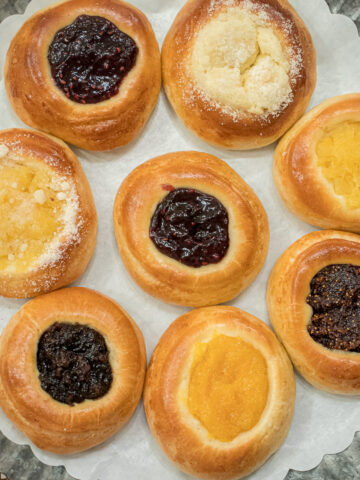
    Sweet Kolache with pineapple, cream cheese, fig, raspberry fillings
    Sweet Kolache with pineapple, cream cheese, fig, raspberry fillings

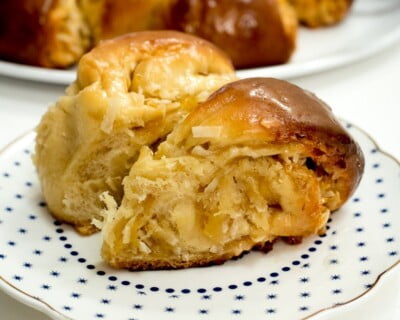
    Kolache, (pronounced ko-lah-chee) the Czech pastry, can be sweet or savory. This blog features the sweet version.  I have updated some of the fillings for a wider variety. Although poppyseed and prune fillings are traditional, I omitted them because I thought six was truly enough.    The fillings are given in tablespoons since most of the Kolache require a tablespoon or more and the amount needed can be calculated using the yield information if you want to make more than one flavor.

    I suggest you pour yourself a cup of coffee or tea, get a glass of wine or otherwise prepare for this longer than usual blog. But the end result is amazing. The fillings are applicable to other pastries and this dough can be used countless ways. This is actually an easy to make sweet roll that I promise you will make over and over again.

    These are amazing pastries with an easy to make dough that handles well. The fillings can be made days ahead and stored in the refrigerator.  The dough must be made a day ahead.  Assembly is easy and in no time you have Kolache.  They can also be made large or small and freeze well.

    [Read more...]

    Raspberries and Cream Cake for Mother's Day

    Modified: Jul 30, 2025 · Published: May 1, 2018 by Helen S Fletcher · This post may contain affiliate links · Leave a Comment

    Raspberries and Cream Cake

    Raspberries and Cream CakeThis Raspberries and Cream Cake comes from the bakery's wedding cake file.  It was a favorite spring and summer cake.

    The white chiffon cake is very tender.  We made it the day ahead, cooled it in their pans and covered them with foil or froze the covered layers if using later.  I use gloves when releasing the cakes as the will be a bit sticky on top.  The cake is filled with whipped cream and fresh raspberries with a whipped chocolate ganache in the middle layer. [Read more...]

    Chocolate Cashew Derby Pie

    Modified: Dec 7, 2024 · Published: Apr 24, 2018 by Helen S Fletcher · This post may contain affiliate links · 11 Comments

    Chocolate Cashew Derby Piw

    Chocolate Cashew Derby PiwThere are a couple of things that make a derby pie special.  It is southern, abundant on the first Saturday of May when the Kentucky Derby runs and it features another southern specialty – bourbon.

    While the original Derby Pie features walnuts, pecans are often substituted. This is actually a very close cousin to the pecan pie.  But I feel strongly that cashews are a grossly underused nut, so I set about doing something about it.  And Chocolate Cashew Derby Pie is it. [Read more...]

    Pithiviers made with Blitz Puff Pastry

    Modified: Jul 24, 2025 · Published: Apr 17, 2018 by Helen S Fletcher · This post may contain affiliate links · 6 Comments

    Pithiviers made with Blitz Puff Pastry
    Pithiviers made with Blitz Puff Pastry

    Light, tender and airy puff pastry has often intimated the most avid pastry cook, amateur or professional.  Forewarned in many recipes of the great amount of time and effort involved, even adventurous bakers have found other ways to spend their time. However, with the use of the food processor, the pastry can be made in a fraction of the time.  In fact, it is ready to use in about 3 ½ hours – a long way from the 36 hours it traditionally takes.

    In my blog American Butter vs. European Butter I talked about the difference between these butters when making laminated doughs.  The experiment has convinced me to use bread flour and European Butter in my laminated doughs.

    [Read more...]

    The World of Cinnamon

    Modified: Aug 8, 2025 · Published: Apr 11, 2018 by Helen S Fletcher · This post may contain affiliate links · 13 Comments

    Cinnamon sticks and ground cinnamon
    Cinnamon sticks and ground cinnamon

    Cinnamon is one of the oldest species and has been around since 2000 B.C.  It was once more expensive than gold.  In addition to using it for food, it was used by the Egyptians as a perfume when embalming as a food preservative.  Romans used it in funeral pyres to mask the smell of burning flesh.  It was also then, and today used for health purposes.  Cinnamon is also mentioned in the Old Testament as an anointing oil.

    As cinnamon spread through Europe, they were aware it was shipped from the Red Sea into the ports of Egypt.  But exactly where it came from was a mystery.  The Egyptians wanted to monopolize the origin and told wild tales about the source to keep it scarce and justify the high price.

    However, in 1518 the Portuguese located cinnamon in Ceylon at which point they conquered the island of Kotto and enslaved the inhabitants in order to monopolize the cinnamon trade.

    It worked until the inhabitants and Dutch took control of the area in 1638.  The people once again became beholden to the Dutch who kept the cinnamon trade for 150 years. It was the most profitable spice in the Dutch East India Company trade.

    Although the British took Ceylon over in 1784, cinnamon had already been cultivated in other parts of the world and the monopoly was broken.


    For our purposes,sun dried we are going to stick with the four types of cinnamon that are commercially used in food.    Cinnamon and cassia are often confused.  There are four types of cinnamon used for food commercially.  While each delivers on the taste of cinnamon, they each have their own characteristics.  Only one cinnamon is considered to be the "true" cinnamon.  The other three are considered cassia and are often lumped together although they should not be as each has its own characteristics, taste and color.

    TYPES OF CINNAMON

    The bark is sun-dried.  As it dries it curls into what we call cinnamon sticks but the more formal name is cinnamon quills.  It can be ground to a powder form or left whole to infuse its flavor into liquids.  The higher the essential oil content in the cinnamon the more intense the flavor.

    "True" cinnamon comes from the bark of bushy evergreen trees from the laurel family native to Sri Lanka (Ceylon).    It is also known as Ceylon cinnamon, the older name for Sri Lanka.  It is said to be the sweetest and mildest tasting as well as the lightest in color.  It is also the most expensive of the cinnamons.  Ceylon cinnamon also has the lowest percentage of coumarin which is a substance that can harm your liver. However, it is almost impossible to ingest enough of any cinnamon to cause viable harm.  It is also grown in India, Madagascar, Brazil and the Caribbean.

    The next three cinnamons are often lumped together as cassia, which is not "true" cinnamon.

    Cassia or Chinese cinnamon which comes from China also known as Tung Hing is mostly grown in China but also in Sri Lanka and Vietnam.  This is known to be spicy, bitter and very intense.

    Korintje cinnamon, also known as Indonesian cinnamon is also very intense and spicy but is smoother than Chinese Cinnamon. It is grown and harvested in Indonesia.  It is  the most imported cinnamon in the United states.  It is widely used in bakeries because of its taste and lower cost.  I used it in my bakery exclusively and still do today.

    Vietnamese cinnamon, also referred to as Saigon cinnamon is grown in Vietnam.  It is very high in volatile oil at 7% giving it a bold and robust flavor.  It is also the highest in essential oil content.  It is said to have a stronger flavor than the Korintje but I disagree here.  After using  Korintje cinnamon, I found the Vietnamese to lack the depth of flavor I found in the Korintje. It also very light in color and when baked, as in cinnamon rolls, they lack a dark brown color that is associated with the filling.

    HEALTH BENEFITS


    Today there is ongoing research into uses of cinnamon for a wide range of diseases including diabetes, digestive disorders, respiratory tract infections as well as cancer.

    Two cinnamons for the World of Cinnamon

    Conclusion


    In the end, which cinnamon you use is up to your taste. Most of the cinnamon on the shelves of grocery stores is of the cassia variety. However, specialty spice shops will, most likely, have most or all of the different types. I recently purchased two from Penzy's and found I still like the Korintje cinnamon I used to buy in 10 pound boxes for use in the bakery.

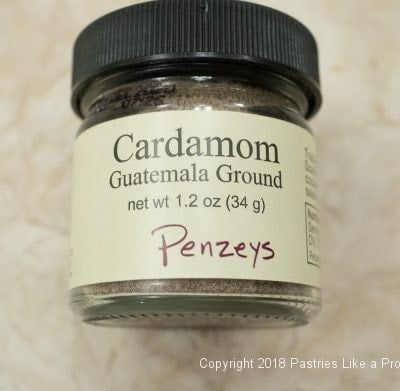
    Another thing to consider when using any spice or herb is to only buy what you can use in about six months. After that, the essential oils which provide the intense flavor will start to dissipate and the flavor will weaken. If they are to be kept longer, freeze them. I love cardamom but do not use it a lot so I store the bottle in the freezer where it stays fresh.
    Research for this article came from the following:
    href="https://non www.ncbi.nlm.nih.gov/pmc/articles/PMC3983393/">https://non www.ncbi.nlm.nih.gov/pmc/articles/PMC3983393/
    https://non www.organiclifestylemagazine.com/cinnamon-ceylon-vs-cassia-health-benefits-and-other-interesting-facts
    https://non www.cnn.com/2017/08/24/health/cinnamon-health-benefits/index.html
    https://non www.britannica.com/plant/cinnamon
    https://non www.britannica.com/plant/cinnamon

    SaveSave

    SaveSave

    SaveSave

    SaveSave

    SaveSave

    SaveSave

    SaveSave

    Flavorings as Used in Baking and Pastry

    Modified: Jul 25, 2025 · Published: Mar 20, 2018 by Helen S Fletcher · This post may contain affiliate links · 27 Comments

    Flavorings are used to enhance, add to or change the taste of the base product, be it cake, cookies, sauces, yeast doughs, pastries, candies, etc.

    Flavorings can come from extracts, emulsions, oils, compounds, powders, spices and herbs. Where to use what is another question. Each of these can be double or triple strength.  For professional baking purposes, we always checked to make sure they were bake-proof meaning the flavor would not disappear when heated.

    Wikipedia offers this difference between flavorants and flavors, "A "flavorant" is defined as a substance that gives another substance flavor, altering the characteristics of the solute, causing it to become sweet, sour, tangy, etc. A flavor is a quality of something that affects the sense of taste."

    The sense of smell determines the ability to taste. Someone with a keen sense of smell can taste subtleties that a person without such a developed sense cannot which is why some people may think something is very cinnamon flavored and another person finds it lacking.

    From Harvard University comes this definition of natural vs. artificial flavors. "The FDA broadly defines natural flavors to include any flavor isolated from natural sources like plant material (fruits, roots, bark, herbs, etc.) or animal products (meat, dairy, etc.) [3]. Artificial flavors are any flavors that are not defined as natural, even if they have the exact same chemical composition as flavors isolated directly from nature [1].

    This distinction between the origins of flavors has no bearing on how safe, healthy, or delicious they are. In fact, flavor agents produced in a controlled laboratory setting undergo rigorous quality control at every stage and do not require a lengthy, labor- and resource-intensive extraction process or acquisition of naturally rare or difficult-to-cultivate materials. As such, many nature-identical artificial flavors are actually available in higher purity than their natural congeners and may be obtained with less damage to the environment."

    Extracts are the most familiar flavorings in home kitchens. Vanilla and almond are two of the most commonly used either as the main flavor or a supportive flavor. Extracts are most used in cakes, cookies, yeast products, pastries, fillings, and buttercreams. Extracts contain alcohol as a base. They can be pure, which use essential oils or distillates from raw materials mixed with alcohol. They can also be made synthetically to imitate the flavors of the pure using artificial flavors or a mixture of natural and artificial.

    Pure Vanilla vs. Imitation Vanilla

    Pure extracts have become very expensive. A gallon of Tahitian vanilla recently went to $400.00 and Bourbon Vanilla costs $350.00 a gallon. Cook's magazine did a blind taste test several years ago to determine whether pure vanilla was all it was cracked up to be. After tasting many pure and artificial vanillas the winner was McCormick artificial vanilla. Price is not always the determining factor, although one is often led to believe this.

    I generally reserve pure vanilla for buttercreams, pastry cream, crème brulee or anywhere it will be the predominant flavor. I never use it anywhere there are complex flavors such as chocolate, lots of spices, molasses, or a lot of ingredients . It is simply a waste of money as it will get lost.

    When I taught, one of my classes was vocal in their hatred of Italian buttercream. I couldn't believe it until I saw the recipe. It used no flavoring. Even I didn't like that! So I made a batch and took it to class. It used artificial vanilla and pure almond flavoring. Their eyes lit up when they tasted it. To a one, they changed their minds. One of the students said, "but you used the expensive vanilla." They were even more impressed when I told them nope, I used the same cheap stuff they use here.

    The one place you cannot use extracts is to flavor chocolate when using it as a coating. The alcohol or water in the extract can cause the chocolate to seize or clump up almost irreversibly.  Flavor the ganache that is being used as the center instead.

    Oils

    Although they are referred to as oils, they do not contain any vegetable oil. Theses flavorings are obtained from the peels (think orange or lemon), flowers or plant leaves. Because they contain no alcohol or water and are high heat tolerant, they are perfect for candy and flavoring chocolate.

    They may be used in baking, but a little goes a long way as they are stronger than extracts. Generally, if a recipe calls for 1 teaspoon of flavoring, you would use a few drops to ¼ teaspoon. While extracts can be added at the beginning with the whites and sugar, oils should be added at the end of the beating cycle.

    Oils are generally more expensive than extracts but they are also much more intense and less is used.  It is important to get oils that are specified as food grade.  There are other essential oils that are used in aromatherapy, soaps, etc. that are not meant to be used for food.

    I prefer anise oil for my anise recipes because of its intensity. I think it imparts much more flavor than extract. However, I generally specify extracts as they are easier to get for most people.

    Recently it was brought to my attention that oils could not be used when making meringues. This person was going to use peppermint oil to flavor their meringue cookies but at the last minute worried about the meringue not whipping to stiff peaks since fat can cause that problem. She called LorAnn Oils and the person told her not to use oil as it would cause the meringue not to whip up as it should.

    When I went on their website I found a recipe for Peppermint Meringues. They indeed did use peppermint oil. The trick is where you put it. It does not go in with the whites in the beginning as does an extract. The whites and sugar are mixed to stiff peaks and then a few drops of oil are mixed in. The photo for this blog was made with anise oil as it was the only one in the house. The oil did not cause a problem as long as it is added at the end of the beating.

    Bakery Emulsions

    Typically flavor emulsions contain water, essential oils, emulsifiers and stabilizers such as gum arabic.

    These are water-based and are used in place of extracts on a one to one substitution. They are bake-proof which means the flavor will stay the same when baked. Sometimes with extracts, the flavor isn't as strong when baked. These are used primarily in large bakeries where cost is a factor. These are less expensive than extracts.

    Powder

    There are powders that are used in baking as primary or secondary flavorings agents. Cocoa is one such powder. Another example is freeze-dried fruit. I use it in buttercreams where I want a strong strawberry or raspberry flavor. However, you have to be careful with the freeze-dried powder. It really soaks up the liquid and can be problematic if used as a main ingredient in cakes and cookies. I thought it would be great to use in an Angel food cake. Not so much. It could have been the amount I used but it was not anyone's idea of an Angel Food Cake!  In fact, it wasn't much of any cake truth to be told.

    More common flavorings are spices such as cinnamon, nutmeg, ginger, cloves – a whole host that are powdered and used for flavoring. When using powders or spices, they should be mixed with the dry ingredients in the recipe so they disperse evenly when added to the batter.

    Liquors and Liqueurs

    I love using these as flavoring agents. Dark rum is my favorite and I use it in many ways. Often I soak the fruit in it for yeast products or fruit purees. I also enjoy using bourbon.

    Liqueurs are usually sweetened and flavored with fruit, spices, nuts, herbs or seeds. I generally don't use these for a baked item but do use them in soaking syrups, or syrups brushed on after baking as well as ganaches.  I have one ganache I use at the restaurant that is enhanced with brandy.

    Citrus Peels and Juices

    Who hasn't used orange, lemon or lime peel that has been zested to add intense flavor to a cake or baked goods?  If I am going to use the peel in a crème anglaise, I find it more agreeable to peel the fruit with a vegetable peeler, cut it into ½ to 1-inch pieces and add it to the milk or cream being used. I bring it to a boil and allow it to cool in the liquid.

    Sometimes in the case of Baklava,  I leave the peel in the syrup overnight for maximum effect. The same can be done with milk or cream. The longer you leave the peel in the liquid the more intense the flavor will become because you are essentially taking the oil from the peel to flavor the liquid. When I want to use the liquid, I simply remove the peel. I then have all of the flavor in a perfectly smooth mixture.

    If I am baking, I usually don't use citrus juices as a flavorings agent unless I back them up with the zest as in my Orange Chiffon.  I find the juice alone is too week when combined with flour, eggs, etc. to have much effect. But the zest or rind is something else. They add a lot of flavor.

    Essences

    Essences are distilled with steam from fruits, spice, and other plants. They are very aromatic and usually, just a few drops are needed.

    Seeds

    are often used either inside bread and cookies as well as sprinkled on top for additional flavor. If I want the flavor of a seed such as sesame or caraway but not the seed itself, I will grind them in a little electric spice grinder to make a powder that can be dispersed throughout the recipe.

    Additional sources of flavorings

    Vanilla sugar can be made by submerging vanilla beans in a canister with sugar for a while. Even vanilla beans that have been removed from a mixture can be washed, dried and used. While I don't use it in baking as a vanilla extract imparts much more flavor it is useful used in finishing such as the Honey Diamonds.

    I have seen where people make vanilla extract by loading up vodka with vanilla beans. The problem with this is there is no way of knowing how weak or strong the vanilla will be. In the beginning probably not very, but if they sit in the vodka for a long time, probably quite a lot.

    Coffee flavoring is as easy as putting instant coffee or instant espresso in little water or other liquid to make a very thick liquid that is then used. In my recipes, I specify the amount of coffee to the amount of liquid.

    Sources for Flavorings
    It should be noted that small amounts of spices, oils, and emulsions should be bought at a time to ensure they are fresh and have maximum flavor. When I closed my bakery, I brought some of the open bottles of spices home with me. However, after a while, they lost their potency and I had to discard them. So wherever you buy your flavorings do not get the biggest bottle even though it may be cheaper to do so unless you bake a lot and will use them within six to nine months.
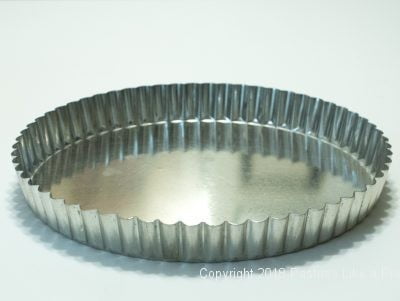
    Grocery stores – This is probably where most people get their flavorings. However, they are often limited and I haven't seen any that carry oil – at least where I live.

    Penzy's – I often buy here because of the high quality of their flavorings. They have many sizes as well as ground spices in cellophane bags for those that use a lot. They also have mail order. They have some oils but mostly dry products as I recall.

    LorAnn Oils and Flavors – This is where I go when I want oils or emulsions. Their diversity is staggering and if you can't find it here, I'm not sure you will find it. The quality is high and they will mail order.

    King Arthur Flour – They also have a lot of flavorings and they get their oils from LorAnn so I just go to the source and buy from LorAnn. However, King Arthur does have everything a baker needs – or at least it seems that way.

    There are other sources for flavorings for sure but these have very high quality and good service.

    Meringues for Flavorings as Used in Baking and Pastry

    Chocolate Coconut Cream Cake

    Modified: Jul 30, 2025 · Published: Mar 13, 2018 by Helen S Fletcher · This post may contain affiliate links · 8 Comments

    Chocolate Coconut Cream Cake

    Chocolate Coconut Cream CakeThis tall, elegant, Chocolate Coconut Cream Cake is perfect for a change-up Easter cake.    I have always wondered why coconut is associated with Easter.  My search yielded no help.  But it is, and this Chocolate Coconut Cream Cake is a surprise twist on my traditional Coconut Cream Cake.  Changing the cake layer from white chiffon to chocolate chiffon completely changes the cake. [Read more...]

    French Macarons with Chocolate Raspberry Filling

    Modified: Jul 12, 2025 · Published: Feb 9, 2018 by Helen S Fletcher · This post may contain affiliate links · 11 Comments

    Pink macarons filled with chocolate and raspery on a white plate.
    Pink macarons filled with chocolate and raspery on a white plate.

    Just in time for Valentine's day comes these special French Macarons with the same chocolate raspberry truffle filling we sold at the bakery. This deeply chocolate, deeply raspberry filling is sandwiched between two pink macaroons.

    It is important to read this header because a lot of the information is here and only referred to in the actual recipe.

    [Read more...]

    The Secret of the 9 Inch Cake Pan

    Modified: Jul 30, 2025 · Published: Jan 31, 2018 by Helen S Fletcher · This post may contain affiliate links · 2 Comments

    Three tiered cake for The Secret of the 9 Inch Cake Pan

    Three tiered cake for The Secret of the 9 Inch Cake PanThe Secret of the 9 Inch Cake Pan is excerpted from “Baking as a Business.” by Helen S. Fletcher.  The book is also available on Kindle.

    Sometime into my professional baking career, I discovered The Secret of the 9 Inch Cake Pan. When we first started making wedding cakes, it was hit or miss. Since we made everything from scratch and there was no internet, I would simply guess at how much batter to make. Sometimes we were right on, sometimes not enough and sometimes too much. In any case, not a good way of conducting business. I have no idea when or how I came up with this formula but it works and we used it at the bakery for scaling cakes up or down.

    This three-tiered cake is a great example of The Secret of the 9 Inch Cake Pan.  The middle layer is 9 inches.  The top layer is 6" and the bottom layer is 12".  Calculating the batter needed for the cake was easy using the Secret of the 9 Inch Cake Pan. Three and one-half recipes of the 9" cake layer would be needed. [Read more...]

    Cocoa Brownies in No Time-or a Little Time!

    Modified: Jul 25, 2025 · Published: Jan 9, 2018 by Helen S Fletcher · This post may contain affiliate links · 17 Comments

    Cocoa Brownies

    Cocoa BrowniesCocoa Brownies have never been in my wheelhouse and I'm not sure why, although I have a sneaking suspicion I am prejudiced in favor of chocolate. However, while wandering around the internet recently, an article on cocoa brownies caught my eye. [Read more...]

    Warm Chocolate Lava Cakes with Bailey's Sauce

    Modified: Jul 30, 2025 · Published: Dec 26, 2017 by Helen S Fletcher · This post may contain affiliate links · 3 Comments

    A Warm Lava Cake sits on an antique plate with a spoon and coral napking and Bailey Sauce in the background.

    If you’re looking for that special dessert on St. Patrick's Day or any day these Warm Lava Cakes with Bailey's Sauce whisk up literally in a matter of minutes. These individual desserts consist of a very tender, chocolate cake with a flowing center.

    In fact, these take only a whisk, a bowl and a few measuring utensils to make.

    A Warm Lava Cake sits on an antique plate with a spoon and coral napking and Bailey Sauce in the background.

    These Warm Chocolate Lava Cakes with Bailey's Sauce comes from Cork, Ireland via the Epcot Food and Wine Festival in Orlando, Florida when my whole family visited Disney World. Many countries are featured presenting food that is associated with them. The array was spectacular and this was just one of our favorites.
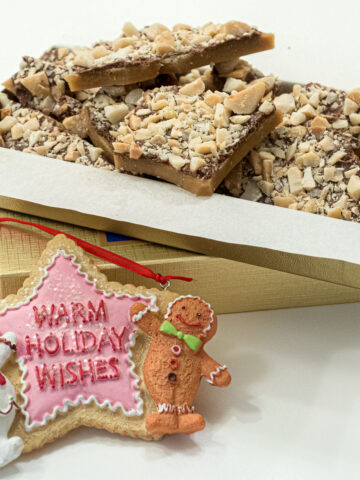
    There are many ways to make this. This is the recipe from the Festival.

    [feast_advanced_jump_to]

    Why You'll Love This Recipe

    • It is soooooo easy to make. No mixer of any kind is needed - just a whisk and a bowl along with a few measuring untensils.
    • The soft cakes and sauce are intensely chocolate.
    • There are only a few familiar ingredients.
    • If you don't have Bailey's Liqueur on hand, just buy a small airline bottle and it will be enough for the sauce. The Bailey's Sauce can be made ahead and simply reheated.
    • It's one of those sophisticated looking desserts that's super simple to make.
    • Everyone loves an individual cake made just for them.
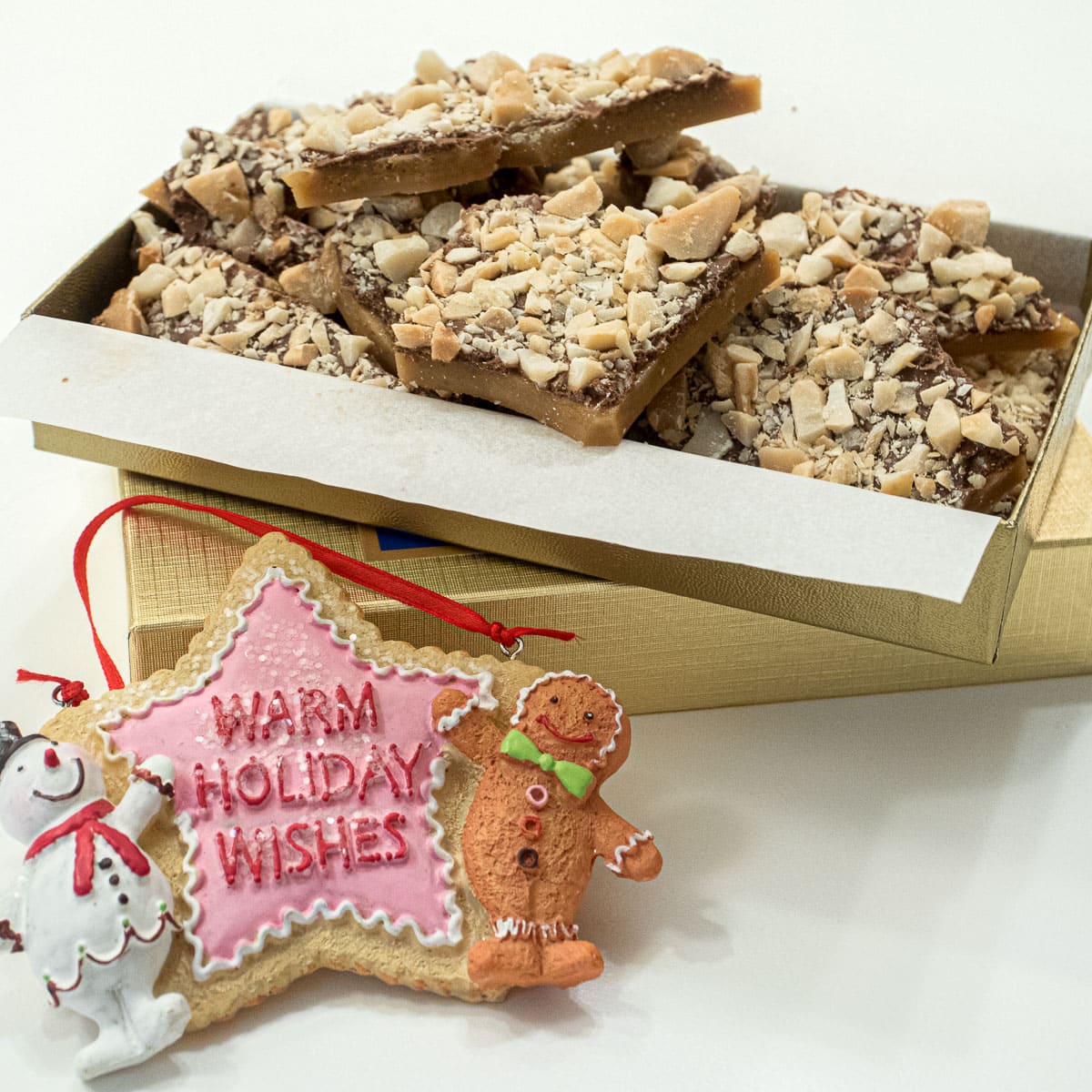
    • Both the sauce and the cake can be made ahead.

    Recipe Ingredients

    Cake Ingredients

    Ingredients for the Warm Chocolate Lave cakes include sugar, semisweet chocolate, whole eggs, egg yolks, flour, vanilla and butter.

    All Photos read Left to Right.

    BACK ROW: Granulated Sugar, Semisweet Chocolate, whole eggs

    MIDDLE ROW: Egg yolks, all-purpose flour, vanilla

    FRONT ROW: Unsalted Butter

    Bailey's Sauce Ingredients

    Bailey's Sauce ingredients include milk chocolate, Bailey's liqueur and heavy cream.

    BACK ROW: Milk chocolate chips.

    FRONT ROW: Bailey's Liqueur, heavy cream

    *Be sure to see the recipe card below for the full ingredient list and instructions.*

    Step by Step Instructions

    For the Cakes

    Aa whisk and large bowl to mix the Lava cakes in.

    Step 1. Have a whisk and large bowl ready. They will be your main utensils.

    The butter is cut into small pats and combined in a bowl with the chocolate.

    Step 2. Cut the butter into small pats. Place half on the bottom and half on top of the chocolate.

    The butter and chocolate are melted.

    Step 3. Melt the butter and chocolate in a microwave at half power for about 2 ½ minutes or place over a pan of simmering water. Although the butter and chocolate may not look melted, they usually are.

    The melted chocolate and butter are whisked together to become one.

    Step 4. Whisk the butter and chocolate together until completely mixed. If it is hot, allow it to cool for about 10 minutes or until lukewarm.

    The whole eggs and egg yolks are placed in a large bowl.

    Step 5. Place the whole eggs and egg yolks in a large bowl.

    The eggs and yolks are whisked together until well mixed.

    Step 6. Whisk the eggs and yolks together until well combined.

    The melted, cooled butter and chocolate are added to the eggs.

    Step 7. Add the lukewarm chocolate/butter mixture to the eggs.

    The eggs and chocolate are whisked togethr completely.

    Step 8. Whisk the eggs and chocolate together until blended.

    The sugar and vanilla are added to the chocolate/butter mixture.

    Step 9. Add the sugar and vanilla to the chocolate mixture.

    The sugar and vanilla are whisked into the chocolate mixture.

    Step 10. Whisk the sugar and vanilla into the chocolate.

    The flour is added to the chocolate mixture.

    Step 11. Last, add the flour.

    The flour is whisked in and the batter is finished.

    Step 12. You guessed it! Whisk the flour in completely for a thick batter.

    The chocolate batter is divided between six Texas muffin cups.

    Step 13. Spray six ramekins or Texas muffin cups generously with a non-stick baking release. Fill them about ¾ full of batter. Bake as directed.

    Bailey's Sauce

    The heavy cream and Bailey's liqueur are placed in a small saucepan.

    Step 1. Combine the heavy cream and Bailey's liqueur in a small, heavy saucepan and brought to a simmer.

    The milk chocolate chips are submerged in the hot liquid.

    Step 2. Submerge the milk chocolate chips under the hot milk and Bailey's. Let it sit for a few minutes and then whisk until smooth.

    Recipe FAQS

    Are the eggs cooked enough?

    The eggs will be about 160°F which is safe to eat. If you are in doubt, test the gooey middle with a baking thermometer.

    Can Lava Cakes be reheated?

    They are definitely best served when baked. The problem with reheating the is that the liquidy middle sometimes gets baked. They can be reheated as follows:
    Wrap in a double thickness of paper towels and microwave for about 10 seconds. Alternatively, place them back in their ramekins or muffin tin and heat in a 350°F oven for about 10 minutes.

    Do Lava cakes need to be refrigerated?

    If they are left over, yes, wrap them individually and refrigerate. Reheat as above.

    Can they be made ahead?

    Yes. Both the sauce and the cakes can be made ahead. Divide the batter between the ramekins or Texas muffin tins, cover well and refrigerate for up to a couple of days or freeze. If frozen, thaw in the refrigerator overnight. Add a few minutes to the baking time since they will be cold. The sauce can be made a week ahead and refrigerated. Reheat to use.

    Expert Tips

    • Make sure you use a quality chocolate such as Guittard, Ghiradelli, or Lindt. Do not use chocolate chips as they won't create a flow.
    • If you don't want to use the Bailey's, increase the cream to ½ cup.
    • Do not overbake or the middle will not have much lava. The sides should be baked but the middles should be giggly. If they are liquidy, bake for another minute.
    • If the cake have been refrigerated or thawed from the freezer, add about a minute to the baking time.
    Warm Lava Cake with the molten interior running out.

    Other Mostly Chocolate Recipes to Consider

    • Chocolate Caramel Pecan Tart
      Chocolate Caramel Pecan Tart
    • These individual Brown Butter Tarts feature a butter crust filled with brickle bits and a browned butter filling. They are lightly dusted with powdered sugar and served with caramel sauce
      Brown Butter Tarts
    • Skillet Brownies with vanilla ice cream on white and orange plates.
      Easy Skillet Turtle Brownies
    • L'Opéra Petit Four
      L'Opéra Petit Fours

    Love this recipe or any other on my site? Please leave a 5-star 🌟🌟🌟🌟🌟rating in the recipe card & consider leaving a review in the comments further down, thanks!

    A Warm Lava Cake sits on an antique plate with a spoon and coral napking and Bailey Sauce in the background.

    Warm Lava Cakes with Bailey's Sauce

    Helen S. Fletcher
    If you’re looking for that special dessert on St. Patrick's Day or any day these Warm Lava Cakes with Bailey's Sauce whisk up literally in a matter of minutes. These individual desserts consist of a very tender, chocolate cake with a flowing center. In fact, these take only a whisk, a bowl and a few measuring utensils to make in a matter of minutes.
    5 from 1 vote
    Print Recipe Pin Recipe
    Prep Time 20 minutes mins
    Cook Time 18 minutes mins
    Total Time 38 minutes mins
    Course Individual cake
    Cuisine Irish
    Servings 6 servings
    Calories 874 kcal
    Prevent your screen from going dark

    Ingredients

    For the Lava Cakes

    • 8 ounces semi-sweet chocolate
    • 1 cup butter (225 grams or 8 ounces or 2 sticks)
    • 5 large egg yolks
    • 4 large whole eggs
    • ¾ cup sugar (150 grams or 5 ¼ ounces)
    • 1 tablespoons vanilla
    • ⅓ cup all purpose flour (45 grams or 1 ½ ounces)

    For the Bailey's Sauce

    • ¼ cup heavy cream
    • ¼ cup Bailey's Liqueur
    • 4 ounces milk chocolate (114 grams)

    Instructions
     

    For the Lava Cakes

    • Preheat the oven
    • to 375 degrees or 350 degrees if using dark pans. Spray 6 six ounce ramekins or Texas muffin pans generously with a non-stick baking releasing agent. Set aside.
    • Melt the chocolate and the butter in the top of a double boiler or in a microwave oven until the chocolate is melted. Whisk together until smooth. Let sit for 10 minutes or so to cool to lukewarm.
    • Whisk the eggs and whole eggs together.
    • Whisk in the chocolate mixture.
    • Add the sugar and vanilla and whisk to combine well.
    • Lastly whisk in the flour.
    • Divide among the 6 ramekins or tins, about ¾ cup each.
    • Bake for 18 to 19 minutes until the outer edges are just set but the middle is giggly but not wet. If it is wet, bake for an additional minute.

    For the Bailey's Sauce

    • While the cakes are baking, make the sauce.
    • Combine the cream and Bailey’s in a small saucepan.
    • Heat until simmering but do not boil.
    • Submerge the chocolate under the cream for several minutes to melt the chocolate. Whisk to smooth.
    • Yield: ⅞ cup sauce.

    Notes

    Make ahead instructions for the cakes: The lava cakes can be prepared and placed in their molds. Refrigerate for several days, or freeze. If frozen, thaw overnight in the refrigerator. Add an additional minute or two when baking.
    Make ahead instructions for the sauce: The sauce can be made up to a week ahead and refrigerated. Heat it to serve with the cakes.
    To release the cakes: Wait for a minute or two, place a serving plate over the ramekins one at a time and turn them upside down. They can be served this way or turn them over. Just be careful, they are very hot. For the Texas muffin cups, go around the edges with a small, flexible spatula. Place a quarter sheet or half sheet over the top of the cups and turn them over. Use a pancake turner to move them to serving plates.
    If Bailey's is omitted, increase the heavy cream to ½ cup.
    Serve immediately with the warmed sauce.
    The lava cakes can also be served with whipped cream, ice cream, or caramel sauce instead of the Bailey's sauce if desired.
    Be sure to use a good quality chocolate such as Guittard, Ghiradelli, Lindt or other quality bar chocolate, so the center will flow when warm.
    The lava should be about 160° when finished. The eggs will be safe at that point.
    If any of the cakes are left over, refrigerate. To warm them, place them back in their original container and heat in a 350°F oven for about 10 minutes or cover with a paper towel and microwave for about 15 seconds or until warmed through. Refrigerate the sauce and warm that to serve with the cakes. The centers may not flow, but they will still be delicious.

    Nutrition

    Serving: 1cakeCalories: 874kcalCarbohydrates: 67gProtein: 11gFat: 62gSaturated Fat: 36gPolyunsaturated Fat: 3gMonounsaturated Fat: 18gTrans Fat: 1gCholesterol: 372mgSodium: 308mgPotassium: 360mgFiber: 4gSugar: 54gVitamin A: 1494IUVitamin C: 0.1mgCalcium: 82mgIron: 4mg
    Tried this recipe?Mention @helensfletcher or tag #pastrieslikeapro!

    SaveSave

    SaveSave

    SaveSave

    SaveSave

    SaveSave

    SaveSave

    SaveSave

    SaveSave

    SaveSave

    Easy Holiday Food Gifts

    Modified: Jul 25, 2025 · Published: Dec 5, 2017 by Helen S Fletcher · This post may contain affiliate links · 6 Comments

    Chocolate Truffles for Holiday Food Gifts

    Chocolate Truffles for Holiday Food GiftsFood gifts are always welcome, but even more so during the holiday season.  Every year the holidays arrive faster and faster.  No matter how I try, there is no way to slow them down.  When I was a little girl, time could not go by fast enough.  Now that I am no longer a little girl, it goes all too fast.

    Many of us, including me, have people on our gift list that we want to remember. There is no better way to let someone know you appreciate them or what they do than with food gifts you make.  So I drew together a list of quick to make and wonderful to receive gifts that are not cookies.  Don't get me wrong, I love making and giving cookies, but they can be time-consuming if you work or are just busy. [Read more...]

    Raspberry Rhapsody Cake

    Modified: Jul 30, 2025 · Published: Nov 28, 2017 by Helen S Fletcher · This post may contain affiliate links · 25 Comments

    Raspberry Rhapsody
    Raspberry Rhapsody

    This Raspberry Rhapsody had an interesting start. This is actually based on the Hungarian cake, Rigo Janci. I introduced it as that and I couldn't get anyone to buy it. I finally tracked down the reason. It seems the chefs didn't know how to pronounce it. Not wanting to look bad, they just skipped over it.

    So, I just changed the name to Raspberry Rhapsody and it took off and became a good seller.

    This Raspberry Rhapsody employs one of the moistest sponge cakes to be found. There is one little trick I found at the bakery that ensures this moisture. Immediately upon coming from the oven, the top of the layers are covered directly with foil until cool. This has the effect of steaming the sponge keeping it flexible and moist.

    [Read more...]

    Peppermint Ravioli Cookies

    Modified: Apr 23, 2026 · Published: Nov 14, 2017 by Helen S Fletcher · This post may contain affiliate links · 31 Comments

    Peppermint Ravioli Cookies tied in a stick with green ribbon and gift boxes around.

    Peppermint Ravioli Cookies

    I wait for the winter holidays for Ghirardelli to send out its peppermint squares again just to make these Peppermint Ravioli Cookies. This once a year treat is delicious on its own, but incorporated into a cookie can’t be beat.

    And if you're looking for something different to add to that cookie exchange or tray, these Peppermint Ravioli Cookies could be just the thing.

    After the holidays were done, we snapped up all the half price or less peppermint squares we could find. I had a ball in January working with them. These Peppermint Ravioli Cookies are easy to make and would be a perfect gift for anyone during the holidays, and what a treat for those of us loving this candy as I do. [Read more...]
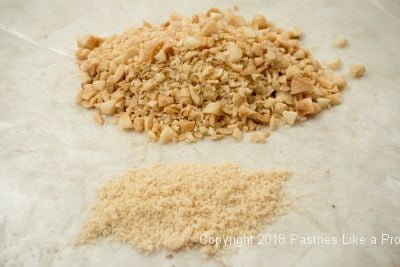
    Pumpkin Cheesecake Tart with Caramel Rum Sauce

    Modified: Oct 11, 2025 · Published: Nov 7, 2017 by Helen S Fletcher · This post may contain affiliate links · 11 Comments

    A slice of Pumpkin Cheesecake Tart on a plate with Rum Caramel Sauce and the tart in the bakground
    A slice of Pumpkin Cheesecake Tart on a plate with Rum Caramel Sauce and the tart in the bakground

    This Pumpkin Cheesecake Tart with Caramel Rum Sauce is ease personified in baking.

    The simple Caramel Rum Sauce can be made weeks ahead and refrigerated.

    The Pumpkin Cheesecake Tart has a graham cracker crust that is pressed in and filled with a cream cheese mixture alternated with a pumpkin mixture which are swirled together.

    The baked tart can be frozen if made ahead.

    That's pretty much it - an epic short intro for me!  Oh, I couldn't leave without telling you to  check out the Pumpkin Mousse Torte for another seasonal pumpkin dessert.

    Caramel Rum Syrup for Pumpkin Cheesecake Tart

    Caramel Rum Sauce

    3 tablespoons water
    1 cup sugar (200 grams or 7 ounces)
    2 tablespoon light corn syrup
    2 tablespoons unsalted butter (30 grams or 1 ounce)
    ⅔ cup 40% or heavy cream
    2 tablespoons rum
    1 teaspoon vanilla

    Water, sugar, cornsyrup for Pumpkin Cheesecake Tart
    Washing sides of pan down for Pumpkin Cheesecake Tart

    Combine the water, sugar and cornsyrup in a heavy medium saucepan. Place over medium heat and stir until the sugar dissolves. Bring to a boil.  Wash the sides down with a brush dipped in cold water.

    Deep amber syrup for umpkin Cheesecake Tart

    Increase the heat and boil, until the syrup becomes a dark amber brown.

    Butter added to caramel for the Pumpkin Cheesecake Tart
    Cream added to caramel for the Pumpkin Cheesecake Tart

    Remove from the heat and the butter. Stir to melt it. Add the cream; it will most likely bubble up like crazy. Finally, stir in the rum and vanilla.

    Pouring caramel for the Pumpkin Cheesecake Tart

    Pour into a container and cool completely.

    It can be left at room temperature for a day or two. Refrigerate after that.

    Yield:  about 1 ⅔ cups

    Plain 11" Graham Cracker Crust
    2 cups graham cracker crumbs (buy them in crumbs or run the crackers through food
    processor) [225 grams or 8 ounces]
    ¾ cup unsifted powdered sugar (75 grams or 2 ⅔ ounces)
    10 tablespoons unsalted butter, melted (150grams or 5 ⅓ ounces)
    1 teaspoon vanilla

    Preheat the oven to 350°F. Line the bottom of a half sheet pan with foil. Set aside.

    Crumbs on side of pan for the Pumpkin Cheesecake Tart
    Crumbs pressed into the side of the pan for the Pumpkin Cheesecake Tart
    Finished crust for Pumpkin Cheesecake Tart

    Combine the crumbs and powdered sugar, mixing well. Mix the butter and vanilla together. Add the butter mixture to the crumbs and toss with a fork until the crumbs are completely coated. Spray the bottom and sides of the quiche pan and press about ⅔ of the crumbs (255 grams or 9 ounces) evenly against the sides of the pan, pressing firmly.   Press the remainder (170 grams or 6 ounces) onto the bottom of the pan.

    Bake for 10 minutes. Leave the oven on.

    If the sides have slumped, immediately press them back up the sides with the back of a spoon. Be careful as everything will be very hot. Using the back of the spoon again, even out the crust. Set aside.

    Cream cheese ingredients for Pumpkin Cheesecake Tart

    Cream Cheese Mixture

    12 ounces cream cheese, room temperature (340 grams or 1 ½ eight-ounce packages)
    ½ cup sugar (100 grams or 3 ½ ounces)
    ¾ teaspoon vanilla
    1 egg
    1 egg yolk
    3 tablespoons milk

    Cream cheese, sugar, vanilla for the Pumpkin Cheesecake Tart

    Beat the cream cheese, sugar and vanilla until fluffy, scraping and re-beating often until completely smooth.

    Eggs added for the Pumpkin Cheesecake Tart

    Add the egg, egg yolk and milk, beating to combine completely, scraping often.

    Cheesecake withheld for Pumpkin CheesecakeTart

    Reserve ½ cup of this mixture. Set the remainder aside.

    Ingredients for pumpkin for Pumpkin Cheesecake Tart

    Pumpkin Mixture

    1 egg
    ¾ teaspoon cinnamon
    ½ teaspoon ginger
    ⅛ teaspoon cloves
    ⅓ cup brown sugar packed (65 grams or 2 ⅓ ounces)
    ½ cup reserved cream cheese mixture from above
    1 cup  canned pumpkin (225 grams or 8 ounces)

    Eggs mixed for the pumpkin for Pumpkin Cheesecake Tart
    Spices added for the Pumpkin cheesecake tart
    Sugar in for the Pumpkin Cheesecake Tart
    Cheesecake in for the Pumpkin Cheesecake Tart
    Pumpkin in for the Pumpkin Cheesecake Tart

    Whisk the egg in a large bowl to mix completely.  Add the cinnamon, ginger and cloves, whisking to combine.  Add the brown sugar, then the reserved cream cheese mixture.  Last, whisk in the pumpkin.

    Pumpkin Cheesecake Tart Assembly
    11" baked graham cracker crust, baked
    Cheesecake mixture
    Pumpkin mixture

    Cheesecake in shell for te Pumpkin Cheesecake Tart
    Marbelized for Pumpkin cheesecake Tart

    Alternate spoons of the pumpkin and cheesecake mixtures in the shell. Swirl to marbleize.

    Bake for 20 to 25 minutes just until set.

    Remove from the oven. Cool.

    Serve with the Caramel Rum Sauce.

    Note:  This can be made ahead and frozen for several weeks.  The caramel sauce can be made ahead at the same time and kept refrigerated.  Bring to room temperature before serving.

    The Pumpkin Cheesecake Tart can be frozen after baking for 6 weeks or so.  Thaw in the refrigerator.

    SaveSave

    SaveSave

    SaveSave

    SaveSave

    SaveSave

    SaveSave

    Scones with Cranberry Strawberry Jam

    Modified: Aug 25, 2025 · Published: Nov 3, 2017 by Helen S Fletcher · This post may contain affiliate links · 8 Comments

    Scone with Cranberry Strawberry Jam on a plate
    Scone with Cranberry Strawberry Jam on a plate

    After last week's marathon recipe, Scones with Cranberry Strawberry Jam is a walk in the park. The scones are easily made and the jam requires no canning if kept in the refrigerator or freezer.  The combination of the cranberries and strawberries makes a sweet-tart topping for the scones, toast, biscuits, or pancakes and waffles. A jar of the jam makes a perfect hostess gift.

    These scones are endlessly variable.   They are light, moist and very buttery tasting despite the fact they have only three tablespoons of butter. Of course, the liquid used is heavy cream.
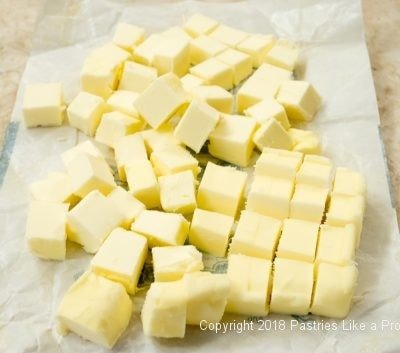
    The scones should be served close to baking for the best experience. But they are certainly good any time of the day, even the next day. Since they can be frozen, either baked or unbaked, warm scones can be had any time of the day. This is a wonderful breakfast with friends or part of a brunch.  They can be made larger or smaller as desired.
    With the butter and cream in these, I would skip the clotted cream but definitely serve them with my Cranberry Strawberry Jam for a special treat.

    Jam ingredients for Scones with Cranberry Strawberry Jam

    Cranberry Strawberry Jam
    12 ounces cranberries, fresh or frozen (340 grams)
    1 pound strawberries (454 grams)
    ⅓ cup water
    3 ½ cups sugar (700 grams or 24 ½ ounces)

    Jam equipment for Scones with Cranberry and Strawberry Jam

    Wash and dry the jars and lids for the jam.  Assemble them along with a ladle and a canning funnel if you have them.  If you don't just ladle straight into the jars.  It is just a lot easier with the funnel.

    Cranberries picked over for Scones with Cranberry Strawberry Jam

    Pick over the cranberries and remove any that are not ripe. Set aside.

    Cranberries and Strawberries in pot for the Scones with Cranberry Strawberry Jam
    Fruit boiling for Scones with Cranberry Strawberry Jam
    Sugar added for jam in Scones with Cranberry Strawberry Ja
    Jam boiling for Scones with Cranberry and Strawberry Jam

    Hull the strawberries and quarter them if large. Combine the cranberries, strawberries and water in a heavy pot. Heat until they start to juice, stirring frequently. Add the sugar. Bring to a rolling boil; boil 10 minutes stirring frequently. 

    Skinming foam for Scones with Cranberry and Strawberry Jam
    Finished jam for Scones with Cranberry Strawberry Jam
    Ladeling jam into jars for Scones with Cranberry and Strawberry Jam

    Skim off any foam.Ladle into jars within ¼ inch of the top.  Place the lids on.

    Jars of jam for Scones with Cranberry and Strawberry Jam

    Cool completely. Store in the refrigerator for several months or freeze for longer storage.

    Yield: 5 -½ pint jars.

    Scone ingredients for Scones with Cranberry and Strawberry Jam

    Scones

    2 cups cake flour (250 grams or 8 ¾ ounces)
    2 teaspoons baking powder
    ¾ teaspoon salt
    ¼ cup sugar (50 grams or 1 ¾ ounces)
    3 tablespoons butter, cold and cut into small pieces (45 grams or about 1 ½ ounces)
    1 cup + 1 tablespoon 40% or heavy cream
    1 tablespoon cream
    Sanding sugar, optional

    Preheat oven to 375°F. Line a baking sheet with parchment paper. Set aside.

    Combine the cake flour, baking powder, salt and sugar in the bowl of a mixer fit with the paddle attachment. Mix briefly to combine.

    Butter added to flour for Scones with Cranberry and Strawberry Jam

    Add the cold, cut up butter and mix to cut the butter in. However, do not overmix, you want some pea-size pieces.

    Cream added to scones for Scones with Cranberry and Strawberry Jam
    Finished scone dough for Scones with Cranberry and Strawberry Jam

    Add the cream and mix on low just to bring it together. Stop halfway through and rearrange the dough in the bowl to mix completely.

    Dough shaped into a round for Scones with Cranberry Strawberry Jam
    Flattening dough for scones for the Scones with Cranberry Strawberry Jam

    Remove from the mixer. Knead several times to make a smooth ball. On a floured surface, press the dough into an 8" round.   You can roll the dough out or, as I do, simply place a round pan of about the same size on top of the dough and press evenly down.  The dough will be about 1" thick.

    Flattening dough for scones for Scones with Cranberry and Strawberry Jam
    Cutting into fourths for Scones and Cranberry and Strawberry Jam
    Tray of eight scones for Scones with Cranberry and Strawberry Jam

    Cut into 7 to 8 pie shaped pieces.  Th easiest way is to cut the round into quarters, then cut each piece into two.  Place on the prepared pan.

    Brushing with cream for Scones with Cranberry Strawberry Jam
    Sprinkling scone with sugar for Scones with cRanberry and Strawberry Jam

    Brush with additional cream and sprinkle with sanding sugar if using.

    Baked scones for Scones with Cranberry and Strawberry Jam

    Bake for 18 to 20 minutes until just browning.

    Scones are best eaten the day they are made.

    Scone for Scones with Cranberry and Strawberry Jam

    Alternately they can be frozen baked or unbaked as desired. If baked, bring to room temperature and warm slightly to serve. If they are unbaked, place on a baking sheet and add about 5 minutes to the baking time.

    Scone Variations  - These are a few of my favorites, what are yours?

    Blueberry Scones – Add ¾ cup frozen blueberries to the dough with the cream.

    Lemon Scones – Add the rind of 1 large lemon. Squeeze the juice from the lemon. Measure 1 ½ cup powdered sugar and add just enough lemon juice so it will drizzle off a spoon on top of the baked scones.

    Blueberry Lemon – Combine the above.

    Cinnamon Scones -  Add 2 teaspoons cinnamon to the dry ingredients and mix as called for.

    Raisin Scones – Add ½ cup raisins that have been soaked in hot water for about 20 minutes. Drain well and pat dry between paper towels. Add with the cream.

    Dried Fruit Scones – Add about ¾ cup diced apricots, cherries, ginger or any combination of dried fruit when adding the cream.

    For another special jam, check out the Strawberry Balsamic Jam.SaveSave

    SaveSaveSaveSave

    SaveSaveSaveSave

    SaveSave

    SaveSave

    SaveSave

    Caramel Apple Tart

    Modified: Mar 24, 2023 · Published: Oct 28, 2017 by Helen S Fletcher · This post may contain affiliate links · 18 Comments

    Slice of Caramel Apple Tart

    Caramel Apple Tart is everything you would want in an apple dessert.  Full of apples, spices, brown sugar and brandy, it's covered with walnut streusel and caramel. This was a fall favorite with my clientele at the bakery.

    Slice of Caramel Apple tart on a plate with a fork

    So you ask, what is the difference between a pie and a tart?  The answer is essentially nothing significant.  A pie is quite often covered with a top crust.  Tarts seldom are and are generally baked in fluted tart pans with removable bottoms - think quiche pan or deeper.

    That's where the streusel comes in.  Something has to go on top of the apples, so they don't dry out while baking.  The caramel that tops this particular tart gilds the lilly even more.  This was a favorite with my wholesale clientele.

    One of the big differences between this and the original post is the dark tart pan. Generally, I am not a big fan of dark bakeware because it browns quickly and often the item bakes up too dark. However, that very characteristic is what makes it work to the advantage of the pie crust which often doesn't brown enough on the bottom. This pan solves that problem.

    Tart pan for Caramel Apple Tart

    Found a 9 ¾ x2 inch tart/quiche pan online.  It seems to be very close to the one I have. I also found that Sur la Table and Williams Sonoma also have some, but not sure of their sizes.  Be sure to follow the directions to hand wash and dry immediately as this is tinned steel and will rust if left wet.

    There are basically two ways of making caramel.  One method is to put sugar in a pan and melt it, continuing to cook until it is the desired color.  Then butter and cream are added.  I have always been a phenomenal flop at this method.  I'm not sure if it is the pan, too high a heat or my impatience and lack of clarity that befuddles me but something does.  I usually burn the caramel with this method.  However, adding some water to the pan first and then adding the sugar helps but I still don't use it.

    The caramel we made at the shop is still my favorite.  I could eat it by the spoonful.  It uses water with the sugar and corn syrup for the first part.  Always put the water in the pan first and then the sugar to keep the sugar from absorbing the water and clumping up.  The most important part is bringing it to the correct temperature.  Too low and the caramel will be runny, too high and it will set up too hard.

    The crust for this Caramel Apple tart is not an American pie crust.  Because this was made for restaurants, the crust had to hold up for a number of days under refrigeration which a normal pie crust will not do. It is not flaky at all but is tender and buttery.  It is a close cousin to the Pasta Frolla used in the  Torta Rustica.  It is a snap to make and a dream to roll out straight from the processor.  This crust is much easier to handle than an American pie crust or French Pate Brisee.  If asked, I would say this is my favorite crust for single tarts and pies.

    As far as the apples are concerned, all one type can be used or you can mix them.  I am using Gala and Granny Smith apples for this tart.  At the bakery, we used Spy apples and I loved them.  However, in my market, I can't find them.

    When baking our tarts, I found that by covering them for the first part of baking and then uncovering for the last part was better than trying to cover them while hot in order to prevent the top from burning.  After baking, the tart is cooled and chilled to make applying the caramel easier.

    This Caramel Apple Tart can be frozen with the caramel or without the caramel.  We sold them with the caramel already on but for home baking, I think it is a better idea to freeze the baked tart without the caramel.  In any case, the tart should be thawed, preferably in the refrigerator for a day or two.  If you didn't apply the caramel top before freezing, apply it after it is defrosted.  Remove the tart from the refrigerator hours before serving so it can reach room temperature.

    This Caramel Apple Tart has parts that can be made ahead to make this easy to put together. The caramel must be made at least the day ahead and up to 10 days ahead if refrigerated.  Take it out the night before using, so it can return to room temperature.

    The Streusel can be made days ahead and refrigerated.  Use it straight from the refrigerator. If streusel is your thing be sure to see Apple Crisp with A Difference for a quick fix.

    They don't say apple pie is America's favorite for nothing and this Caramel Apple Tart is right up there with the best of them.

    Caramel - for how to photos of Caramel
    1 cup cold water
    1 ½ cups sugar (300 grams or 10 ½ ounces)
    2 tablespoons corn syrup
    1 cup 40% cream
    7 tablespoons unsalted butter, cut into pieces (105 grams or 3 ⅔ ounces)
    1 teaspoon vanilla

    Place the water, sugar and corn syrup in a 2 quart or larger saucepan. Stir over heat until the sugar is dissolved completely. Bring to a boil; wash the sides of the pan down with a pastry brush dipped in cold water, then boil without stirring until the mixture becomes a medium golden color.

    Off heat, immediately add the butter and stir until it is melted. Pour the cream in all at once and stir in. If some of the cream lumps up don’t worry. Return to medium high heat and bring to a boil. Boil to 230 degrees on a candy thermometer. Pour into a bowl and allow to come to room temperature.

    This can be made days ahead, cooled and refrigerated. Take out the night before using to soften.

    Yields: 1 ½ cups

    Streusel ingredients for the Caramel Apple Tart

    Streusel Topping

    ½ cup walnuts (60 grams or 2 ounces)
    2 tablespoons flour (17 grams or about ⅔ ounce)
    ½ cup packed brown sugar (100 grams dor 3 ½ ounces)
    2 tablespoons butter, cut into pieces (30 grams or 1 ounces)

    Streusel ingredients for Caramel Apple Tart
    Streusel processed for the Caramel Apple Tart

    Put all in a processor bowl fitted with the steel blade or the bowl of a mixer. Pulse to form a crumbly streusel topping. Set aside or refrigerate if making ahead.

    Filling
    2 ½ pounds apples, peeled, cored and sliced (1135 grams)
    2 tablespoons brandy or lemon juice
    1 cup packed brown sugar (200 grams or 7 ounces)
    ¼ cup flour (35 grams or about 1 ¼ ounces)
    2 teaspoons cinnamon
    ¾ teaspoon nutmeg

    Pour the brandy or lemon juice over the apples.

    Dry ingredients for filling for the Caramel Apple Tart

    Mix the remaining ingredients together  

    Dry ingredients for filling mixed for Caramel Apple Tart
    Apples mixed for the Caramel Apple Tart

    and pour over the apples.  Mix well so apples are all coated.  Let rest about 15 minutes while preparing the crust.

    Crust ingredients for Caramel Apple Tart

    Crust

    2 cups sifted cake flour (250 grams or 8 ¾ ounces)
    ½ teaspoon salt
    ½ cup unsalted butter, cold,  cut into pieces (114 grams or 4 ounces)
    1 egg
    3 tablespoons cream

    Place the flour and salt in a processor bowl or mixing bowl. Mix to combine.

    Butter added for crust for the Caramel Apple Tart
    Butter cut in for the Caramel Apple Tsrt
    Cream and egg whisked for the Caramel Apple Tart
    Liquid in processor for the Caramel Apple Tart
    Crust balled up for the Caramel Apple Tart

    Add butter and cut in until mealy and indistinguishable. Whisk the egg and cream together and add to the flour mixture and mix or process until a smooth ball forms. This will look powdery at first but just keep processing or mixing and it will ball up. 

    Crust ready to roll for the Caramel Apple Tart
    Crust rolled out for the Caramel Apple Tart
    Seating crust into the pan for the Caramel Apple Tart
    Seating crust for 90° angle for the Caramel Apple Tart

    Form into a ball and flatten somewhat.  Roll into a circle about 11 inches. Fit into a 9x2 inch fluted tart shell with a removable bottom or a 9 inch deep dish pie pan. Make sure it is seated well into the corners by pulling the dough to the center and fitting it into the shell at a 90° angle.  

    Crust in pan for the Caramel Apple Tart
    Pressing dough off for the Caramel Apple Tart
    Finished crust for the Caramel Apple Tart

    Remove the excess dough by pressing with the palm of your hand on the top of the shell to cut it off.  If using the pie pan,  you may have to cut it off cleanly with a knife. Set aside.

    Assembly of Caramel Apple Tart
    Preheat oven to 400°F.  If using a glass pan, reduce the temperature by 25°F and adjust the time as necessary.

    Line a half sheet pan or another rimmed baking pan with foil for easy clean up in case of overflow.

    Apples in pan for the Caramel Apple Tart
    Juice over apples for the Caramel Apple Tart

    Fill the pastry crust with the apples, keeping the filling flat and making sure the edges of the pastry are filled.  Pour the juices that have accumulated over the apples.

    Applying streusel for the Caramel Apple Tart

    Top the Caramel Apple Tart with the streusel.

    Streusel on for the Caramel Apple Tart
    Ready for the oven for the Caramel Apple Tart
    Baked Apple Caramel Tart

    Tear off a piece of foil large enough to enclose the top and sides of the baking pan. Spray the dull side of the foil and cover the tart. Bake for 45 minutes. Remove foil and bake 35 minutes more or until apples are soft.  If the streusel darkens too quickly, lightly cover with the foil again.   Cool to room temperature, then chill.

    Finishing the Caramel Apple Tart
    Caramel
    Finely chopped walnuts

    Remove tart from the refrigerator.

    Pointed offset spatula to release the tart for the Caramel Apple Tart

    Release the tart edges by making sure none of the juices from the pie filling have sealed the crust to the pan.  A pointed offset spatula makes this easy.

    Releasing edges of the Caramel Apple Tart
    Tart released for the Caramel Apple Tart
    Spreading caramel on the Caramel Apple Tart
    Nuts on edge of the Caramel Apple Tart

    Place the tart on a wide can and gently drop the sides.  Use as much of the caramel as you like.  Spread caramel over top of the streusel. Edge with finely chopped walnuts. This may be frozen at this point. Thaw in the refrigerator for 2 days.  Serve at room temperature or slightly warm but be careful not to melt the caramel.

    Note:  This may be made without the caramel if desired, for an Apple Streusel Tart.

    SaveSave

    Soft Flatbreads

    Modified: Jan 21, 2024 · Published: Oct 20, 2017 by Helen S Fletcher · This post may contain affiliate links · 9 Comments

    Soft Flatbreads
    Soft Flatbreads

    Making bread is one of my favorite things and thse Soft Flatbreads have become a favorite.

    The original recipe for these soft flatbreads came from King Arthur Flour.  The soft flatbread is essentially a fry bread which makes it really fast to finish.   The recipe calls for adding boiling water to some of the flour to cook the starch in it.  it also uses potato flakes to add a softness and flavor that would be unattainable without it.

    Most of the time I make these soft flatbreads, fry it up, freeze the soft flatbreads individually, stack them, wrap in foil and keep them in the freezer.  I pull what I need and heat them in a 350°F oven wrapped in foil to keep them soft.  I use them for bread with our meals or anywhere flour tortillas or wraps are called for.

    As wonderful as the holidays are, they can be stressful. Along with all the special recipes for the holidays, I look for those that are super flavorful and quick to make. . As well as being quick and easy to make, these soft flatbreads freeze well.

    Buttermilk Flatbreads are another great bread in the same vein.

    Ingredients for Soft Flatbreds

    Soft Flatbreads
    2 ½ cups all purpose flour (350 grams or 12 ¼ ounces)
    1 ⅓ cups boiling water
    ½ cup potato flakes (24 grams or ⅞ ounce)
    1 ¼ salt
    1 teaspoon instant yeast
    2 tablespoons vegetable oil

    Flour in bowl for Soft Flatbreads
    Dough flattened out for Soft Flatbreads

    Place 1 ½ cups flour (210 grams or 7 ⅓ ounces) in the bowl of a processor or mixer.
    Pour the boiling water over the flour and process or mix until it comes together and the ingredients are combined. Flatten the mixture in the bowl.  Cover the bowl and let it sit for about 30 to 40 minutes until it cools.

    Remaining dry ingredients for Soft Flatbreads

    While the mixture is cooling, combine the remaining flour, potato flakes, salt and yeast.

    Remaining ingredients mixed for Soft Flatbreads
    Flour and oil added to Soft Flatbreads

    When the flour/water mixture has cooled, add the remaining ingredients including the oil. Process or mix until the dough comes together forming a slightly sticky ball. If the dough is too firm, add a tablespoon water.

    Dough torn into pieces for Soft Flatbreads
    Dough balled up for Soft Flatbreads

    I made the dough in my processor. It was a bit stiff so I broke the dough apart, placing them equally around the bowl and added another tablespoon of water. I processed again and it formed a ball.

    Finished dough kneaded for Soft flatbreads

    In any event, process or mix the dough to knead to form a ball. I kneaded the dough by hand five or six times to form a smooth ball.

    Place the dough in a sprayed bowl, cover it and let it rise for about an hour until doubled in bulk.

    Eight little balls for Soft Flatbreads
    Flatbread rolled out for Soft Flatbreads

    Punch the dough down and divide into 8 pieces, about 80 grams or approximately 2 ¾ ounces each. Roll each piece into a smooth ball. Roll each piece into about an 8 inch round. I rolled mine all once and placed paper between them.

    Frying for Soft Flatbreads
    Frying second side of the Soft Flatbreads

    Heat a frying pan over medium heat and place a soft flatbread in the pan.
    Cook it about 1 minute when it will puff up in spots, turn and fry the other side. Remove immediately, and continue until all of the soft flatbreads are fried.  Stack them up as they are fried to keep them soft.

    If not using at once, they can be wrapped and reheated at 350°F for 10 to 15 minutes until hot.

    If making ahead, freeze them individually.  When frozen, stack them up, wrap in foil and store in the freezer for several months.  Reheat, from the frozen state, as above for about 20 minutes.

    SaveSave

    SaveSave

    SaveSave

    SaveSave

    SaveSave

    Chocolate Marshmallow Cream Horns

    Modified: Jul 25, 2025 · Published: Oct 13, 2017 by Helen S Fletcher · This post may contain affiliate links · 23 Comments

    Cream Horns for Chocolate Marshmallow Cream Horns
    Cream Horns for Chocolate Marshmallow Cream Horns

    Whether you call them cream horns or lady locks, the long ago name for a pastry that resembled the curls of a woman's hair, they are fun to eat.

    They are simply puff pastry that has been rolled very, very thin and wrapped around a metal form. After baking, the form is removed and the cream horn is stuffed with a variety of fillings.

    Sugar cone and metal form for Chocolate Marshmallow Cream Horns

    While I own a set of lady lock forms I used for the finish of a cake in my book, "The New Pastry Cook", I couldn't see asking people to spend $24.00 for a set they may only use occasionally. So I came up with a substitute so you wouldn't miss out on these treats.

    You're going to cover ice cream sugar cones with foil and wrap the puff pastry around those. The cream horns are a good size if you wrap them to the top, but you can make smaller ones by not wrapping all the way up. I have to say I was pretty pleased with myself for this one!

    As I mentioned in last weeks blog, I used Trader Joe's puff pastry for this as it is rolled to about 1/16th inch. If you use Dufour's or another brand you will need to roll it out. In any case, trim the edges and you are ready to go.

    I suggest you work the pastry on a piece of parchment paper. It will then be easy to pick up the parchment, place it on a baking sheet and pop it in and out of the freezer or refrigerator to keep it cold.

    The one thing to watch is making sure the dough is cold. If it warms too much it will stretch. After one or two, you will be able to judge the manageability of the dough and the winding of it onto the cream horn form.  It's actually pretty fast.

    Cream horns can be rimmed in chocolate and filled with marshmallow cream as I have done or they can be filled with lemon curd, whipped cream and fruit, or a lightened pastry cream. I use a quick tempering method for the chocolate so it doesn't discolor if it sits for a day. If the filling is to be cold, then fill them at the last minute. The cream horns should not be refrigerated after baking as they lose their crispness.

    These are best served the same day as they are made.  Although you may have to fill them at the last minute, they can be wrapped with the puff pastry and frozen, unbaked, for months since they have to be baked from a frozen state.

    Chocolate Marshmallow Cream Horns
    Puff Pastry
    Sugar Cones
    Regular foil

    Wrap the sugar cones in regular foil. Do not use the heavy foil as it doesn't fold as well. I made this template which works really well. Keep the foil tight and smooth to the cone. Otherwise, the puff pastry can get caught in the wrinkles and won't release well.

    Template for Chocolate Marshmallow Cream Horns

    You can stack pieces of foil on top of each other and cut them all at once. Here is the template I used.  You can use whatever works for you.

    Foil marked for Chocolate Marshmallow Cream Horns

    If you stack 4 pieces of foil and mark the top piece of foil, all the forms can be cut at once. Place the foil with the 12 inch side in front of you.  Mark the foil and cut the top piece off.

    Foil cut on the diagonal for Chocolate Marshmallow Cream Horns

    Cut on the diagonal line so you have two pieces.

    Wapping cone for Chocolate Marshmallow Cream Horns

    Wrap the cones. Be sure to place the cone so at least 1" of foil protrudes.

    Roll the cone in the paper tightly and smoothly toward the opposite side.

    Wrapping cone for Chocolate Marshmallow Cream Horns
    Cone wrapped in foil for Chocolate Marshmallow Cream Horns
    Top edges of foil tucked inside cone for chocolate Marshmallow Cream Horns

    Secure tip and tuck top foil into the cone to secure the foil.

    If you are using TJ's puff pastry, the two sheets will make 8 cream horns so you will need 8 pieces of foil.

    Sheet of dough for Chocolate Marshmallow Cream Horns

    Thaw the puff pastry for 2 hours at room temperature of about 74°F.  If the room is warmer it may be ready sooner.  Please read Perfectly Acceptable Puff Pastry for thawing tips.  Unroll the pastry carefully and flatten it out.  It should be cold and firm.  If not, place it on parchment, and then on a baking sheet.  Refrigerate or freeze briefly to firm it up.  Do not continue if the puff is soft.

    Dough cut into strips for Chocolate Marshmallow Cream Horns
    Covering the top of the cone for Chocolate Marshmallow Cream Horns
    Wrapping the dough on the diagonal for chocolate Marshmallow Cream Horns

    Cut the pastry into about ¾ inch strips. Try not to go narrower. An easy way to start winding the dough onto the cones is to cover the tip first and then start wrapping the strips on the diagonal. I found no need to dampen the pastry to get it to stick together but mine was a tad tacky when I unrolled it and I didn't use flour on it.Continue wrapping the strip of puff pastry on the diagonal.

    Piecing the pastry for Chocolate Marshmallow Cream Horns

    You will have to join the pastry strips as you run out while wrapping. Just make sure all the joined pieces are on one side and that you place that side down on the baking sheet. This will ensure that they will not pop up while baking if on the top side. Press the piece together well.

    Wrapped cone for chocolate Marshmallow Cream Horns
    Unbaked tray of horns for Chocolate Marshmallow Cream Horns

    As you wrap each one, put it immediately into the freezer. Continue to wrap all the cones.

    Freeze the cones rock hard.

    Double panned for Chocolate Marshmallow Cream Horns
    Baked horns for Chocolate Marshmallow Cream Horns
    Removing form for Chocolate Marshmallow Cream Horns
    Empty baked cone for Chocolate Marshmallow Cream Horns

    Shortly before baking, preheat the oven to 400°F. Double pan the cream horns.  Place the pan of cream horns on a second pan underneath.  Place the cones in the oven and bake for 25 minutes. Cover the top loosely with foil if they are browning too much.   Carefully remove the foil wrapped cones as they will be hot. They will release with a slight twist. Return the empty cream horns to the oven and bake another 5 to 7 minutes to bake the inside of the cones. Cool completely.

    Quick Tempering Chocolate
    6 ounces semisweet chocolate (170 grams)
    2 tablespoons crisco or like product – do not use oil or butter

    Quick tempered chocolate for Chocolate Marshmallow Cream Horn

    Place in a small, narrow bowl slightly larger than the top of the cream horn and microwave on half power for about 2 minutes. It won't look melted. Use a small whisk to smooth is out. Alternately, place the chocolate and shortening in a bowl and place over hot water. Transfer to a small narrow bowl.

    Rim the top of each cone in the chocolate, allowing the excess chocolate to drip back into the container.

    Freeze briefly to just to set up. Do not leave them in the freezer as they may get soggy as they defrost.

    Marshmallow Cream - go here for how to photo
    3 tablespoons water
    ⅔ cup corn syrup
    ⅓ cup + 1 tablespoon sugar (75 grams or 2 ⅓ ounces)
    2 large egg whites
    1 tablespoons vanilla

    In a small saucepan, bring the water, cornsyrup and ¼ cup (50 grams or 1 ¾ ounces) of sugar to a boil. Wash the sides of the saucepan down with a pastry brush (not plastic) dipped in hot water. Continue to boil hard until a candy thermometer reaches 246 degrees.

    In the meantime, place the egg whites in a clean mixing bowl fitted with a whisk. When the temperature of the sugar syrup reaches 230 degrees, beat the egg whites to the soft peak stage. Slowly add the remaining sugar and return to the soft peak stage. If the whites get done before the syrup, reduce the speed to the lowest and keep mixing. Do not turn off the mixer. When the syrup comes to temperature, raise the speed of the mixer to medium and slowly drizzle it into the whites. Turn the mixer to high and beat until thick and lukewarm. Reduce the mixer to low and add the vanilla.

    Yield: About 3 cups

    Assembly
    Chocolate Rimmed Cones
    Marshmallow Cream

    Using a plain tip, pipe the marshmallow cream into the cone, extending it beyond the rim of the cone.

    These are best served the same day.

    Another great recipe using puff pastry is the Mille-Feuille (Napoleon Pastry)

    SaveSave

    SaveSave

    SaveSave

    SaveSave

    SaveSave

    SaveSave

    SaveSaveSaveSave

    SaveSave

    Perfectly Acceptable Purchased Puff Pastry

    Modified: Jul 24, 2025 · Published: Oct 5, 2017 by Helen S Fletcher · This post may contain affiliate links · 12 Comments

    Both boxes of puff pastry for Purchased Puff Pastry

    Both boxes of puff pastry for Purchased Puff PastryWith the holidays approaching, I thought I would test all butter purchased puff pastry.  Normally, I would make my own using my blitz puff pastry method but I thought there might be a place for purchased puff pastry when time was of the essence.

    I only wanted all butter puff pastry so that limited my options in St. Louis.  We have Dufour found at Whole Foods for about $14.00 for 14 ounces and Trader Joe's for $3.99 for 18 ounces.  I kept looking for a catch with Trader Joe's version and the only one I found is that it is only available from now until the end of the holiday season.  It is not a year round product as is Dufour. [Read more...]

    All Salt is Not Created Equal When Baking

    Modified: Jul 25, 2025 · Published: Sep 28, 2017 by Helen S Fletcher · This post may contain affiliate links · 4 Comments

    Four salts for All Salts are Not Created Equal

    Top, table salt - Right, coarse sea salt - Bottom, kosher salt, Left - fine sea salt

    Salt enhances the taste of most foods to which it is added. For instance, stew without salt would be bland and not very tasty. Bread without salt would be equally bland and uninteresting. In fact, salt is an important factor in keeping yeast from going wild in bread baking. It also, attracts water, adding moisture to the bread.

    There is a distinct difference between salted and unsalted butter in more ways than one. The most noticeable difference in taste. Unsalted butter has the clean taste of only butter. Salt alters the taste of the butter but it is not right or wrong.

    Salted butter lasts longer because salt is a preservative. Unsalted butter, in particular, should be kept in the freezer if it is not going to be used in a couple of weeks. I buy a considerable amount of unsalted butter at once because of all the baking and testing I do. However, it is kept in the freezer with only a couple of pounds in the refrigerator ready to use.

    I use unsalted butter in my baking because I want to control the amount of salt being added to the recipe. In some cases, such as shortbread and European butter cookies, no salt is added so using salted butter would alter the taste.

    However, in a pinch, if all you have is salted butter, reduce the salt called for by ¼ teaspoon per stick of butter.

    I digress. Back to the subject at hand.

    There are many salts and it seems more are coming all the time. Some are better for baking than others and some are "finishing salts" which are added when served.

    The most succinct description of salts comes from thespruce.com "Today there are three main methods for obtaining salt: Evaporation from sea water, mining salt from the earth, and creating salt brines. Most common table salts are a product of salt brines, and salts used for industrial purposes are obtained through mining, while specialty or gourmet salts are still produced via evaporation of seawater". It's an article worth reading.

    According to Serious Eats, "A cup of table salt will have twice the salting power of a cup of Diamond Crystal kosher salt." In addition, they provide a useful chart for determining the strength of salts. The most important point here is that because table salt is so dense, if a recipe calls for Kosher salt, the amount of table salt substituted by volume should be half of the amount of Kosher salt called for. This is another article worth reading.

    In other words using the same amount of differing salts can have drastic consequences.

    Table SaltTables salt for All Salts are Not EqualThis is the most common salt available and is usually iodized. It is the saltiest tasting of all and considered to be the densest salt. It is commercially produced today by the use of salt brines and has anti-clumping additives to keep it free-flowing.

    Kosher Salt  Kosher Salt for All Salts are Not Created EqualComes in fine and coarse crystals. It is considered to be less refined than table salt hence the fine and coarse crystals. The only reason it is referred to as Kosher is that it is used in koshering meat as the large grains of salt draw out more liquid.

    Sea Salt Two Sea Salts for All Salts are Not Created EqualIt is exactly what it says. It is the least processed of salts since the flakes are collected from evaporated sea water. It can come in fine or coarse as seen above.

    One of the most expensive is Fleur de sel which forms naturally from shallow pools of seawater only during certain months of the year when it is dry in France. This delicate salt is skimmed off by hand making it very expensive. There are less expensive sea salts but Fleur de Sel is considered to be among, if not, the best. It should be used as a finishing salt being added at the end. It is particularly good with chocolate and in "salted" pastries and caramel.

    While many in the baking world use kosher salt, I prefer table salt. It mixes well where the larger crystals often take longer, it is the strongest tasting salt and in most recipes prior to the "discovery" of other salts, was the only one used.

    However, herein lies the difficulty. If a recipe states a certain type of salt, such as kosher, remember that it is less salty in flavor so more is used in that recipe to obtain flavor. If the same amount of table salt is used by volume the item will be over salted.

    In a perfect world, we would all use the same weights, the same butter (salted or unsalted), the same salt, etc. But as we know, all too well, this is not a perfect world, never will be and probably shouldn't be. So read your recipes carefully and if substituting, do so carefully.

    As a last thought, in the research for this post, every article said that when tested side by side in the same recipe which salt was used in which recipe was not apparent.  I think the word was indistinguishable.  So I am not sure why some recipes call for kosher and hopefully not sea salt except to finish.  I know we are all seeking to stand out, but I feel this is at the expense of the baker if they are not aware of the differences and how to substitute.

    As always, thanks for reading.

    SaveSave

    SaveSave

    SaveSave

    SaveSave

    SaveSave

    SaveSave

    SaveSave

    SaveSave

    Praline Squares or Pecan Candy

    Modified: Jul 25, 2025 · Published: Sep 21, 2017 by Helen S Fletcher · This post may contain affiliate links · 3 Comments

    Praline Square candy
    Praline Square candy

    These Praline Squares or  Pecan Candy are one of those happy accidents that comes from just enough knowledge. I found a recipe for New Orleans Praline Pieces on  epicurious.com that sounded just like what I was looking for.

    I had made pralines before and I remembered they always seemed grainy after they set up. So, in an attempt to make them less grainy or not grainy at all, I decided to replace some of the sugar with clear corn syrup as it is an invert sugar and helps reduce crystallization in sugar.

    So out comes the pot and in goes everything except the pecans. The butter melts, a candy thermometer is clamped on and the bubbling mass cooks to a temperature of 236 degrees. I removed it from the heat and cooled it to 220°F as instructed.

    I then proceeded to stir like a mad woman until it became thick and creamy at which time I added the pecans, stirred even faster and poured the thick mass into a prepared 9x9 pan to cool.

    After hours and hours of cooling, it looked like I was successful in making caramels with pecans in them. Now I am in no way complaining – they were sensational! But they never got hard like pralines nor became opaque like pralines. So I went to bed thinking I made a great candy but not praline.

    The next morning I walked downstairs and had really forgotten about the whole praline experiment as I went about doing other things. I did finally get around to looking at them and lo and behold!

    They firmed up, became opaque and they are the real thing – but not grainy. As an added attraction, they can be cut into perfect squares of melt in your mouth, brown sugar and pecan goodness.

    But whether it is  Praline Squares or Pecan Candy it is good anytime but especially during the fall and for the holidays.

    Ingredients for Praline Squares or Pecan Candy

    Praline Squares or Pecan Candy
    ¾ cup brown sugar (150 grams or 5 ⅓ ounces)
    ½ cup granulated sugar (100 grams or 3 ½ ounces)
    ¼ cup clear corn syrup
    ½ cup heavy cream
    2 tablespoons unsalted butter
    1 teaspoon vanilla
    ¼ teaspoon salt
    ⅛ teaspoon cream of tartar
    1 ¼ cups pecan pieces (140 grams or 5 ounces)

    Spray a 9 inch square pan and set aside.

    Ingredients in pan for Praline Squares or Pecan Candy
    Ingredients melting in pan for the Praline Squares or Pecan Candy
    Mixture boiling for the Praline Squares or Pecan Candy
    Washing sides down for Praline Squares or Pecan Candy

    Place all but the pecans in a 2 ½ to 3 quart saucepan. Cook over moderate heat, stirring until the sugars dissolve and the butter melts. When the butter is melted and the mixture comes to a boil, wash the sides down with a brush dipped in cold water.

    Thermometer clamped on for Praline Squares or Pecan Candy
    Cooling mixture for the Praline Squares or Pecan Candy
    Stirring mixture for the Praline Squares or Pecan Candy

    Clamp on a candy thermometer and boil, undisturbed, until it reaches 236 degrees. Immediately remove from the heat and let it cool to 220 degrees. Stir vigorously with a spoon until thick.

    Mixture stirred for Praline Squares or Pecan Candy
    Nuts added for Praline Squares or Pecan Candy
    Pouring into pan for the Praline Squares or Pecan Candy

    Stir the pecan pieces in quickly and pour into the prepared pan. 

    Spreading in pan for the Praline Squares or Pecan Candy

    Smooth out quickly as the mixture will become very thick and hard to move.

    So whether these become Praline Square or Pecan candy they are sure to become a part of your candy repertoire.

    SaveSave

    SaveSave

    SaveSave

    SaveSave

    SaveSave

    SaveSave

    SaveSave

    SaveSave

    SaveSave

    SaveSave

    SaveSave

    SaveSave

    SaveSaveSaveSave

    SaveSave

    SaveSaveSaveSave

    SaveSave

    Toasted Sugar or Not!

    Modified: Jul 25, 2025 · Published: Sep 14, 2017 by Helen S Fletcher · This post may contain affiliate links · 26 Comments

    Items made with Toasted Sugar

    Items made with Toasted SugarI was recently toodling around the internet and came across a recipe for Toasted Sugar on Serious Eats by Stella Parker.

    For all the chemistry involved please go to the article. I just wanted to know if it actually worked and what it tasted like.

    I didn't own a glass baking dish, so off to Walmart I went to get one. Easy enough. While there I picked up a four pound package of granulated sugar as called for.

    A glass or ceramic baking dish is called for because they are poor conductors of heat and allow the sugar to darken without melting.

    Here how it went. [Read more...]

    Getting the Most out of Baking Recipes

    Modified: Jul 25, 2025 · Published: Sep 5, 2017 by Helen S Fletcher · This post may contain affiliate links · 4 Comments

    Getting the Most out of Baking Recipes.com

    Getting the Most out of Baking Recipes.comReading baking recipes is not as easy as reading a book for pleasure.  While it's true, people read cookbooks for enjoyment, that isn't the same as cooking or baking from them. Yet, there are a number of things that will help in understanding what the author of the recipe wants you to do.  Well written recipes follow a certain form. [Read more...]

    From 1 Recipe Comes Multiple Cake Layers

    Modified: Jul 30, 2025 · Published: Aug 21, 2017 by Helen S Fletcher · This post may contain affiliate links · 21 Comments

    Five different layers of cake stacked upon each other
    Five different layers of cake stacked upon each other

    Many, many years ago when I first opened my bakery, the challenge was finding recipes for cake layers that worked and could be scaled up.  It seemed like all I did was test.

    Then I discovered, as did everyone, "The Cake Bible" by Rose Levy Beranbaum.  It was a game changer for anyone interested in baking and cakes.  The explanations of what was going on and why in each recipe helped us understand baking better.  At that point in time (1988)  there was not a lot of information on the science of baking, which made this book all the more valuable.

    I found the recipes in her book for cake layers to be the recipes I was looking for.  Although I used recipes from many sources, including those I came up with, "The Cake Bible" was always my back up.

    This recipe is a slight variation of her White Velvet Cake.  I have used it before in my Spirited Marble Cake.

    One day, when I was thinking about blogs that particularly help people, I remembered comments from the Base Cookie blog I wrote. It seemed readers appreciated having one base recipe that could be turned into many different cookies. So this base cake layer blog came about with the help of Rose.

    The recipe is one of the easiest cake layers to make. However, the technique is a bit different from the usual creaming of the butter and sugar.  In this recipe, the dry ingredients along with the butter and a portion of the liquid is combined with definite mixing times to create a very thick batter, to which the remainder of the liquid is added in three additions.  It is that easy.

    The one point that needs to be stressed in this cake layers recipe is the temperature of the butter.  As you will see, the recipe states softened.  That can mean a lot of different temperatures.  I have seen recommendations by several prominent authors that 68°F is the ideal temperature for softened butter. However, I find that is still too cold to blend or cream well with sugar.  I got a sandy texture but not one where I would call it creamed.

    The temperature of the butter I use for creaming or when calling for "softened butter" is 70°F or 72°F. At this temperature, it will mix completely.  It is important in this recipe as the butter is being combined with a large amount of flour, sugar, and liquid.  If you don't have an instant read thermometer (and you should) the best I can tell you is that it will feel soft when you press it in the package but not mushy.  In no case should it be liquid.  This happens a lot when butter is microwaved to soften it, but at too high a temperature.  I usually remove butter the night before if I am baking in the morning. I also keep my house around 74°F in the summer.

    Flavoring for the white cake layers can be all vanilla, all almond extract, half and half or more of one than the other.  My favorite for white cake layers is mostly almond with some vanilla, as you will see below.

    In addition to the White Cake layers, Rose changes out the egg whites for egg yolks for her Yellow Downey Cake.  In addition, it is easy to add citrus zest, marbleize the cake and make a chocolate cake.

    The Chocolate cake test was really interesting.  I made one recipe of the white cake and split the batter in half by weight.  I added cocoa to one layer and melted and cooled chocolate to the other layer.  The two cake layers couldn't have been more different.  The one with the chocolate was much paler and had less of a chocolate taste.  It was more like a German Chocolate batter.  The cocoa layer was very dark and tasted more of chocolate.  I am including both for your reference.

    In this recipe, I call for two cake layers.  However, the batter can be divided into 3 or 4 if desired. Just make sure to reduce the baking time and test with a tester.  The approximate weight of the batter is included, so dividing by weight should be easy.  The reason for the approximate weight is the size of the eggs can throw off an exact weight.  Even though large eggs are recommended, even those can vary in size. The standard is 24 ounces per 12 eggs, but within those 12 eggs, the weights can vary.

    Before you ask, the photo above shows only 5 layers, the citrus flavors were not included.

    I have also collected buttercreams from throughout my blog for instant reference to fill whichever cake layers you make.

    One last note, all of the cake layers freeze extremely well.  All of these were frozen for photography and suffered not at all in taste or appearance, as you can see.

    Buttercreams from Pastries Like a Pro

    • Raspberry Buttercream
    • Espresso Buttercream
    • Strawberry Buttercream
    • German and American Buttercreams
    • French Buttercream
    • Italian Buttercream
    • Chocolate Buttercream
    • Whipped Cream Frosting
    • Cream Cheese Frosting
    • Dobos Torte Chocolate Buttercream
    • Spirited Chocolate Buttercream

    Base White Cake

    Ingredients for From 1 recipe comes 6 Cake Layers

    4 large egg whites (128 grams or 4 ½ ounces)
    1 cup milk
    1 ½ teaspoons almond extract*
    1 teaspoon vanilla extract
    3 cups sifted cake flour** (300 grams or 10 ½ ounces)
    1 ½ cups sugar (300 grams or 10 ½ ounces)
    1 tablespoon + 1 teaspoon baking powder
    ¼ teaspoon salt
    12 tablespoons unsalted butter, softened (170 grams or 6 ounces)

    *The flavoring can be 2 teaspoons almond extract, 2 teaspoons vanilla extract, half vanilla and half almond extracts as you please.

    **If not weighing the flour, which is preferred, place a dry measure on a piece of wax paper.  Sift cake flour into the cup until it is overflowing.  With scrape the overflow off with the back of a knife.  Repeat 2 more times.

    Preheat oven to 350 degrees. Line two 9x2 inch round cake pans with parchment.
    Spray center only (like our cake pan prep shows) of each parchment.

    Liquids for From 1 Recipe Comes 6 Different Cake Layers

    In a bowl, lightly combine the egg whites, ¼ cup milk, almond extract and vanilla. Set aside.

    Liquids whisked for From 1 Recipe comes 6 Different Cakes
    Dry ingredients mixed for From 1 Recipe Comes 6 Different Cake Layers
    Butter and milk added for From 1 Recipe Comes 6 Different Cake Layers
    Cake mixing for From 1 Recipe Comes 6 Different Cake Layers
    Batter mixed for From 1 Recipes comes 6 Different Cake Layers
    First liquid in for From 1 Recipe comes 6 Different Cake Lalyers

    In a large mixing bowl, combine the dry ingredients and mix on low speed for 30 seconds to blend. Add the butter and remaining ¾ cup milk. Mix on low speed until the dry ingredients are moistened. Increase to medium and beat for 1 ½ minutes. The batter will be thick and luxurious. Gradually add the egg mixture in thirds, beating about 30 seconds each time.

    Finished batter for From 1 Recipe Comes 6 Different Cake Layers

    Finished batter weighs about 1110 grams or 38 ½ ounces.

    Divide the dough between the two prepared pans (555 grams or 19 ⅓ ounces each).

    White cake for From 1 Recipe Comes 6 Different Cake Layers

    Bake for 18 to 22 minutes until a tester comes out clean.

    VARIATIONS OF BASE CAKE LAYERS

    Yellow Cake

    Yellow Cake for From 1 Recipe Comes 6 Different Cake Layers

    Substitute 3 egg yolks for the egg whites. All the rest remains the same.

    Marble Cake

    Marble cake layer for From 1 Recipe Comes 6 Different Cake Layers

    Divide the white batter in half. Add 3 ounces of melted chocolate to one half of the batter. For how to photos, see Spirited Marble Cake.

    Chocolate Cake – There are two versions of this because I was happy with both and each has their own application.

    Chocolate Cake with Cocoa – This is the darkest and most intense of the two chocolate cakes. It tastes the most chocolaty. I used 60 grams (2 ounces) of dutched cocoa and 240 grams (8 ½ ounces) of cake flour in place of all flour. Place in the mixing bowl with the remainder of the dry ingredients. All the rest remains the same.

    Chocolate cake layer with cocoa for From 1 Recipe comes 6 Different Layers

    Bake for 24 to 26 minutes.

    Chocolate Cake with Chocolate - This cake is lightly flavored with chocolate and emulates a German Chocolate Layer.

    For this cake, you whisk in 6 ounces (170 grams) of melted bittersweet or semisweet chocolate into the finished batter. The chocolate can be melted in a bowl over hot, but not boiling water or microwaved at half power for about 2 ½ minutes. Stir and, if not melted, microwave briefly at half power in 15 second bursts.

    This cake, for some reason, has a very, very thin meringued layer on top.  Simply brush off the loose pieces and frost it.

    The layers for this cake will weigh about 1200 grams (42 ounces) total or 600 grams (21 ounces per layer.

    Chocolate cake with chocolate for From 1 Recipe Comes 6 Different Cake Layers

    Bake for 24 to 26 minutes.

    CITRUS FLAVORED LAYERS

    Lemon Cake – Add the zest of 3 large or 4 medium lemons to the batter of the yellow cake, using all vanilla in the batter. Add it with the dry ingredients in the mixing bowl.   All the rest remains the same.

    Orange Cake – Add the zest (orange part only, do not use the white pith below) of large navel oranges to the white batter using all almond extract. Add it with the dry ingredients in the mixing bowl. All the rest remains the same.

    Juice oranges will not provide enough zest because of their thin skin.

    Citrus Cake – Use the zest of 1 navel orange, 1 lemon and 2 limes. Add them to the dry ingredients in the mixing bowl. All the rest remains the same.

    Cake layers cut in half for From 1 Recipe Comes 6 Different Cake Layers

    Bake these layers for 18 to 22 minutes until the center springs back when lightly touched or a tester comes out clean.SaveSaveSaveSaveSaveSaveSaveSaveSaveSaveSaveSaveSaveSaveSaveSave

    White Wine Amaretto Peach Sauce

    Modified: Jul 28, 2025 · Published: Aug 10, 2017 by Helen S Fletcher · This post may contain affiliate links · 4 Comments

    White Wine Amaretto Peach Sauce

    White Wine Amaretto Peach SauceI recently made this White Wine Amaretto Peach Sauce for the restaurant to serve over peach ice cream. As I was peeling the peaches, I thought of all the ways this could be used for a quick summer dessert.

    If you have been following the weather across the states (I realize most people don't particularly care about the weather elsewhere but I have children in other states and like to see if they are as bad off as we are), you will know that St. Louis is experiencing a brief respite from the very hot temperatures. As a result, I have been indulging myself by going back in the kitchen for short sprints.

    I'm not sure when I started making this, but it was a while back. The wine and amaretto give the White Wine Amaretto Peach Sauce a depth of flavor that sugared peaches can't match. I have used both Chardonnay and Pinot Grigio white wines with excellent results. [Read more...]

    Streusel Topped Blueberry Cobbler

    Modified: Jul 25, 2025 · Published: Aug 1, 2017 by Helen S Fletcher · This post may contain affiliate links · 4 Comments

    Streusel Topped Blueberry Cobbler

    Streusel Topped Blueberry CobblerBlueberry Cobbler is great anyway you eat it, but top it with a Walnut Streusel and it takes it to a whole new level.

    It has been beastly hot in St. Louis and the last thing I wanted to do was get into the kitchen with a hot oven going.  We love cobbler
    especially in the summer when so much fresh fruit is available.  I was looking for something that would highlight the fruit but was easy, quick and a bit different from the usual cobblers.  This Walnut Streusel Blueberry Cobbler fits all those requirements.

    This is a combination of a streusel topping from an old standby sour cream coffee cake.  The blueberry filling is the sauce from the Lemonade Cake with Blueberry Sauce and the base of the cobbler is the Cream Biscuits which are the easiest, lightest, best biscuits I have ever made.  Layer them together and you have a fast and easy summer delight.  The blueberry filling is great served slightly warm over ice cream.  

    The choice of a baking pan is up to you, but I like a glass pan for this as I can see if the bottom has lightly browned as this is about the only indication the blueberry cobbler has baked through.

    This cobbler would be amazingly good with peaches also.  Just skin the peaches, slice and substitute for the blueberries.  I would use white balsamic vinegar and add amaretto liquor in place of part or all of the water.

    Walnut Streusel ToppingIngredients for the Walnut Streusel Blueberry Cobbler

    ¾ cup walnuts  (85 grams or 3 ounces)
    ¾ cup brown sugar (150 grams or 5 ⅓ ounces)
    3 tablespoons flour (28 grams or ounce)
    1 ½ teaspoon cinnamon
    3 tablespoons butter or margarine, cut up and cold

    Place the walnuts in a food processor and pulse to chop finely. Remove from the processor. Set aside.Walnuts for the Walnut Streusel Blueberry Cobbler

    Place the sugar, flour, cinnamon in a processor bowl. Pulse several times to mix. Dry ingredients in processor for Streusel Topped Blueberry CobblerAdd the butter and Butter added to processor for the Streusel Topped Blueberry Cobblerprocess until it starts making crumbs. Crumbs for the Streusel Topped Blueberry CobblerAdd the walnuts Walnuts added to crumbs for the Streusel Topped Blueberry Cobblerand pulse several times. Set aside.Finished streusel for the Streusel Topped Blueberry Cobbler

    Blueberry FillingSauce ingredients for the Streusel
    ⅓ cup sugar (65 grams or 2 heavy ounces)
    1 tablespoon cornstarch
    3 tablespoons water
    2 tablespoons balsamic vinegar
    2 ½ cups fresh or frozen blueberries (340 grams or 12 ounces)

    Combine the sugar and cornstarch in a saucepan; Water, sugar and cornstarch in pan for the Streusel Topped Blueberry Cobblerstir in the water and balsamic vinegar and mix well. Balsamic vinegar added for the Streusel Topped Blueberry CobblerAdd the blueberries. Blueberries added to the pan for the Streusel Topped Blueberry CobblerCook over medium heat, stirring constantly until mixture comes to a boil. Continue cooking and stirring for 1 minutes more. Set aside to cool.Cooked filling for the Streusel Topped Blueberry Cobbler

    If the filling is too thick, add a tablespoon or two of water to thin it out.

    Biscuit BatterBiscuit ingredients for the Streusel Topped Blueberry Cobbler
    1 ½ cups sifted cake flour
(150 grams or 5 ⅓ ounces)
    1 ½ teaspoons baking powder
    ½ teaspoon salt
    ¾ to ⅞ cups 40% cream

    Preheat oven to 425F. If using a glass pan, Glass dish for the Streusel Topped Blueberry Cobblerreduce the oven to 400°F. Spray an 8x8 inch square baking pan. Set aside.

    Place the flour, baking powder and salt in a mixing bowl.  Blend together.  Dry Ingredients in bowl for the Streusel Topped Blueberry CobblerPour in ¾ cup of cream in.  Cream added for the biscuit batter for the Streusel Topped Blueberry CobblerMix the dough.  Mixing the dough for the Streusel Topped Blueberry CobblerThe dough should be somewhat sticky.  If it is not, add the remaining cream in  1 tablespoon at a time.Biscuit batter for the Streusel Topped Blueberry Cobbler

    Pat the dough into the bottom of the prepared pan.Biscuit batter pressed in for the Streusel Topped Blueberry Cobbler

    Pour the blueberry filling over the dough and spread out evenly.Filling spread on for the Streusel Topped Blueberry Cobbler

    Sprinkle the streusel evenly over the cobbler.Streusel on for the Streusel Topped Blueberry Cobbler

    Bake for 20 to 22 minutes until the bottom of the biscuit batter is baked. Lightly cover with foil about half way or three-quarters of the way through baking to keep the top from over browning.

    This is best served warm.

    Serves 9.

    SaveSave

    SaveSave

    SaveSave

    SaveSave

    SaveSave

    SaveSave

    SaveSave

    SaveSave

    SaveSaveSaveSave

    SaveSaveSaveSaveSaveSave

    SaveSave

    • « Previous Page
    • 1
    • …
    • 7
    • 8
    • 9
    • 10
    • 11
    • …
    • 14
    • Next Page »

    Hi, I'm Helen! Being a self-taught baker and owning a bakery for over 25 years, I found many ways to make baking more successful and less intimidating. Even busy people can bake as in many cases, recipes can be done over days. The goal is to make your baking life easier, more enjoyable, with great outcomes on a consistent basis.

    More about me →

    Subscribe to receive our free ebook

    SUBSCRIBE

    Spring Baking

    • Slices of the Strawberry Cake sit on a marble plate with fresh strawberries.
      Strawberry Cake - A Little Slice of Heaven
    • Irish Apple Cake dusted with powdered sugar on a white and green tray
      Irish Apple Cake
    • Blueberry poke cake is a 9x13" cake that has holes poked in it and filled with a blueberry compote. It is finished with whipped cream and blueberry filling
      Blueberry Lemon Poke Cake
    • An Individual Italian Tiramisu sits on a cream colored plate and dark beige and silver trim with a cup of tea and a plater of tiramisu in the background,
      Individual Italian Tiramisu
    • A whole coffee cake muffin sits on a wite plate with a colored mug on the plate and more muffins in the background.
      Coffee Cake Muffins (Bakery-Style & Moist)
    • Chocolate Strawberry Mousse Torte on a golden plate.
      Chocolate Strawberry Mousse Torte

    Popular Recipes

    • This Mini Pineapple Upside Down Cake features a pineapple slice with a cherry in the middle on top of a yellow cake sitting on a blue and white plate.
      Mini Pineapple Upside Down Cakes
    • A plate of Cuccidati, fig and nut filled Italian Cookies sprinkled with multi-colored nonpariels.
      Cuccidati - Italy's Finest Cookie
    • This picture shows a slice of the coffee cake on a white, lace edged plate on a marble counter.
      Apricot Crumb Coffee Cake
    • Langue de Chat cookies in a bowl.
      Langue de Chat
    • Angel food Cake
      Perfectly Easy Angel Food Cake
    • Large nut pieces for Chopping Nuts
      Chopping Nuts - A Quicker Way

    Available Now

    Available on Amazon, Barnes & Noble, Apple Books, as well as other sites and in book stores.
    AUTOGRAPHED COPIES ARE AVAILABLE
    Click here to purchase an autographed copy.

    Footer

    ↑ back to top

    About

    • About Helen
    • Privacy Policy

    Newsletter

    • Sign Up! for emails and updates

    Contact

    • Contact
    • Press
    • Facebook
    • Pinterest
    • Instagram
    • Threads
    • Bluesky

    COPYRIGHT © 2026 PASTRIES LIKE A PRO

    Rate This Recipe

    Your vote:


    A rating is required
    A name is required
    An email is required