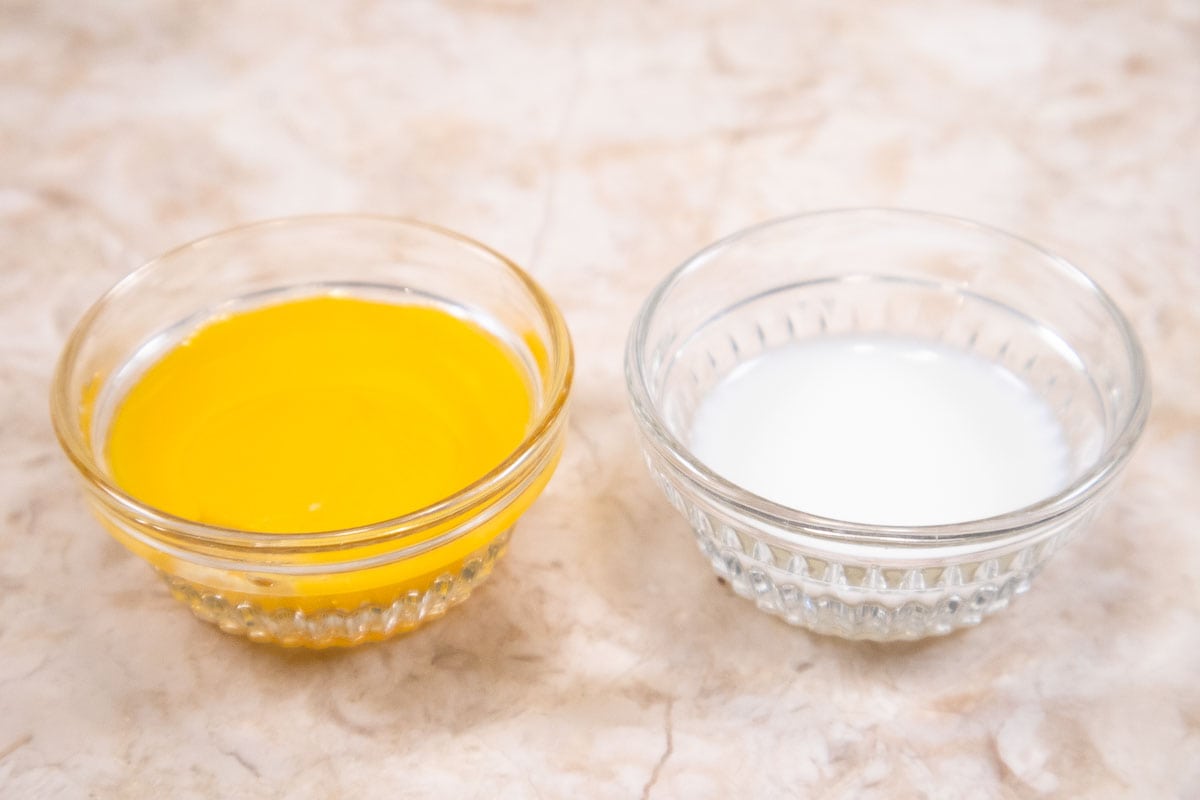
Pastries Like a Pro

  • Home
  • Recipes
  • About Helen
  • Mother's Day
  • Subscribe
  • Contact
menu icon
go to homepage
  • Home
  • Recipes
  • About Helen
  • Mother's Day
  • Subscribe
  • Contact
    • Facebook
    • Instagram
    • LinkedIn
    • Pinterest
    • Twitter
  • subscribe
    search icon
    Homepage link
    • Home
    • Recipes
    • About Helen
    • Mother's Day
    • Subscribe
    • Contact
    • Facebook
    • Instagram
    • LinkedIn
    • Pinterest
    • Twitter
  • ×
    Home

    The Easiest Pâte Sucrée Pastry Crust

    Modified: Jul 24, 2025 · Published: Nov 1, 2022 by Helen S Fletcher · This post may contain affiliate links · 23 Comments

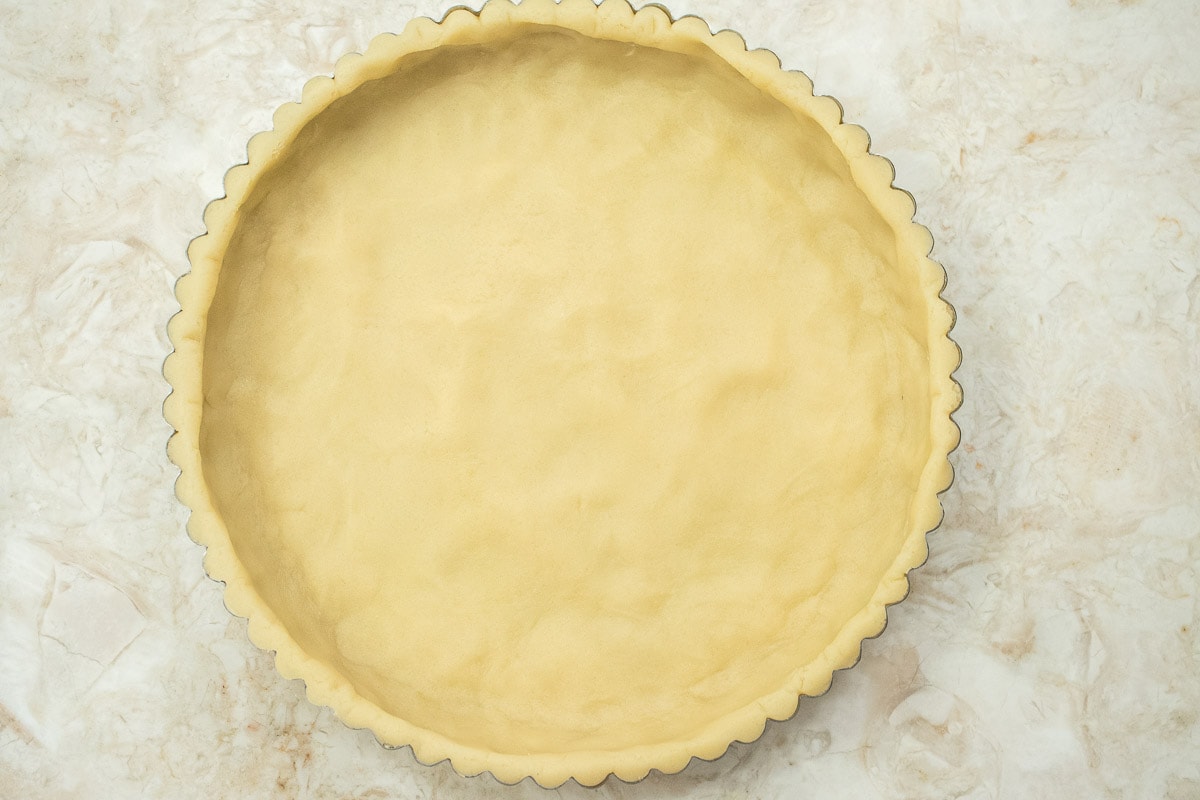
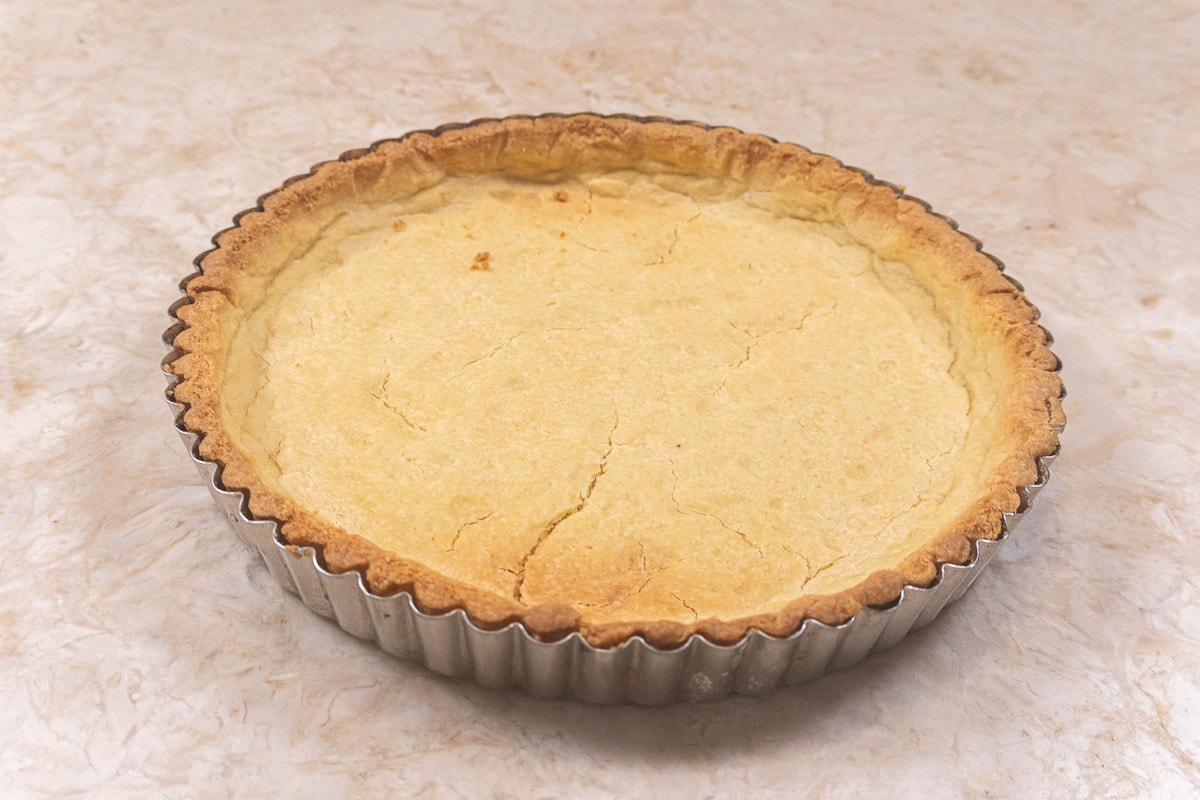
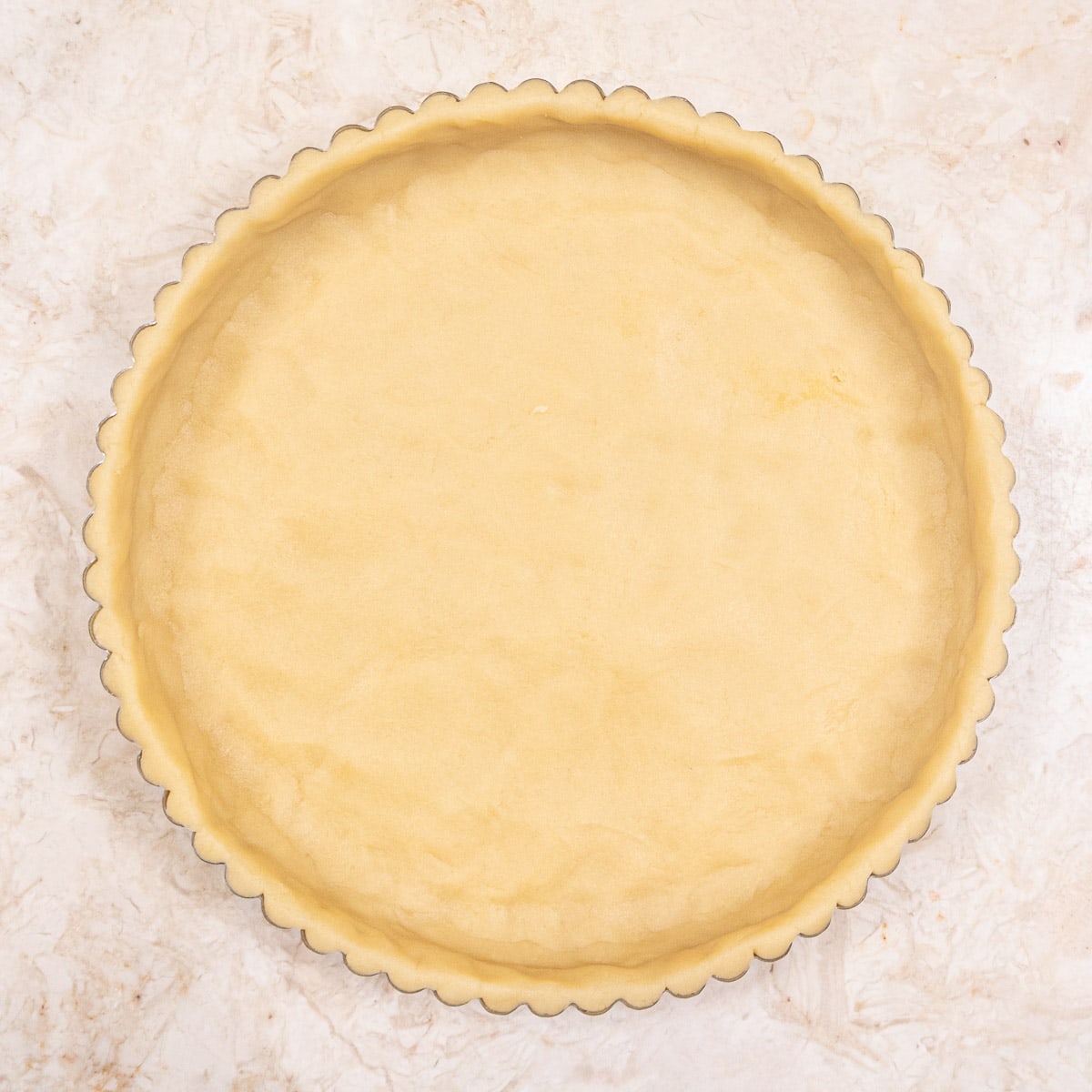
    The Pâte Sucrée Crust in a tart pan with a removable bottom ready to be baked.

    This Pâte Sucrée Crust, with its sugar and egg yolk, is light, crisp, tender, slightly sweet, and sturdy enough to hold custards, creams, frangipane and curd fillings among others. It is a building block and master pastry for all sweet tarts.

    The Pâte Sucrée Crust in a tart pan with a removable bottom ready to be baked.

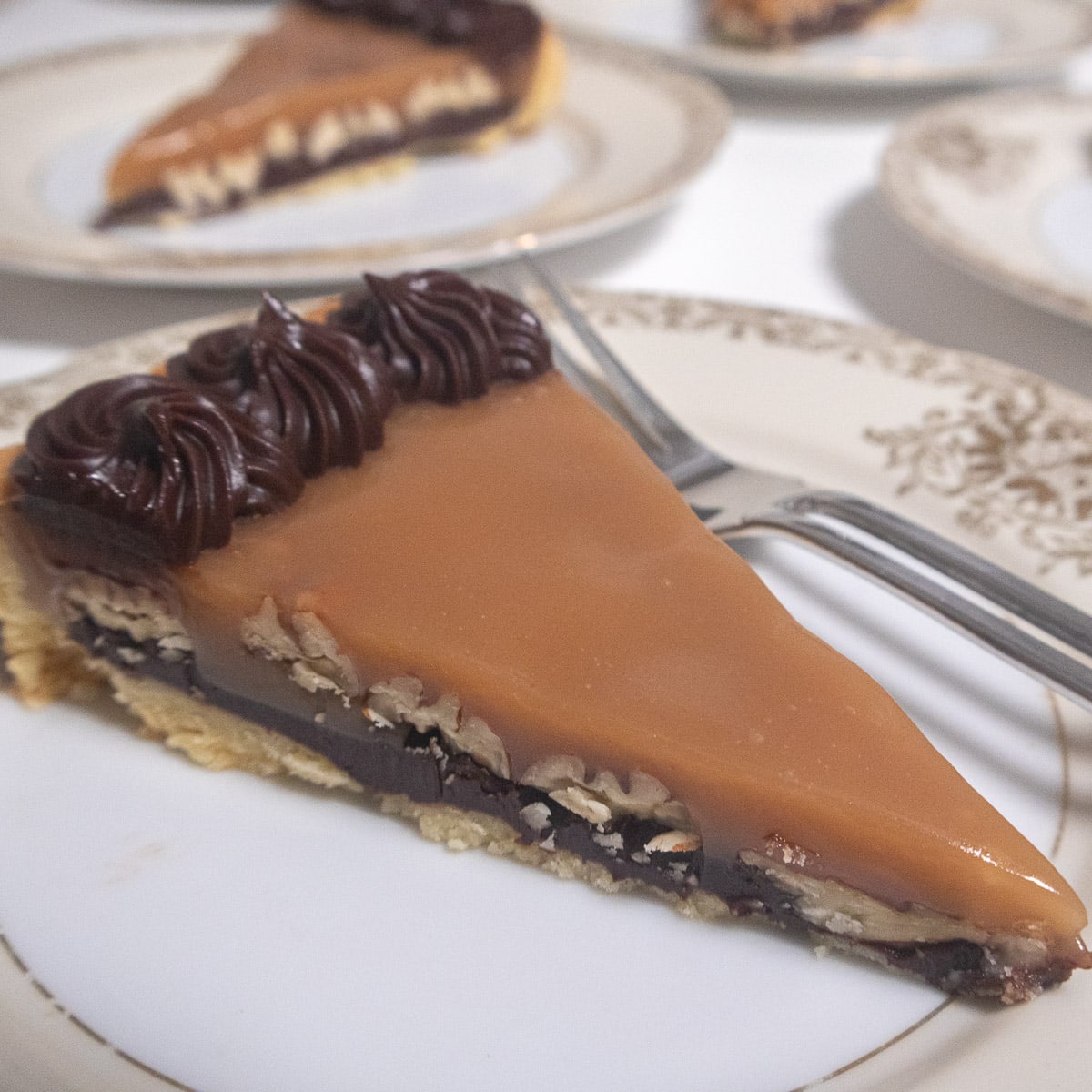
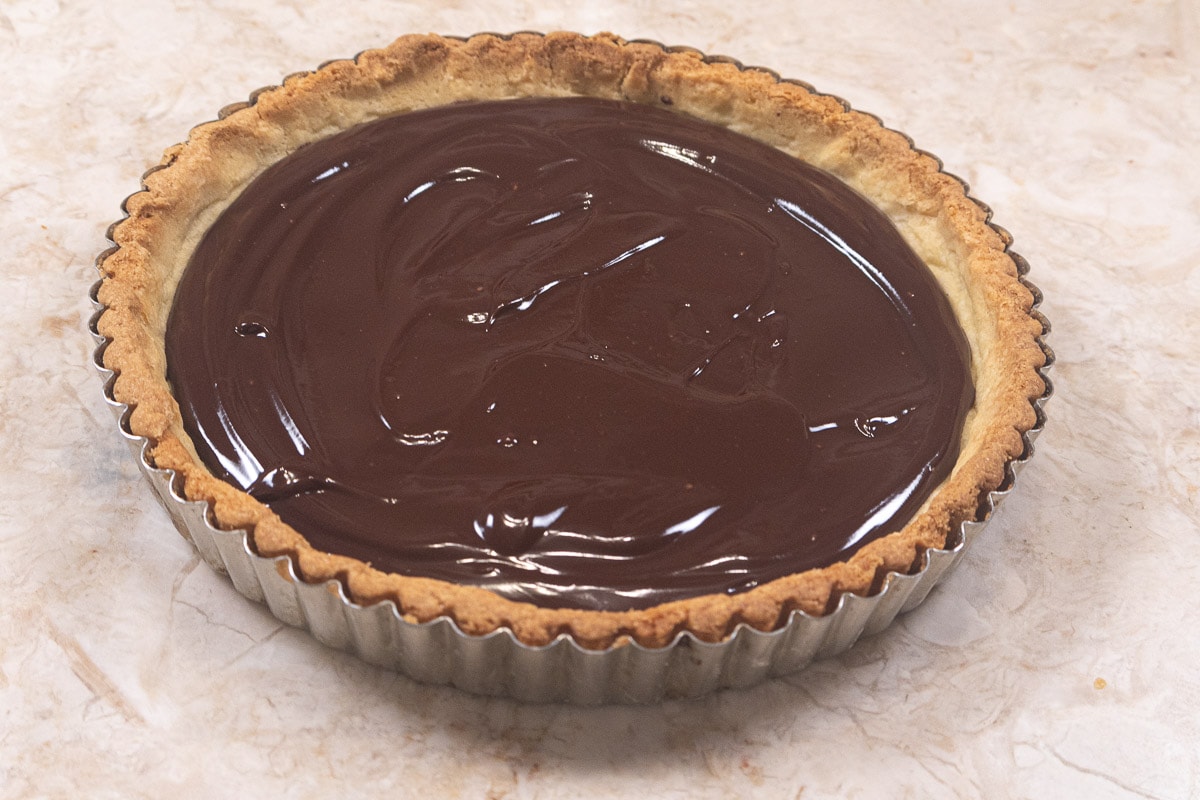
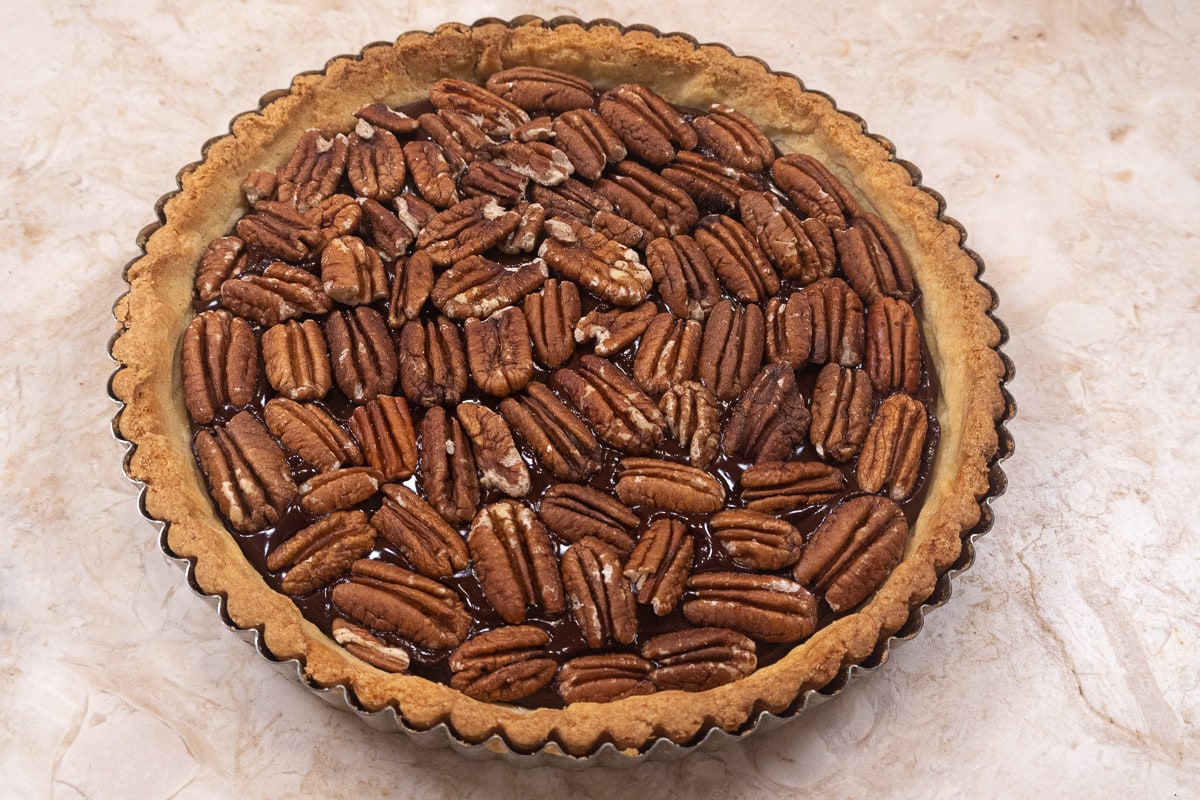
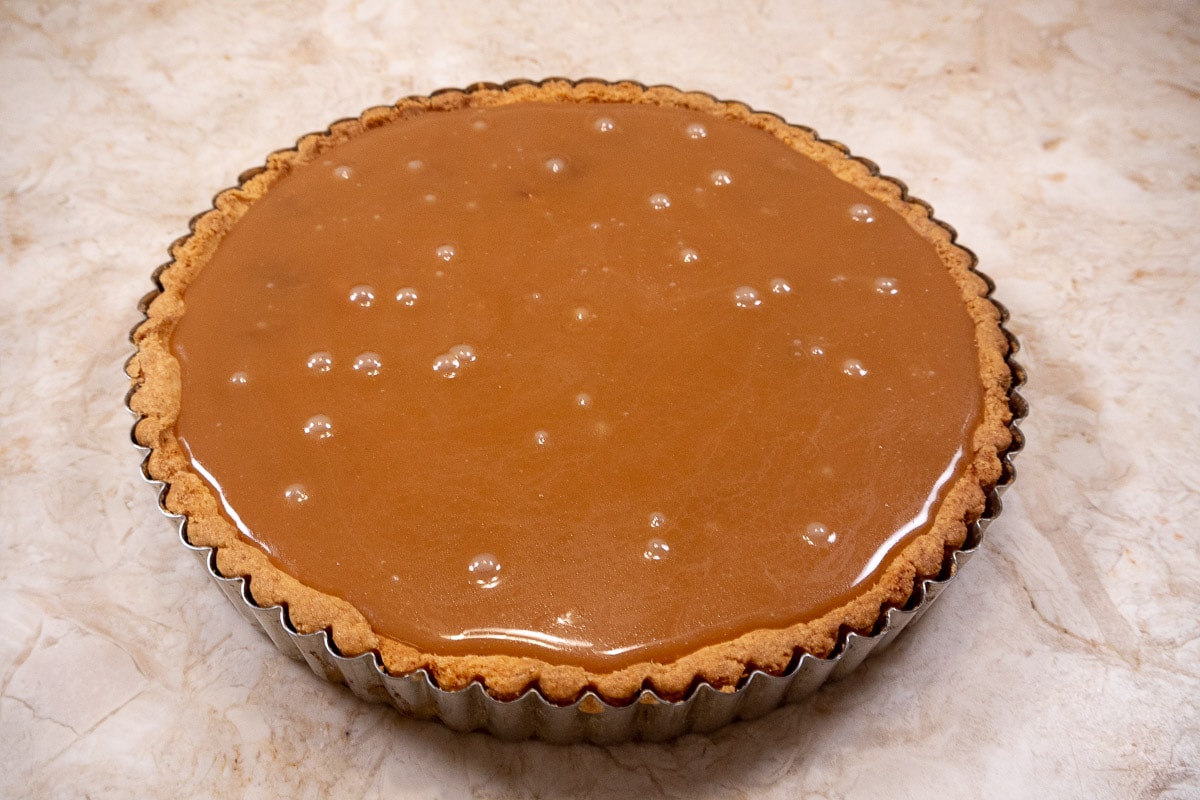
    It can be used for full size tarts as well as mini tarts and is easier than most tart shells to make. Four pantry ingredients is all it takes for this fantastic French crust. The Cinnamon Whiskey Tart, Chocolate Caramel Pecan Tart, and the Peach Curd Tart are all good examples of this tart shell.

    [feast_advanced_jump_to]

    One of Three French Pastry Crusts

    There are three main French pastry crusts. Each one has its own particular use. All of them use the same ingredients but the method of putting them together makes the difference.

    • Pâte Sucrée means sweet dough in French. This shortcrust pastry is a light, tender, crisp, crust that can hold liquid fillings without leaking. It is made of four ingredients, flour, butter, sugar and egg yolk. With this crust the sugar and butter are creamed together, the egg yolks are added and last the flour. It lends itself to sweet fillings such as custards, creams, fruit curds, and frangipagne. This is the perfect crust when you don't want to roll the pastry as I show you below.
    • Pâte Sablée is the richest of the three pastries and has a reputation for being difficult to use. Sablée means sandy or grainy and this crust has a higher percentage of sugar making for a crumbly texture. Some recipes also use almond or nut flours to enhance the tender, crumbly texture of the pastry similar to shortbread. This pastry uses the creaming method also. Because it is so short, it can be difficult to roll out but using the press in method makes this much easier. This crust is generally used with sweet fillings.
    • Pâte Brisée is closest to an American pie crust. Brisée means broken and refers to the butter being left in pieces in the pastry. There are two versions of this pastry. The most basic one uses all butter, flour, salt and water. The second is the Pâte Brisée a l'Oeuf which uses and egg along with the water. It is the only pastry of the three to use salt. It is also the only flaky crust among the three that leaves the butter in chunky pieces as opposed to creaming. This pastry is used for savory as well as sweet dishes. The Brie and Bacon Tart, Honey Thyme Apple Tart, and the Individual Apple Crostatas all use the this crust.

    Recipe Ingredients

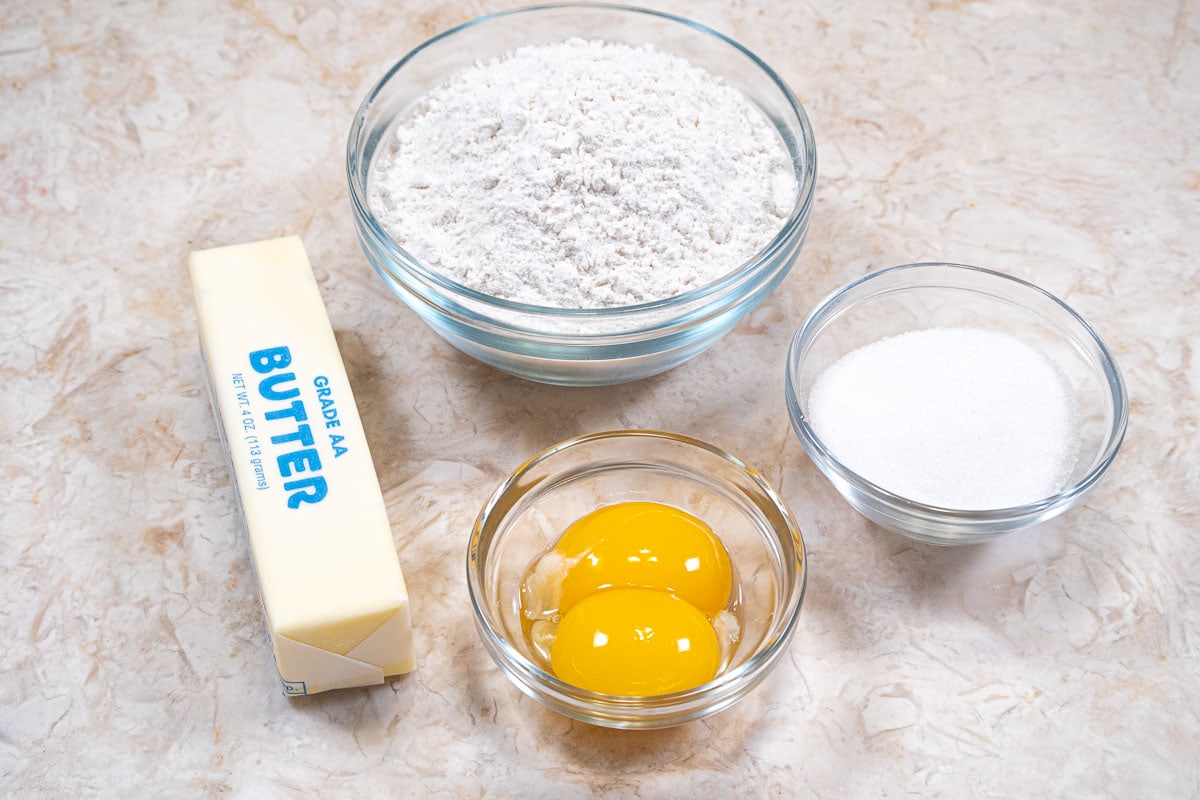
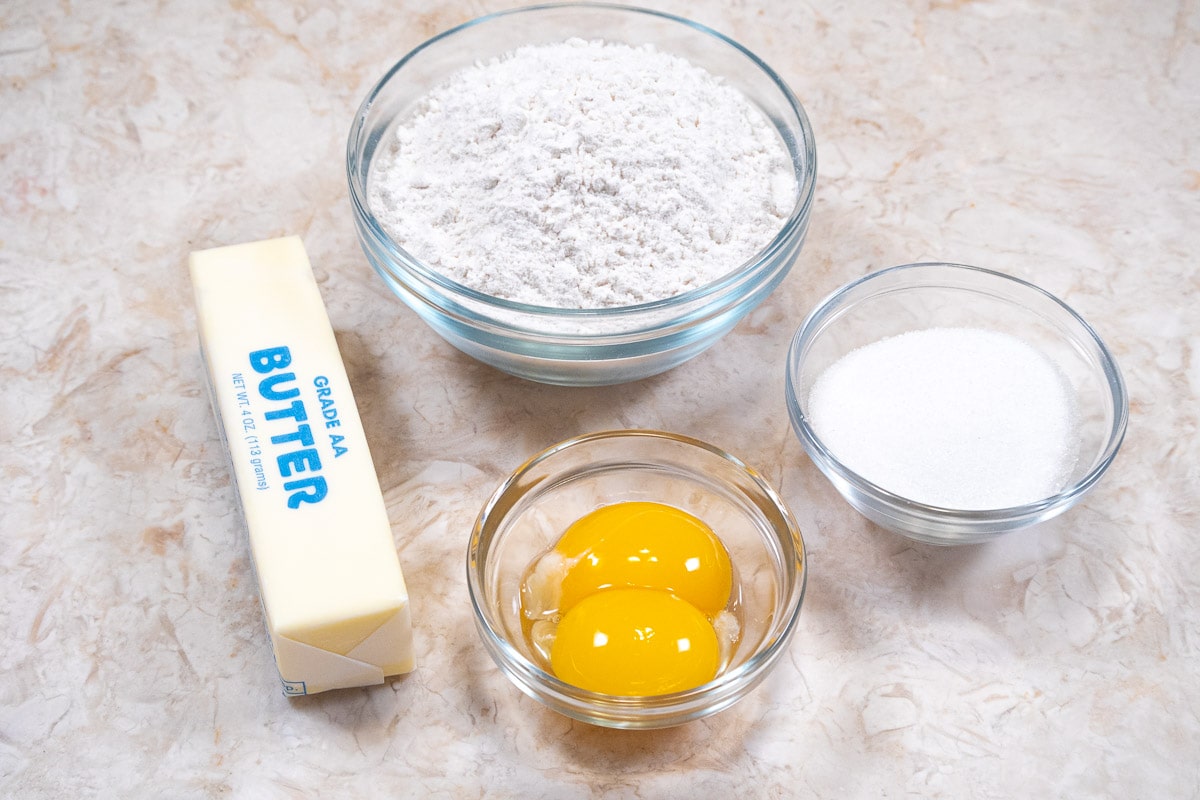
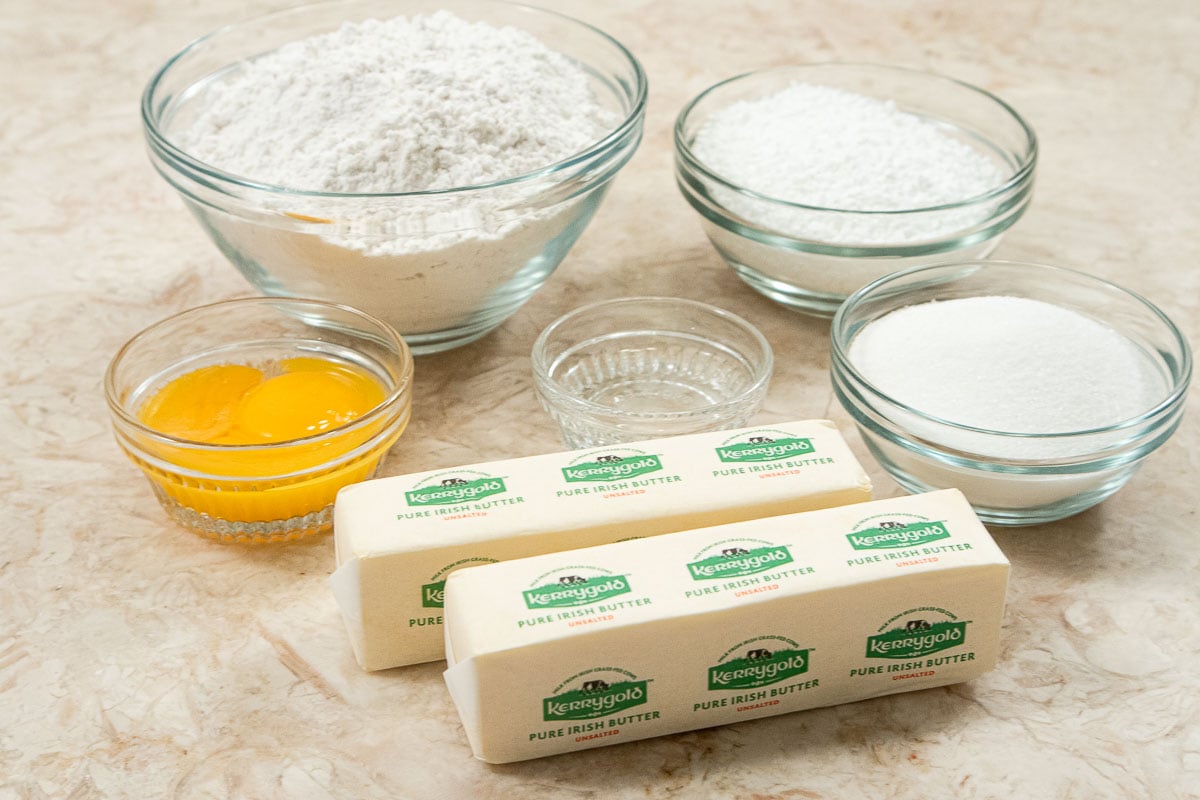
    ingredients for the pate sucree, butter, floour, egg yolks and sugar

    Clockwise from: Unsalted Butter, All Purpose Flour, Sugar and Egg Yolks

    Key Ingredients

    • All-purpose flour is used for its strength. Eggs and sugar are both tenderizers and with the large amount of butter, the flour has to be able to stand up.
    • Egg yolks from size large eggs are used. They are the only binder in the crust and contribute a beautiful yellow color to the pastry, as well taste.
    • Butter - This is a perfect place for European butter with its intensity of taste although I must admit I was out when I made this. Great either way.

    Be sure to see the recipe card below for the full ingredients and instructions.

    Step by Step Instructions

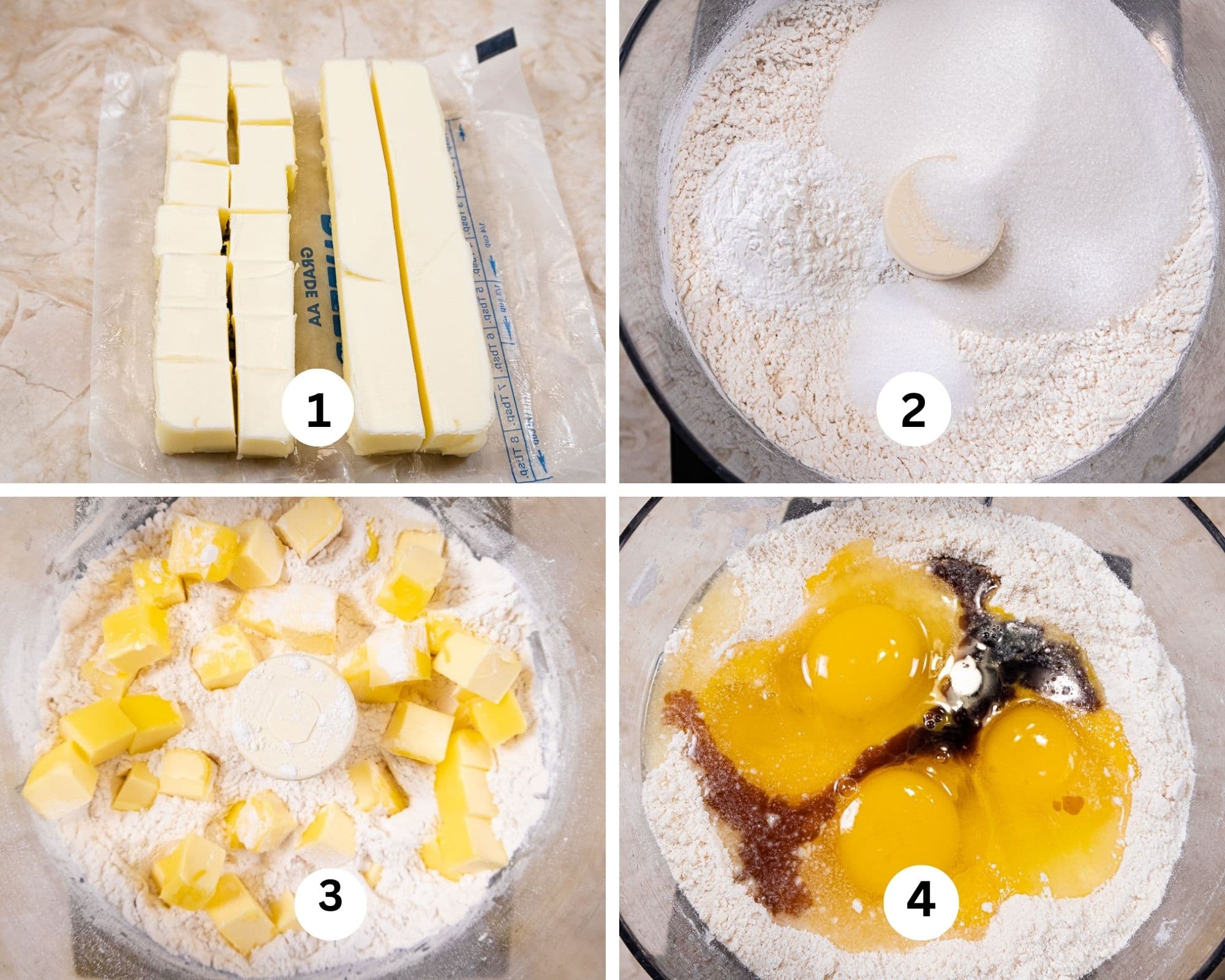
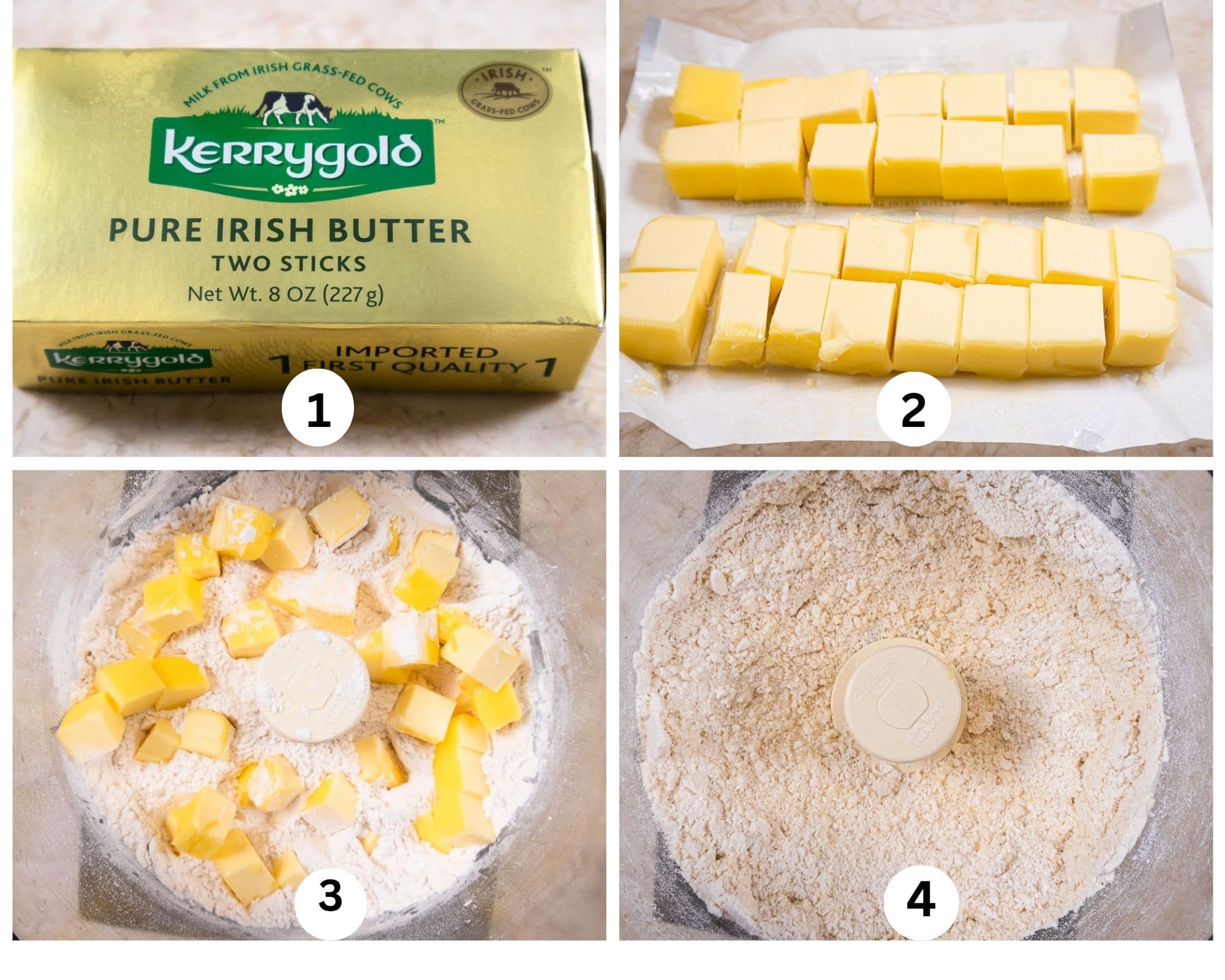
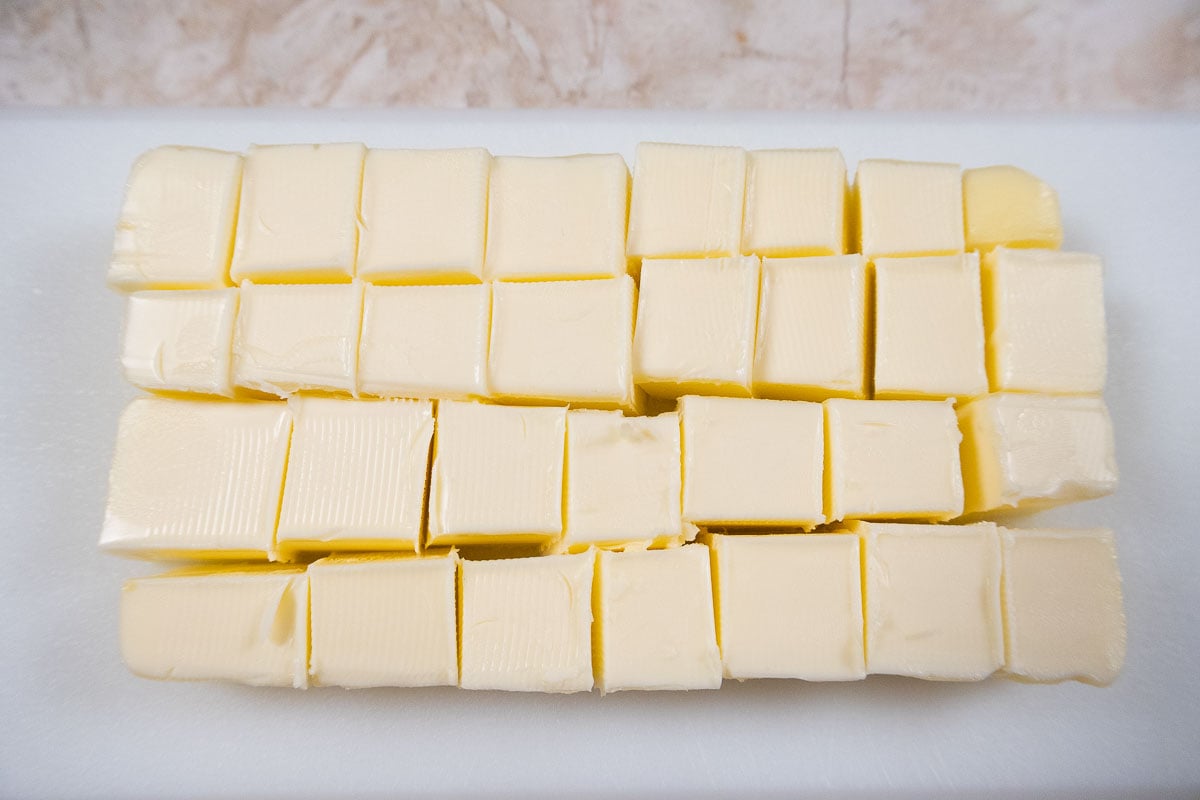
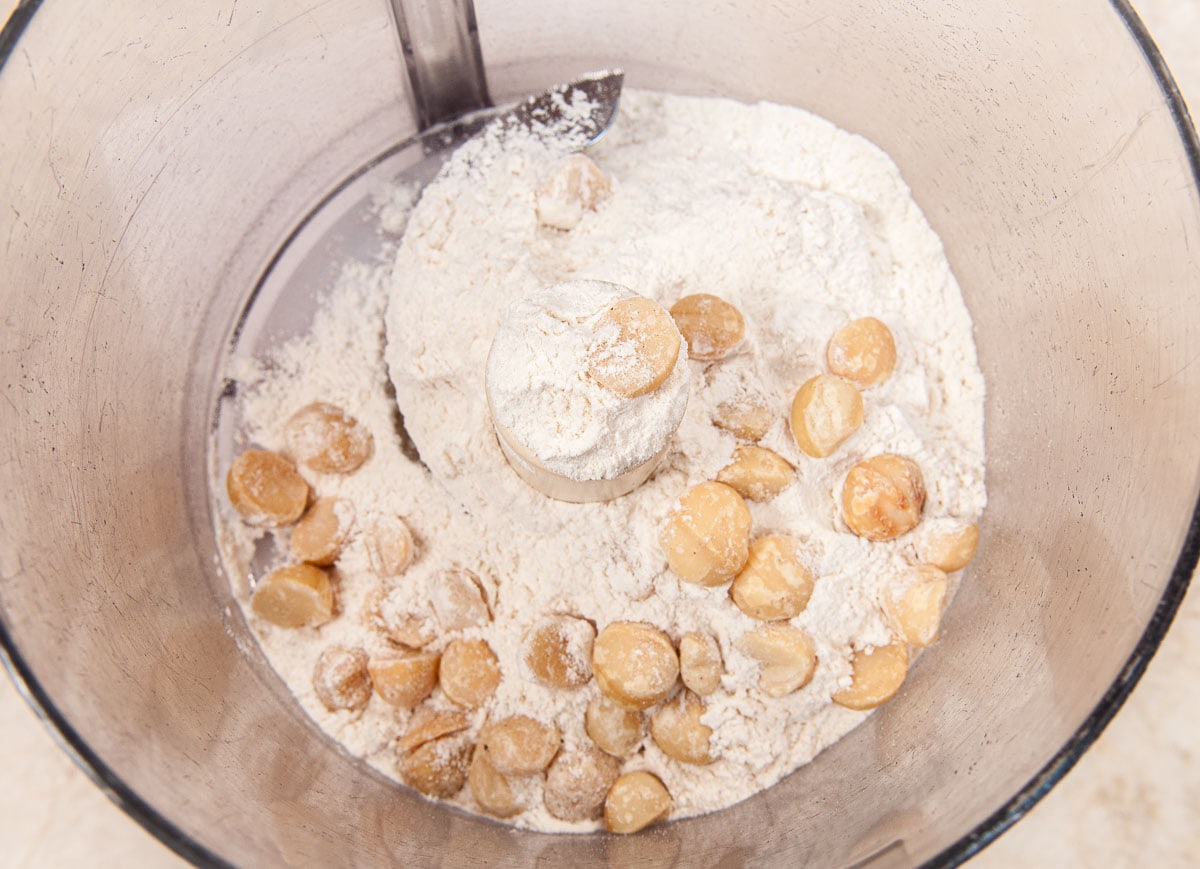
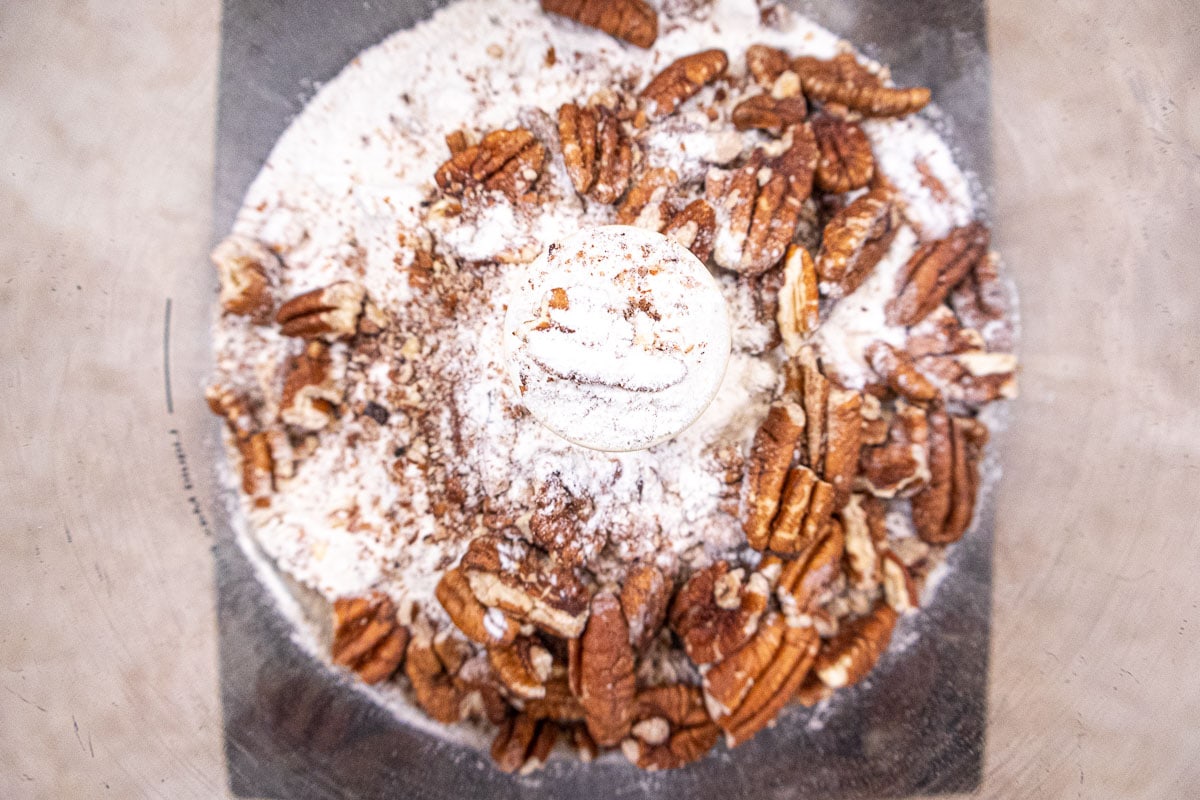
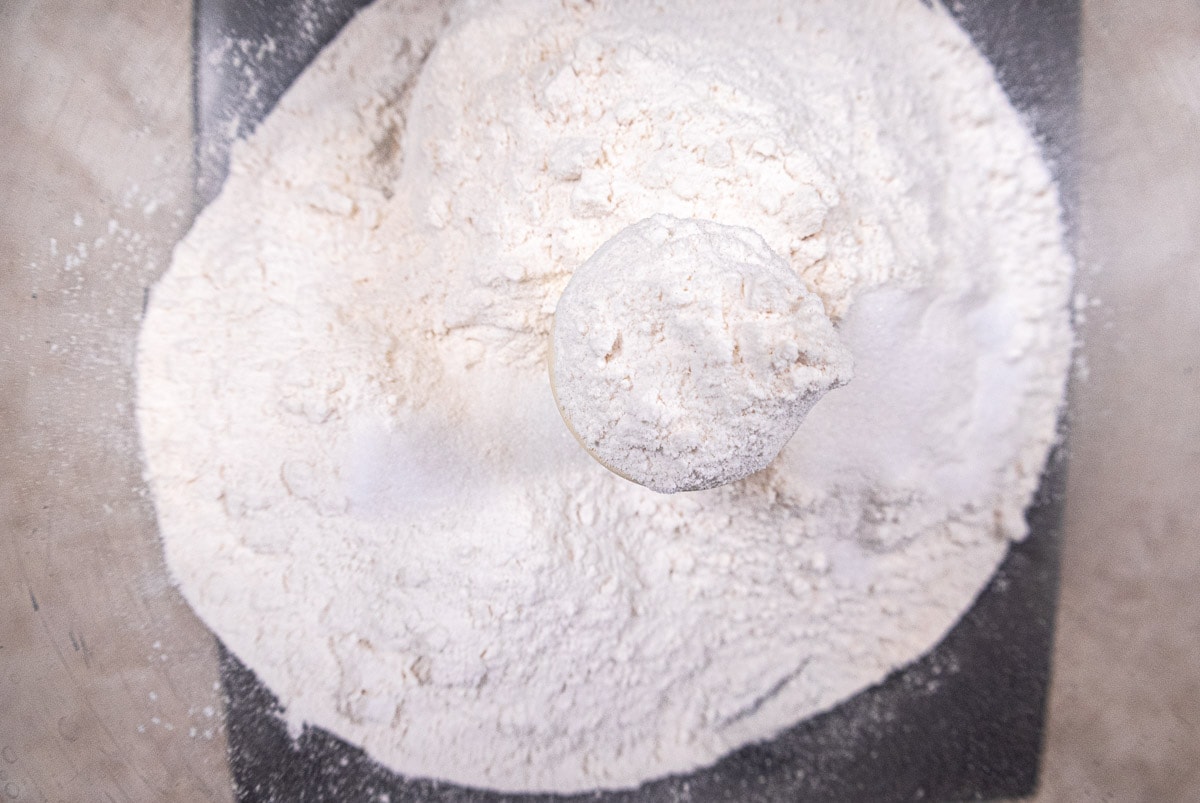
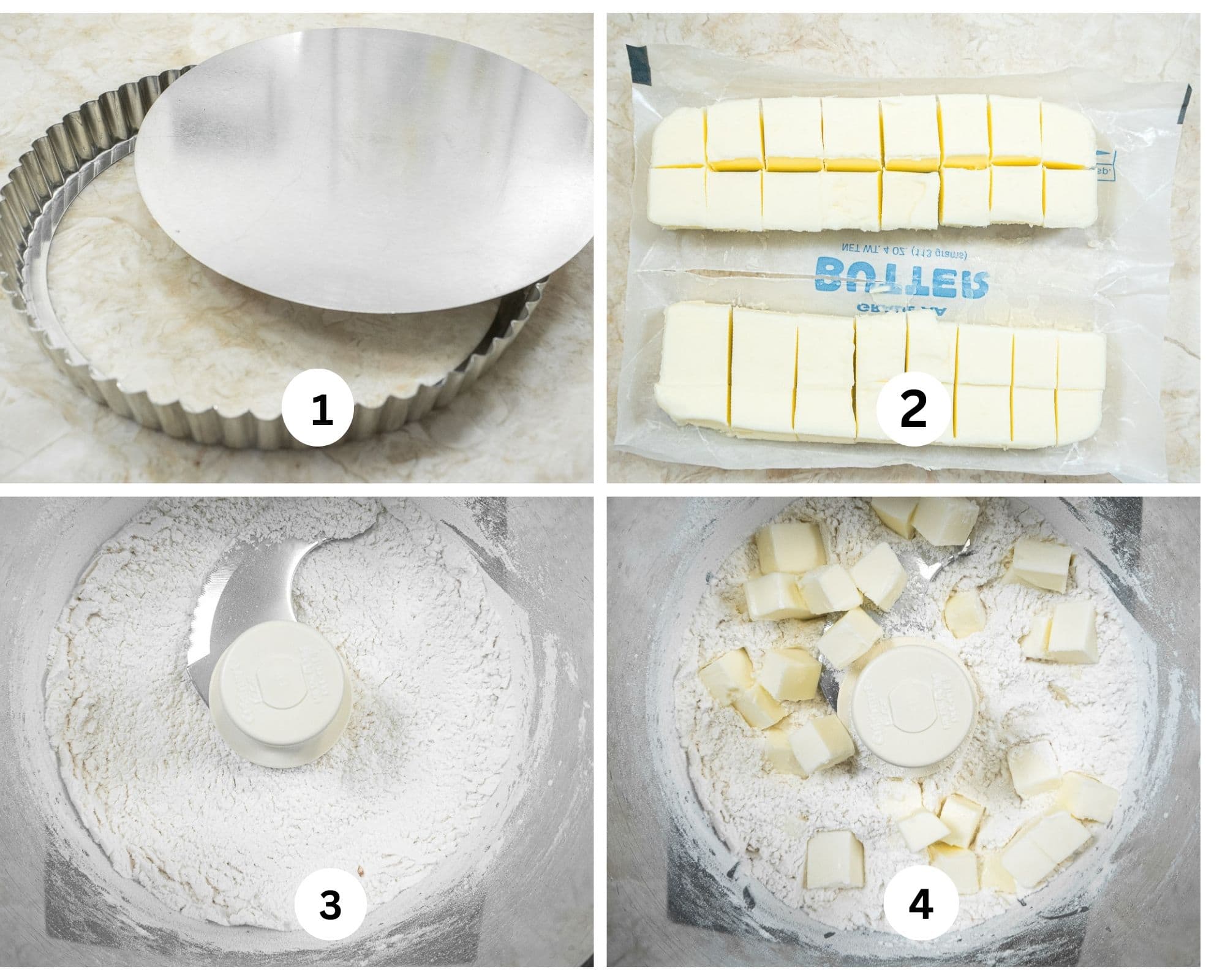
    The first collage shows the tart tin with a removable bottom, the ingredients - butter, flour, sugar and egg yolk - the flour in the processor and the butter added.

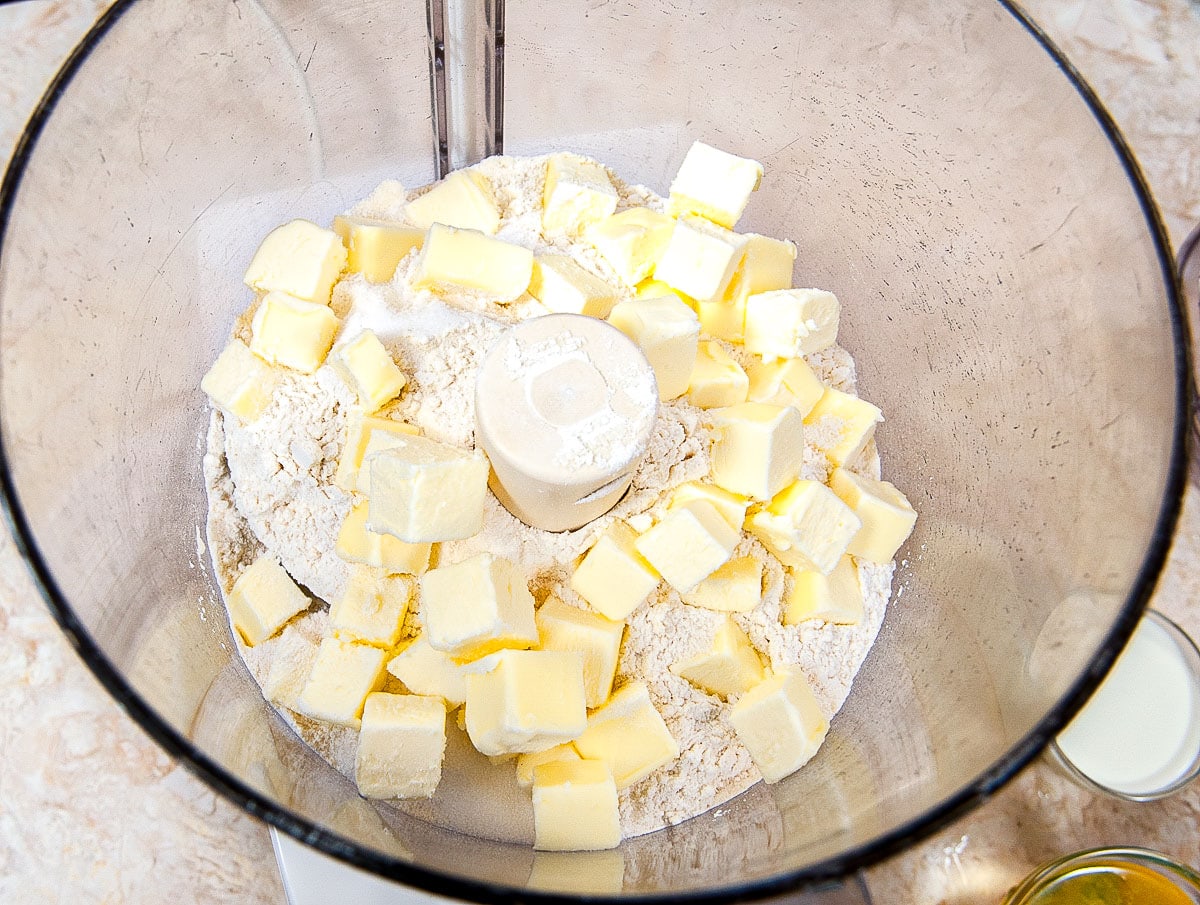
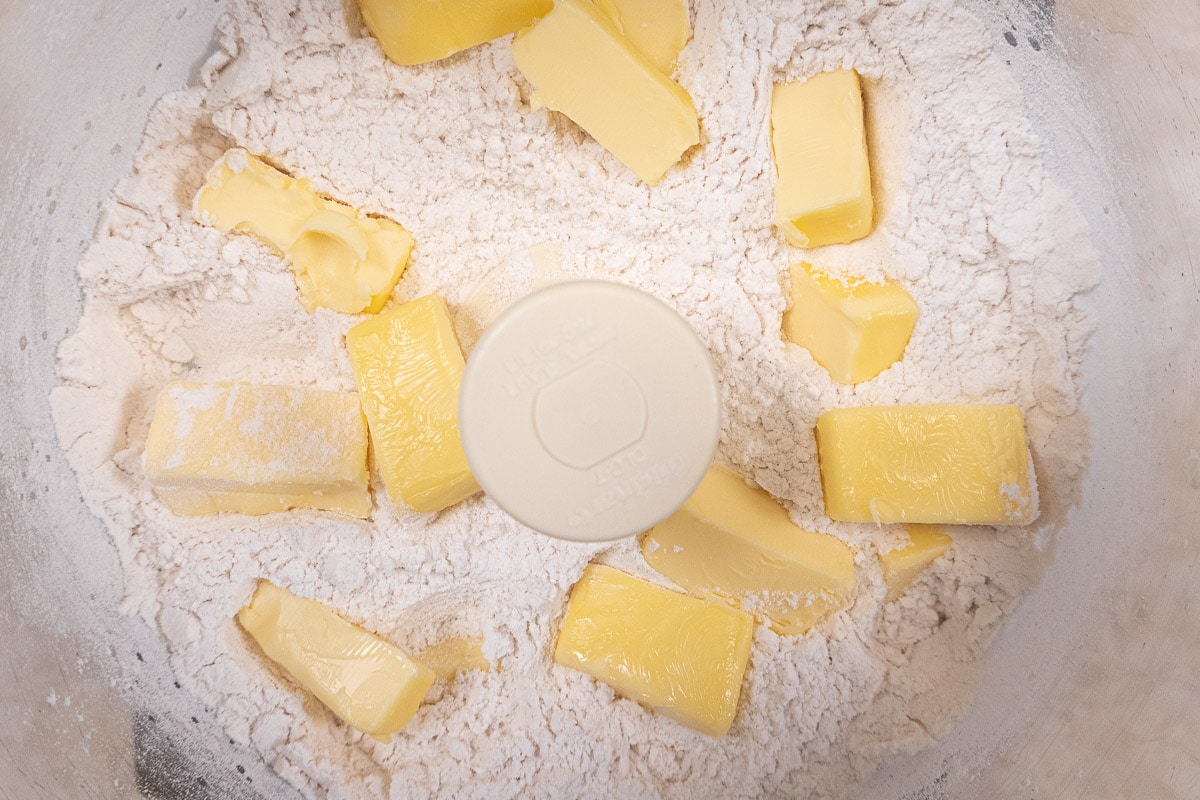
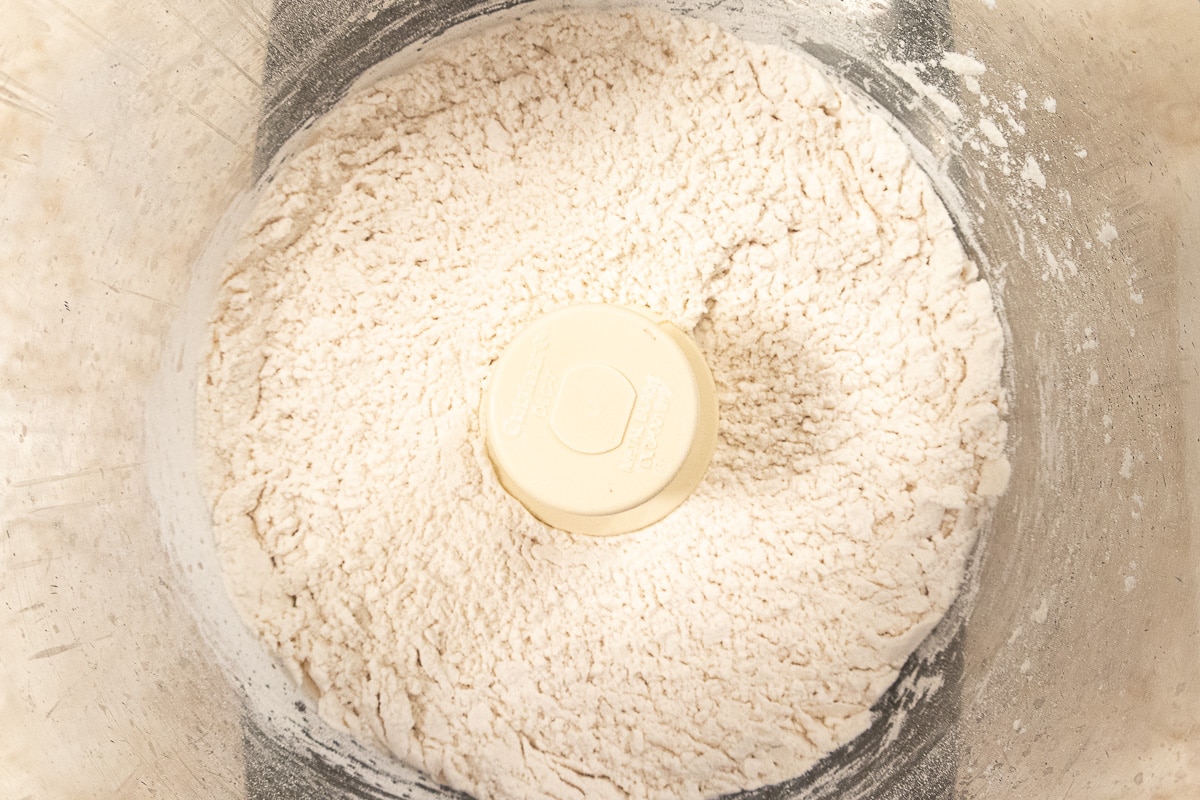
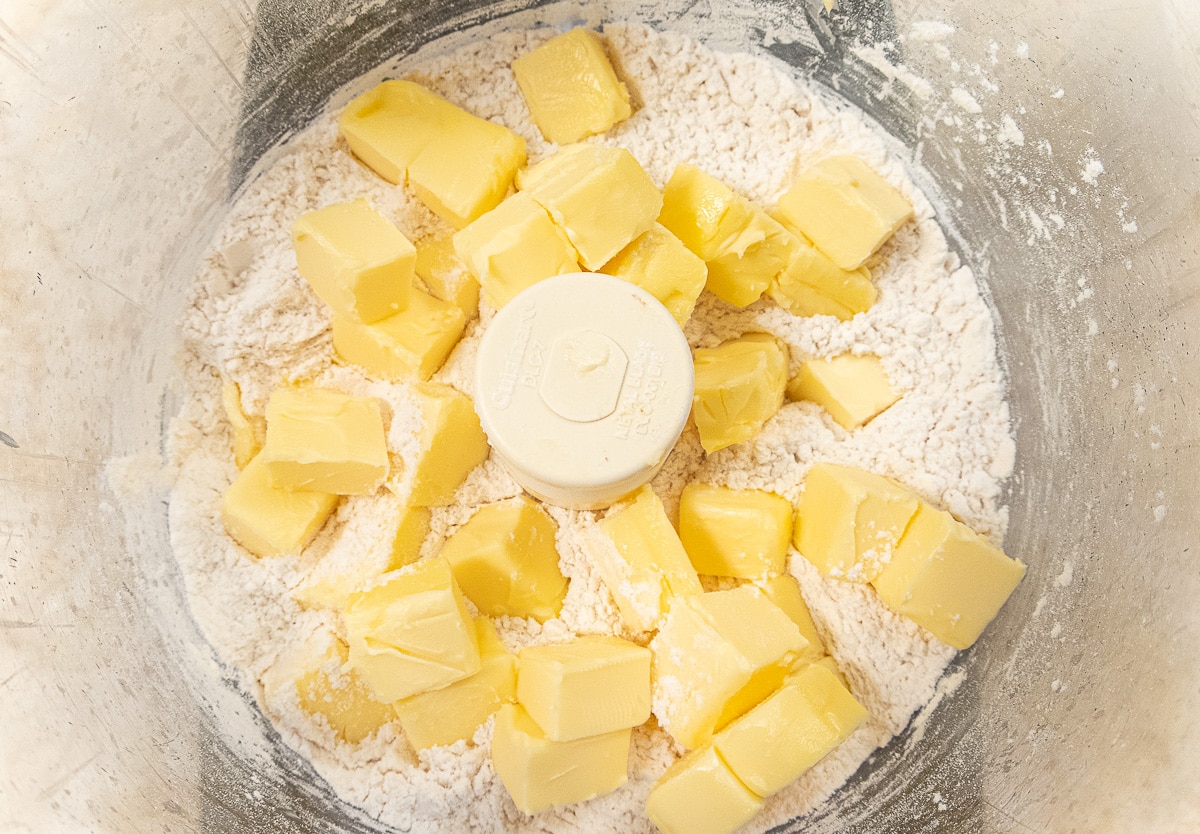
    Step 1. This is a 9 x 1 inch tart pan with a removable bottom which makes removing the tart a cinch.  Step 2. Cut the butter legnth-wise, then crosswise into smaller pieces. Refrigerate to keep cold. Step 3.  Pulse the flour in the food processor several times. Step 4. Distribute the cold butter in a circle over the flour.

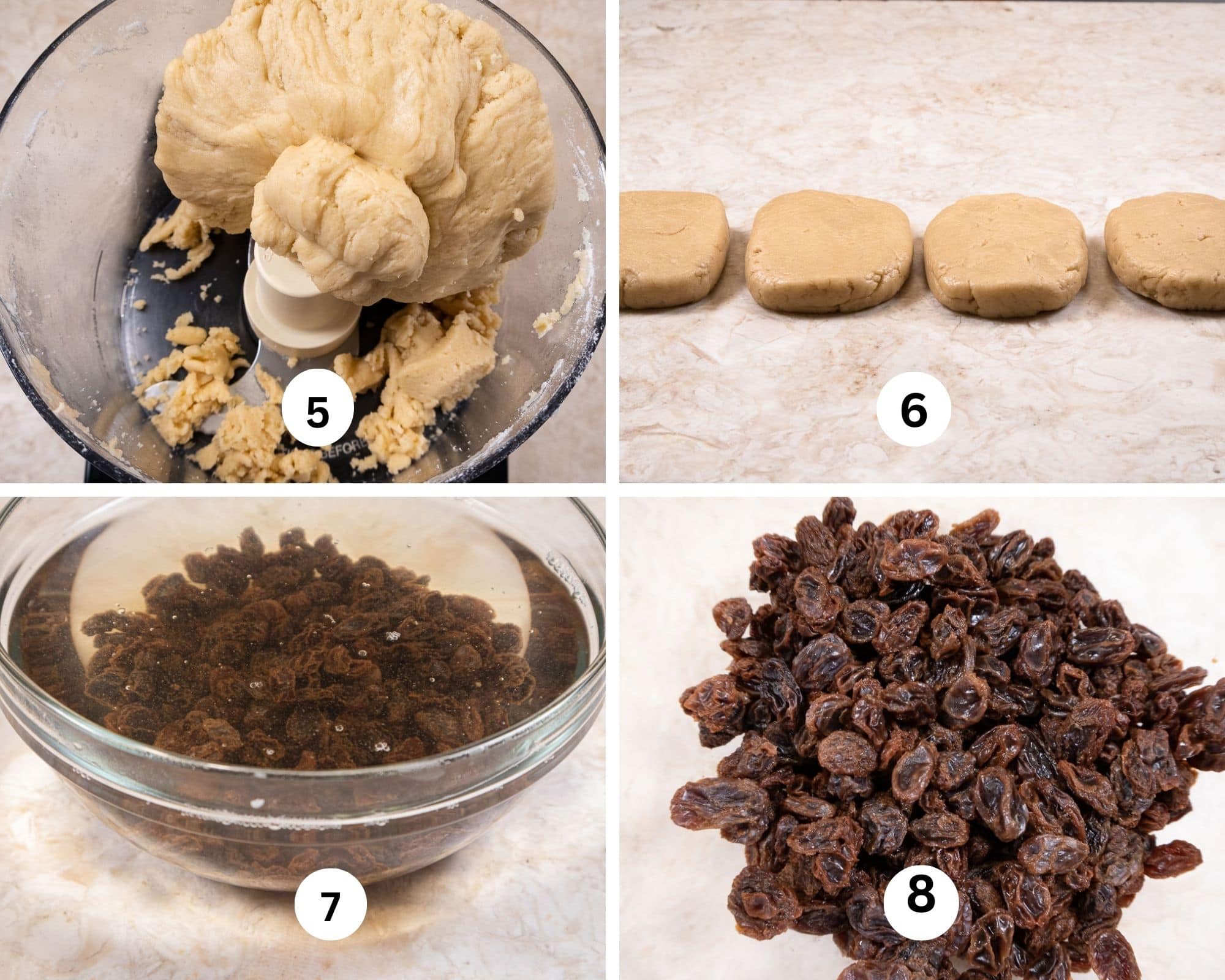
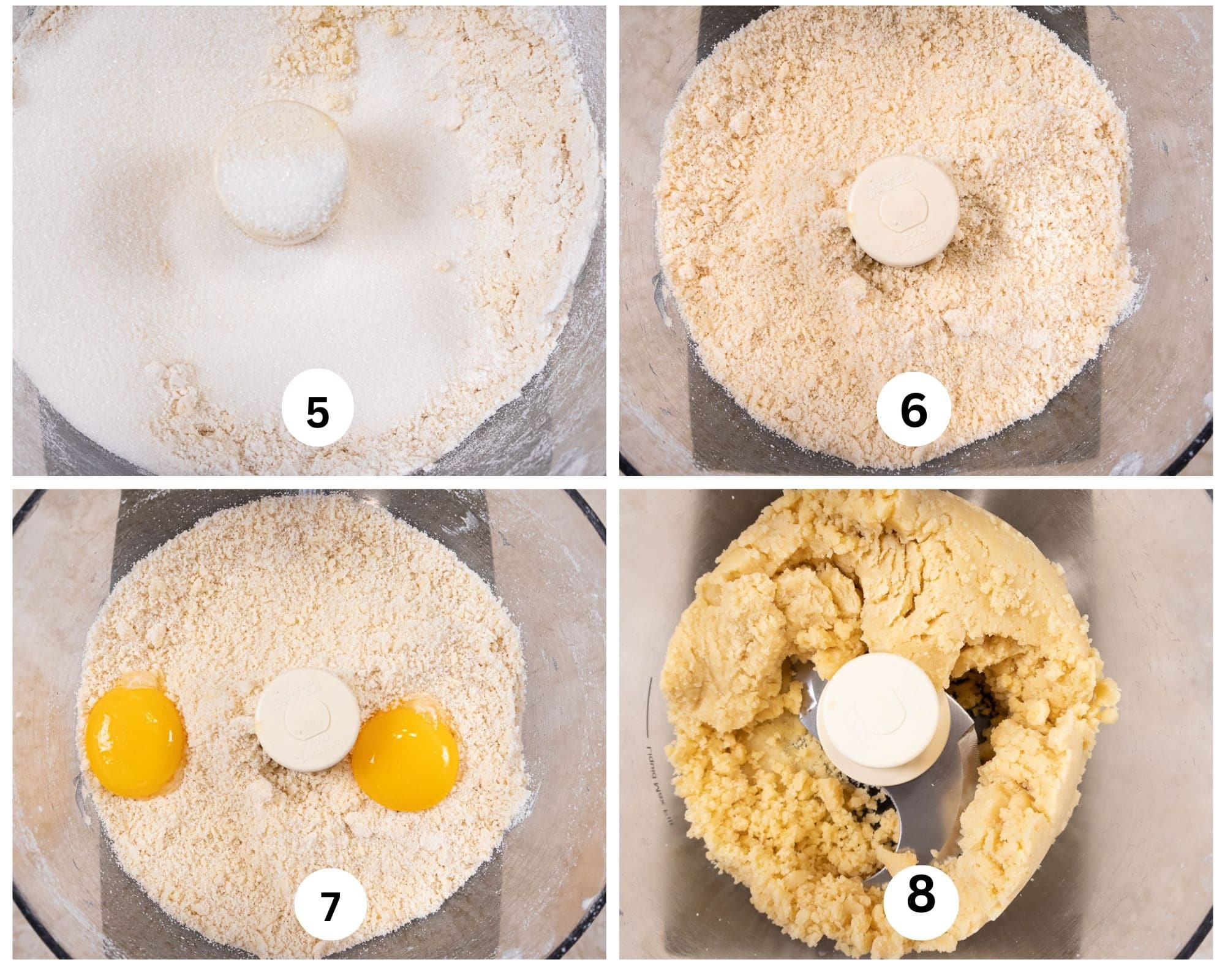
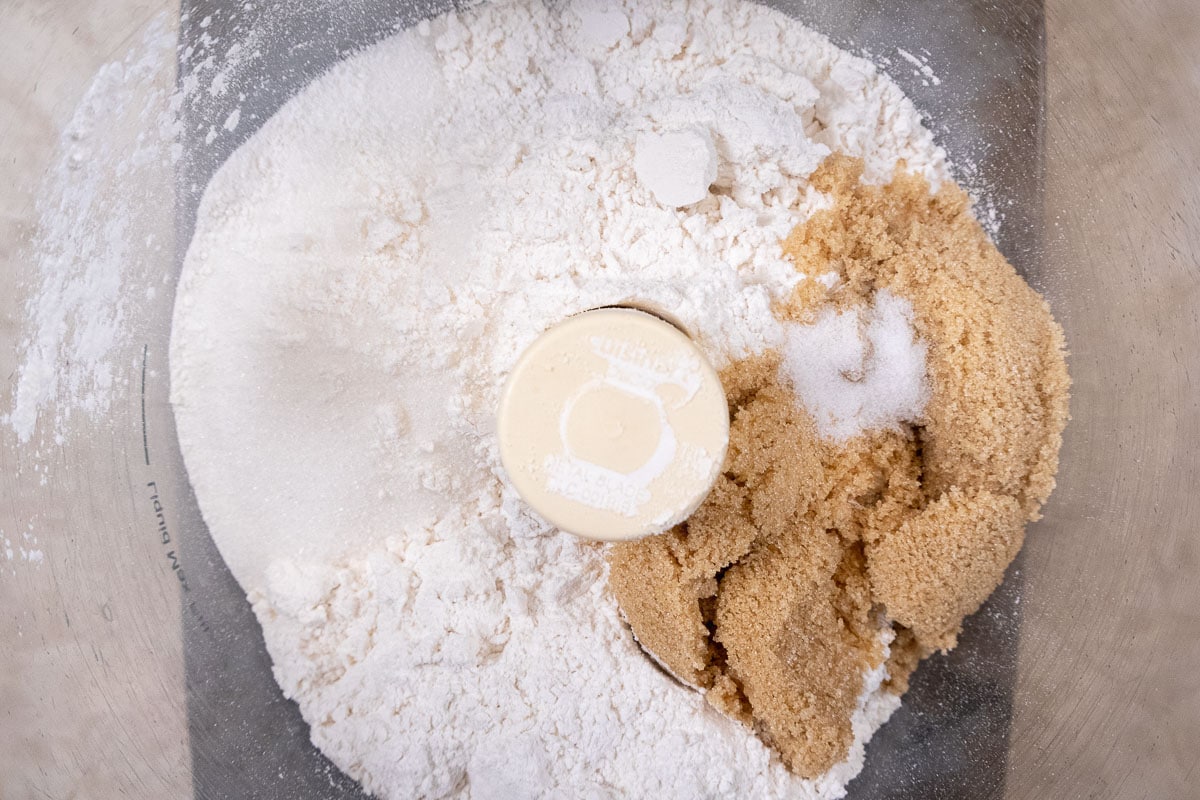
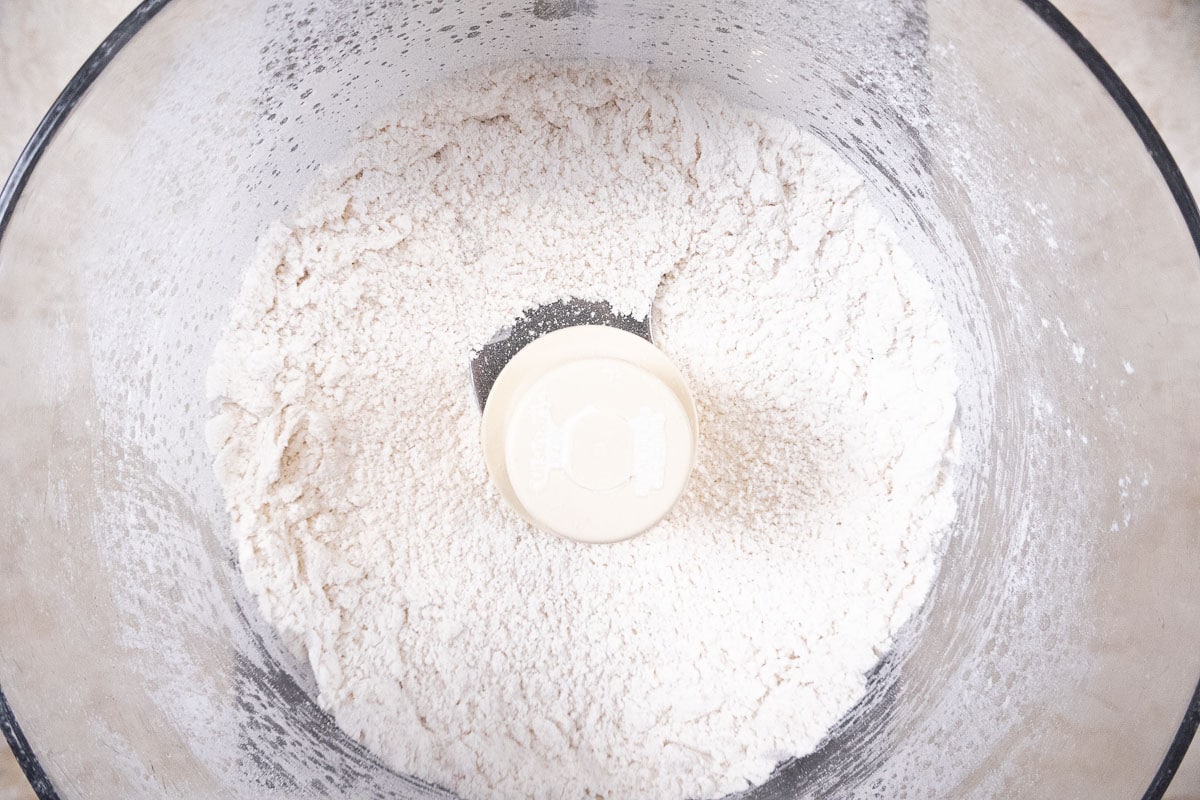
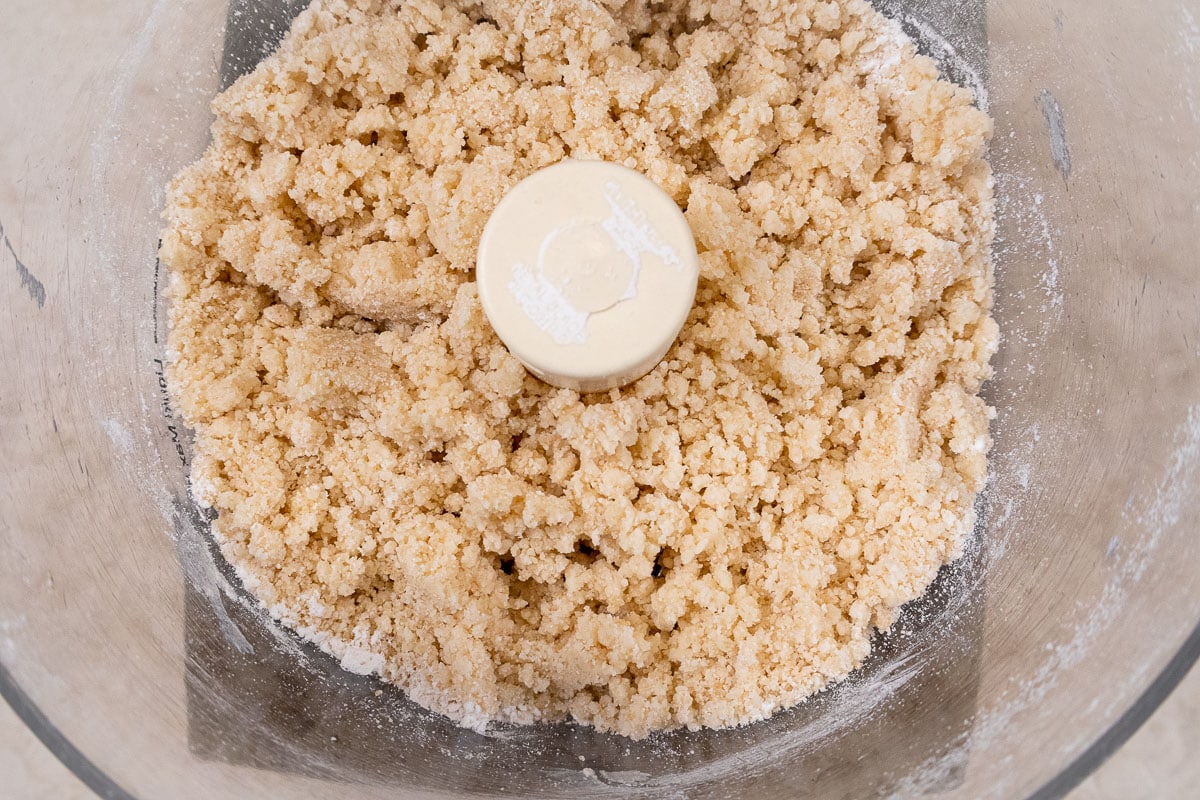
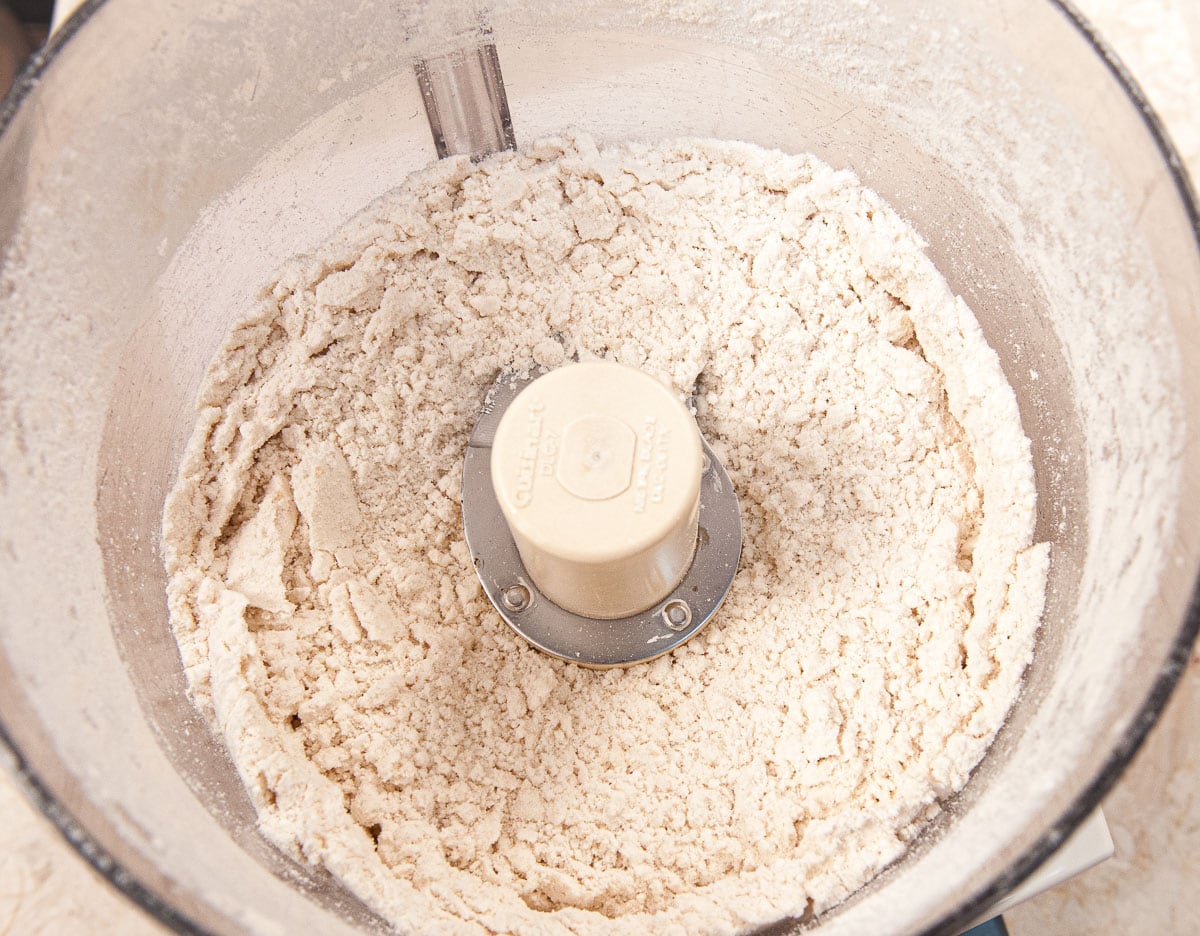
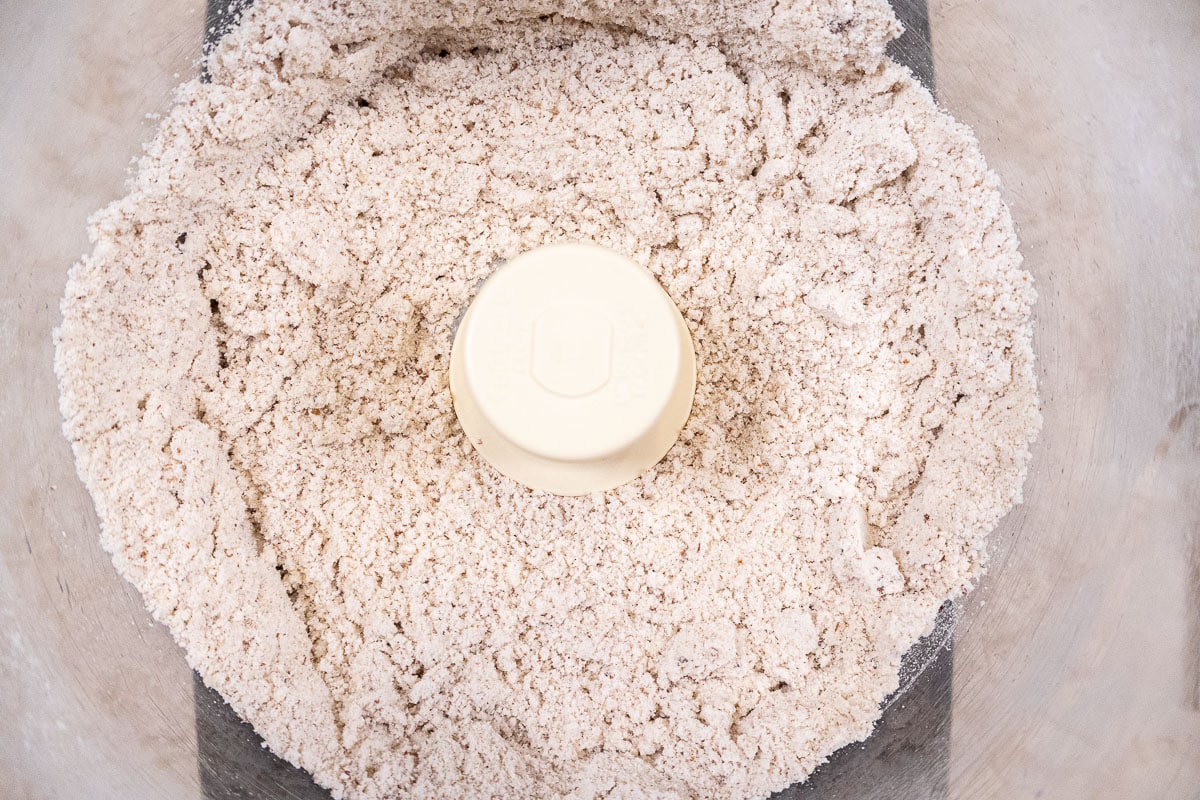
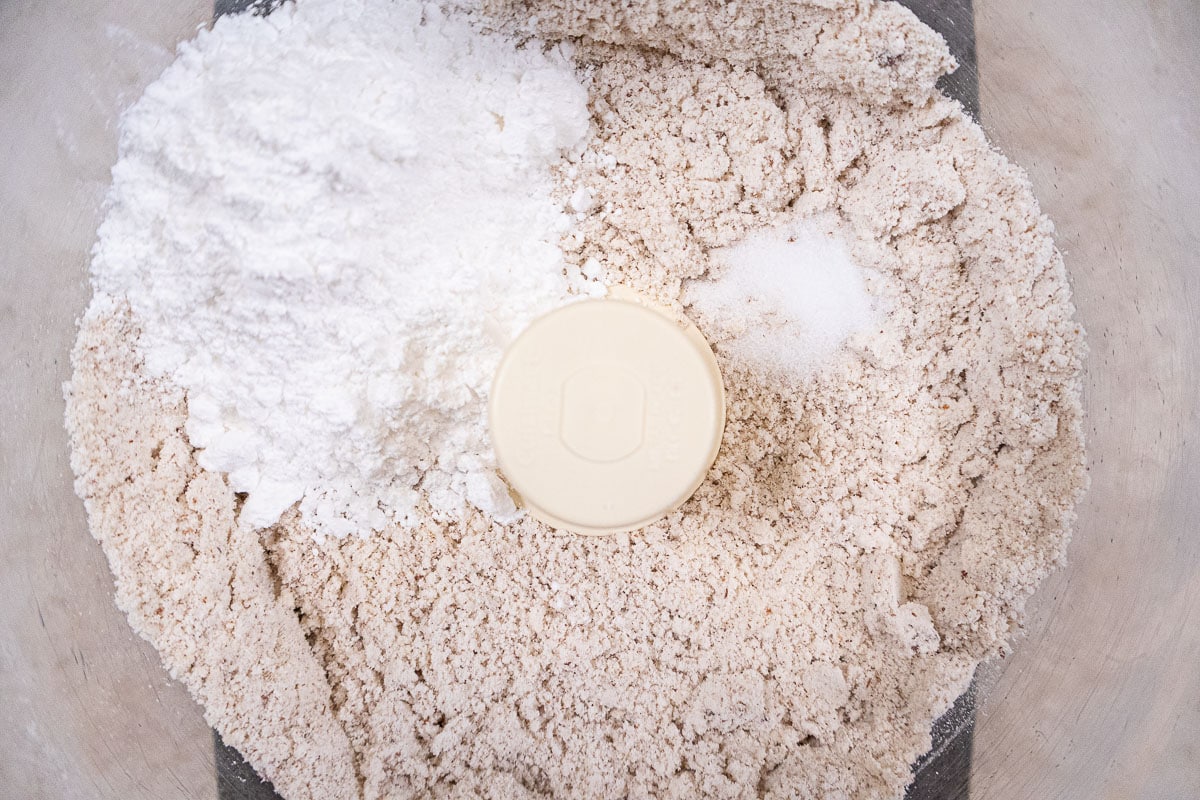
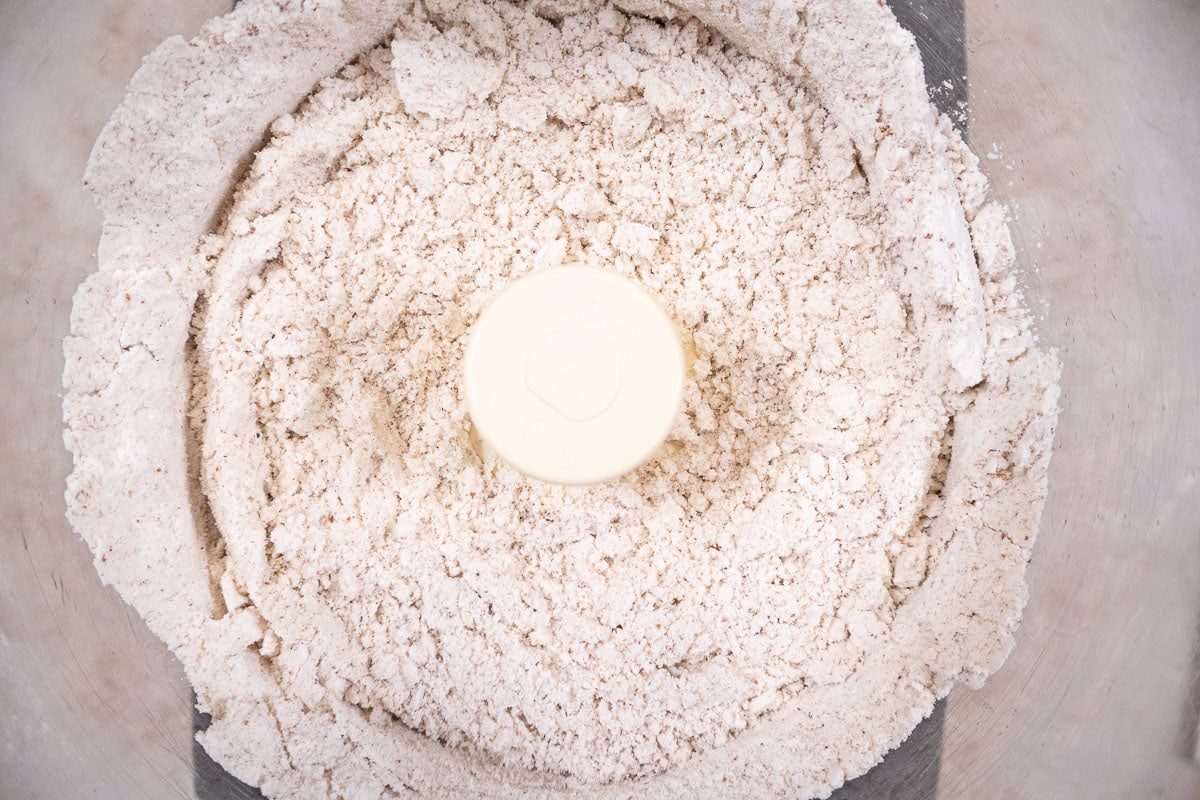
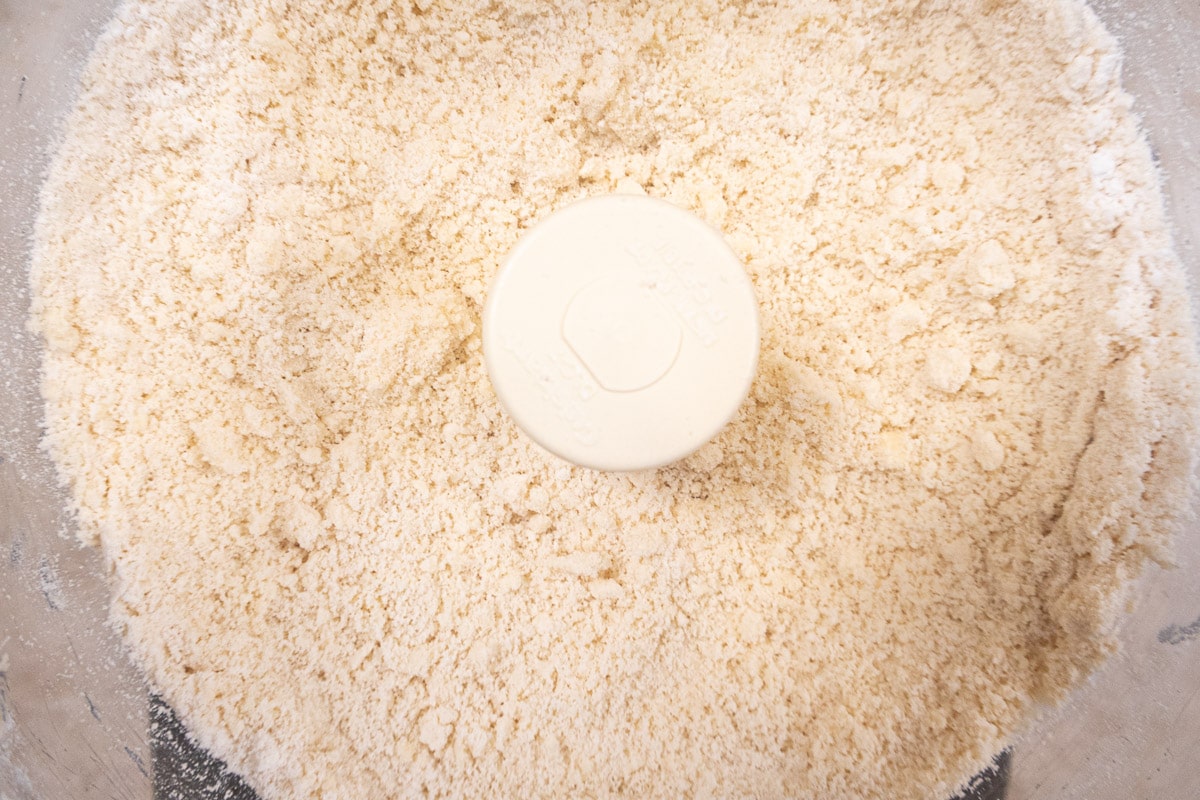
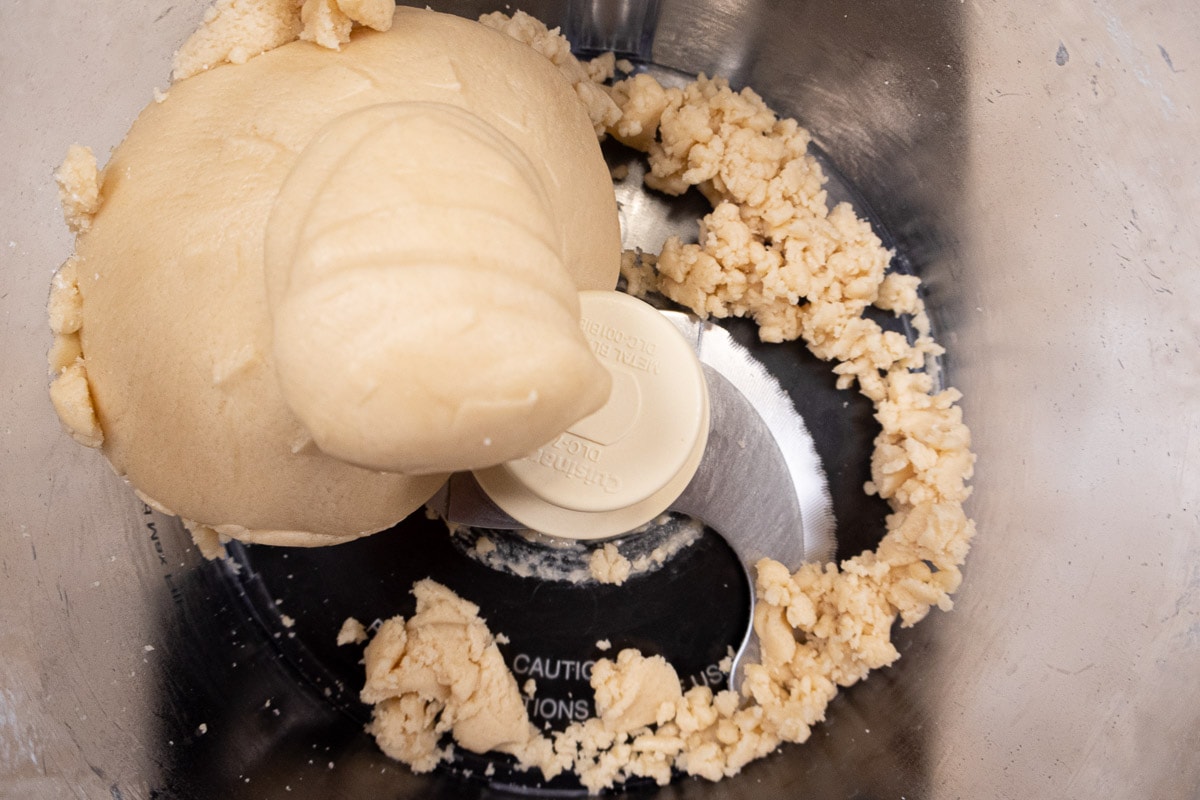
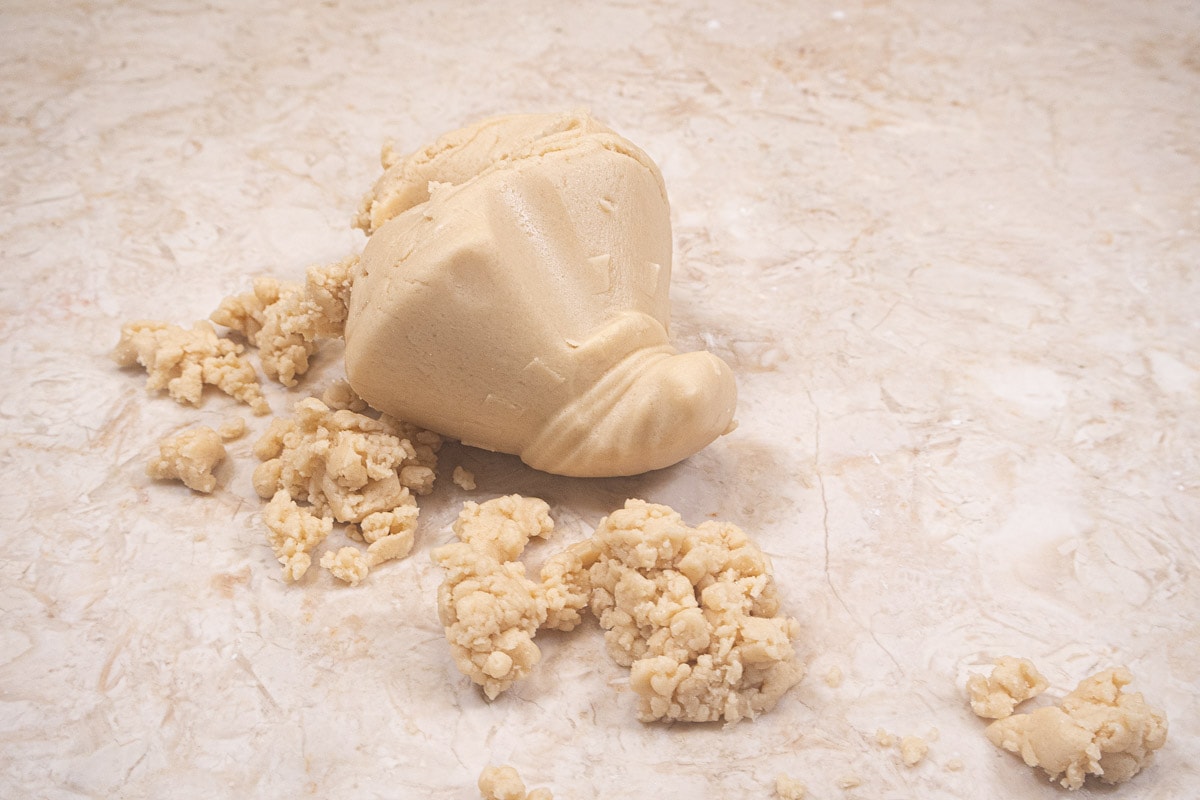
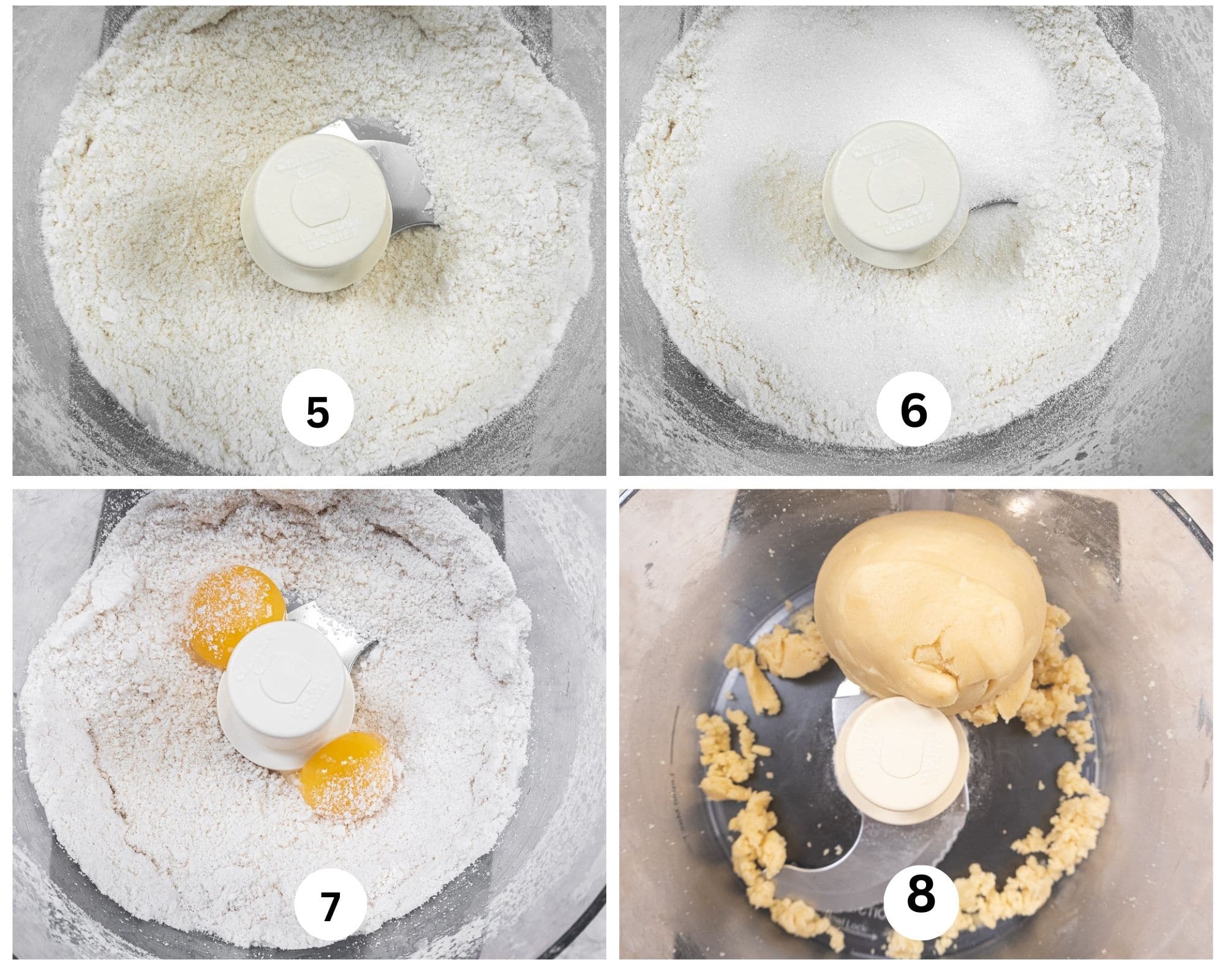
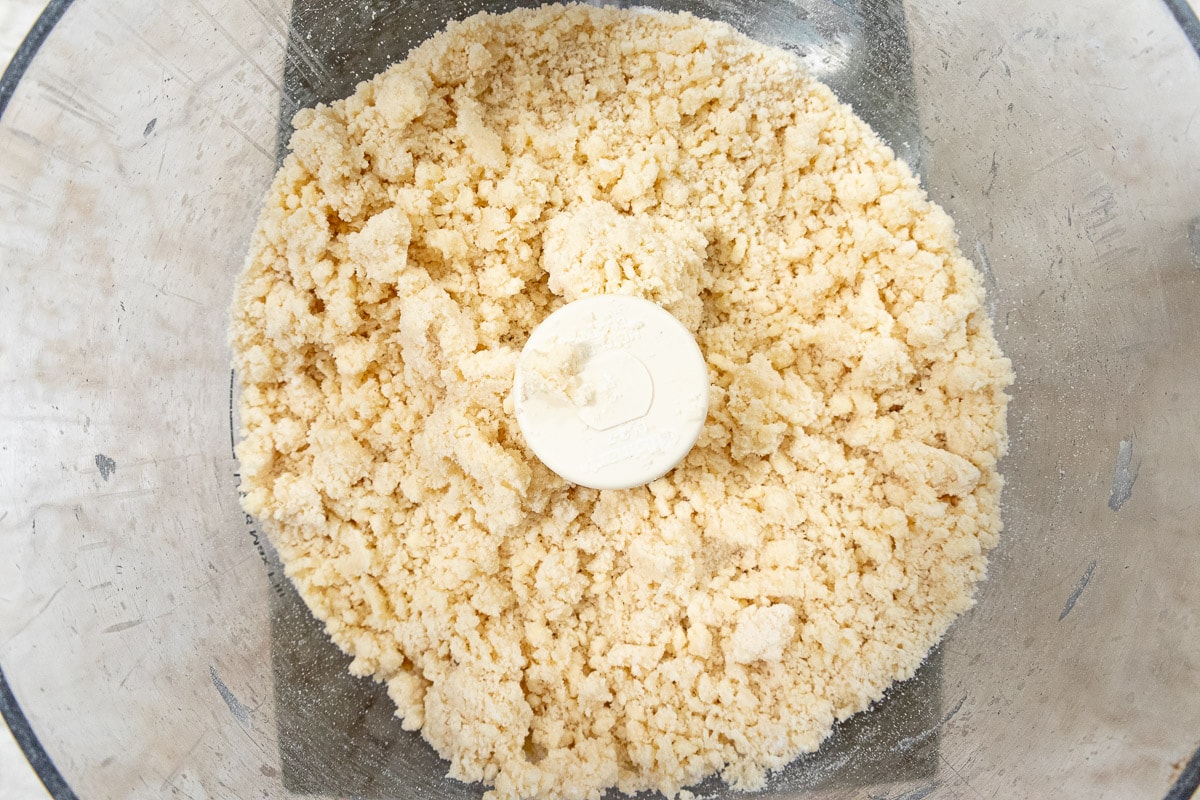
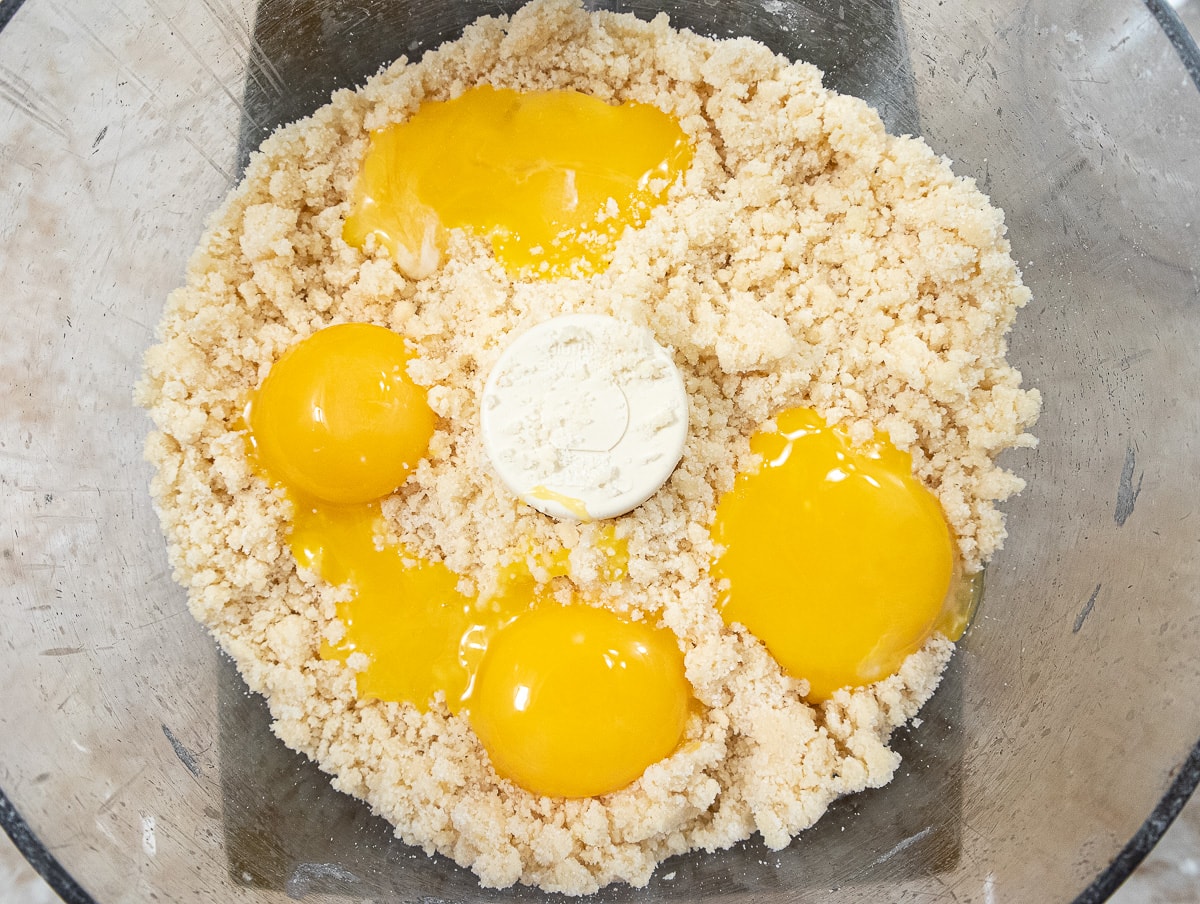
    The second collage shows the butter being cut into the flour, the sugar added to the processor followed by the egg yolk and the pastry balling up after processing.

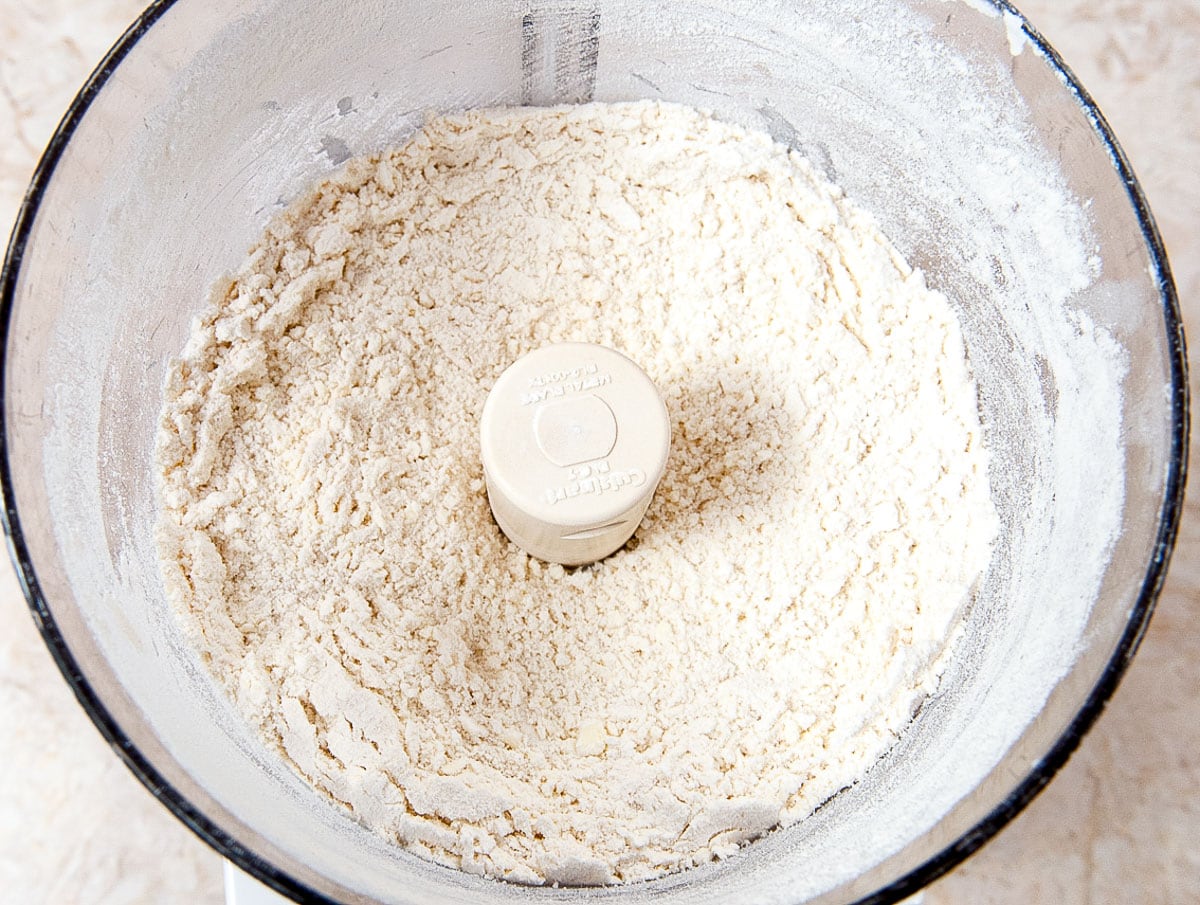
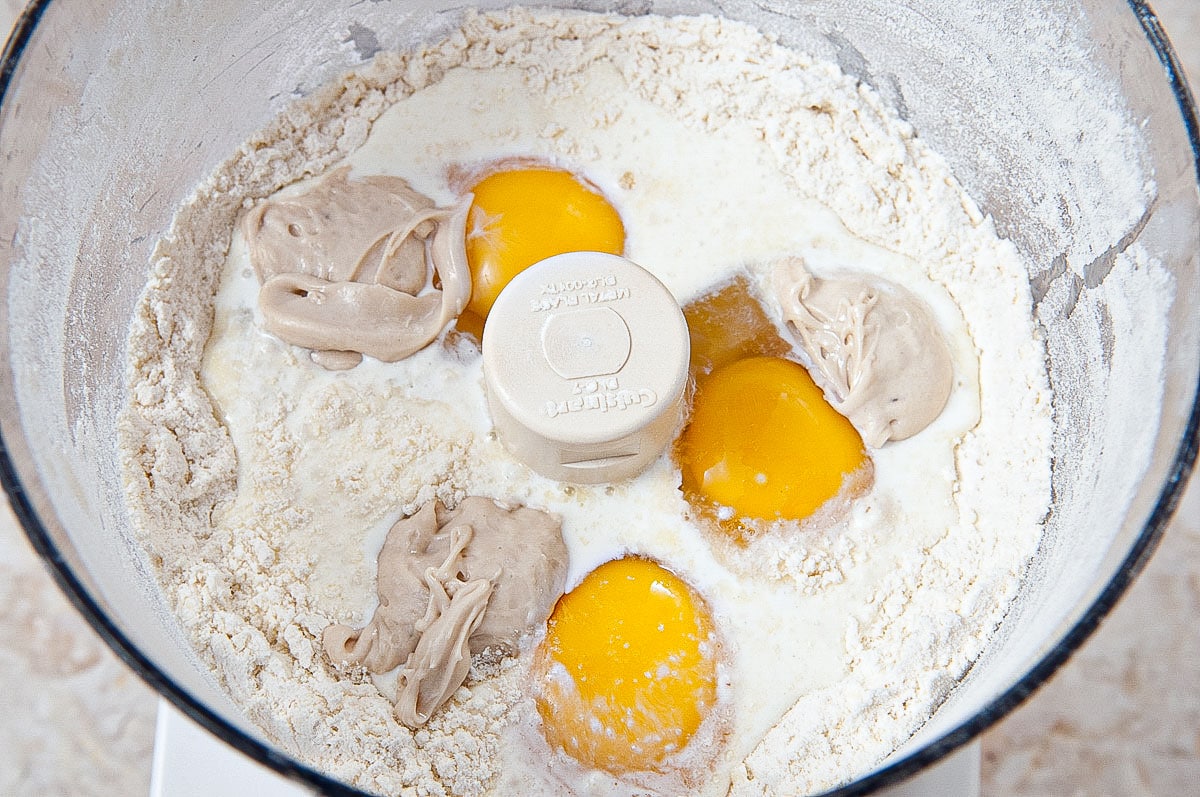
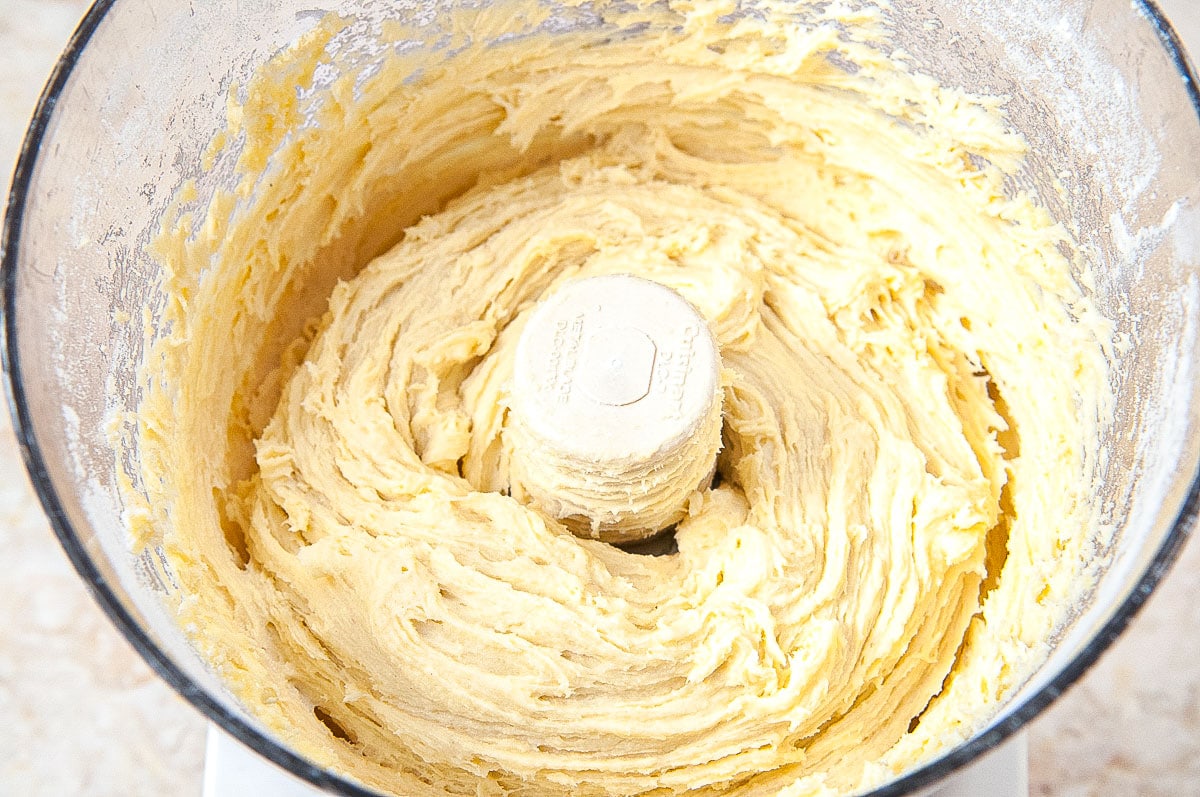
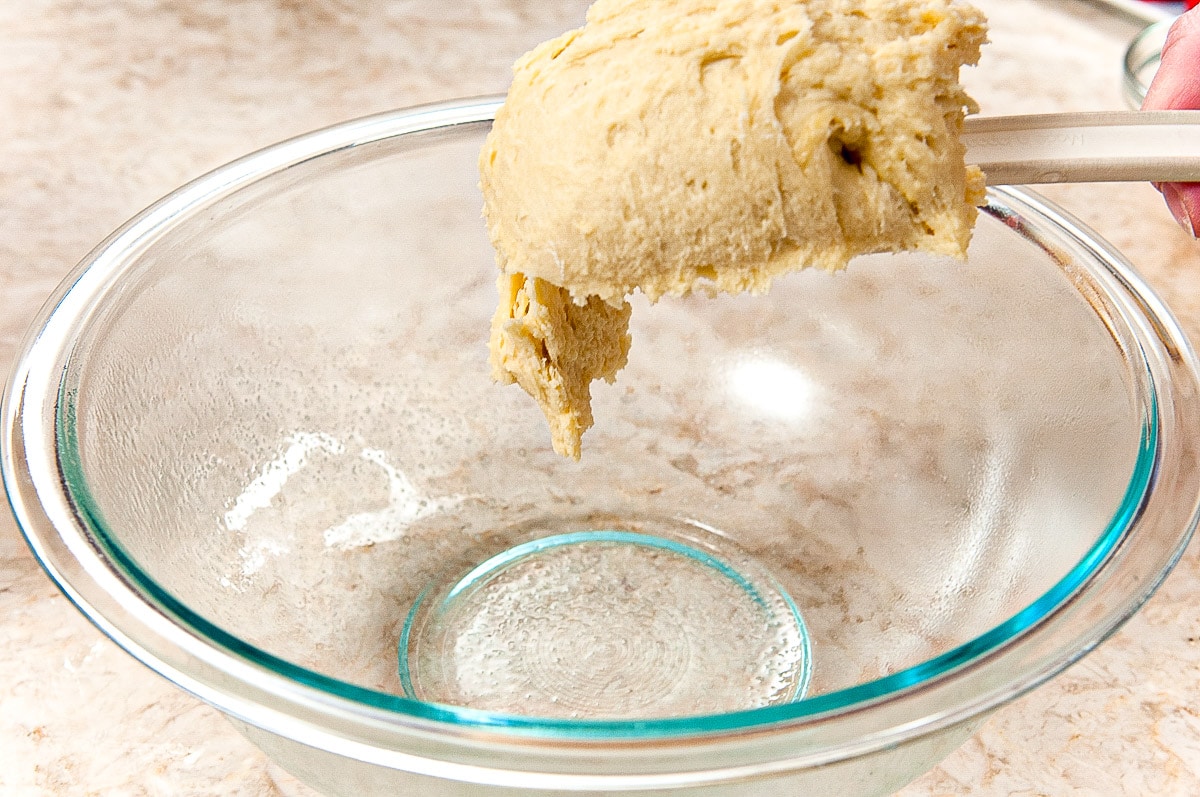
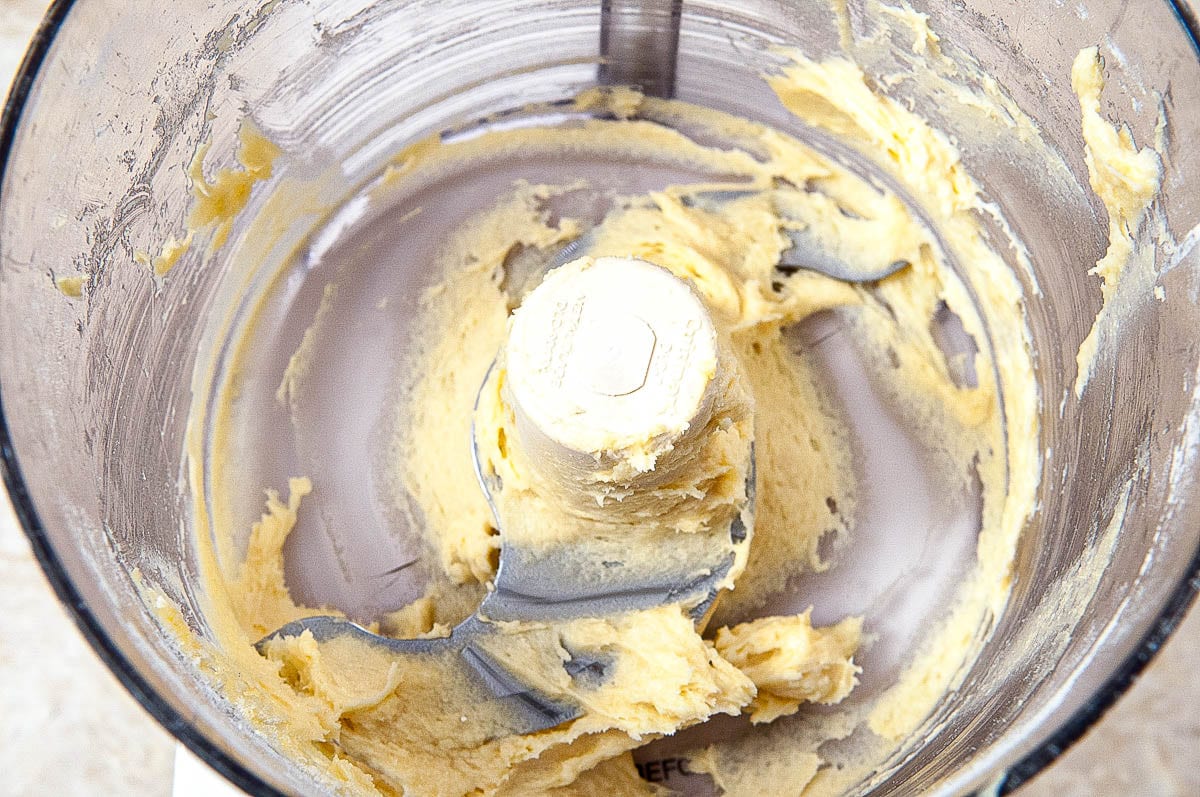
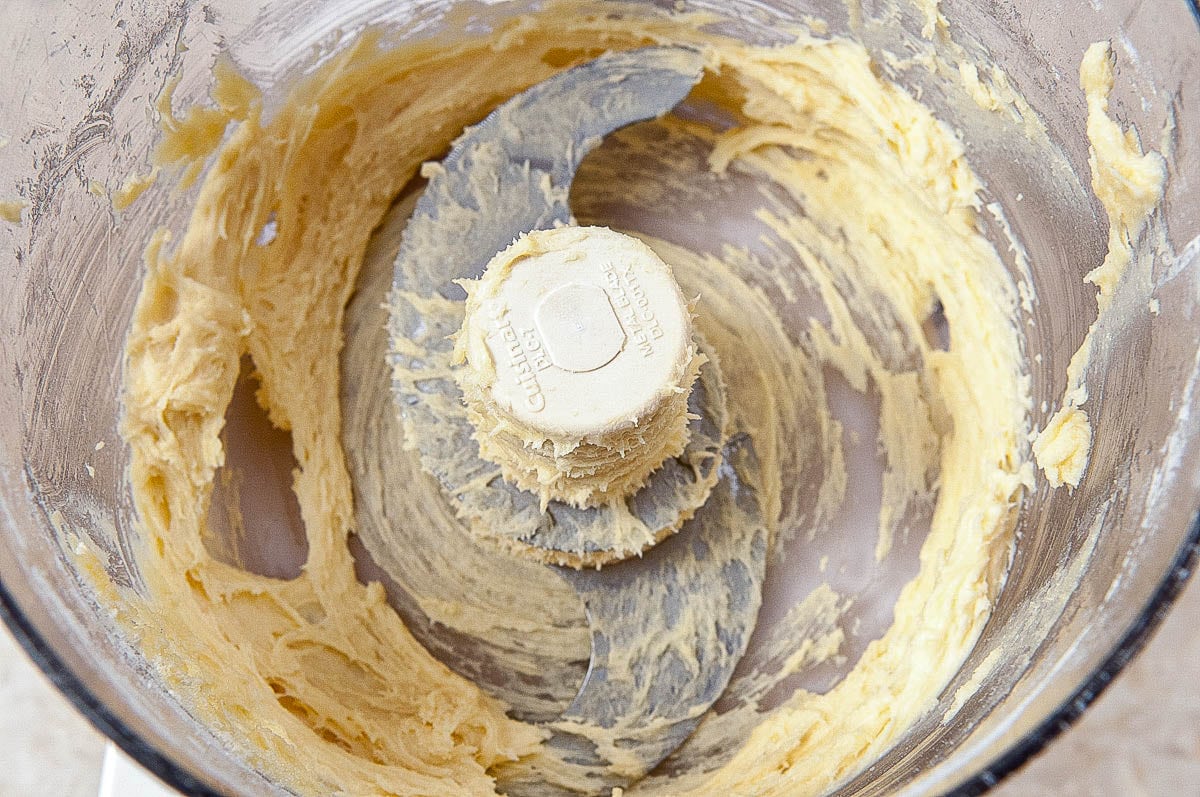
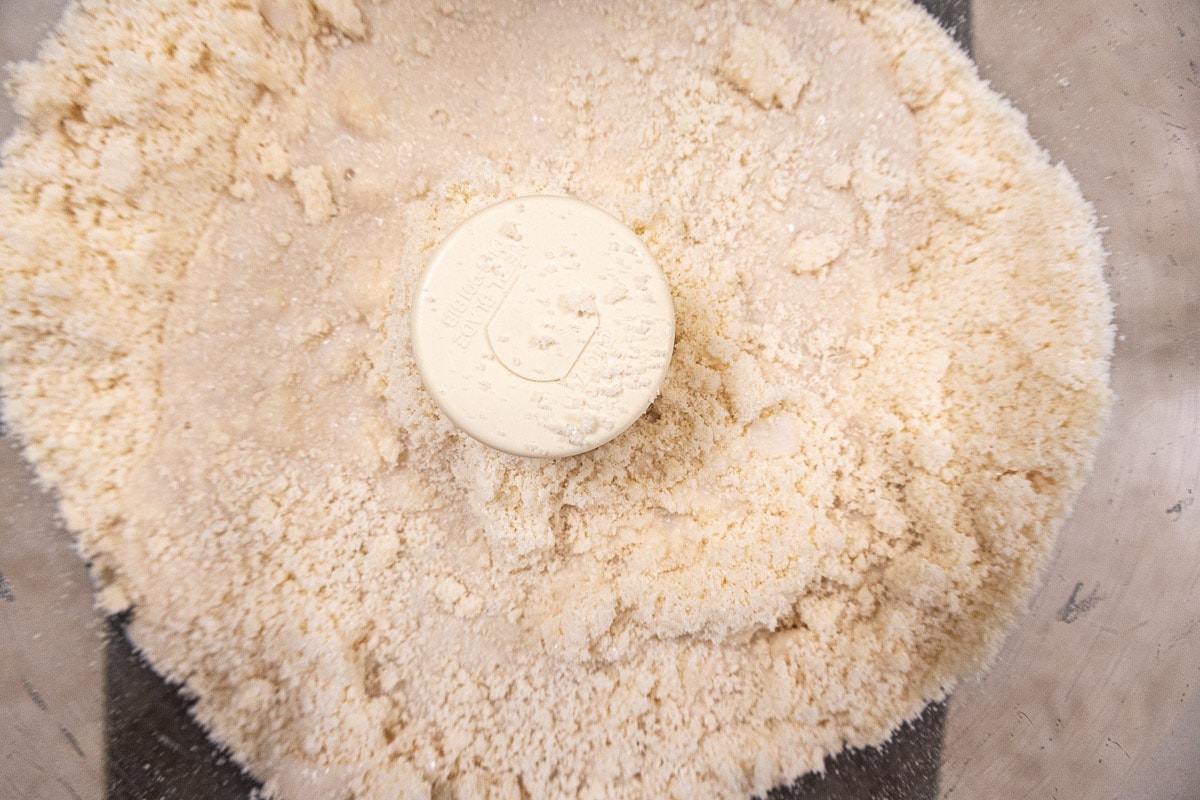
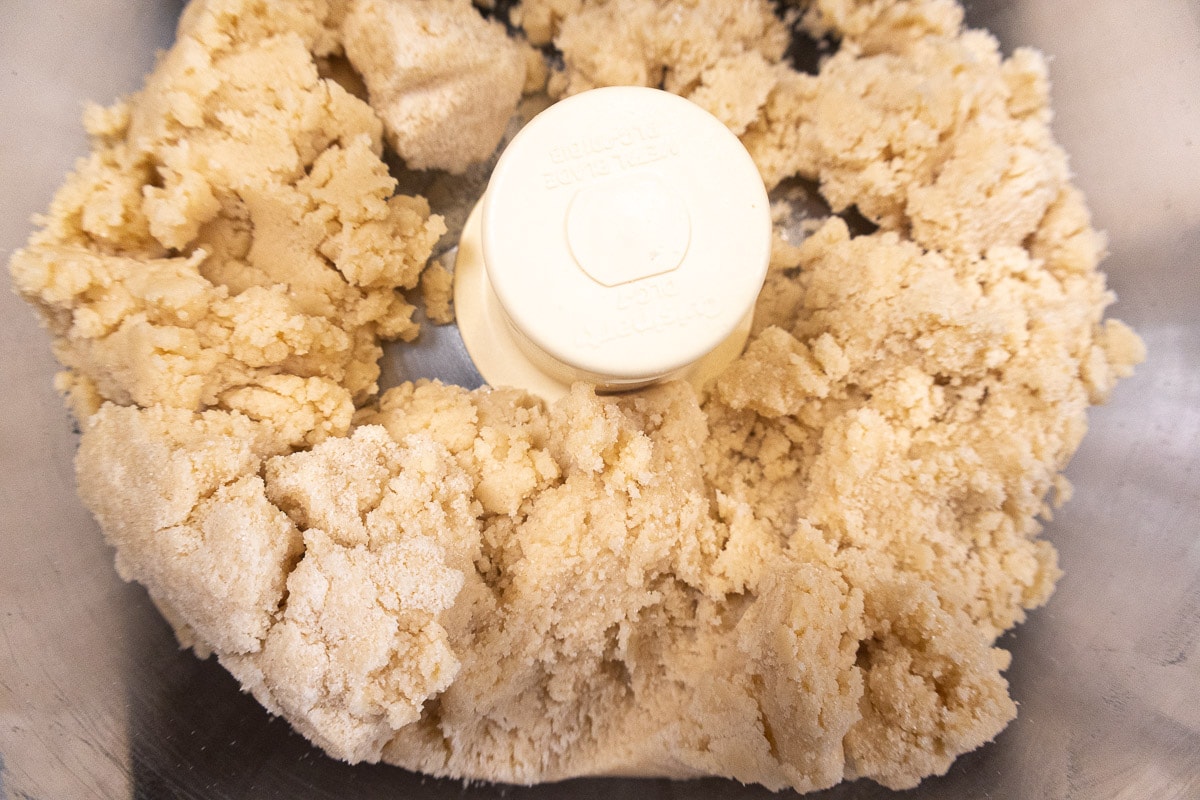
    Step 5. Process to cut the butter into the flour so that it is indistinguishable. Step 6. Pour the sugar over the flour/butter mixture in the food processor. Pulse several times to mix. Step 7.  Add the egg yolks to the food processor. Step 8. Process the ingredients until they form a ball. Rearrange the dough as needed if it isn't forming a ball.

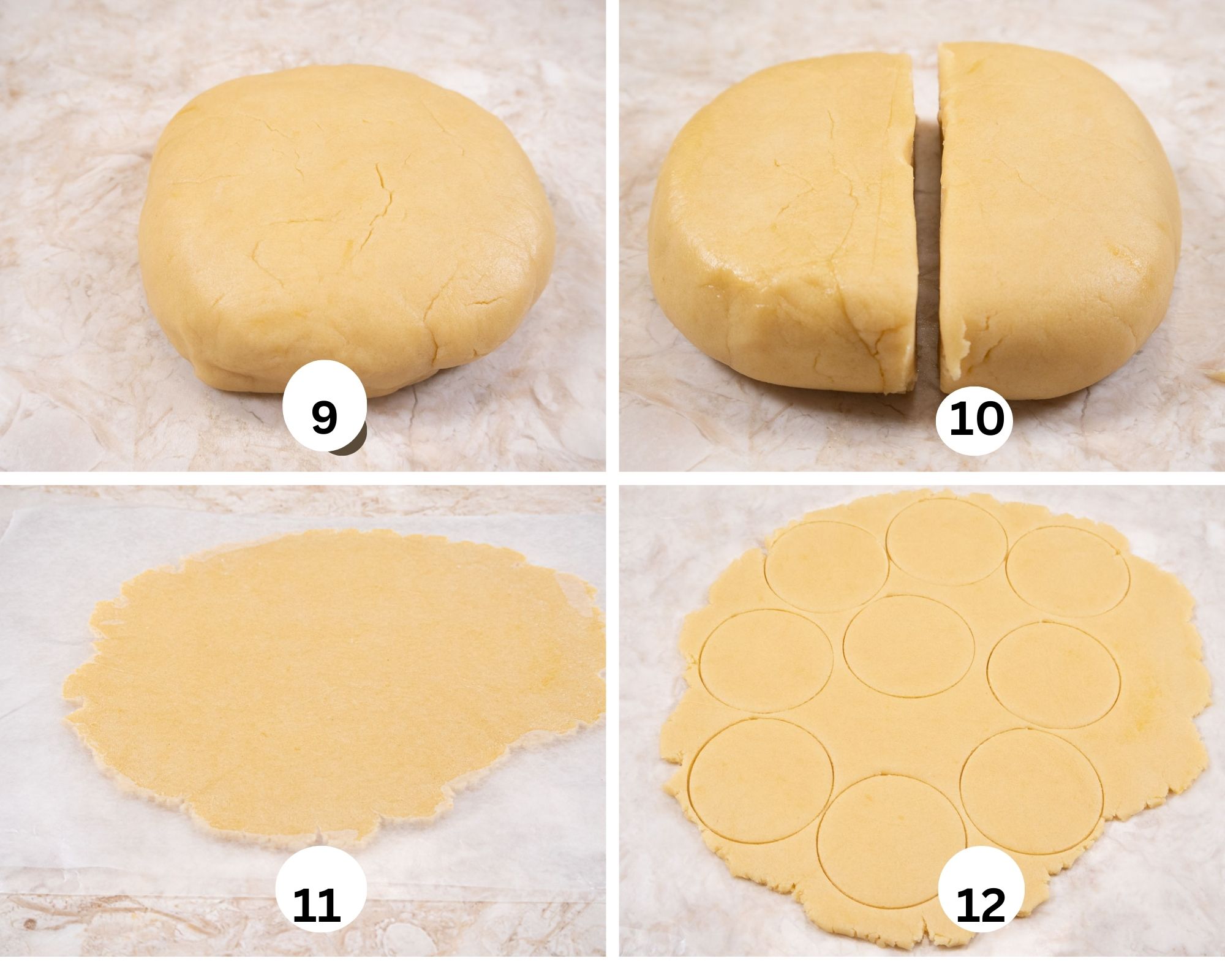
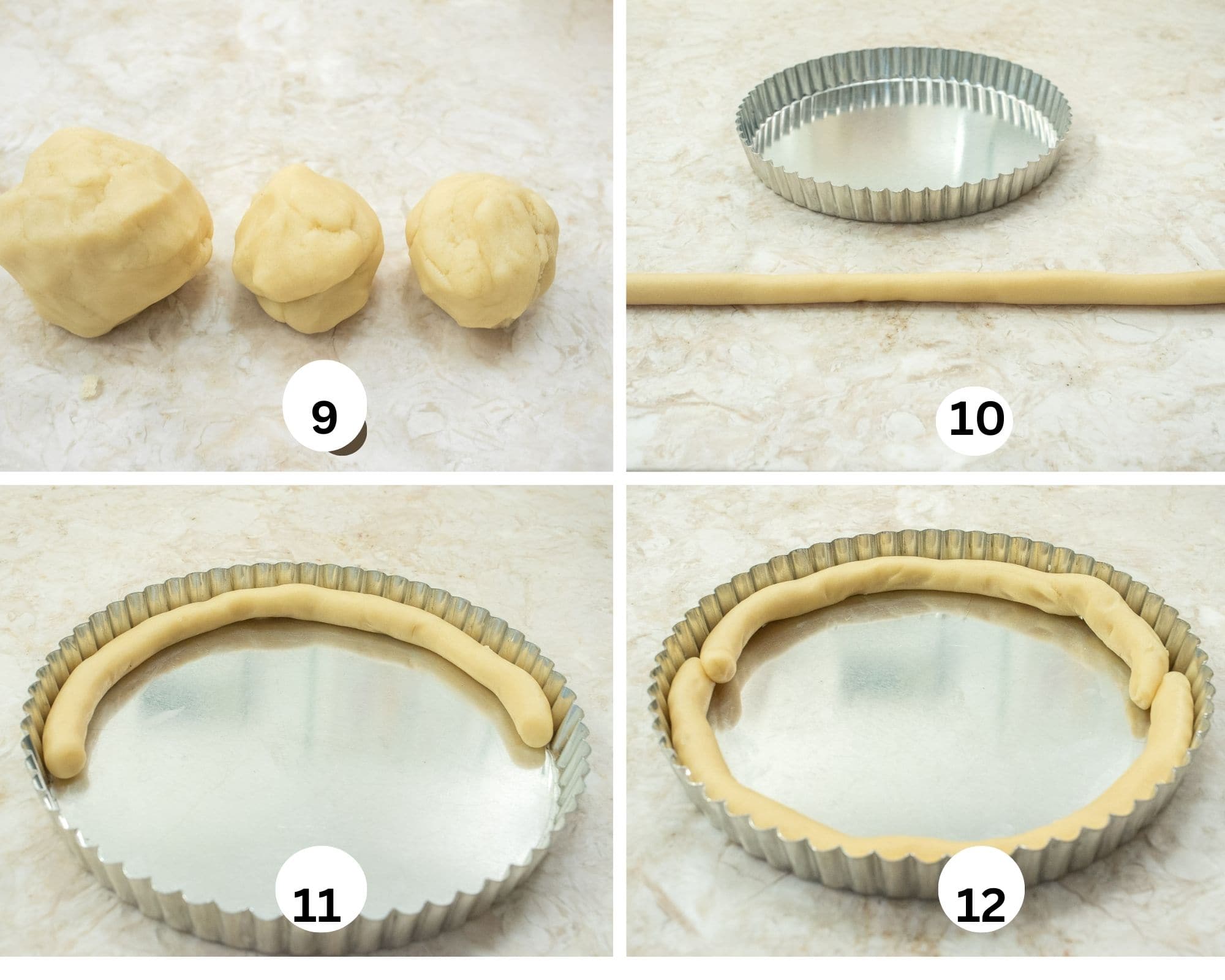
    The dough is divided into thirds, a photo with a rope of dough in front of the pan, the rope halfway around the tin and the second rope going around the inside edge.

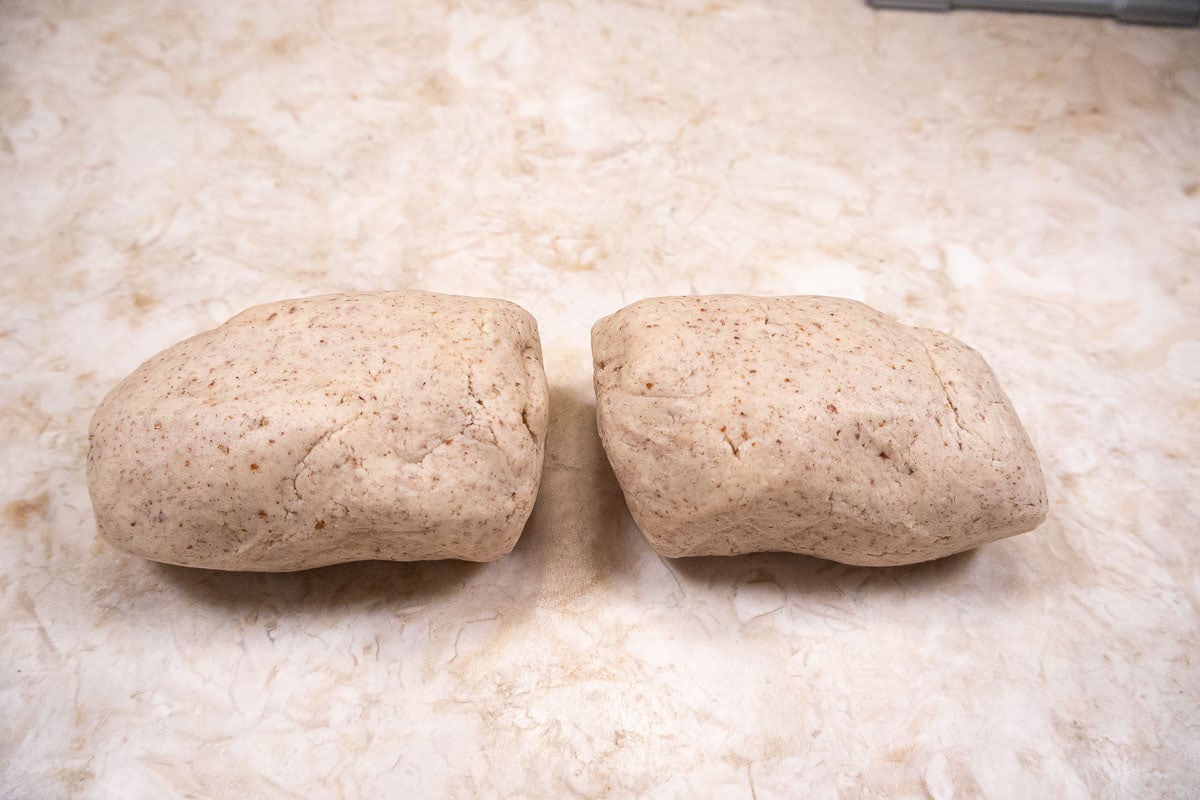
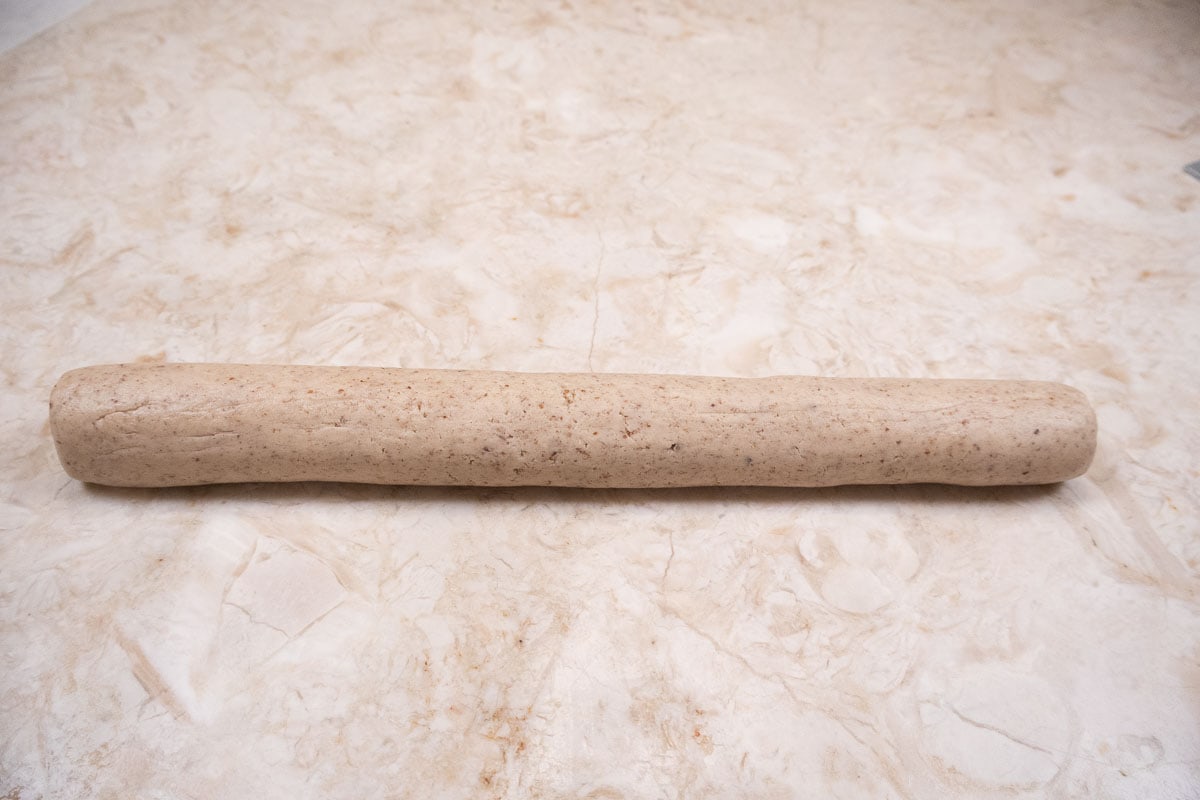
    Step 9. Divide the pastry in half. Divide one half into half again making l large piece and two smaller pieces. Step 10. Spray the center of the tart pan only. Roll one piece of the smaller ball into a 14" rope.  Step 11. Place the rope of pastry on one side of the tart pan going a little over halfway around the inside.  Step 12. Place the second rope along the other edge making sure the ends overlap by about 1". Press them together firmly.

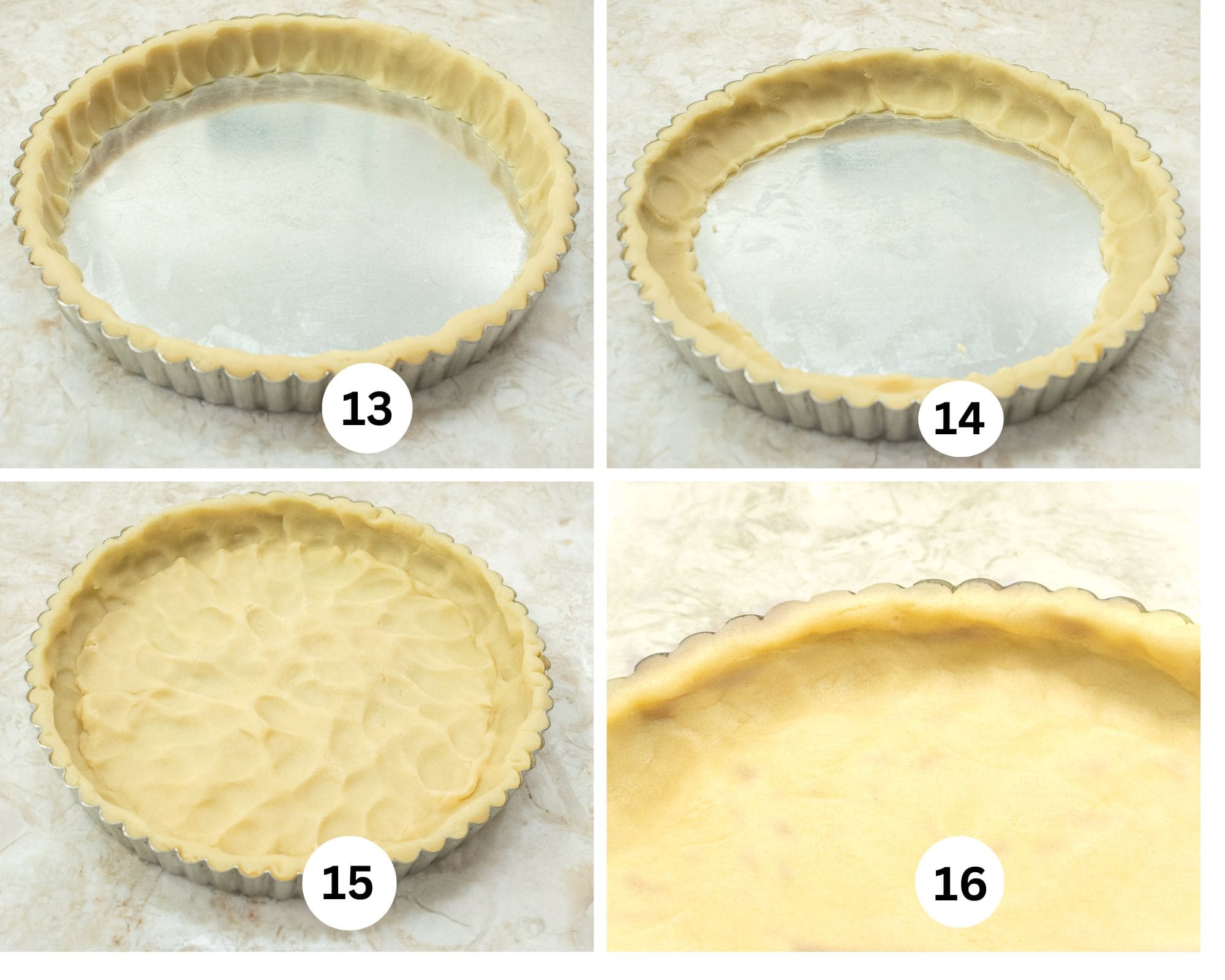
    The fourth collage shows the pastry pressed against the edge of the tin, it is moved out towards the center, the bottom is pressed in and the bottom and edge pressed together.

    Step 13. Press the ropes along the sides of the pan. Step 14. Press the bottom edge out towards the center for about and inch. Step 15. Flatten the remaining piece of pastry and press it out to meet the pastry at the edge of the pan. Step 16. Press the side and bottom edges together so no seam shows.

    Baking the Crust

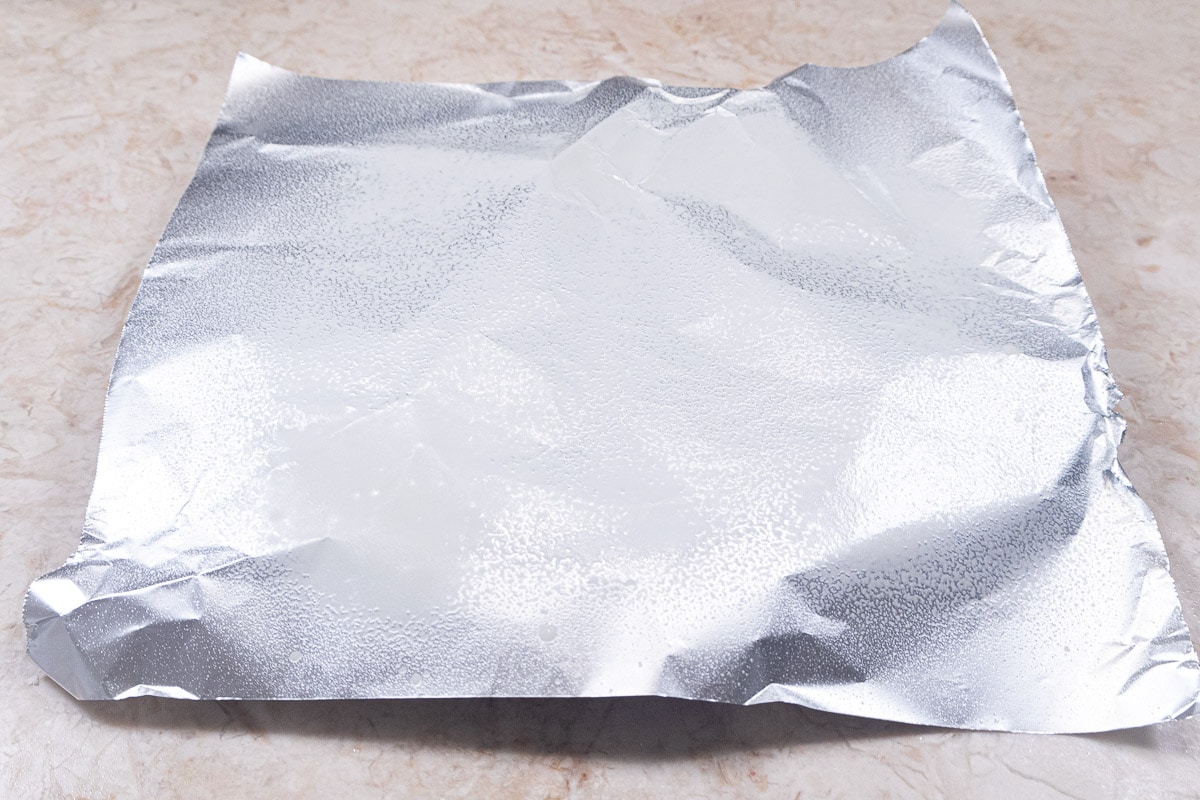
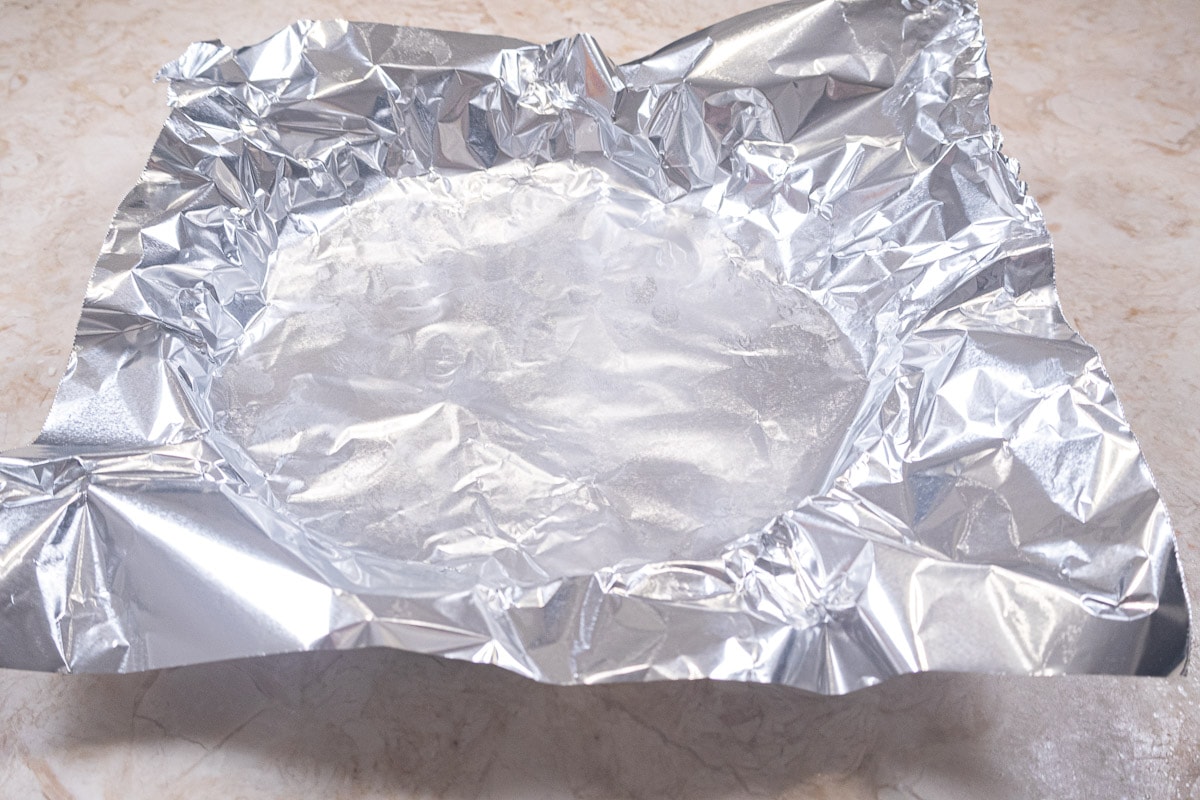
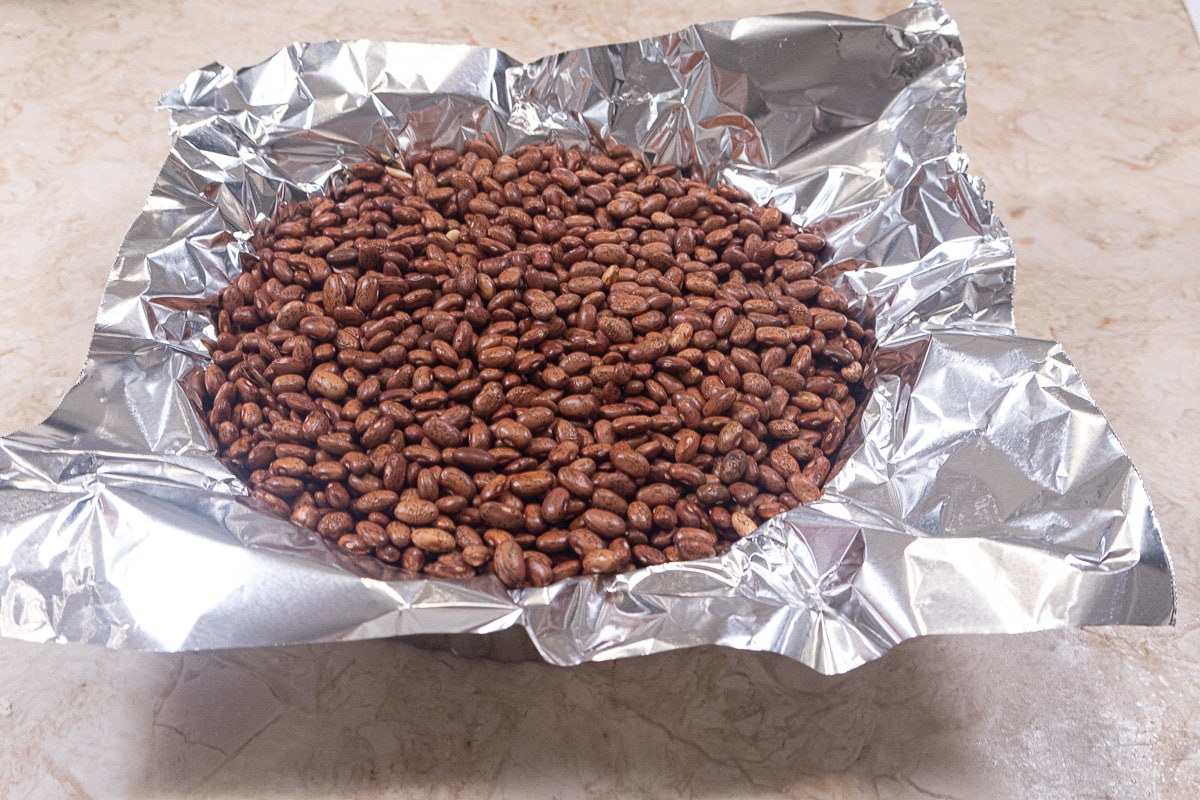
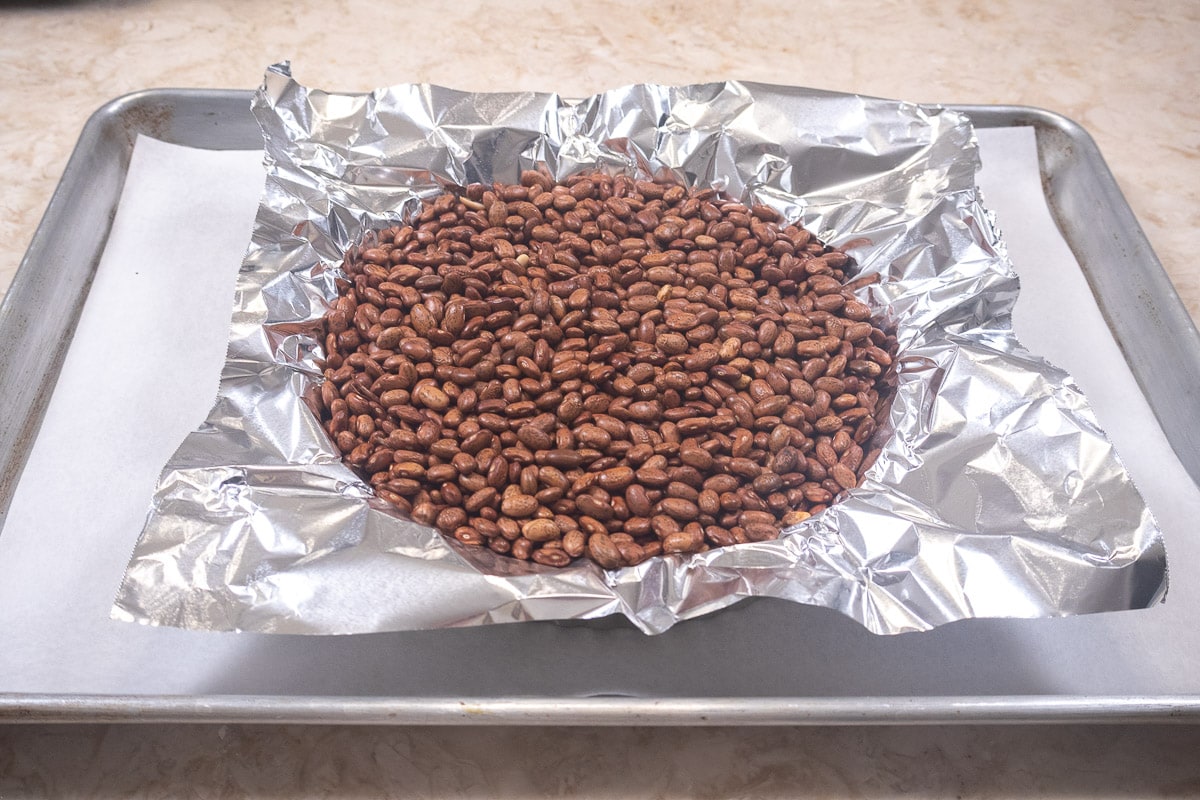
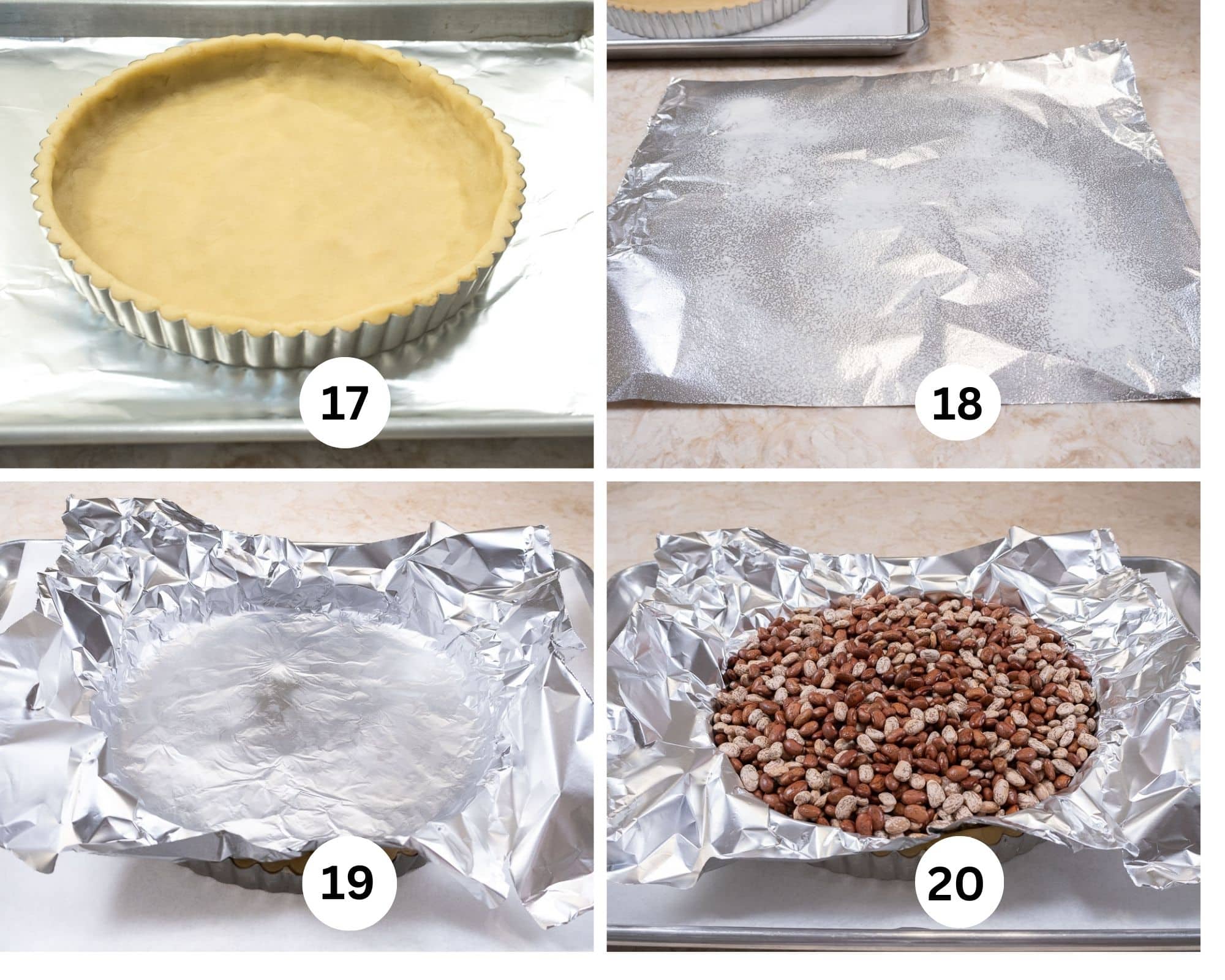
    The four photos in th is collage show the finished crust, sprayed foil, foil pressed into the crust, the foil filled with beans.

    Step 17. With the heel of your hand, press the bottom crust so it is perfectly smooth. Then press down on the top edge of the pan so it is even with the pan. Chill the pastry until very cold or frozen. Place the pan on a baking sheet. Step 18. Spray a large piece of foil with a non-stick baking spray. Step 19. Place the foil, sprayed side down into the pan. Press the edges of the foil against the pastry. Step 20. Fill the shell with pie weights or beans.

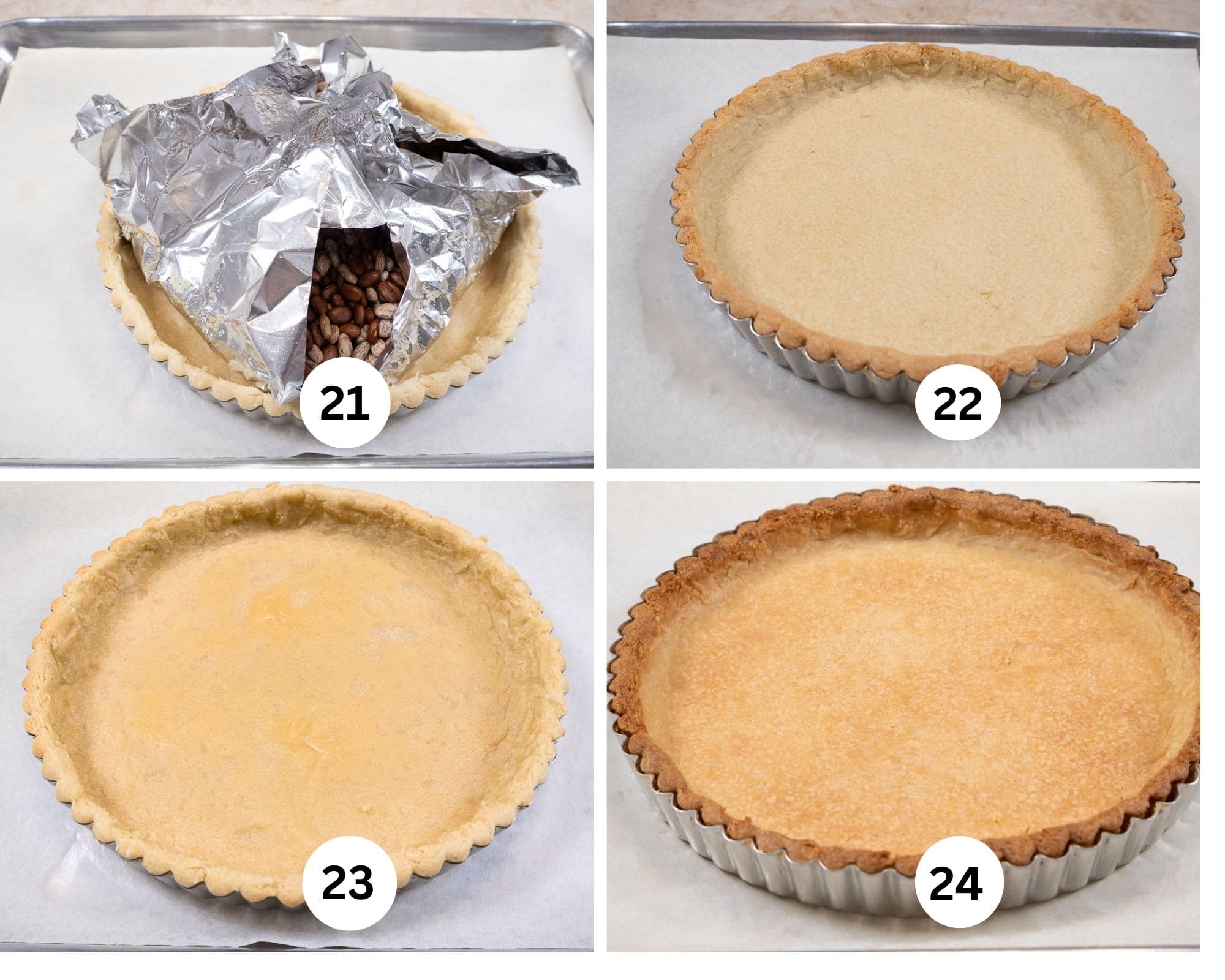
    The final collage shows the weights being removed from the pastry, the pastry after the beans are removed, the partially baked shell and the completely baked shell.

    Step 21. Lift the 4 corners of the foil. Step 21. Remove the weights from the shell. Step 23. A partially or par baked shell that will be filled and baked. Step 24. The fully baked shell ready to fill.

    Recipe FAQs

    What does Pâté Sucrée mean?

    Pâté Sucrée is French for sweet dough that is used for tarts. including fruit tarts and tarts with creamy filling. Although light and crisp in texture, it stays intact for creamy fillings and fruit tarts.

    What is the difference between a shortcrust and Pâté Sucrée?

    The shortcrust has more butter in the recipe resulting in a more flaky and crumbly baked shell requiring firmer fillings.

    What is the difference between and American Pie crust and Pâté Sucrée?

    An American pie crust is usually made with shortening, not butter and has no sugar. Pea size pieces of shortening left in the finished dough makes it very flaky and tender. Pâté Sucrée is made with butter and sugar which are creamed together.

    Storage

    The pâté sucrée crust can be baked immediately filled or unfilled or it can be frozen, well wrapped for several months to use later.

    Expert Tips

    • The pastry is ready to press in as soon as it comes from the processor. If, for any reason it is very soft, refrigerate briefly to firm up. Do not leave it in the refrigerator too long or it will be difficult to work with because of the large amount of butter.
    • When baking the crust without a filling, be sure to line the shell with foil. It is strong enough to hold the pie weights or beans without breaking when removed. Do not use parchment paper. It can and will break scattering hot pie weights or beans everywhere.
    • I don't dock my dough (use a fork to make holes in it)for a couple of reasons. It is usually docked to prevent the crust from bubbling up. I haven't found that this dough does that since it is not a flaky dough, which is more prone to bubbles. The other reason I don't is that if you are filling it with a liquid filling, the crust has to be sealed. While this is easily done by brushing the bottom of the crust with a beaten egg white, the white can seal the crust to the pan if it goes through the hole completely.
    • Honey Thyme Apple Tart
      Honey Thyme Apple Tart
    • Peach Curd Tart
      Peach Curd Tart - A Summer Treat
    • Chocolate Glazed Bakewell Tart

    Love this Pâte Sucrée Crust or any other on my site? Please leave a 5-star 🌟🌟🌟🌟🌟rating in the recipe card & consider leaving a review in the comments further down, thanks!  Star ratings help people discover my recipes online. Your support means a great deal to me.

    The Pâte Sucrée Crust in a tart pan with a removable bottom ready to be baked.

    The Easiest Pâte Sucrée Crust

    Helen S. Fletcher
    While most pastry crusts often meet with dread, this is the easiest crust to make.  With only four ingredients and using  the press in technique this makes an easy, go to crust that is light, crisp, tender, slightly sweet, and sturdy enough to hold custards, creams, frangipane and curd fillings among others. It is a building block and master pastry for all sweet tarts.  Of the three main French pastry crusts, the pate sucree is the easiest to make.  
    4.58 from 7 votes
    Print Recipe Pin Recipe
    Prep Time 15 minutes mins
    Cook Time 20 minutes mins
    Total Time 35 minutes mins
    Course Pastry
    Cuisine French
    Servings 16 servings
    Calories 106 kcal

    Equipment

    • 9x1" tart pan with removable bottom
    Prevent your screen from going dark

    Ingredients

    • 1 ¼ cup all-purpose flour (175 grams)
    • ½ cup unsalted butter, cold and cut into small pieces (114 grams)
    • ¼ cup granulated sugar (50 grams)
    • 2 large egg yolks

    Instructions
     

    • Have a 9”x1” tart pan with a removable bottom for the tart handy.
    • Place the flour in the bowl of a processor. Pulse several times. 
    • Place the cold butter over the flour and process until the butter is indistinguishable.  
    • Pour the sugar over the mixture and process briefly to mix in. 
    • Add the yolks and process until the crust comes together in a ball.  This may take a bit.  Reorganizing the pastry in the processor helps.  If your processor is a smaller one, divide the mixture in half and process each half separately.  Join the two pieces together by kneading them a few times.
    • Divide the dough in half (about 180 grams). 
    • Divide one half in half again (about 90 grams).
    • Roll one of the smaller pieces of dough into a 14" rope that will go a little over halfway around the inside of the tart pan.  
    • Repeat with the second half, overlapping the edges of the dough. Press the edges together so no line appears.
    • Press the pastry into the edges of the pan.
    • Press the dough about 1" into the bottom of the pan towards the center. 
    • Flatten the remaining half of the dough and place it in the center of the pan.  Press it out to join the edge dough.  Join these completely so there is no line that can be seen.  
    • To partially bake the shell, freeze the crust until hard. Preheat the oven to 375°F. Tear a piece of foil about 13" long and spray one side of it with a non-stick baking release.  Line with the crust with the foil, sprayed side down.  Fill the pan to the top with pie weights or with beans.
      Bake for 20 minutes,  remove the weights carefully by grasping all four corners of the foil and lifting out.  Return the crust to the oven and bake for about 5 minutes more until about two thirds done baked.  It should not be completely baked but should be firm.
    • To completely bake the crust, follow the above instructions and bake until golden brown, about 8 to 10 minutes more.

    Notes

    • The pastry is ready to press in as soon as it comes from the processor. If, for any reason it is very soft, refrigerate briefly to firm up. Do not leave it in the refrigerator too long or it will be difficult to work with because of the large amount of butter.
    • When baking the crust without a filling, be sure to line the shell with foil. It is strong enough to hold the pie weights or beans without breaking when removed. Do not use parchment paper. It can and will break scattering hot pie weights or beans everywhere.
    • I don't dock my dough (use a fork to make holes in it)for a couple of reasons. It is usually docked to prevent the crust from bubbling up. I haven't found that this dough does that since it is not a flaky dough, which is more prone to bubbles. The other reason I don't is that if you are filling it with a liquid filling, the crust has to be sealed. While this is easily done by brushing the bottom of the crust with a beaten egg white, the white can seal the crust to the pan if it goes through the hole completely.

    Nutrition

    Serving: 16servingsCalories: 106kcalCarbohydrates: 11gProtein: 1gFat: 6gSaturated Fat: 4gPolyunsaturated Fat: 0.4gMonounsaturated Fat: 2gTrans Fat: 0.2gCholesterol: 40mgSodium: 2mgPotassium: 15mgFiber: 0.3gSugar: 3gVitamin A: 210IUCalcium: 6mgIron: 1mg
    Tried this recipe?Mention @helensfletcher or tag #pastrieslikeapro!

    A Cranberry Orange Muffin

    Modified: Aug 25, 2025 · Published: Oct 26, 2022 by Helen S Fletcher · This post may contain affiliate links · 14 Comments

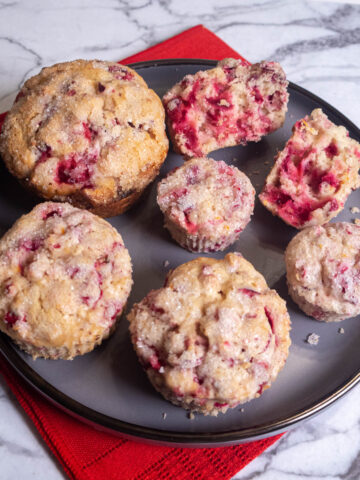
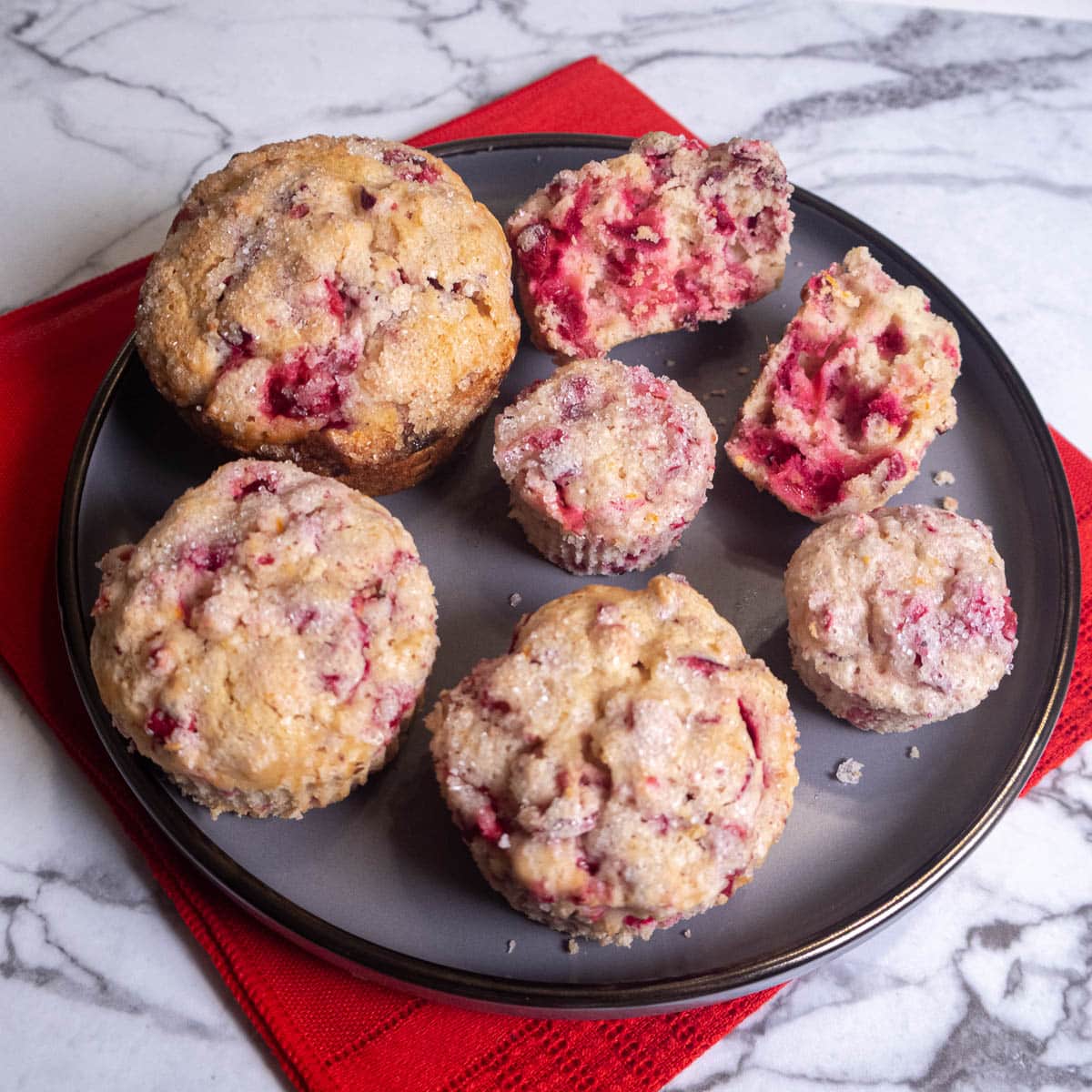
    Cranberry Orange Muffins in three sizes, mini, regular and Texas on a gray plate with a red napkin.

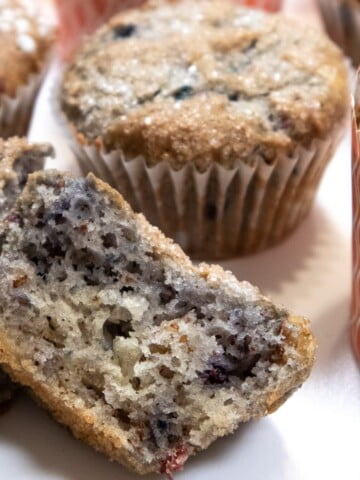
    These Cranberry Orange Muffins are a variation of the Cranberry Vanilla Muffins which are equally good. Cranberries team up well with other fruits especially orange and nowhere better than in these muffins.

    Cranberry Orange Muffins in three sizes, mini, regular and Texas on a gray plate with a red napkin.

    One of my most favorite things about Fall is cranberries arriving around the middle of October and this is a perfect recipe to use them in. Other recipes featuring cranberries on my blog you might want to try are, Cranapple PIe, Chocolate Cranberry Curd Tart and Cranberry Pecan Streusel Coffee Cake. My Basic Muffin Mix allows you to tailor your muffins to your preferences. For sure see another fall favorite my Really Easy Pumpkin Muffins.

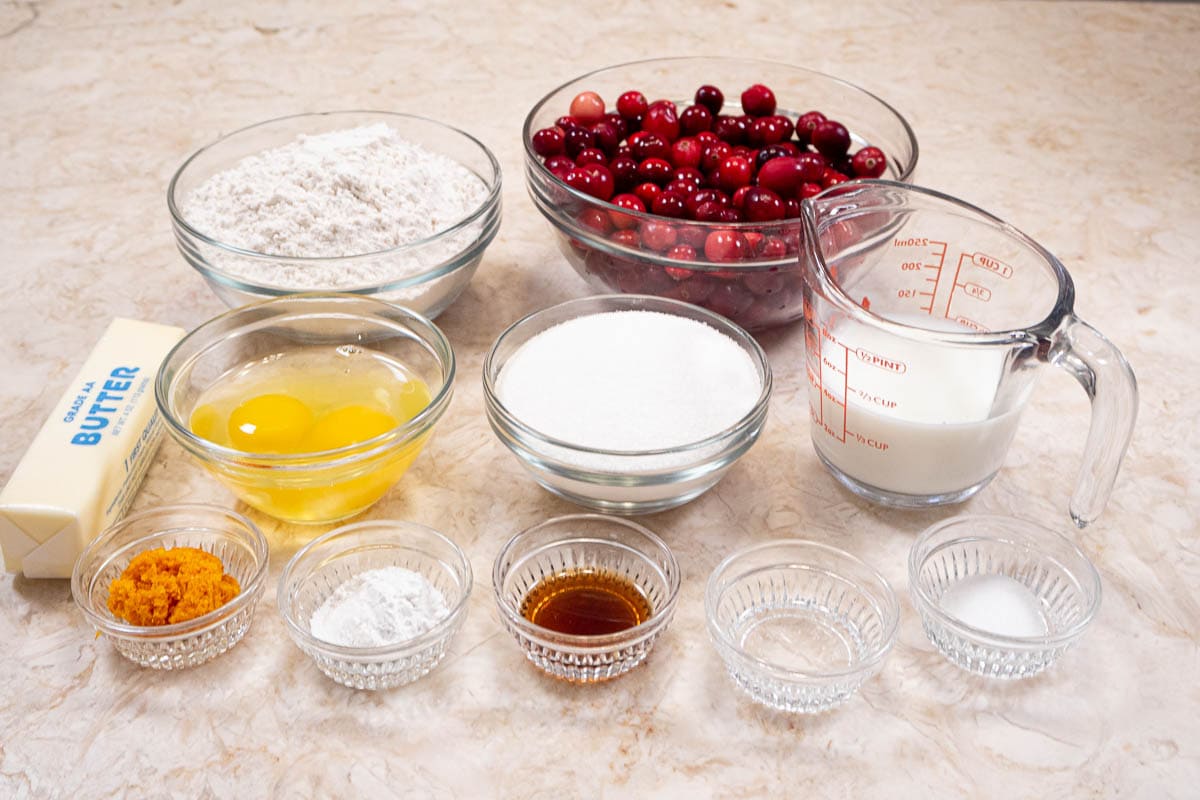
    Ingredients for A Cranberry Orange Muffin including flour, cranberries, eggs, sugar, milk, orange zest, baking powder, vanilla and almond extract.

    From Left to Right. Back Row: All-purpose flour, cranberries. Middle Row: Butter, eggs, granulated sugar, milk. Front Row: orange zest, baking powder, vanilla extract, almond extract, salt.

    Ingredients

    • Cranberries can be fresh or frozen. If fresh are used, freeze them until hard.
    • Milk can be whole or 2%.
    • Eggs are size large.
    • Orange Zest. A microplaner is best for obtaining the zest. A medium to large orange will yield the amount needed.
    • Butter can be salted or unsalted for this recipe.

    Instructions

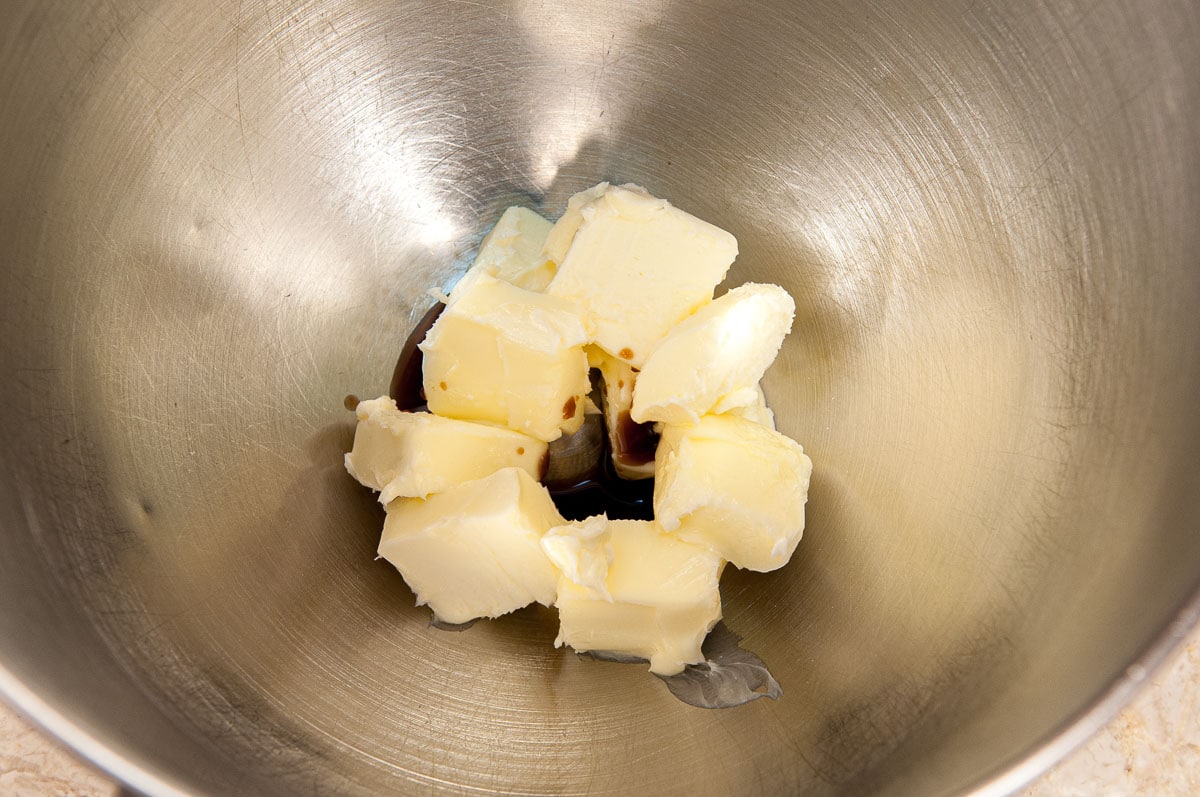
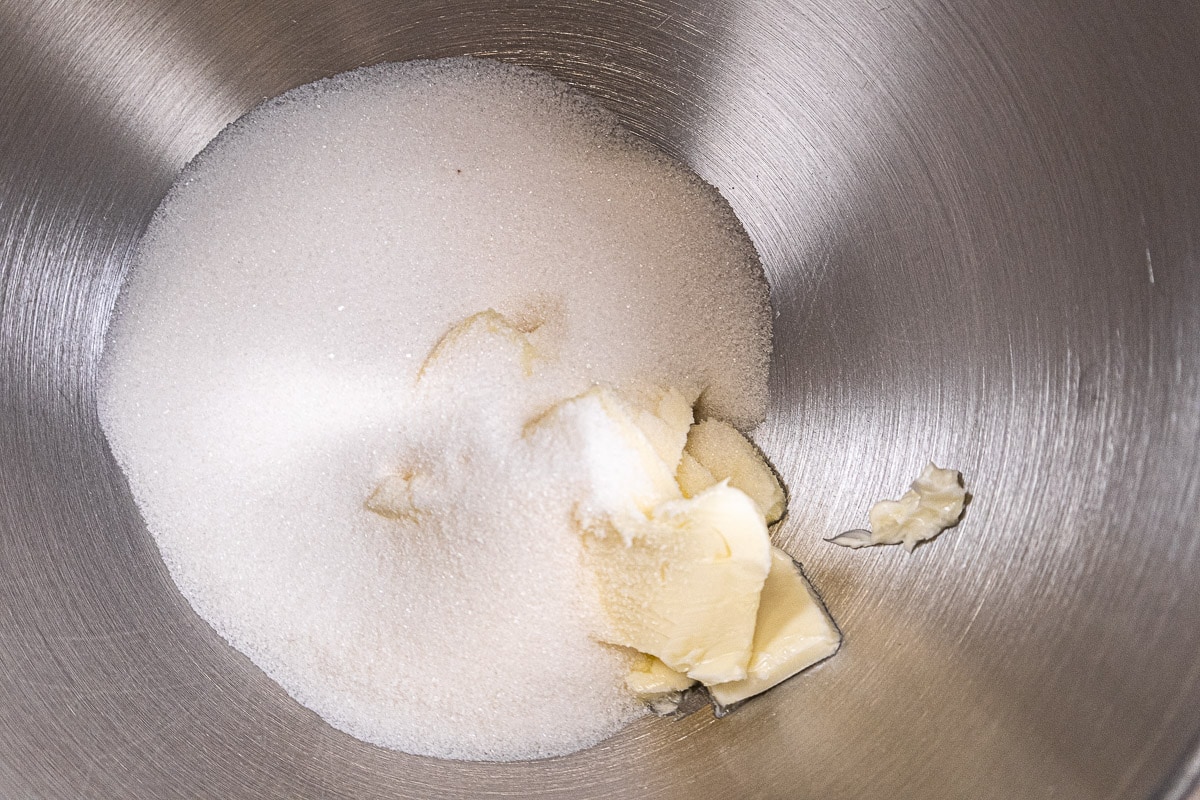
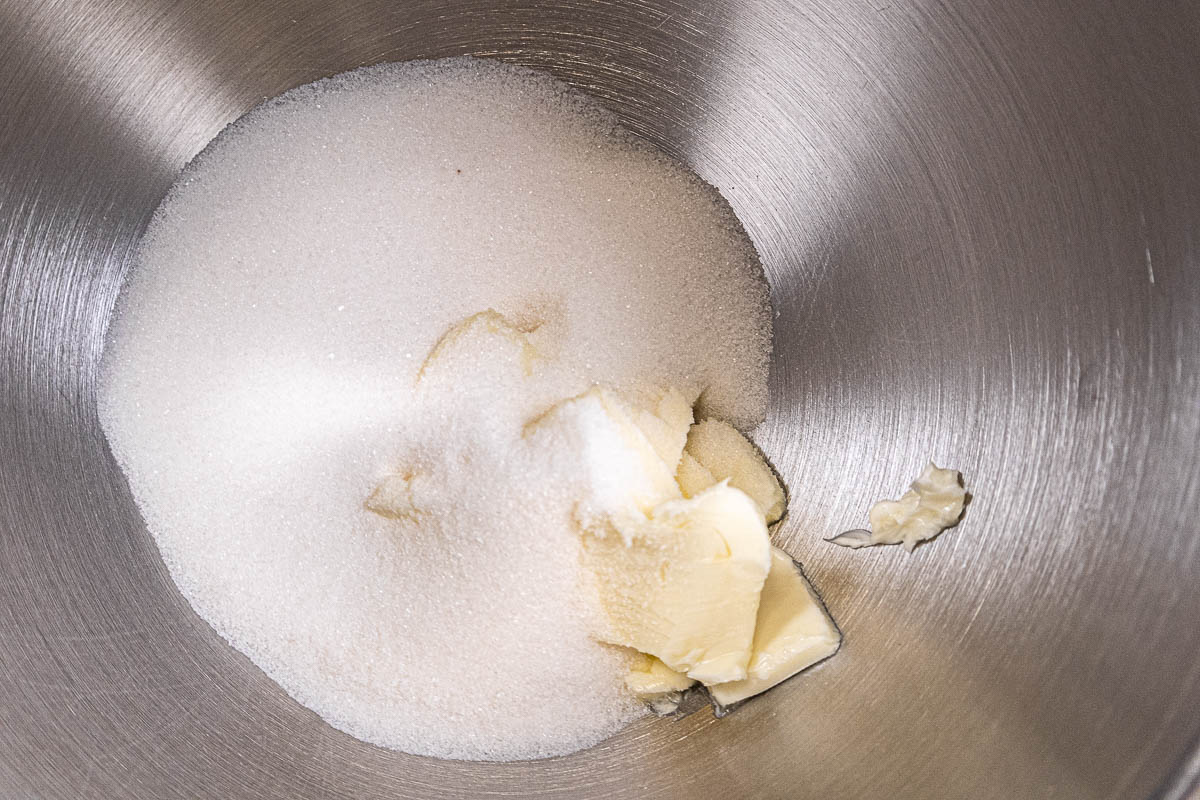
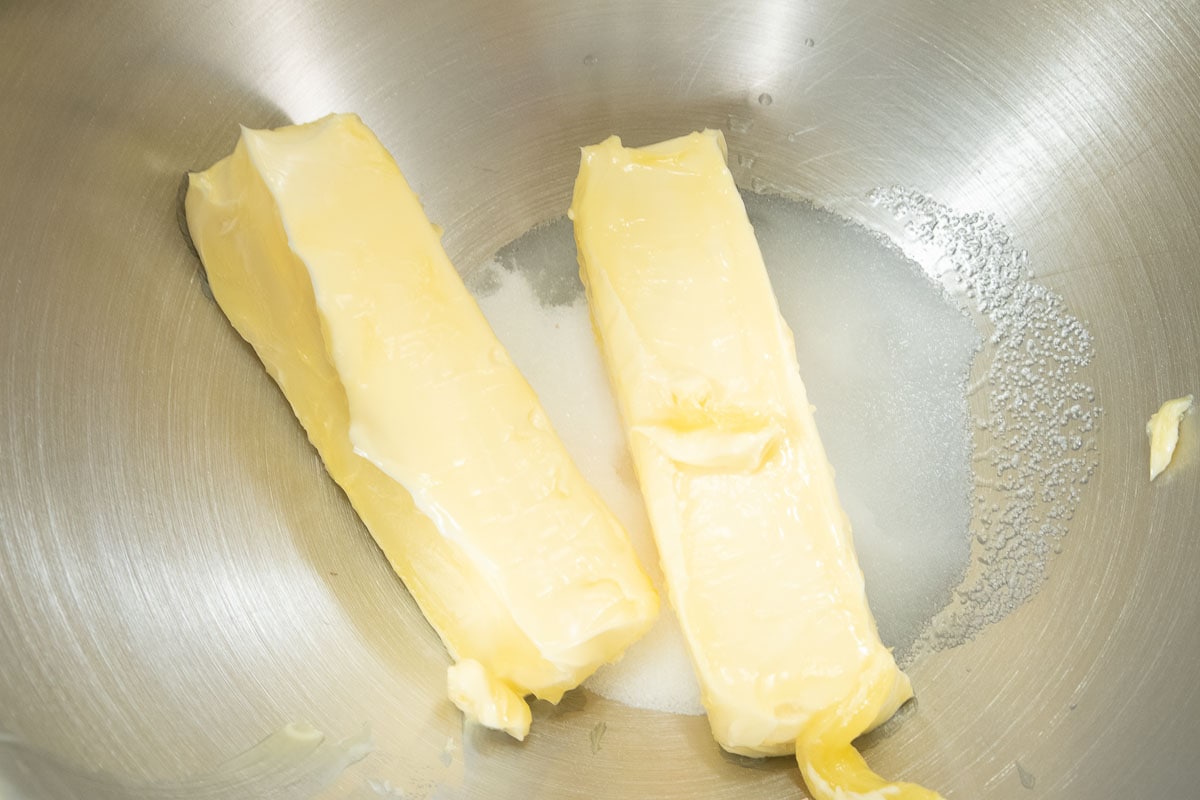
    Butter and sugar in the bowl of a mixer.

    Step 1. Butter and granulated sugar in a mixing bowl.
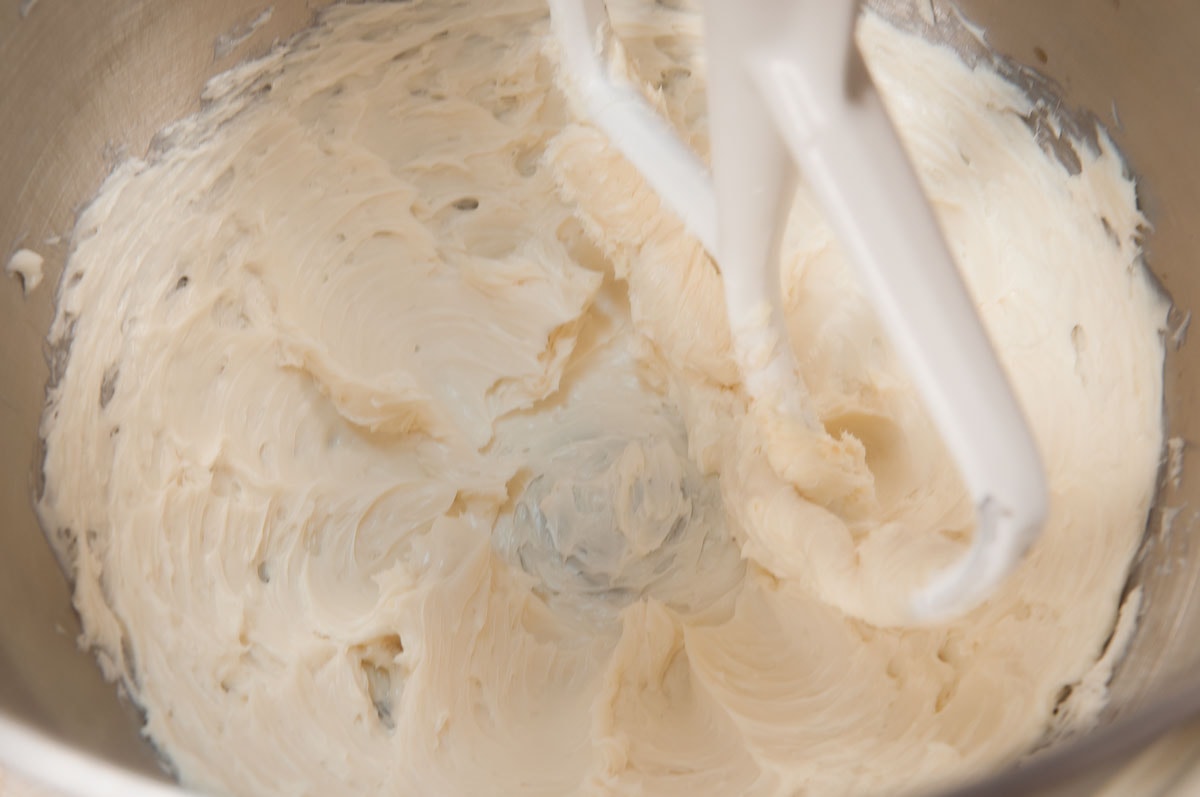
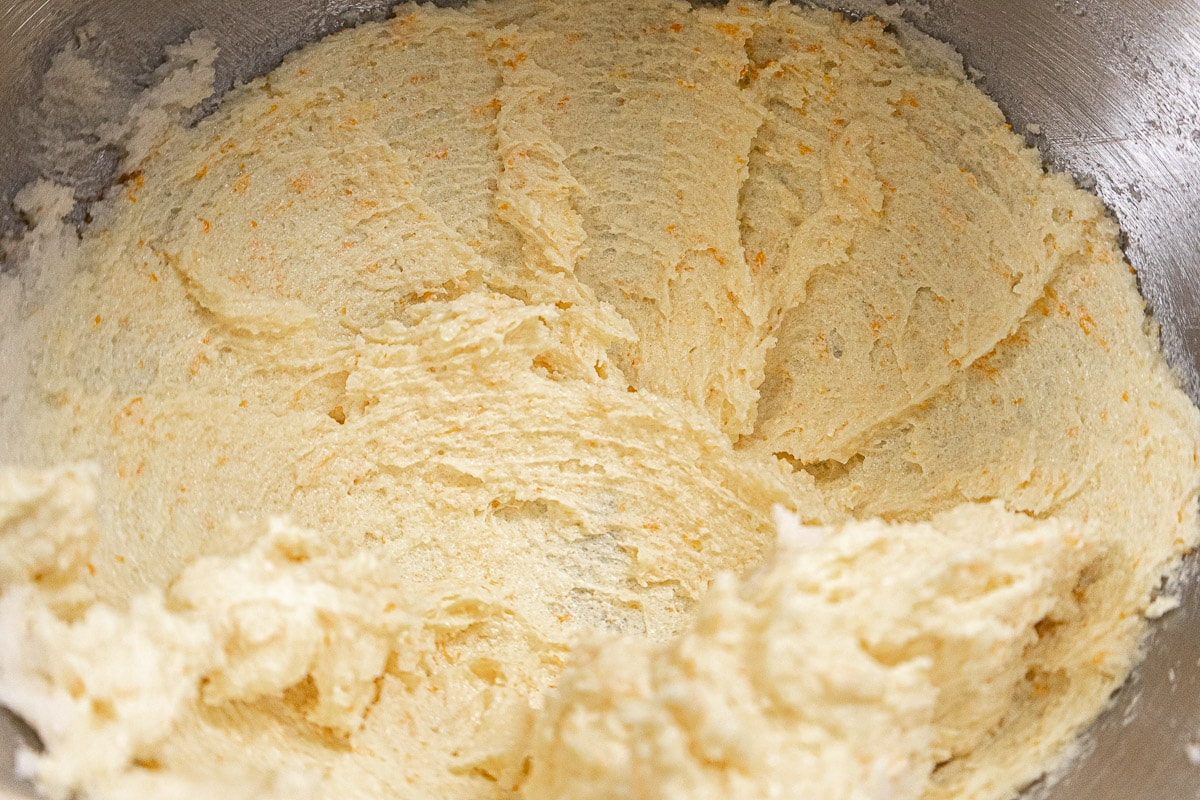
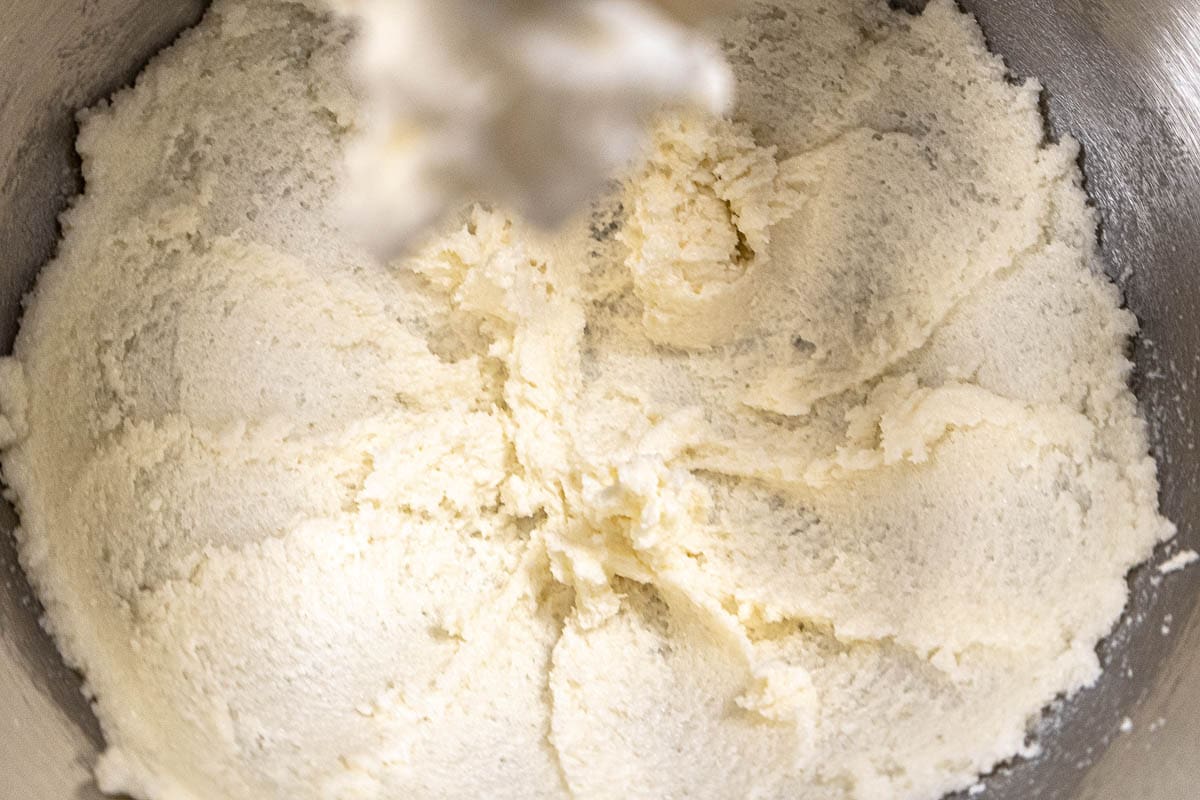
    Butter and sugar creamed in the mixing bowl.
    Step 2. The butter and sugar creamed together.

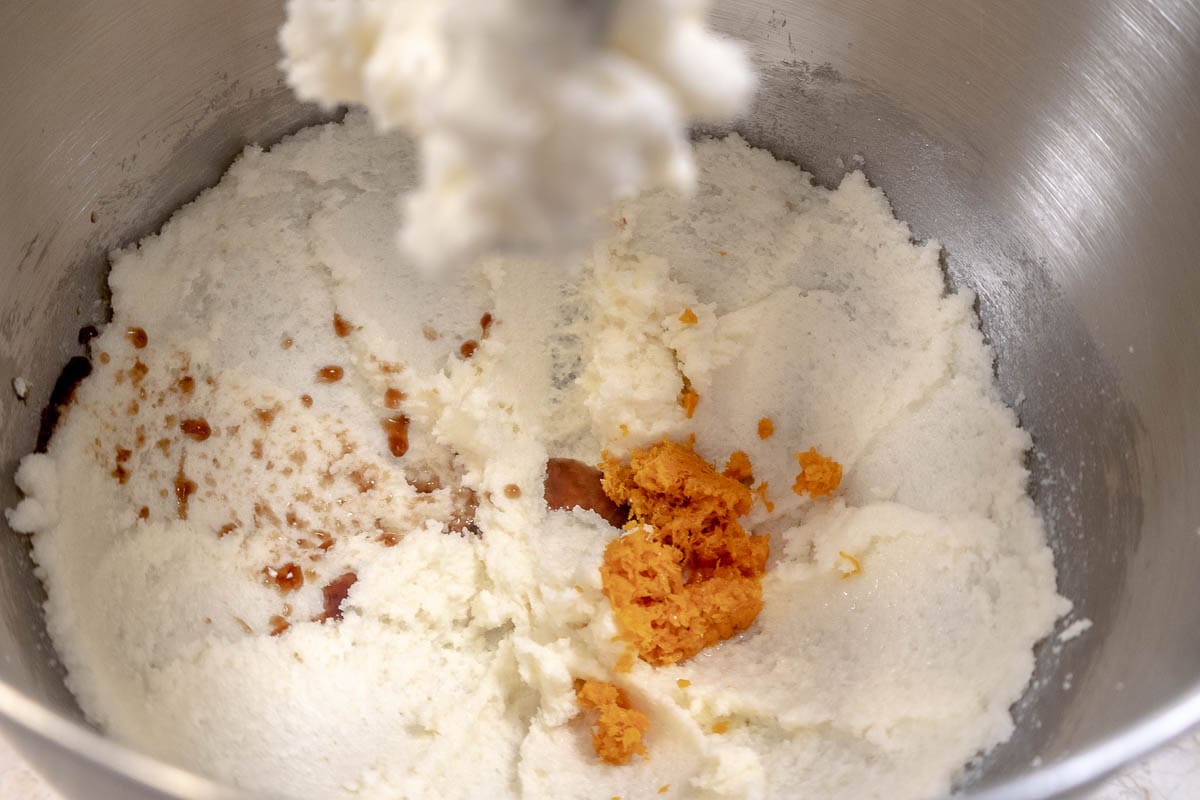
    The vanilla and almond extracts as well as the orange zest is added to the creamed mixture.

    Step 3. The vanilla and almond extracts along with the orange zest are added to the creamed mixture.

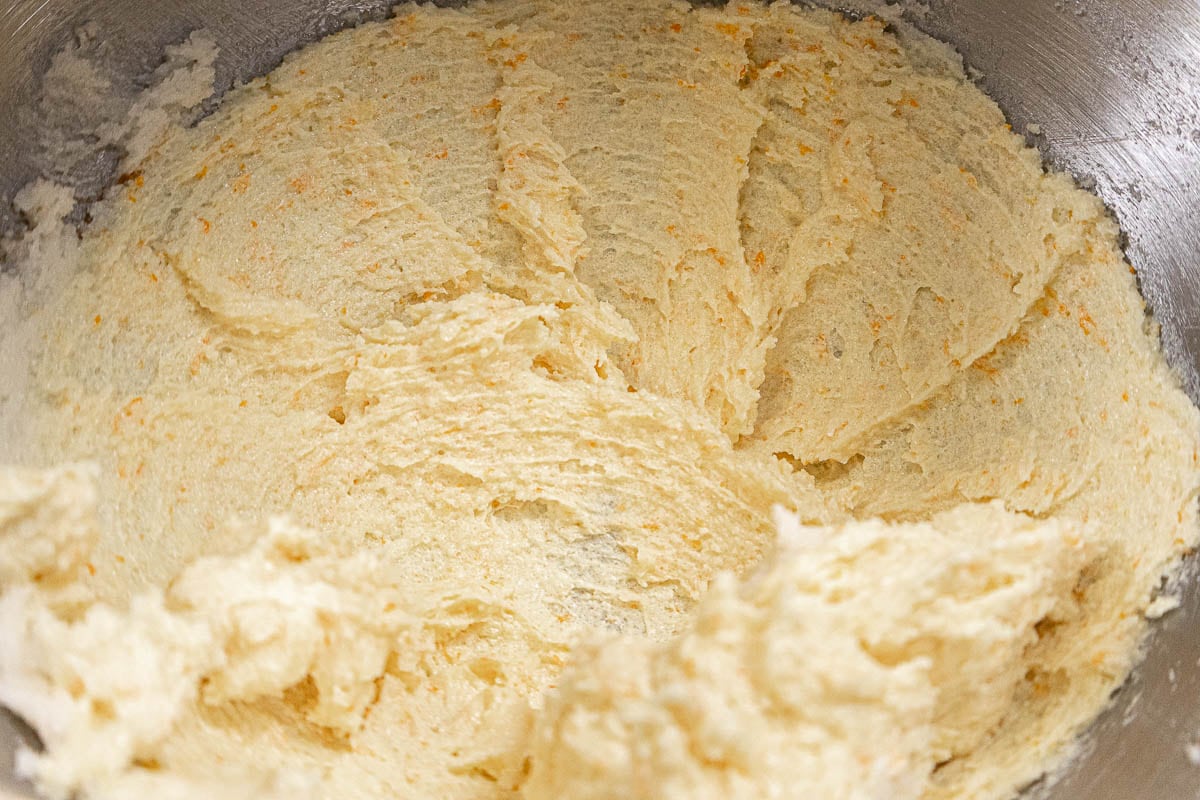
    The extracts and orange zest added to the creamed sugar and butter.

    Step 4. The extracts and zest added to the creamed mixture.

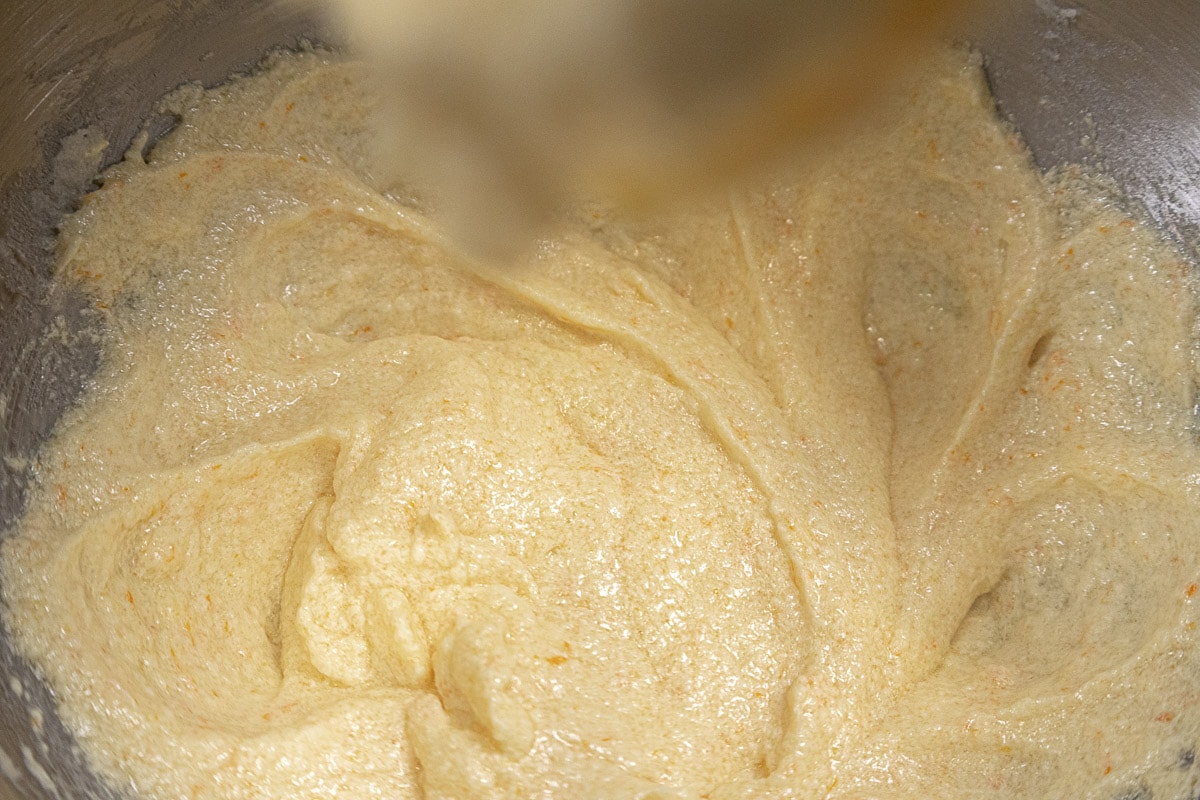
    Eggs added to the mixing bowl.
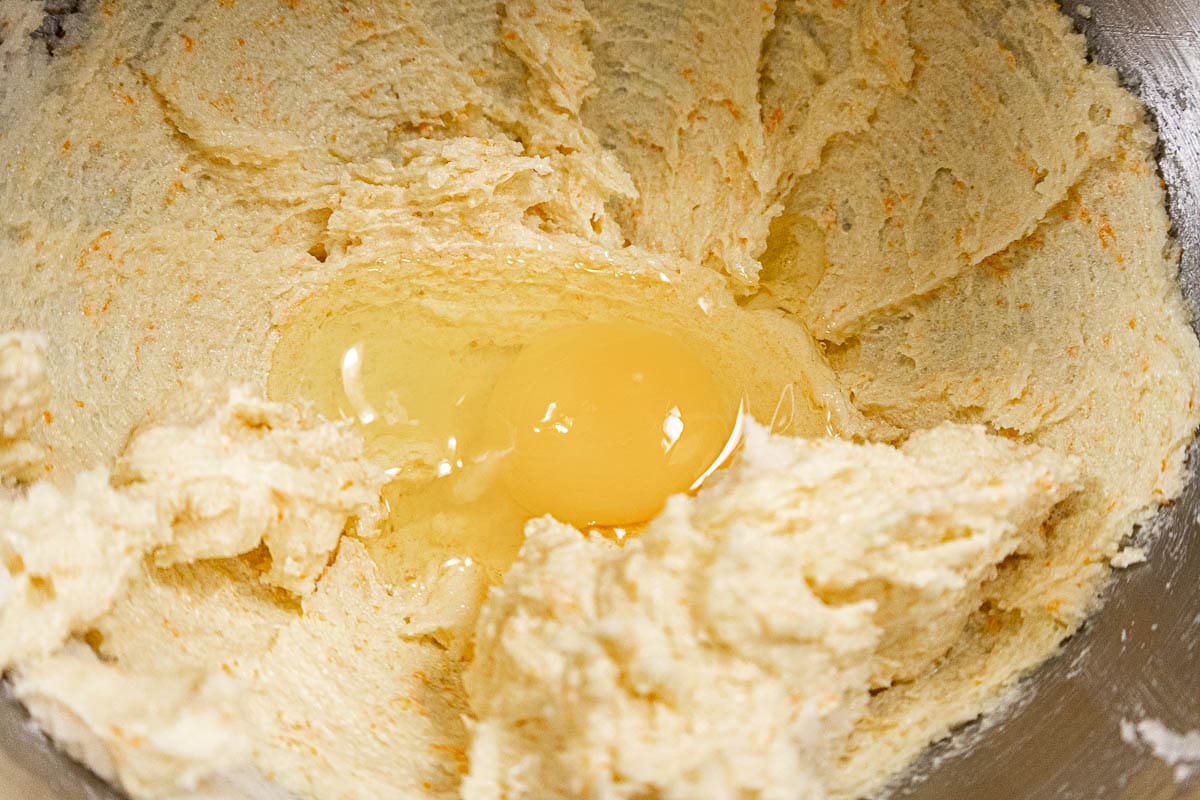
    Step 5. One egg at a time is beaten into the batter.

    After the eggs are are added, the batter will look curdled.

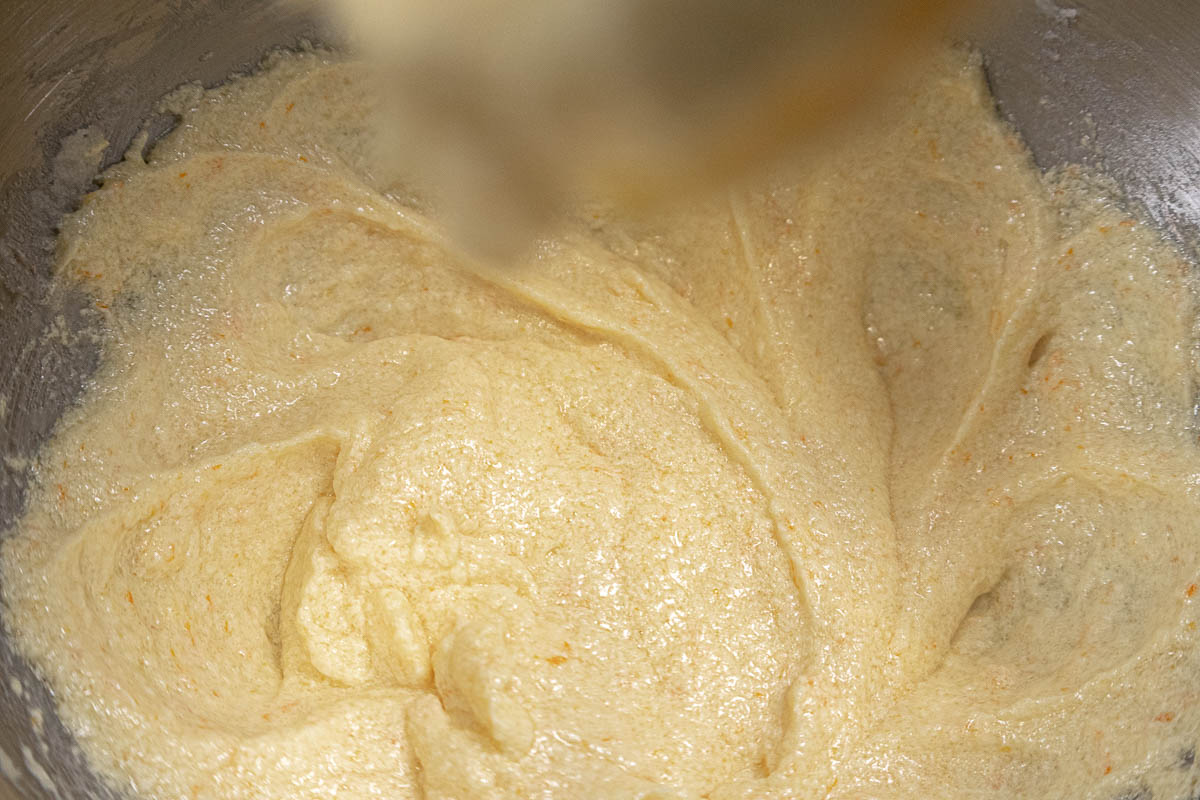
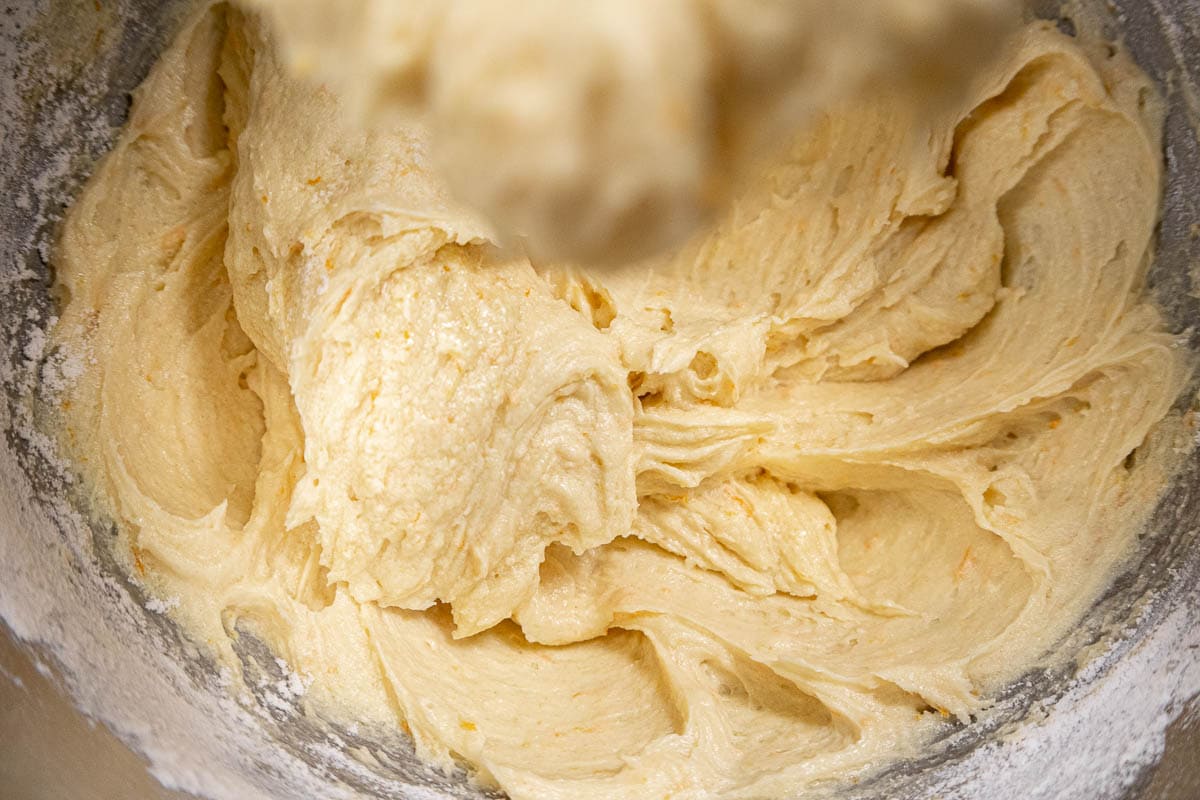
    Step 6. After both eggs are added the batter will most likely look curdled. That will be fixed in the next step.

    The flour, baking powder and salt in a bowl to be mixed.

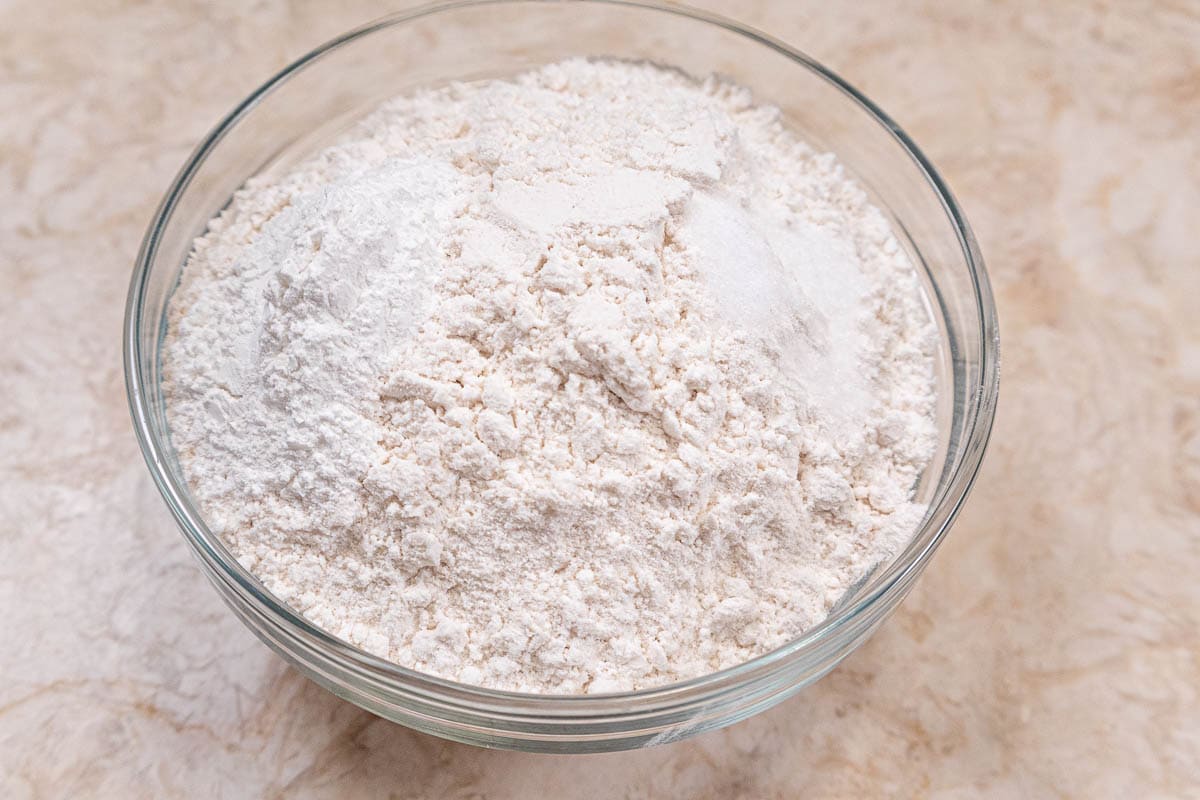
    Step 7. The baking powder and salt to be mixed with the flour.

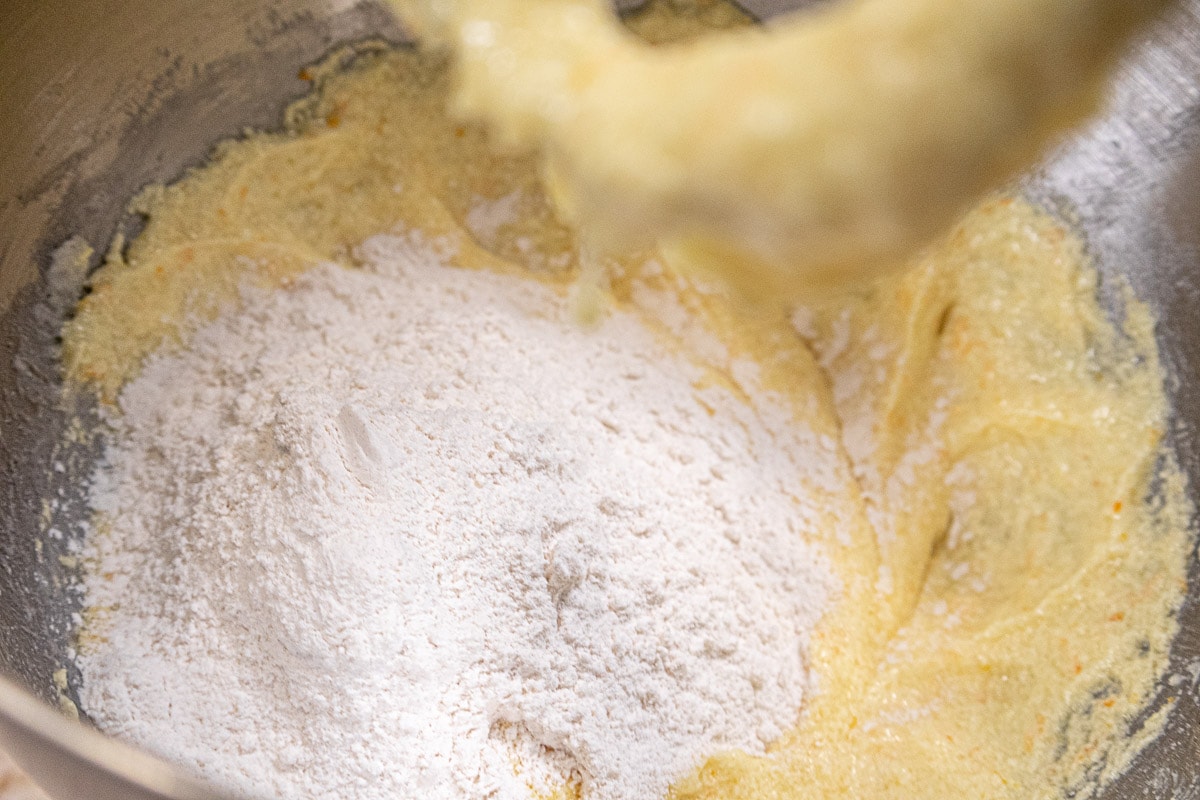
    The first addition of flour to the mixture in the bowl.

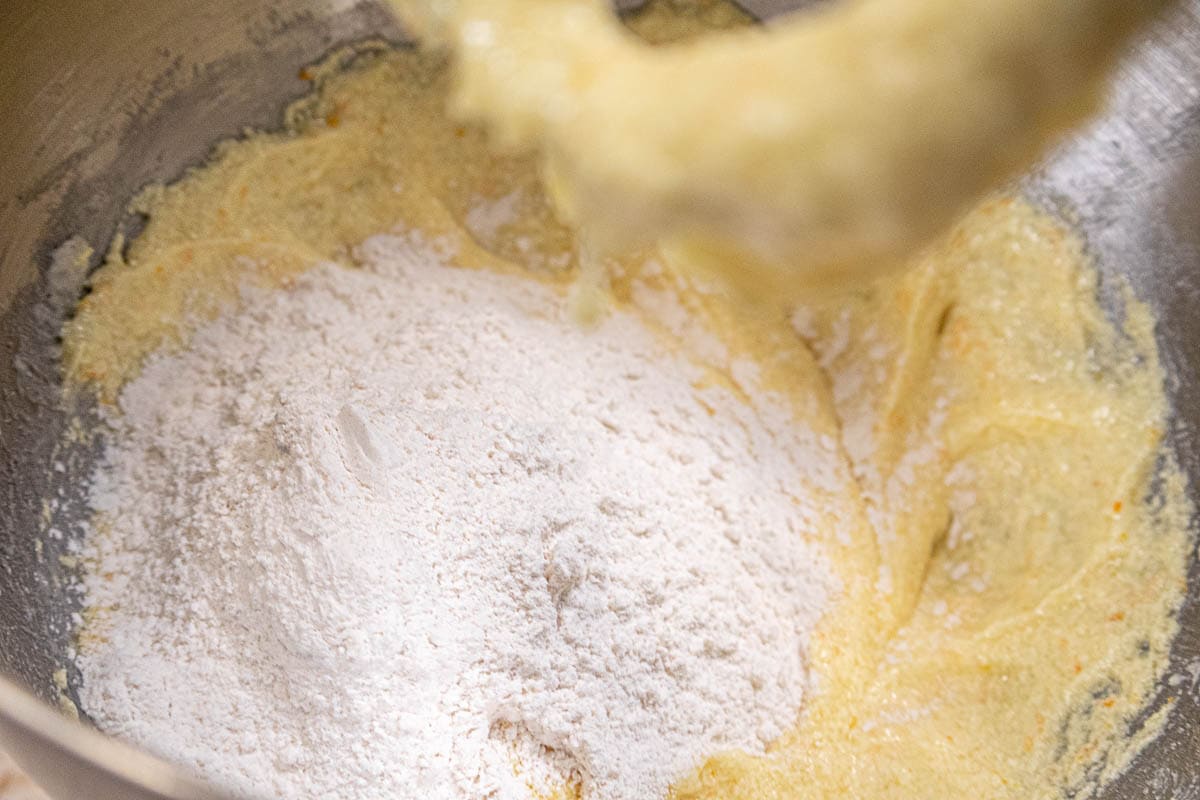
    Step 8. The first third of flour added to the mixing bowl. The flour will be added alternately with the milk.
    The first third of the flour mixed in.

    Step 9. The first third of the flour mixed in.

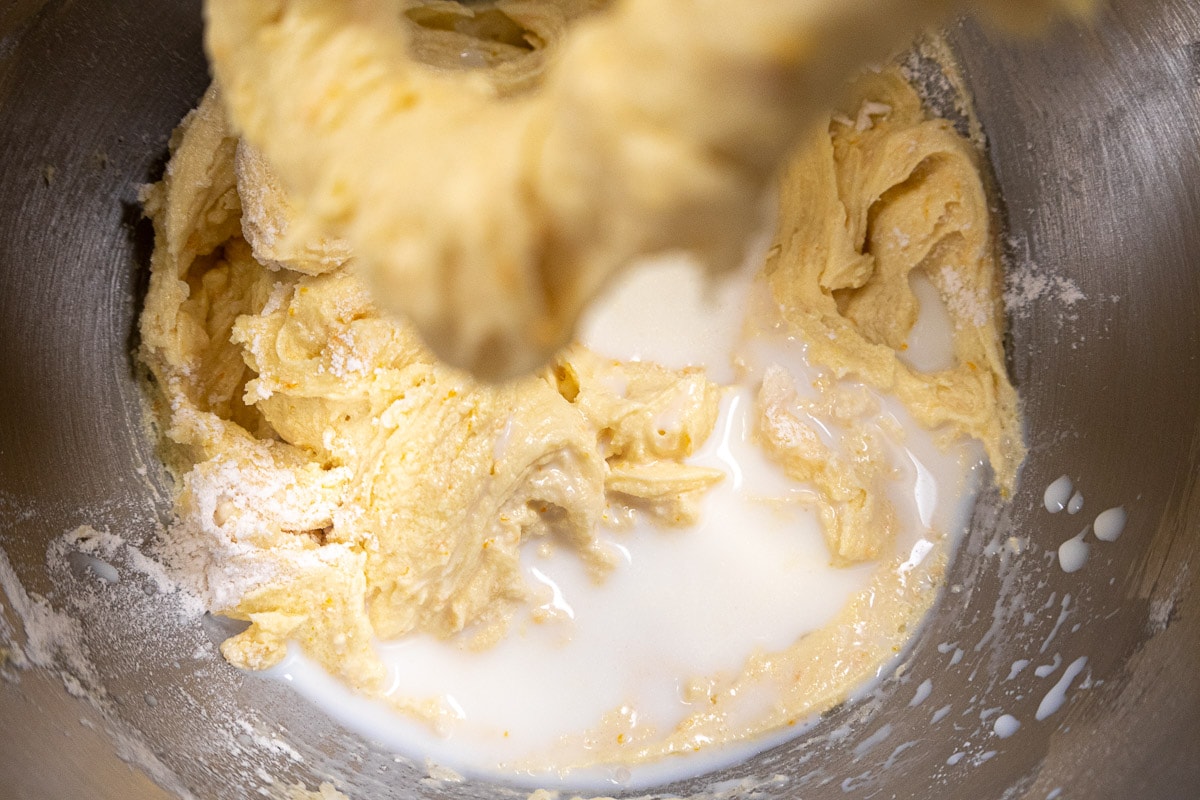
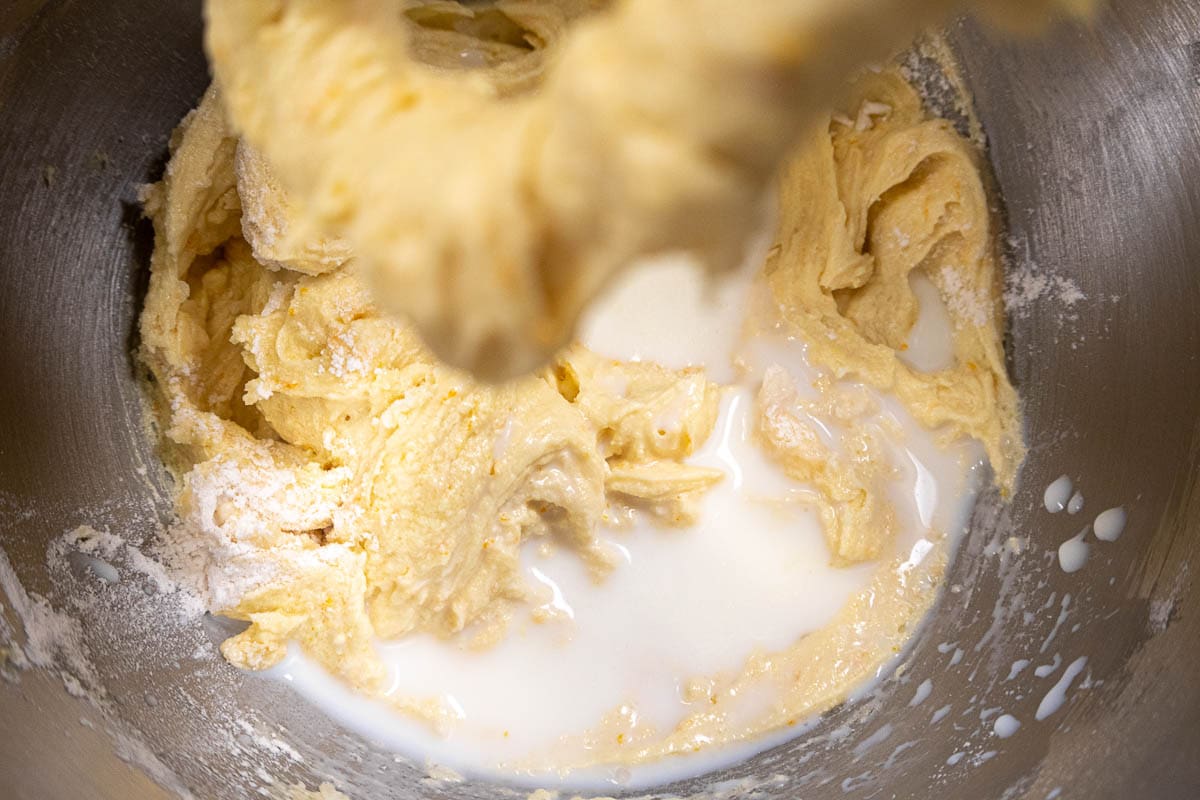
    The first half of the milk added to the mixing bowl.
    Step 10. The first half of the milk added.

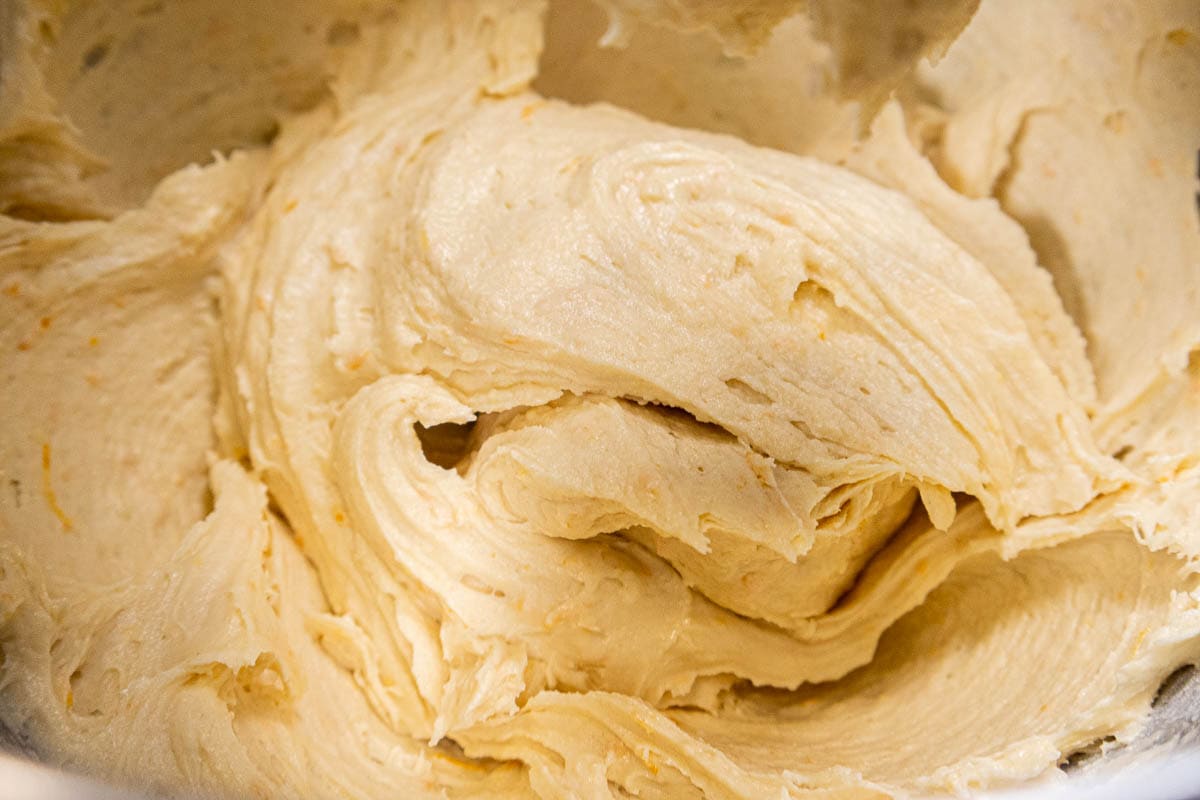
    The finished batter after three additions of flour and  2 of milk.

    Step 11. The finished batter after 3 additions of flour alternating with 2 of milk.
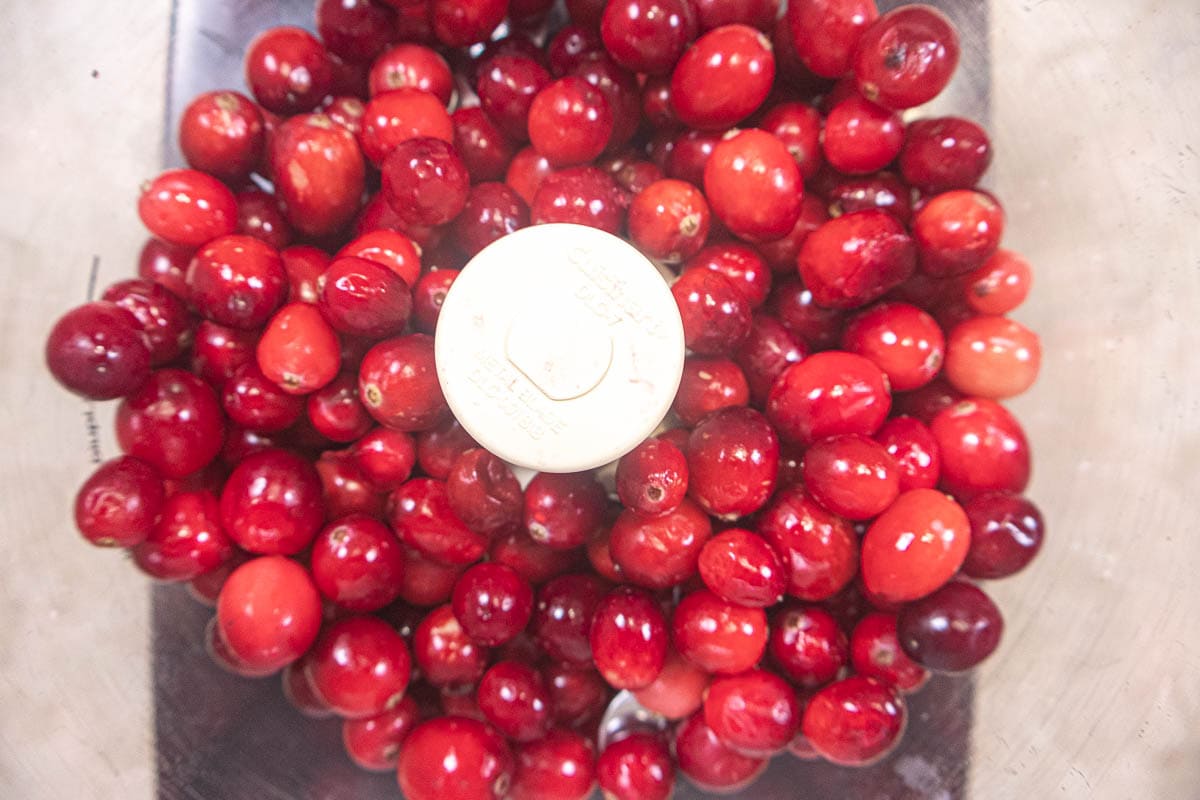
    Frozen cranberries in the food processor.

    Step 12. The frozen cranberries are placed inside a food processor.

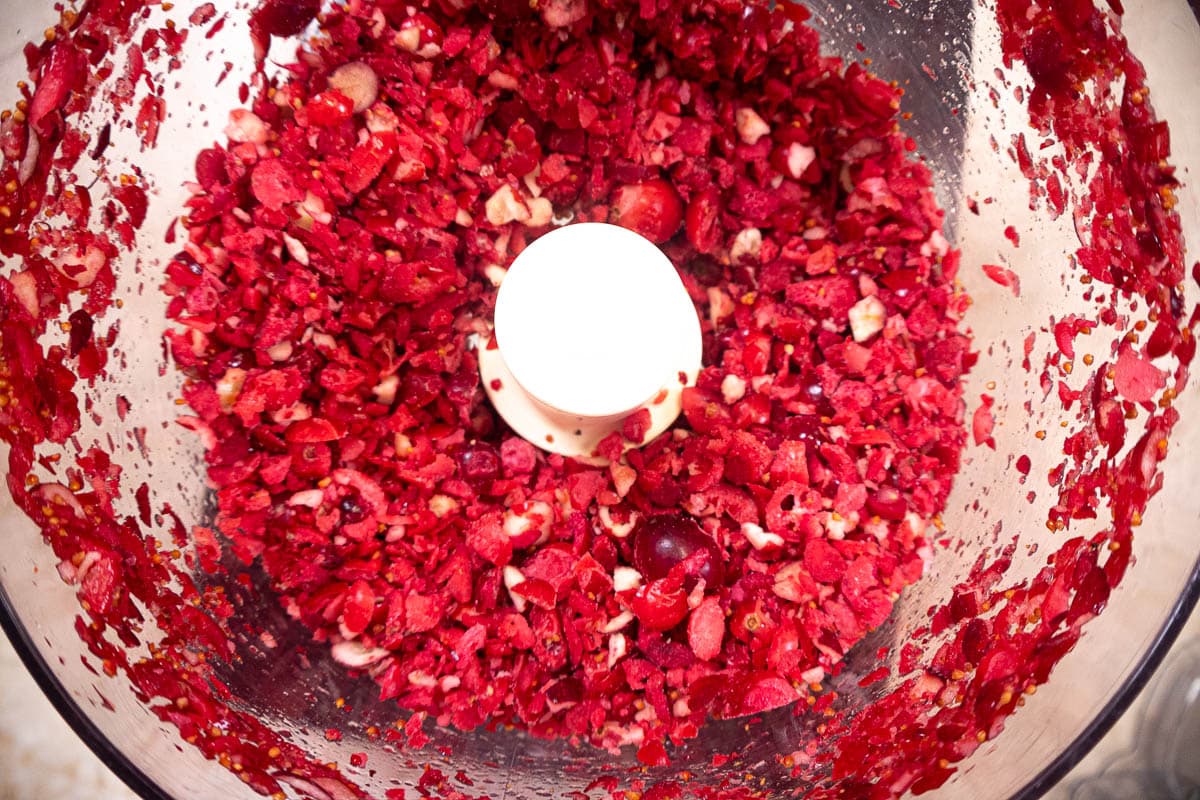
    The cranberries are pulsed in the processor until chopped into smaller pieces.

    Step 13. The frozen cranberries are pulsed in the processor to make smaller pieces.

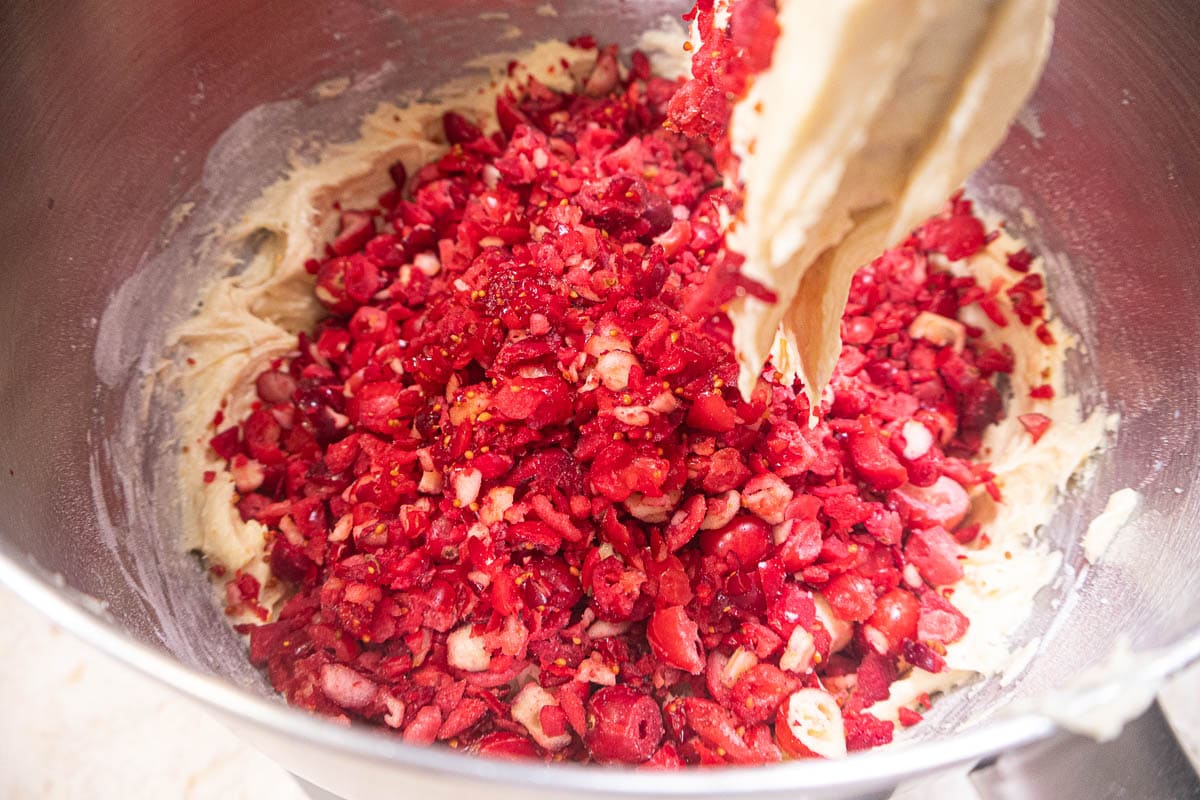
    The cranberries are added to the batter in the mixing bowl.
    Step 14. The cranberries are added to the batter in the mixing bowl.
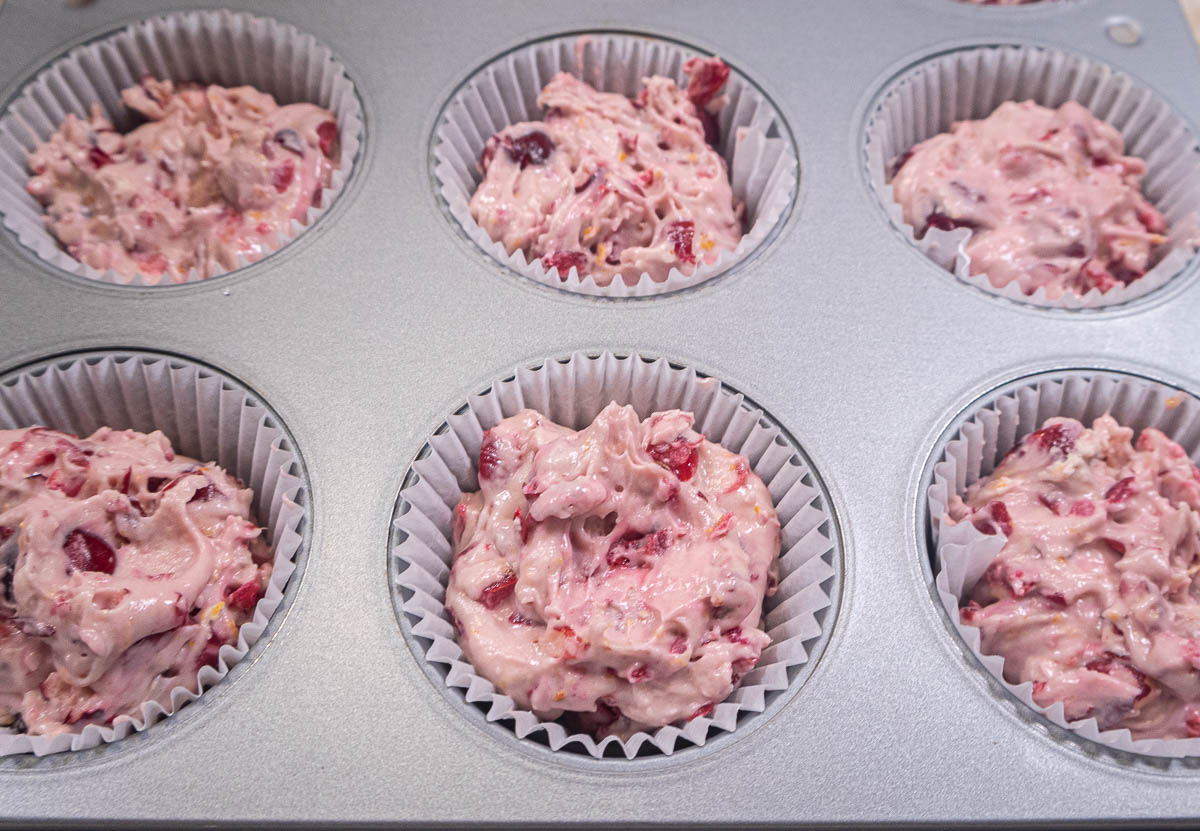
    The muffin tins are filled ¾ full.

    Step 15. The muffins are filled ¾ full. This applies to either the mini, regular or Texas size muffins.

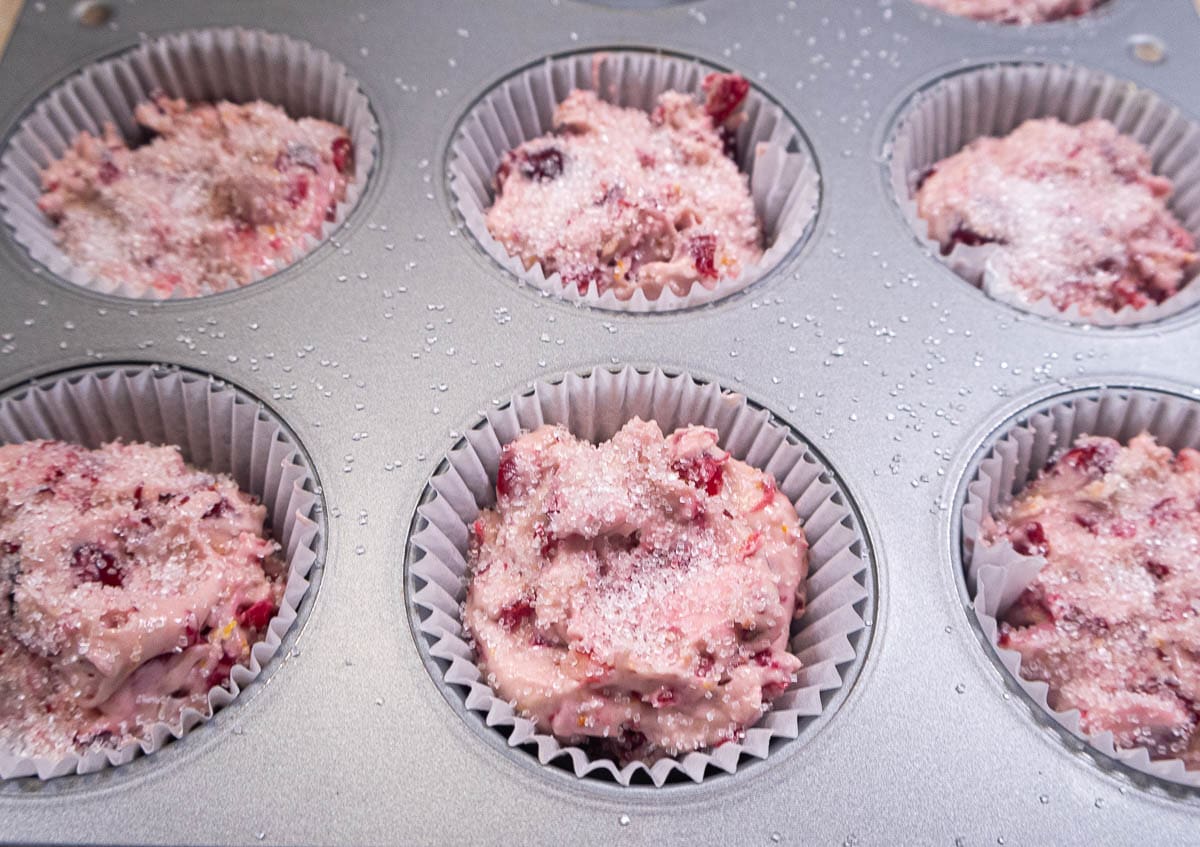
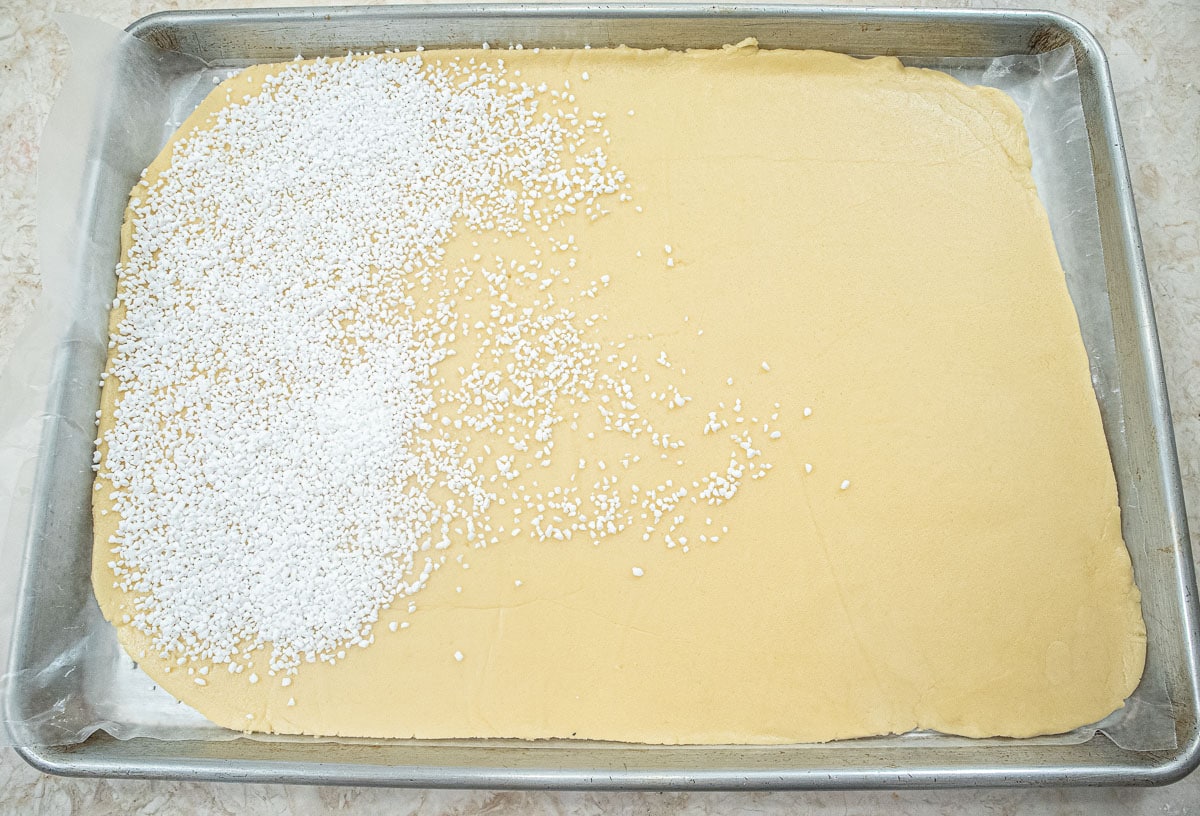
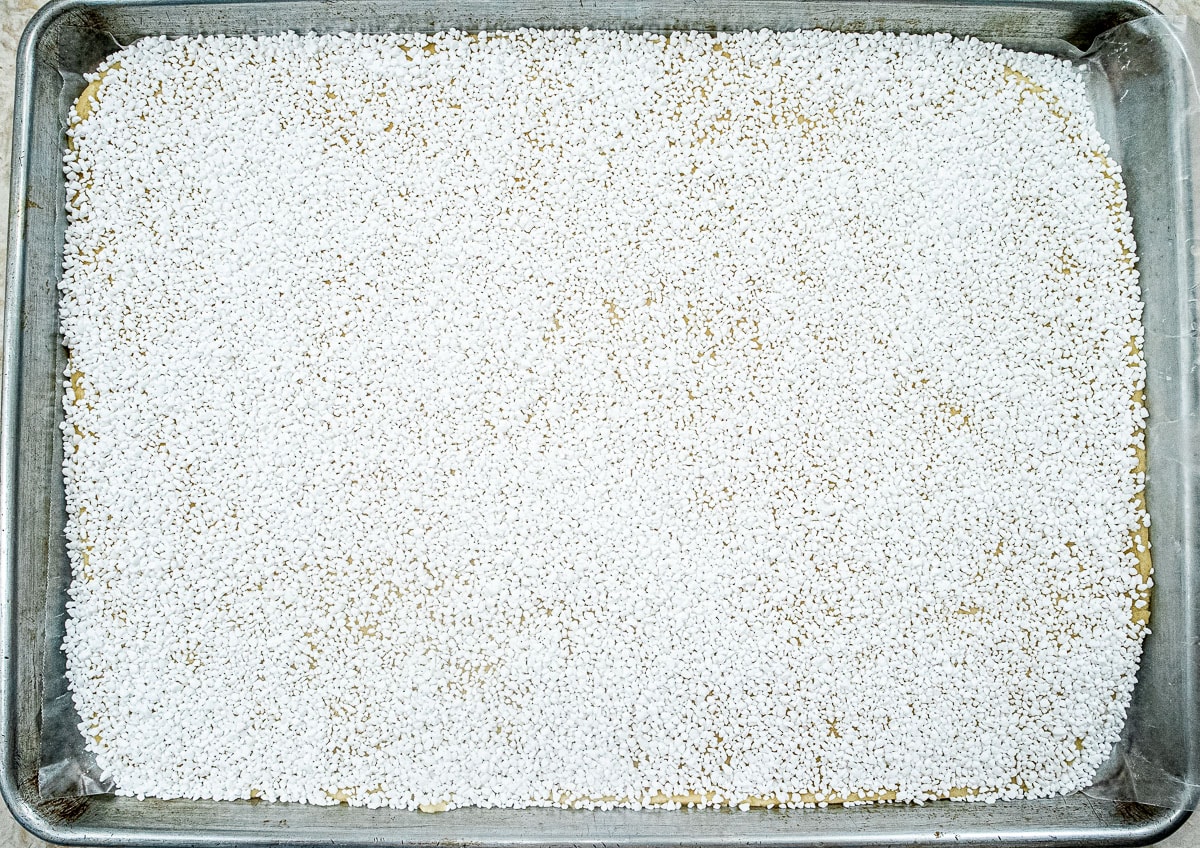
    Sanding sugar is sprinkled on top to add crunch.

    Step 16. Sanding sugar is sprinkled liberally on top to add a bit of crunch.

    *Be sure to see the recipe card below for the full ingredients list & instructions

    Variations

    The number of muffins will increase if adding either of these.

    • 2 cups of Mini chocolate chips can be added. Chocolate, cranberries and orange are a great combination.
    • 1 cup of any coarsely chopped nuts can be added. For extra flavor toast the nuts at 350°F for 7 to 10 minutes depending upon the nut. Cool before chopping.

    Storage

    These muffins can be stored for several days at room temperature or frozen for longer storage. Thaw at room temperature.

    Top Tips

    Freezing the cranberries before adding them to the batter keeps the batter from turning that dreaded gray color from fruit juices. Chopping them in the food processor and immediately adding them to the batter and filling the muffin tins keeps the color vibrant and inviting.

    To use or not to use paper liners? The muffins bake up softer and stay more moist if paper liners are used. If they are baked directly in sprayed pans, they brown much faster and the outside of the muffins are sturdier.


    Cranberry Orange Muffins in three sizes, mini, regular and Texas on a gray plate with a red napkin.

    A Cranberry Orange Muffin

    Helen S. Fletcher
    A Cranberry Orange Muffin recipe features the flavors of fall fruit and is quickly made featuring fresh or frozen cranberries and orange zest.  A great recipe for beginner bakers. 
    4.34 from 3 votes
    Print Recipe Pin Recipe
    Prep Time 20 minutes mins
    Cook Time 25 minutes mins
    Total Time 45 minutes mins
    Course Muffins
    Cuisine American
    Servings 20 muffins
    Calories 144 kcal
    Prevent your screen from going dark

    Ingredients

    Sugar Nutmeg Topping

    • ⅓ cup sanding or granulated sugar
    • 1 teaspoon nutmeg

    Cranberry Orange Muffins

    • 12 ounces fresh cranberries, fresh or frozen (340 grams)
    • 1 cup sugar (200 grams or 7 ounces)
    • ½ cup butter, softened (114 gram, 4 ounces or 1 stick)
    • 1 tablespoon grated orange zest
    • 1 teaspoon vanilla extract
    • 1 teaspoon almond extract
    • 2 large eggs
    • 2 cups all purpose flour (280 grams or 10 ounces)
    • 2 teaspoons baking powder
    • ¼ teaspoon salt
    • ½ cup milk

    Instructions
     

    Sugar Nutmeg Topping

    • Combine the sugar and the nutmeg. Set aside

    Cranberry Orange Muffins

    • Freeze the cranberries hard. 
    • Preheat the oven to 350°F. Line muffin cups with paper liners or spray them well.
    • Cream together the sugar and butter until light and fluffy. 
    • Add the vanilla and almond extracts as well as the grated orange rind, mixing in completely.
    • Scrape down and add the eggs one at a time.  Beat until light and completely combined.  
    • In the meantime, combine the flour, baking powder and salt.  Mix together.  
    • Add the flour and milk alternately, starting and ending with the flour in thirds and the milk twice.  
    • Last, place the cranberries in a food processor and pulse to coarsely chop.  Add to the batter and mix in just until well combined.  The batter will be stiff at this point because the cranberries are frozen.
    • Fill the cups ¾ full.  This applies to whatever size you are using.
    • Sprinkle the tops liberally with the sugar/nutmeg mix. 
    • Regular size muffins – bake  24 to 26 minutes – makes about 20 muffins
    • Mini size muffins - bake 117 to 20 minutes - makes about 40
    • Texas size muffins - bake 27 to 30 minutes - makes about 10 to 12

    Notes

    1. 2 cups mini chips can be added.
    2. 1 cup toasted, chopped nuts of  your choice can be added.
    3. Either addition will increase the the number of muffins.  
    4. Freezing the cranberries will keep the muffins vibrant without turning an off color.
    5. Using paper liners for the muffin tins makes a softer, muffin that stays more moist.  If baked directly in sprayed tins the muffins brown more quickly and have a sturdier outside to them.  They don't stay fresh as long.  

    Nutrition

    Calories: 144kcalCarbohydrates: 22gProtein: 2gFat: 5gSaturated Fat: 3gPolyunsaturated Fat: 0.3gMonounsaturated Fat: 1gTrans Fat: 0.2gCholesterol: 29mgSodium: 117mgPotassium: 45mgFiber: 1gSugar: 11gVitamin A: 187IUVitamin C: 3mgCalcium: 39mgIron: 1mg
    Tried this recipe?Mention @helensfletcher or tag #pastrieslikeapro!

    Pumpkin Cake Donut Recipe

    Modified: Sep 9, 2025 · Published: Oct 10, 2022 by Helen S Fletcher · This post may contain affiliate links · 11 Comments

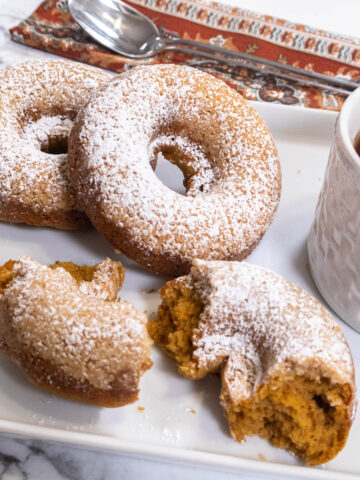
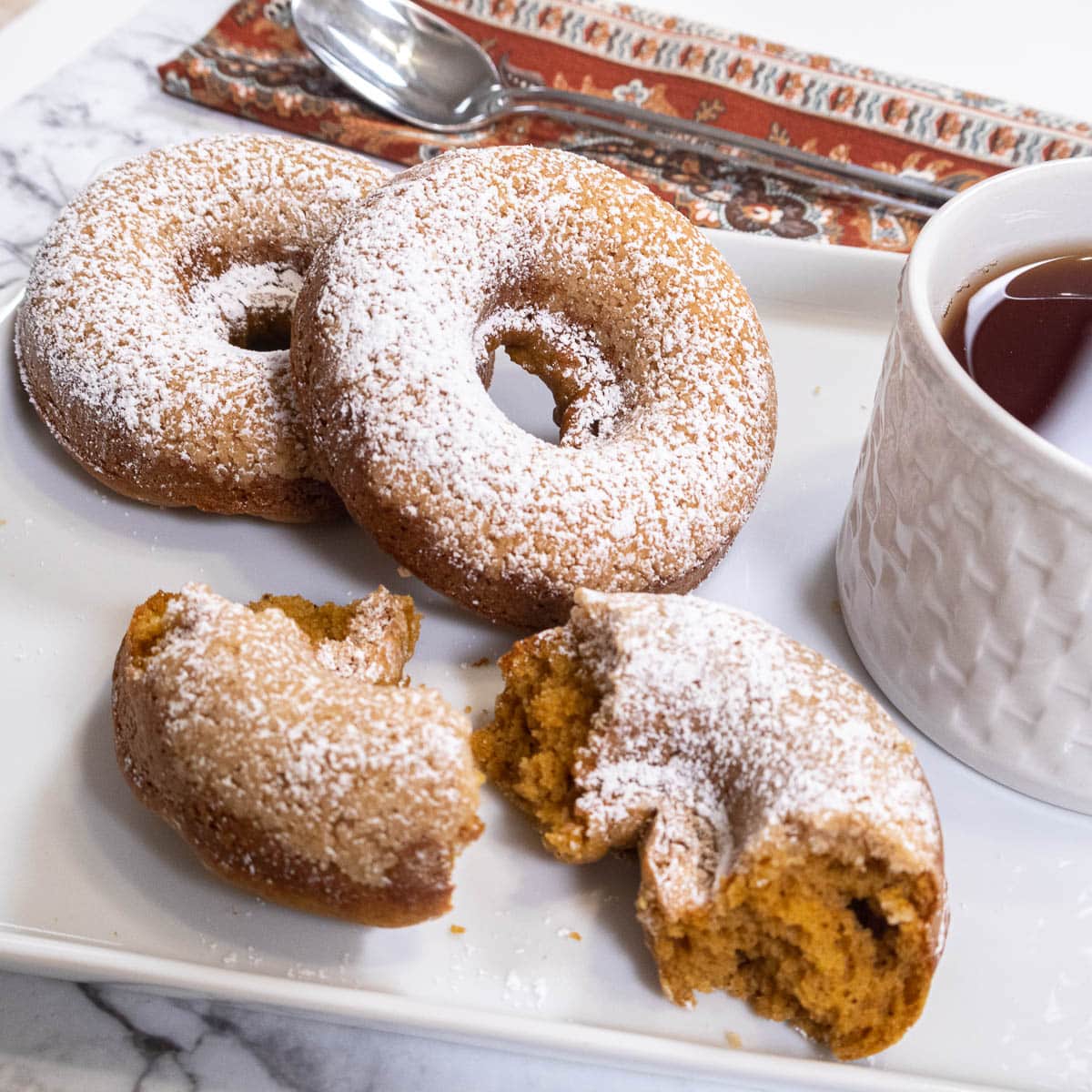
    Pumpkin cake donuts on a plate with a cup of tea.

    This quick, easy Pumpkin Cake Donut Recipe doesn't get any faster. With no yeast to wait for, these are ready in no time. They stay fresh for days. No cake donut pan? No problem. There's a work around below.

    Pumpkin cake donuts on a plate with a cup of tea.

    This old fashioned cake doughnut recipe was inspired by another fall favorite, Apple Cake Doughnuts and the Carrot Cake Baked Doughnuts which I'm sure you'd enjoy also. All of the cake donuts including the are baked and not fried including the Crumbed Cake Baked Donuts Recipe. There's a great discussion on my post, Fried or Baked Doughnuts.

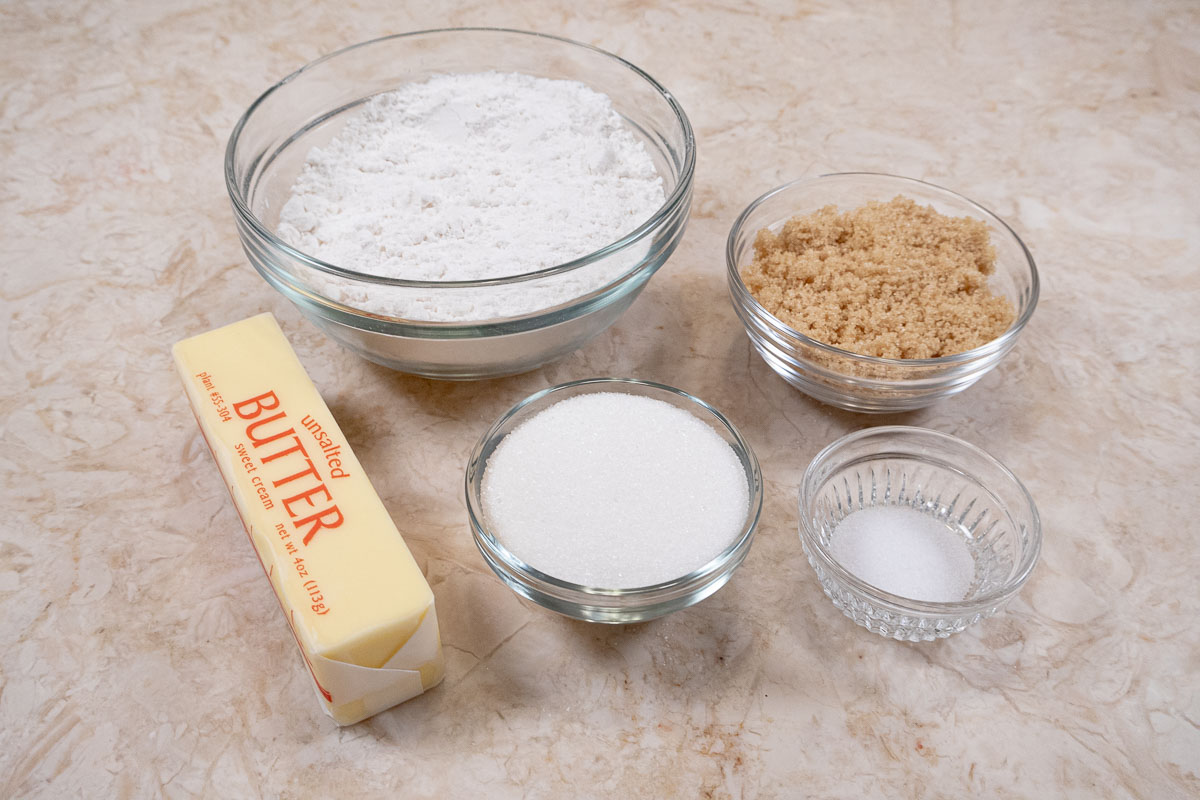
    Crumb Topping Ingredients

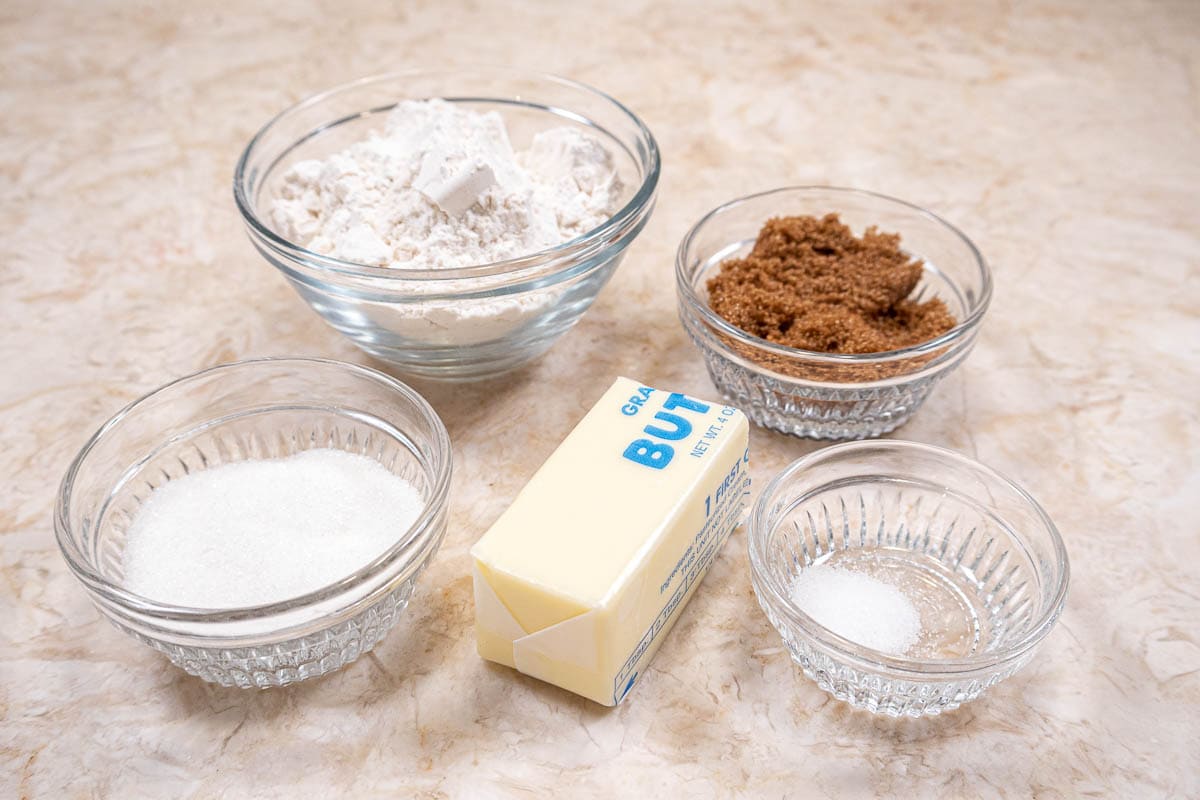
    Ingredients for the crumb topping on the Pumpkin Cake Donuts

    Back Row: flour, brown sugar. Front Row: sugar, butter, salt

    Crumb Topping Instructions

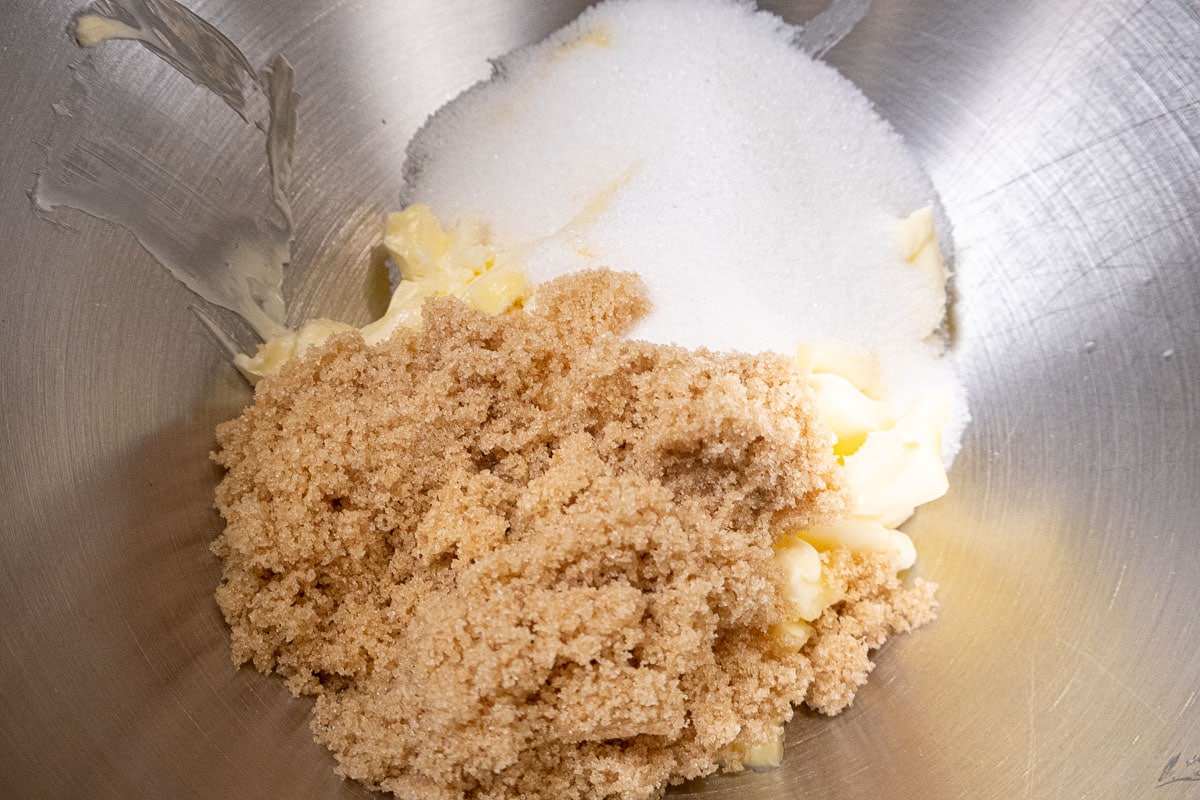
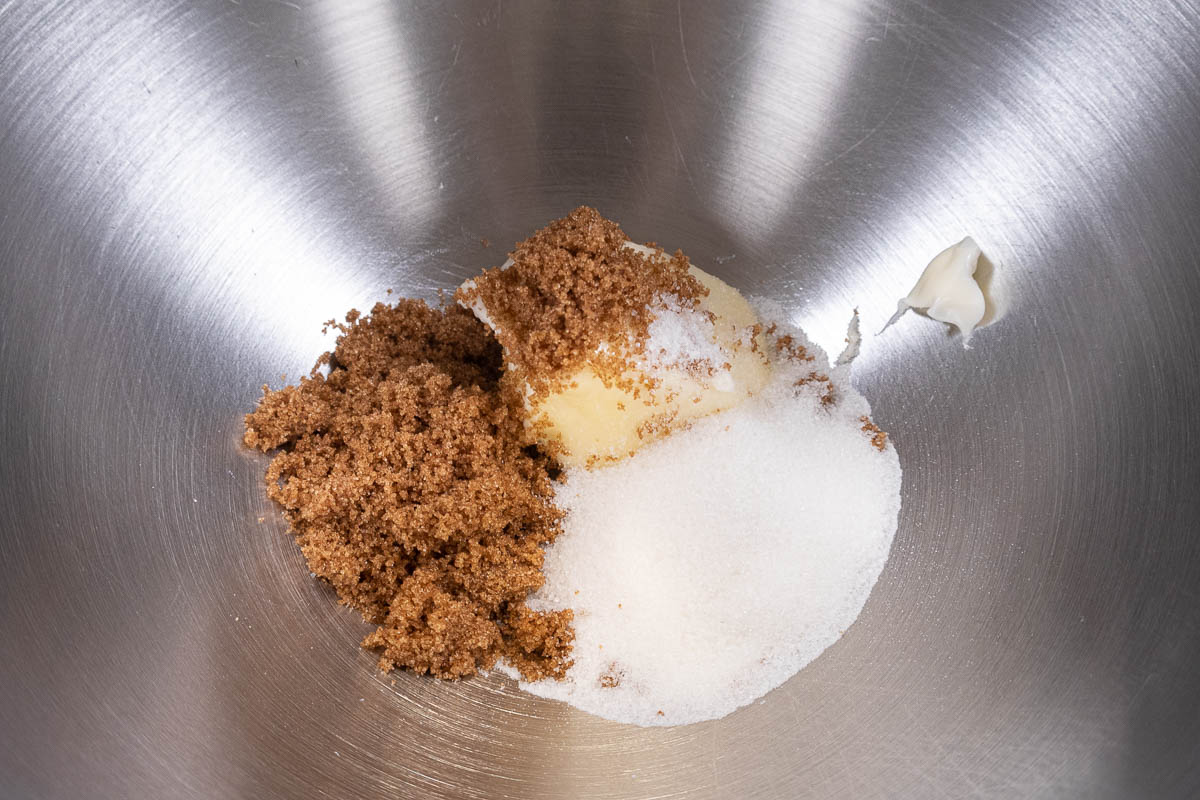
    Softened butter,brown and granulated sugars and salt in a mixing bowl.
    Step 1. Butter, brown and granulated sugars, salt in a mixing bowl
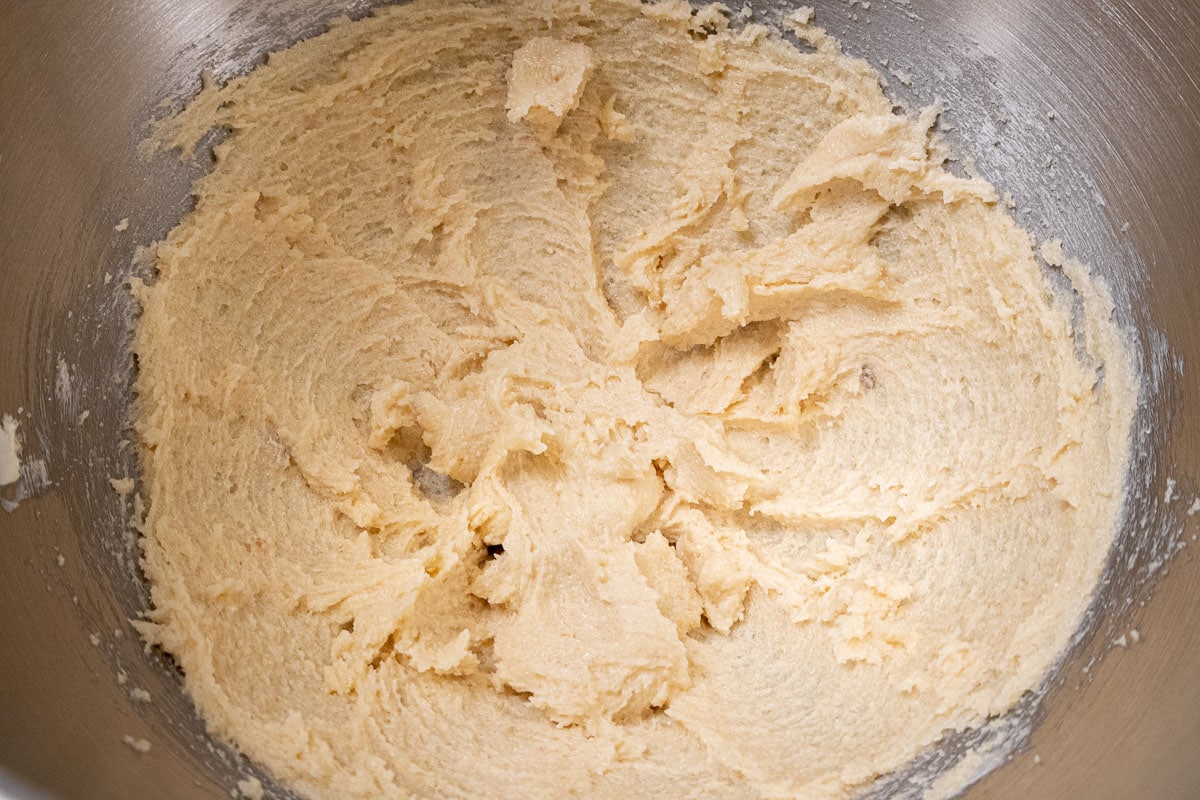
    Butter, sugars and salt creamed in mixing bowl for the Pumpkin Cake Donuts
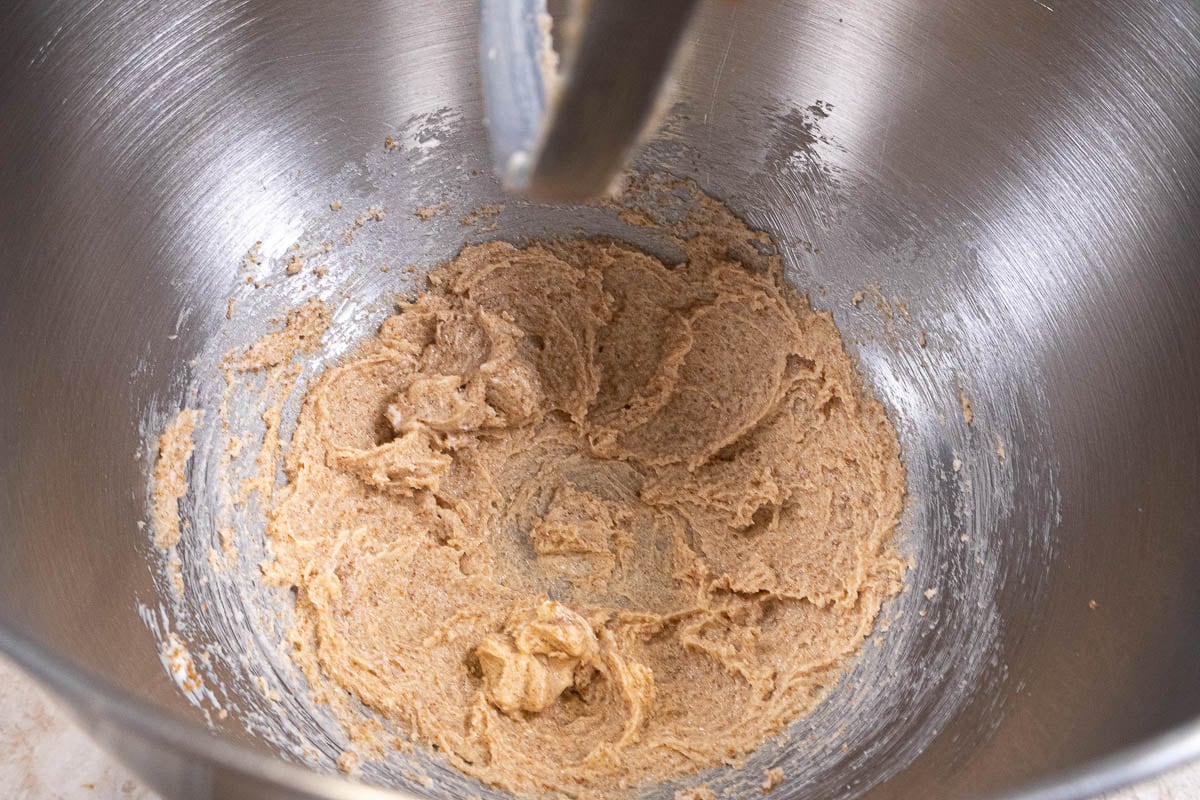
    Step 2. The butter, sugars and salt creamed together.

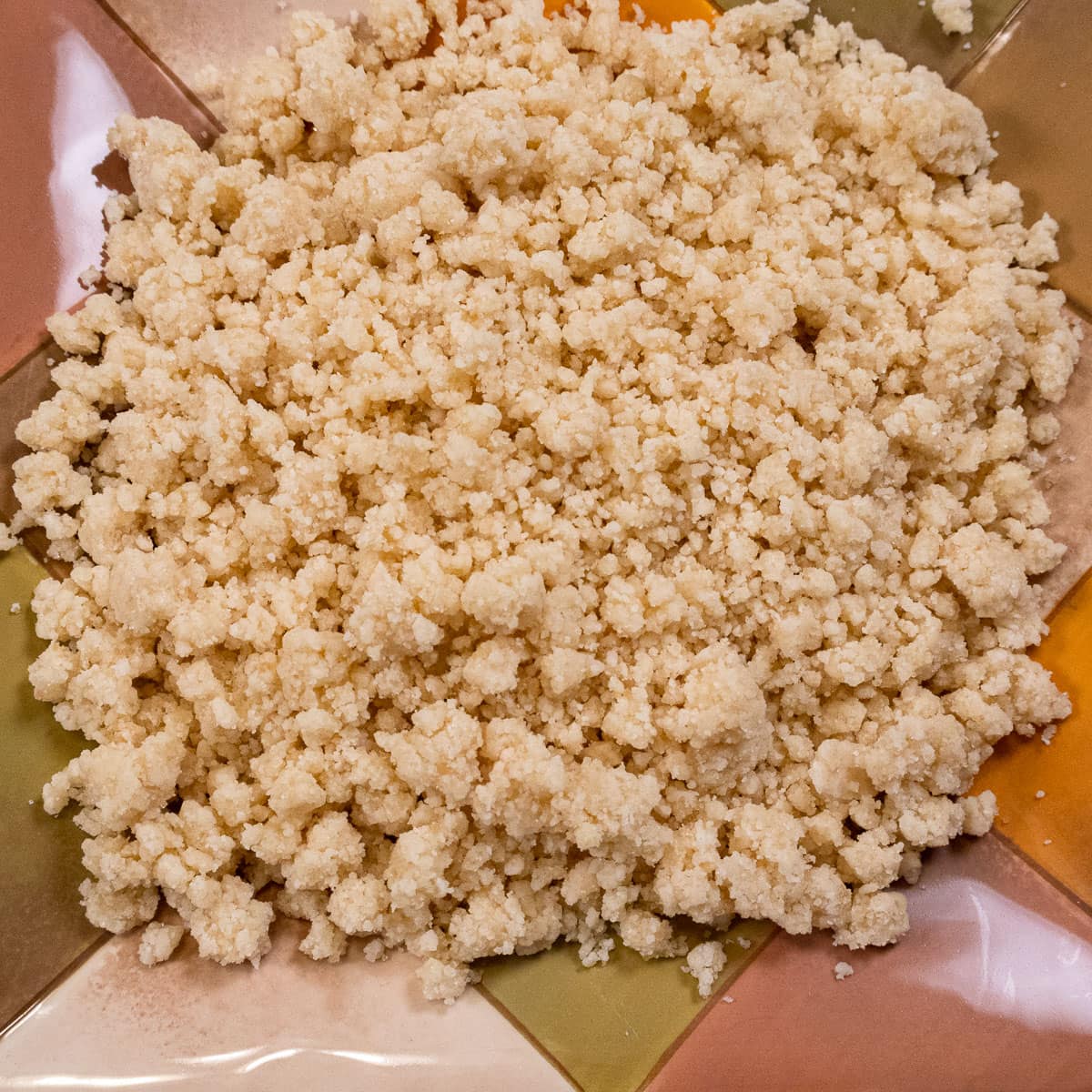
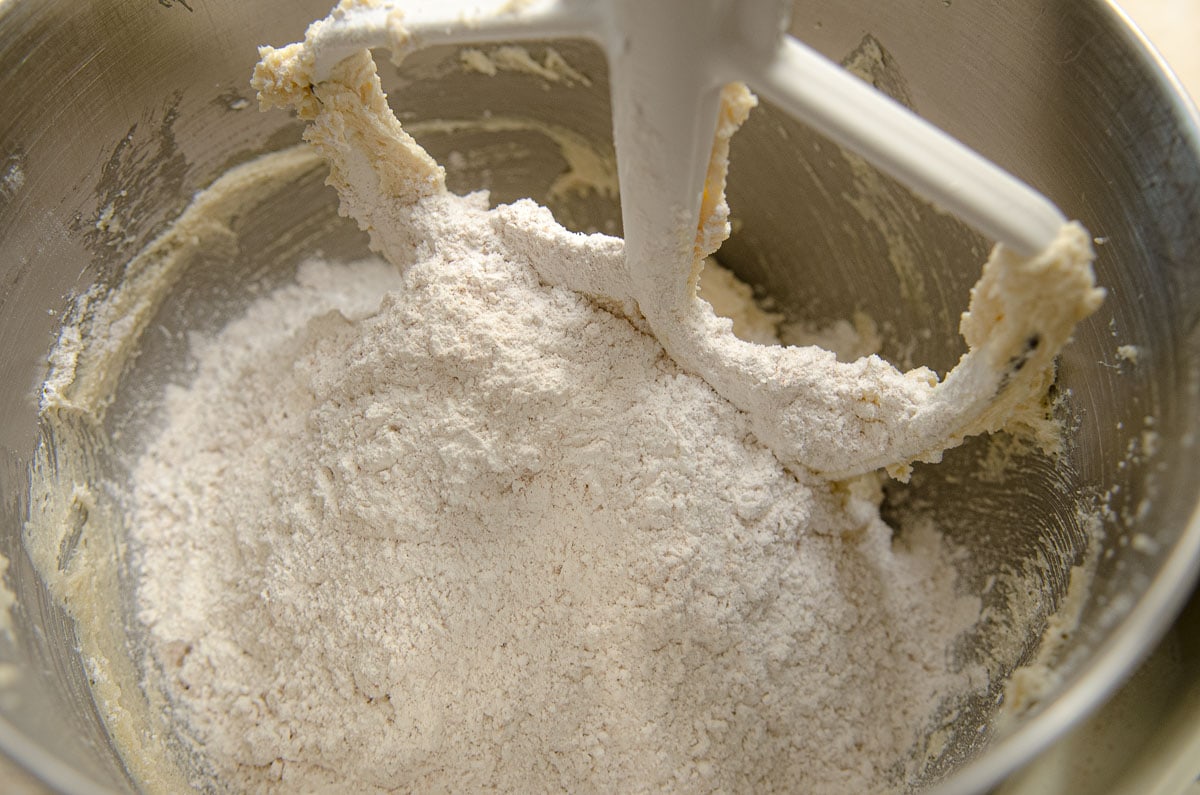
    Add the flour to the creamed mixture and mix to get crumbs

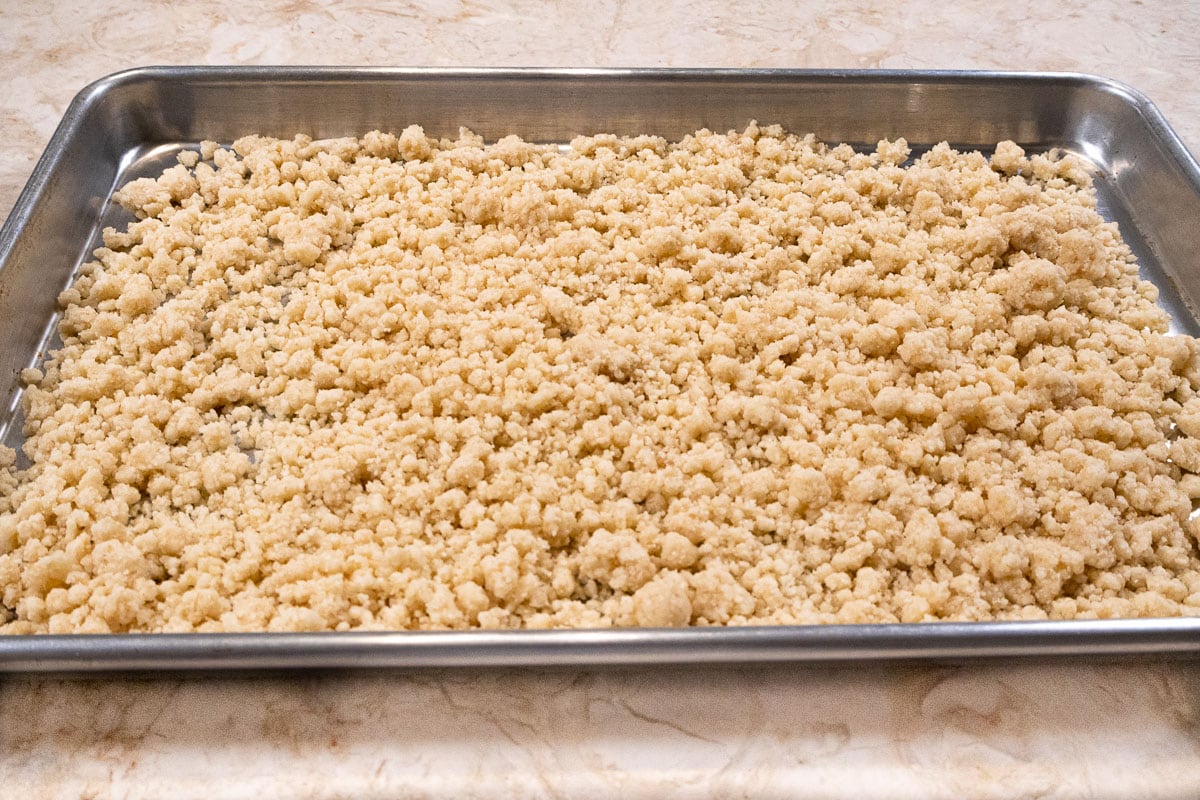
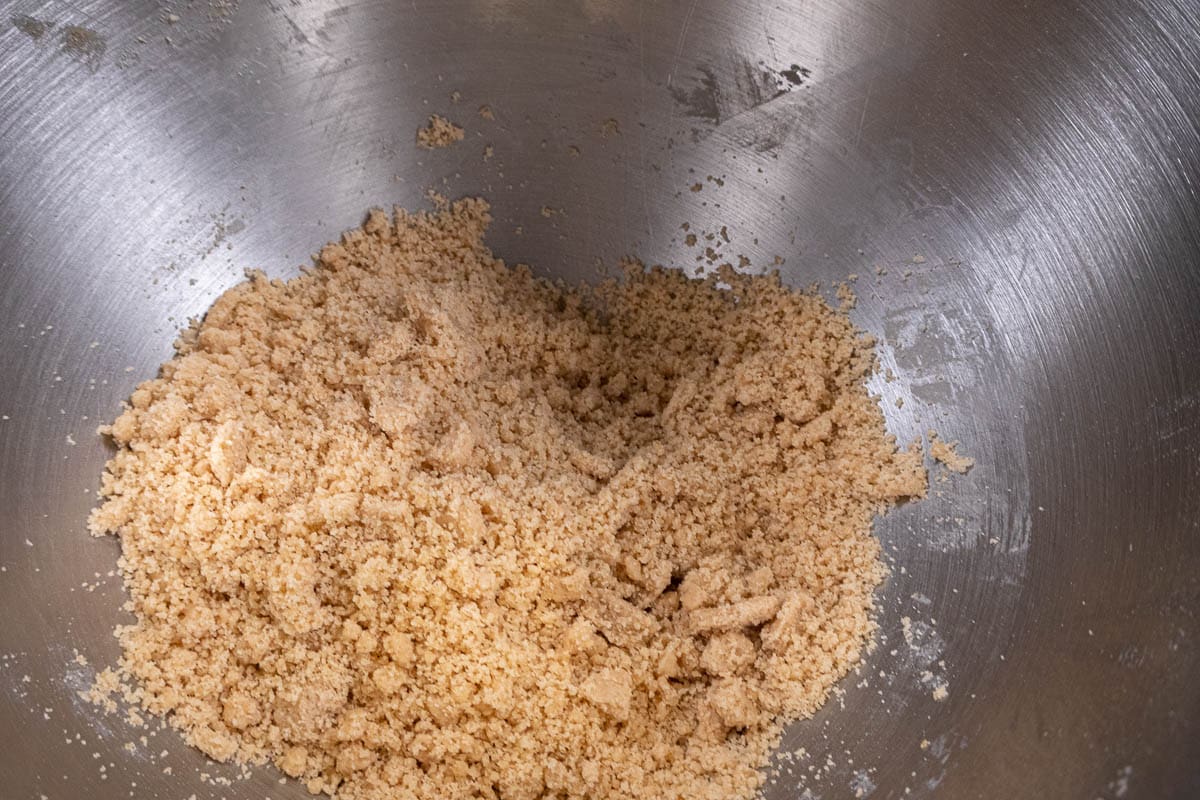
    Step 3. Add the flour all at once and mix on medium to form crumbs. Don't over-mix or it will become a paste. Refrigerate until needed.

    Pumpkin Cake Donut Ingredients

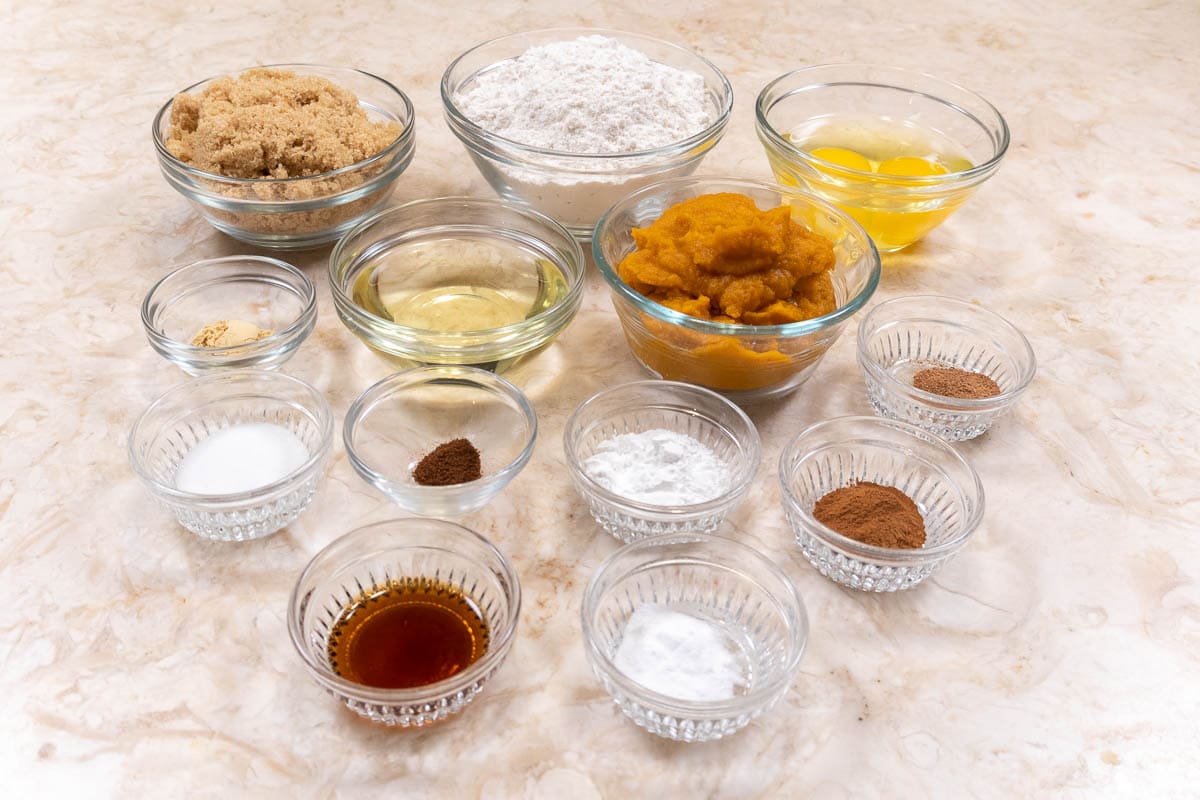
    Sugar, flour, eggs, oil, pumpkin puree, spices, baking powder, baking soda,salt and vanilla for the pumpkin cake donuts.
    Front Row: vanilla, baking soda. Third Row: ginger, oil, pumpkin puree, nutmeg. Second Row: salt, cloves, baking powder, cinnamon. Front Row: vanilla, baking soda.

    Pumpkin Cake Donut Instructions

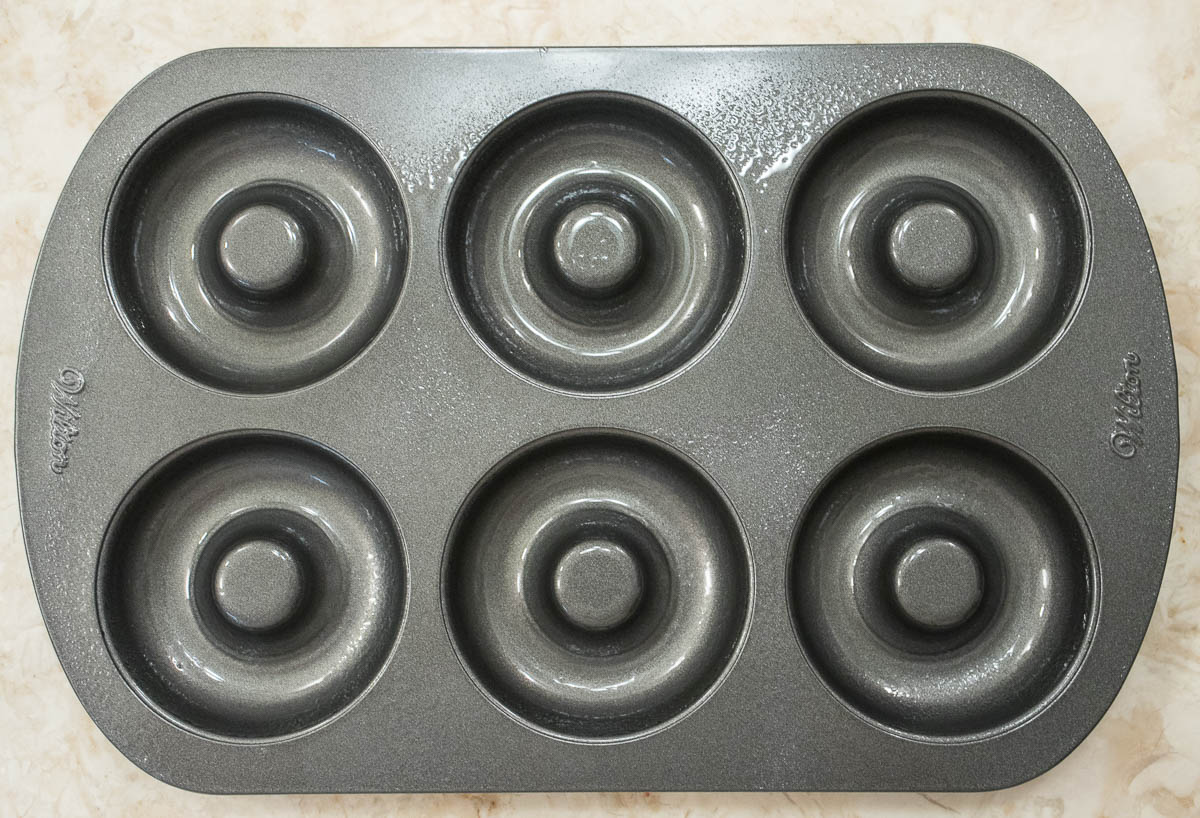
    Cake donut pan sprayed with a non-stick baking release

    Step 1. Spray 2 cake donut pans with a non-stick baking release and set aside. Alternatively, spray a 12 well, regular size muffin tin. Set aside.

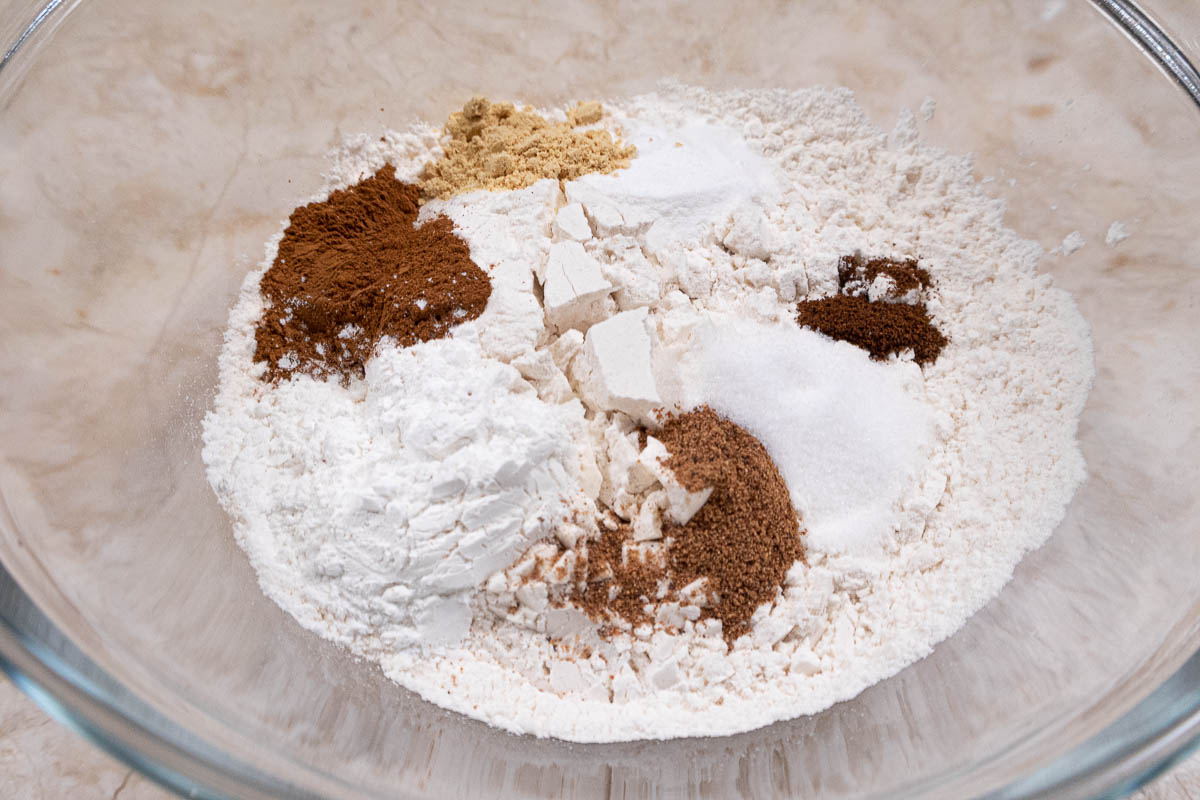
    Flour, baking powder, baking soda,spices and salt for the Pumpkin Cake Donut batter

    Step 2. The dry ingredients for the pumpkin batter. Whisk together.

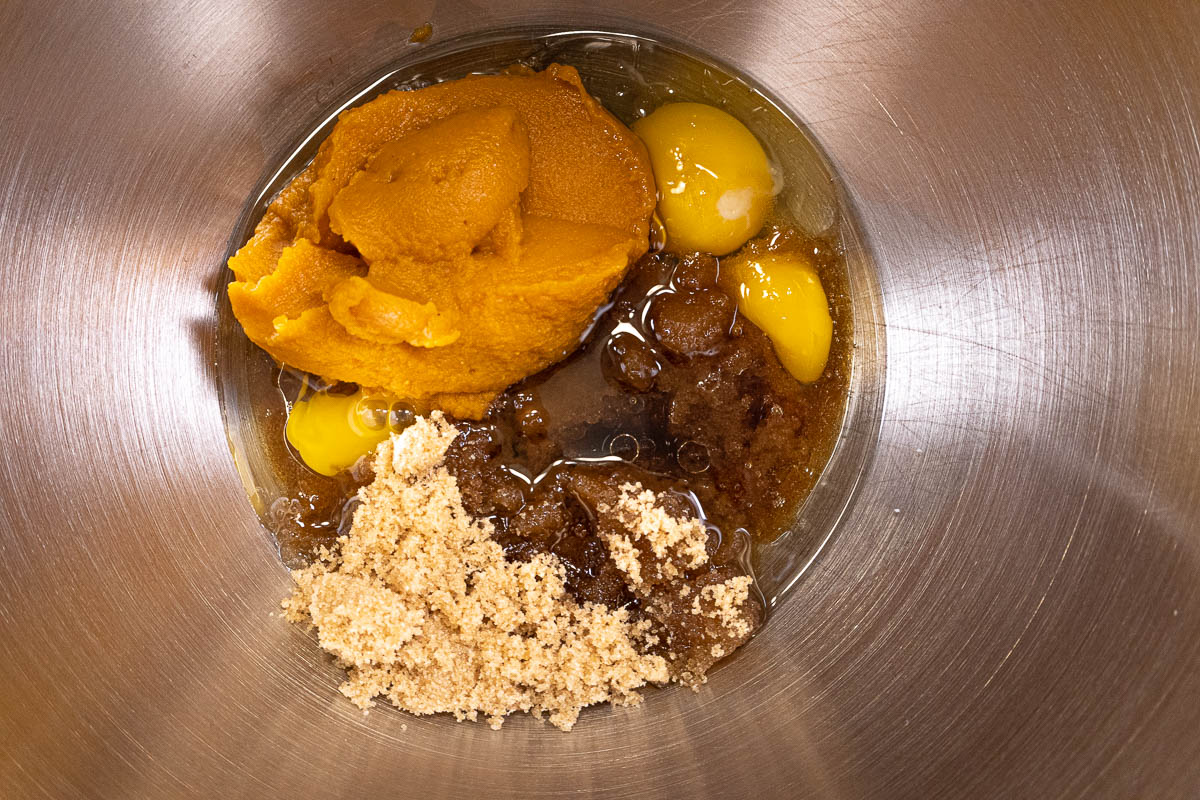
    The oil, eggs, sugar, pumpkin puree and vanilla in a mixing bowl for the Pumpkin Cake Donut Recipe

    Step 3. The oil, eggs, brown sugar, pumpkin puree and vanilla in the mixing bowl.

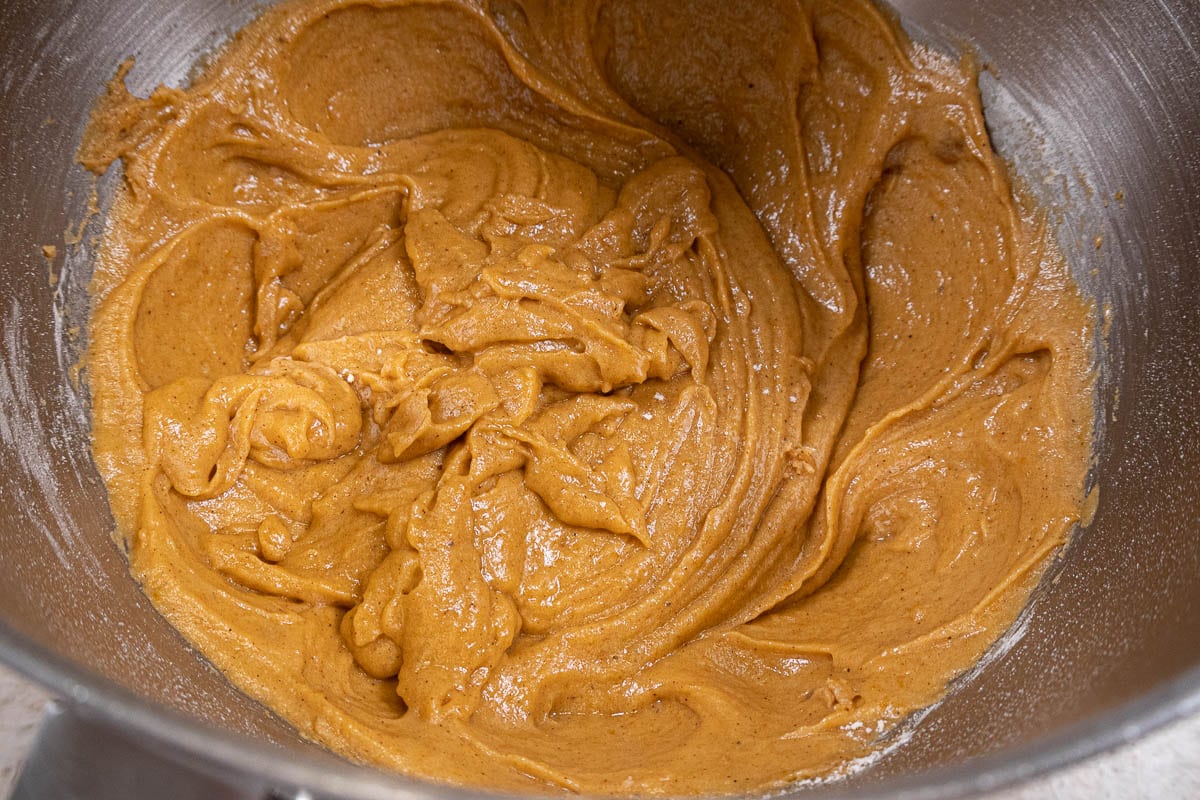
    Pumpkin batter mixed in bowl.

    Step 4. Pumpkin batter mixed.

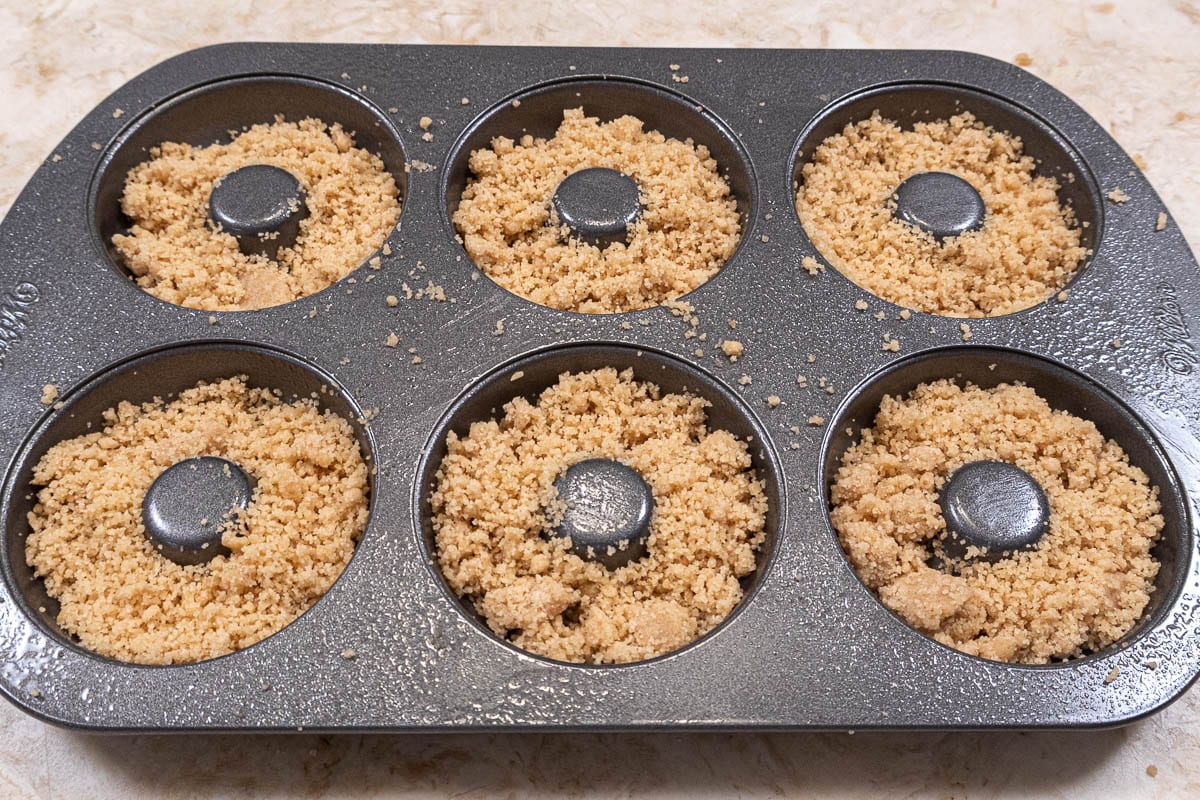
    Crumbs covering the bottom of a cake donut pan.

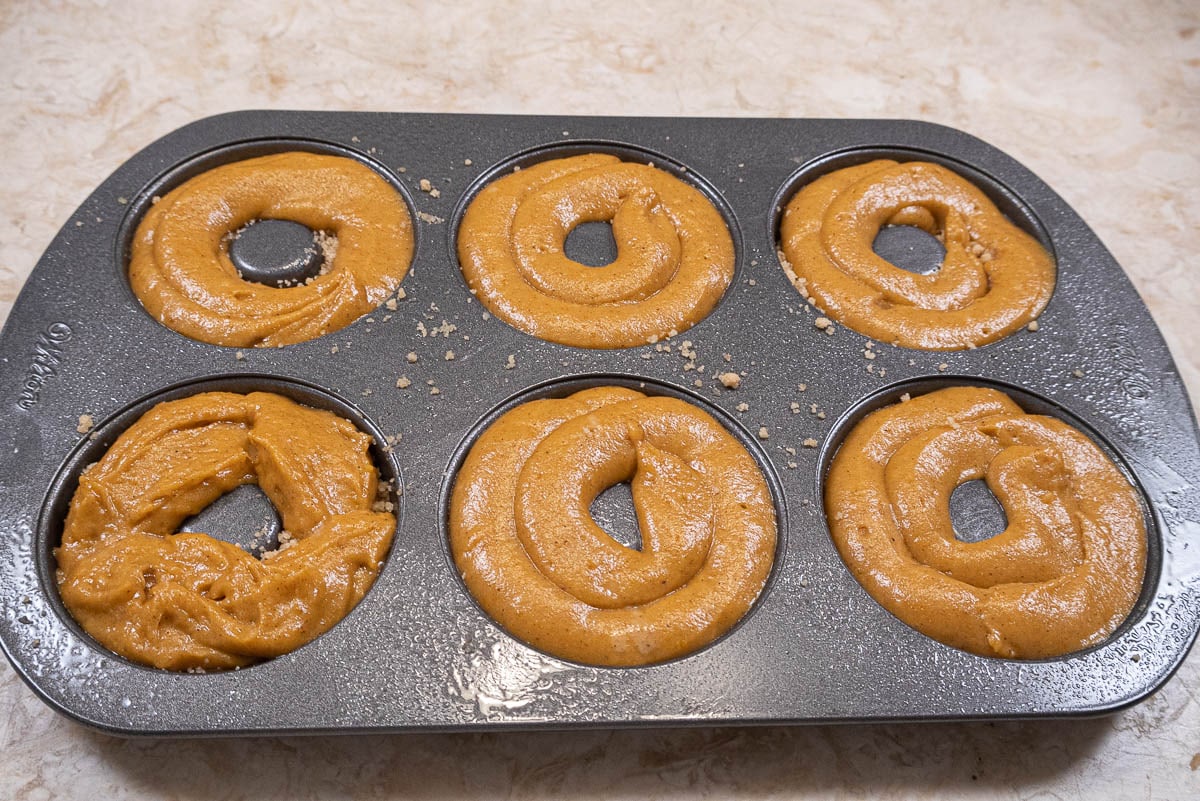
    Step 5. The crumbs from above are divided between the 12 cake donut wells.

    The pumpkin batter piped over the crumbs.

    Step 6. Spoon or pipe the batter over the crumbs. It is easier to pipe the batter using a piping bag or heavy plastic food bag with the tip cut off.

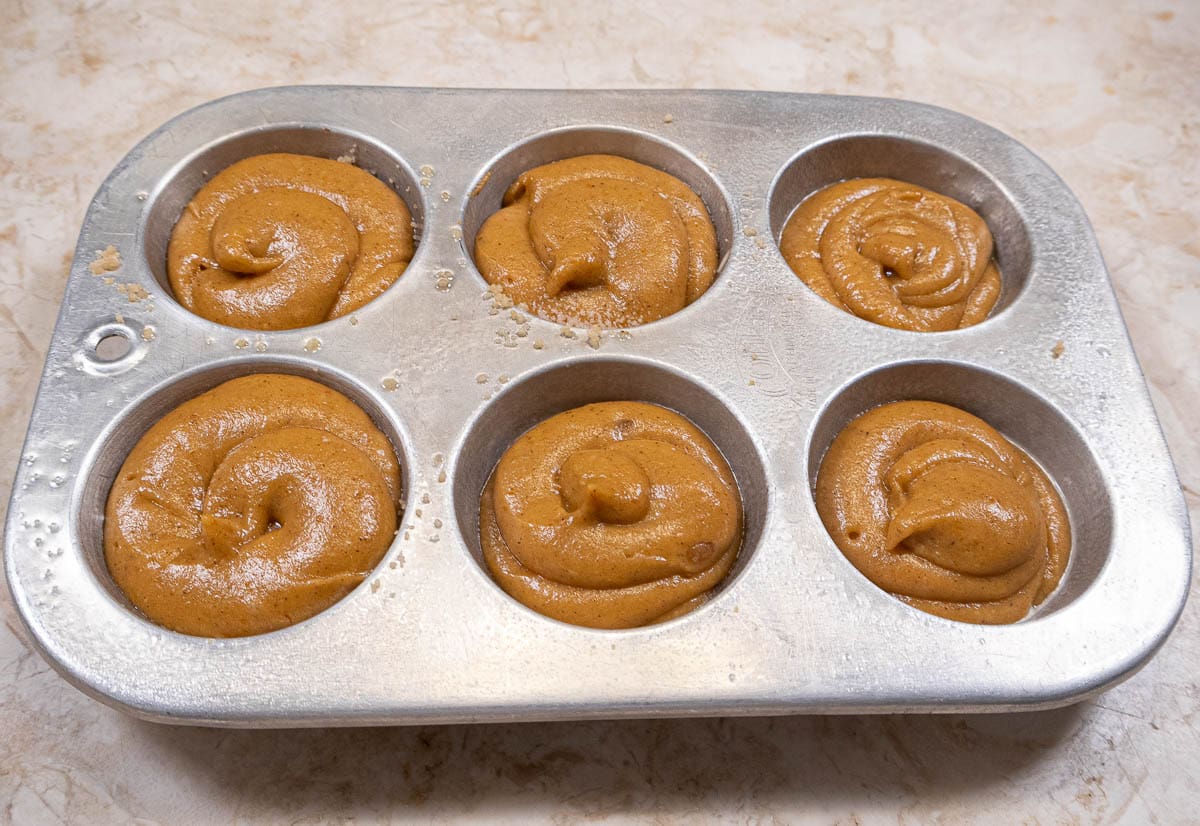
    If using a muffin pan, fill about ¾ ful

    Step 7. If using a muffin tin, place the crumbs on the bottom and fill about ¾ full.

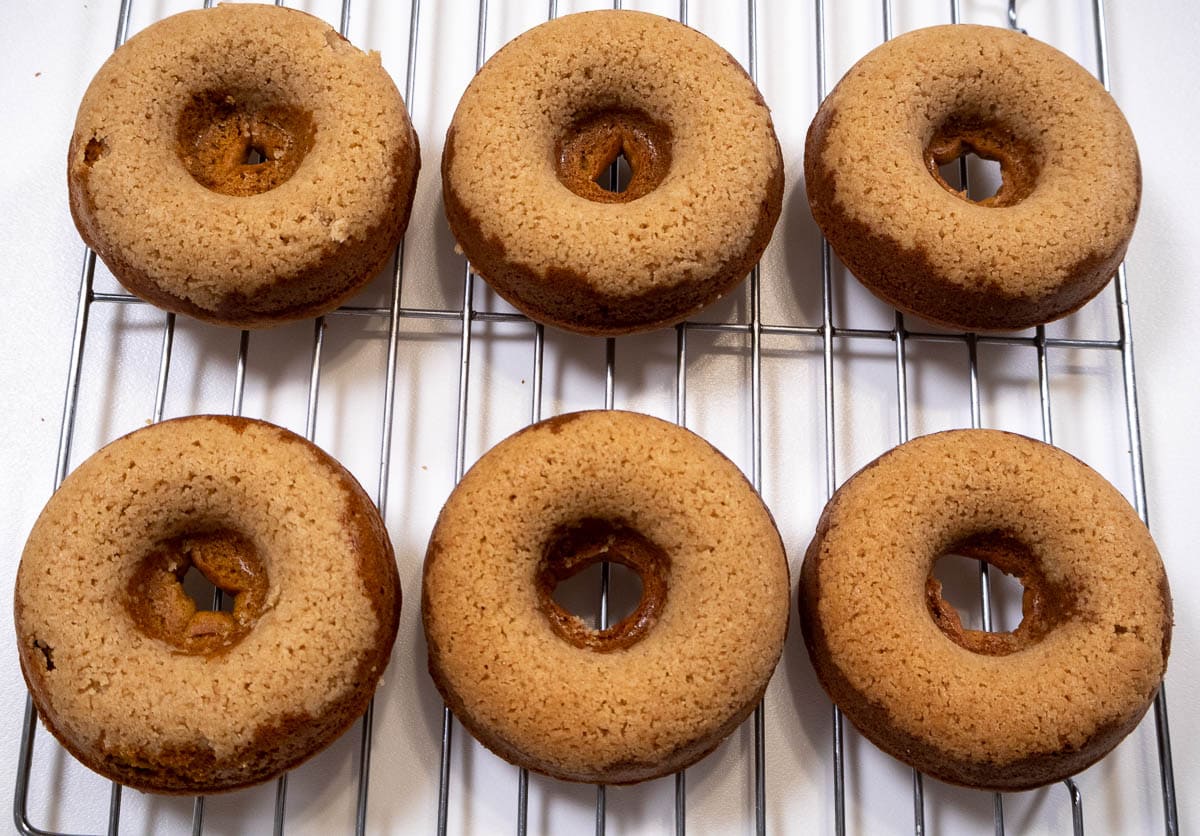
    Baked Pumpkin Donut Cake Recipe donuts on a cooling rack

    Step 8. Baked cake donuts cooling on a rack before dusting with powdered sugar.

    Storage

    These will keep for several days at room temperature. The powder sugar may need to be replenished. For longer storage, freeze without the powdered sugar. Thaw at room temperature and then powder sugar.

    Top Tip

    If you don't have the cake donut pan, a regular size muffin tin will do. It will take a few minutes longer to bake because of the depth. Both will make 12.

    Pumpkin cake donuts on a plate with a cup of tea.

    Pumpkin Cake Donut Recipe

    Helen S. Fletcher
    This Pumpkin Cake Donut Recipe doesn't get any easier or faster. With no yeast to wait for, these are ready in no time. Pumpkin forward with plenty of spice, they stay fresh for days. No cake donut pan? No problem. Just substitute a regular size 12 well muffin tin.  
    5 from 1 vote
    Print Recipe Pin Recipe
    Prep Time 20 minutes mins
    Cook Time 16 minutes mins
    Total Time 36 minutes mins
    Course Donuts
    Cuisine American
    Servings 12 servings
    Calories 329 kcal
    Prevent your screen from going dark

    Ingredients

    Crumb Topping

    • 6 tablespoons unsalted butter, softened (90 grams or 3 ounces)
    • ¼ cup granulated sugar (50 grams 1 ¾ ounces)
    • ¼ cup packed dark brown sugar (50 grams or 1 ¾ ounces)
    • ¼ teaspoon salt
    • ¾ cup all-purpose flour (90 grams or 3 ounces)

    Pumpkin Cake Donut 

    • 1 ¼ cups flour (175 grams 6 ⅛ ounces)
    • 1 teaspoon cinnamon
    • ½ teaspoon nutmeg
    • ½ teaspoon ginger
    • ⅛ teaspoon cloves
    • 2 teaspoons baking powder
    • ½ teaspoon baking soda
    • ½ teaspoon salt
    • ½ cup oil
    • 2 eggs
    • 1 cup brown sugar, packed (200 grams or 7 ounces)
    • ¾ cup pumpkin puree (170 grams or 6 ounces1 teaspoon vanilla)
    • Powdered sugar as needed

    Instructions
     

    Crumb Topping

    • Combine the butter and both sugars in a mixing bowl.  Cream until very light.
    • Whisk the salt and flour together; add all at once and beat on medium just until large crumbs form.  Scrape down the sides and the bottom for unincorporated flour.  If crumbs don't form, add a couple of teaspoons of water at a time to help them along. Mix briefly.
    • Do not over mix or you will end up with a really thick cohesive mixture.Store the crumbs in the refrigerator while you make the cake.

    Pumpkin Cake Donuts

    • Preheat the oven to 350°F.  Lightly spray 2 6-hole doughnut pans or regular size muffin tins with a non-stick baking spray.  Set aside.
    • Whisk the flour, cinnamon, nutmeg, ginger, cloves, baking powder, baking soda, and salt together.  Set aside.
    • Combine the oil, eggs, brown sugar, pumpkin, and vanilla in the bowl of a mixer.  Beat on low until completely combined.  Add the flour, all at once, and beat on medium until well blended.
    • Divide the crumbs between the donut or muffin tins.
    • Fill the wells of the donut or muffin tins just under the top.   It is easiest to pipe this in because it is thick.  Just cut about ½” off a plastic piping back or a heavy plastic food storage bag.  Fill with batter and pipe it over the crumbs.
    • Bake the donut for 12 to 15 minutes until a tester comes out clean or they spring back when lightly touched.
    • Bake the muffin tins for 14 to 16 minutes.
    • Cool for a few minutes, then release from the tins.
    • Sprinkle lightly with powdered sugar when cool.

    Notes

    Do not use pumpkin pie filling as it is not the same as the pumpkin puree.

    Nutrition

    Calories: 329kcalCarbohydrates: 44gProtein: 3gFat: 16gSaturated Fat: 5gPolyunsaturated Fat: 3gMonounsaturated Fat: 8gTrans Fat: 0.3gCholesterol: 42mgSodium: 281mgPotassium: 98mgFiber: 1gSugar: 27gVitamin A: 2598IUVitamin C: 1mgCalcium: 73mgIron: 2mg
    Tried this recipe?Mention @helensfletcher or tag #pastrieslikeapro!

    Gateau Breton

    Modified: Jul 25, 2025 · Published: Oct 3, 2022 by Helen S Fletcher · This post may contain affiliate links · 15 Comments

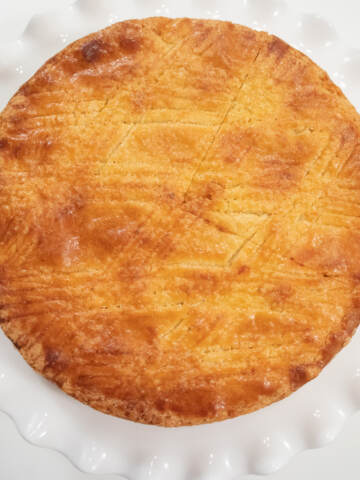
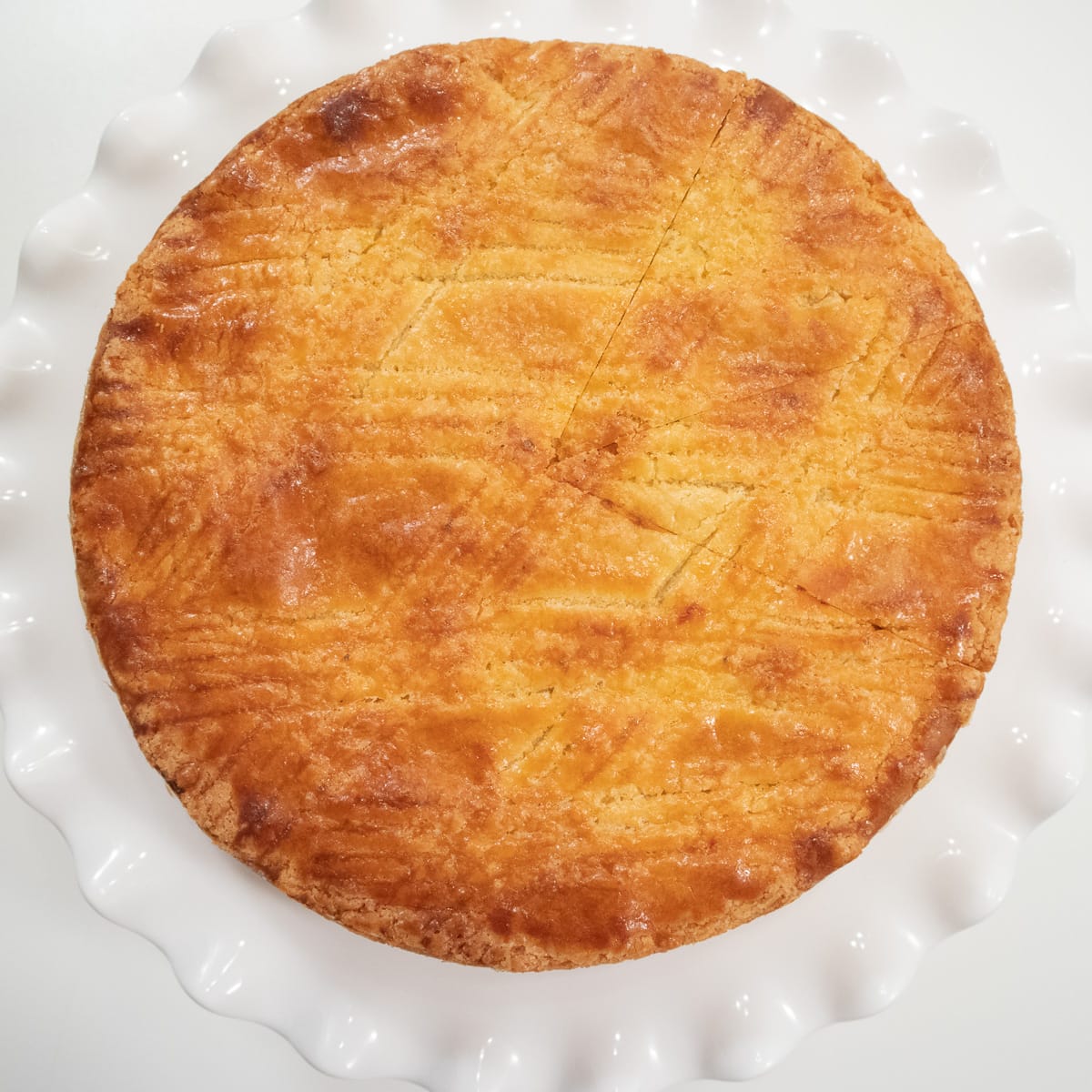
    Gateau Breton

    Gateau Breton is destined to become one of your favorites.  An easily made butter pastry sandwiches a fruit filling that can be served for breakfast, as a great dessert, a snack or, if you’re like me, just have a piece whenever. 

    Gateau Breton

    This marvelous French pastry comes from  the Brittany region of France;  which is known for its butter and sea salt.  Interestingly enough, unlike most pastry recipes, salted butter is preferred over unsalted for this recipe, particularly salted European Butter.

    Prune Filling

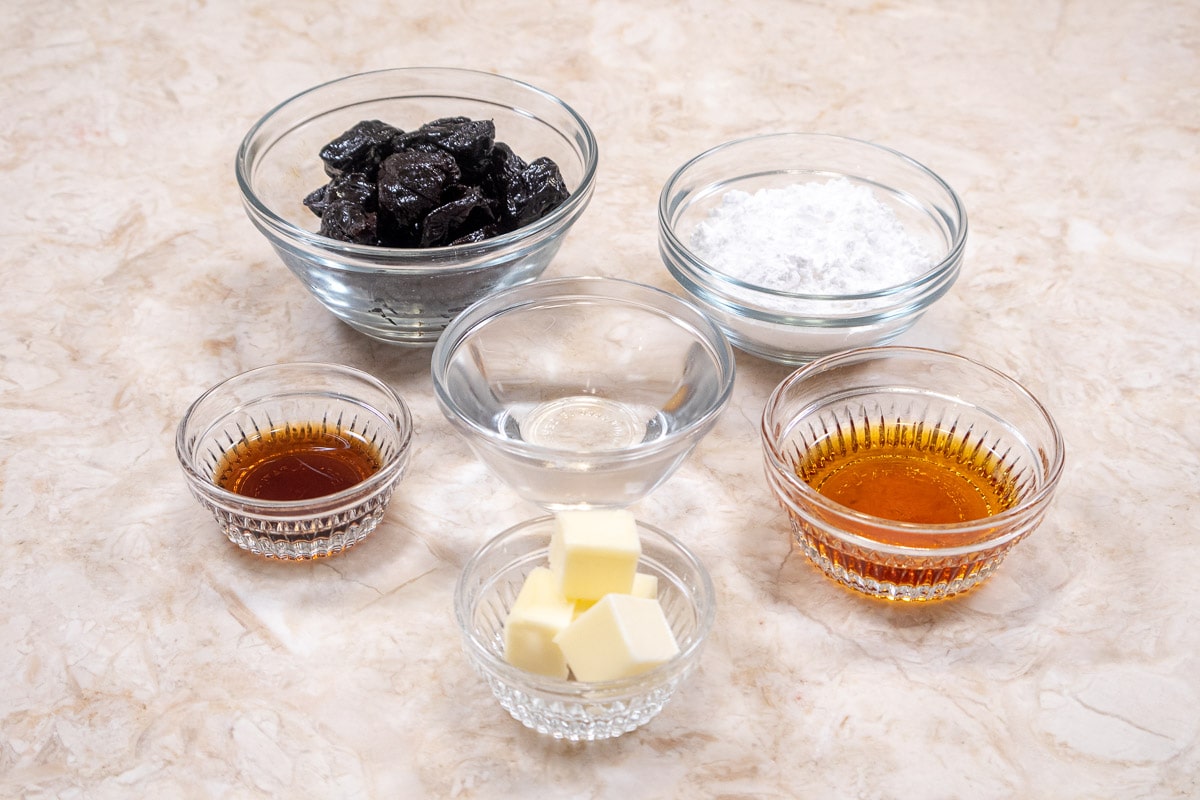
    Ingredients for the filling include prunes, rum, butter, powdered sugar and vanilla.

    BACK ROW: Prunes, powdered sugar.

    MIDDLE ROW : Vanilla, water, dark rum.

    FRONT ROW: Butter

    Instructions

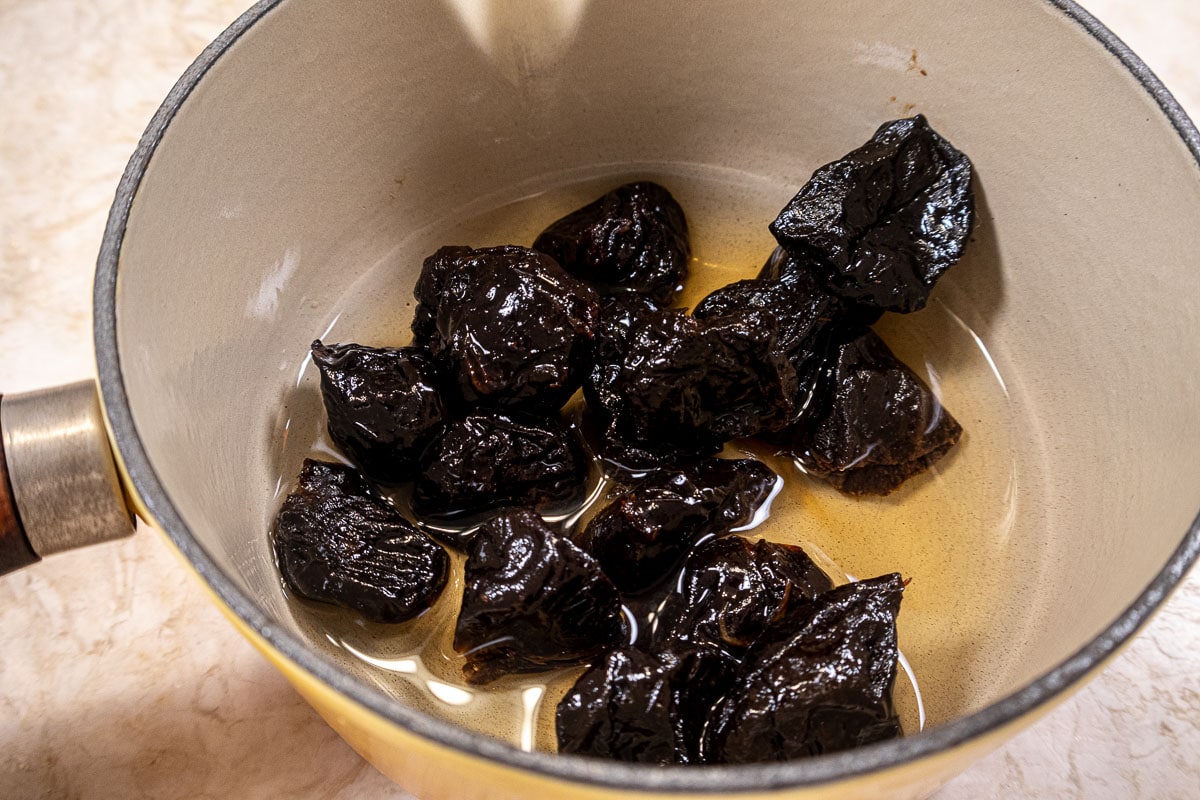
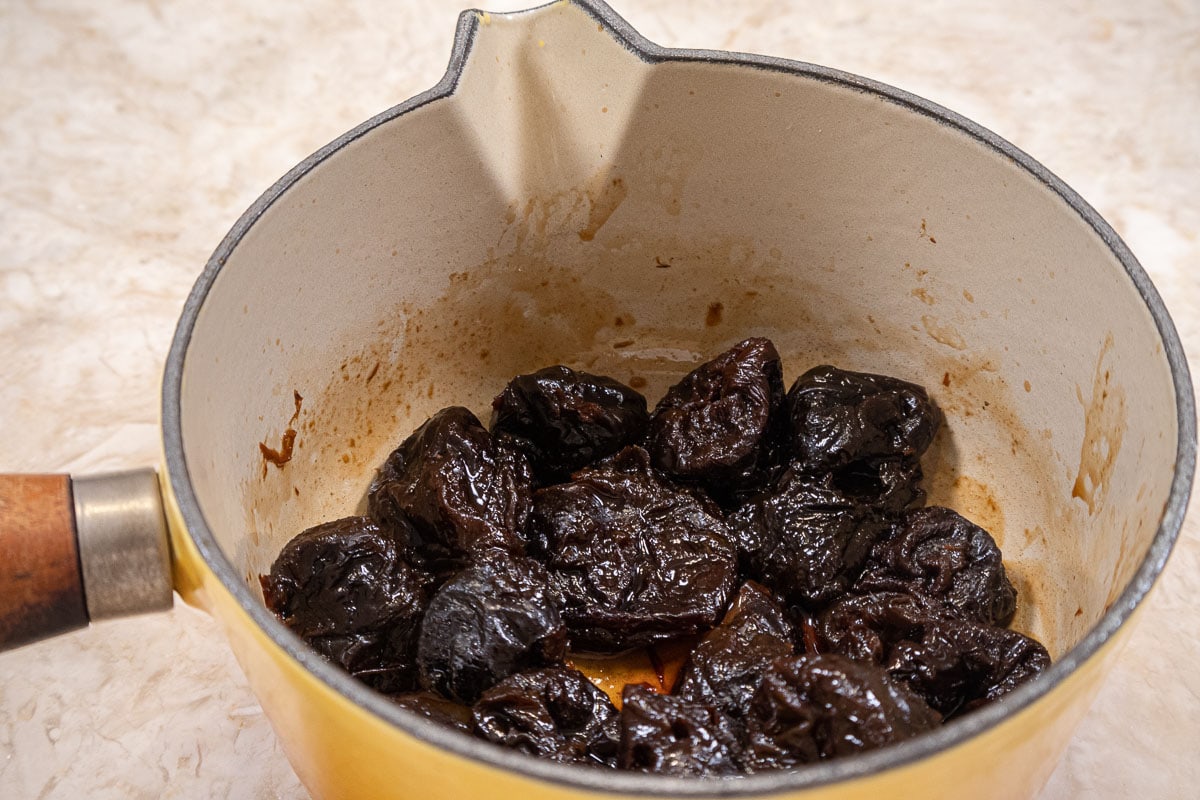
    Prunes and water in saucepan

    Step 1. The prunes and water are placed in a small saucepan.

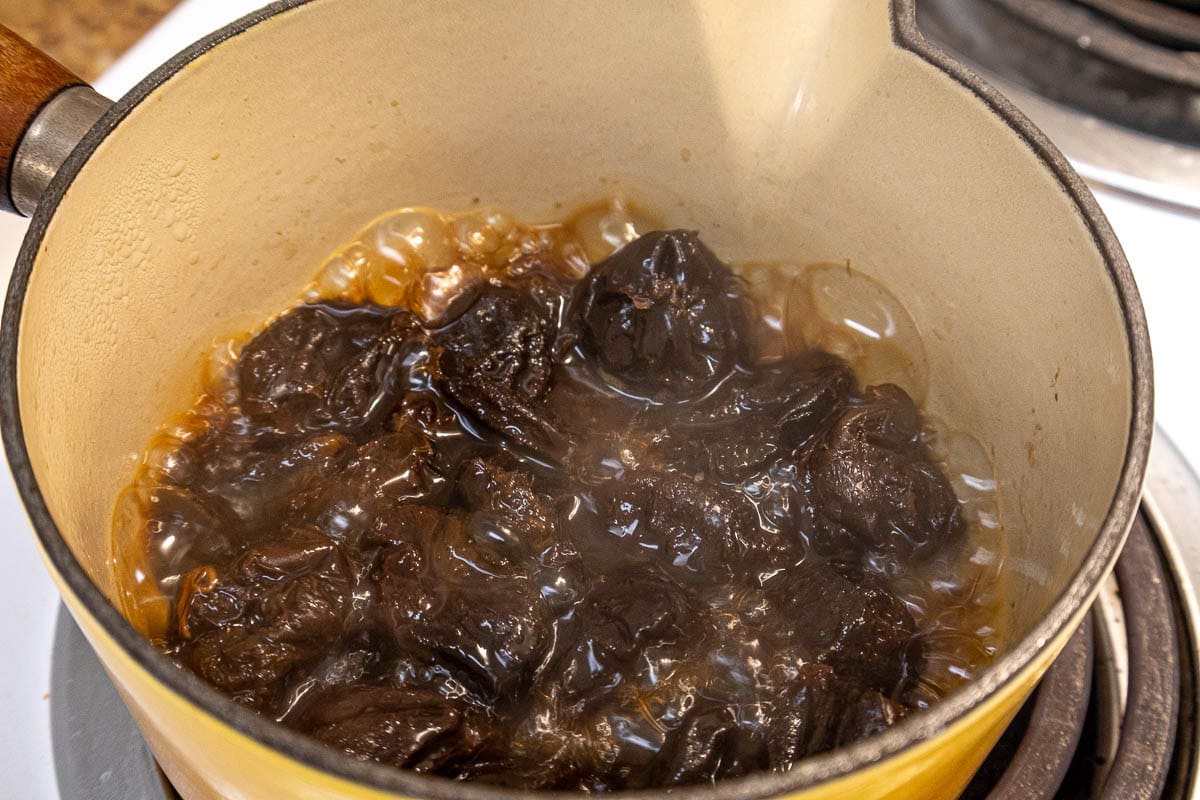
    Prunes and water boiling

    Step 2. Prunes and water boiling.

    The prunes are cooked until just a little liquid is left in the pan

    Step 3. The prunes are cooked until just a little water is left in the pan.

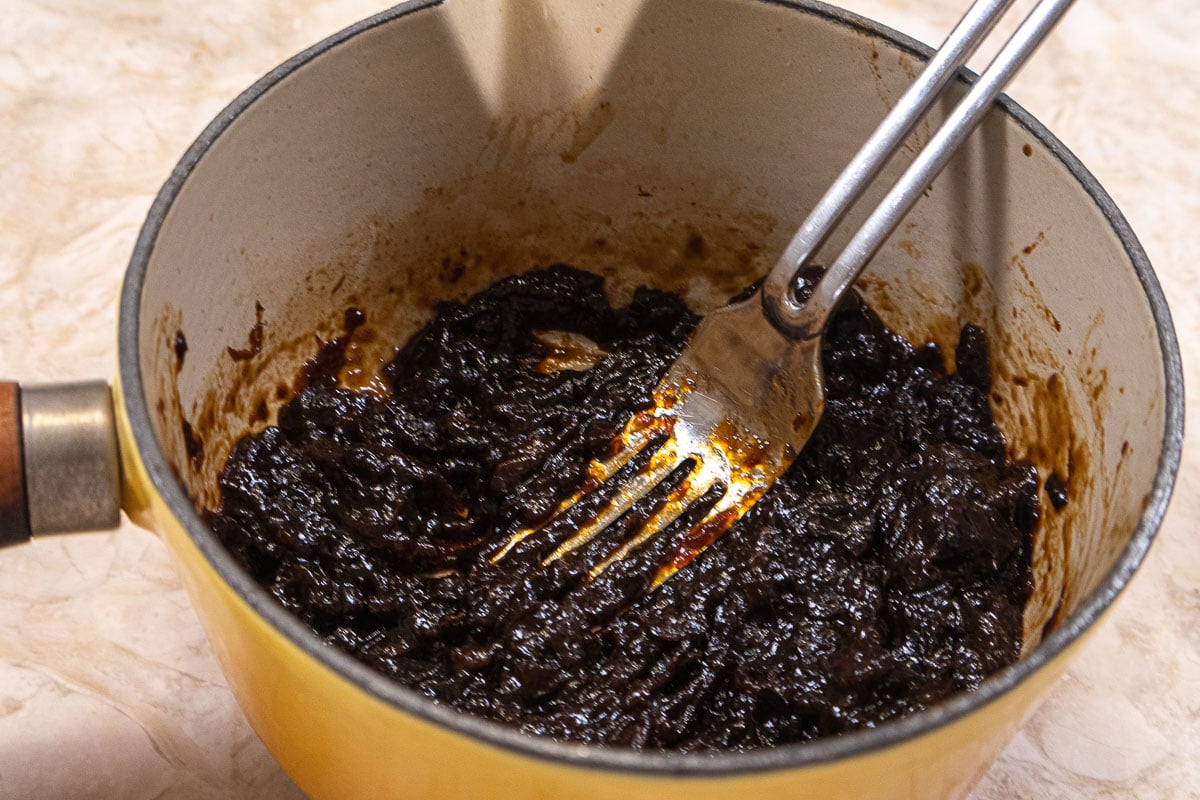
    Mashing the prunes after cooking

    Step 4. The prunes are mashed with a fork while they are hot.

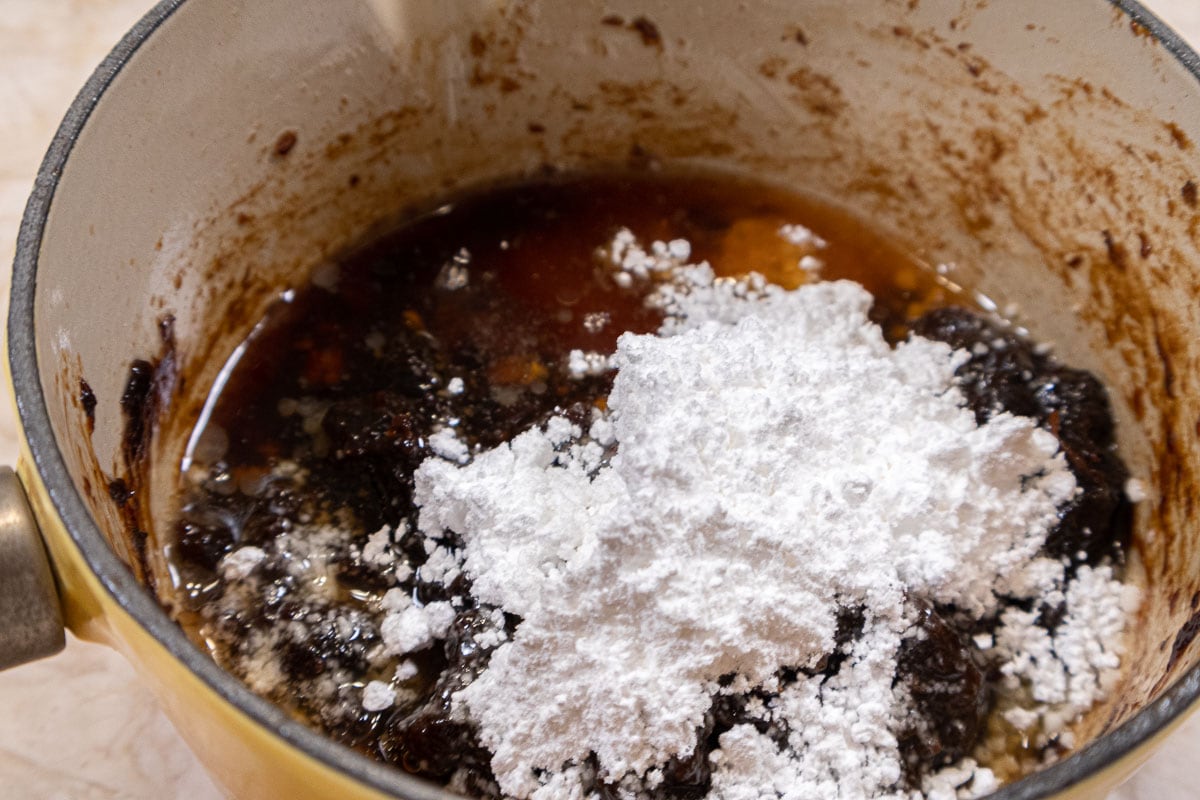
    The remainder of the filling ingredients are added to the mashed prunes

    Step 5. The remainder of the filling ingredients are added to the mashed prunes.

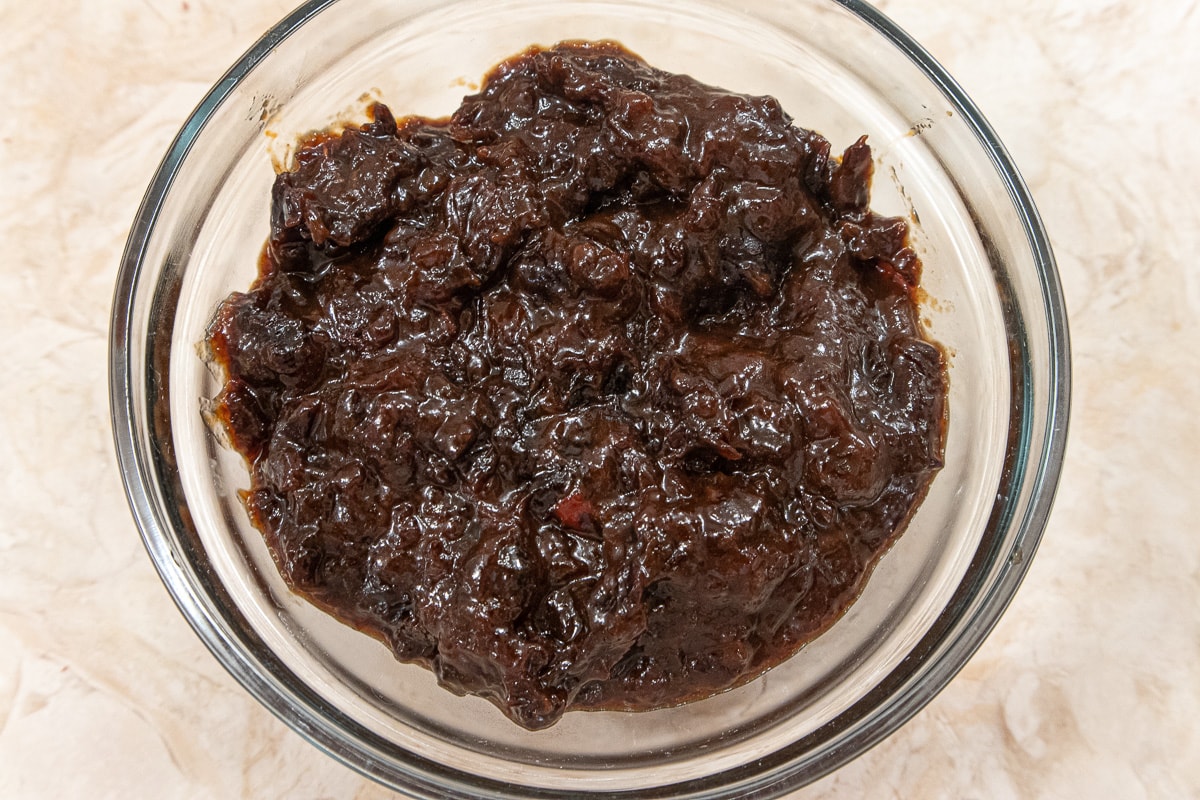
    The prune filling finished

    Step 6. The finished filling.

    For a complete list of ingredients and amounts please see the recipe card.

    Pastry for Gateau Breton

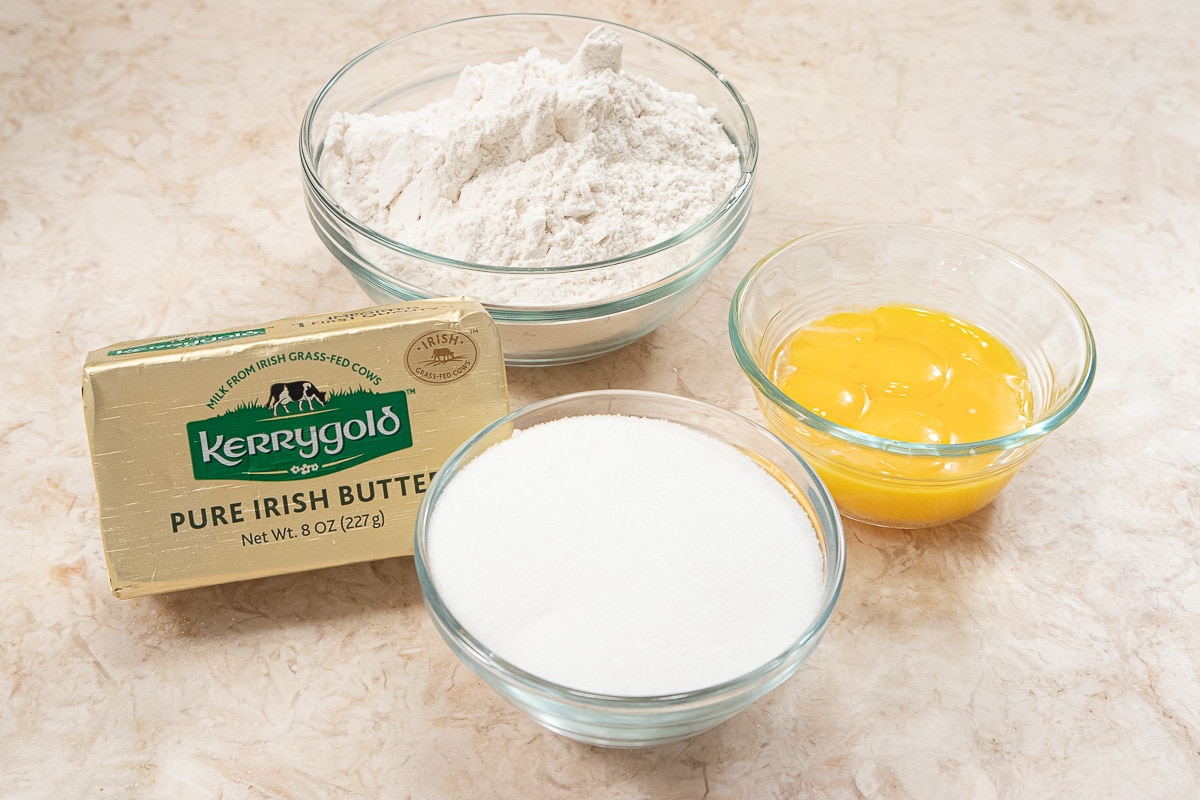
    Ingredients to make the pastry for Gateau Breton

    BACK ROW: Flour

    MIDDLE ROW: Butter and egg yolks,

    FRONT ROW: Sugar

    • Salted Butter - European style salted butter is preferred such as Kerrygold or Plugra. It's used for it's higher fat content and it's intense flavor since the pastry is very butter forward.
    • Egg yolks - size large are used

    For a complete list of ingredients and amounts please see the recipe card.

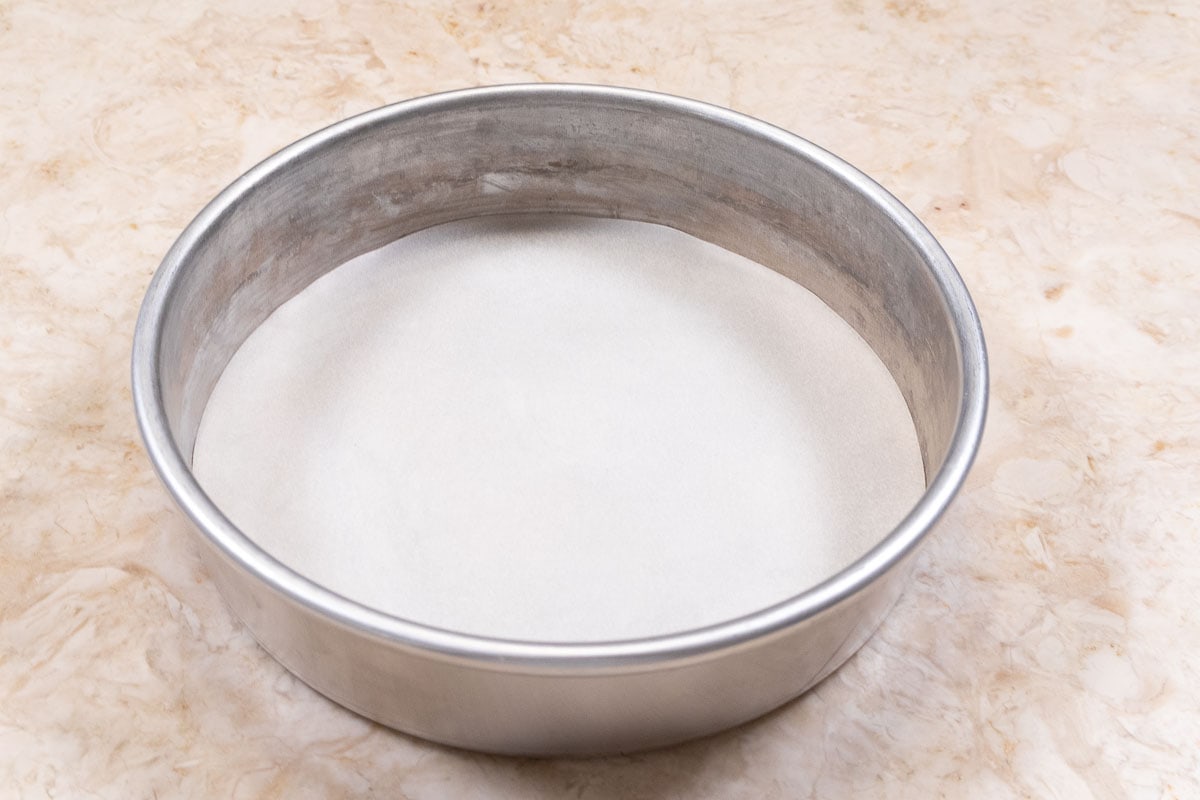
    9" round cake pan lined with parchment paper

    Step 1. Line an 8" round cake pan with parchment paper. Spray the bottom and sides of the pan with a non-stick baking release. Set aside.

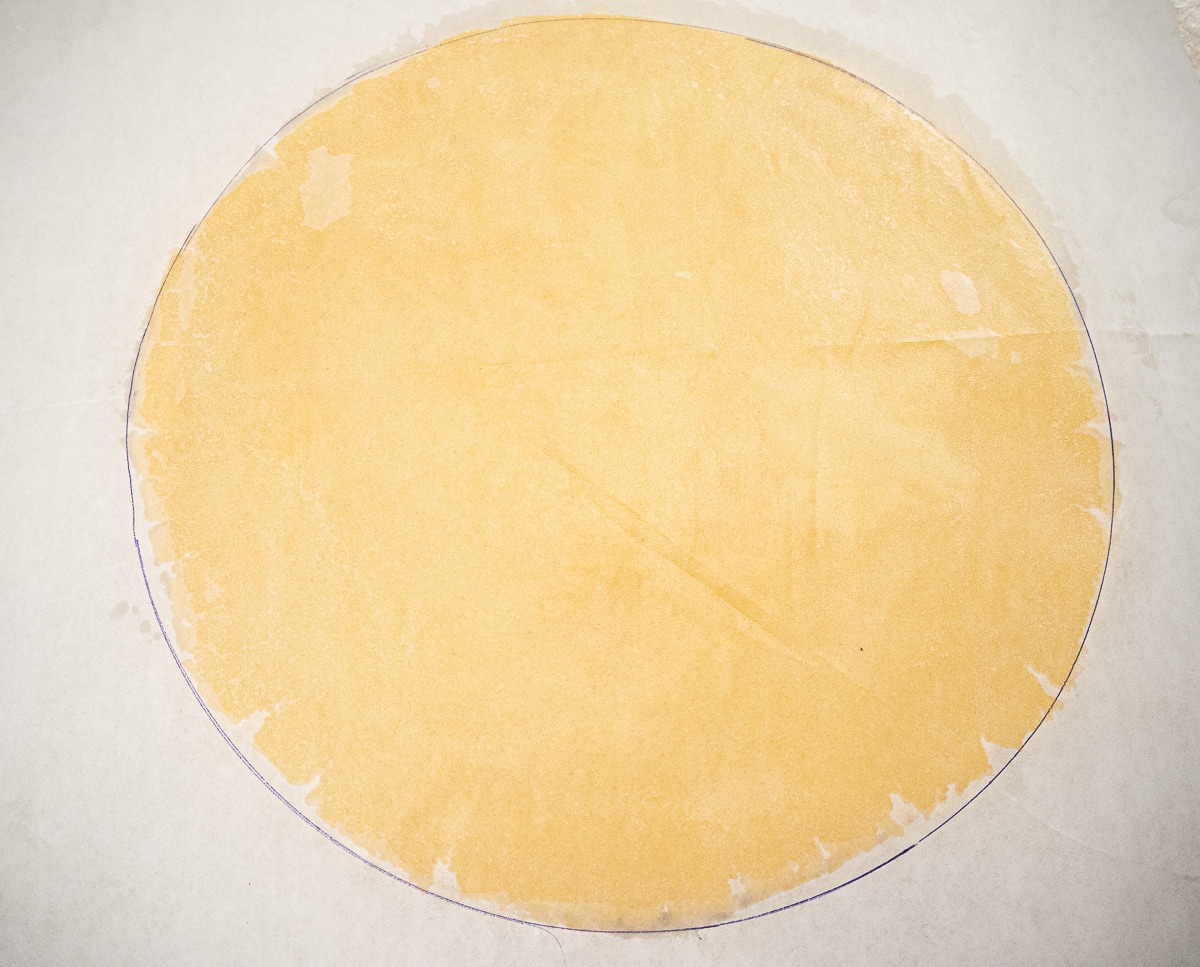
    9" circle drawn on a piece of parchment paper

    Step 2. Draw an 8" circle on parchment paper. Turn it upside down and set it aside. Preheat the oven to 350°F.

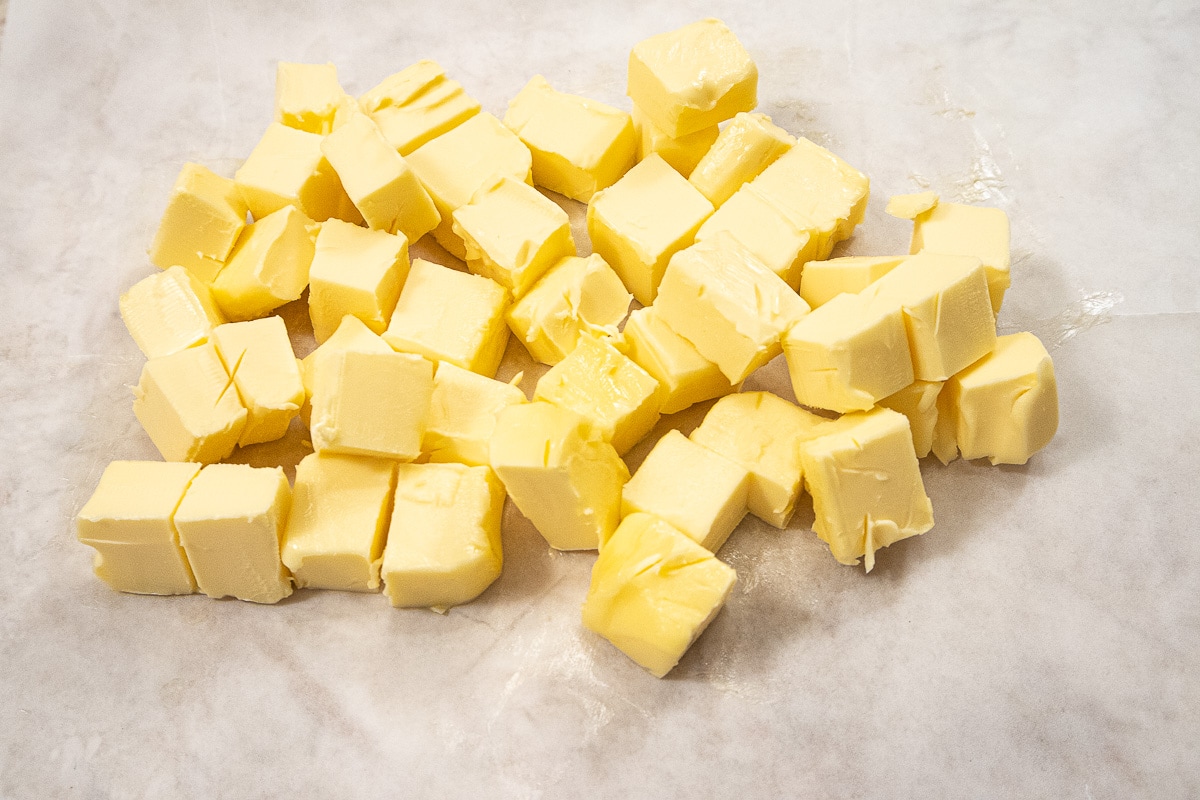
    Butter cut for Gateau Breton pastry

    Step 3. Cut butter in small pieces and keep refrigerated until needed.

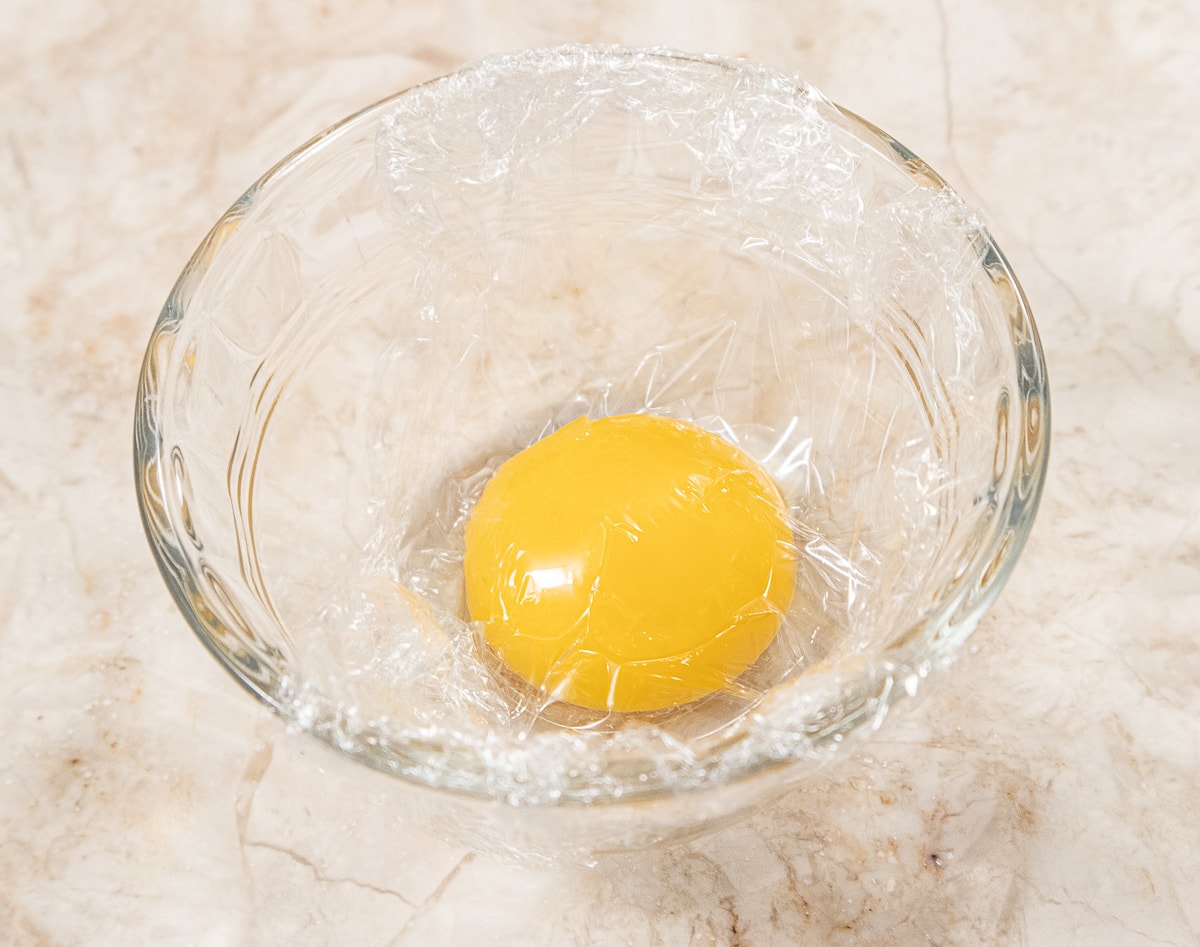
    Egg yolk covered with film  and refrigerated until needed

    Step 4. Reserve one egg yolk, covered and refrigerated.

    Combine the flour and sugar in the bowl of the processor

    Step 5. Place the flour and sugar in the bowl of the processor. Pulse several times to mix.

    Butter added to flour mixture in processor

    Step 6. Refrigerated butter is added to the processor.

    Butter cut into flour mixture

    Step 7. The butter is processed until it is indistinguisable. Do not let it form a ball.

    Five egg yolks in the processor

    Step 8. Five eggs are added to the processor.

    Dough processed to mix completely

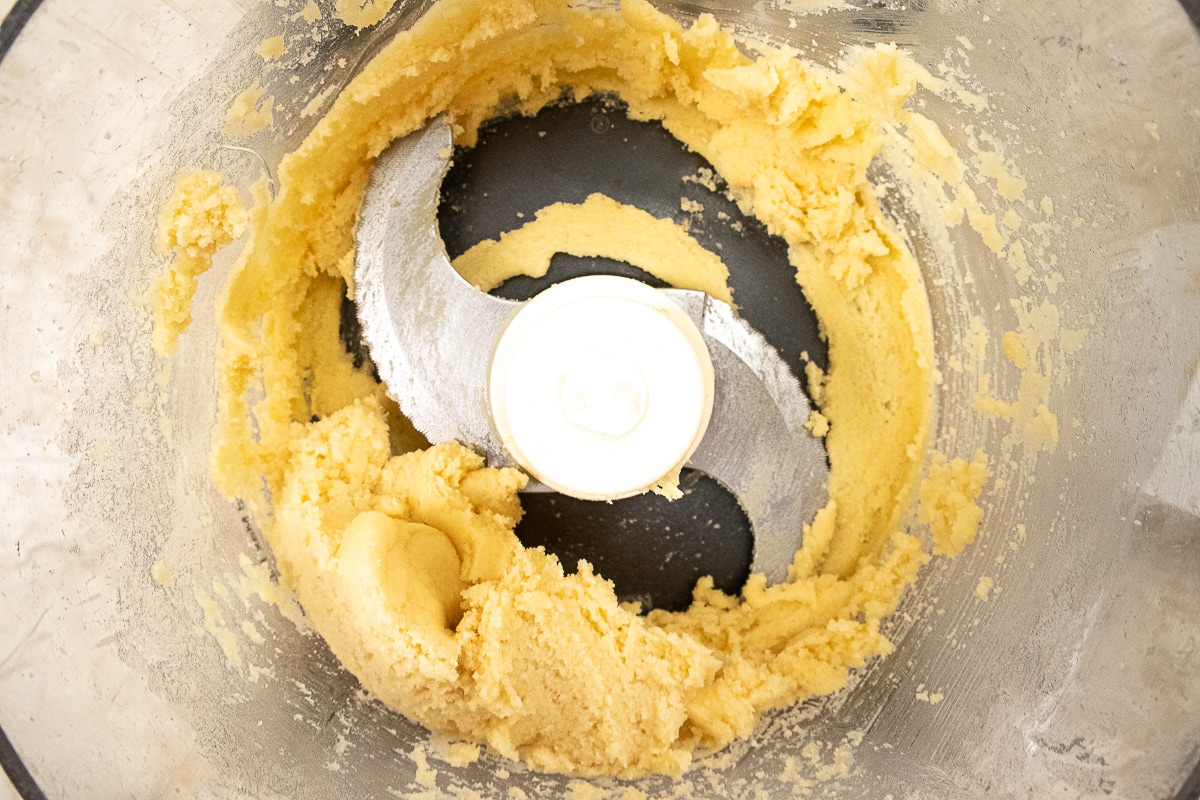
    Step 9. The pastry for the Gateau Breton is processed to mix completely. Be sure to scrape down and rearrange as needed until it comes together. Remove from the processor.

    Pastry disc on bottom of crust

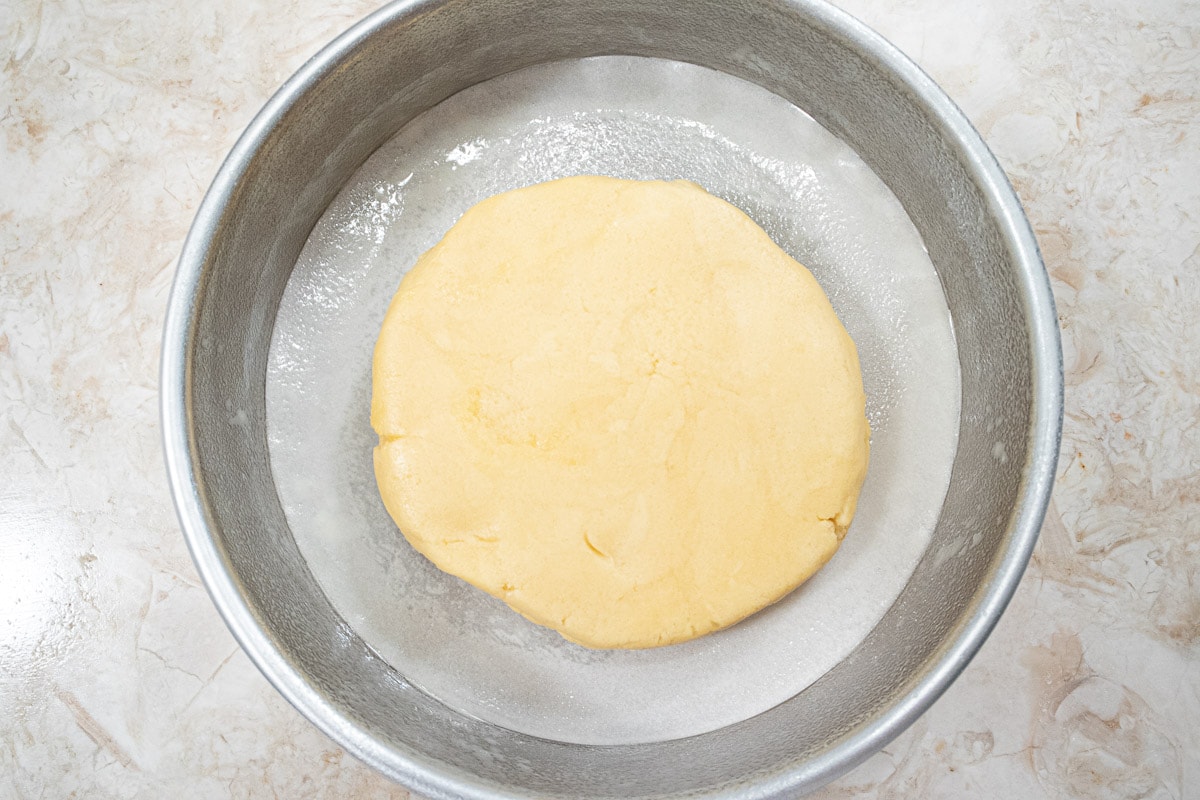
    Step 10. Divide the dough in half and shape each half into a disc. Place one disc in the bottom of the pan. If it is too soft, refrigerate briefly to firm it up slightly.

    Pressing the dough into the bottom of the pan

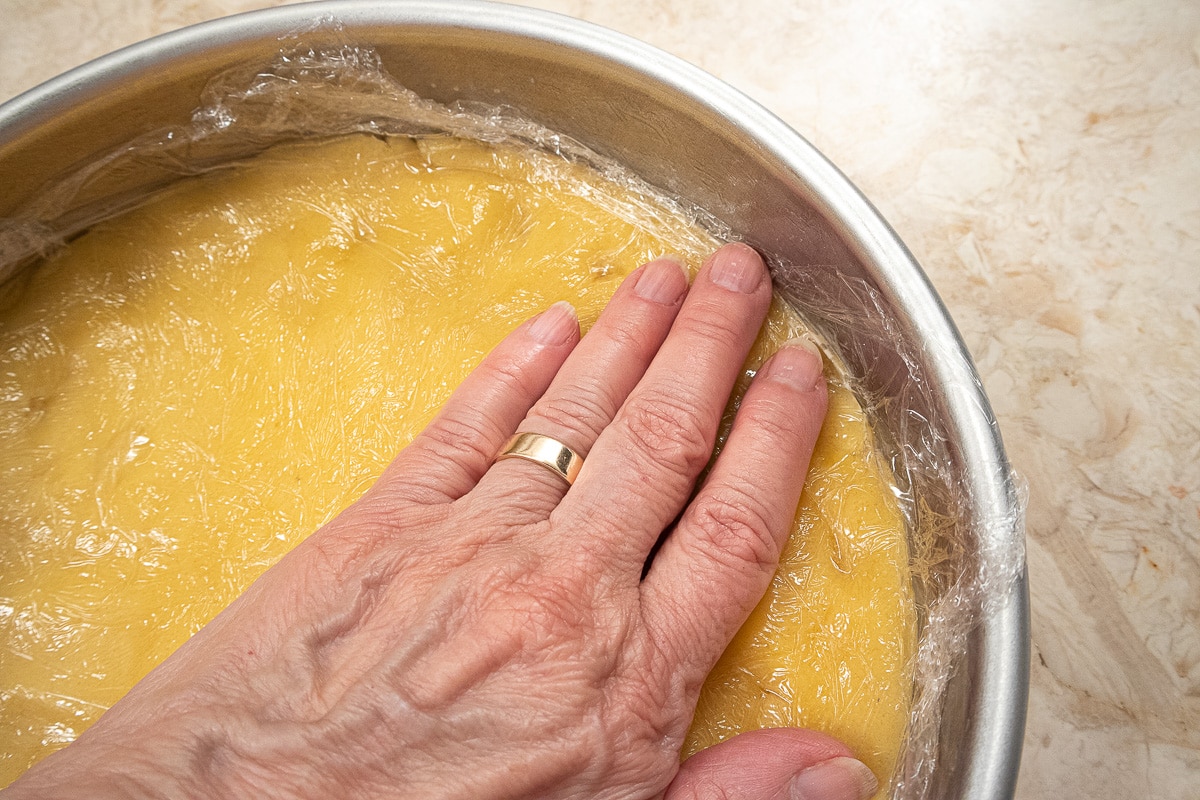
    Step 11. Cover the disc with plastic wrap and press the dough evenly into the bottom of the pan. Remove the plastic wrap.

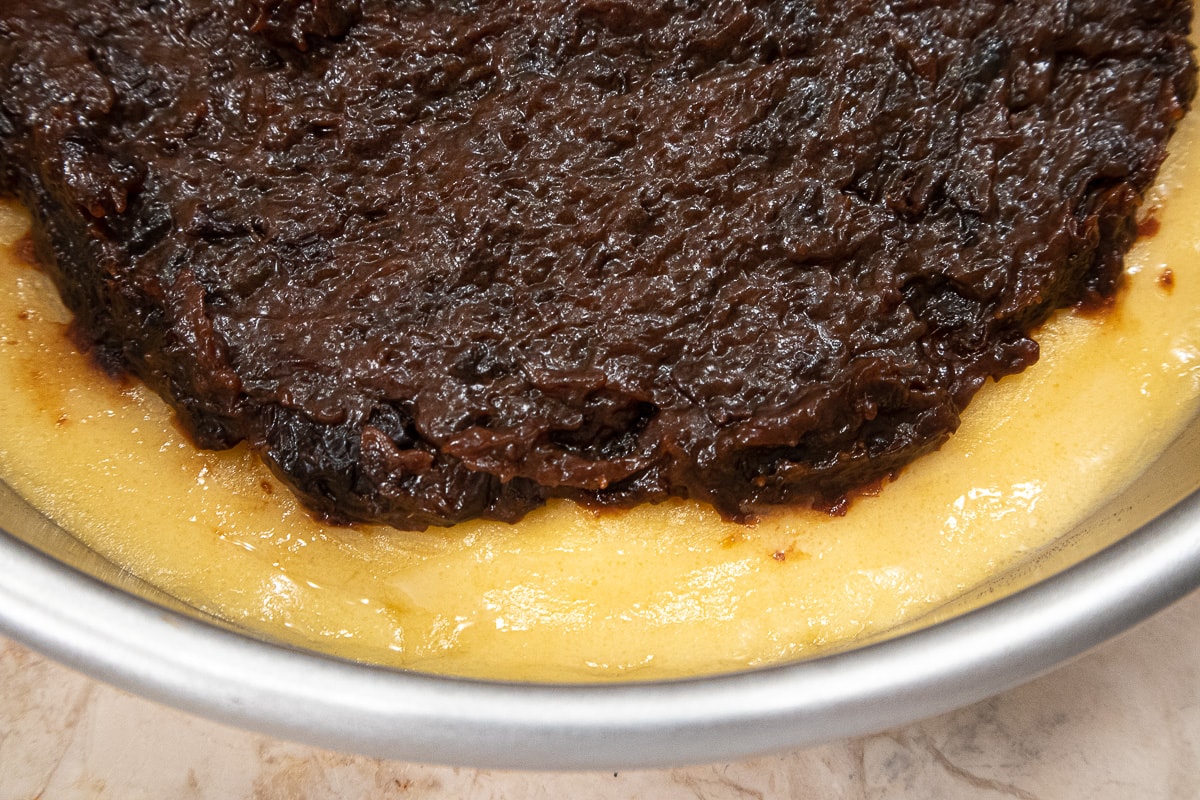
    Spread the cooled filling to within ¾ inch of the sides of the pan

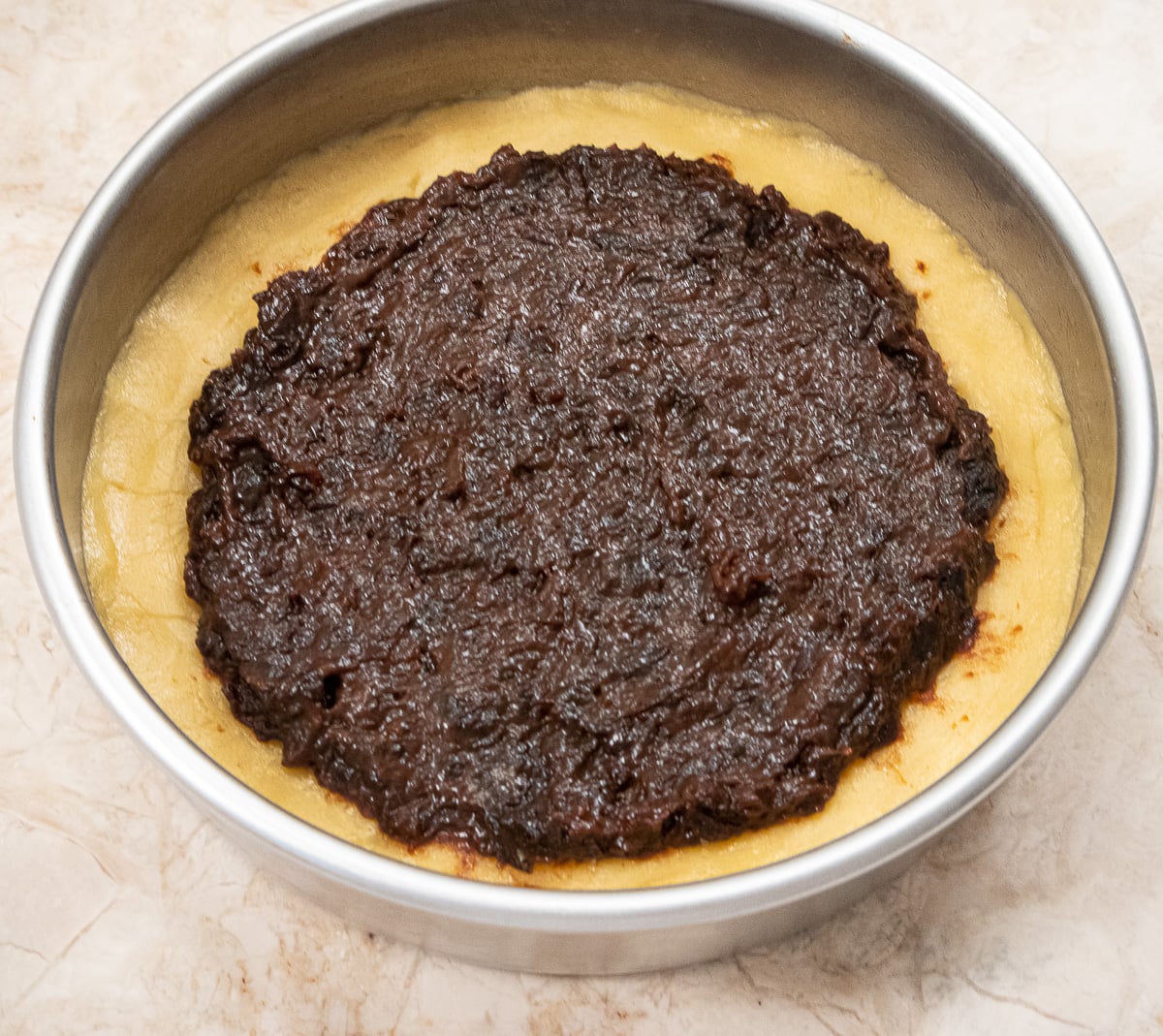
    Step 12. Spread the filling to within ¾" of the edge of the pastry.

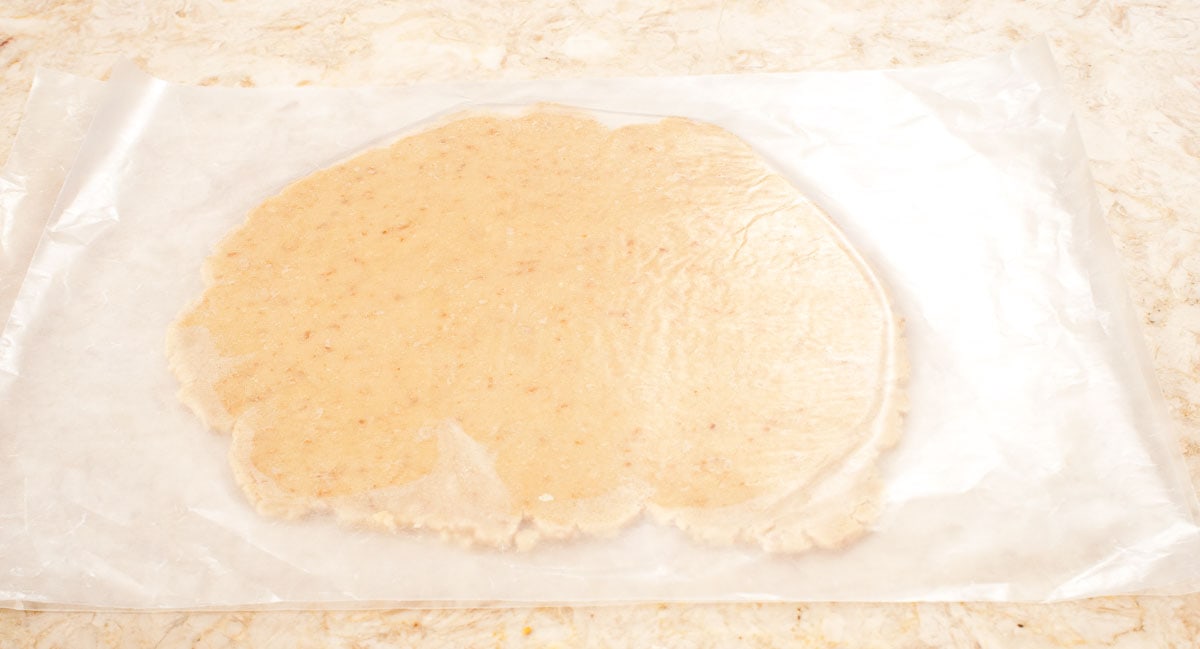
    Place the second disc of pastry in the middle of the circle on the parchment paper.  Cover with waxed paper and roll out to fit the circle.

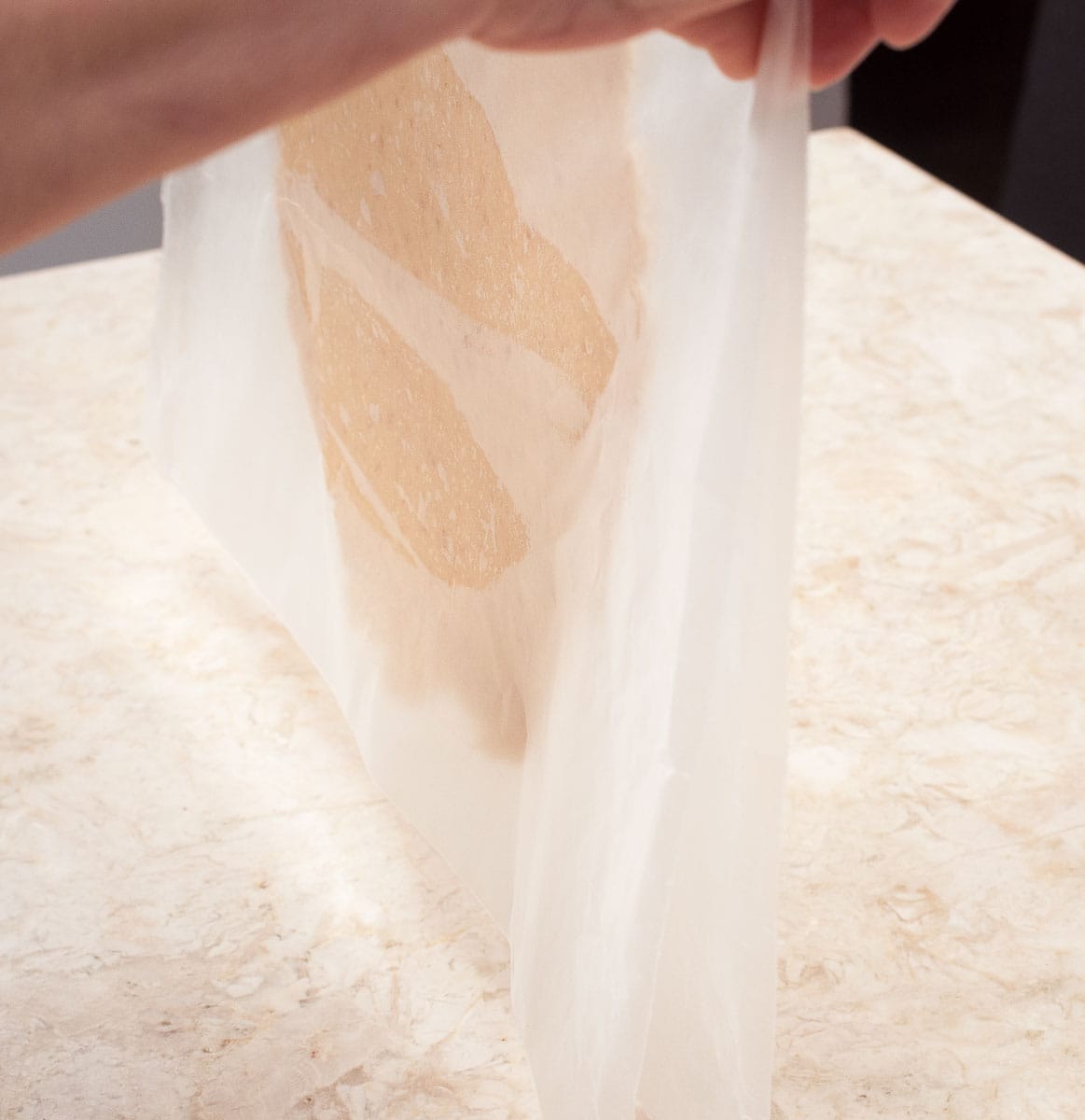
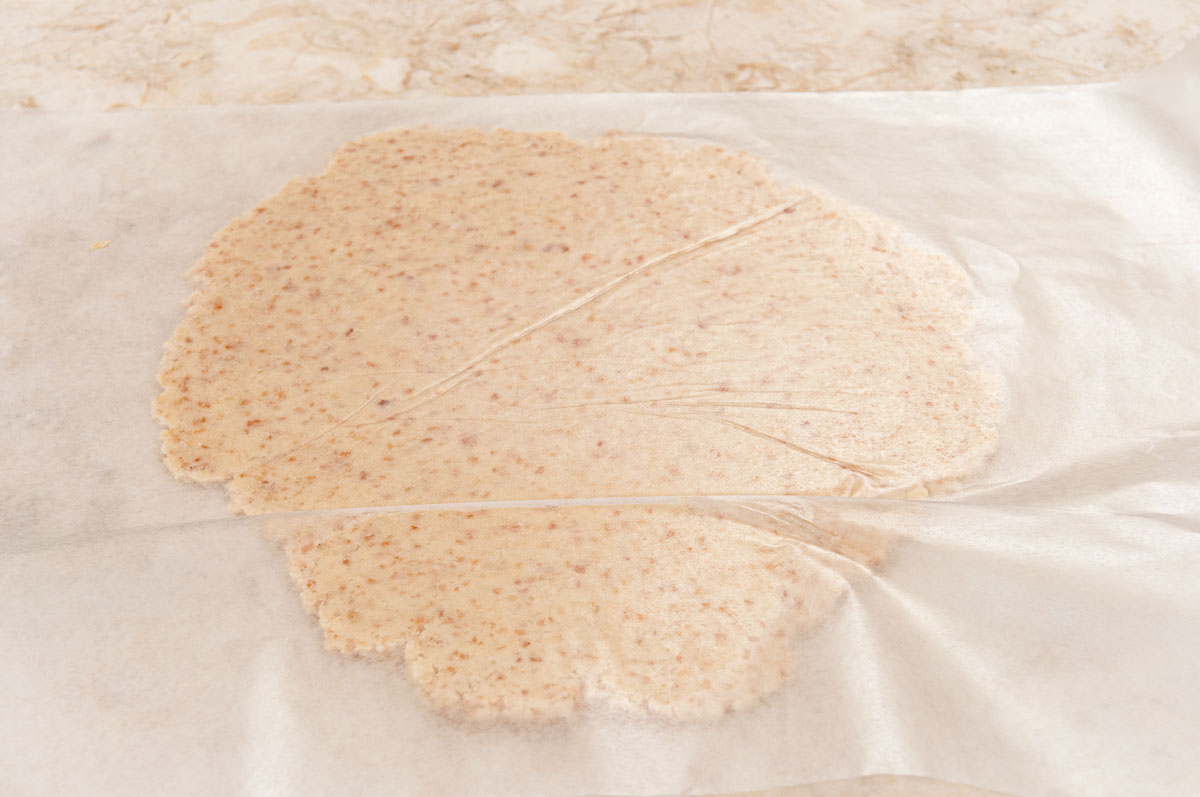
    Step 13. Place the second half of the pastry in the middle of the circle drawn on the parchment paper. Place parchment paper or wax paper over the pastry and roll it out to fit the circle. Flip the paper over so the bottom is on top and refrigerate until firm but not hard.

    Edge of pastry moistened

    Step 14. Moisten the edge of the pastry with water.

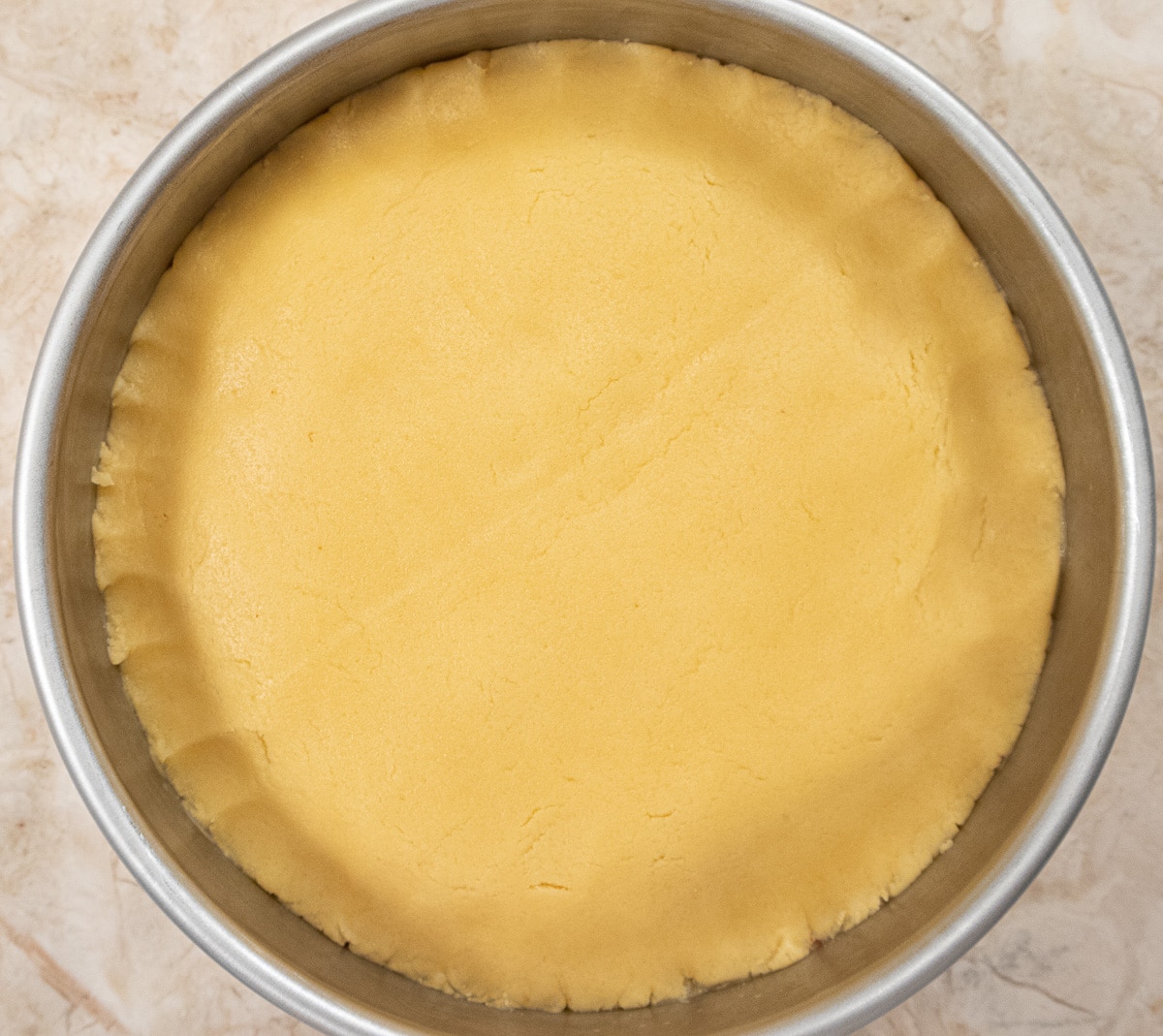
    The top crust in place over the filling

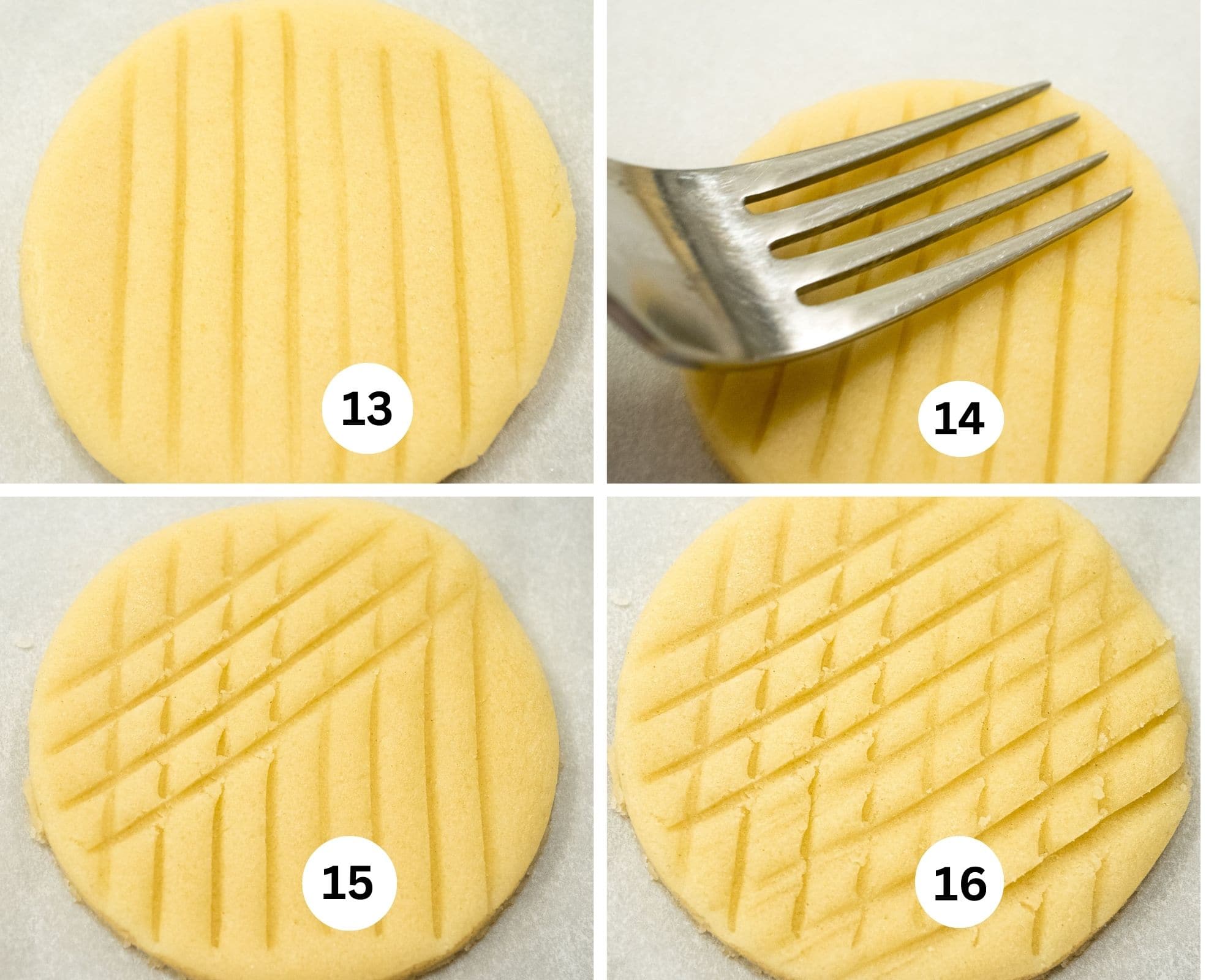
    Step 15. Place the top crust over the filling. The edges of the top and bottom are pressed together. Make a cross hatch design on the top and brush with the egg wash.

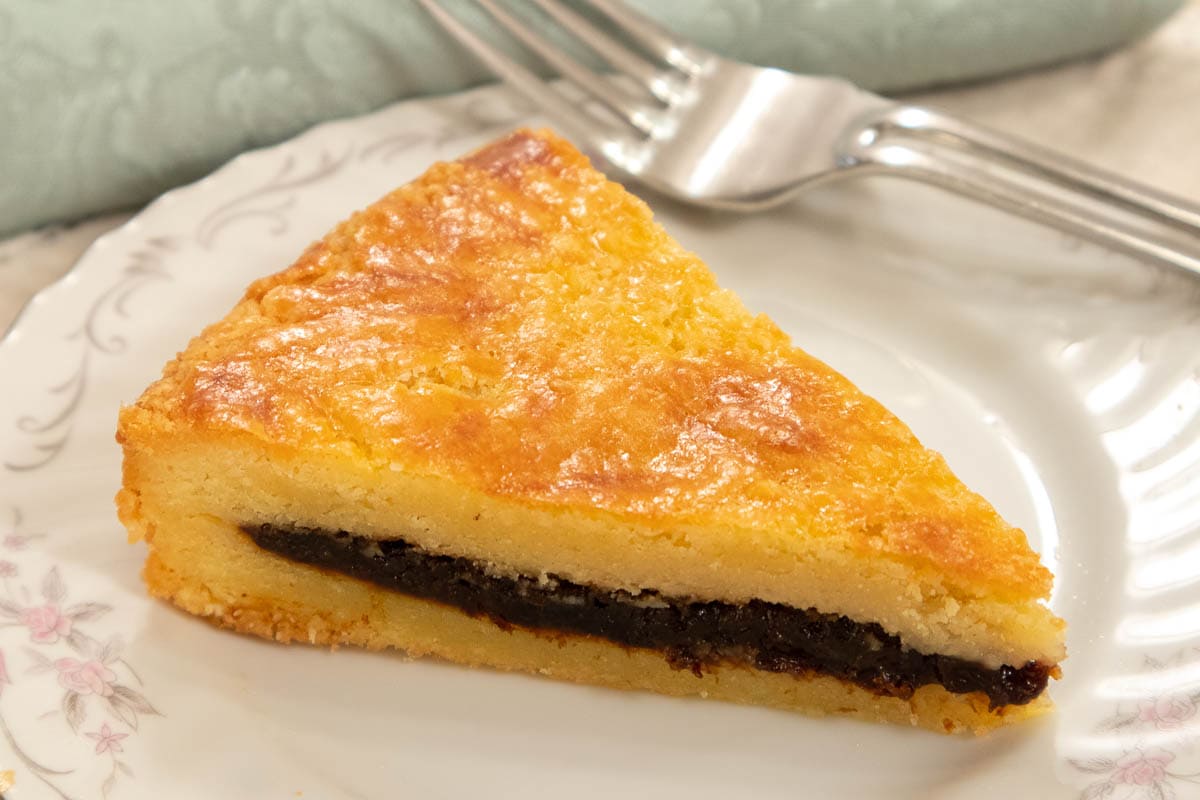
    A slice of the Gateau Breton on a plate

    Step 16. Bake the Gateau Breton for 50 to 55 minutes until the top is a medium brown. Cover loosely with foil if it is browning too quickly. Cool to lukewarm. Go around the edges of the pan with a small metal spatula and turn out. Cool completely on a rack.

    NOTE: If the pastry is very soft coming from the processor, chill it just until firm enough to press in and roll out. Do not let it get completely hard or the large amount of butter in the pastry will make it difficult to roll out.

    Variation

    • Substitute dried apricot for the prunes if desired.

    Storage

    The pastry will keep for at least 5 days at room temperature if kept covered.

    Gateau Breton

    Gateau Breton

    Helen S. Fletcher
    Gateau Breton is a French pastry that comes from the Bretagne region of France.  While professional looking, this easily made pastry features salted European butter and a prune or apricot filling between two layers of pastry made in a food processor or mixer. 
    5 from 4 votes
    Print Recipe Pin Recipe
    Prep Time 1 hour hr
    Cook Time 55 minutes mins
    Total Time 1 hour hr 55 minutes mins
    Course Cake, Dessert
    Cuisine French
    Servings 14 servings
    Calories 302 kcal
    Prevent your screen from going dark

    Ingredients

    Prune Filling

    • 4 ounces dried prunes
    • ⅓ cup water
    • 2 tablespoons dark rum
    • 1 tablespoon butter, cut into several small pieces (15 grams or ½ ounce)
    • ¼ cup powdered sugar
    • 1 teaspoon vanilla

    Gateau Breton Pastry

    • 1 cup salted European style butter, cold (225 grams or 8 ounces)
    • 6 large egg yolks
    • 2 cups all-purpose flour (280 grams or 10 ounces)
    • 1 cup granulated sugar (200 grams or 7 ounces)

    Instructions
     

    Prune Filling

    • Place the prunes, water and dark rum in a small pan.  Bring it to a boil and cook until most of the water has evaporated. 
    • Remove it from the heat and mash the prunes with the back of a spoon until smooth.  Don’t worry if a few small pieces are left.  
    • And the remaining ingredients, stirring until the butter melts and all is combined.  Set aside to cool completely.

    Gateau Breton Pastry

    • Line an 8” round cake pan with parchment paper.  Spray the paper and entire cake pan with a non-stick baking release.  Set aside.   
    • Using the round pan, draw an 8” circle in the middle of a piece of parchment paper.  Turn it over and set aside. Preheat the oven to 350F.  
    • Cut the butter into small pieces and keep refrigerated until using.   
    • Reserve one egg yolk for the finish.  Place it in a small bowl and cover it directly with plastic wrap.  
    • Combine the flour and sugar in the bowl of a food processor.   Pulse to combine.  
    • Add the cold butter and process until it is indistinguishable.   
    • Add five egg yolks and process until the dough comes together.   Scrape down. 
    • Rearrange the dough in the processor as needed so it comes together
    • Remove the dough from the processor.  
    • Clean the blade by pulsing several times.  
    • Bring the dough together in one piece.  It will be soft at this point.  Do not add flour to the work surface.  Just use a gentle motion to bring it together.  It will weigh about 770 grams or about 27 ounces.  Divide it in half or about 385 grams each or 13 ½ ounces each. Shape into discs. 
    • If the dough is too soft to work, chill it for about 2 hours or so until it firms up.  Do not let it get too hard or it will be difficult to press in and roll out. 
    • Place one disc in the middle of the pan.  Cover it with plastic wrap and press it out evenly to cover the bottom of the pan. 
    • Spread the filling to within about ¾ inch from the sides.  
    • Place the second disc of pastry in the middle of the circle on the parchment paper.  Place another piece of parchment or waxed paper over the pastry and roll out to fit within the 8” circle.   
    • Flip the paper over so the bottom is on top.  If the pastry does not exactly fit, adjust it now. 
    • Chill just until firm but not hard, about 10 to 15 minutes. 
    • In the meantime, stir a teaspoon of water into the reserved egg yolk.
    • Dampen the edges of the bottom piece of pastry with water and place the top over the filling.  Press the top and bottom edges together lightly.  
    • Apply the egg wash to the top of the cake.  Using a fork, draw a cross hatch on the top layer. 
    • Bake for 50 to 55 minutes until the top is a medium brown.  Cover with foil if it browns too quickly.  
    • Cool to lukewarm, go around the edges of the pan with a small metal spatula and turn the gateau out.  Cool completely right side up.   

    Notes

    Alternate Apricot Filling for the Gateau Breton:  Substitute dried apricots for the prunes in the filling above.
    The filling makes a great spread for toast or English muffins.

    Nutrition

    Calories: 302kcalCarbohydrates: 35gProtein: 3gFat: 16gSaturated Fat: 10gPolyunsaturated Fat: 1gMonounsaturated Fat: 5gTrans Fat: 1gCholesterol: 120mgSodium: 115mgPotassium: 92mgFiber: 1gSugar: 20gVitamin A: 605IUVitamin C: 0.05mgCalcium: 21mgIron: 1mg
    Tried this recipe?Mention @helensfletcher or tag #pastrieslikeapro!

    Hazelnut Gianduja Cake

    Modified: Jul 25, 2025 · Published: Sep 26, 2022 by Helen S Fletcher · This post may contain affiliate links · 10 Comments

    Hazelnut Gianduja Cake

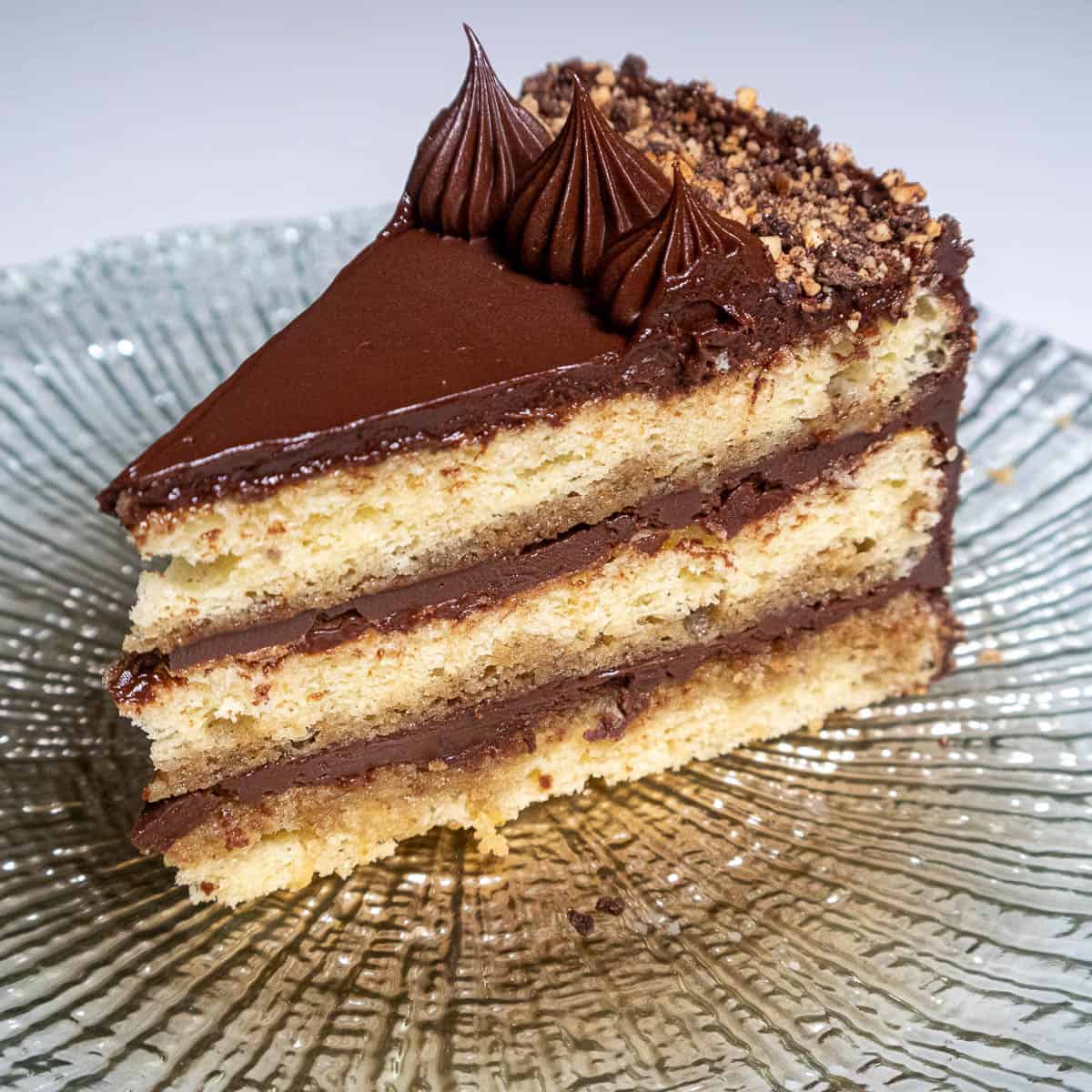
    This Hazelnut Gianduja Cake is the perfect celebration or holiday cake and the updated methods and instructions make it completely approachable and doable for the home baker. The cake recipe consists of several component parts and three of the four can be made ahead. Actually, the entire cake can be made ahead and refrigerated or frozen if desired.

    Hazelnut Gianduja Cake

    Hazelnut Gianduja Cake is modeled on a European style Gianduja Torte featuring a hazelnut butter sponge, washed with a coffee syrup and finished with an almost cloud like chocolate hazelnut buttercream. The cake is rich but not overwhelming sweet, which is one of the reasons European cakes often differ from American cakes.

    The buttercream recipe for this cake is based upon the Viennese Buttercream used for the Dobos Torte. A few quick turns in the processor and the buttercream is light in texture, smooth and intense. It's amazingly simple and literally melts on your tongue.

    Ingredients

    Hazelnut Butter Sponge

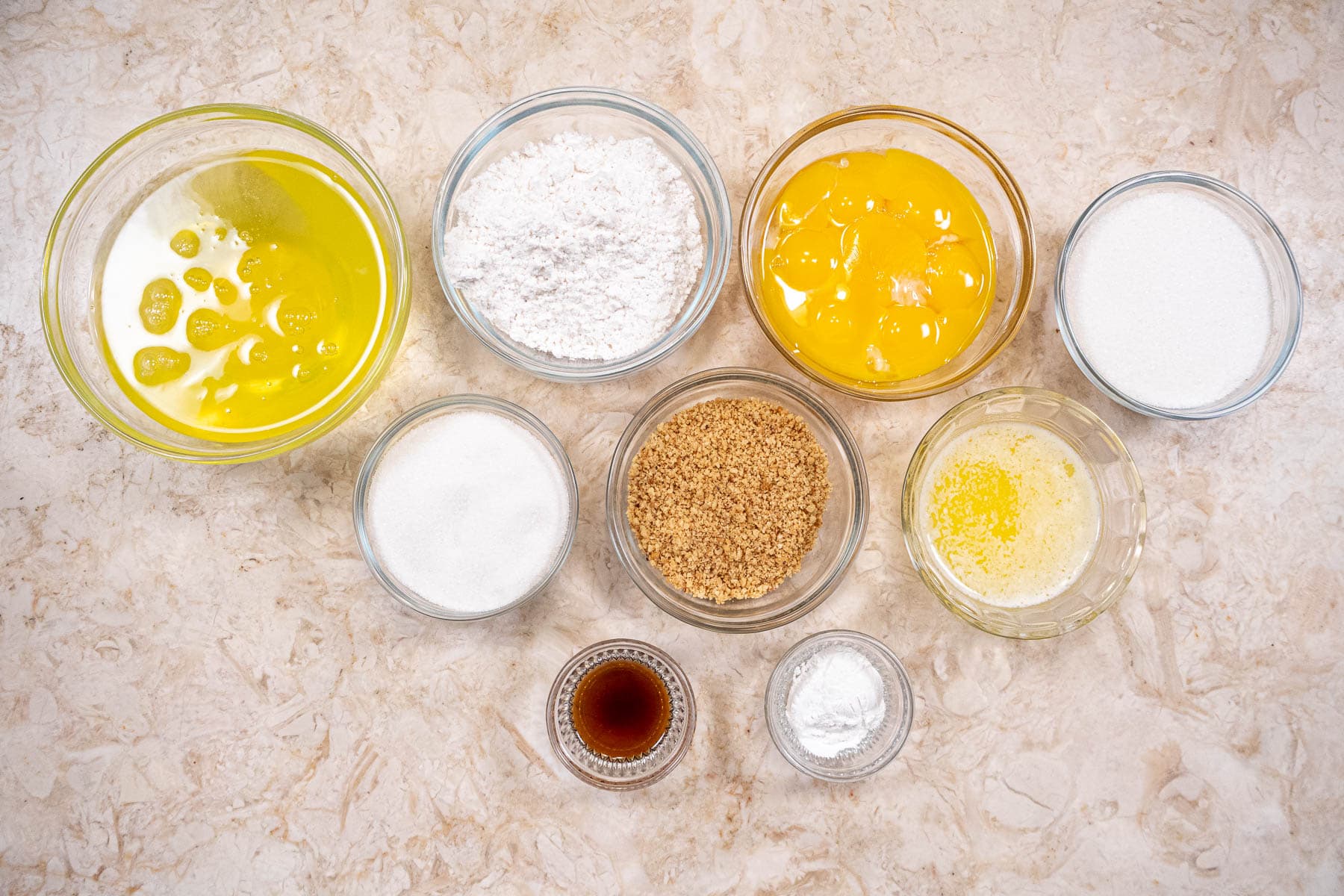
    Ingredients for the Hazelnut Butter Sponge Cake

    Back Row: Egg whites, flour, egg yolks, sugar. Middle Row: Sugar, ground hazelnuts, butter. Front row: vanilla, baking powder

    • Cake flour is used because it is a softer flour with a lower protein count that will make a very tender cake.
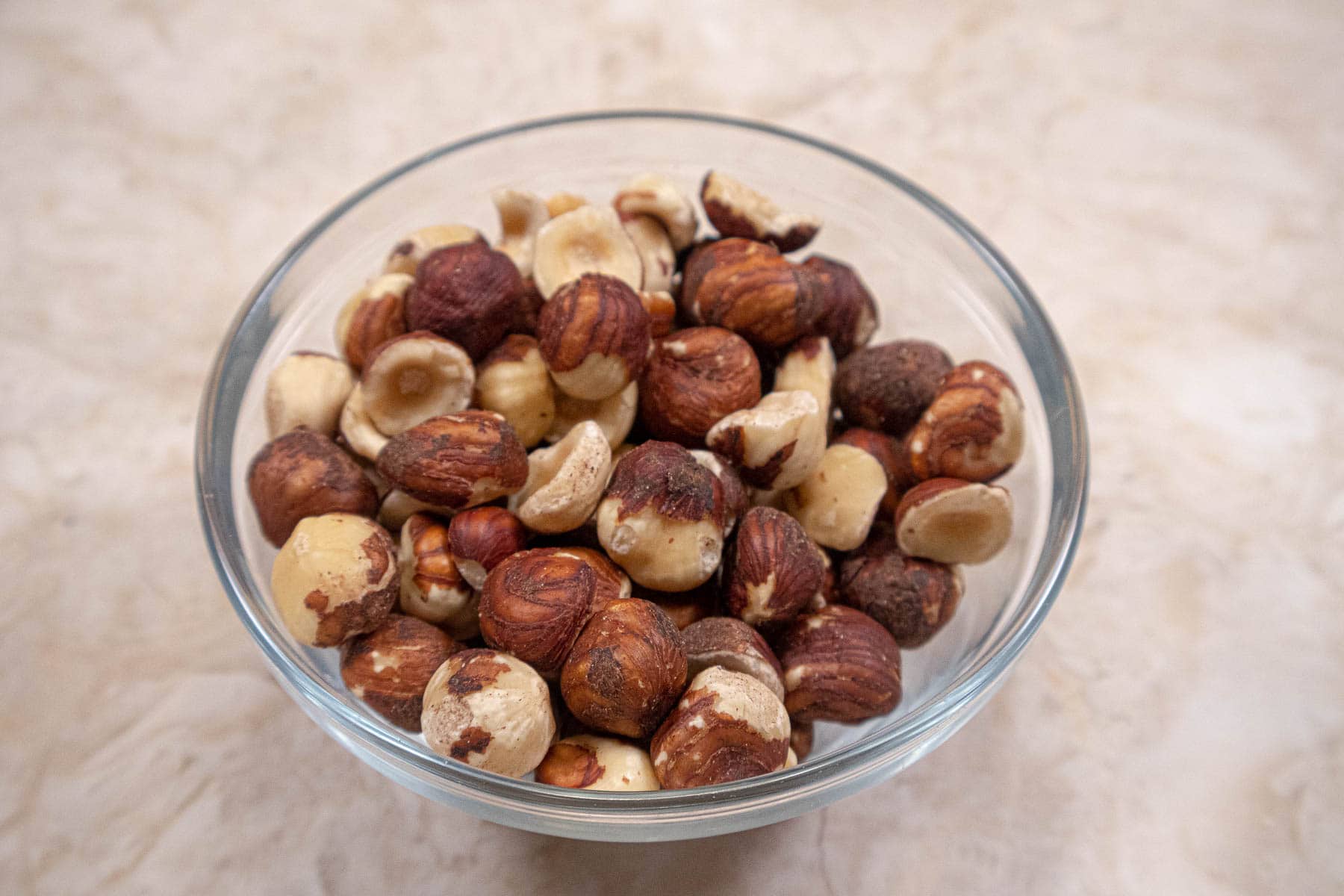
    • Hazelnuts are often sold with dark brown skins still attached. There is an easy way to remove them. Toasting the hazelnuts will bring out more flavor.
    • Baking Powder is added to insure the cake layers rise evenly
    • Large Eggs should be used to ensure the correct amount of liquid and fat are added
    • Baker's Sugar is preferred over granulated sugar because it is going to be used with beaten egg whites. Baker's sugar dissolves more easily and faster because it is more finely ground. It's easily made in a food processor. However, granulated sugar can also be used.
    • Vanilla can be pure or Baker's imitation vanilla which, as noted in Cook's Magazine recently, was chosen over pure vanilla in a blind taste test. An earlier taste test also chose McCormick's imitation vanilla over pure vanilla. Either is fine if using imitation vanilla. For more information on flavorings, go here.
    • Unsalted Butter can be American or European

    Coffee Syrup

    • Water
    • Granulated Sugar is fine since it will be dissolved in boiling water.
    • Instant Coffee or Espresso
    • Kahlua or other coffee flavored liqueur

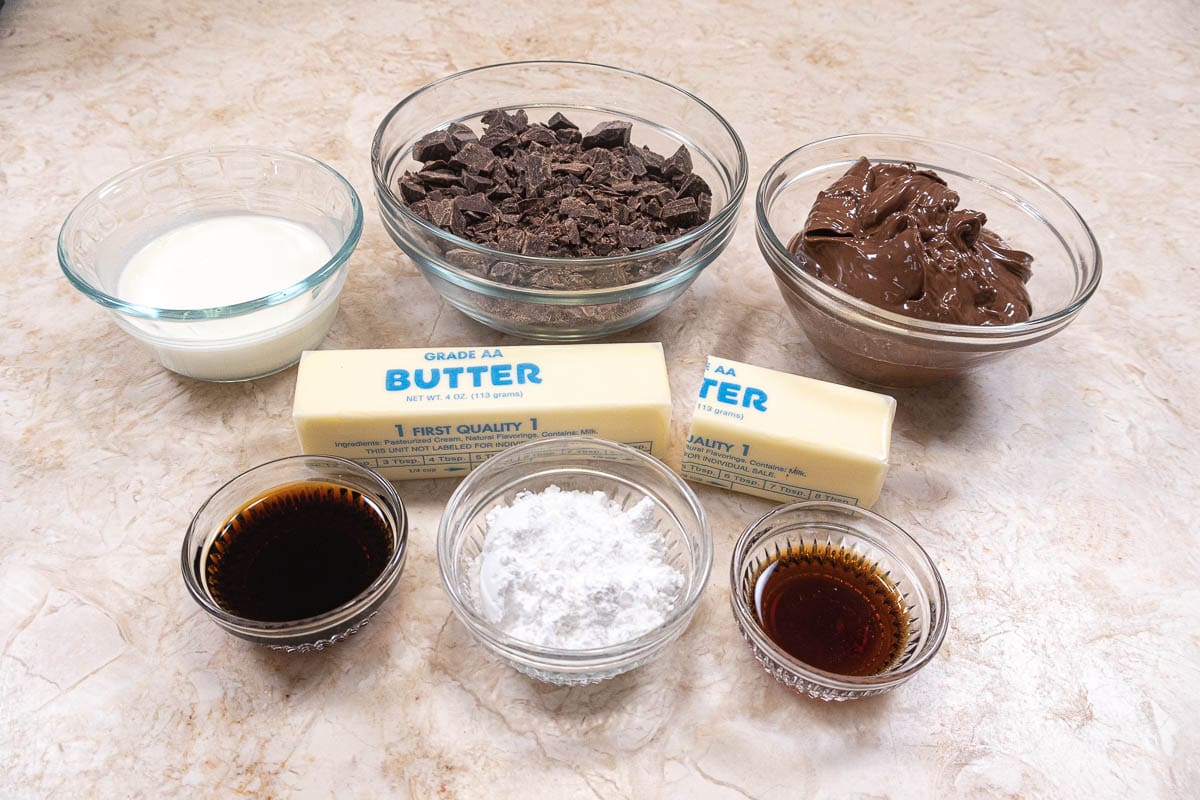
    Hazelnut Gianduja Cake Buttercream and Decor

    • Semisweet chocolate - My chocolate of choice is Callebaut 811 semisweet chocolate callets, which are 54.5%. This is found easily online. Higher fluidity chocolates will not work as well here as they will make the buttercream too loose.
    • Unsalted Butter - American or European
    • Heavy Cream - sometimes referred to as 40% cream
    • Kahlua or other coffee flavored liqueur
    • Vanilla - imitation is fine since the chocolate, nuts and Nutella are predominant flavors
    • Powdered Sugar
    • Nutella - right out of the bottle
    • Toasted Hazelnuts

    See recipe card for quantities.

    Instructions for Hazelnut Butter Sponge

    Hazelnuts with skins on to be toasted

    Most hazelnuts are bought with the skins on. They should be toasted until deep golden brown and fragrant.

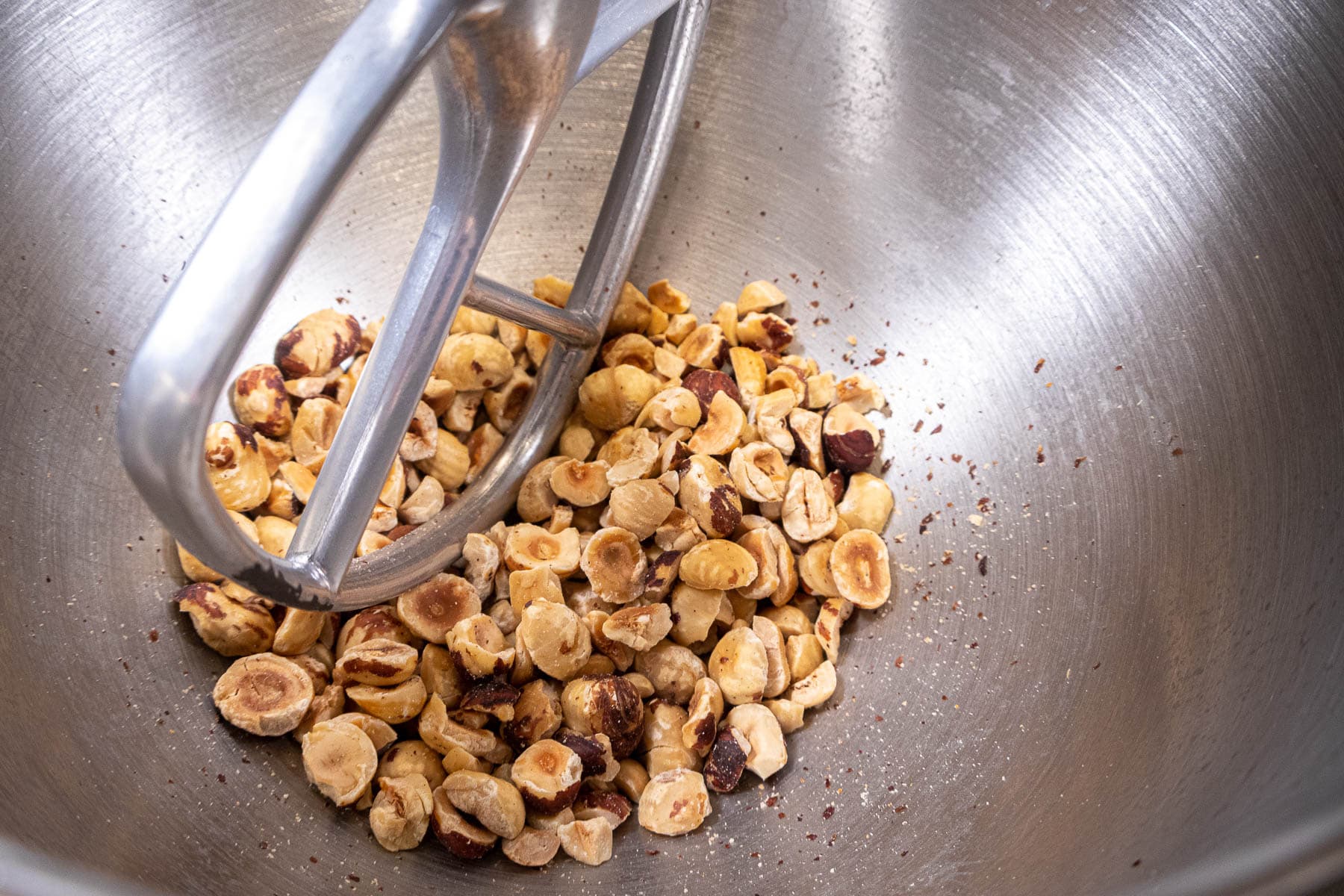
    Toasted hazelnut in mixer bowl to be skinned.

    Hazelnuts straight out of the oven are skinned easily by placing them in the bowl of a mixer and mixing on medium for several minutes to remove the skins.

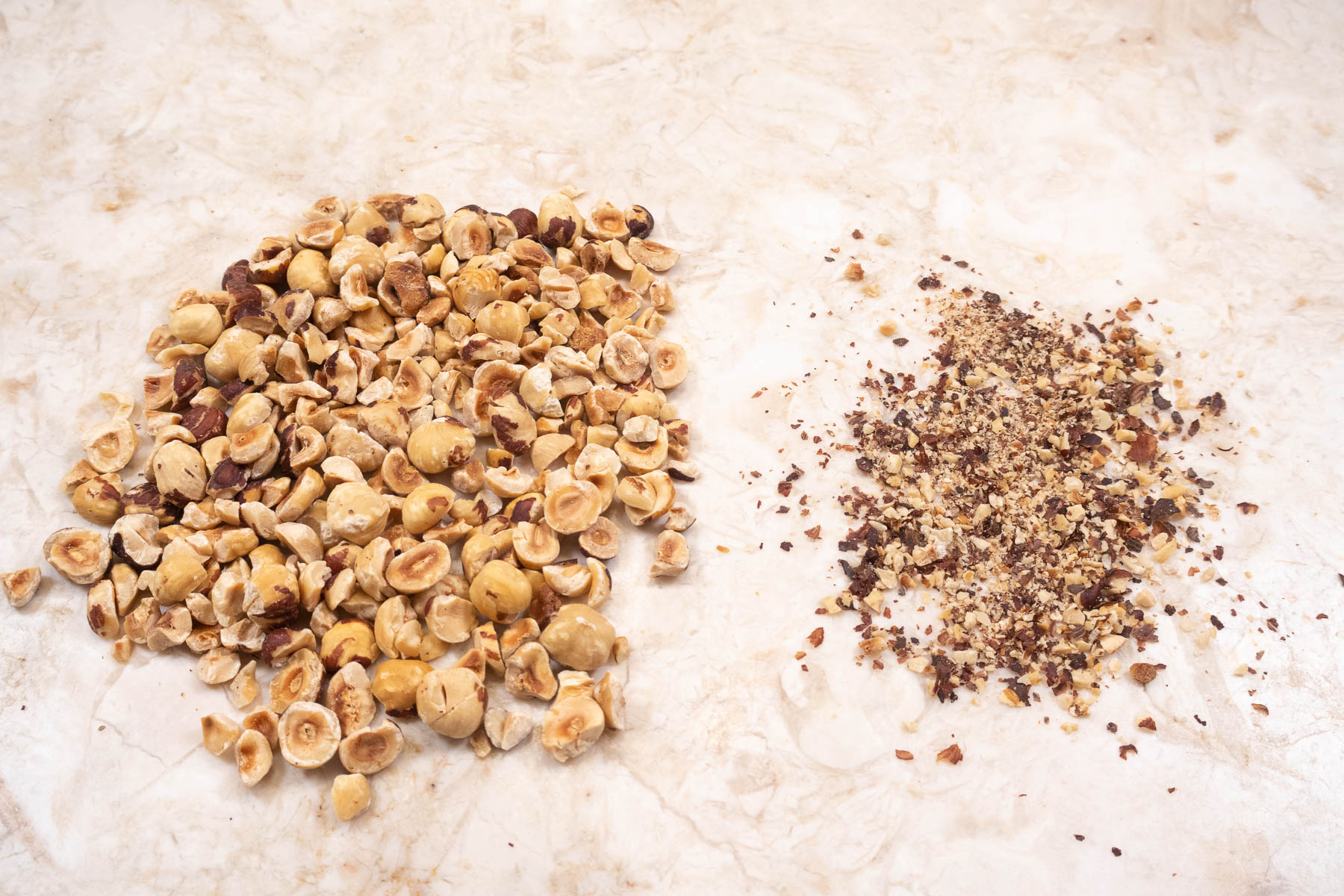
    Skinned hazelnuts

    Separate the hazelnuts from the skins. As you can see some skins stubbornly cling to a few of the nuts but that's fine. Cool completely before proceeding.

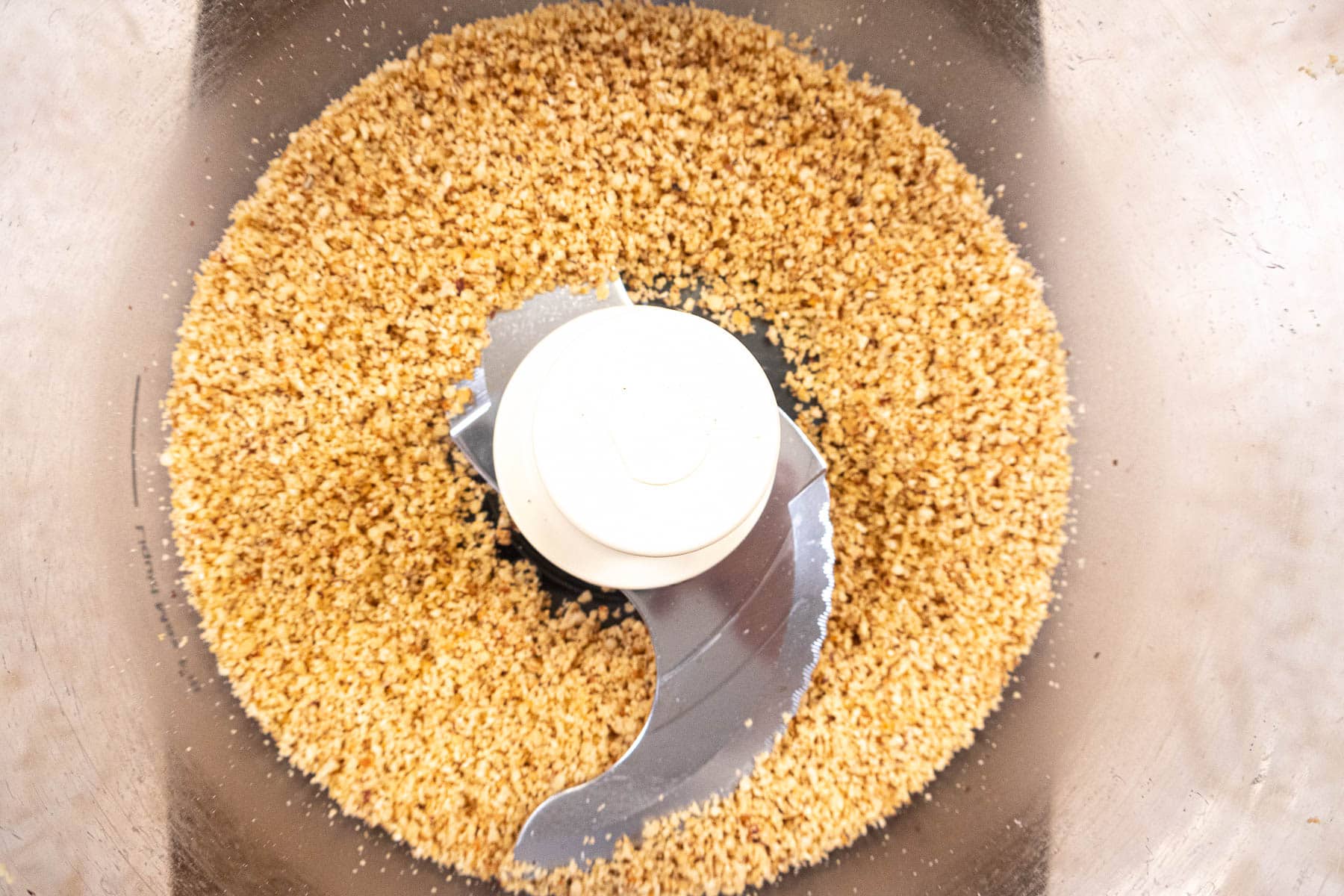
    Hazelnuts ground in the processor

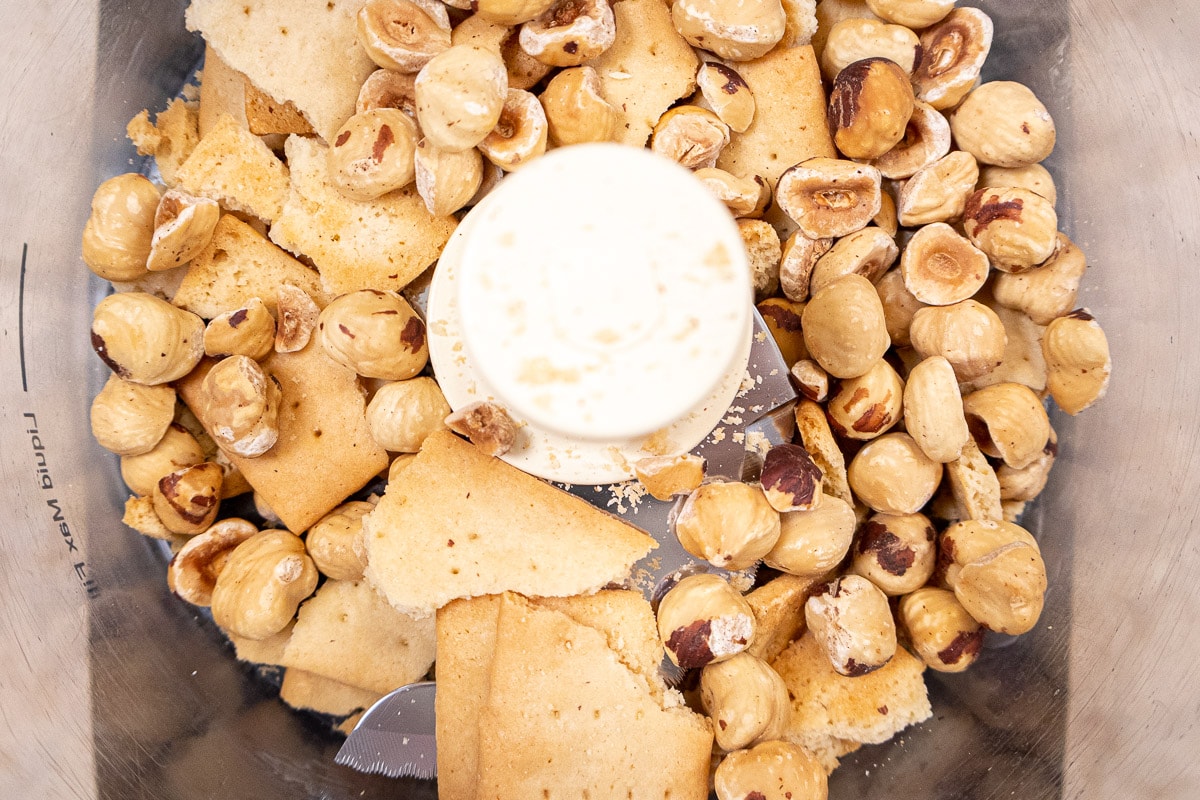
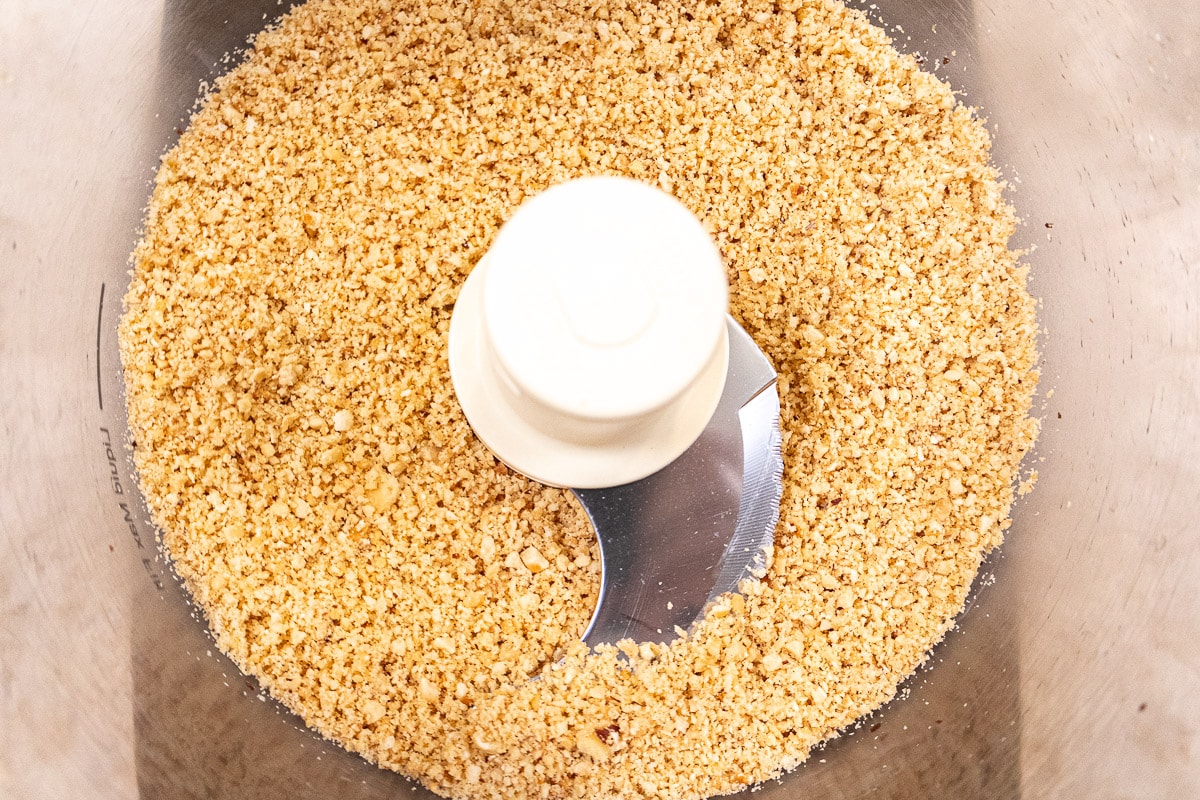
    Place the nuts in the food processor and process until finely ground. Be careful not to over process or they can turn into a paste.

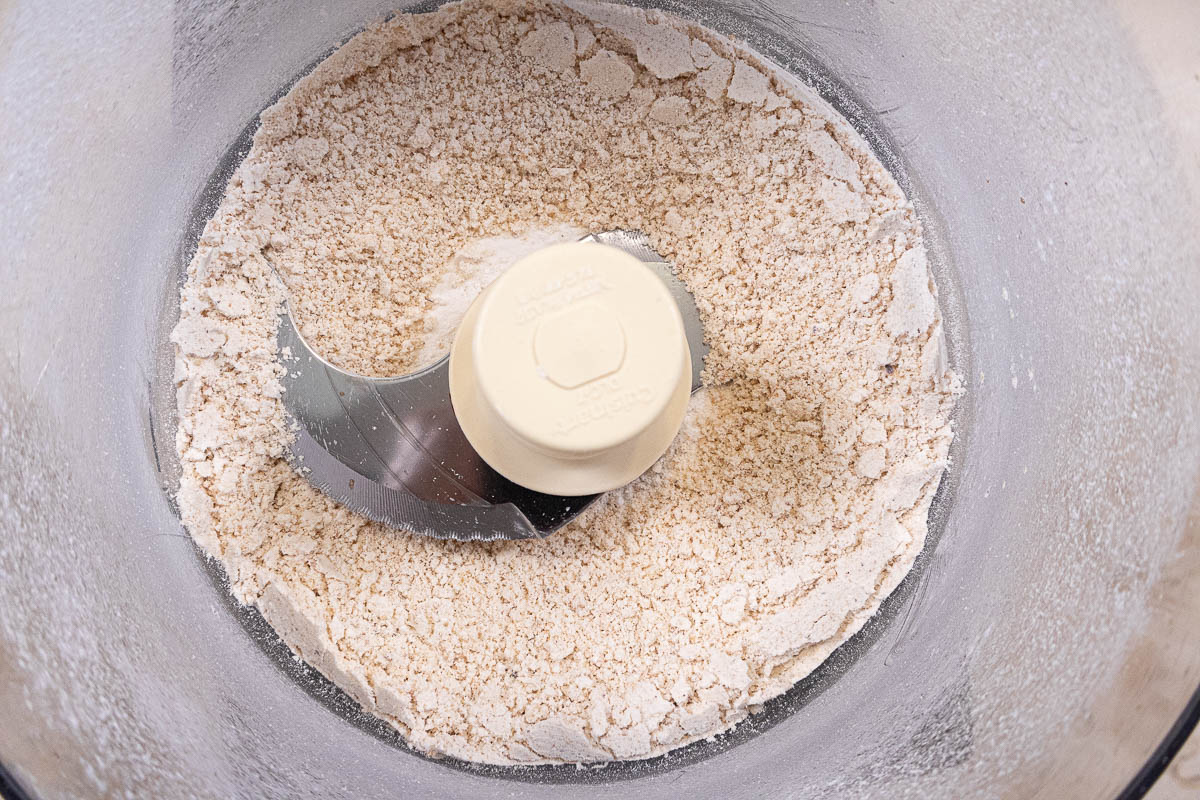
    Ground hazelnuts, flour and baking powder in the food processor

    Place the flour and baking powder in the processor with the hazelnuts. Process to further pulverize the nuts as fine as possible and mix the ingredients. Set aside.

    Egg yolks, sugar and vanilla in mixing bowl

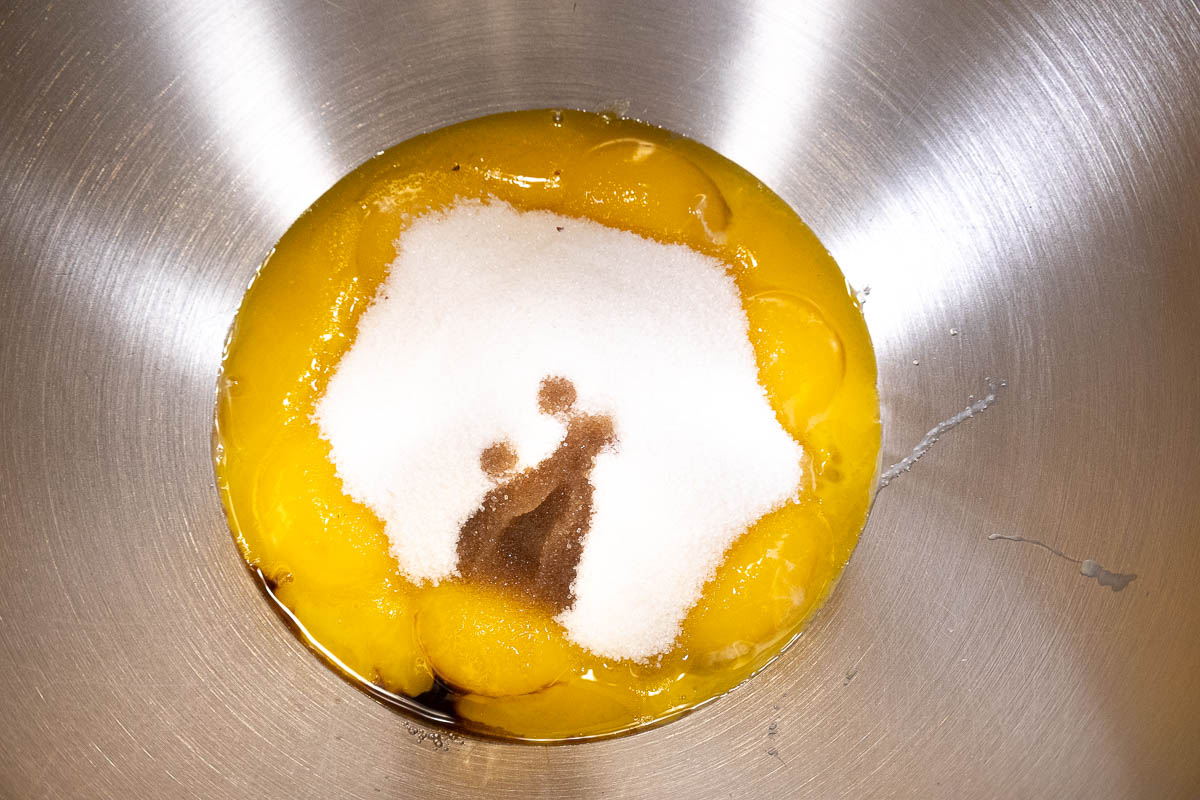
    Place the egg yolks, sugar and vanilla in the mixer bowl fitted with the whisk attachment.

    Egg yolks, sugar and vanilla beaten until very light and the mixture ribbons

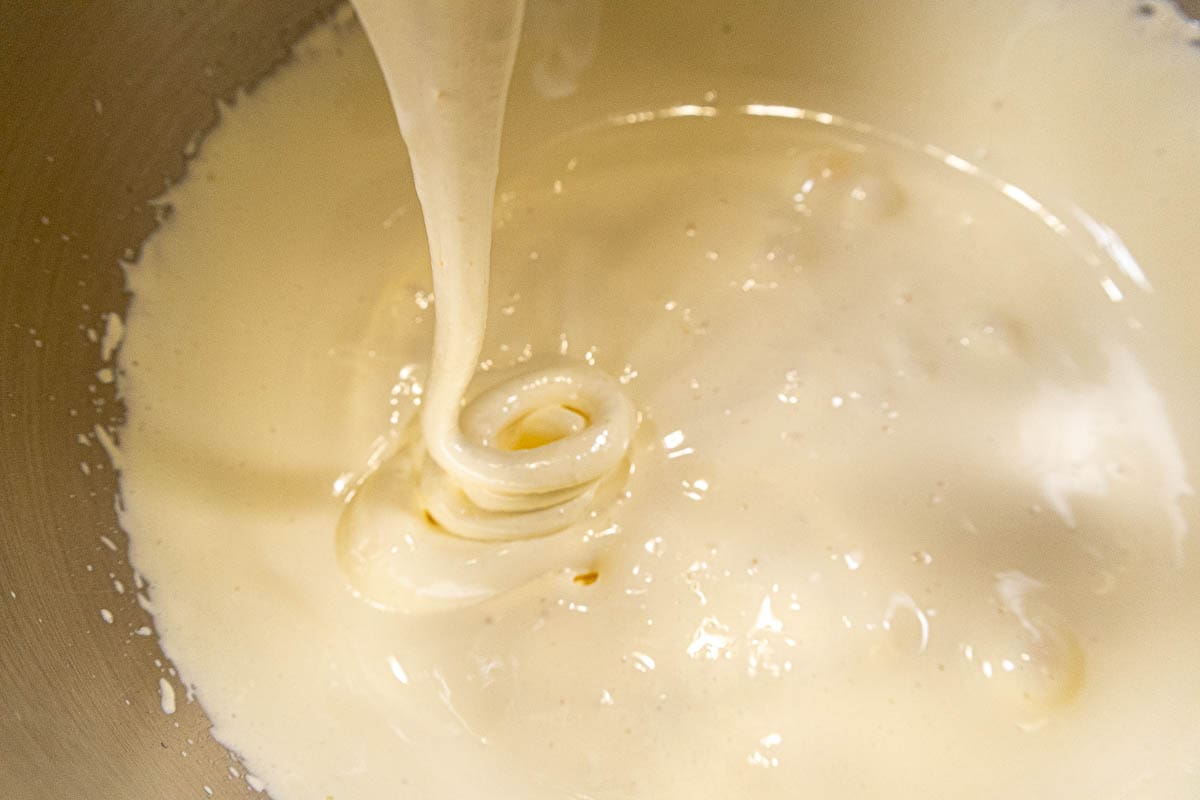
    Beat the mixture until very, very light and the mixture forms a ribbon as it drops from the whisk.

    Egg whites beaten to stage just before adding the sugar

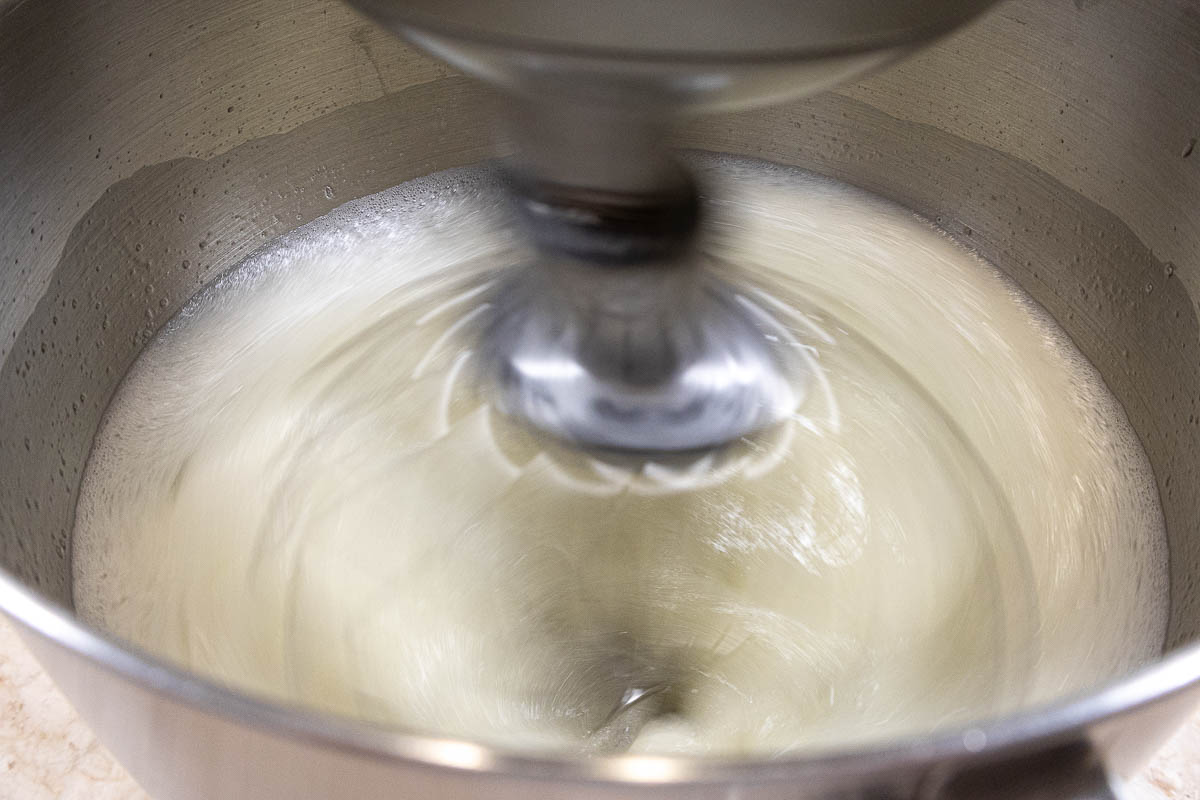
    Place the egg whites in a clean bowl with a clean whisk. The egg whites should be beaten to the point the whisk attachment starts forming lines. Add the sugar a bit at a time and beat to the soft peak stage.

    Add one half the flour/nut mixture over the egg whites

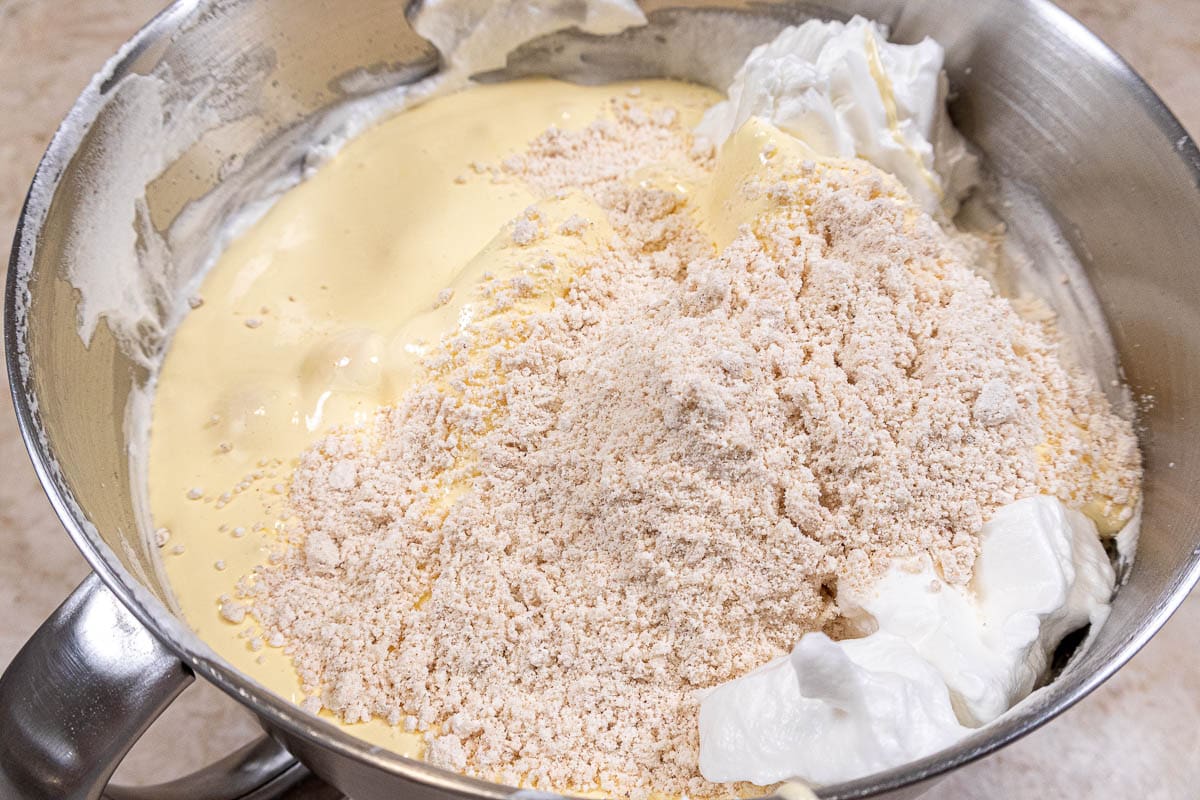
    Pour the beaten egg yolks over the whites. Add half of the flour/nut mixture over the beaten egg whites. Fold in about ¾ of the way. Add the remaining flour/nut mixture and fold in.

    About a cup of the sponge layer in a bowl

    Place about a 1 cup of the sponge in a medium size bowl.

    Add the melted butter and whisk in competely

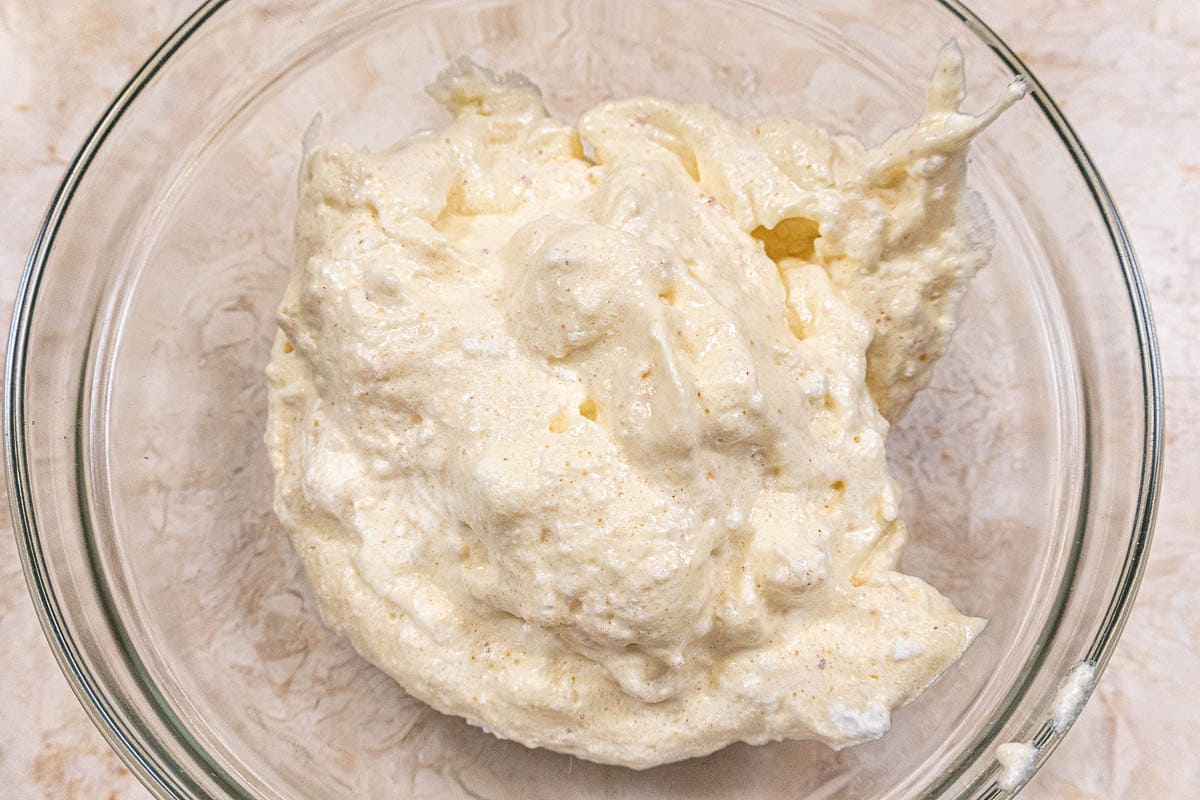
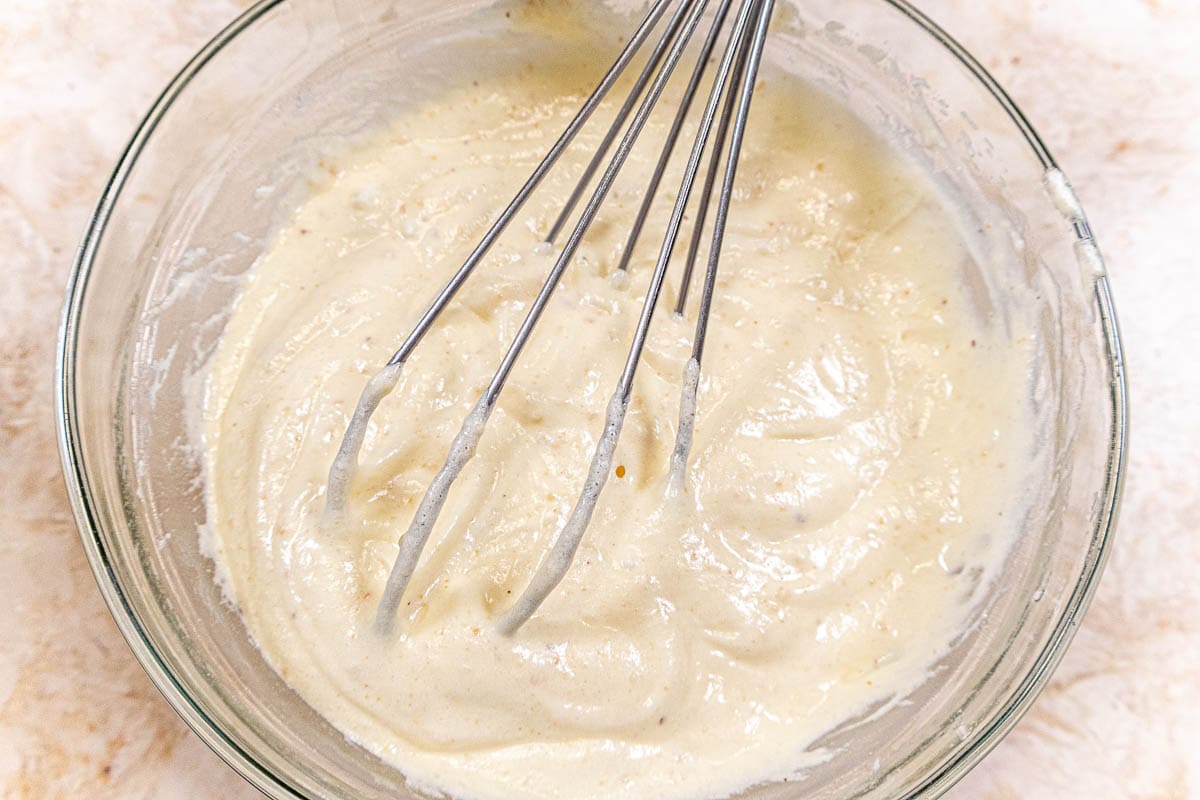
    Add the melted butter and whisk in until the butter is completely blended in the the mixture is emulsified. Return this to the main amount of batter in the bowl and fold in.

    Unbaked layers of hazelnut  butter sponge

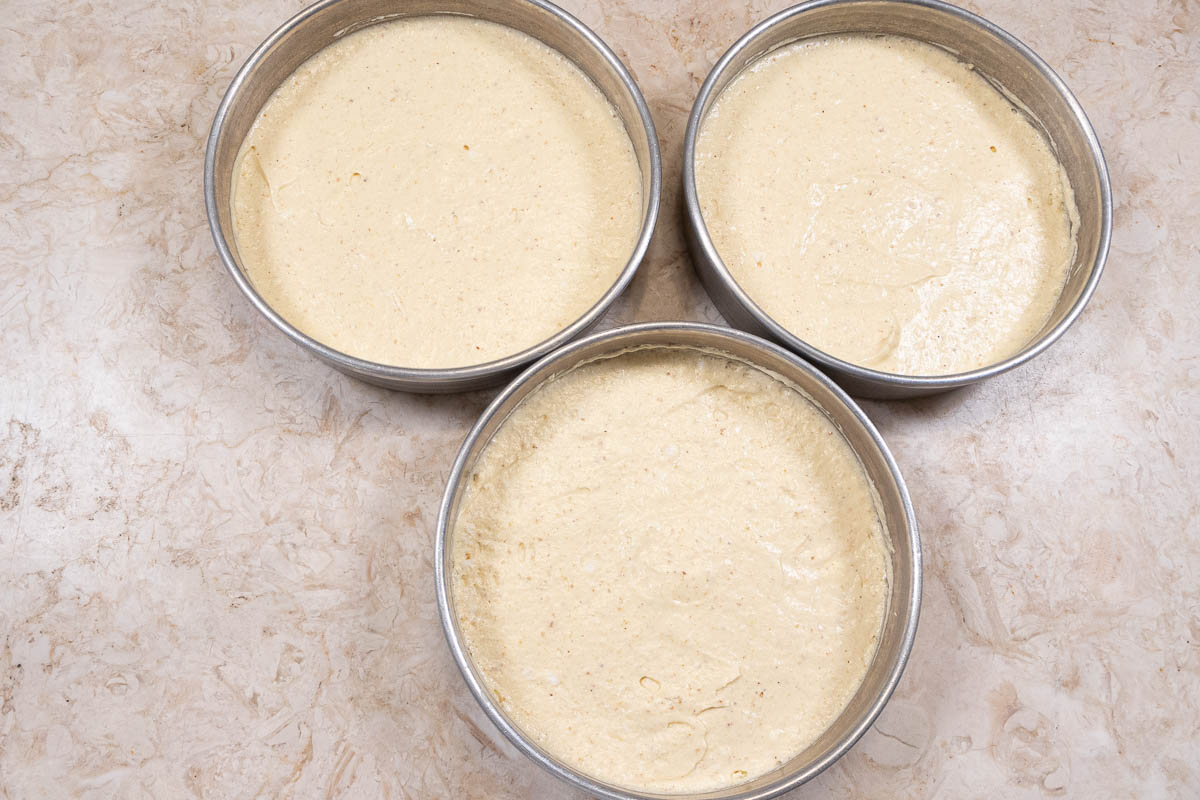
    Divide the batter between 3 prepared pans. Bake until the layers spring back when lightly touched and a tester comes out cleanly. Do not overbake.

    Coffee syrup adds another layer of flavor the the Hazelnut Gianduja Cake

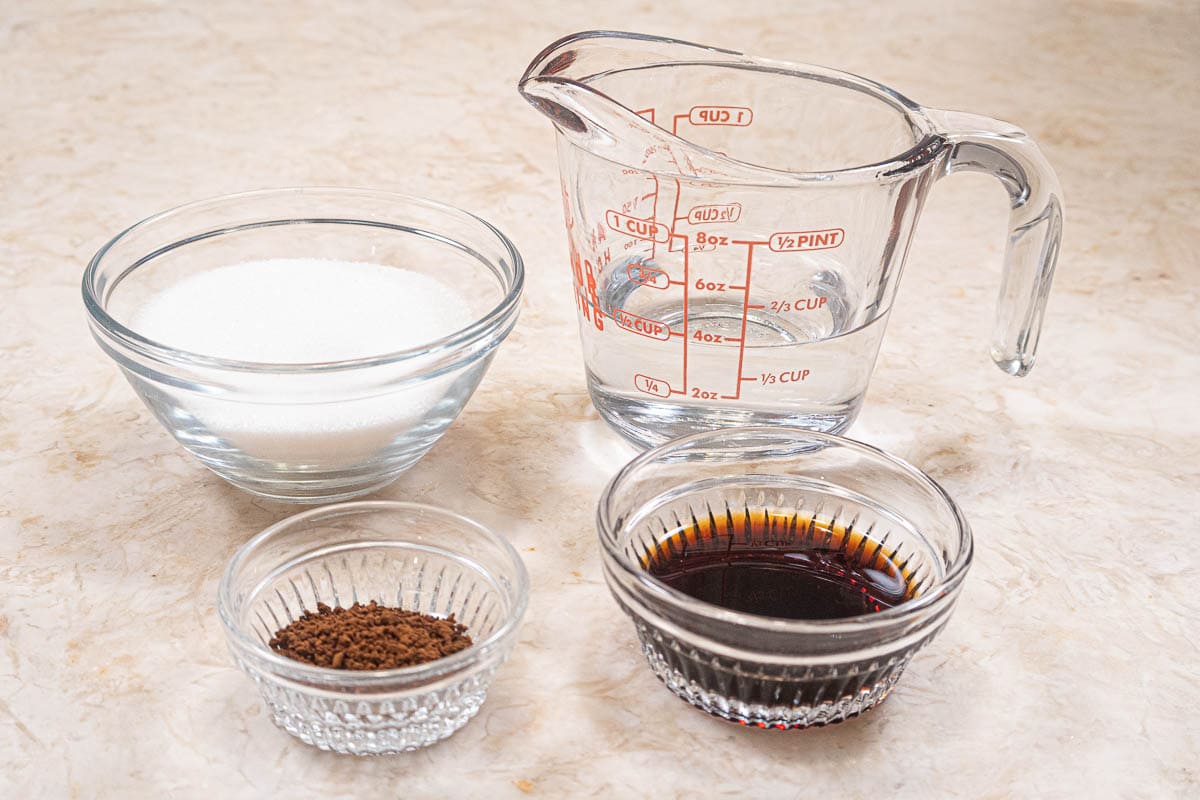
    Coffee Syrup Ingredients

    Back Row: Sugar, water. Front Row: Instant Coffee, Kahlua

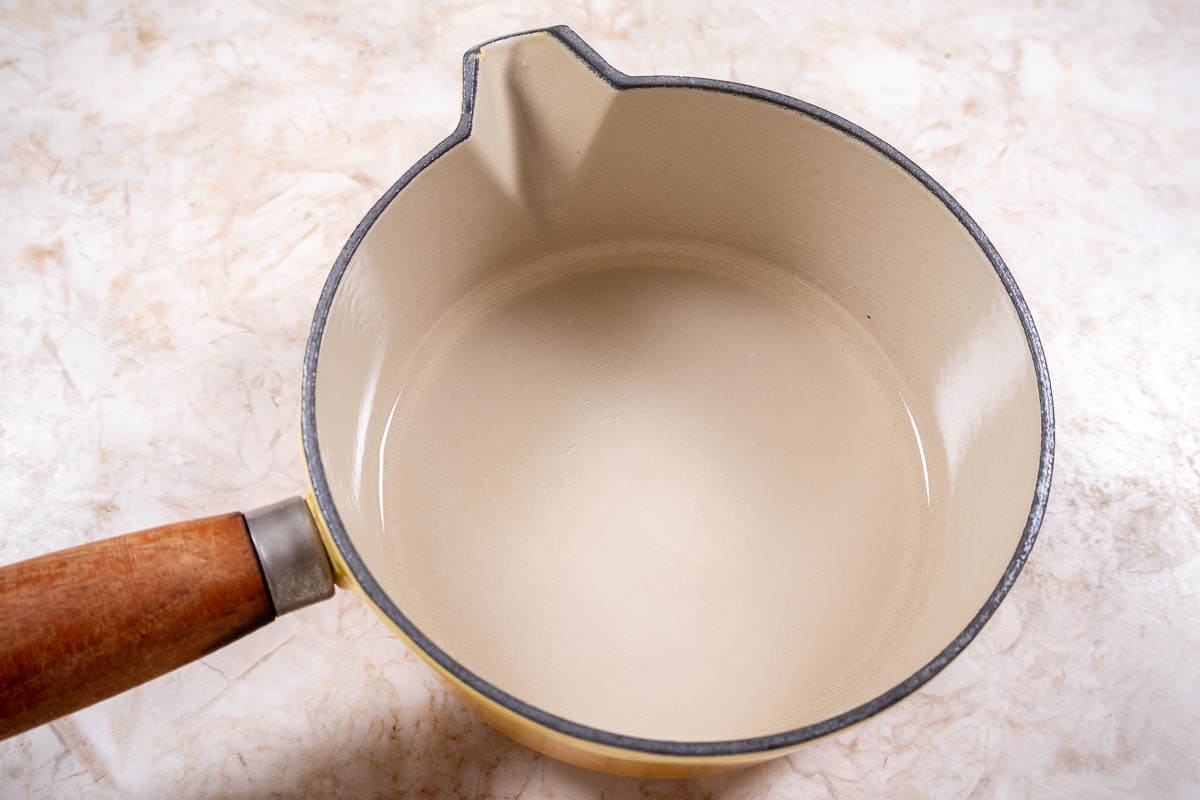
    Water and sugar in small pan for Coffee Syrup

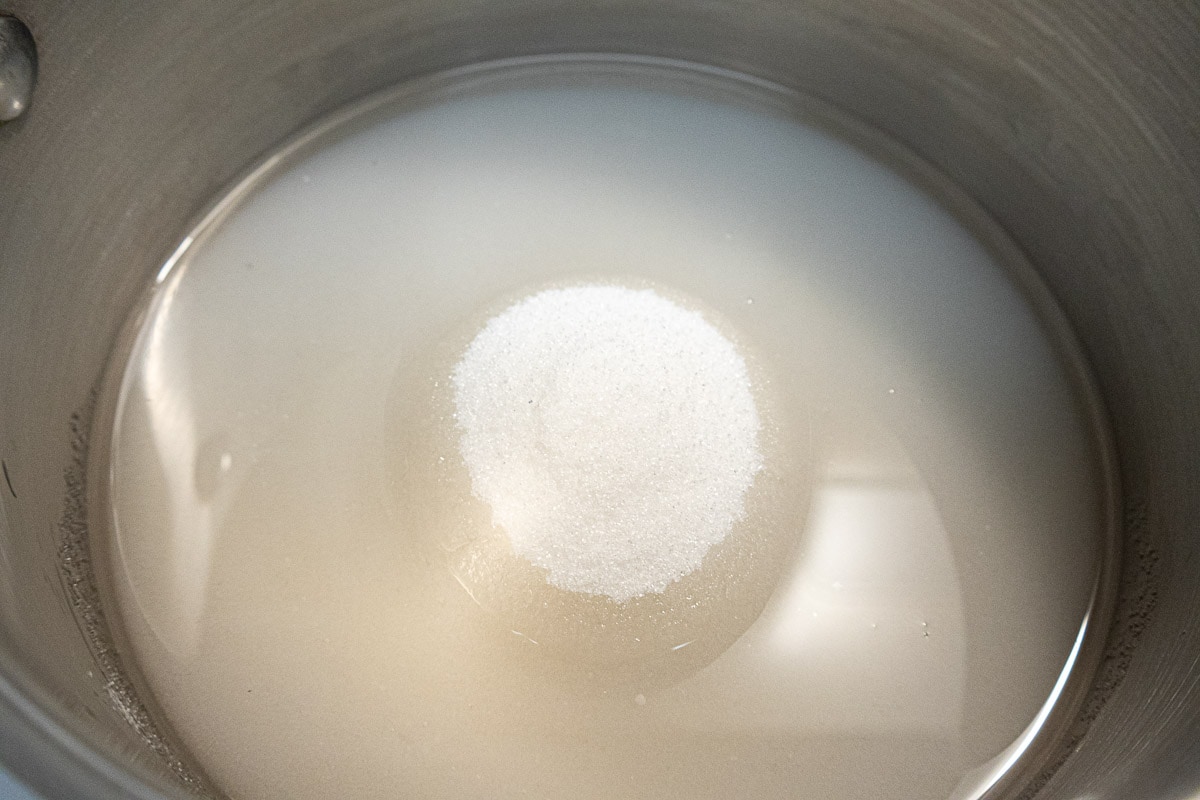
    Place the water and sugar in a small saucepan to make a simple syrup.

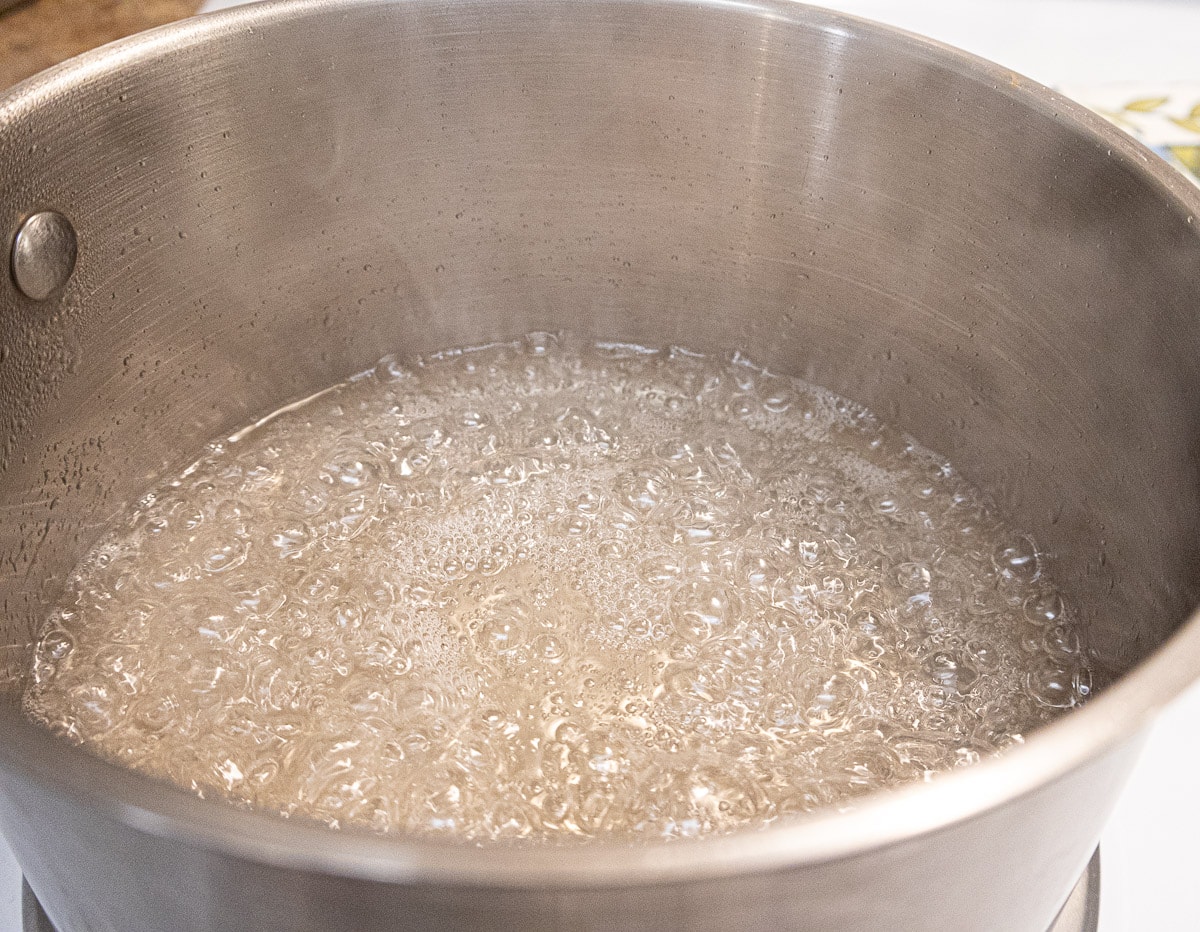
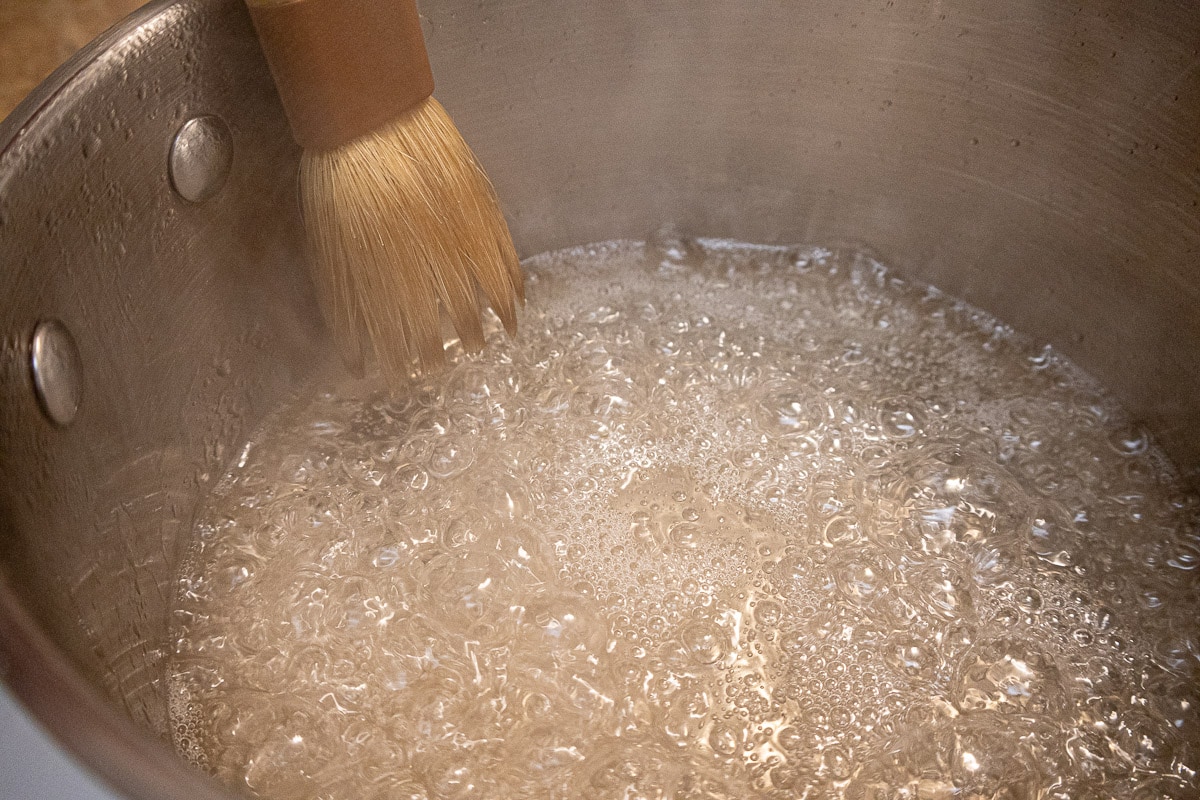
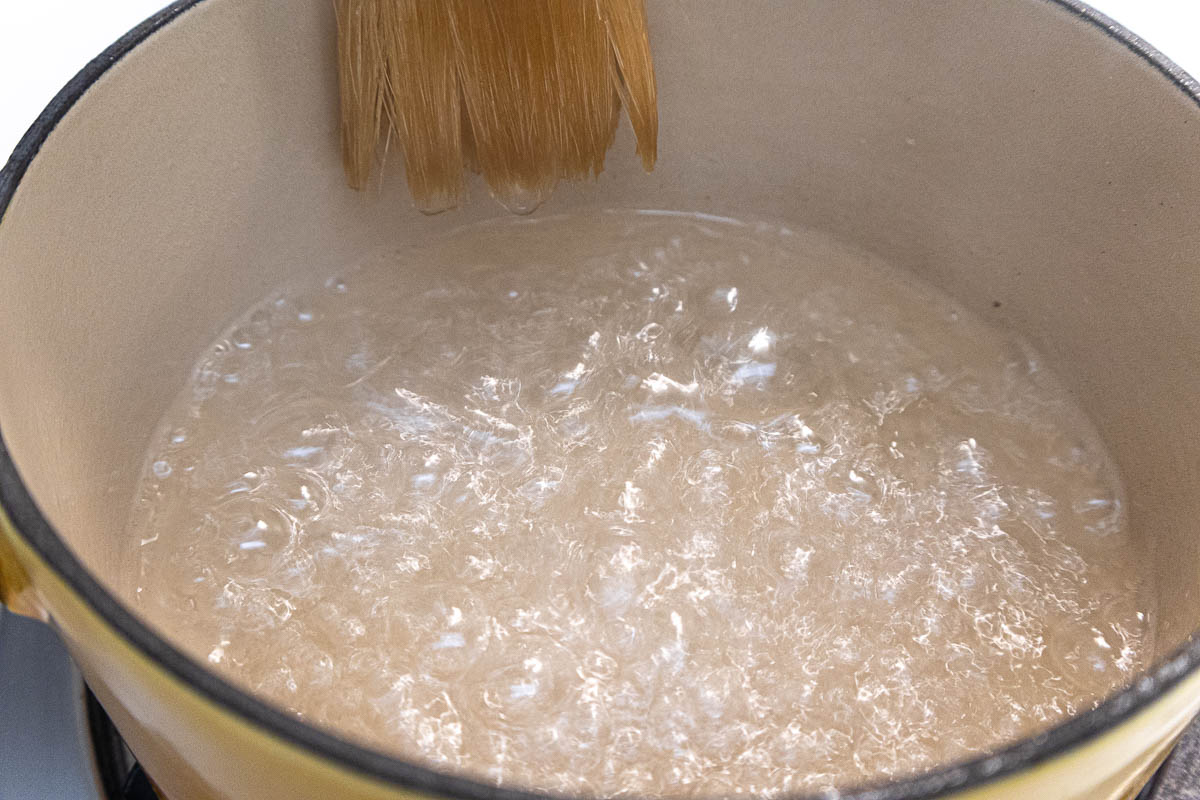
    Water and sugar boiling.  Wash down the sides of the pan

    When the syrup comes to a rolling boil, wash the sides of the pan down with a pastry brush dipped in cold water to remove any sugar crystals.

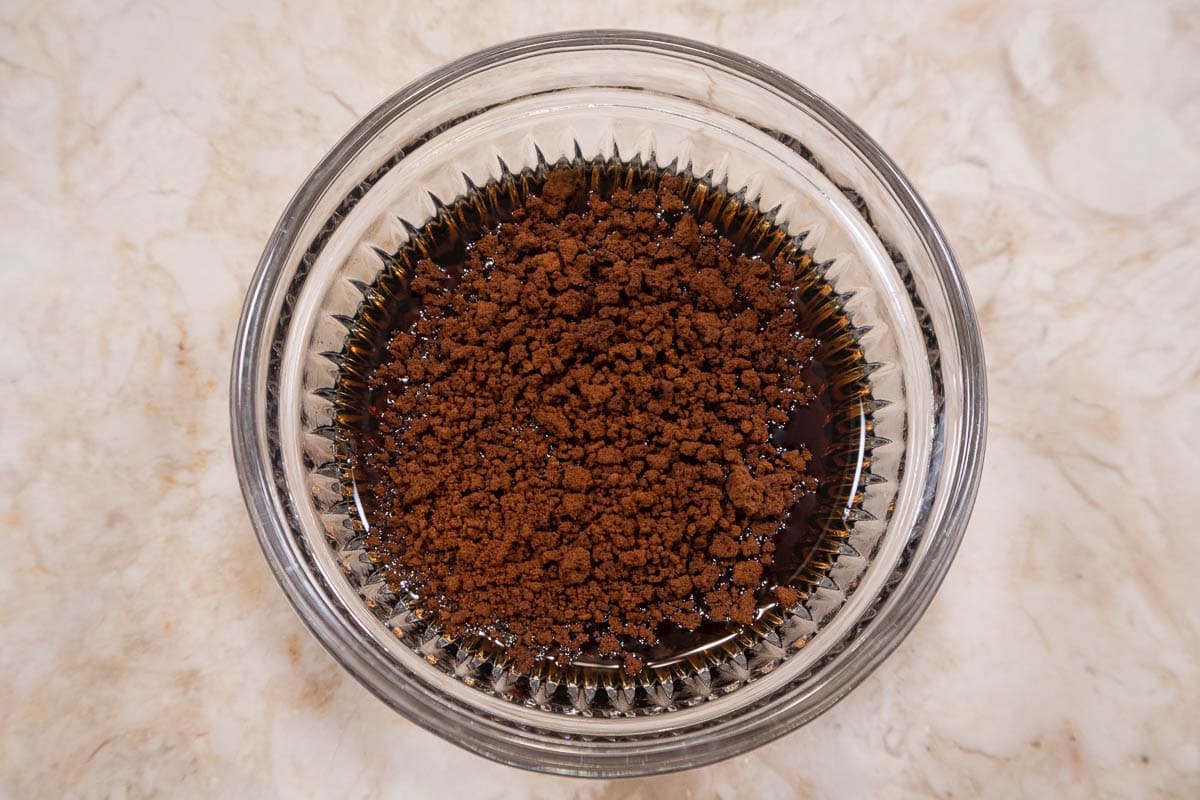
    Coffee and Kahlua to be mixed

    Dissolve the coffee in the Kahlua.

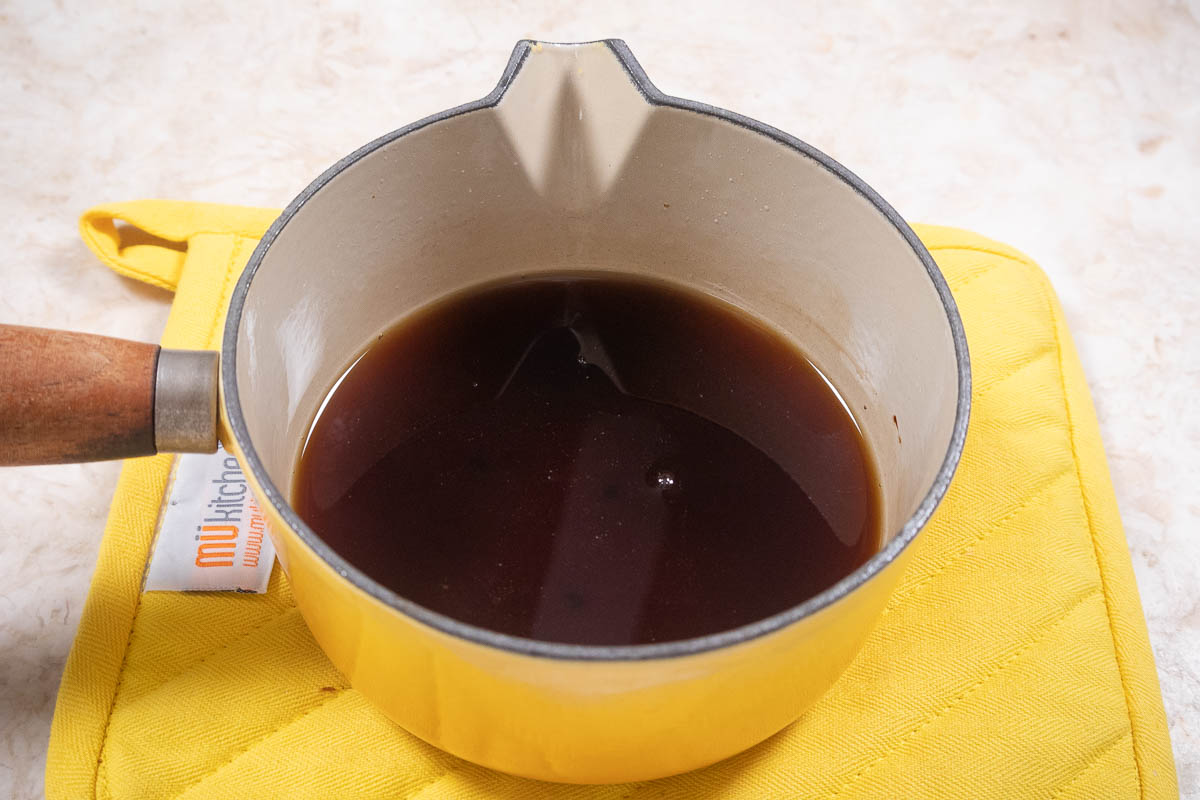
    Coffee syrup made for the Hazelnut Gianduja Cake

    Add the coffee/Kahlua mixture to the simple syrup. Cool completely.

    Hazelnut Gianduja Cake Buttercream

    Hazelnut Gianduja Buttercream

    Back Row: Cream, semisweet chocolate, nutella. Middle Row: Unsalted butter. Front Row: Kahlua, powdered sugar, vanilla

    Melted chocolate in processor bowl for the buttercream

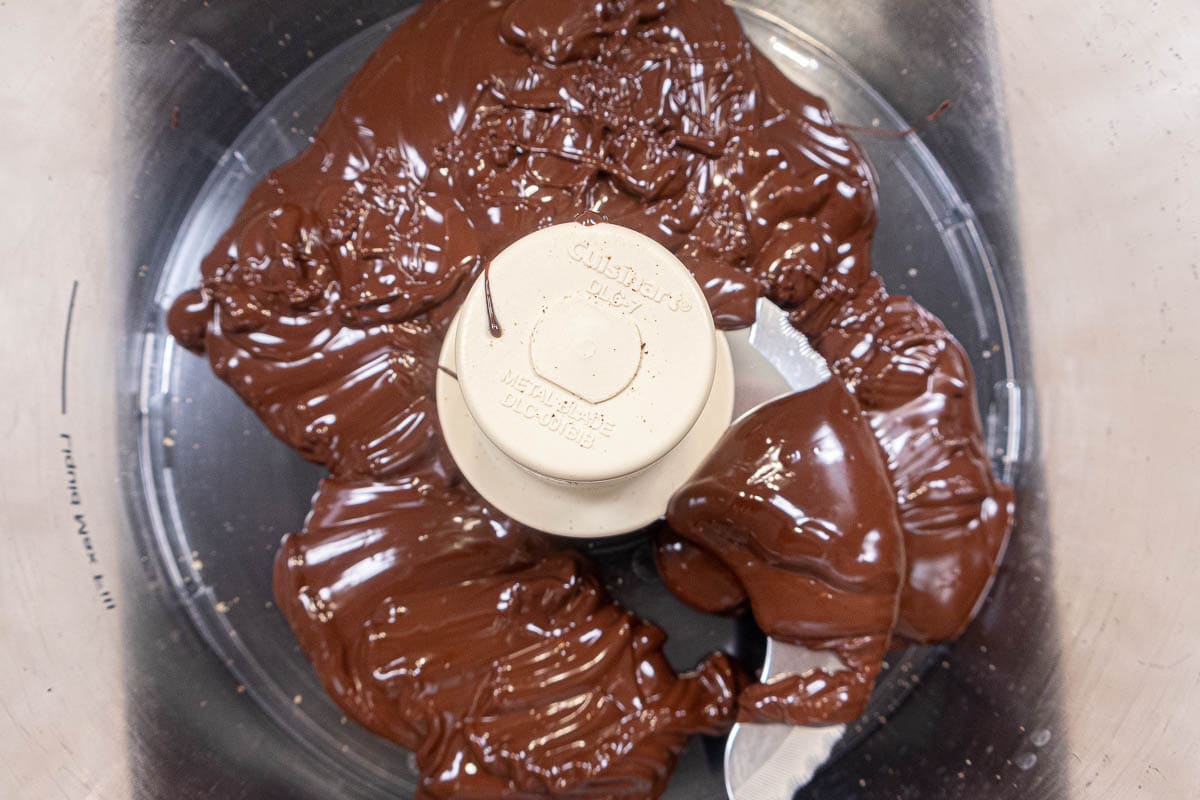
    Melt the chocolate over hot water or in the microwave at half power. Cool slightly and place in the bowl of a processor.

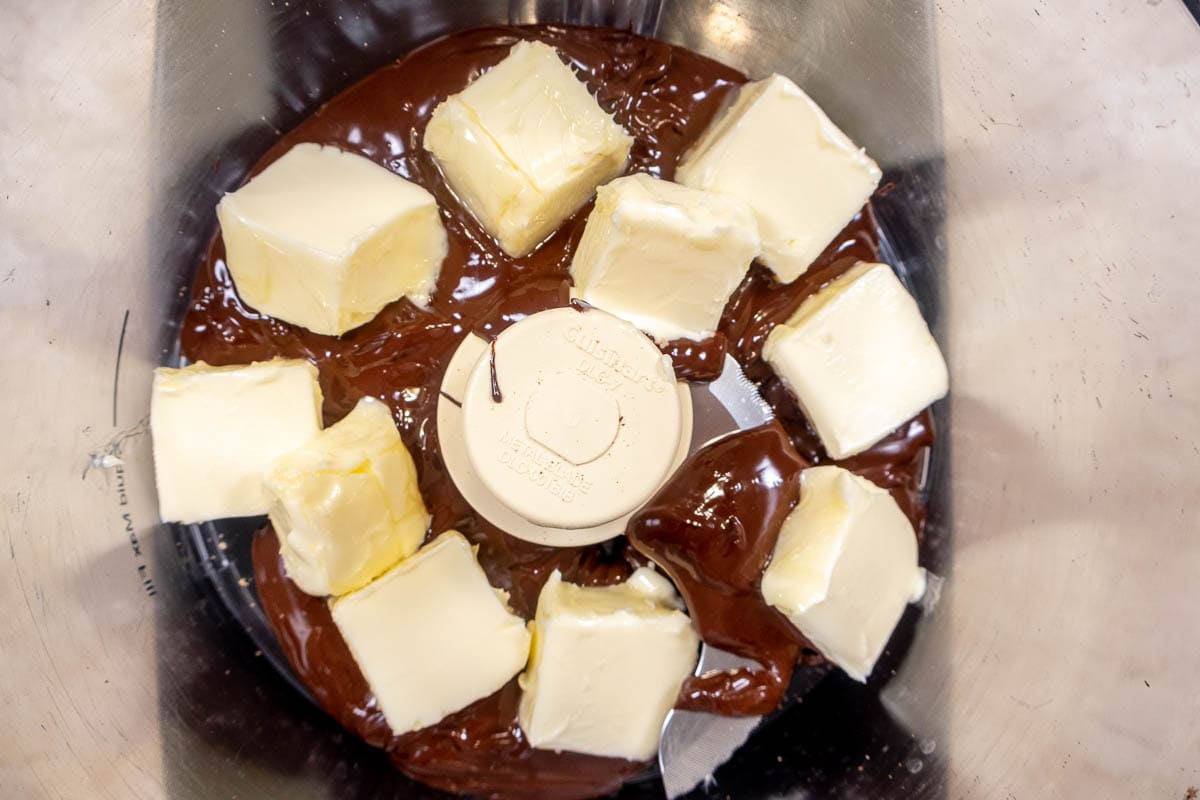
    Place the butter over the chocolate in the processor

    Place the cut up butter, which has been out of the refrigerator for 30 minutes over the chocolate.

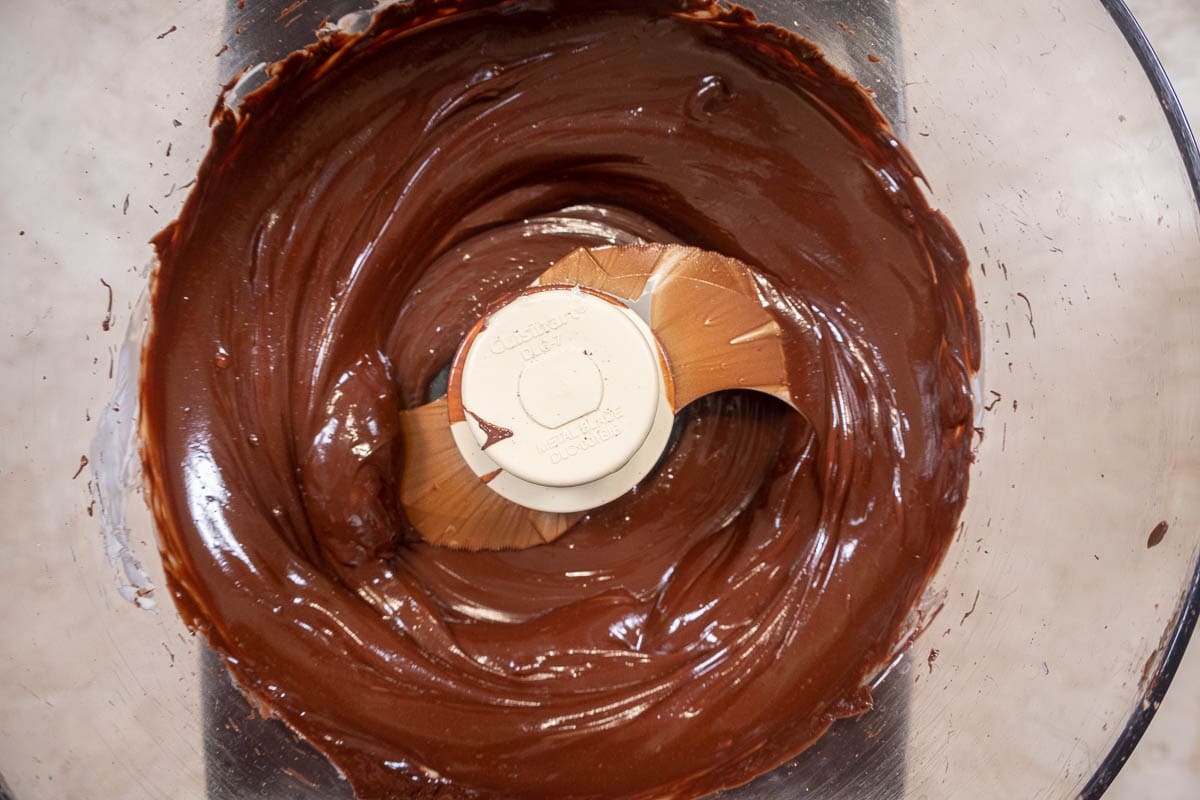
    Process the butter and chocolate together

    Process the chocolate and butter together.

    Remaining buttercream ingredients added to processor

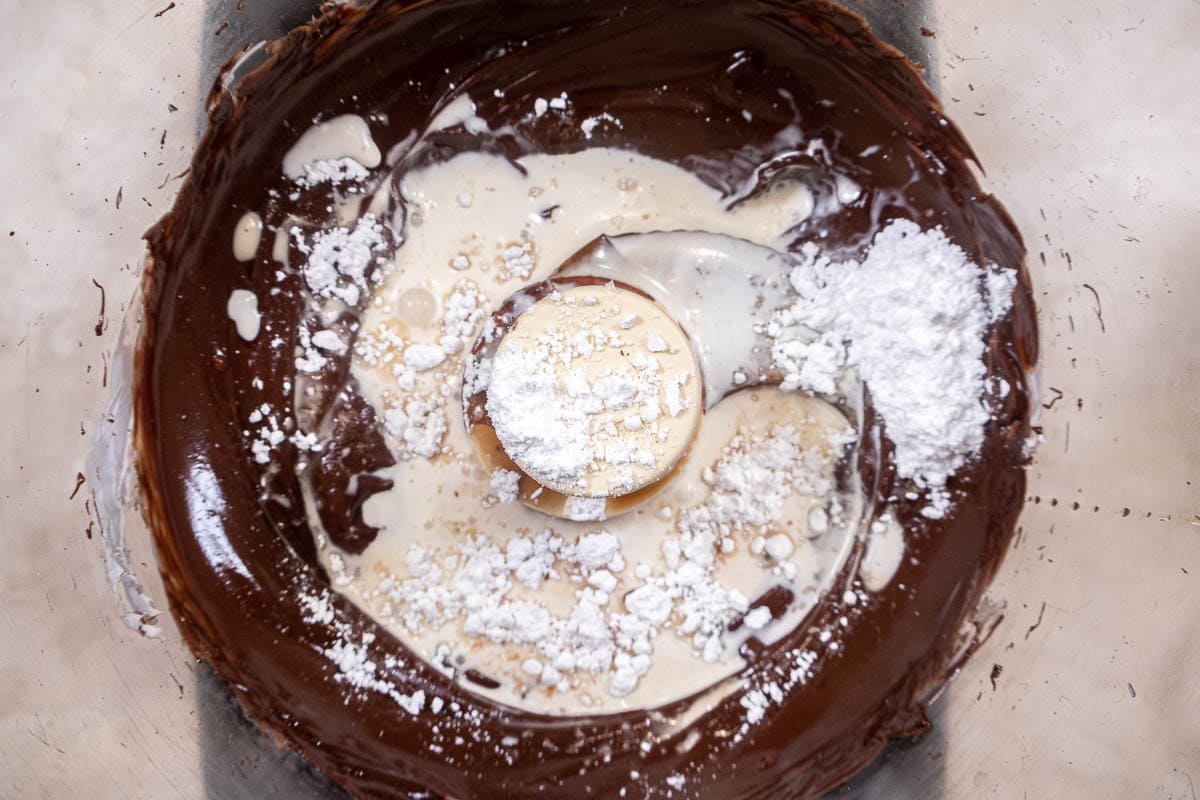
    Add the remaining ingredients to the processor and process until smooth, scraping down once or twice.

    The finished buttercream

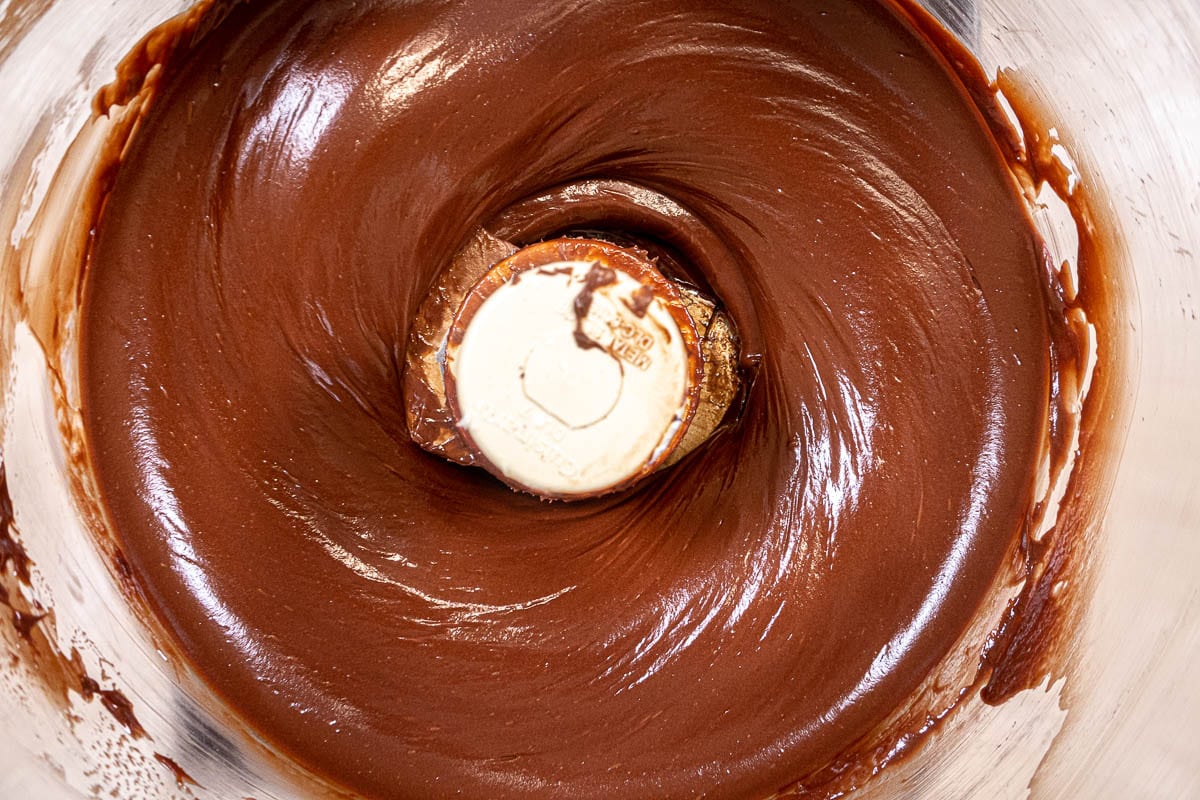
    The finished buttercream is very light and smooth but will hold its shape.

    Hazelnudt Gianduja Cake Decor

    Chocolate ground for decor for Hazelnut Gianduja Cake

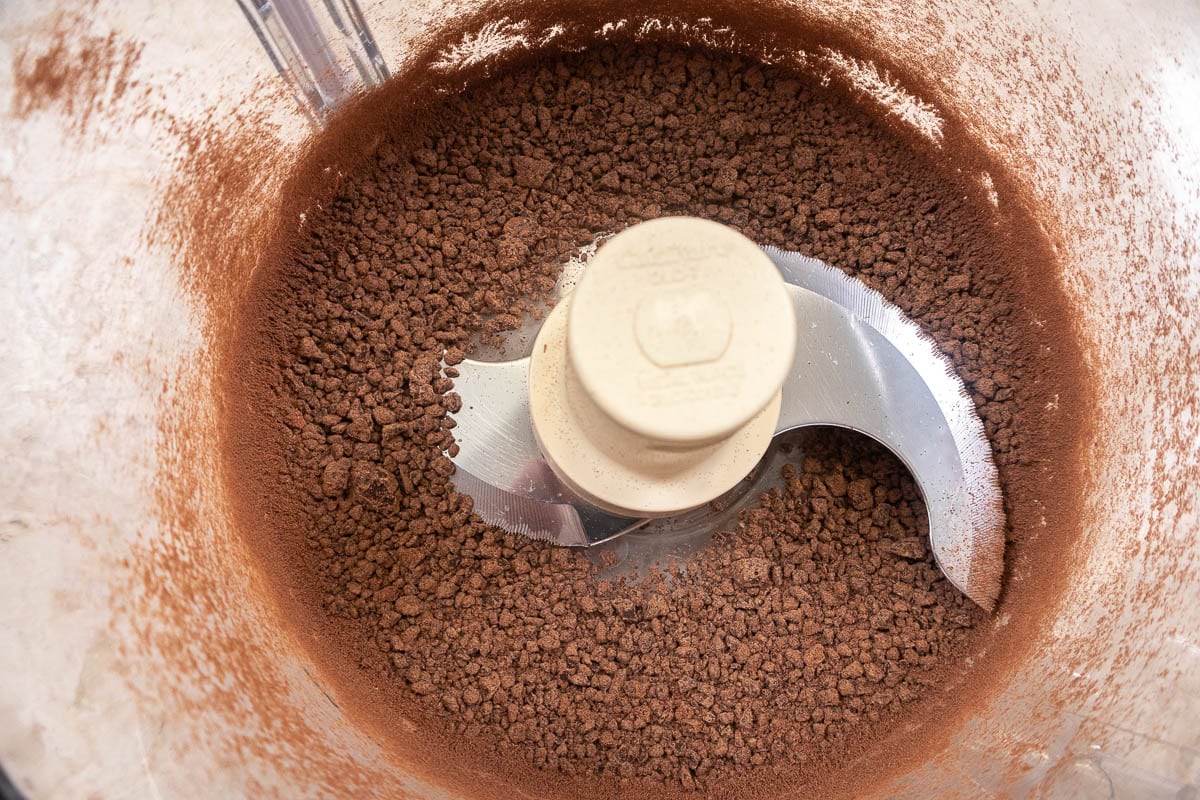
    Semisweet chocolate coarsely ground in the processor for the cake decor.

    Hazelnuts coarsely ground for Hazelnut Gianduja Cake

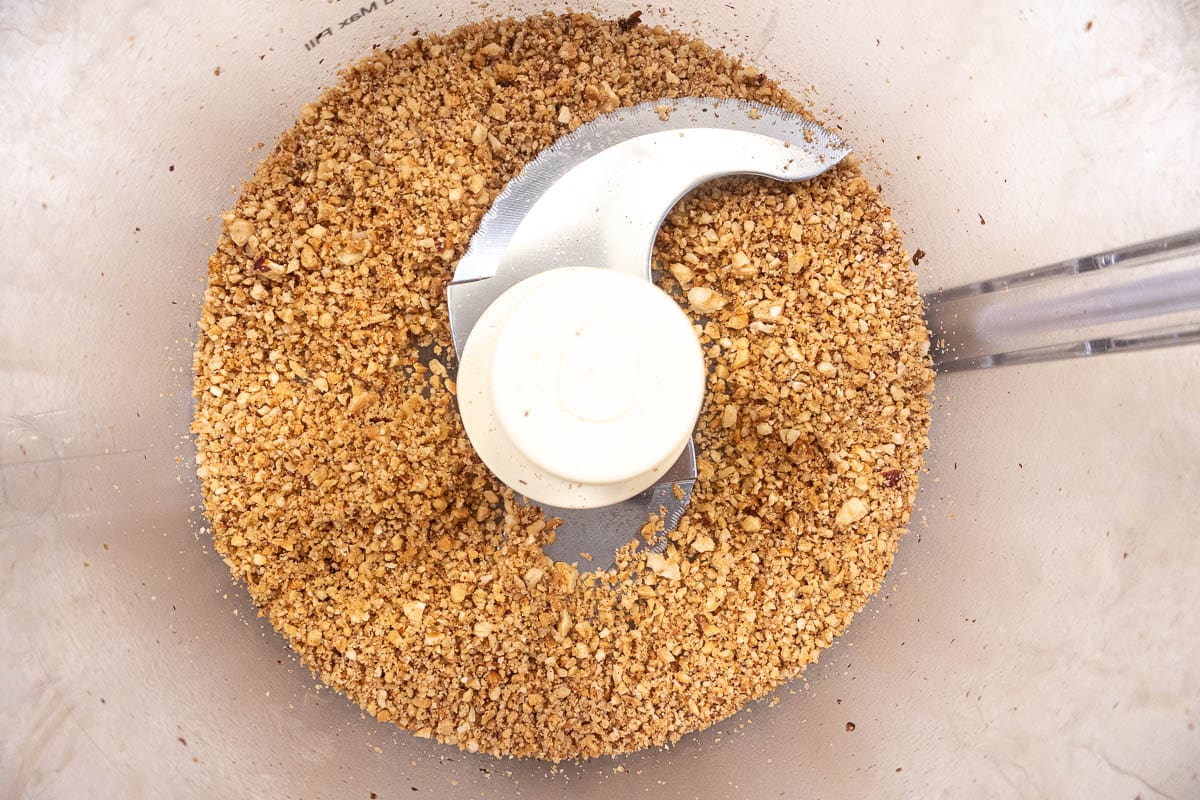
    Hazelnuts coarsely ground in processor for deco. Combine and place in the freezer until needed.

    Assembly

    Coffee syrup brushed cake layer

    Turn the frozen cake layers upside down, remove the parchment paper and brush each one with ⅓ of the coffee syrup.

    Chocolate Hazelnut Buttercream spread on bottom layer of cake

    Spread ½ cup buttercream over the bottom layer of the cake. Repeat with the second layer.

    Third layer of Hazelnut Gianduja Cake placed on

    Place the third layer on, coffee side down.

    Hazelnudt Gianduja Cake finished with buttercream

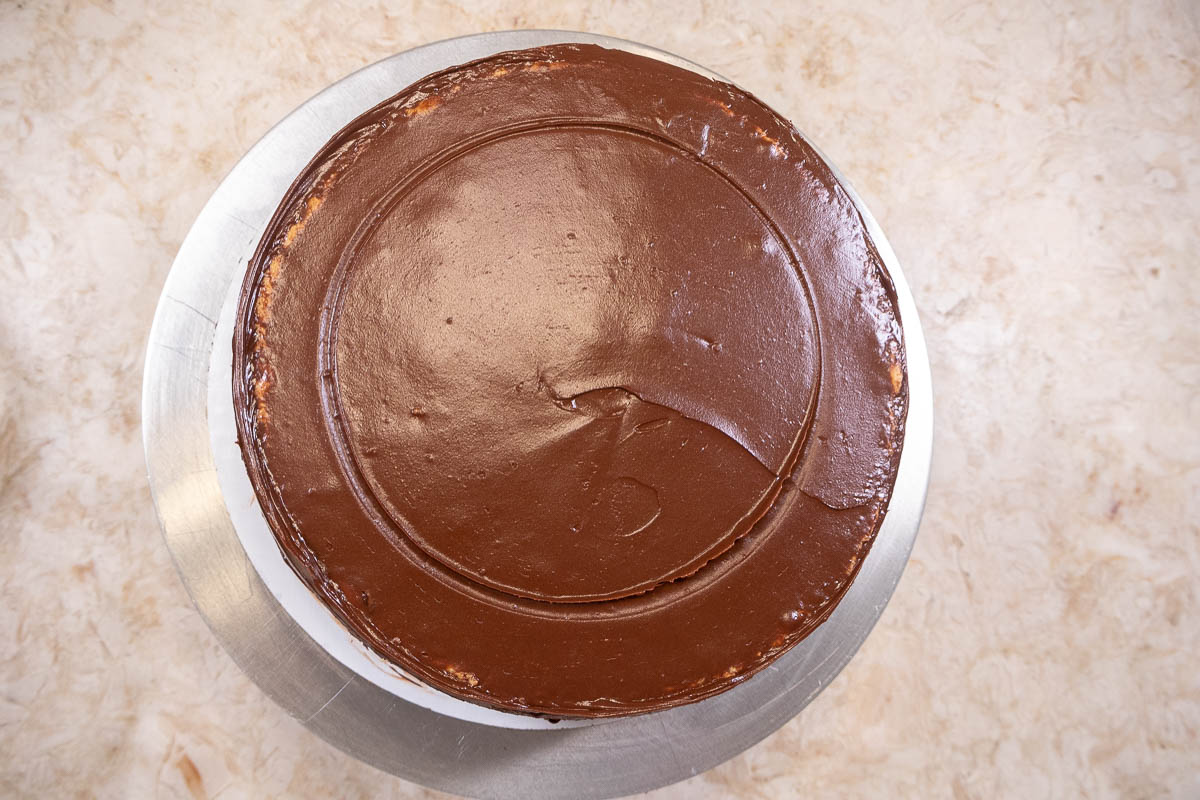
    Finish the sides of the cake with a thin layer of buttercream. Reserve about ⅔ cup of buttercream and use the rest to finish the top.

    Mark the top of the Hazelnut Gianduja Cake

    Mark the top of the cake in a 6" circle.

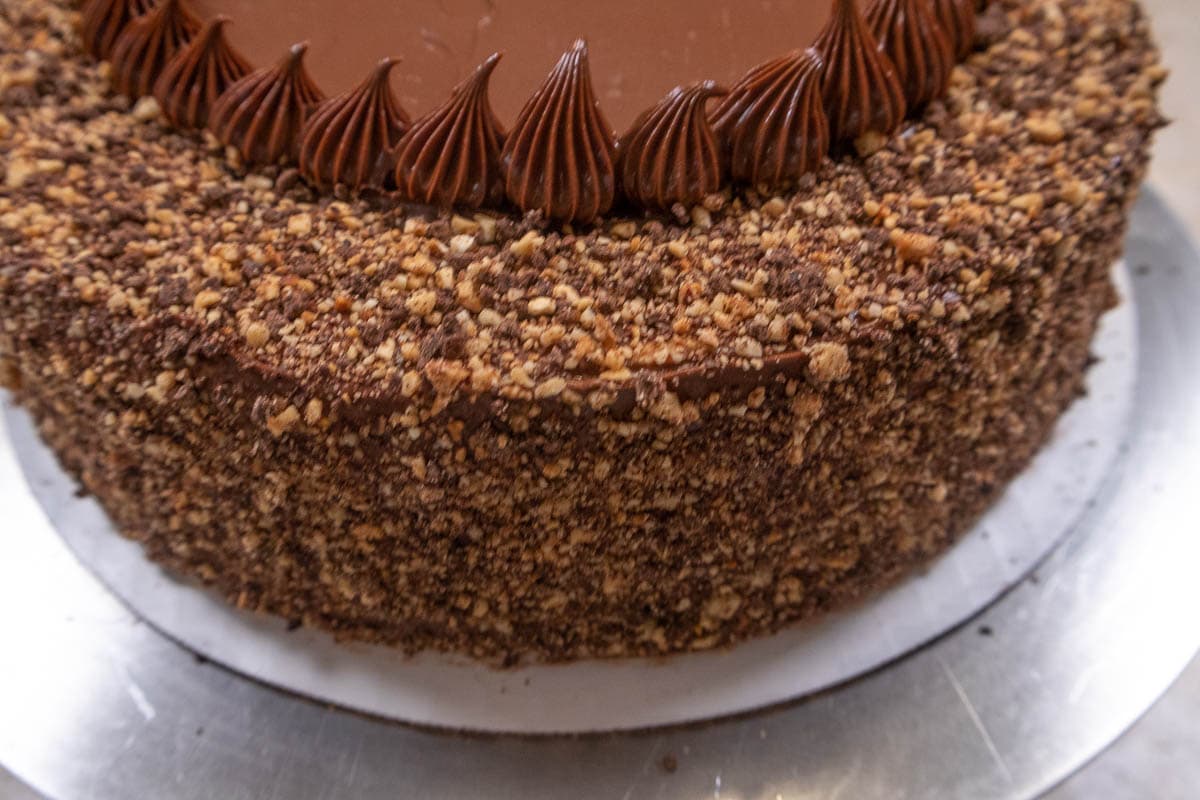
    Decor applied to edge and sides of the cake

    Chocolate-Hazelnut decor added to the edges and sides of the cake.

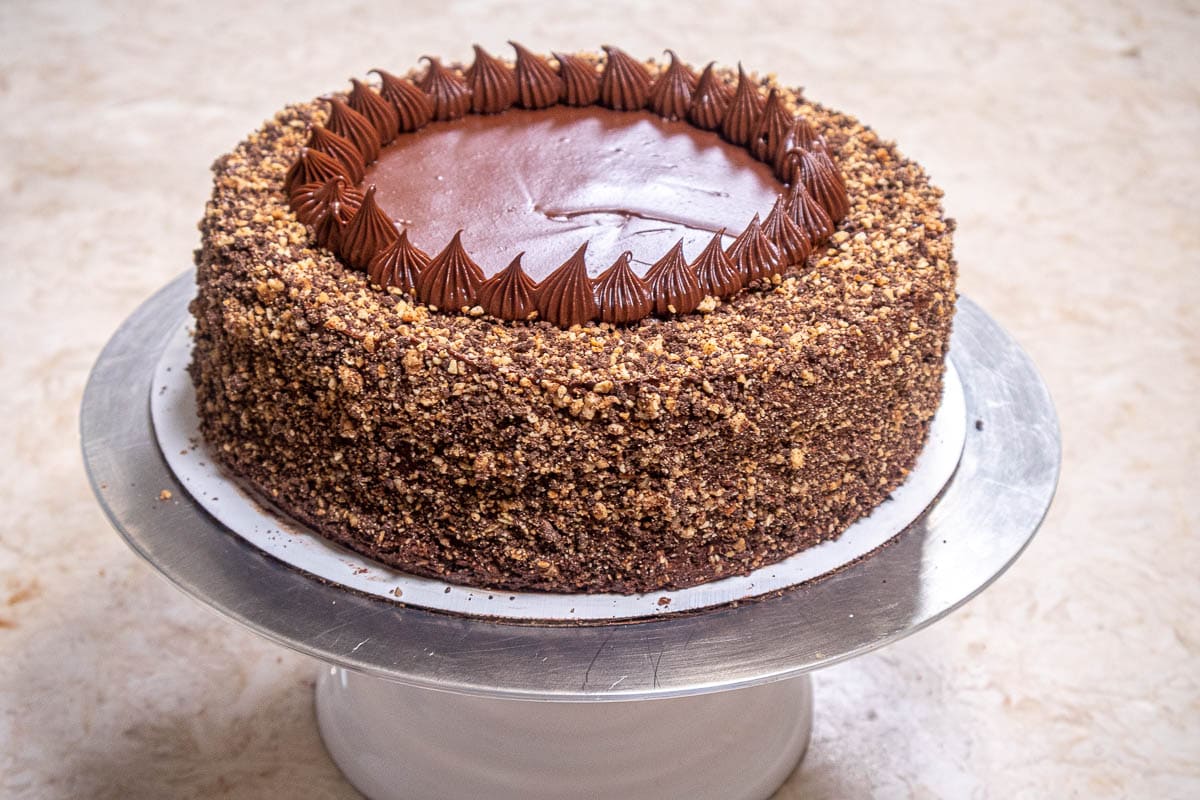
    Finished Hazelnut Gianduja Cake on turntable

    The inner edge of the top of the cake piped with the reserved buttercream.

    Hint: To easily remove the last of the buttercream from the processor bowl and blade, go the Food Processor Tips When Baking

    Substitutions

    If hazelnuts aren't your thing, then substitute blanched almonds, toasting them as are the hazelnuts. Or, half almonds and half hazelnuts can be used.

    If you don't want to use the Kahlua, substitute water in the same amount and double the instant coffee.

    Equipment

    • Scale
    • Measuring spoons, cups
    • Bowls
    • Rimmed baking sheet
    • Mixer with bowl and whisk attachment
    • 3- 9x2" round baking pans
    • Offset spatulas
    • Rubber spatula
    • Food Processor and scraper
    • Small saucepan
    • Pastry Brush
    • Double boiler or microwave

    Storage

    The Hazelnut Gianduja Cake can be kept, covered, at room temperature for 4 to 6 hours and then refrigerated. It can also be made in its entirety and frozen. Defrost in the refrigerator, covered if possible, overnight.

    Top tip

    When working with sponge cakes, it is best to freeze the layers before filling and finishing the cake. It makes them much more stable and the resulting look of the cake much better.

    FAQ

    Can all-purpose flour be used instead of cake flour? It can but the resulting cake will not be as tender. The cake flour has a lower protein count which makes it softer which is why it is important to some cakes.

    Can anything be substituted for the Nutella? Go to Dobos Torte - A Hungarian Speciality and use the Chocolate Buttercream in that recipe.

    Why is there baking powder in this sponge? I didn't think sponge cake used a leavening agent. Normally they don't. However, the addition of the butter in this sponge can cause the sponge layers to bake up shorter. This is especially true for novice bakers who are just learning the technique of folding ingredients together. The addition of the baking powder is an aid to getting the right outcome.

    Why emulsify the butter with a small amount of cake batter? Melted butter added to a sponge or genoise cake can cause problems if folded in by itself. Because the butter is heavy, it immediately sinks to the bottom of the mixing bowl if added by itself. It is difficult to fold it in completely without knocking much of the air out of the batter resulting in a rubbery layer at the bottom of the baked cake layers. By removing a small amount of the batter and whisking the butter into it, the butter becomes one with the sponge batter making it much easier to return to the main amount of batter and fold it in.

    What does Gianduja mean? The word Gianduja refers to a combination of chocolate and hazelnuts. It comes from the Piedmont district in Italy. It was created in 1806 i Turin as a way to reduce the amount of cocoa used in making chocolates. In today's world, white, milk or dark chocolate can be used.

    Is Gianduja the Same as Nutella? They both share hazelnuts but in addition to hazelnuts, Nutella's ingredients include sugar, palm oil, skim milk, , cocoa, lecithin, and vanillan. So no, it is not the same.

    Are Hazelnuts the same as Filberts? Yes, in America hazelnuts are referred to as Filberts. The same nut is referred to as Hazelnuts in Europe and that name is most commonly used.

    Hazelnut Gianduja Cake

    Hazelnut Gianduja Cake

    Helen S. Fletcher
    Hazelnut Gianduja Cake is the perfect celebration or holiday cake.  A tender hazelnut butter sponge cake is washed in a coffee syrup and finished with and intense but quickly made chocolate hazelnut buttercream.  Many of the parts can be made ahead to speed assembly or the cake can be frozen in its entirety.  
    No ratings yet
    Print Recipe Pin Recipe
    Prep Time 1 hour hr 30 minutes mins
    Cook Time 30 minutes mins
    Total Time 2 hours hrs
    Course Cakes
    Cuisine American
    Servings 16
    Calories 562 kcal
    Prevent your screen from going dark

    Ingredients

    Hazelnut Butter Sponge Cake

    • ⅔ cups sifted cake flour (85 grams or 3 ounces)
    • 2 ounces hazelnuts, toasted (60 grams or 2 ounces)
    • 1 teaspoons baking powder
    • 9 large egg yolks
    • ¾ cup sugar (150 grams or 5 ⅓ ounces)
    • 1 teaspoon vanilla
    • 9 large egg whites
    • ½ cup sugar (100 grams or 3 ½ ounces)
    • 6 tablespoon butter, melted (85 grams or 3 ounces or ¾ stick)

    Coffee Syrup

    • ½ cups water
    • ½ cups sugar (100 grams or 3 ½ ounces)
    • 1 teaspoons instant coffee
    • 2 tablespoons Kahlua

    Chocolate Hazelnut Décor

    • ⅔ cup toasted hazelnuts (85 grams)
    • 3 ounces semisweet chocolate (85 grams)

    Chocolate Hazelnut Buttercream

    • ½ pound semisweet chocolate, coarsely chopped (225 grams)
    • ¾ cup butter, 30 minutes out of the refrigerator (170 grams or 6 ounces or 1 ½ sticks)
    • ⅓ cup 40% cream
    • 1 ½ tablespoons Kahlua or other coffee flavored liqueur
    • 2 teaspoons vanilla
    • 3 tablespoons powdered sugar (40 grams or 1 ⅓ ounces)
    • 1 cup Nutella (280 grams or 10 ounces)

    Instructions
     

    Hazelnut Butter Sponge

    • Preheat the oven to 350°F.  Line three 9x2" round cake pans with parchment paper and spray the centers only. 
    • Place the hazelnuts on a rimmed baking sheet.  Toast them for 7 to 9 minutes until deep golden brown.  If they have dark skins on them, immediately place them in the bowl of a mixer fitted with the paddle attachment.  Mix the nuts on low to medium speed for several minutes until the skins are mostly gone.
    • Some will always remain and that is fine.  Cool completely.  Separate the skinned nuts from the skins. 
    • Place the cold, skinned, hazelnuts in a food processor.  Process until very fine.  Do not overprocess or they will become a paste. 
    • Add the flour and baking powder to the processor. Process to further grind the nuts as fine as possible. 
    • Place the egg yolks, ¾ cup sugar and vanilla in a mixing bowl fitted with a whisk attachment.  Whisk at medium speed until very pale and it reaches the ribbon stage. 
    • With a clean bowl and whisk attachment, beat the egg whites until you can see a trail in the beaten whites.   Slowly add the ½ cup sugar and beat to medium peaks.  Pour the egg yolk and half the flour mixture over the whites.  Fold in gently; fold in remaining flour.  
    • Place about 1 cup of the batter into a medium size bowl.  Add the melted butter and whisk vigorously  until the butter and batter are completely combined; return this to the mixing bowl and fold in.   
    • Divide the batter between the three pans, using about 275 grams or about 9 ⅔ ounces for each.  Smooth out.  Bake for 10 to 15 minutes or until the sponge springs back when lightly touched and/or a tester come out clean.  
    • It will not have a lot of color – that is as it should be.  Cool completely before removing from the pans.  
    • The layers can be baked, cooled and frozen, well covered, up to a month ahead.
    • Coffee Syrup
    • Combine the water and sugar in a small saucepan.  As it approaches the boil, wash the sides of the pan down with a brush dipped in cold water.  
    • Bring to a boil.  
    • Dissolve the coffee in the Kahlua.  If it won't dissolve microwave for about 10 seconds,    
    • Stir the Kahlua mixture into the sugar syrup.  Cool.
    • This may be made days ahead and refrigerated.

    Chocolate Hazelnut Decor

    • Place the chocolate in the bowl of a processor.  Pulse until coarsely chopped but not powdered.  Remove from the processor.
    • Without cleaning the bowl, add the hazelnuts and process until coarsely chopped.
    • Combine the two and freeze.
    • This can be done weeks ahead and kept frozen. 

    Chocolate Hazelnut Buttercream

    • Melt the chocolate over a double boiler or in a microwave at half power for about 2 ½ minutes.  If microwaving, let it sit for a few minutes then stir. It may need more time in the microwave, depending upon the power of the unit.
    • Transfer to the bowl of a processor or blender.  
    • Cut the butter which has been room temped for 30 minutes into 1 inch pieces and place it in a circle over the chocolate.  
    • Process about 30 seconds or until smooth.  Scrape down.
    • Add the the remaining ingredients and process until smooth, scraping down once or twice. 
    • The buttercream will be amazingly light but will hold its shape.  
    • This should be made just before using to fill and finish the cake.

    Assembly

    • Remove the paper from the bottom of the sponge layers.  Keeping the layers upside down, brush each layer with ⅓ of the coffee syrup.
    • Place one layer on a cake board or serving plate, coffee side up.  Spread with ½ cup of the buttercream.
    • Repeat with the second cake layer.
    • Place the top cake layer on and finish the sides with a thin coat of buttercream.  Reserve enough to finish the top with the peaks.  Use the remainder of the buttercream to finish the top of the cake.  
    • Place a 6" cake pan upside down to mark the top of the cake evenly.  Alternatively, draw a circle about 1 ½" in from the edge of the cake.
    • Working quickly, carefully distribute the frozen decor on the top edge of the cake.
    • Pour the decor onto a rimmed baking pan.  Apply the decor to the sides of the cake covering them completely.  This is most easily done by holding the cake board or plate in your left hand over the pan.  Scoop some of the decor in your right hand and press it onto the side of the cake, letting the excess fall onto the pan.
    • Fit a pastry bag with a ½" B tip.  Pipe the reserved buttercream between the edge of the buttercream and decor to finish the cake.  Pipe straight down and pull up to make the peak design.
    • If not serving within the next few hours, refrigerate the cake.  However, remove it from the refrigerator several hours ahead to make sure it is room temperature when served.

    Notes

    1. The cake layers should be frozen before filling and finishing to make it easier and for a better looking outcome.  Freeze them individually with the bottom parchment still on.  After they are hard, stack them, wrap well in foil, wrap again and freeze for up to a month.
    2. It is important to freeze the decor and use it quickly so the chocolate doesn't melt as you apply it to the cake.
    3. To cut:  Run a serrated bread knife under really hot water on both sides to heat it.  Dry it quickly with a paper towel and then let it melt through the top buttercream and cut straight down.  Pull the knife out at bottom of the cake.  Repeat for each cut.  
    4. If the cake has been refrigerated, bring it out several hours before serving.  It should always be served at room temperature or the buttercream will lack its full flavor.

    Nutrition

    Calories: 562kcalCarbohydrates: 53gProtein: 8gFat: 36gSaturated Fat: 20gPolyunsaturated Fat: 2gMonounsaturated Fat: 11gTrans Fat: 1gCholesterol: 150mgSodium: 174mgPotassium: 301mgFiber: 4gSugar: 43gVitamin A: 628IUVitamin C: 1mgCalcium: 80mgIron: 3mg
    Tried this recipe?Mention @helensfletcher or tag #pastrieslikeapro!

    Yeast as it Relates to Bread

    Modified: Apr 20, 2026 · Published: Sep 19, 2022 by Helen S Fletcher · This post may contain affiliate links · 17 Comments

    Yeasts

    Yeast is a primary ingredient in many breads. This white paper is a comprehensive discussion of the types of yeasts, it's uses, lean and rich doughs, preferments, temperatures, proofing and making a proofer, the structure of doughs, finishes, storage, how much to use, and more.

    Yeasts

    What is Yeast

    Yeast cells are single cell living organisms that are a part of the fungi group.  Approximately 15 million are in one pound of compressed yeast.   One of the oldest living organisms, dating back to the Egyptians, it continues to help mankind make bread and beer.  Hieroglyphs show Egyptians 5,000 years ago in bread bakeries and making beer -  maybe not the beer we know, but beer nevertheless.  Both of these were dependant upon yeast, just as they are today.  But it was Louis Pasteur who proved that living yeast is necessary for fermentation.

    The yeast most often used today is Saccharomyces cerevisiae which translates in Latin to “sweet fungi of beer.” There are 1,500 strains of yeast that have been identified but that is just 1% of the strains believed to exist but are not yet named.

    The yeast we use for baking is a domesticated wild yeast that manufacturing has stabilized and made 200 times stronger than it was in the wild.  Plant scientists decide which characteristics of wild yeast are desirable and put them on a diet of cornsyrup to make them reproduce.  When they reproduce to the desired degree, they are filtered, dried, packaged and shipped off to market.

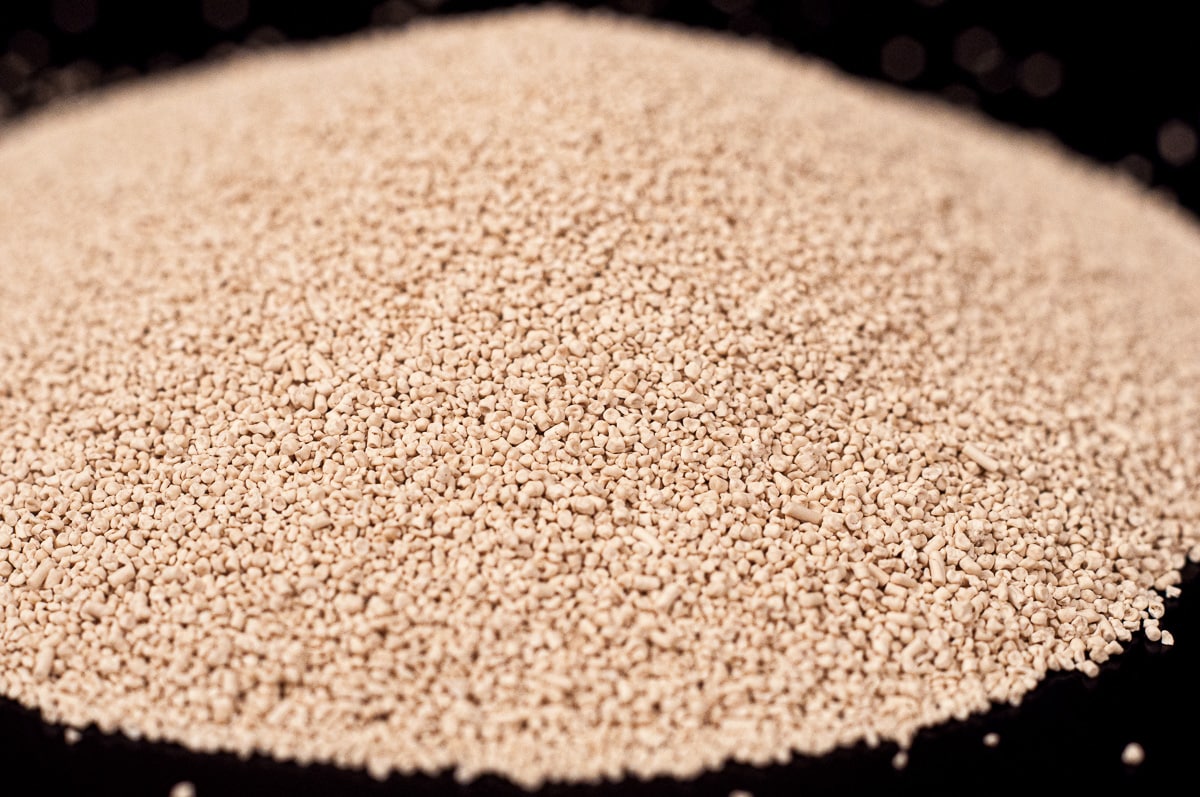
    Yeast granules

    The ability of yeast to rise is affected by food, moisture, the right acid balance (pH) and a temperature between 70 and 100 degrees.  However, for the best taste the dough should rise at the lowest temperature so it can develop flavor.  

    While the correct amount of sugar will enhance yeast development, too much of it will either slow it down or kill it off.  Salt should never be mixed directly with yeast.  Salt is necessary to slow down the development of the yeast.

    Dough heavy in sugar or fat (think eggs, butter) is a very slow riser.  To compensate for this a sponge is often used.  These will be discussed later in the article.  The optimum amount of sugar, without using a sponge, is no more than ¼ cup per 3 cups of flour.  There are basically two types of yeast dough:  Rich and lean.  A rich dough is a sweet dough and is, as you can guess, one that is heavy in sugar and fat.  A lean dough is low in sugar and fat.  Each of these is treated differently when it comes to yeast.

    Types of Yeast

    Baker’s yeast, like baking powder and baking soda, is used to leaven baked goods.  Baking powder and baking soda react chemically to produce the carbon dioxide that makes the baked goods rise.  Yeast, however, does not cause a chemical reaction.  Instead, the carbon dioxide it produces in the form of bubbles is the result of the yeast literally feeding on the dough causing the dough to rise until killed by heat.

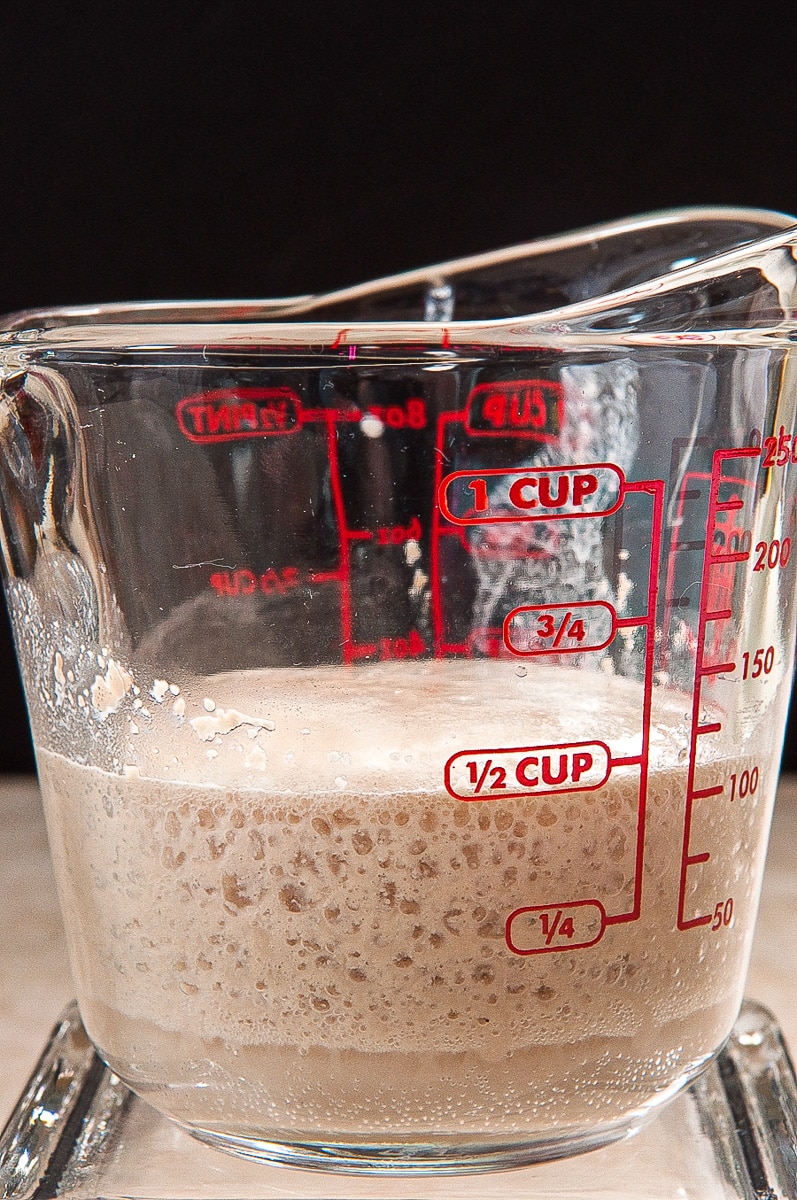
    Today, there are a variety of yeasts offered but the two most important used by home bakers are instant or active dry yeast.  All the others are variations of these two.  While it was necessary in the past to dissolve active dry yeast in water, it can now be added directly to the dry ingredients as instant yeast is.  If you are unsure your active dry yeast is still active, dissolve it in a ¼ cup warm water with ½ teaspoon sugar.  In about 10 minutes or so it should bubble up to the ½ cup measure.

    Risen Yeast in cup

    Active Dry Yeast

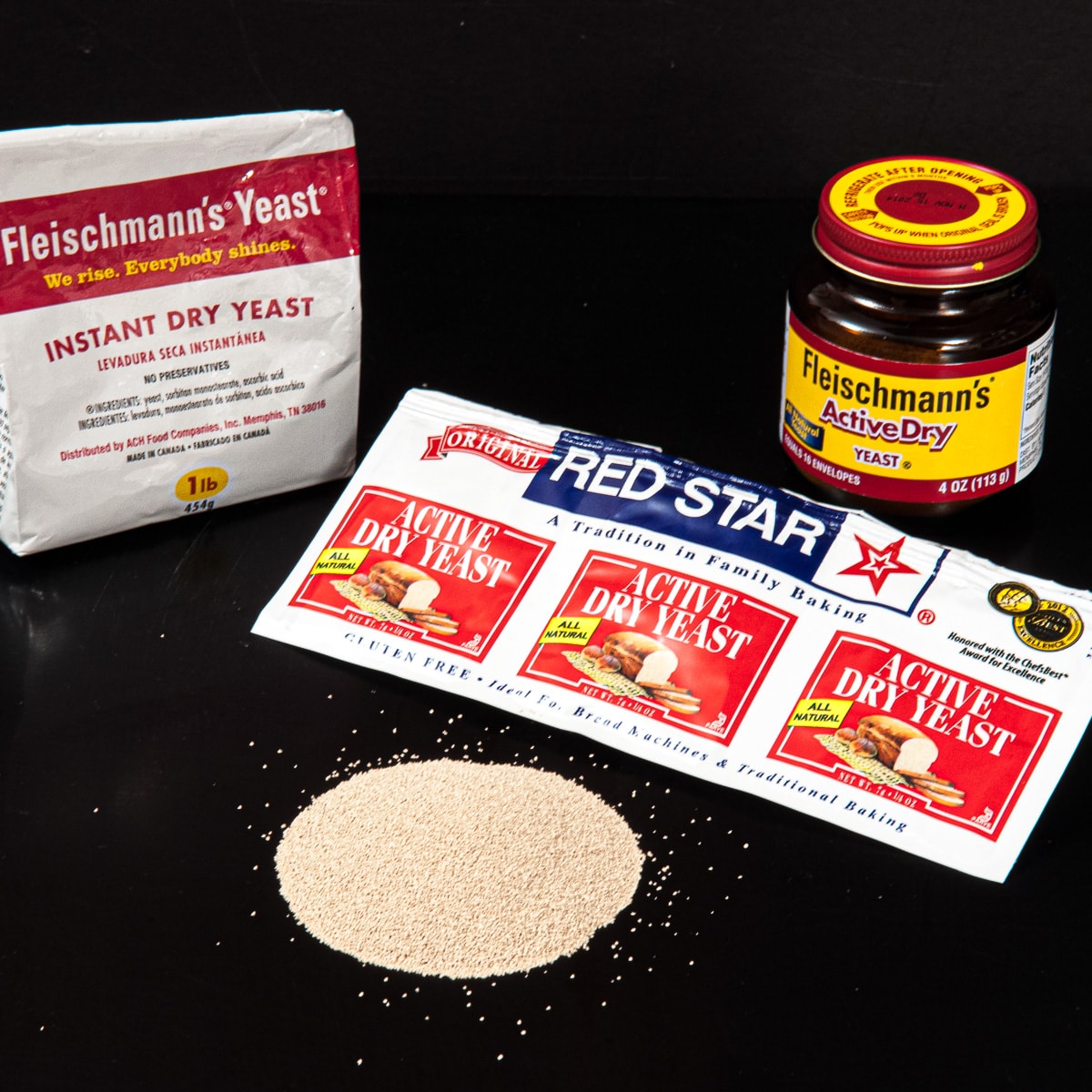
    According to King Arthur Flour,  Active Dry Yeast is considered slower to get going but eventually catches up to the instant yeast which is a quicker starting yeast.  Fleischmann’s and Red Star are the two most prevalent active dry yeasts in the super markets.  They come in 3 packets and in jars as well as vacuum packed.

    Because active dry yeast is subjected to extremely high temperatures to dry out cake yeast and form the granules, many of its cells are destroyed in the process.

    Because the outer cells are dead, this yeast must be dissolved in a warm liquid to activate the living cells in the center.

    Instant Yeast

    Instant Yeasts referred to as Instant, Rapid Rise, Bread or Pizza yeast are processed to 95% dry matter but are dried more gently resulting in every dried particle is living and active.  The yeast can be added directly to the dry ingredients without first proofing it in water. However, if both salt and yeast are added to the same bowl as the flour, they should be put on opposite sides of the bowl until mixed as salt in direct contact will kill the yeast.

    SAF instant yeast is the leader among instant yeasts although Fleishman’s is on many grocer’s shelves.  SAF is produced in France by the LeSaffre company who is the largest producer of yeasts in the world.   Red Star also has a large share.

    Although today’s active dry yeast and instant yeast can be used interchangeably, it is a common practice to use about ¼ less instant yeast than active dry yeast by artisan bread bakers. It is also not recommended to use the same amount of instant yeast as active dry in a bread machine as the machines use a higher temperature to raise the dough.  If using instant yeast in a bread machine reduce it by about 25% to avoid the dough over-rising and then collapsing.

    General Guide to Purchasing Yeast

    Thanks to www.asweetpeachef.com for this.
    “Granted, purchasing yeast can be a confusing process due to different manufacturers not using the same names for their products or using the same names for different types of yeast.  That being said, here’s a general guide to purchasing yeast using popular labeling and product instructions:

    • Cake (Moist) – traditional live yeast; needs to be dissolved in water
    • Active Dry – traditional dry yeast; needs to be dissolved usually with sugar
    • Instant – contains small amount of yeast enhancer; does not need to be dissolved
    • Bread Machine – exactly the same as Instant but in a different package
    • Rapid-Rise – larger amount of yeast enhancers and other packaging changes to the granules; does not have to be dissolved”

    How Much Yeast to Use

    This chart from Red Star Yeast.

    It includes cake yeast which is rarely found but I left it in as a comparison.

    To use instant yeast in place of active dry yeast, 1 ¾ teaspoon of instant yeast is used in place of 2 ¼ teaspoons of active dry yeast.

    Flour Dry Yeast Cake Yeast
    cups* packages
    (¼ oz)
    gramsteaspoonsounces**
    0-4             1              7           2+¼  ⅔
    (⅓ of a 2oz. cake)

    4-8

    2

    14

    4+½

    1+⅓
    (⅔ of a 2oz. cake)

    8-12

    3

    21

    6+¾

    2

    12-16

    4

    28

    9

    2+⅔
    (1+⅓ of a 2oz. cake)

    16-20

    5

    35

    11+¼

    3+⅓
    (1+⅔ of a 2oz. cake)

    However, the amount of yeast to use can be altered by whether the recipe is a a lean or rich dough.  Rich doughs that include sugar, eggs and butter require more yeast than lean doughs consisting of water, flour, salt, and yeast.

    According to Red Star, if the ratio of sugar to flour is more than ½ cup sugar to 4 cups flour, an additional 2 ¼ teaspoons of  yeast per recipe is needed.

    If too much yeast is used, the bread can rise too quickly, resulting in not much flavor and it can become misshapen when baked.

    Storage

    Depending upon how often you use yeast, it can be stored in the refrigerator or in the freezer for longer storage. Packages of active dry yeast contain 2 ¼ teaspoons per pack.

    Instant yeast comes in a jar or, in larger amounts, in vacuum packages.  I usually buy the larger package and transfer the yeast to an airtight container and store it in the freezer.

    A smaller container is kept in the refrigerator for everyday use and refilled from the freezer as necessary.

    Working with Yeast Dough

    Because so many different factors go into yeast dough rising, it is difficult to give definite times.  If the room is cold, it will take longer, if it is too warm, it will go faster.

    Also making a big difference the amount of yeast used.  Artisan breads generally use smaller amounts of yeast for longer rising dough so it develop more flavor.  American types of loaf breads are prone to using more yeast for a quicker rise, especially if ingredients other than flour, water, salt and yeast are used.

    Sweet doughs invariably use more yeast per cup of flour.

    There is a temptation by some bread bakers to use more yeast for a quicker rise.  The problem with that is it produces CO2, alcohol and organic acids at a much faster rate.  Acid, such as the alcohol produced, weakens the gluten in the dough causing it not to rise well.  In other words, too much yeast will cause the opposite of a quick rising dough.

    You can always cut back on the yeast, which will cause the dough to rise slower creating a very strong gluten structure to support a good rise in the oven.  Allowing dough to rise overnight with a small amount of yeast will product a superior loaf.

    One of the things that can greatly alter the rising time is how frequently you make bread.  If you bake a lot of yeast products, there will be wild yeast in your kitchen which will aid in the rising of your products.  If you bake infrequently with yeast, very little will be in your kitchen so it may take longer for your dough to rise.

    While King Arthur gives some guidelines for how much yeast to use, if you are a beginner, I suggest following a dependable recipe.  A basic dough using only flour, water, salt and possibly a bit of oil or sugar is fine to leave out on the counter for an all day countertop rise.  These include baguettes, focaccia, and pizza doughs.

    Any product that uses dairy should be refrigerated for a slow rise.  I usually make my sweet dough the day before I want to shape and bake it as it is easier to handle that way.  The dough won’t be as springy when rolling and will shape much easier.   I allow it a first rise at room temperature, punch it down and then transfer it to the refrigerator.

    Dough Structure

    The structure of the dough can be affected by many things.  If it is a lean dough, the amount of water in the dough will give it a tight structure or an open, holey one.  Baguettes have a tighter finished structure using less water than does ciabatta, which can be so wet as to be difficult to manage for the best open structure when baked.  It’s sort of like trying to manage a wiggly blob when shaping.

    Sweet dough will always have a tighter structure due to the ingredients, including the liquid.

    Also the liquid used in the dough will make a difference.  Yeast loves potato water and literally gobbles it up.

    In the past, the instructions for loaf breads at the time were to keep adding flour while kneading the dough until it no longer stuck to the board.  It invariably ended up with too much flour in it.  The lack of hydration is what made the dough stale so quickly.  Later I discovered that the dough, lean or sweet, should be soft which does not necessarily equate to sticky although it sometimes does.

    While some people take great pride in hand kneading their bread to perfection, I am not one of them.  I simply don’t have the time nor the desire.  So I use my heavy duty mixer and a dough hook to knead my dough.  I do knead it by hand for a minute or so to smooth it out before putting them to rise.

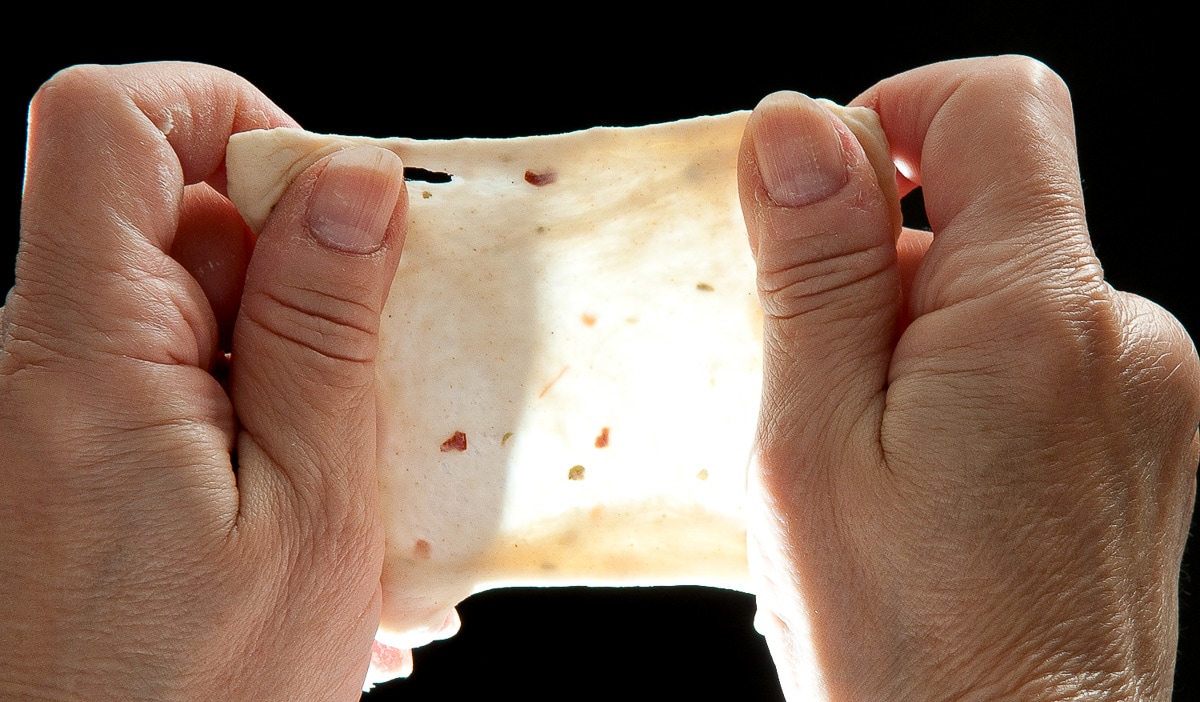
    In any case, the kneaded dough should pass the windowpane test.  A small piece of dough is stretched thinly with your fingers until you can see through it.  If it breaks or will not stretch thinly enough, knead it some more until it does.

    Stretched dough forming a winddowpane

    The Flavor in Bread

    The flavor of bread can be controlled by three things.  The flour used, the amount of browning during baking and the flavor built up during fermentation.

    Pre-ferments

    There are several reasons for wanting to increase the amount of organisms in your dough without adding additional yeast.  Among them are rich doughs.  A lot of sugar, eggs, milk or cream will slow the ability of the dough to rise.  However, loading up these doughs with lots of yeast can lead to a “ yeasty taste” and can actually be counterproductive.  So a sponge is often used to introduce more living yeast cells into the dough without increasing the amount of yeast.

    A sponge consists of a small amount of flour, some yeast, water and sometimes a pinch of sugar are mixed together. They are then covered and allowed to rise until doubled.  Since yeast is a living organism, you can see how when the sponge has risen, you have just increased enormously the number of live organisms ready to help raise a rich dough.

    Lean dough often depend upon variations of this theme under the names, bigas (Italian), levains (French) Poolish, a liquid starter or sometimes they are just called starters.  They all do the same thing, which is to allow very little yeast to be used.  These often ferment for several hours or overnight introducing more flavor into the dough.

    Another pre-ferment is to save a piece of dough from a batch made the day before and add it to the new batch of dough.

    King Arthur Flours has a wonderful discussion on preferments that help clarify the confusing differences among all the different types.  It is so important, I have included the entire discussion here.

    “A preferment is a preparation of a portion of a bread dough that is made several hours or more in advance of mixing the final dough. The subject of preferments is one that can cause immense confusion among bakers. The variety of terminology can bewilder even the most experienced among us. Words from foreign languages add their contribution to the complexity.

    A preferment is a preparation of a portion of a bread dough that is made several hours or more in advance of mixing the final dough. The preferment can be of a stiff texture, it can be quite loose in texture, or it can simply be a piece of mixed bread dough. Some preferments contain salt, others do not. Some are generated with commercial yeast, some with naturally occurring wild yeasts. After discussing the specific attributes of a number of common preferments, we will list the benefits gained from their use.

    • chef
    • pâte fermentée
    • levain
    • sponge
    • madre bianca
    • mother
    • biga
    • poolish
    • sourdough
    • starter

    These terms all pertain to preferments; some are quite specific, some broad and general. The important thing to remember is that, just as daffodils, roses, and tulips all are specific plants that fall beneath the heading of “flowers,” in a similar way the above terms all are in the category of “preferments.” Let’s examine several of the terms listed in more detail.

    Pâte fermentée, biga, and poolish, are the most common preferments which use commercial yeast. As such, we can place them loosely in a category of their own. We place sourdough and levain in a separate category.

    pâte fermentée
    Pâte fermentée is a French term that means fermented dough, or as it is occasionally called, simply old dough. If one were to mix a batch of French bread, and once mixed a portion were removed, and added in to a new batch of dough being mixed the next day, the portion that was removed would be the pâte fermentée. Over the course of several hours or overnight, the removed piece would ferment and ripen, and would bring certain desired qualities to the next day's dough. Being that pâte fermentée is a piece of mixed dough, we note that it therefore contains all the ingredients of finished dough, that is, flour, water, salt, and yeast.

    biga
    Biga is an Italian term that generically means preferment.  It can be quite stiff in texture, or it can be of loose consistency (100% hydration). It is made with flour, water, and a small amount of yeast (the yeast can be as little as 0.1% of the biga flour weight). Once mixed, it is left to ripen for at least several hours, and for as much as 12 to 16 hours. Note that there is no salt in the biga. Unlike pâte fermentée, which is simply a piece of mixed white dough which is removed from a full batch of dough, the biga, lacking salt, is made as a separate step in production.

    poolish
    Poolish is a preferment with Polish origins. It initially was used in pastry production. As its use spread throughout Europe it became common in bread. Today it is used worldwide, from South America to England, from Japan to the United States. It is by definition made with equal weights of flour and water (that is, it is 100% hydration), and a small portion of yeast. Note again the absence of salt. It is appropriate here to discuss the quantity of yeast used. The intention is not to be vague, but it must be kept in mind that the baker will manipulate the quantity of yeast in his or her preferment to suit required production needs.

    For example, in a bakery with two or three shifts, it might be suitable to make a poolish or any other preferment and allow only 8 hours of ripening. In such a case, a slightly higher percentage of yeast would be indicated in the preferment. On the other hand, in a one-shift shop, the preferment might have 14 to 16 hours of maturing before the mixing of the final dough. In this case the baker would decrease the quantity of yeast used. Similarly, ambient temperature must be considered. A preferment that is ripening in a 65°F room would require more yeast than one in a 75°F room.

    sourdough and levain
    The words sourdough and levain tend to have the same meaning in the United States, and are often used interchangeably. This however is not the case in Europe. In Germany, the word sourdough (sauerteig) always refers to a culture of rye flour and water. In France, on the other hand, the word “levain” refers to a culture that is entirely or almost entirely made of white flour. While outwardly these two methods are different, there are a number of similarities between sourdough and levain. Most important is that each is a culture of naturally occurring yeasts and bacteria that have the capacity to both leaven and flavor bread. A German-style culture is made using all rye flour and water.

    A levain culture may begin with a high percentage of rye flour, or with all white flour. In any case, it eventually is maintained with all or almost all white flour. While a rye culture is always of comparatively stiff texture, a levain culture can be of either loose or stiff texture (a range of 50% hydration to 125% hydration). With either method, the principle is the same. The baker mixes a small paste or dough of flour and water, freshens it with new food and water on a consistent schedule, and develops a colony of microörganisms that ferment and multiply. In order to retain the purity of the culture, a small portion of ripe starter is taken off before the mixing of the final dough. This portion is held back, uncontaminated by yeast, salt, or other additions to the final dough, and used to begin the next batch of bread.

    One important way in which a sourdough and levain are different from pâte fermentée, biga, and poolish, is that the sourdough and levain can be perpetuated for months, years, decades, and even centuries. When we make a preferment using commercial yeast, it is baked off the next day. We then begin the process again, making a new batch of preferment for the next day’s use. It would be tempting to say the pâte fermentée can be perpetuated, since each day we simply take off a portion of finished dough to use the following day. This is not actually the case. We could not, for example, go on vacation for a week and come back to a healthy pâte fermentée, whereas we could leave our sourdough or levain culture for a week or more, with a minimum of consequences.

    During the initial stages in the development of a sourdough or levain culture, it is common to see the addition of grapes, potato water, grated onions, and so on. While these can provide an extra nutritional boost, they are not required for success. The flour should supply the needed nutrients for the growing colony. Keep in mind, however, that when using white flours, unbleached and unbromated flour, such as those produced by King Arthur® Flour, are the appropriate choice. Vital nutrients are lost during the bleaching process, making bleached flour unsuitable.

    How does the baker know when his or her preferment has matured sufficiently and is ready to use? There are a number of signs that can guide us. Most important, it should show signs of having risen. If the preferment is dense and seems not to have moved, in all likelihood it has not ripened sufficiently. Poor temperature control, insufficient time allowed for proper maturing, or a starter that has lost its viability can all account for the problem.

    When the preferment has ripened sufficiently, it should be fully risen and just beginning to recede in the center. This is the best sign that correct development has been attained. It is somewhat harder to detect this quality in a loose preferment such as a poolish. In this case, ripeness is indicated when the surface of the poolish is covered with small fermentation bubbles. Often CO2 bubbles are seen breaking through the surface.

    There should be a pleasing aroma that has a perceptible tang to it. Take a small taste. If the preferment has ripened properly, we should taste a slight tang, sometimes with a subtle sweetness present as well. The baker should keep in mind that a sluggish and undeveloped preferment, or one that has gone beyond ripeness, will yield bread that lacks luster, and suffers a deficiency in volume and flavor.

    There are a number of important benefits to the correct use of preferments, and they all result from the gradual, slow fermentation that is occurring during the maturing of the preferment:

    • Dough structure is strengthened. A characteristic of all preferments is the development of acidity as a result of fermentation activity, and this acidity has a strengthening effect on the gluten structure.
    • Superior flavor. Breads made with preferments often possess a subtle wheaty aroma, delicate flavor, a pleasing aromatic tang, and a long finish. Organic acids and esters are a natural product of preferments, and they contribute to superior bread flavor.
    • Keeping quality improves. There is a relationship between acidity in bread and keeping quality. Up to a point, the lower the pH of a bread, that is, the higher the acidity, the better the keeping quality of the bread. Historically, Europeans, particularly those in rural areas, baked once every two, three, or even four weeks. The only breads that could keep that long were breads with high acidity, that is, levain or sourdough breads.
    • Overall production time is reduced. Above all, to attain the best bread we must give sufficient time for its development. Bread that is mixed and two or three hours later is baked will always lack character when compared with bread that contains a well-developed preferment. By taking five or ten minutes today to scale and mix a sourdough or poolish, we significantly reduce the length of the bulk fermentation time required tomorrow. The preferment immediately incorporates acidity and organic acids into the dough, serving to reduce required floor time after mixing. As a result the baker can divide, shape, and bake in substantially less time than if he or she were using a straight dough.
    • Rye flour offers some specific considerations. When baking bread that contains a high proportion of rye flour, it is necessary to acidify the rye (that is, use a portion of it in a sourdough phase) in order to stabilize its baking ability. Rye flour possesses a high level of enzymes compared to wheat flour, and when these are unregulated, they contribute to a gumminess in the crumb. The acidity present in sourdough reduces the activity of the enzymes, thereby promoting good crumb structure and superior flavor. “

    Proofing

    Proofing can refer to activating the yeast in warm water or allowing the dough to rise as we use it in home baking.  Professional bakers use the term fermentation when it comes to allowing the dough to rise either shaped or unshaped.  It’s a little less confusing that way.

    Yeast dough requires time, temperature and humidity to rise.  Between the initial rise of the dough to the final rise of the shaped dough, there can be 3, 4 or more.  Professionals use proofers to manage these requirements.  At the bakery, I had a proofing box, which held sheet pans of products.  At the bottom of the proofer was a container to hold water.  The temperature could be set as desired.   This can be easily duplicated at home with an oven.

    In the summer, I have no problem with yeast dough rising, even the rich ones.  However, in the winter, my kitchen is cold and it can take an eternity to get the dough to rise.  So, I make a proofer in my oven.  Just place a 9x13 inch pan of hot water in the bottom of the oven about 10 minutes before you are ready for the dough to rise.

    This can be the first time or after shaping and setting it to rise before baking.  Put your bread in the oven and close the door.  I generally remove the water after about 30 minutes.  Just make sure the temperature stays between 80 and 90 degrees.  You don’t want the dough to rise too rapidly or to over ferment.  Remove the product before preheating the oven for baking.

    A second way is to use the light in the oven. Simply turn the light on slightly before, or even when you put the product in the oven. No water is necessary. Close the door and monitor the temperature. If the oven gets too hot, prop the door open slightly to maintain the temperature.

    Important Temperatures for Breads

    Above 50 degrees to activate the yeast
    90 to 100 degree water to proof yeast
    80 to 90 degrees to proof the dough
    139 degrees the yeast is killed

    Cold water should be used if making dough in a processor as the speed of the blade is about 30 miles an hour.  This heats the dough.  If warm water is used, the dough can become overheated.

    Lukewarm water or liquid can be used in breads made in a mixer to give them a start on rising.

    Baking the Finished Product

    Knowing a few things about the final process, will help give you the loaf you are looking for.

    Make sure the oven is completely preheated before putting the bread in.  If it is a lean bread, the temperature is usually fairly high.  For sweet breads, the temperature is lower as the dough usually contains butter, sugar or honey and possibly milk or cream, making it ripe for burning at high temperatures.  I double pan any sweet bread, or bread with a lot of butter, chocolate, honey, cornsyrup, etc.  This slows the heat to the bottom of the bread so that, when finished, the bottom is about the same color as the top of the bread.

    Creating Steam in your Oven - I don’t usually create steam in the oven when I bake sweet breads.  But often do  for lean breads where I want a crusty finish.  The steam should only last about 8 minutes.  Professional ovens have steam injectors so it is easy to give it several bursts of steam to obtain a crusty finish.  There are several ways to create steam.

    Water - A pan, such as a 9x13 inch pan, can be put in the bottom of the oven and filled with several cups of hot water.
    Ice Cubes can be added to the pan instead of water.  This has the advantage of not having to pull out a pan of really hot water from the oven after about 8 minutes.
    Misting – Another method is to use a mister and spray the oven every 2 minutes for the first 8 minutes of baking.  Some people spray the interior of the oven before putting the product in to bake.  I don’t favor this one, as I once blew out the oven light which was a mess to clean up.

    Slashing the Tops  

    Some breads require the tops to be slashed just before they go into the oven.  It is important not to slash too deeply.  About ½" is about as deep as the cut should go. This can be done with a single edge razor blade or a curved razor called a lame.  Whatever you use, it has to be very sharp, so it doesn’t pull the bread but makes a clean cut.

    Washes  

    Breads, lean or rich, often have some kind of wash applied just before going into the oven so the finished product will have a better finish or add to the crispness.

    Water - Brushing the crust with water will add to the crispness of the baked crust.  A mister is perfect here to give an even coat of water.
    Whole Egg  gives a shiny bronze finish.  Make sure the egg is completely beaten.
    Egg White Wash – Here again it is very important to beat the white well.  This will give a transparent, very shiny finish.
    Egg Yolk Wash – This gives a very deep brown finish with a soft crust.  I like to use this on sweet breads.
    Milk Wash – This gives a soft, not so shiny finish to the crust.
    Cream  added to egg yolk – Add about 1 tablespoon cream per egg yolk.  This gives the deepest of mahogany brown finishes with a beautiful sheen.  I use this on sweet breads.
    Butter – Melted butter can be brushed on a loaf before going into or after removing from the oven.  It will soften the crust with a dull finish.

    Go here to see the different finishes.

    Storing Baked Breads

    Most baked breads freeze well.  If frozen, they benefit from a few minutes in a 350 degree oven to return them to their original goodness.

    Thaw the bread at room temperature. Place it in the oven. It is impossible to give times because there are so many types and sizes of bread. Larger loafs may take 20 minutes or so, smaller rolls 10 minutes. You only want to warm them not bake them so just feel them to see if they are warm or not.

    Apple Fritters with Speculaas Spice

    Modified: Aug 25, 2025 · Published: Sep 12, 2022 by Helen S Fletcher · This post may contain affiliate links · 11 Comments

    Apple Fritters with Speculass Spice

    Apple Fritters with Speculaas Spice are sure to become a fall favorite. There's a speedy version of an Apple Cake Doughnut and a Carrot Cake Baked Doughnut that can be yours in about 30 minutes. Warm and crisp, they comes together easily using a few pantry ingredients, a bowl, a whisk, and a few measuring utensils.

    The liquid used can be milk, water or beer. I like to use beer because it makes a lighter fritter and gives a bit more lift to the batter. That's pretty much it.

    Apple Fritters with Speculass Spice

    Fall Spices are often added to the batter as well as to the sugar in which the fried apple fritters are finished. I use Speculaas spice which is a combination of eight or more spices used in the German cookie of the same name. It has a deeper profile than just cinnamon alone. It can be used anywhere gingerbread spice is called for. An easy homemade version is included in the apple fritter recipe.

    There's a speedy version of an Apple Cake Doughnut and a Carrot Cake Baked Doughnut which can be yours in about 30 minutes.

    Ingredients

    Apple Fritter ingredients

    Back row: sugar, flour, beer. Middle row: vanilla, egg, salt, diced apple. Front row: baking powder, Speculaas spice

    Apple Fritter with Speculaas Spice Batter

    • Granny Smith Apple - these give the most apple taste to the fritters. The apples can be peeled or not. I don't.
    • Egg will bind the ingredients, give crispness and color.
    • Beer, water or milk - the beer or water makes a crisper apple fritter. If using beer, use a light beer such as Stella Artrois.
    • All-Purpose Flour is best to use here
    • Baking powder provides the lift and lightness
    • Speculaas spice - recipe below
    • Vegetable oil - I use canola oil but any vegetable oil, except olive oil, can be used.

    Speculaas Spice Ingredients - woody, spicy, warm, and sweet.

    Speculaas spice ingredients

    TOP ROW: Cinnamon, cloves, ginger, nutmeg

    BOTTOM ROW: Anise Seed, ground, cardamom, ground coriander, white pepper

    Substitutions

    • The apple fritters can be finished with granulated sugar, cinnamon sugar, or powdered sugar if desired.
    • Cinnamon or another spice can replace the Speculaas spice.

    Be sure to see the recipe card below for the full ingredients list and instructions.

    Step by Step Instructions

    Speculaas Spices and Sugar

    Spices layered in a jar

    Step 1. Put all the spices in a jar.

    Spices shaken in the jar to mix.

    Step 2. Put the lid on the jar and shake vigorously to mix the spices.

    Sugar and Speculass spice

    Step 3. Granulated sugar and speculaas spice.

    Speculaas sugar

    Step 4. Sugar and spice mixed together for speculaas sugar to finish the fritters.

    Apple Fritters

    Egg beaten for Apple Fritters

    Step 1. Beat the egg in a medium size bowl.

    Vanilla Added

    Step 2. Add the vanilla, mix well.

    Beer being added to batter

    Step 3. Add the beer to the batter, mixing in completely. Milk or water may be substituted.

    Dry ingredients being added

    Step 4. Whisk the dry ingredients into the wet ingredients.

    Batter without the apples mixed

    Step 5. Batter without the apples mixed.

    Apples added to batter

    Step 6. Add the apples to the batter.

    Batter with apples added

    Step 7. Batter completed with apples. Ready to fry.

    350°F on thermometer

    Step 8. Heat about 1 ½ inches of oil in a pan or skillet to 350°F.

    Apple Fritters frying

    Step 9. The apple fritters should be fried in vegetable oil about 2 minutes on each side until they are golden brown.

    Fried Apple Fritters draining

    Step 10. Drain on paper towels.

    Warm fritter in spiced sugar

    Step 11. Immediately add the fritters to a bowl of speculaas sugar. Make sure the fritter is very warm or hot or the sugar will not stick to it.

    Sugared Fritter

    Step 12. Roll the fritter around until completely coated in the sugar.

    Recipe FAQs

    What is an apple fritter batter made of?

    A batter of egg, flour, beer or other liquid, a leavening agent, sugar and flavorings encase apples either in rings or cut into pieces and deep fried. They are then rolled in sugar, or a flavored sugar.

    What makes a fritter?

    There are various types of fritters but all are deep fried. They can be plain fritters of deep-fried chou paste or a yeast dough. Generally they can be small pieces of meat, seafood, vegetables, or fruit coated in or stirred into a batter and deep fried. The pieces used in the fritter

    How to keep fritters crispy?

    Try to keep whatever is being coated or stirred into the batter free of as much moisture as possible. The prepared fritters can be refrigerated until cold and then deep fried which keeps them from absorbing as much oil.

    Storage

    Fritters of any kind are best eaten immediately or within a few hours of making as is any deep fried item. To store any remaining, cover loosely with plastic wrap and keep at room temperature until the next day.

    Apple Fritters are in a white bowl with rippled edges sitting on a multi-colored plate.

    Other Top of the Stove Treats

    • French Beignets with coffee
      Irresistible French Beignets - A Weekend Treat
    • Fresh as a Daisy Doughnuts
      Fresh as a Daisy Doughnuts
    • Skillet Brownies with vanilla ice cream on white and orange plates.
      Easy Skillet Turtle Brownies
    • Sweet and Hot Macadamia Brittle
    Speculaas Spiced Apple Fritters

    Apple Fritters with Speculaas Spice

    Helen S. Fletcher
    Apple Fritters with Speculaas Spice are a great way to welcome the fall. These warm and crispy treats are only  30 minutes away when you follow this easy recipe.  The Speculaas spice used in the batter and for the sugar coating gives a deeper flavor than cinnamon alone and can be used anywhere gingerbread spice is needed.  
    No ratings yet
    Print Recipe Pin Recipe
    Prep Time 20 minutes mins
    Cook Time 4 minutes mins
    Total Time 24 minutes mins
    Course Snack
    Cuisine American
    Servings 24 servings
    Calories 94 kcal
    Prevent your screen from going dark

    Ingredients

    Speculaas Spice

    • 5 tablespoons cinnamon
    • 1 teaspoon ground nutmeg
    • 1 teaspoon ground cloves
    • ½ teaspoon ground aniseed
    • ½ teaspoon white pepper
    • ½ teaspoon ground coriander seed
    • ½ teaspoon ground ginger
    • ½ teaspoon ground cardamom

    Apple Fritters

    • 2 cups diced apples, peeled or unpeeled
    • 1 large egg
    • 1 ⅓ cups beer, water or milk
    • 1 teaspoon vanilla
    • 1 ¾ cup flour (245 grams)
    • ¼ cup granulated sugar (50 grams)
    • 1 tablespoon baking powder
    • ½ teaspoon speculaas spice
    • ¼ teaspoon salt
    • Canola oil as needed

    Speculaas Sugar

    • 1 cup granulated sugar
    • 1 tablespoon speculaas spice

    Instructions
     

    Speculaas Spice and Sugar

    • Combine all of the ingredients in a small jar.  Place the cap on the jar.
    • Shake the jar vigorously to mix.
    • Combine the sugar and speculaas spice, stirring until completely mixed together.  Set aside.
    • Yield:  ⅓ cup

    Apple Fritters

    • Cut the apple in about ⅓ inch dice.  Set aside. 
    • Whisk the egg to mix. Add the vanilla and mix well.   
    • Pour in the beer, water or milk and whisk to blend together.
    • Add the flour, sugar, baking powder, spice and salt.  Whisk together until smooth.         
    • Stir in the apples.  
    • Heat about 1 to ½ inch of oil to 350°F in a medium size frying pan.  
    • Drop the batter by heaping tablespoons and fry to a golden brown.  Turn and fry the second side.  This will take about 2 minutes on each side.
    • Drain on paper towels and immediately roll in the speculaas sugar. 

    Notes

    A 12 ounce bottle of beer will  yield the 1 ⅓ cups needed.
    1 large apple will produce the 2 cups of diced apples.
    If the apples are juicy, blot them dry with paper towels before adding them to the batter so the moisture won't thin out the batter.
    Chilling the batter will yield a crisper batter as will the beer. 
     

    Nutrition

    Calories: 94kcalCarbohydrates: 21gProtein: 1gFat: 0.4gSaturated Fat: 0.1gPolyunsaturated Fat: 0.1gMonounsaturated Fat: 0.1gTrans Fat: 0.001gCholesterol: 7mgSodium: 81mgPotassium: 40mgFiber: 2gSugar: 12gVitamin A: 22IUVitamin C: 1mgCalcium: 53mgIron: 1mg
    Tried this recipe?Mention @helensfletcher or tag #pastrieslikeapro!

    Perfectly Easy Angel Food Cake

    Modified: Jul 25, 2025 · Published: Sep 5, 2022 by Helen S Fletcher · This post may contain affiliate links · 20 Comments

    Angel food Cake

    This Perfectly Easy Angel Food Cake is fat free and the fastest, loftiest, most tantalizing Angel Food Cake recipe to be found.  It's a standout among homemade angel food cakes.  

    If you struggled with the getting the egg whites just right and then watched them deflate as you folded the flour in, that's all in the past. Why?  Because this is not your Betty Crocker angel food cake since there is no folding in of the flour. It’s all done in the mixer and if you don’t believe it, just give this recipe a whirl. It's absolutely foolproof and you won't be disappointed. Follow the photos so your mixture looks the same and your on your way.

    Angel food Cake

    With no fat and only a few ingredients, this is an ideal treat for anyone on a low fat diet. While it can be iced, it's perfect as is.

    A couple of other really easy cakes to make include the Orange Almond Tea Cake, Lemon Strawberry Cake, and the Quick and Easy Summer Tea Cake. And be sure to check out My Best Banana Cake Recipe for a truly fantastic cake.

    [feast_advanced_jump_to]

    Why this Recipe is Different

    An Angel Food Cake is not made like most cake recipes. There is no chemical leavening agent such as baking powder or baking soda. Air beaten in is the only leavening agent and it does a fantastic job when properly incorporated.

    The main difference between this recipe for Angel Food Cake and the traditional method is there is no folding the flour in at the end. This is the step that often deflates the beaten egg whites removing much of the air.

    To help with this, processing the sugar to make it finer will help dissolve it in the egg whites faster. If the sugar is not processed, it will just take a bit longer to make sure the sugar is dissolved in the whites.

    However, it is important when initially adding the sugar to beat the whites until they are glossy, high in the bowl and stiff as in Step 7. If it is not, continue beating on high until they are. It is equally important to add the flour/sugar mixture at the end on low and in fourths and beat only until mixed in. The mixture should remain very high and very thick as in Step 10.

    The photos will guide you in each step to insure your cake comes out like the one in the photo above.

    Ingredients

    Ingredients forFoolproof  Angel Food Cake

    Top Row: Baker's Sugar, Egg Whites. Middle Row: Salt, Vanilla Extract, Cake Flour. Bottom Row: Almond Extract, Cream of Tartar

    • Baker's Sugar is very finely ground granulated sugar. It dissolves faster and more completely when used with egg whites or when creaming with butter, yolks or eggs. While it can be difficult and/or expensive to find in grocery stores or online it is easily made at home.
    • Egg whites can be freshly separated from the yolks or can be accumulated over time and frozen. If frozen, thaw in the refrigerator for a day or two until completely liquid. There are different opinions as to whipping them at room temperature or cold. Because the air bubbles created when whipping stay tighter when beaten cold, I used this method at the bakery and recommend it.
    • Cake Flour is used because it contains less gluten than other flours such as pastry, all-purpose or bread flour and yields a very tender cake. It is important to sift it as little lumps don't incorporate well in the finished batter.
    • Cream of tartar is an acid that helps stabalize the egg whites. Lacking it, lemon juice or white vinegar can be used since they are both acidic. Neither will affect the taste after baking.
    • Vanilla and Almond extracts - This is a favorite flavor combination I used at the bakery. However, all of either one can be used if preferred. Check the ingredient list to make sure there is no oil in the flavoring. If there is, the flavoring must be added at the end of the beating.
    • Salt - A bit of salt helps elevate the flavor of the cake.

    See recipe card for quantities.

    Instructions

    Angel Food Cake Pan

    Step 1. An Angel Food Tube Pan is about 4" deep, has a removable bottom and legs extend from the top. The tube in the middle allows the heat to come up and bake the cake from the middle as well as the outside.

    Angel Food Cake Pan

    Step 2.The pan should not be prepared in any way. Do not butter or spray it.

    Sugar processed for Angel Food Cake

    Step 3. Granulated sugar processed to make baker's sugar.

    Egg whites and flavorings in mixing bowl for Angel Food Cake

    Step 4. Egg whites, vanilla and almond extracts, in the mixing bowl.

    Egg whites whipped before adding sugar

    Step 5. Egg whites whipped to the soft peaks stage and ready to add the sugar. The whites should be very high and thick but not stiff.

    Blend half the sugar, salt and cream of tartar together.

    Adding sugar gradually to the whipped egg whites

    Step 6. Adding a heaping spoon of ½ the sugar mixture at a time to the egg whites. Beat 10 to 15 seconds after each addition. Repeat until all of the sugar is gone.

    Half the sugar added for the Angel Food Cake

    Step 7. Half the sugar added to the egg whites. They will be very glossy, high in the bowl and stiff. If they don't look like this, keep beating until they do.

    Flour and sugar for Angel Food Cake

    Step 8. Sift together the remaining sugar and cake flour to be added.

    Flour being added for Angel Food Cake

    Step 9. Sugar/flour mixture being added in four additions on low speed. Beat just until flour mixture is incorporated each time.

    Finished mixing the Angel Food Cake

    Step 10. All of the sugar/flour mixture added. The mixture will be very high and very thick.

    Step 11. Perfectly Easy Angel Food Cake mixture in the pan.

    Angel Food mixture smoothed out.

    Step 12. Mixture smoothed out.

    Cooling and Releasing

    Cooling the baked Angel Food Cake

    Step 13. After baking, it is important to cool the cake upside down so it retains it height. If the Angel Food Cake pan has feet on it, simply turn it upside down. If not, hang it on a bottle.

    Releasing the Angel Food Cake from the pan

    Step 14. After the Angel Food Cake has cooled, use a small, flexible,metal spatula to go around the tube in the middle. Tall isn't it? Over 4 inches of perfection!

    Release the edge of the cake.

    Step 15. Release the outer edge of the cake with the metal spatula. Make sure to keep the spatula pressed against the edge of the pan and not the cake.

    Releasing the bottom of the cake

    Step 16. After removing the side, go under the bottom of the cake to release it.

    Hint: The key to a perfect Foolproof Angel Food Cake is beating the whites to the correct consistency at each stage. If they are initially under beaten, it will be difficult for them to attain the lofty heights needed for this cake since the air beaten in is the only leavening agent. Beating to the soft peak stage is important.

    Variations

    Citrus Angel Food Cake:  Grate the zest from 1 lime, 1 lemon and 1 orange.  Process half of the sugar at a time.  Add the zest to the second half of the sugar and use as called for.

    Chocolate Angel Food Cake:  Add ⅓ cup sifted cocoa to the flour.  Since coffee enhances the flavor of chocolate, add 1 teaspoon instant coffee dissolved in the almond and vanilla flavoring.  Use these where called for in the base recipe.

    Equipment

    • Angel Food Cake Pan
    • Scale
    • Measuring Cup and spoons
    • Strainer or Sifter
    • Mixer with whisk attachment
    • Rubber Spatula
    • Small metal spatula

    Storage

    The cake will last for three or four days kept covered. It can also be baked and frozen. Thaw at room temperature.

    Top tip

    When adding the sugar/flour mixture to the egg whites, make sure the mixer is on low and beat only until each addition is incorporated.

    Angel food Cake

    Perfectly Easy Angel Food Cake

    Helen S. Fletcher
    This Perfectly Easy Angel Food Cake requires no folding in of the flour making it as easy as it gets.  Couple that with a high rising, super moist cake and all the problems with making an Angel Food Cake in the traditional manner disappear.  
    4 from 4 votes
    Print Recipe Pin Recipe
    Prep Time 25 minutes mins
    Cook Time 45 minutes mins
    Total Time 1 hour hr 10 minutes mins
    Course Cake
    Cuisine American
    Servings 14 servings
    Calories 204 kcal
    Prevent your screen from going dark

    Ingredients

    • 2 ½ cups sugar, divided (500 grams)
    • 14 large egg whites (440 grams)
    • 1 teaspoon vanilla extract

    • 1 teaspoon almond extract

    • 1 ½ cups sifted cake flour (150 grams)
    • 1 ¼ teaspoon salt

    • 1 ½ teaspoons cream of tarter


    Instructions
     

    • Please note that the flour should be sifted BEFORE measuring if not weighing to give the correct measurement. Just sift the flour directly into a 1 and a ½ cup measure to overflowing. Sweep off the excess with the back of a table knife.
    • Preheat the oven to 350°F..
    • Have the angel food pan ready but do not prepare it in any way. Do not butter or spray it.  To obtain its full height, the cake needs to cling to the side of the pan.  Set aside.
    • Place the sugar in a food processor and process for 30 to 60 seconds until more finely ground.  Regular granulated sugar can be used but make sure to beat it long enough to dissolve the sugar.
    • Place the egg whites, vanilla and almond extracts in a mixer bowl.  Fit the mixer with a whisk attachment.  Beat on medium high just to a soft peak stage.
    • Blend half the sugar (1 ¼ cups, 250 grams), salt and cream of tarter.  Gradually add a heaping tablespoon at a time to the egg whites.  Beat 10 to 15 seconds after each addition.  Repeat until all of the sugar has been added. They will be very glossy, high and stiff in the bowl. If they are not, continue beating on high until they are.
    • Sift together the remaining half of the sugar and the flour.  Set the mixer to low speed and add to the egg whites in four additions.  Beat just until the flour mixture is incorporated each time. The mixture will retain most of its height and be very thick. Do not overbeat.
    • Pour the batter into cake pan and smooth out with a spatula.
    • Bake for 35 to 40 minutes until risen, nicely browned and a tester comes out clean.  Don’t over bake.  Cool upside down in the pan.  If the Angel Food Pan doesn't have feet, hang the pan on a bottle.
    • When cold, go around the tube and the edge of the pan with a flexible spatula. Release the rim of the pan.
    • Release the bottom of the cake with a spatula and turn it out onto a cake board.  Turn it right side up to serve.

    Notes

    I'll admit 14 egg whites is a lot and what, you ask, do I do with 14 egg yolks left over. If you google "what to do with extra egg yolks", there are plenty of suggestions.
    Egg yolks can also be frozen for several months if they are weighed and 10% sugar is whisked in to keep them from gelling in the freezer and becoming  hard. A close measurement would be ¼ teaspoon sugar per large egg yolk which weighs 17 grams.  For the 14 large egg yolks, whisk together 1 tablespoon plus ½ teaspoon sugar. Thaw in the refrigerator overnight or until completely thawed.  
    At the bakery, we bought frozen egg yolks and frozen egg whites.  The yolks contained the 10% sugar as called for above.  When we used them, we did not deduct the sugar in the egg yolks from the recipe we were using. We simply used them as egg yolks and never had a problem.  

    Nutrition

    Serving: 14servingsCalories: 204kcalCarbohydrates: 46gProtein: 5gFat: 0.5gSaturated Fat: 0.1gPolyunsaturated Fat: 0.1gMonounsaturated Fat: 0.04gCholesterol: 0.04mgSodium: 262mgPotassium: 64mgFiber: 0.3gSugar: 36gVitamin A: 1IUVitamin C: 0.01mgCalcium: 5mgIron: 0.2mg
    Tried this recipe?Mention @helensfletcher or tag #pastrieslikeapro!

    Best Plum Dumplings

    Modified: May 1, 2026 · Published: Aug 29, 2022 by Helen S Fletcher · This post may contain affiliate links · 12 Comments

    Plum Dumplings

    These Best Plum Dumplings come from many countries in Europe have a version of Plum Dumplings from Hungary, Croatia, Serbia, Czech Republic, and Germany. A potato enriched dough is wrapped around an Italian prune plum then briefly boiled and coated in butter browned bread crumbs. Perfect with pork or kielbasa or alone for breakfast these plum dumplings can be eaten, warm or cold.

    Plum Dumplings

    Italian prune plums are in the markets briefly around the end of August and the beginning of September. They are small, purple and sweet when ripe and are the same plums from which prunes are made, hence the name.

    Sugar cubes can be found in the sugar section of stores and come in little boxes.

    Box of sugar cubes

    Ingredients

    Plum Prep

    • Italian Prune Plums
    • Sugar cubes
    Plums and sugar cubes

    Back row - Italian Blue Plums. Front row - Sugar Cubes

    Potato Dough

    Potato Dough Ingredients for Plum dumplings

    BACK ROW: Mashed potatoes, all-purpose flour.

    FRONT ROW: Butter, eggs, salt

    Bread Crumb Garnish

    breadcrumb ingredients

    Back row - Left, breadcrumbs, brown sugar. Front,butter

    • Butter
    • Bread Crumbs
    • Light or Dark Brown Sugar

    See recipe card for quantities.

    Instructions

    Plum Prep

    Plum cut in half with the seed removed

    Cut the plums in half from stem end to bottom. Remove the seeds.

    Replace the seed of the plum with a cube of sugar

    Replace the seed with a cube of sugar. Alternatively, add a teaspoon of granulated sugar. Set aside.

    Mashed Potato Dough

    Flour, salt and butter in mixing bowl for Plum dumplings

    Place the flour, salt, and butter cubes in a mixing bowl.

    Butter cut in until indistinguishable

    Butter cut in until indistinguishable.

    Add potatoes

    Add mashed potatoes.

    Beat until the potatoes are completely mixed in.

    Egg added

    Add Egg.

    Completed dough

    Mix well to complete Mashed Potato Dough for the Plum Dumplings.

    Assembly

    Dough Rolled out for Plum Dumplings

    Cut into 16 - 4" squares.

    Bring one corner up an over plum.

    Place a plum in the center of a square. Bring one corner up and over the plum.

    Bring the opposite corner over the plum

    Bring the opposite corner of the square over the top of the plum.

    Bring the left corner over the plum

    Take the left corner up and over the plum.

    Bring the right corner up and over to completely cover the plum

    Bring the last corner up and over to completely cover the plum.

    Pinch all of the corners together to seal the plum dumpling

    Pinch all of the edges together to seal the plum dumpling.

    Rolling between hands

    Rolling between hands

    Completed dumpling

    Finished Plum Dumpling

    Cooking and Breadcrumb Garnish

    Butter melted in pan

    Melt the butter in a large skillet or saute pan.

    Breadcrumbs added

    Add the breadcrumbs and brown over low heat. Stir frequently so they don't burm.

    Browned bread crumbs

    Browned breadcrumbs

    Brown sugar added to the browned breadcrumbs

    Removed from the heat and add the brown sugar. Stir to incorporate it completely. Set aside.

    Frozen or room temperature plum dumplings

    Plum dumplings ready to be cooked. Bring 6 to 8 quarts of water to a boil.

    Plum dumpings boiling

    Plum dumplings in boiling water rising to the top of the pan when they are done.

    Cooked plum dumplings in breadcrumbs

    Cooked plum dumplings in breadcrumbs.

    Finished Plum Dumplings

    Ready to eat plum dumplings

    Hint: Watch the breadcrumbs carefully and stir frequently. They have a tendency to over-brown or burn quickly.

    Storage of the Best Plum Dumplings

    After shaping, these plum dumplings can cooked immediately or frozen for several months. After cooking, these can be left out at room temperature of hours but they should be stored in the refrigerator overnight.

    Top tip

    There is no difference in the dough when using freshly mashed potatoes or instant mashed potatoes. The instant potatoes just makes it faster and easier. Since different brands have different reconstituting instructions, it is important to follow the directions on the box. Do not use the butter, salt or any other ingredient suggested. Use only the water and potato flakes.

    Plum Dumplings

    Best Plum Dumplings

    Helen S. Fletcher
    Plum Dumplings are a once in a year treat as the Italian Prune Plums only show up in the stores for a short time around the end of August and the beginning of September.  The plums are wrapped in a potato dough and boiled briefly.  A sweetened (or not) breadcrumb garnish adds a final flourish.
    4.50 from 2 votes
    Print Recipe Pin Recipe
    Prep Time 50 minutes mins
    Cook Time 10 minutes mins
    Total Time 1 hour hr
    Course Side Dish
    Cuisine American
    Servings 16 servings
    Calories 310 kcal
    Prevent your screen from going dark

    Ingredients

    Plum Dumplings

    • 1 large baking potato Instant mashed potatoes
    • 16 Italian prune plums
    • 16 sugar cubes
    • 2 ½ cups flour (350 grams)
    • 1 teaspoon salt
    • 3 tablespoons butter cold (45 grams or 1 ½ ounces)
    • 2 eggs, beaten

    Crumb Garnish

    • ½ cup butter (114 grams, 4 ounces, or 1 stick)
    • 2 cups plain breadcrumbs (215 grams or 7 ½ ounces)
    • 1 cup light or dark brown sugar, packed (200 grams or 7 ounces)

    Instructions
     

    • If using the baking potato, peel and cut it into 1 inch dice.  Cover with water, bring to a boil and reduce heat to a simmer.  Cook until soft but not mushy.  
    • Fit a mixer with the whisk attachment and mash the potato.  Measure 1 ¼ cups and cool completely.
    • Alternatively, reconstitute the instant mashed potatoes according to the directions on the box to make 1 ¼ cups.  Cool completely. 
    • In the meantime, pit the plums and place a cube of sugar in each void.  Set aside.
    • Add the flour and salt to the mixer bowl.  Cut the cold butter into pieces and add to the bowl.  Mix at medium until the butter is cut in so it is indistinguishable.  
    • Add the mashed potatoes and mix in completely.  
    • Add the eggs and mix until a soft , slightly sticky dough forms. 
    • Remove it from the bowl and knead it several times to smooth it out. 
    • Lightly flour the work surface and the top of the dough. Roll the dough into a 16”x16” rectangle.   It doesn’t have to be perfect.  Cut into 4” squares.  
    • Put a plum in the center of the square.  Bring each corner up and over the top of the plum.  Pinch very well to seal all edges.  
    • Roll between the palms of your hands to make a round dumpling.  Cover with a towel if cooking immediately or freeze.
    • Bring 6 to 8 quarts of water to a boil.  Add 1 tablespoons of salt. 
    • While the water is coming to a boil, melt the butter over low heat in a large skillet or sauté pan.  Add the breadcrumbs and toast to a medium brown.  Stir frequently to prevent over-browning or burning.
    • Remove from the heat and add the brown sugar.  Set aside.
    • Add about 6 to 8  dumplings to the boiling water.  They will sink to the bottom of the pot. Cook 7  to 9 minutes, stirring once or twice to make sure they are not sticking to the bottom of the pot.  
    • Cook for about 7 to 9 minutes if cooking immediately.  Add a few minutes if they are frozen. When they rise to the top of the pot, they are done.  Immediately remove one at a time from the water with a slotted spoon and transfer to the crumb mixture.  Roll gently to coat completely.  Repeat with remaining dumplings.  Sprinkle the additional crumbs over the dumplings.  

    Notes

    Most recipes do not sweeten the crumb garnish but it really takes these plum dumplings to a higher level.  The garnish can be made as called for, with less or no sugar added if desired.  
    These dumplings can be served warm, room temperature or cold and eaten anytime of the day.  They are particularly good with pork reflecting their European origin in many regions including Hungary, Croatia, Serbia, the Czech Republic, and Germany.  

    Nutrition

    Calories: 310kcalCarbohydrates: 52gProtein: 5gFat: 10gSaturated Fat: 5gPolyunsaturated Fat: 1gMonounsaturated Fat: 2gTrans Fat: 0.3gCholesterol: 41mgSodium: 320mgPotassium: 235mgFiber: 2gSugar: 25gVitamin A: 501IUVitamin C: 9mgCalcium: 50mgIron: 2mg
    Tried this recipe?Mention @helensfletcher or tag #pastrieslikeapro!

    If you enjoy savory recipes, you'll also love these Easy Cheesy Sausage Balls!

    A Peach Roundup

    Modified: Nov 19, 2022 · Published: Aug 22, 2022 by Helen S Fletcher · This post may contain affiliate links · 2 Comments

    Photo of Peaches in rows at a market

    This Peach Roundup is one last chance to use the last of the summer peaches before they disappear for another year. There is literally something for everyone in this peach roundup from soup, to pizza to a pie and a tart and a quick bread. Pick your favorite and head out to the store for a favorite summer fruit.

    Dutch Peach Pie
    Fresh summer peaches just beg to be made into this amazing looking Dutch Peach Pie, which is one of the most sensational tasting pies around. While this is not a recipe that you'll make in twenty minutes, it's worth every second it takes. 
    Check out this recipe
    A slice of Dutch Peach Pie on a white lace plate with a fork beside it.
    Peach Jam sits on a biscuit with a bowl of peaches and a container of jam behind it.
    Peach Amaretto Jam
    This Peach Jam is the perfect recipe if you've never made jam before. This is a refrigerator or freezer jam that doesn't require canning with the large pot of boiling water and all that comes with it. 
    Check out this recipe
    Chilled Peach Soup
    Peach Soup is a chilled dessert soup perfect for the summer months. Peaches, dry white wine, and honey make this a fast and easy make ahead dessert.
    Check out this recipe
    Peach Soup
    Peach Swirl Ice Cream
    No Churn Peach Swirl Ice Cream
    This No Churn Peach Swirl Ice Cream is so easy it only takes 4 ingredients. It satisfies the love of ice cream and peaches.  If using pureed fresh peaches instead of the Peach Jam, make sure they are very ripe for the best flavor. 
    Check out this recipe
    Peach Pizza
    This eye-catching Peach Pizza with its juicy peaches coupled with a rich, buttery, French pâte brisée crust and tangy goat cheese filling, is the perfect dessert for everything from a bbq to a sit down dinner.
    Check out this recipe
    Peach Pizza for Everything Peaches

    Want more Fall recipes? Try these Thanksgiving Recipes!

    Chilled Peach Soup

    Modified: Jul 25, 2025 · Published: Aug 21, 2022 by Helen S Fletcher · This post may contain affiliate links · Leave a Comment

    Peach Soup

    Chilled Peach Soup has an affinity with white wine and peaches making this a very interesting dessert. The two naturally go together along with amaretto, honey and vanilla.

    Peach Soup

    Preparing the Peaches

    To learn more about the different types of peaches and an easy method of peeling them that takes only the skin, leaving the flesh intact check out all about peaches.

    Because peaches vary in sweetness, start with ⅓ cup sugar.  After the soup is blended, taste it for sweetness.  Add the additional sugar if necessary. 

    This Chilled Peach Soup couldn't be an easier dessert to make ahead - and perfect for the end of the peach season.

    Looking for another soup or two: Try Easy Light Chicken Soup or Tuscan Vegetable Stew - both really easy, quick and more important loaded with flavor and fresh veggies.

    Peach Soup

    Chilled Peach Soup

    Helen S. Fletcher
    Peach Soup is a chilled dessert soup perfect for the summer months. Peaches, dry white wine, and honey make this a fast and easy make ahead dessert.
    No ratings yet
    Print Recipe Pin Recipe
    Prep Time 15 minutes mins
    Cook Time 20 minutes mins
    Total Time 35 minutes mins
    Course Soup
    Cuisine American
    Servings 4 servings
    Calories 318 kcal
    Prevent your screen from going dark

    Ingredients

    • 3 large peaches or 4 medum peaches
    • 2 ½ cups dry white wine
    • ¼ cup Amaretto
    • ⅓ to ½ cup sugar
    • 2 tablespoons honey
    • 2 teaspoons Tahitian Vanilla
    • ½ cup water

    Instructions
     

    • Bring a large pot of water to a boil. Add the peaches and blanch them for 3 to 4 minutes until the skin comes off easily. As soon as they are done, run cold water over them and peel the skin off.  Cut them in half and remove the seed. Set aside.
    • Place all ingredients in a medium size sauce pan and bring to a boil.  Add the peaches, cut side down. Bring to a boil, reduce the heat, and simmer the peaches until they are very soft.
    • Place the peaches in a blender or food processor and blend or process until they are completely smooth.  Remove to a bowl.  
    • Add the liquid to the blender and blend it.  Combine the two. Store in the refrigerator.  

    Notes

    This can be made days ahead and refrigerated.  Stir before serving as it will separate.  Serve this with Amaretti cookies and a small scoop of vanilla ice cream in the middle of the soup in each bowl if desired.

    Nutrition

    Calories: 318kcalCarbohydrates: 46gProtein: 1gFat: 1gSaturated Fat: 0.04gPolyunsaturated Fat: 0.1gMonounsaturated Fat: 0.1gSodium: 25mgPotassium: 254mgFiber: 2gSugar: 41gVitamin A: 367IUVitamin C: 5mgCalcium: 20mgIron: 1mg
    Tried this recipe?Mention @helensfletcher or tag #pastrieslikeapro!

    Individual Island Baked Alaska

    Modified: Jul 25, 2025 · Published: Aug 15, 2022 by Helen S Fletcher · This post may contain affiliate links · 5 Comments

    Individual Island Baked Alaska

    Individual Island Baked Alaska takes the best of both states for this easy, make ahead ice cream treat.  The island part takes its flavors from Hawaii.  Toasted coconut and macadamia nuts are folded into ice cream, then scooped into Texas muffin tins.  A pineapple foam adds a touch of tartness to balance out the sweet meringue.

    Individual Island Baked Alaska

    The Alaska part emulates the snow-covered state with a snow white meringue enclosing the ice cream.  Lightly toasting the meringue highlights the swirls of the décor.  While meringues can sometimes be finicky, following the steps below will help ensure success.

    Tucked away in the freezer, Island Baked Alaska is the perfect dessert for the end of a summer meal.......or any meal for matter.

    [feast_advanced_jump_to]

    Ingredients

    Coconut Macadamia Ice Cream

    Macadamia Coconut Ice Cream
    • Vanilla Ice Cream purchased
    • Toasted Coconut
    • Macadamia Nuts

    Coconut Graham Cracker Base

    Coconut Graham Cracker Base
    • Powdered Sugar
    • Sweetened Coconut Flakes
    • Butter
    • Graham Crackers

    Meringue

    Meringue ingredients for Island Baked Alaska
    • Granulated Baker's Sugar
    • Egg Whites
    • Cream of Tartar

    Pineapple Foam

    Pineapple Foam ingredients
    • Fresh pineapple - cleaned and chunked
    • Granulated Sugar
    • Dark Rum - Meyer's Dark Rum
    • Instant Clearjel thickens without heat. It's particularly good added directly to fresh fruit a little at a time to thicken it. This post about Thickeners and on how to use it is a great source of information. Make sure to use the instant variety. The regular Clearjel will not work here.

    Be sure to see the recipe card below for the exact ingredients and instructions.

    Recipe Instructions

    Coconut Macadamia Ice Cream

    Toasted coconut and macadamia nuts

    Step 1. Toast the coconut and macadamia nuts. Cool before using. Use this method to quickly cut the macadmias.

    Softened ice cream for island Baked Alaska

    Step 2. Soften ice cream slightly before stirring in the coconut and macadamia nuts.

    Coconut Macadamia ice cream scooped into muffin tins

    Step 3. Scoop into six Texas muffin tins using a #6 disher/scooper. Alternatively, measure ⅔ cup for each hole. Freeze until the tops are very firm but not completely frozen throughout.

    Graham cracker base mixed

    IStep 4. ngredients for the coconut graham cracker base mixed together.

    Meringue

    For more information please see my post on Meringue Shells.

    Whipping egg whites to the soft peak stage

    Step 1. Whip the egg whites and cream of tartar to the soft peak stage before adding sugar.

    Adding sugar to the egg whites

    Step 2. Slowly add sugar about a tablespoon at a time. Beat 10 to 15 seconds before adding additional sugar.

    Stiffly beaten egg whites ready to pipe onto ice cream

    Step 3. Meringue ready to pipe when it is very stiff and glossy.

    Dot of meringue on work surface to secure ice cream

    Step 4. Fit a piping bag with a ⅜" or ½"open star pastry tip. Pipe a small dot of meringue on the work surface.

    Remove the ice cream from the tins.

    Step 5. Place one frozen ice cream on top of the meringue to hold it in place while being piped.

    Sides of ice cream piped with meringue

    Step 6. Pipe from the bottom up to the top edge, leaving about ¼" of the base unpiped. This will make it easier to transfer it without marring the decor. Freeze until hard.

    Meringue piped on top of ice cream

    Step 7. Pipe meringue on top connecting it to the side edges. Freeze until hard.

    Propane and butane tanks to brown the meringue

    Step 8. Use either a propane tank or butane tank to brown the frozen meringue.

    Pineapple Foam

    Pineapple foam.

    Step 9. This is a to your taste recipe meaning you add the sugar and rum to whatever amount of pineapple you have. Combine all but the Instant Clearjel. Stir well. Add half of the Clearjel directly into the mixture. Stir well. Wait for about 5 minutes. If the foam needs to be thicker, add a bit more.

    Helpful Hint: Humidity makes it difficult to beat meringue to stiff peaks. Finish the Island Baked Alaska on a dry day with low humidity.

    Substitutions

    Any ice cream can be used for these. Actually any additives can be substituted for the coconut and macadamia nuts although it may not be an Island baked Alaska. Additionally, the meringue can be flavored with a teaspoon of whatever you like added at the very end of the beating.

    Equipment

    • Scale
    • Measuring cups, spoons
    • Assorted bowls
    • Sheet pans
    • Food processor
    • Texas muffin tin - 6 cup
    • Mixer
    • Piping bag
    • Piping tip - ⅜" to ½"
    • Propane or butane tank
    • Freezer space for Muffin tin

    Storage

    These must be stored in the freezer.

    Cut Island Baked Alaska

    Top tip

    Use a generous amount of meringue to finish each of the baked Alaskas. If you're not into piping, just spoon it on and swirl it with the tip of the spoon.

    Individual Island Baked Alaska

    Individual Island Baked Alaska

    Helen S. Fletcher
    Toasted coconut and macadamia nuts are added to purchased ice cream as the base for Individual Island Baked Alaska. Finished with billows of toasted meringue, these make ahead desserts are stored in the freezer. 
    No ratings yet
    Print Recipe Pin Recipe
    Prep Time 1 hour hr
    Total Time 1 hour hr
    Course Ice Cream
    Cuisine Americn
    Servings 6 servings
    Calories 984 kcal
    Prevent your screen from going dark

    Ingredients

    Coconut Macadamia Ice Cream

    • 1 cup sweetened coconut flakes (85 grams or 3 ounces)
    • 1 cup macadamia nuts (130 grams or 4 ¼ ounces)
    • 1 quart purchased vanilla ice cream

    Coconut Graham Cracker Base

    • 1 cup sweetened coconut flakes (85 grams or 3 ounces)
    • ⅔ cup graham cracker crumbs (85 grams or 3 ounces)
    • ¼ cup powdered sugar (35 grams or 1 ¼ ounces)
    • 6 tablespoons unsalted butter, melted (85 grams or 3 ounces

    Meringue

    • 6 egg whites (200 grams or 7 ounces)
    • 1 ½ cups baker’s sugar (300 grams or 10 ½ ounces)
    • ½ teaspoon cream of tartar

    Pineapple Foam

    • Fresh pineapple
    • Granulated sugar to taste
    • Dark Rum, optional
    • 1 to 2 teaspoons clearjel per 1 ½ cups puree

    Instructions
     

    Coconut Macadamia Ice Cream

    • Preheat the oven to 350°F.  Spray the muffin holes well with a non-stick baking release.  Set aside.
    • Place the coconut on one end of a half sheet and the macadamia nuts on the other end.   Toast for 7 to 9 minutes until they are golden brown.   Stir the coconut once or twice to make sure it evenly browns.  If one or the other is done first, remove it and continue to toast the other.  Cool completely.
    • Cut or smash the macadamia nuts and set aside.  Combine them with the coconut.
    • Soften the ice cream.  Sprinkle the macadamia mixture over the ice cream and stir all together.
    • Scoop into 6 muffin holes using a #6 disher/scooper or measure ⅔ cup for each hole.  Press the ice cream down so there are no air holes.
    • Freeze until the tops are very, very firm.
    • Combine the ingredients for the coconut graham cracker base.
    • When the ice cream is ready, top with ¼ cup of the base, pressing down to flatten out to make it adhere to the sides.  Freeze until solidly frozen.    

    Meringue

    • Place the egg whites and cream of tartar in the mixing bowl.  Beat on medium until soft peaks form.
    • Slowly add the sugar about a tablespoon at a time beating 10 to 15 seconds before adding additional sugar.  Continue until all the sugar is used.
    • Beat until the meringue is very stiff and glossy.  
    • Fit a piping bag with a ⅜" or ½"open star pastry tip. Pipe a small dot of meringue on the work surface. 
    • Place one frozen ice cream on top of the meringue dot to hold it in place while being piped. 
    • Pipe from the bottom up to the top edge, leaving about ¼" of the base unpiped. This will make it easier to transfer it without marring the decor. Freeze until hard. 
    • Pipe the meringue on top connecting it to the side edges. Freeze until hard. 
    • Using either a propane tank or butane tank, brown the frozen meringue.
    • At this point the Island Baked Alaskas may be stored in the freezer for several week.

    Pineapple Foam

    • This is a to  your taste recipe.  There are no amounts.  Fruit has varying amounts of sweetness so taste it before adding sugar and rum. 
    • Clean and cut the pineapple.  Add as much as you want to the processor.  Let it process  long enough to make the foam.  Remove from the processor.
    • Add sugar and rum to taste.  I used a couple of teaspoons of rum to 1 ½ cups puree.
    • Add 1 teaspoons of instant Clearjel per 1 ½ cups of puree. Stir well.  Let sit for 5 minutes.
    • Add another teaspoon of  Clearjel if the mixture is too thin.

    Notes

    To serve, make sure the Island Baked Alaska sits out for at least 15 to 20 minutes before serving.  This will soften them slightly and make the flavors come alive.  Place some of the Pineapple Foam on each plate and top  with an Island Baked Alaska
    The Pineapple foam can be made early in the day and refrigerated.   

    Nutrition

    Calories: 984kcalCarbohydrates: 117gProtein: 12gFat: 55gSaturated Fat: 28gPolyunsaturated Fat: 2gMonounsaturated Fat: 22gTrans Fat: 0.5gCholesterol: 100mgSodium: 322mgPotassium: 609mgFiber: 6gSugar: 102gVitamin A: 1014IUVitamin C: 1mgCalcium: 237mgIron: 2mg
    Tried this recipe?Mention @helensfletcher or tag #pastrieslikeapro!

    Hello Dolly Cookies

    Modified: Feb 3, 2025 · Published: Aug 8, 2022 by Helen S Fletcher · This post may contain affiliate links · 11 Comments

    Hello Dollie Cookies

    Hello Dolly Cookies are a really easy version of the Hello Dolly bars.  Other names for the same bars are Magic Bars or 7 Layer bars.  This recipe is beyond simple – just stir the ingredients together, drop and bake. That's it! These chewy cookies make a great take along for getting out and about as they pack easily or tuck into a pocket.

    Hello Dollie Cookies

    These are great to make in the summer since they only require a bowl, a spoon and a few measuring utensils. A short bake and they're done. Make ahead makes them even better.

    Want to try something a little different? Check out Pryaniki - Russian Honey Spice Cookies or the Decadent Chocolate Snack Cake.

    Ingredients

    ingredients for Hello Dollie Cookies

    Just measure the ingredients above, stir, drop and bake. In a few minutes the cookies are done.

    A special note about the sweetened condensed milk. When testing this cookie I found that different brands of sweetened condensed milk have different thicknesses. The one that woks the best is Eagle Brand. The looser condensed milks will require more graham cracker crumbs to tighten up the liquid and stop the cookies from spreading.

    Graham Cracker Crumbs - If using graham cracker cookies, you will need to crush them between your hands and place them in a food processor. Process to make crumbs. Alternatively, the cookies can be placed in a plastic bag and crushed with a heavy pan or rolling pin to make uniform, fine crumbs.

    Cutting the Pecans - for an easier way to cut the nuts.

    See recipe card for quantities.

    Instructions

    Dry ingredients for Hello Dollies

    Place the chips, coconut, and nuts in a large bowl.  Sprinkle the graham cracker crumbs over and mix well.  

    Condensed milk poured over dry ingredients

    Pour the condensed milk over the mixture.

    Stir so everything is evenly coated.  It will be a very, very thick mixture.  

    Cookies dropped on sheetpan

    With a #40 disher/scooper or about 2 tablespoons, drop the cookies 3 across and 4 down on the baking sheet.  

    Hello Dollie cookie flattened

    With the back of a flat pancake turner or a glass, press the Hello Dollie Cookies about ½ inch flat

    Scooting the cookie off the back of a spaula

    If they stick, which they probably will, they are easily scraped off with a table knife.  Alternatively, just flatten with moist fingers.

    Hint: Before putting the cookies in the oven to bake, be sure to double pan them.

    Equipment

    • Scale or measuring cups (scale preferred)
    • Large bowl
    • Sturdy spoon to mix
    • #40 disher/scooper or tablespoon measure
    • Flat Metal spatula
    • Table knife
    • Baking trays lined with parchment paper
    • Cooling Rack

    Storage

    These Hello Dolly Cookies are great freshly baked, these cookies are even better if stored for a day in a covered container. They will soften slightly and the flavors will come together. They will last for about 5 days in the container.

    Top tip

    All condensed milk is sweetened. Evaporated milk is not but it is not the same product. Be sure to used sweetened condensed milk.

    Hello Dollie Cookies

    Hello Dolly Cookies

    Helen S. Fletcher
    Hello Dolly Cookies are quickly made and require no mixer or involved ingredients.  Just stir together, scoop, bake, cool and eat.  A perfect project with kids.  
    No ratings yet
    Print Recipe Pin Recipe
    Prep Time 20 minutes mins
    Cook Time 14 minutes mins
    Total Time 34 minutes mins
    Course Cookies
    Cuisine American
    Servings 30 cookies
    Calories 149 kcal
    Prevent your screen from going dark

    Ingredients

    • 1 cup semisweet chocolate chips (170 grams or 6 ounces)
    • 1 cup butterscotch chips (170 grams or 6 ounces)
    • 1 cup sweetened coconut flakes (85 grams or 3 ounces)
    • 1 cup chopped pecans or walnuts (114 grams or 4 ounces)
    • 1 cup graham cracker crumbs (114 grams or 3 ½ ounces)
    • 14 ounce can Eagle Brand Sweetened Condensed Milk

    Instructions
     

    • Preheat the oven to 350°F.  Line baking sheets with parchment paper.  Set aside. 
    • Place the chips, coconut, and nuts in a large bowl.  Sprinkle the graham cracker crumbs over and mix well.   
    • Pour the condensed milk over the dry ingredients and stir so everything is evenly coated.  It will be a very, very thick mixture.   
    • With a #40 disher/scooper or about 2 tablespoons, drop the cookies 3 across and 4 down on the baking sheet.  
    • With the back of a flat pancake turner or moistened fingers, press the cookies about ½ inch flat. 
    •  If they stick, which they probably will, they are easily scraped off with a table knife.  
    • Bake for 13 to 15 minutes, just until set. They will not have a lot of color but that is how it should be.
    • Cool and store in an airtight container up to 5 days.

    Notes

    1. A special note about the sweetened condensed milk.  When testing this cookie I found that different brands of sweetened condensed milk have different thicknesses. The one that works the best is Eagle Brand. The looser condensed milks will require more graham cracker crumbs to tighten up the liquid and stop the cookies from spreading. 
    2. Graham Cracker Crumbs - If using graham cracker cookies, you will need to crush them between your hands and place them in a food processor. Process to make crumbs. Alternatively, the cookies can be placed in a plastic bag and crushed with a heavy pan or rolling pin to make uniform, fine crumbs.
    3. Cutting the Pecans -Go here for an easier way to cut the nuts. 
    4. Before baking, be sure to double pan them.

    Nutrition

    Calories: 149kcalCarbohydrates: 20gProtein: 2gFat: 7gSaturated Fat: 3gPolyunsaturated Fat: 1gMonounsaturated Fat: 3gTrans Fat: 0.005gCholesterol: 5mgSodium: 66mgPotassium: 113mgFiber: 1gSugar: 16gVitamin A: 46IUVitamin C: 0.4mgCalcium: 47mgIron: 1mg
    Tried this recipe?Mention @helensfletcher or tag #pastrieslikeapro!

    No Churn Peach Swirl Ice Cream

    Modified: Jul 25, 2025 · Published: Jul 4, 2022 by Helen S Fletcher · This post may contain affiliate links · 3 Comments

    No Churn Peach Swirl Ice Cream
    No Churn Peach Swirl Ice Cream

    This No Churn Peach Swirl Ice Cream came about because I’m an ice cream lover of the first degree.  While you can always find vanilla ice cream in my freezer for sundaes or root beer floats, I couldn’t resist adding them to plain vanilla no churn ice cream.  

    The idea for this Peach Swirl Ice Cream dawned on me when I bought Georgia Peaches to make my Peach Amaretto Jam.   I love peach ice cream but it isn’t offered as much as it was in the past.  So what could be easier than adding it to an ice cream that takes 10 minutes.  

    I originally posted this a few years ago and with peaches coming into the markets, it seem like a good idea to remind everyone again. There is a funny story attached to this recipe. One of my sons was visiting and I had this in the freezer. After dinner, he asked what was for dessert, a carry over from childhood when there was always dessert. I told him peach ice cream. His reaction was muted, definitely not excited. He told me peaches weren't his favs but he'd have a little. Well, long story short, a little turned into several more trips to the freezer as he magically turned into a peach lover - or at least a Peach Swirl Ice cream lover.

    How to Keep No Churn Ice Cream Scoopable

    The one thing that can be problematic with this type of ice cream is that when frozen it can be rock hard.  There’s a couple of things that can be done to avoid this.  

    First, if the cream is whipped to a really stiff stage, it will freeze hard.  Whip it until it is medium firm.  The softer the cream is whipped the less hard it will be when frozen.  If the cream is whipped to the soft peak stage, it will freeze like soft set ice cream.  However, I don't recommend that because it melts really, really fast out of the freezer.

    Second, the alcohol in a couple of tablespoons of liquor or liqueur will keep the ice cream scoopable.   If all else fails, and you have a rock for ice cream, just leave it out for 15 to 20 minutes and it will soften. 

    The Peach Swirl

    I have used my Peach Jam flavored with Amaretto for my swirl in my No Churn Peach Swirl Ice Creaml.  While I highly recommend this step, 1 cup of pureed peaches can also stand in.  

    If you're into ice cream, take a look at these. The individual Baked Alaska is a complete do ahead, the Magic Shell is the perfect finish to a scoop of ice cream and last but certainly one you will want to make is the Easy Hawaiian Sundae with caramelized pineapple. Last but not least is the Caramel Brickle No Churn Ice Cream.

    Peach Swirl Ice Cream

    No Churn Peach Swirl Ice Cream

    Helen S. Fletcher
    This No Churn Peach Swirl Ice Cream is so easy it only takes 4 ingredients. It satisfies the love of ice cream and peaches.  If using pureed fresh peaches instead of the Peach Jam, make sure they are very ripe for the best flavor. 
    5 from 2 votes
    Print Recipe Pin Recipe
    Prep Time 20 minutes mins
    Total Time 20 minutes mins
    Course Ice Cream
    Cuisine American
    Servings 6 cups
    Calories 584 kcal
    Prevent your screen from going dark

    Ingredients

    • 1 cup peach amaretto jam or 1 cup peeled, pitted, pureed peaches
    • 2 cups heavy cream
    • 14 ounce can condensed milk (1 ¼ cups)
    • 2 teaspoons vanilla bean paste or vanilla extract

    Instructions
     

    • The jam needs to be made the day ahead and refrigerated.
    • Whip the cream and vanilla to medium peaks.  Do not over-whip.
    • Pour the condensed milk over the cream and fold in. 
    • Pour half of the mixture into a 2 quart pan such as this 8x8 square pan.
    • Randomly spoon the jam over the cream.
    • Top with the remainder of the cream.
    • Turn the pan 90° and again, randomly spoon the jam over.
    • With a small spatula or knife, swirl the mixture briefly. 
    • Freeze for about 6 hours minimum.  It will take longer in a deeper dish.
    • Yield:  About 6 cups

    Notes

    The recipe for the Peach Amaretto Jam can be found here.  

    Nutrition

    Calories: 584kcalCarbohydrates: 65gProtein: 8gFat: 34gSaturated Fat: 22gPolyunsaturated Fat: 1gMonounsaturated Fat: 9gCholesterol: 112mgSodium: 121mgPotassium: 351mgFiber: 0.1gSugar: 56gVitamin A: 1424IUVitamin C: 6mgCalcium: 248mgIron: 0.4mg
    Tried this recipe?Mention @helensfletcher or tag #pastrieslikeapro!

    Best of All Strawberry Muffins

    Modified: Aug 25, 2025 · Published: Jun 27, 2022 by Helen S Fletcher · This post may contain affiliate links · 10 Comments

    Strawberry Muffins

    These Best of All Strawberry Muffins are not only easy, but the fresh strawberries are used two ways.  Strawberry puree is added to the batter to intensify the flavor and the cut strawberries are used for a burst of sweet/tart flavor. This recipe from my bowl and a whisk collection. No mixers are used so this is super easy and a great recipe to make with children.

    Strawberry Muffins

    A full pound of this summertime fruit is used so be sure to pick the ripest, most full of flavor strawberries you can find.  

    The crumbs are based on the NY Style Crumb Cake which I always made in the mixer. However, I found a quicker, easier way using the processor.

    If you're looking for a simple to make summer pie go to the (Almost) No Bake Strawberry Pie. Other muffins you may enjoy are the Blueberry Crumb Muffins with their Brown Sugar Almond Crumb, A Perfectly Easy Basic Muffin Mix and the iresitible, Easy PBJ Muffins.

    [feast_advanced_jump_to]

    Recipe Ingredients

    Crumb Topping

    The ingredients for the crumb topping are cake flour, brown sugar, unsalted butter, salt, and granulated sugar.

    FRONT ROW: Salt, granulated sugar

    MIDDLE ROW: Unsalted Butter

    BACK ROW: Cake Flour and brown sugar

    Strawberry Muffins

    The Strawberry Muffin ingredients include cut fresh strawberries, cake flour, granulated sugar, baking power, salt, eggs, unsalted butter, strawberry puree, almond extract and red food coloring.

    FRONT ROW: Almond extract, baking powder, vanilla extract, salt and red food coloring

    MIDDLE ROW: Unsalted butter, granulated sugar, eggs

    BACK ROW: Pureed strawberries, cake flour, fresh cut strawberries

    Toppings for the Strawberry Muffins

    The Crumb Topping is based on the NY Style Crumb Cake which I always made in the mixer. However, I found a quicker, easier way using the processor.

    Swedish pearl sugar is made by compressing sugar crystals to form larger, round, particles that won't dissolve in baked goods.  It's a wonderful topping for all kinds of pastries and baked items.  These pure white, crunchy sugar crystals don’t melt in the oven.  But It shouldn’t be confused with Belgian Pearl Sugar which has quite large white crystals and is used in Liege waffles.  Both of these can be easily found online.

    Sanding sugar is made by drying out sugar syrup, then screening the granules that are left behind.  Sanding sugar can be found uncolored which adds sparkle and crunch to baked goods or it is can be found in a wide array of colors.  

    For much more information on sugar see my post Sugar- The Sweetest Part of Baking.

    Why Use Cake Flour

    Cake flour has the lowest protein count of all the white baking flours providing a softer texture to the finished item.  It is the protein in flour that gives it its strength. Bread flour has a much larger protein count and is most often used with yeast.  All- purpose  is in the middle. There's more information about flour in my post Flour as Used in Baking.

    I specify cake flour when I want to ensure a soft outcome to cake layers, biscuits, scones, or muffins.  Lacking cake flour, all-purpose flour can be substituted. 

    Be sure to see the recipe card below for the exact ingredients and instructions.

    Step by Step Instructions

    Crumb Topping

    The Crumb Topping collage shows the dry ingredients in the processor bowl, mixed, butter added to processor and crumbs formed.

    Step 1. Place the dry ingredients in the processor bowl. Step 2. Process until mixed. Step 3. Add the cut up butter to the processor. Step 4. Process with pulses to form the crumbs. Do not over process or you will make a paste. Empty into a bowl and store in the refrigerator until needed. These may be made ahead if desi

    Strawberry Muffins

    This collage shows the dry ingredients in a bowl, mixed, the wet ingredients in a separate bowl and mixerd.

    Step 1. Place the dry ingredients in bowl. Step 2. Whisk together. Step 3. In a separate bowl, whisk the eggs. Add the melted butter, strawberry puree, almond and vanilla extracts. Step 4. Whisk together until completely combined.

    The second collage shows the red coloring in liquid ingredients, the ingredients mixed, the flour added and the finished batter.

    Step 5. Add the food coloring if using. Start sparingly, you can always add more. Step 6. Whisk together to distribute the color. Step 7. Pour the liquid ingredients over the dry ingredients. Step 8. With a rubber spatula, gently fold the ingredients together, adding the cut up strawberries at the end.

    The last collage shows a bowl of crumbs and the batter, the batter  in a cupcake pan, crumbs on top and last muffins finished with sanding sugar and Swedish pearl sugar.

    Step 9. The crumbs and strawberry muffin batter. Step 10. Fill the muffin tin about halfway. Step 11. Cover with the crumbs. Step 12. If using the sanding sugar (top left) or the Swedish pearl sugar, fill the cups about ¾ full and sprinkle heavily with either sugar.

    FAQS

    Can frozen strawberries be used?

    I don't suggest them. They will be too juicy and the pieces will be mushy in the finished muffin.

    Will the Strawberry Muffins freeze?

    Yes. Just freeze them after baking without the powdered sugar, then wrap each one individually and place in a freezer proof container. Thaw at room temperature and dust with powdered sugar if using the crumb topping.

    When making the crumbs, why to people make a paste then pinch it off to make the crumbs?

    I have no idea. It seems like a lot of extra work. They are simple to make in a mixer or food processor.

    Expert Tips

    • Make sure the butter is very cold or even partially frozen when making the crumbs in a food processor. If using the mixer, the butter should be softened to cream well. In either case, do not over mix or process or the mixture will become a paste. If that should happen, add a bit more flour and mix or process briefly.
    • Once you add the liquid ingredients to the dry ones, switch to a rubber spatula and mix the two together with a folding action. Do not mix vigorously. Fold in the fresh strawberry pieces.
    • If using one of the sugars on top of the muffins, the yield will be less because the pans are filled with more batter.
    • I like to spray the pans with a non-stick baking spray instead of using paper lines. They come out prettier and more intact.
    A whole muffin sits next to an open muffin with a strawberry on a white plate with a blue and white napkin in the background.

    More Quick Muffins and Breads

    • Basic muffins are shown plain and with sanding sugar glistening on top.
      A Perfectly Easy Basic Muffin Mix
    • Slices of Banana Bread in a circle with strawberries in the middle on a blue and white plate.
      Best Two Step Banana Nut Bread
    • Slices of Strawberry Bread on a lattice plate.
      Strawberry Bread

    If you love these Strawberry Muffins, It would be hugely helpful and so appreciated it if you would take a moment to leave a rating below. Thank you.

    Strawberry Muffins

    Best of All Strawberry Muffins

    Helen S. Fletcher
    These Best of All Strawberry Muffins use a full pound of fresh strawberries as a puree and cut up in the muffins.  Use the ripest strawberries for the fullest flavor.
    No ratings yet
    Print Recipe Pin Recipe
    Prep Time 20 minutes mins
    Cook Time 22 minutes mins
    Total Time 42 minutes mins
    Course Muffins
    Cuisine American
    Servings 24 servings
    Calories 220 kcal
    Prevent your screen from going dark

    Ingredients

    Crumb Topping

    • ½ cup butter, very cold (114 grams, 1 stick)
    • ⅓ cup granulated sugar (65 grams)
    • ⅓ cup packed brown sugar (65 grams)
    • 1 ½ cups cake flour (185 grams)
    • ¼ teaspoon salt

    Easy Strawberry Muffins

    • 1 quart fresh strawberries
    • 2 ½ cups cake flour (310 grams)
    • ¾ cup sugar (150 grams)
    • 1 ½ teaspoon baking powder
    • ¼ teaspoon salt
    • 3 large eggs
    • ¾ cup butter, melted (170 grams or1 ½ sticks)
    • ⅔ cup strawberry puree
    • 1 teaspoon almond extract
    • 1 teaspoon vanilla extract
    • red food coloring, optional
    • Swedish pearl sugar as needed
    • Sanding Sugar as needed
    • Crumb Topping
    • Powdered sugar as needed.

    Instructions
     

    Crumb Topping

    • Place the dry ingredients in the bowl of a food processor. Process to mix.
    • Cut the cold butter into pieces and add to the processor. Pulse the processor to form crumbs.
    • When the crumbs have been formed, remove to a bowl and store in the refrigerator while making the muffins.

    Best of All Strawberry Muffins

    • This recipe makes about 12 Texas Muffin, 24 standard sized muffins or 40 mini muffins.
    • Preheat the oven to 350°F. Spray the muffin cups with non-stick baking release or line with muffin papers.
    • Cut 1 ½ cups of the strawberries into pieces about ¼".  Set aside.
    • Purée the remainder of the fresh strawberries in a processor or blender. There should be about ⅔ cup.  If it is short, add water.  Set aside.
    • In a large bowl, whisk together the cake flour, sugar, baking powder, and salt.
    • In a separate bowl, whisk the eggs.  Add the melted butter, strawberry puree, almond extract, vanilla extract, and food coloring, mixing well.
    • Pour the wet ingredients over the dry ingredients and mix gently with a rubber spatula.  Do not overmix. A few lumps are fine.
    • Stir in the cut strawberries.
    • If topping with the crumbs, fill the Texas Muffin cups about ½ full of the batter.
    • Top with a scant ⅓ cup crumb mixture, pressing down lightly.
    • Fill the regular size muffin cups about ½ full.  Top with a heaping soup spoon of crumbs, pressing them down lightly.  The mini pans should be filled about half full. Top with crumbs to about the top of the pan.
    • Bake the mini pans 12 to 14 minutes or until a tester comes out clean.
    • The regular muffins should bake about 15 to 16 minutes.
    • The Texas muffins bake 19 to 22 minutes.
    • Cool completely and dust the crumb topped muffins with powdered sugar.
    • The muffins will keep well for several days in an airtight tin.  They can also be frozen without the powdered sugar for several months.  Thaw at room temperature and dust heavily with powdered sugar.

    Notes

    There is always an abundance of photos to guide you in the post above.
    As always, I recommend using a scale for accuracy and consistency.  Flour, in particular, is difficult to measure by volume.  For my recipes, I use 140 grams per cup of unsifted  all-purpose, bread or whole wheat flour and 125 grams of cake flour. Others may use different weights so use whatever they suggest.
    _________________________________________________
    The crumb topping is the same one used on the New York Style Crumbcake and it is my idea of the perfect coffeecake.  They are super easy to make in the mixer as long as the mixture is not over beaten leading to a paste instead of crumbs.  For this post, I made them in the processor with excellent results. 
    Swedish pearl sugar is made by compressing sugar crystals to form larger, round, particles that won't dissolve in baked goods.  It's a wonderful topping for all kinds of pastries and baked items.  These pure white, crunchy sugar crystals don’t melt in the oven.  But It shouldn’t be confused with Belgian Pearl Sugar which has quite large white crystals and is used in Liege waffles.  Both of these can be easily found online.
    Sanding sugar is made by drying out sugar syrup, then screening the granules that are left behind.  Sanding sugar can be found uncolored which adds sparkle and crunch to baked goods or it is can be found in a wide array of colors.  
    For much more information on sugar see my post Sugar- The Sweetest Part of Baking.
    Why Use Cake Flour
    Cake flour has the lowest protein count of all the white baking flours providing a softer texture to the finished item.  It is the protein in flour that gives it its strength. Bread flour has a much larger protein count and is most often used with yeast.  All- purpose  is in the middle.
    I specify cake flour when I want to ensure a soft outcome to cake layers, biscuits, scones, or muffins.  Lacking cake flour, all-purpose flour can be substituted. 
    Make sure the butter is very cold or even partially frozen when making the crumbs in a food processor. If using the mixer, the butter should be softened to cream well. In either case, do not over mix or process or the mixture will become a paste. If that should happen, add a bit more flour and mix or process briefly.
    Once you add the liquid ingredients to the dry ones, switch to a rubber spatula and mix the two together with a folding action. Do not mix vigorously. Fold in the fresh strawberry pieces.
    If using one of the sugars on top of the muffins, the yield will be less because the pans are filled with more batter.
    I like to spray the pans with a non-stick baking spray instead of using paper lines. They come out prettier and more intact. 
     

    Nutrition

    Serving: 1muffinCalories: 220kcalCarbohydrates: 28gProtein: 3gFat: 11gSaturated Fat: 6gPolyunsaturated Fat: 1gMonounsaturated Fat: 3gTrans Fat: 0.4gCholesterol: 46mgSodium: 160mgPotassium: 60mgFiber: 1gSugar: 13gVitamin A: 327IUVitamin C: 9mgCalcium: 29mgIron: 0.4mg
    Tried this recipe?Mention @helensfletcher or tag #pastrieslikeapro!

    Chocolate Peanut Butter Mousse Cake

    Modified: Jul 25, 2025 · Published: Jun 20, 2022 by Helen S Fletcher · This post may contain affiliate links · 22 Comments

    A slice of chocolate cake, peanut butter mousse glazed in chocolate on a marble plate
    A slice of chocolate cake, peanut butter mousse glazed in chocolate on a marble plate

    This Chocolate Peanut Butter Mousse Cake is absolute proof that sometimes the easiest cake to make is also one of the best.  How could you go wrong with a brownie cake layer, peanut butter mousse and an extravagant deep chocolate glaze? 

    Whether it’s for Father’s Day or another day, this cake is sure to please all chocolate peanut butter fans.  

    Brownie Cake Layer

    If peanut butter is going to be teamed up with a cake layer, what could be better than a brownie turned cake layer. This cake layer is based on my Cocoa Brownies (not to be missed). Really easy and really good.

    Peanut Butter Mousse Filling

    Peanut butter is much loved and for good reason. My husband, one son and a grandson could live on it. Lighten the filling with a bit of whipped cream and it melts in your mouth. Creamy peanut butter is best here. Don't use natural because it doesn't whip up the same.

    Ganache for Chocolate Peanut Butter Mousse Cake

    I love this Dark Satin Ganache to finish this cake. The clear corn syrup gives the ganache a shiny finish. Ganaches are basically chocolate and cream, sometimes butter, sugar, and/or corn syrup.

    I have seen methods where the cream is heated and then poured over the chocolate in another bowl. Maybe it's my baker's instinct to use as few dishes as possible, but I just add the chocolate to the heated cream, let it sit for a minute and then very gently whisk the chocolate to melt it. One less dish to wash! Don't get over enthusiastic whisking or the finished ganache will have air bubbles.

    Also, don't let the cream boil. The resulting ganache will lose its shine if the chocolate gets too hot. When the cream starts steaming, remove it from the heat and add the chocolate.

    A slice of chocolate cake, peanut butter mousse glazed in chocolate on a marble plate

    Chocolate Peanut Butter Mousse Cake

    Helen S. Fletcher
    How can you go wrong with a chocolate brownie layer, peanut butter mousse and a deeply decadent chocolate glaze that's a snap to make.
    5 from 4 votes
    Print Recipe Pin Recipe
    Prep Time 1 hour hr
    Cook Time 25 minutes mins
    Total Time 1 hour hr 25 minutes mins
    Course Cake
    Cuisine American
    Servings 14 servings
    Calories 648 kcal
    Prevent your screen from going dark

    Ingredients

    Brownie Cake Layer 

    • ⅔ cup natural unsweetened cocoa powder (55 grams or 2 scant ounces)
    • ½ cup all-purpose flour (70 grams or about 2 ½ ounces)
    • ½ teaspoon salt
    • ¼ teaspoon baking powder
    • 3 eggs
    • ⅔ cup packed dark brown sugar (130 grams or 4 ½ounces)
    • 1 ⅓ cup powdered sugar (170 grams or 6 ounces)
    • ⅔ cup canola or vegetable oil
    • 1 teaspoon vanilla

    Peanut Butter Mousse Filling

    • 1 cup heavy cream
    • 1 ½ cups smooth peanut butter (385 grams or 13 ½ ounces)
    • 8 ounces cream cheese, softened (225 grams)
    • 1 cup powdered sugar (130 grams 0r 4 ⅕ ounces)
    • 2 teaspoon vanilla

    Dark Satin Ganache for Cake

    • ⅓ cup 40% or heavy cream
    • 2 tablespoons clear corn syrup
    • 4 tablespoons butter (60 grams or 2 ounces)
    • 5 ounces semisweet chocolate (140 grams)

    Instructions
     

    Brownie Cake Layer

    • Preheat the oven to 325 F /162 C with the rack in the middle.  Line the bottom of a 9" round cheesecake pan or springform mold with parchment. Spray the parchment and sides of the pan.  Set aside.
    • Measure the cocoa, flour, salt and baking powder and sift them through a strainer.  Both the flour and especially the cocoa have a tendency lump.  The cocoa lumps don't want to dissolve in liquid but sifting will take care of that problem.
    • Beat the eggs and both sugars for about 3 minutes or until fluffy and lighter in color.
    • Add the oil and vanilla, mixing until completely combined.
    • Add the flour mixture and beat on low just to combine.
    • Pour into the pan, level the mixture and bake for 28 to 33 minutes until a tester comes out with a few moist crumbs clinging to it.

    Peanut Butter Mousse Filling

    • In a mixing bowl, beat the cream until stiff.  Remove the cream to another bowl.
    • In the same mixing bowl combine the peanut butter, cream cheese, powdered sugar and vanilla.  Beat until smooth on medium. 
    • Beat briefely until lighter in color.
    • Fold in the cream.
    • Pour onto the cake layer and spread evenly.
    • Chill overnight.

    Dark Satin Ganache

    • Combine the cream, corn syrup and butter in a small saucepan.  Heat until the butter melts but do not let it boil.  It should be steamy hot but not boiling.
    • Remove from the heat and submerge the chocolate.  Wait for 2 minutes the gently whisk until smooth.
    • Pour over the chilled cake and refrigerate until set.

    Notes

    This cake may be frozen in its entirety well wrapped for a couple of months.  Thaw in the refrigerator.  

    Nutrition

    Calories: 648kcalCarbohydrates: 52gProtein: 11gFat: 47gSaturated Fat: 17gPolyunsaturated Fat: 7gMonounsaturated Fat: 20gTrans Fat: 0.2gCholesterol: 86mgSodium: 313mgPotassium: 353mgFiber: 4gSugar: 40gVitamin A: 707IUVitamin C: 0.1mgCalcium: 76mgIron: 2mg
    Tried this recipe?Mention @helensfletcher or tag #pastrieslikeapro!

    Southwestern Seafood Tart

    Modified: Dec 5, 2025 · Published: Jun 6, 2022 by Helen S Fletcher · This post may contain affiliate links · 4 Comments

    Southwestern Seafood Tart
    Southwestern Seafood Tart

    This savory Southwestern Seafood Tart was a favorite tart from our take-out shop.  This is an ideal summer patio lunch or dinner teamed with the super easy Black Bean Salad.

    This tart is so beloved by my daughter-in-law Kate that I try to have it on hand when she visits or send it back if my son pops in alone.  She tells me she rations it out to make the most of it.  

    Good warm, room temperature or cold, this is an impressive but easy dinner any time of the  year, but particularly during patio times.

    Imitation Crab or  Surimi

    Kitchn recently ran a post on imitation crab and I couldn’t agree more.  In fact, this tart does not have the same personality if real crab is used.  It is flat.   Jessica Harlan wrote in Kitchn, “The packages are not actually crab, but rather surimi, which is minced Alaskan pollack that’s been seasoned with sugar, rice wine, and other flavorings (including a tiny amount of crab and crab extract) to mimic the delicately sweet flavor of king crab or snow crab legs. At around $3 for an eight-ounce package, surimi is far more affordable than crab, it’s got a super-long shelf life, and it’s easy to use and prepare — you can even eat it right out of the bag (something I do quite a bit!).”

    Not Fake or Imitation

    Surimi is often mislabled as “fake ” or “imitation” seafood when, in reality, there's nothing fake about it.  As far as the nutritional value of pollock, like salmon, tuna and cod, it is a good source of lean protein and low in saturated fat.  All of these fish are also a good source of vitamin B12, phosphorous, and selenium.

    Louis Kemp, one of the companies that makes the imitation crab, has a great article about it.  It’s worth a read.

     I know there are some people who think the whole idea of imitation anything is bad and I wish they had called it something else.   It goes by a bunch of other names including, "crab sticks," “crab delights”,  "crab-flavored seafood," “sea legs”,  "surimi seafood," "krab," and in Japan it is known as "kamaboko."  I’m sure there are more.  

    It comes in different shapes and sizes and is a fraction of the cost of real crab.  I love real crab, but I also love imitation crab.  It is great used in salads, spreads,  sandwiches, crab cakes, and California rolls any time of the year.   In fact, a lot of sushi uses this very product.

    Southwestern Seafood Tart Crust

    This is an easy press in crust requiring no rolling and almost no time.  It can be made in the food processor or the mixer.  If using the mixer, it may have to be chilled before it can be pressed in.  The crust is completely baked before the filling is added.

    A bit of cornmeal and cream cheese are used for added flavor and a bit of texture. 

    Surimi Filling

    This filling can double for a dip if you simply omit the crust. No need to bake it. Just make it and it's ready to go.  It’s great with crackers or tortilla chips.  

    Pepperjack cheese along with cream cheese, salsa, green chiles and jalapeno peppers team up with the imitation crab for a really easy southwestern take on this savory tart.


    Southwestern Seafood Tart

    Southwestern Seafood Tart

    Helen S. Fletcher
    This savory Southwestern Seafood Tart with Black Bean Salad is amazingly easy to make and is the perfect patio lunch or dinner for the summer or anytime of the year. 
    No ratings yet
    Print Recipe Pin Recipe
    Prep Time 30 minutes mins
    Cook Time 50 minutes mins
    Total Time 1 hour hr 20 minutes mins
    Course Savory Tart
    Cuisine Southwestern
    Servings 6 servings
    Calories 618 kcal
    Prevent your screen from going dark

    Ingredients

    Cream Cheese Cornmeal Crust

    • 1 ¼ cups all-purpose flour (175 grams)
    • 3 tablespoons cornmeal
    • ¾ teaspoon salt
    • 6 tablespoons unsalted butter, cold and cut into small pieces (85 grams or ¾ stick)
    • 2 ounces cream cheese, cut into several pieces* (60 grams or 2 ounces)

    Southwestern Seafood Filling

    • ½ pound surimi or imitation crab (225 grams)
    • 4 ounces pepper jack cheese, grated (114 grams)
    • 5 ounces cream cheese, room temperature (140 grams)
    • 4 ounces 1 can chopped green chiles (114 grams)
    • ⅓ cup medium hot thick salsa, I use Paul Newman’s
    • 2 teaspoons chopped jarred jalapeno slices with juice
    • 1 cornmeal shell above or pie crust, fully baked

    Instructions
     

    Cream Cheese Cornmeal Crust

    • Processor Method
    • Combine the flour, cornmeal and salt in the bowl of of a food processor.  Pulse several times to mix.
    • Add the cold butter and process until indistinguishable. 
    • Add the cream cheese and process until a ball forms.
    • Mixer Method
    • The butter should be softened for this method.  
    • Combine the flour, cornmeal, and salt.  Whisk to combine.  
    • Add the butter and cream cheese and mix until a ball forms.  

    Pressing In the Crust

    • Lightly spray a 9x¾” tart pan with a removable bottom.  Set aside. 
    • Save a small piece of dough to patch the crust if needed.  
    • Divide the dough in half (195 grams for each piece).  Divide one half in half again (97 grams each piece).  The little piece of dough is saved for patching.
    • Roll one of the two smaller pieces into a rope 15” long.  Press around the sides of the pan.  Repeat with the second smaller piece of dough.  The edges will overlap.  Press the edges firmly together so no seam shows.  
    • Press the remainder of the dough evenly on the bottom and sealing the bottom to the edges very well. If the dough is too soft to work, chill until easier to press in.  This will most likely occur if made in the mixer. After pressing in, chill for 15 to 20 minutes until firm. 
    • Preheat the oven to 325°F.  
    • Spray a piece of foil with non-stick baking release.  Place in the shell, sprayed side down.  
    • Fill to the top with beans or pie weights.
    • Bake for 20 minutes with the beans.  Remove the beans and bake 15 to 20 minutes longer until golden and completely baked. 
    • If there are cracks in the shell, and there very well might be,
    • break off a small piece of dough from that reserved.  Roll it under your hand into a very small rope.
    • Place it over the crack, and with the tip of a small spatula or your finger, press it into the crackand smooth it out.
    • Cool the shell. 

    Southwestern Seafood Tart Filling

    • Preheat oven to 325°F.
    • Pulse the surimi or imitation crab briefly in a processor until finely chopped.  DO NOT PUREE. 
    • Place the pepper cheese and cream cheese in a mixer bowl. 
    • Mix until well combined and there are no lumps of cream cheese. 
    • Add the remaining ingredients except the imitation crab. 
    • Mix well. 
    • Blend in the surimi or imitation crab. 
    • Pour into the baked shell and smooth top.
    • Bake for 20 to 25 minutes until firm. 
    • Serve warm, room temperature or cold.  Store, covered, in the refrigerator

    Notes

    This Southwestern Seafood Tart may be made ahead in its entirety, cooled, wrapped well and frozen.   Thaw in the refrigerator.  Heat in a 350°F oven for about 20 to 30 minutes if refrigerator cold.  Less time if room temperature.

    Nutrition

    Calories: 618kcalCarbohydrates: 49gProtein: 14gFat: 41gSaturated Fat: 22gPolyunsaturated Fat: 2gMonounsaturated Fat: 12gTrans Fat: 1gCholesterol: 95mgSodium: 1037mgPotassium: 202mgFiber: 3gSugar: 3gVitamin A: 1185IUVitamin C: 7mgCalcium: 199mgIron: 3mg
    Tried this recipe?Mention @helensfletcher or tag #pastrieslikeapro!

    Blueberry Lemon Poke Cake

    Modified: Jul 25, 2025 · Published: May 23, 2022 by Helen S Fletcher · This post may contain affiliate links · 7 Comments

    Blueberry poke cake is a 9x13" cake that has holes poked in it and filled with a blueberry compote. It is finished with whipped cream and blueberry filling

    This Blueberry Lemon Poke Cake (minus the lemon) was an exciting find for me and I think will be for you also.  The Blueberry Poke Cake recipe originally appeared in the Washington Post Food Section Voraciously by Jessie Sheehan and I couldn’t have been happier to find it. Unfortunately, they aren't sharing it anymore.  A Poke cake is so named because you literally poke holes in it.  

    This is truly one of the longest posts I've written, but there is so much information to share because I want to make sure your cake brings you the raves you deserve.

    Blueberry poke cake is a 9x13" cake that has holes poked in it and filled with a blueberry compote.  It is finished with whipped cream and blueberry filling

    This cake takes a bit of time but is so stunning when presented cut that it’s worth every minute. One of the fascinating aspects of this dessert is it is not too sweet.  It’s perfectly balanced to remember every bite and want more.

    Blueberry and blueberry and lemon recipes abound for good reason. Here are a couple more sure to please: Lemon Blueberry Cake, Blueberry Crumb Coffee Cake, and the Blueberry Pizza in a Brioche Crust (yep, the 60 Second Brioche that is the wonder of the brioche world.

    [feast_advanced_jump_to]

    Why You'll Truly Love This Cake

    • It is gorgeous when cut and everyone will ask how you striped it inside. Tell or don't tell, it's up to you.
    • As fantastic as it looks, it tastes even better. The cake, filling and whipped cream topping are perfectly balanced making each bite complete.
    • It can be made ahead and frozen. Just be sure to thicken it with one of the thickeners I use. Cornstarch breaks down when frozen and thawed.

    Recipe Ingredients

    Blueberry Puree

    Blueberry puree ingredients include blueberries, water, cornstarch, sugar and lemon juice.

    FRONT ROW: Cornstarch, granulated sugar, lemon juice

    BACK ROW: Blueberries, water

    Lemon Cake

    Cake ingredients are oil,cake flour, buttermilk, lemon, baking powder, eggs, egg yolk, granulated sugar, baking soda, vanilla, unsalted butter, salt.

    FRONT SODA: Salt, vanilla extract, unsalted butter, baking soda

    MIDDLE ROW: Baking powder, lemon, eggs,egg yolk, granulated sugar

    BACK ROW: Oil, cake flour, buttermilk

    Whipped Cream Topping

    Powdered sugar ,heavy cream, vanilla.

    FRONT ROW: Vanilla extract

    BACK ROW: Powdered Sugar, heavy cream

    The Cake 

    • It’s basically what is referred to as a muffin mix or, in days gone by, a dump cake.  Basically, the liquids are mixed and then the flour is dumped in.  A quick mix and it's done.
    • Half oil and half melted butter are used.  The oil keeps the cake moist, the butter is for flavor.  Buttermilk adds longevity to a cake as well as flavor.  
    • When I wrote about freezing cream in an earlier post, one of my readers mentioned she froze buttermilk also.  I tried it and after thawing in the refrigerator for a day or two, I gave it a good shaking and it worked perfectly for this cake.

    About the Flour

    • If you went to the Post recipe there is a discrepancy between the volume of my flour and theirs.I know I'll get a question about this.  Since I use 140 grams per cup of flour my volume measurement will be different than those using another method. See my post, The Frustrating Facts about Measuring Flour for more detailed information.
    • However, the weight of the flour remains the same.  310 grams is 310 grams no matter how it is measured which is why I strongly encourage everyone to
    • buy a scale.  
    • Cake flour is called for because it makes a softer cake than all-purpose.  However, if no cake flour is to be had, use 2 ¼ cups all-purpose flour can be used. The weight remains the same.

    Thickening the Puree

    • Because I was going to place half the cake in the freezer , I changed the thickener originally used.  Cornstarch breaks down when frozen and then thawed.  
    • Sweet rice flour is wonderful and easier to use.  Don’t confuse it with white rice flour - they are not the same.  It can easily be found online or in Asian stores if your grocery story doesn’t carry it.  I have a post, Thickeners as Used in Baking and Pastry, that has more information.  

    Whipped Cream Frosting

    • I have often been asked about stabilizing whipped cream.  This works anywhere whipped cream is called for as a filling, in a filling or as a finish.
    • I want to share what we did at the bakery.  We used heavy cream and powdered sugar.  Period.  Nothing else – well maybe a bit of extract or liqueur.  It was whipped to a spreadable or pipeable consistency and then used as called for.  There is no need to use anything else.  Products were finished with it and the cream didn’t separate, leak, or become watery.  Cakes, tarts and other desserts were frozen with the cream as a filling or frosting and thawed in the refrigerator where they were stable for days.
    • Using cream that is not marked heavy cream can cause problems.  Using the correct cream is the key.  
    • One last note about whipped cream.  I have seen where the rage is to whip the cream in the food processor.  I love my processor and use it for all kinds of prep but not whipping cream.  It never achieves the lightness of being beaten in a mixer or by hand if you are so inclined.  It's heavier and tastes closer to butter. 

    Be sure to see the recipe card below for the exact ingredients and instructions.

    Step by Step Instructions

    Blueberry Puree

    The blueberry puree collage shows the blueberries in a saucepan with the sugar and thickening on top, mixed in the pan, the cooked berries in the food processor and then processed.

    Step 1. Frozen or fresh blueberries can be used. If the berries are frozen, do not thaw them.  Mix the sugar and thickener together. Add the water and lemon juice to a medium size sauce pan. Add the blueberries and then the sugar and thickener. Step 2. Place over medium-high heat and, stirring constantly, bring the mixture to a boil if using the cornstarch.  If using the sweet rice flour, it will thicken before it boils. If using cornstarch it will have to boil for 1 to 2 minutes. See my post on Thickeners as Used in Baking and Pastry.   Remove from the heat and allow to cool to room temperature or chill it in the fridge . Step 3. Add the cooled berries to the bowl of a processor or blender. Step 4. Process to puree as smooth as possible. The blender will make a smoother puree than the processor but both are fine. The puree can be made several days ahead and refrigerated.  Warm in the microwave or on the stove top to just barely warm or bring to room temperature.  

    The Cake

    The first collage for the cake shows the panlined with paper, the cake flour being sifted, the dry ingredients whisked together and the wet ingredients in a mixing bowl.

    Step 5. Line the bottom of a 9x13x2 inch baking pan with parchment paper letting the paper overhang the edges of the pan. Spray the paper and side of the pan. Set aside. Step 6. Because cake flour is very fine it has a tendency to clump together. These clumps do not always mix in smoothly so it is important to sift before using. Step 7. Whisk the cake flour, baking powder, baking soda, and salt together.  Set aside. Step 8. Add the sugar, oil, butter, lemon zest and vanilla extract to the mixing bowl.

    This collage shows the wet ingredients mixed, the eggs and yolk added and mixed and the buttermilk added and mixed.

    Step 9. Beat on low to blend them together. Step 10. Add the eggs and yolk. Step 11. Mix the eggs and yolk in completely. Step 12. Add the buttermilk and mix.

    Here the flour is added, mixed in, poured into the pan and baked.

    Step 13. Add the flour mixture. Step 14. Beat on low to combine completely, scraping as necessary. The batter will be rather on the thin side. Step 15. Pour into the prepared pan. Step 16. Bake as directed.

    This collage shows the wooden spoon used to make the holes in the cake, making the holes, filling the holes twice .

    Step 17. The ½" smooth handle of a wooden spoon is used to make the holes in the cake. Step 18. Reserve 3 or 4 tablespoons of puree. Immediately upon removing the cake from the oven poke the holes in it using the end of a wooden spoon about ½ inch round. Poke holes almost to the bottom of the cake about 1 inch part - do not go through the cake..  Twist the spoon from side to side for the best holes.  After each poke, clean the utensil with a paper towel.  Continue until the entire cake has been covered with holes.  Sometimes the holes will partially fill back in.  Re-poke them.  I poked twice to make sure they would hold the most puree. Poking 5 across the 9" side and 7 down the 13" side works well. Step 19. Fill the holes to the very top with the blueberry puree.  I found an ice tea or baby spoon works well here.  Let the puree settle for about 10 to 15 minutes.  Step 20. Repeat twice more, allowing the puree to settle before moving on.  Allow to cool completely at room temperature.  Cover the top of the cake directly with plastic wrap and refrigerate overnight.  

    Assembly

    Releasing the cake shows a cake board on top of the chilled cake and the pan turned over,the bottom paper removed and the cake turned right side up.

    Step 21. After the cake has chilled, Go around the edges of the cake with a small metal spatula.  Place a cake board or half sheet pan on top of the cake pan, keeping the plastic wrap in place. Step 22. Turn the pan over. Step 23. Remove the pan and parchment paper. Step 24. Place a second board or presentation platter on the cake and flip back over so the blueberry filled holes are now on top.  Remove the plastic wrap.  

    Step 25. On the both the long and short side of the cake, place toothpicks on the edge of the puree so you will know where to cut for the most dramatic effect. Step 26. Cover the top with the whipped cream whipped to stiff peaks . Step 27. Spoon the reserved blueberry puree over the cream randomly.  Step 28. With the tip of a small spatula or knife, swirl the puree. To serve, cut along the toothpick lines to expose the puree.

    Recipe FAQS

    Why is it called a Poke Cake?

    In order to have a cake absorb a liquid throughout, some cakes are poked with a fork or skewer. Poke cakes are different because ½" holes are made throughout the cake and purees, condensed milk, pudding mixes, all kinds of things are poured into the holes. Done correctly, they not only add flavor but when cut make a dramatic appearance.

    Why did my filling leak out of the Poke Cake?

    It is important to have the filling thick and not to fluid. It is also important not to poke the holes to the bottom of the cake. They should be at least ¼"above the bottom.

    Can any cake be turned into a Poke Cake?

    Any flavor can be used. The cake should be a butter cake or one that is more substantial in texture than a sponge or genoise cake.

    Expert Tips

    • Please see the information above under the Recipe Ingredients for in depth help.
    • The cake can be completed and held in the refrigerator for up to 3 days.
    • Additionally, if the sweet rice flour is used to thicken the puree, the cake can be frozen in its entirety. Place the cake on a cake board. Do not cover. Freeze until hard. Cover well with plastic wrap and wrap several times in foil. Freeze for up to 2 months. Unwrap and thaw in the refrigerator the day before serving.
    • Bring to room temperature to serve.
    • In the newspaper comments several people said they were going to make the American flag for the 4th by putting blueberries in the corner of the cake and strawberries or raspberries to make the horizontal lines.  Neat idea!
    This photo shows the cake cut with the holes filled with the blueberry puree surrounded with the lemon cake.

    More Special Cakes for You

    • Slices of the Strawberry Cake sit on a marble plate with fresh strawberries.
      Strawberry Cake - A Little Slice of Heaven
    • Chocolate Raspberry Marzipan Gateau
      Chocolate Raspberry Marzipan Gateau
    • A sour cream cake laden with poppyseeds filled with orange curd and finished white chocolate buttercream
      Poppyseed Cake with Orange Curd and White Chocolate Buttercream
    • A slice of the gluten free Lemon Strawberry Cake sits on a white plate with daisies on the table.
      Lemon Strawberry Cake

    If you love this Blueberry Lemon Poke Cake, It would be hugely helpful and so appreciated it if you would take a moment to leave a rating below. Thank you.

    Blueberry poke cake is a 9x13" cake that has holes poked in it and filled with a blueberry compote. It is finished with whipped cream and blueberry filling

    Blueberry Lemon Poke Cake

    Helen S. Fletcher
    Although this cake takes a bit of time, it is easy to make.  Large holes in the lemon cake are filled with blueberry puree that makes a dramatic presentation when cut.
    No ratings yet
    Print Recipe Pin Recipe
    Prep Time 1 hour hr
    Cook Time 25 minutes mins
    Total Time 1 hour hr 25 minutes mins
    Course Cake
    Cuisine American
    Servings 20
    Calories 359 kcal

    Equipment

    • 9x13" baking pan
    • 2 quarter sheet boards
    Prevent your screen from going dark

    Ingredients

    Blueberry Puree

    • ½ cup granulated sugar (100 grams)
    • 2 tablespoons cornstarch or sweet rice flour
    • ¾ cup water
    • 2 tablespoons fresh lemon juice
    • 3 cups fresh or frozen blueberries (420 grams)

    Lemon Cake

    • 2 ½ cups cake flour (310 grams)
    • 2 teaspoons baking powder
    • ¾ teaspoon baking soda
    • 1 teaspoon salt
    • 1 ⅔ cups granulated sugar (330 grams)
    • ½ cup vegetable oil
    • ½ cup unsalted butter, melted and slightly cooled (114 grams or 1 stick)
    • 1 tablespoon vanilla extract
    • Zest of 1 large lemon
    • 2 large eggs
    • 1 large egg yolk
    • 1 ¾ cups buttermilk

    Whipped Cream

    • 2 cups heavy cream
    • ⅓ cup powdered sugar (45 grams)
    • 2 teaspoons vanilla extract, optional

    Instructions
     

    Blueberry Puree

    • Add the water and lemon juice to a medium size saucepan.
    • Add the blueberries.  
    • Whisk together the sugar and thickener. Add it to the saucepan.
    • Stir all together.  
    • Place over medium heat and, stirring constantly, bring the mixture to a boil if using the cornstarch.  If using the sweet rice flour, it will thicken before it boils. 
    • Remove from the heat and allow to cool to room temperature.
    • Puree in a blender or processor.  
    • The puree can be made several days ahead and refrigerated.  Warm in the microwave or on the stove top to just barely warm or room temperature.   Yield:  About 2 ¼ cups.

    Lemon Cake

    • Preheat the oven to 350°F.
    • Line the bottom of a 9x13x2 inch with parchment paper.  Spray the paper and side of the pan.  Set aside. 
    • In a medium bowl, whisk together the sifted cake flour, baking powder, baking soda, and salt.  Set aside.
    • In the bowl of a mixer, blend together the sugar, oil, butter and vanilla extract and lemon zest.
    • Add the eggs and yolk, mixing the combine.
    • Incorporate the buttermilk into the mixture.
    • Last, add the flour and beat on low just to completely mix.  The batter will be rather on the thin side.
    • Pour it into the prepared pan.
    • Bake for 25 to 30 minutes until golden brown and a tester comes out clean.
    • Poke the holes in the cake immediately upon removing the cake from the oven while the cake is hot.  See Assembly of the Blueberry Lemon Poke Cake below.

    Whipped Cream Frosting

    • Place everything in the bowl of a mixer fitted with the whisk attachment.  Whip to medium peaks.

    Assembly of the Blueberry Lemon Poke Cake

    • Lemon Cake
    • Blueberry Puree
    • Whipped Cream
    • Reserve 3 to 4 tablespoons of blueberry puree.  Set aside. 
    • Using the handle end of a ½ inch round wooden spoon or other utensil, poke holes almost to the bottom of the cake about 1 inch part.  Twist the spoon from side to side for the best holes.  After each poke, clean the utensil with a paper towel.
    • Continue until the entire cake has been covered with holes.  Sometimes the holes will partially fill back in.  Re-poke them.  I poked twice to make sure they would hold the most puree. Poking 5 across the 9" side and 7 down the 13" side works well.
    • Fill the holes to the very top with the blueberry puree.  I found an ice tea or baby spoon works well here.  Let the puree settle for about 10 to 15 minutes.   
    • Repeat twice more, allowing the puree to settle before moving on.  Allow to cool completely to room temperature.  
    • Cover the top of the cake directly with plastic wrap and refrigerate overnight.   
    • Go around the edges of the cake with a small metal spatula.  Place a cake board or half sheet pan on top of the cake pan, keeping the plastic wrap in place.
    • Turn the pan over.
    • Remove the pan and parchment paper.
    • Place a second board or presentation platter on the cake and flip it back over so the blueberry puree filled holes are now on top.  
    • On both the long and short side of the cake, place toothpicks on the edge of the puree so you will know where to cut for the most dramatic effect. Remove the plastic wrap.
    • Cover with the whipped cream. 
    • Spoon the reserved blueberry puree over the cream randomly. 
    • With the tip of a small spatula or knife, swirl the puree.
    • Cut along the toothpick lines to expose the puree.
    • Refrigerate any leftovers.

    Notes

    There is always an abundance of photos to guide you in the post above.
    As always, I recommend using a scale for accuracy and consistency.  Flour, in particular, is difficult to measure by volume.  For my recipes, I use 140 grams per cup of unsifted  all-purpose, bread or whole wheat flour and 125 grams of cake flour. Others may use different weights so use whatever they suggest.
    ___________________________________________________
    Please see the extended notes regarding the cake, flour, thickening and whipped cream just under the ingredients for in depth information.
    Please see the information above under the Recipe Ingredients for in depth help.
    The cake can be completed and held in the refrigerator for up to 3 days.
    Additionally, if the sweet rice flour is used to thicken the puree, the cake can be frozen in its entirety. Place the cake on a cake board. Do not cover. Freeze until hard. Cover well with plastic wrap and wrap several times in foil. Freeze for up to 2 months. Unwrap and thaw in the refrigerator the day before serving.
    Bring to room temperature to serve. 
    In the newspaper comments several people said they were going to make the American flag for the 4th by putting blueberries in the corner of the cake and strawberries or raspberries to make the horizontal lines.  Neat idea!


    Nutrition

    Serving: 20servingsCalories: 359kcalCarbohydrates: 41gProtein: 4gFat: 20gSaturated Fat: 10gPolyunsaturated Fat: 4gMonounsaturated Fat: 5gTrans Fat: 0.2gCholesterol: 67mgSodium: 237mgPotassium: 96mgFiber: 1gSugar: 28gVitamin A: 575IUVitamin C: 3mgCalcium: 73mgIron: 0.4mg
    Tried this recipe?Mention @helensfletcher or tag #pastrieslikeapro!

    Spooning the Crust

    Modified: Apr 23, 2026 · Published: May 16, 2022 by Helen S Fletcher · This post may contain affiliate links · 5 Comments

    Sealing the Crust to the side of the pan
    Sealing the Crust to the side of the pan

    Spooning the crust is something we did at the bakery which saved many a product when we released it from the pan.  This tip will keep your end product looking pristine after releasing it.

    Pre-baked crusts can have a gap between the pan the and crust. When a topping is added it can often leak down into that gap making it difficult to release. The technique I came up with at the bakery solves the problem enabling it to be released cleanly and easily.

    Where does leaking happen

    Cheesecakes, lemon bars and other bar type cookies are good candidates for spooning the crust.  I mention it in my latest book, Craving Cookies.  It’s simple and effective.  Examples of  this technique on my blog can be found in Pecan Bars, Updated Lemon bars, Sour Cream Cheesecake and Apple Crisp Cheesecake.  

    Spooning the Crust fixes that problem

    Immediately after the crust is baked or partially baked, use the back tip of a spoon to reattach the crust to the side of the pan by gently pushing the crust back to the edge of the pan. Simply place the tip of the spoon between the gap and the crust. Drag it straight down the edge of the pan with a bit of pressure and the crust will adhere.   This will prevent the liquid ingredients from seeping down the pulled away edges of the crust.

    Sealing the crust with a spoon

    Unbaked Crusts

    This technique can also be used to make sure a crust is tightly pressed against the side of the pan even if it isn't being baked such as a graham cracker crust.

    Spooning the Crust

    Updated Lemon Meringue Pie

    Modified: Mar 31, 2023 · Published: May 9, 2022 by Helen S Fletcher · This post may contain affiliate links · 10 Comments

    Lemon Meringue Pie
    Lemon Meringue Pie

    This Updated Lemon Meringue Pie came about as a result of a Meringue class I taught recently on Zoom. Two things stood out. The meringue and how the filling is made. This update addresses both of those to make this easier and foolproof.

    Please check out the Lemon Meringue Pie recipe.

    The Filling

    The is the usual filling for a Lemon Meringue Pie but how it is made can stand some modernization. Typically, the water, sugar, cornstarch, and salt are cooked until very thick. At this point, the yolks are tempered by adding the hot liquid to them three times. Then everything is put back in the pan and brought to a boil for 1 minute.

    An easier, faster way is to simply put everything but the butter in the pan at the same time and bring to a boil over medium heat, stirring constantly. Add the butter off heat, whisk in and pour into the baked pie shell. Continue as in the blog.

    The Meringue for the Updated Lemon Meringue Pie

    Weeping or beading as the sugar beads are known can be a problem with Meringue toppings. The meringue sliding off the filling can be another problem. Both of these are easily solved by adding the how and when the meringue is put on the pie.

    Several ingredients will make a difference. Baker's sugar or caster sugar is very finely ground sugar. Using this can make the difference between the sugar dissolving in the egg whites are staying undissolved. The undissolved sugar causes the beading.

    The second ingredient that can help, especially if the weather is a bit humid is to add ¼ teaspoon cornstarch per egg white. Mix the cornstarch and sugar together before slowly adding to the egg whites. The sugar should be added a spoonful at a time and then beaten for 15 to 20 seconds before adding another spoonful. This will allow time for the sugar to fully dissolve.

    An acid in the form of cream of tartar, lemon juice or white vinegar will help stabalize the egg whites. I prefer the cream of tartar because I don't like adding any liquid to the egg whites. Cream of tartar is added ⅛ teaspoon per egg white.

    Our Pie to Try Recommendation: Banoffee Pie

    Applying the Meringue to the Pie

    Once the meringue is whipped to a stiff peak, how it is applied determines if it will slide off the filling or not.

    First of all, many recipes tell you to put the meringue on the hot filling. Don't! The filling does not cook from the bottom on a hot filling because the filling isn't hot enough. That is just hooey! After the filling is added to the crust, press plastic wrap onto the top of the filling and allow it to come to room temperature.

    It is most important to make sure the meringue is attached at every point to the inside of the crust. As I mention in the post, this is easiest done with a piping bag but spooning it on is fine as long as it is attached to the crust. This will keep it from slipping off the filling or shrinking back.

    Browning the Crust

    One of the things that will cause beading or weeping is baking the crust to brown it. Any undissolved sugar will form this little brown beads. I put my Lemon Meringue Pie on a sheet pan on the lowest rung of the oven on hi broil. Within minutes, it is beautifully and evenly browned.

    • A slice of the American Pie Crust showing off it's flakiness.
      American Pie Crust Tutorial
    • A slice of Bailey's Pie for Pi Day with its dark bottom layer, light mousse layer and whipped cream edging sits on a white plate with the ie in the background and a cup next to the plate.
      Bailey's Pi Day Pie
    • A slice of the pumpkin tart finished with a lattice design and whipped cream sits on a white plate with an orange and green gourd behind it as well as the pumpkin tart itself
      (Almost) No Bake Pumpkin Tart
    • A slice of No Bake Strawberry Pie finished with whipped cream, sits on a white plate with a yellow gingham background.
      (Almost) No Bake Strawberry Pie

    The Best of All Spiced Molasses Cookies

    Modified: Sep 20, 2023 · Published: May 2, 2022 by Helen S Fletcher · This post may contain affiliate links · Leave a Comment

    A wreath of molasses cookies sits on a blue and white plate.
    A wreath of molasses cookies sits on a blue and white plate.

    These updated cookies really are the Best of All Spiced Molasses Cookies due to the muscavado sugar used.  The original recipe with it’s crinkle finish is from “Julia Child and More Company” and has always been one of my favorites.  

    In order to accommodate the new sugar, I have changed the recipe slightly.  These cookies will have crisp edges but will be soft in the centers. 

    Muscavado Sugar

    Muscavado Sugar

    Several posts ago, I talked about the different sugars used in baking.  Among them was one that intrigued me the most - the muscavado dark brown sugar.  Also known as Barbados sugar, it's very robust and the least refined raw cane sugar in which all of the molasses is retained.  

    It comes in a dark and light version with a rich, intense flavor.   Muscavado sugar has a wet, sandy texture and has a stronger taste than regular brown sugar due to the increased molasses. Light muscovado sugar is about one sixth molasses, and dark about one third molasses. 

    It retains the most complex sweetness including the butterscotch flavors in candies and puddings.   This sugar is key to the more intense flavor of these Best of All Spiced Molasses Cookies.

    Not normally found in most grocery stores, it is available online.  

    Substitution for Muscavado Sugar

    If muscovado sugar is not to be found, substitute the same amount of dark brown sugar and use dark or full flavored molasses.  That will get you closest.

    Double Pan the Best of All Spiced Molasses Cookies

    It is important to double pan these cookies as they feature really dark brown sugar and molasses which tends to over brown the bottoms.  Placing one baking sheet on top of another will solve this problem. The cookie on the left was baked on a single pan while the cookie on the right was doubled panned.

    Double panned cookie

    Easy to Over Bake

    Because these cookies puff up in the oven, it is easy to overbake them.  After the initial baking, add a few minutes one or two at a time.  They should be puffy, but not wet in the center.  Usually 3 to 4 minutes more will do it. 

    These deeply flavored, richly spiced Best of All Molasses Cookies are extremely satisfying and perfect by themselves or with a cup of tea…..or coffee.  

    The Best of All Spiced Molasses Cookies

    Helen S. Fletcher
    Muscavado sugar is the key to these intensly flavored, enormously satisfying Best of All Molasses Cookies. 
    No ratings yet
    Print Recipe Pin Recipe
    Prep Time 20 minutes mins
    Cook Time 13 minutes mins
    Total Time 33 minutes mins
    Course Cookies
    Cuisine American
    Servings 32 cookies
    Calories 146 kcal
    Prevent your screen from going dark

    Ingredients

    • 1 ¼ cups salted peanuts, divided (140 grams or 5 ounces)
    • ⅓ cup granulated sugar (65 grams or 2 ¼ grams)
    • 1 cup muscovado sugar (200 grams or 7 ounces)
    • ¾ cup unsalted butter (170 grams or 6 ounces or 1 ½ sticks)
    • 1 large egg
    • ⅓ cup mild molasses
    • 2 cups all purpose flour (280 grams or 10 ounces)
    • 2 teaspoons baking soda
    • 1 teaspoon cinnamon
    • ½ teaspoon cloves
    • ½ teaspoon ginger
    • ¼ nutmeg
    • ¼ teaspoon salt

    Instructions
     

    • Preheat the oven to 350°F.  Line three baking sheets with parchment.  Double pan by placing the lined baking sheet on top of another baking sheet.  This will keep the bottoms of the cookies from over browning or burning.
    • Place the peanuts in a food processor.  Pulse to coarsely chop.  Remove ½ cup and set aside.  To the remaining peanuts in the processor, add ⅓ cup granulated sugar and pulse to finely chop the peanuts.  Remove to a bowl.  Set aside.
    • Cream the butter, sugar and ½ cup chopped peanuts until light and fluffy.
    • Beat in the egg. Followed by the molasses.  Scrape often.
    • In the meantime, combine the flour, baking soda, spices and salt.  Whisk to combine.
    • Add to the creamed mixture and beat until well combined.
    • The dough will be soft but can be shaped.  Do not refrigerate or the peanut/sugar mixture will not adhere to the cookies.  Just use a light touch.  Scoop the dough with a #40 disher/scooper, scraping it off well.  Roll in the sugar/peanut mixture.
    • Alternatively, these can be shaped by rolling about 1 ½ tablespoons of dough into a ball then rolling it in the peanut/sugar mixture.
    • Place 12 equally spaced cookies on a half sheet pan as these will flatten and spread.
    • Bake for 9 minutes on the center rack, turn the pan and bake for 3 to 4 minutes more.
    • They will have flattened out, have a crinkle finish and be slightly puffy.  Cool slightly, then remove to cooling racks.

    Notes

    These keep well for 4 or 5 days in an airtight tin.  

    Nutrition

    Serving: 32servingsCalories: 146kcalCarbohydrates: 18gProtein: 3gFat: 7gSaturated Fat: 3gPolyunsaturated Fat: 1gMonounsaturated Fat: 2gTrans Fat: 0.2gCholesterol: 17mgSodium: 117mgPotassium: 117mgFiber: 1gSugar: 11gVitamin A: 141IUVitamin C: 0.004mgCalcium: 23mgIron: 1mg
    Tried this recipe?Mention @helensfletcher or tag #pastrieslikeapro!

    Three Easy Sugar Fixes

    Modified: Jul 25, 2025 · Published: Apr 21, 2022 by Helen S Fletcher · This post may contain affiliate links · 16 Comments

    Granulated sugar
    Granulated sugar
    Granulated Sugar

    Three easy sugar fixes may just get you through that recipe that needs one of these and guess what? You're out! If you saw Monday's post - Sugar, The Sweetest Part of Baking, you know there are many different sugars both dry and liquid. But all that knowledge doesn't help when there isn't any. Any one of these remedies may just help.

    BROWN SUGAR

    Brown sugar is simply granulated sugar that has been coated in molasses.  The darker the sugar, the more molasses and deeper the taste.  It’s easy to duplicate at home.

    For each cup of light brown sugar, measure 1 cup granulated sugar.  Remove 1 tablespoon and substitute 1 tablespoon light or dark molasses. If using weights, weigh 185 grams granulated sugar and add 1 tablespoon molasses.

    Light Brown Sugar
    Light Brown Sugar

    For dark brown sugar, remove 2 tablespoons sugar and substitute 2 tablespoons molasses.

    Homemade brown sugar
    Dark Brown Sugar

    There is no need to mix the sugar and molasses together.  Just add them to the recipe where the brown sugar is called for.  If using a scale, weigh 175 granulated sugar (6 ounces) and add 2 tablespoons molasses.

    POWDERED SUGAR (CONFECTIONERS SUGAR)

    Powdered, confectioners or icing sugar as it is can also be referred to, dissolves instantly in liquid.  It is used for quick glazes, frosting for a cake or cookies and in some baked cookies for a softer texture.  It can also be used as part of the sugar in meringues.  

    Place 1 cup of granulated sugar in a blender (do not use a food processor, it won’t work).  Add 1 teaspoon cornstarch.  The cornstarch will keep the sugar from clumping.  Blend until powdered. Because this is lighter than granulated sugar, a cup will weigh 130 grams or 4 ½ ounces.

    Powdered Sugar
    Powdered Sugar

    SUPERFINE SUGAR (BAKER’S SUGAR)

    Superfine or Baker’s Sugar is a staple in bakeries.  It is simply granulated sugar that has been ground very, very fine so it dissolves quicker and easier.  While it can be hard to find in grocery stores, it is a cinch to make at home.  Egg whites in particular, especially for meringues, call for superfine or baker’s sugar.  It's also very useful when creaming butter and sugar or combining eggs or yolks with sugar

    Simply place granulated sugar in a processor bowl and process 10 to 20 seconds until very, very fine.  I process a 4 pound bag of sugar and keep it in a container so I have it whenever I need it. That's so much easier than doing it every time.

    This weighs 200 grams per cup or 7 ounces, the same as granulated sugar.

    Bakers Sugar
    Bakers Sugar

    Three Easy Sugar Fixes Not Just in a Pinch

    These Three Easy Sugar Fixes can be used in a pinch or really anytime. I especially keep a container of Bakers Sugar in my pantry. I noticed this week when shopping that they are selling Bakers Sugar - at really inflated prices.

    Sugar - The Sweetest Part of Baking

    Modified: Apr 23, 2026 · Published: Apr 18, 2022 by Helen S Fletcher · This post may contain affiliate links · 11 Comments

    Colored Sugar
    Colored Sugar
    Colored Sugar

    Sugar, in one form or another is the most used sweetener in a bakery.  It is used not only for sweetening, but as a tenderizer, moisturizer and for contributing brown color and a caramelized or baked flavor.  

    Sugars can be dry powders consisting of fructose, sucrose, glucose, maltose and lactose.

    Liquid syrups include, honey, invert sugar, corn syrup, molasses, sorghum, maple syrup, and golden syrup.

    While used for sweetening, sugar also provides many functions including their hygroscopic properties which simply means their ability to attract and hold water.

    Tenderizing

    After the sugar is dissolved, it prevents gluten formation, protein coagulation and starch gelatinization.  Sugars delay the formation of structure and as a result they tenderize.  

    The more sugar that is added, the more delayed structure formation, the more tender the baked good.  

    Too little sugar in baked goods causes the structure to form too early before it can expand from the heat/steam in the oven.  The product will be compact with a peaked and cracked top with little color.

    Too much sugar will result in too little structure formation and it either won’t rise or will rise but collapse as it cools.  It can cause the product to expand over the edge of a cupcake liner or pan, then collapse in the center.  

    Sugar Retains Moisture

    Retaining moisture can be good or bad, depending upon what is being baked.  While desirable in cakes, muffins, quick breads, scones, etc., it can ruin meringue.

    The hygroscopic nature of sugar increases the softness and moistness in baked goods.  It can also postpone drying out.  Syrups such as invert syrup, honey, and high fructose corn syrup add more moistness and prevent drying out longer than dry sugars.

    Provides Brown Color 

    While brown sugars and syrups naturally provide a darker color to baked goods, most sweeteners contribute brown color through the process of caramelization and Maillard browning.  Cooked sugar has a caramelized taste.  The flavors of Maillard browning are diverse including roasted coffee and cocoa beans, roasted nuts, maple syrup and molasses.  

    Browning occurs when sugars are heated to a high temperature.  Maillard browning is similar but proteins, in addition to the sugars, take part in browning faster and at a lower temperature.  Because of the increased protein in bread flour, products made with it will brown faster than those made with all-purpose, pastry or cake flour.

    Additional Functions

    Sugar assists in leavening because there is air between the irregularly shaped crystals.  When dry sugar is added to batters and doughs, air is added.  Air is a leavening agent.  

    Stabalizes Eggs.   Beating egg whites, yolks or whole eggs with sugar makes them less likely to collapse.  Think angel food, sponge, genoise and anytime butter and sugar or sugar and eggs are beaten until light.  The light color is the air that is beaten in.  That air expands in the heat of the oven and causes the product to rise.

    In the case of meringue cookies or pavlova where egg whites are beaten with sugar to stiff peaks, they are dried out in the oven rather than baked at low temperatures to keep them from expanding and cracking.  

    Sugar provides food for yeast helping it grow faster.  Often times, even in breads,itis added to help the yeast along without simply adding more yeast.  

    Reduce the iciness and harshness in frozen desserts by lowering the freezing point and holding onto the water preventing ice crystals.

    Prevents Microbial Growth at high levels by lowering the water activity which is why the yeast in rich, sweet doughs rise more slowly than lean doughs.

    Adds sheen to icings.  Syrups, in particular add a glossy sheen to icings and ganache which is why corn syrup is often an ingredient.

    Promotes Crisp Crust on Some Baked Goods.  When moisture evaporates during baking, a crisp crust will form. Sugar promotes this crispiness as it recrystallizes during cooling.  This is particularly noticeable in cookie, brownies and pound cake recipes high in sugar and low in moisture. 

    Spread in Cookies.  The more dissolved sugar in the cookies, the more the cookies will spread.  The finer it is, , the more they will spread.  Although powdered sugar is a finer grind, the cornstarch helps prevents the spread of cookies. 

    Sugars for Sugar - The Sweetest Part of Baking
    Starting at 12:00 position Muscavado, Demerara, Sanding, Light Brown Sugar, Swedish Pearl Sugar, Dark Brown Sugar, Turbinado, Granulated sugar.

    White Sugars

    Granulated sugar is a highly-refined, multi-purpose sugar made from sugar cane, sugar beets, or a combination of the two. It has had all of the naturally present molasses refined out of it.  Considered a pure sugar, it has been crystallized and centrifuged then sent through a granulator where the crystals are dried, separated, and screened.  It is the sugar most commonly used in baking.  

    Baker’s Sugar – is granulated sugar that is more finely ground, also referred to as superfine sugar, ultra-fine sugar or caster sugar.  It is used professionally because it dissolves more easily in recipes and is particularly good for meringues and creaming butter and sugar together.  

    Caster Sugar – see Baker’s sugar as it is the same thing.  The name caster sugar is used in Great Britain and it present or former colonies. 

    Confectioners sugar is also referred to as powdered sugar . 10X powdered sugar is the most finely powdered.  It is used for dusting desserts,  frostings, icings, and candy because it provides a smooth consistency. Because it dissolves so easily, it is often used in beverages.  Confectioners sugar or powdered sugar contains about 3% cornstarch to prevent it from clumping.  

    Swedish Pearl Sugar consists of thick, white, opaque, white sugar that retains its shape under the heat of the oven.  It is used for decoration as well as texture and taste particularly in Scandinavian baking. 

    Belgiun Pearl Sugar is the same as Swedish Pearl Sugar but is larger.  It is used extensively with Liege Waffles.

    Sanding Sugar is used for decoration reflecting light so as to sparkle.  It comes in colors as well as clear with large crystal that hold up well to the heat of the oven.  

    Coarse Sugar has larger crystals than sanding sugar but is used for decoration also.

    Sugar Cubes consist of granulated sugar that has been compressed into small squares.  In the past it was used to sweeten tea.  Often, flowers or other designs were painted on them.

    Donut Sugar or Snow Sugar is a specially developed powdered sugar that will not dissolve or melt on baked items. It can be used for decorating donuts, breakfast pastries, fruit tarts, cakes and cookies. This is especially necessary when finishing something that is moist because this sugar will stay white and powdered.  It can also finish a frozen product and now melt when thawed. Other names by which it is known are White Snow Sugar, Non-Melting White Donut Sugar, Non-Melting Powdered sugar and Snow White Non-Melting Topping Sugar.

    Brown Sugars

    Brown Sugar, Dark and Light – Brown sugar is the less refined version of granulated sugar in which some of the molasses has been retained.  Less molasses is retained in light brown sugar than in dark brown sugar. It can also be granulated sugar to which molasses has been added back.  Brown sugar is more difficult to measure correctly by volume.  If measuring this way, always pack the cup.  The most accurate way to measure is by weight.  One cup of either brown sugar weighs 200 grams.  Either brown sugar is also low enough pH for it to be deemed slightly acidic and will activate baking soda when the two are combined.  

    Demerara Sugar is raw sugar than has been nominally refined.  It has large grains, is amber colored and has a subtle molasses flavor.  It is often used for topping muffins and scones.

    Turbinado Sugar is also minimally refined raw sugar made after the molasses has been spun off from the sugar,.  As a result, the crystals are large and golden.  Turbinado sugar is finer than Demerara sugar and often used in tea and coffee.

    Muscavado Sugar is also known as Barbados sugar is a robust, least refined raw cane sugar in which all of the molasses is retained.  It comes in a dark and light version with a rich, intense flavor.   Muscavado sugar has a wet, sandy texture and has a stronger taste than regular brown sugar due to the increased molasses. Light muscovado sugar is about one sixth molasses, and dark about one third molasses.  It retains the most complex sweetness including the butterscotch flavors in candies and puddings.   

    Liquid Sugars

    Sweeteners such as corn syrup, invert syrups, honey, and molasses prevent moisture loss and also help prevent sugar crystallization.  These sweeteners make soft, moist baked goods.

    Honey comes in many flavors depending upon where the bees are.  It is used as a sweetener in baking and to finish desserts such as baklava.  

    Molasses, Dark & Light is a thick, dark syrup made by boiling and reducing sugar cane which produces sugar crystals and molasses.  There are usually three cycles with each cycle yielding a darker and more bitter syrup.  It also comes in mild, the first extraction and dark which is the second.  Black strap molasses is the third and the most intense and bitter.  

    Sorghum syrup was introduced into the south in the early 17th century from Africa with the slave traffic.  It has a thinner consistency than molasses and was often used as a drizzle on cakes, biscuits and bread.

    Maple Syrup has multiple which vary in flavor and thickness.  It is used for both sweet and savory applications including as a flavoring for pies and cookies. 

    Corn Syrup is made from the starch of corn and contains varying amounts of sugars.  It is used in foods to soften texture, add volume, and prevent crystallization of sugar.  It come in a clear variety that is enhanced with salt and vanilla and the dark corn syrup that contains molasses. 

    Golden syrup is a translucent, golden-amber colored, sweet syrup, which was created in London in the 1880s. It is made from white sugar which has been inverted, meaning that the sucrose has been broken down into two simpler sugars, fructose and glucose.   Beautifully golden, hence it’s name is has a light caramel flavor.  It is used where honey or corn syrup is used and as a syrup over pancakes, waffles, ice cream, etc.  (I can eat this by the spoonful all by itself.)

    Tourte Milanese

    Modified: Jul 3, 2025 · Published: Apr 4, 2022 by Helen S Fletcher · This post may contain affiliate links · 16 Comments

    A slice of Tourte Milanese sits on a plate exposing its dramatic yellow, green, red and pink layers.

    I came across Tourte Milanase years ago.  It’s a spectacular tour de force. And, as with most spectaculars, it requires a bit of preparation to get it finished.  But when it’s done and you cut into it, the striking layers of green, red, pink and white are dramatic.

    While impressive, it isn’t difficult but time has to be set aside for sure.

    A slice of Tourte Milanese sits on a plate exposing its dramatic yellow, green, red and pink layers.

    While I am making the original Tourte Milanese, feel free to switch out ingredients. Don't like spinach? Switch to marinated artichokes or broccoli. Trade the ham for turkey. Cheddar cheese would be good and you can really add excitement with hot pepperjack cheese.

    Don’t let the length of the recipe deter you.  Much of the prep can be made ahead to speed things along.  The tourte can also be assembled and held completely baked or unbaked.  

    [feast_advanced_jump_to]

    The Origin

    Both the book and the PBS series, Baking with Julia, featured Michel Richard along side Julia Child.  It’s as relevant today as it was then.  Tourte Milanase is the creation of Michel Richard, a French born pastry chef who was adventurous, jovial and fond of experimentation.  Born in France, he became a citizen of the United States. He was known to be open to the many culinary influences of this country with his hybrid French-Californian take on food.  

    The original recipe featured puff pastry as its crust.  But I feel the puff is too light for the hefty filling, so I changed it to one of my favorite savory crusts, pasta frolla as used in the Torta Rustica.  A fantastic accompaniment is my post Asparagus Season is Here.

    Recipe Ingredients

    Pasta Frolla

    The ingredients for the pasta frolla include butter, flour, eggs, salt and cream.

    CLOCKWISE: Cake flour,eggs,salt, cream and unsalted butter.

    Omelet Ingredients

    The ingredients for the omelet include eggs, parsley, water, chives, salt, pepper, and oregano.  The spinach in the photo is not used in the omelet.

    I have no idea why I put the spinach in this photo. It is not included in the omelet.

    FRONT ROW: Oregano, salt, and pepper

    MIDDLE ROW: Parsley, water and chives

    BACK ROW: (omit the spinach), eggs.

    Spinach Filling

    And here is where the spinach goes along with crem, salt, pepper, olive oil, butter, nutmeg, and garlic.

    FRONT ROW: Garlic, nutmeg and salt

    MIDDLE ROW: Pepper, olive oil and butter

    BACK ROW: The spinach, and cream

    Additional Items for the Assembly

    Additional ingredients for the assembly of the Tourte Milanese are smoked ham, swiss cheese, red pepper and an egg.

    CLOCKWISE: Swiss cheese, smoked ham, fire roasted red peppers and an egg

    Using the ingredients listed in this recipe, the pasta frolla crust for the Tourte Milanese should be made just before assembly.

    For ease of preparation, I used chopped frozen spinach and jarred fire roasted red peppers.  For some reason, spinach stays frozen longer than any other vegetable we handled. Thaw a couple of days in the fridge or set it out at room temperature for several hours. Failing everything else, microwave it.  It should be very well thawed. Drain in a colander and then squeeze the water out until it is very dry.  

    The red peppers should be well drained and patted dry or, if using fresh peppers they should be roasted and cooled.

    Use your favorite ham as long as it isn’t loaded with water.  If the ham has a casing, cut it off.  

    For the Omelets, I cut the chives and parsley and set them aside.  When cooking the eggs, I sprinkled them with the herbs, salt and pepper before I flipped them over.  Because they are large and awkward to flip, I cut each in half making it much less intimidating.  

    The omelets, spinach filling and red peppers can be made the day ahead and refrigerated making this a very manageable entree.

    Have the ham and cheese sliced thinly.

    Be sure to see the recipe card below for the full ingredients list & instructions

    Step by Step Instructions

    The first collage for Tourte Milanese shows the omlets being made, cut in h alf, flipped and cooling.

    Step 1. Pour the 5 beaten eggs into a pan and sprinkle with the herbs. Step 2. Cut the omlet in half to make flipping it easier. Step 3. Flip each half over and finish cooking. Step 4. Place them on a parchment lined baking sheet, cover with plastic wrap and allow to cool. This can be done the day before and refrigerated if desired.

    The second collage shows the spinach filling being sauteed, the cream added, laid out on a tray to cool and covered with plastic wrap.

    Step 5. Saute the spinach for several minutes. Step 6. Add the salt, pepper, nutmeg and cream. Mix quickly so the spinach absorbs the cream. The mixture should not show liquid. Step 6. Pour the spinach onto a rimmed baking sheet to cool. Cover with plastic wrap. This may be done the day before and refrigerated.

    This collage shows the dough divided as called for, the bottom  crust in the pan and the side crusts also in the pan.

    Step 9. Divide the dough in half. Divide one piece in half again, as seen in the top of 9. Roll into two 9" circles. Step 10. Place one circle in the bottom of the well sprayed pan securing it to the edge of the pan. Refrigerate the second round for the top, covering it with plastic wrap. Step 11. For the sides, divide the other half of the dough in 3 equal pieces. Roll each piece into an 11x4" rectangle. As they are rolled, place them against the side of the pan. There will be a 1" overhang. The spray should keep it in place. Step 12 Continue in this manner with the 2 other pieces of dough completing the bottom crust. Join the seams well by pressing firmly together. Set aside.

    Collage 4 shows the crust being filled with the egg omlet, spinach, cheese and ham.

    Step 13. Place one of the egg omelets on the bottom of the crust. Step 14. Spread half of the spinach filling evenly over the omelet. Step 15. Add half of the cheese on top of the spinach. Step 16. Then half of the ham goes over the cheese.

    Collage 5 shows the red peppers being added and the second omelet on top.  The crust is folded in to partially cover the omelet and brushed with egg wash.

    Step 17. Cover the ham with all of the well drained, patted dry red peppers. Step. 18 Continue layering the the remaining ingredients in reverse order - ham, cheese, and spinach ending with the second omelet on top. Step 19. Turn the overhanging crust over the omelet. Step 20. Brush with egg wash.

    The last collage shows the dough cut into a circle, placed on top of the omelet, marked for servings and baked to a medium golden brown.

    Step 21. Remove the second circle of dough from the refrigerator and let it warm just slightly so it doesn't crack when added to the pan. Step 22. Place it on top and trim if necessary to make it fit tightly into the side. Step 23. Mark the top, without going through the dough into the desired number of pieces. Brush with egg wash and refrigerate for at least an hour or overnight before baking. Brush with egg wash again. Step 24. Bake until a dark medium brown.

    Recipe FAQs

    What is a Tourte Milanese?

    The Tourte Milanese has a layered filling of vegetables, cheese and ham enclosed in a pastry crust.

    What crust is used for the Tourte Milanese?

    The original crust was puff pastry as the tourte was designed by Michel Richard, a French chef of note. However, other, more substantial crusts can be used.

    Can The Tourte Milanese be made ahead of time?

    It sure can. It can be completed, baked or unbaked and refrigerated several days ahead. If baked it should be freshened and warmed before serving or it can be assembled the day before and baked when needed.

    Make Ahead and Storage

    • Both the omelets and spinach filling can be made the day before, covered and refrigerated until needed.
    • The Tourte Milanese can be made ahead in its entirety and refrigerated up to two days before baking. Make sure the spinach filling and red peppers are drained and dry so they don't add water to the filling.
    • The tourte can also be baked and refrigerated up to two days ahead. To serve, bring it to room temperature and wrap it completely in foil. Leave a vent hole at the top. Place on a baking sheet to freshen and warm in a 350°F oven for about 30 minutes.
    • Store any leftovers in the refrigerator.

    Expert Tips

    • When making the crust, make sure the butter is refrigerator cold so the dough doesn't become pasty.
    • The dough should be able to be rolled immediately, but if it is soft, refrigerate briefly. If left in the cold too long, it will be more difficult to roll due to the butter.
    • If during any time while rolling the dough, it softens, refrigerate or pop it into the freezer briefly.
    • All the component fillings should be room temperature or cold when assembling.
    Slice of the Tourte Milanese on a plate with a napkin and fork.

    Other savory dishes to enjoy

    • Spanakopita
      Spanakopita - A Spinach Pie from Greece
    • Finished Phot
      Goat Cheese Pesto Tart
    • A slice of the Torta Rustica displaying the multiple layers of the filling.
      Torta Rustica - A Savory Italian Pastry

    If you love this Tourte Milanese or any other recipe on my website, please leave a 🌟star rating in the recipe card and let me know how it went the in 📝 comments below. I appreciate each of you being here

    A slice of Tourte Milanese sits on a plate exposing its dramatic yellow, green, red and pink layers.

    Tourte Milanese

    Helen S. Fletcher
    What could be more dramatic than spectacular layers of green, red, white and pink encased in pasta frolla for this best of all make ahead entrees?
    5 from 2 votes
    Print Recipe Pin Recipe
    Prep Time 2 hours hrs
    Cook Time 1 hour hr 30 minutes mins
    Total Time 3 hours hrs 30 minutes mins
    Course Savory Tart
    Cuisine American
    Servings 12 servings
    Calories 488 kcal

    Equipment

    • 9x3 cheesecake or springform pan
    Prevent your screen from going dark

    Ingredients

    Omelets 

    • This is for 2 omelets. Use half the ingredients for each. These can be made the day ahead and refrigerated.
    • 2 Tablespoons fresh chives, chopped
    • 2 Tablespoons fresh parsley, chopped
    • ¾ teaspoon dried oregano
    • ¾ teaspoon salt
    • ½ teaspoon black pepper
    • 10 large eggs
    • 4 tablespoons water
    • Butter and/or oil for pan

    Spinach Filling 

    • This can be made the day ahead and refrigerated.
    • 24 ounces chopped frozen spinach, thawed and the water squeezed out
    • 2 tablespoons olive oil
    • 1 tablespoon butter
    • 2 cloves garlic, peeled and minced
    • ¾ teaspoon salt
    • ½ teaspoon black pepper
    • ¼ teaspoon nutmeg
    • ½ cup cream

    Pasta Frolla Crust

    • 3 ⅓ cups all-purpose flour (420 grams)
    • 1 ¼ teaspoons salt
    • ¾ cup unsalted butter, refrigerated (175 grams)
    • 2 eggs + 1 yolk
    • ¼ cup cream

    Assembly of the Tourte Milanese

    • Pasta Frolla Crust
    • Two Omelets
    • Spinach Filling
    • ½ pound Swiss Cheese, thinly sliced (225 grams)
    • ½ pound smoked ham, thinly sliced (225 grams)
    • 1 pound jar or can of fire roasted red peppers, drained and patted dry (454 grams)
    • 1 Egg beaten for egg wash

    Instructions
     

    Omelets

    • Chop the chives and parsley separately.  Set aside.  Have the oregano, salt and pepper in close proximity to the saute pan. 
    • For each of 2 omelets, whisk 5 eggs until completely blended.  Add 2 tablespoons water.
    • Add a bit of butter or oil to a 9” saute pan and heat until melted and hot.   
    • Pour in the eggs.  Immediately, sprinkle with half of the chives, parsley, oregano, salt, and pepper or as much or little as you care.   
    • Cook until the bottom is just set.  It will still have a lot of uncooked eggs on top.  Lift the omelet in several places, tilt the pan and let the liquid run underneath.  
    • Cut the omelet in half and flip it over.  Cook briefly just until set.
    • Remove it to a sheet pan to cool.  Cover and cool completely before using.
    • Repeat with the second half of the ingredients.

    Spinach Filling

    • Heat the oil, butter and garlic in a large skillet or pot over medium heat.   
    • Add the spinach and saute for 2 to 3 minutes.   
    • Add salt, pepper and nutmeg and cream.  Mix quickly so the spinach absorbs the cream.   
    • Remove the spinach filling, correct the seasonings, cover and cool completely.  Set aside. 
    • This may be made the day ahead and refrigerated

    Pasta Frolla Crust

    • Place the flour and salt in the bowl of a processor.  Process to mix.
    • Cut the cold butter into small pieces and add to the processor.  Process until it looks mealy and no butter is visible. 
    • Whisk the eggs, yolk and cream together and pour over the ingredients in the processor.Process until a ball forms. Redistribute the dough, making sure the top of the dough is on the bottom. Process again.
    • Spray a 9x3” cheesecake or springform pan very well with a non-stick baking release.  Set aside. 
    • Divide the dough in half.   
    • Divide one piece in half again and roll each piece into a 9” circle.  Place one in the bottom of the prepares pan.  Cover the second circe with plastic wrap and refrigerate while preparing the sides.
    • For the sides, divide the second piece of dough into 3 equal pieces.  If you don’t have a scale, roll the dough into a log and divide into 3.   
    • Roll each piece into a 11" x 4" inch rectangle.
    • Place each one, as it is rolled, against the side of the pan with a 1" overhang.  The spray should keep it in place.   Join the seams well by pressing them firmly together. 
    • Seal the bottom edges together by pressing firmly.

    Assembly

    • Egg wash - 1 egg beaten well with 1 teaspoon of water
    • Place one omelet in the bottom of the pan.
    • Spread half of the spinach filling over the omelet.
    • Cover the omelet with half of the cheese.
    • Then half the ham goes on.
    • All of the red peppers go over the ham. Make sure they are very dry.
    • Now reverse the order so ham, cheese, spinach filling and the omelet finish the filing. Press down so the fillings are flat.
    • Fold the over hanging dough over the omelet. Brush it with the egg wash. Remove the second circle of dough from the refrigerator and let it warm just slightly. Place it on top of the omelet making sure it is firmly against the edge of the pan.
    • Cut a vent in the center of the dough and carefully with a very sharp knife. Mark the tourte into 10 to 12  pieces. Brush with egg wash. Reserve the remainder of the egg wash.
    • Refrigerate for an hour or overnight before baking.
    • Brush with egg wash again before baking.

    Baking the Tourte

    • If baking immediately, bake at 350°F  for 1 ¼ to 1 ½ hours until medium brown.  Cool to warm or room temperature to serve.
    • Cool completely and refrigerate up to 2 days if making ahead.
    • If baked ahead, bring it to room temperature. Wrap in foil, leaving a vent hole at the top. place it on a baking sheet and warm it in a 350°F oven for about 30 minutes to warm and freshen.
    • Serve cold, room temperature or slightly warmed but not hot.   

    Notes

    Both the spinach and omelets can be made the day ahead of assembly.  Just cover and refrigerate them. 
    I use frozen spinach, well drained and squeezed dry. It looks like a lot, but when it is thawed and cooked, it reduces a lot.
    Jarred fire roasted red peppers, drained and blotted dry are perfect.
    Make sure the ham and cheese are sliced thinly.
    Trim the casing off the ham if there is one.
    Cutting the omelets in half when cooking makes them much easier to flip. 
    All of the parts of the filling should be room temperature or cold when assembling.
    Make sure the butter is refrigerator cold when making the pasta frolla.  This enables it to be rolled immediately. If at any point it becomes soft, refrigerate or freeze for a few minutes.
    This Tourte Milanese can be made ahead in one of two ways. 
    Assemble, unbaked, up to two days ahead and refrigerate unbaked, Bring to room temperature before baking and bake as directed.  Make sure when assembling, to dry the vegetables well between paper towels.
    Alternatively, bake it and refrigerate for 2 or 3 days.  To warm, wrap in foil, leaving a small vent at the top.  Heat at 350°F for about 30 minutes.

    Nutrition

    Calories: 488kcalCarbohydrates: 31gProtein: 21gFat: 32gSaturated Fat: 17gPolyunsaturated Fat: 2gMonounsaturated Fat: 10gTrans Fat: 1gCholesterol: 240mgSodium: 1434mgPotassium: 439mgFiber: 3gSugar: 1gVitamin A: 7923IUVitamin C: 22mgCalcium: 308mgIron: 3mg
    Tried this recipe?Mention @helensfletcher or tag #pastrieslikeapro!

    Fig Stuffed Anise Sweet Bread

    Modified: Aug 25, 2025 · Published: Mar 28, 2022 by Helen S Fletcher · This post may contain affiliate links · 2 Comments

    Fig Stuffed Anise Sweet Bread
    Fig Stuffed Anise Sweet Bread

    Fig Stuffed Anise Sweet Bread is not only beautiful, it has an “how did you do that” look to it.  Swirled into an easily made S shape it is a picture of old-world elegance.  Not overly sweet, this large loaf of sweet bread is perfect with a cup of tea or coffee.

    The shape of this bread is based on the Pane Bianco which is a savory stuffed Italian bread. 

    The Dough

    What I particularly like about this lightly sweetened dough is how luxuriously soft and velvety the dough feels.  While slightly sticky when made, an overnight rest in the refrigerator makes it ideal to work.  This is really important when it comes to the length to which the dough needs to be rolled.  There is none of the dreaded spring-back so prevalent while rolling yeasted doughs.  However, it is important to roll it the dimensions called for and pick the dough up from time to time as it will always shrink back slightly.

    The anise flavoring is subtle even with the fig filling.  If anise is not your cup of tea, it can be flavored with vanilla or orange or lemon rind.  

    The Fig Filling

    I used Mission Figs for this Fig Stuffed Anise Sweet Bread for their depth of flavor in this easy to make filling.  Below is just one of the brands available.

    The dark figs come with their stems attached.  Just cut them off at the top and they are ready to go into the processor.  After quickly processing to chop them, the remaining ingredients are added and processed.  

    I remember when dried fruit was truly dry, always needing to be soaked.  But nowadays, much of the dried fruit is moist and so much better and easier to work with.  These Mission figs fall into that category.  They don’t need to be soaked or otherwise prepared to use.  

    Shaping and Baking the Fig Stuffed Anise Sweet Bread

    Although the shape looks complicated, it's really very easy to do.  One long roll, sliced deeply with one side turned down and the up to make the S.  That’s it.

    I chose to finish the Fig Stuffed Anise Sweet Bread with Swedish Pearl Sugar to give it a bit of crunch.  Sanding sugar can be used or it can simply be egg washed.  

    The Fig Stuffed Anise Sweet Bread is doubled panned when baked. Rich doughs that have egg and sugar can become overly browned on the bottom easily. By placing the pan with the sweet bread on a second pan, it will slow down the heat to the bottom preventing over browning or burning. It will increase the time slightly but the outcome will be much better.

    While I have never gotten the hang of decoratively slashing loaves of bread, I do love to shape them and this loaf is appealing in more ways than one.

    Fig Stuffed Anise Sweet Bread

    Fig Stuffed Anise Sweet Bread

    Helen S. Fletcher
    Not overly sweet, this Fig Stuffed Anise Sweet Bread is the perfect accompaniment to a cup of tea or coffee - morning, noon or night. 
    No ratings yet
    Print Recipe Pin Recipe
    Prep Time 35 minutes mins
    Cook Time 1 hour hr
    Total Time 1 hour hr 35 minutes mins
    Course Sweet Bread
    Cuisine American
    Servings 12
    Calories 306 kcal
    Prevent your screen from going dark

    Ingredients

    Dough

    • 3 ½ cups bread flour (490 grams or 17 ¼ ounces)
    • 1 tablespoon instant yeast
    • 1 ½ teaspoons salt
    • 1 cup lukewarm water
    • ¼ cup unsalted butter, melted (60 grams, 2 ounces or 4 tablespoons)
    • 2 large eggs
    • 2 teaspoons anise extract
    • ⅓ cup dark brown sugar (65 grams or 2 ¼ ounces)

    Fig Filling

    • 7 ounces dried mission figs (200 grams)
    • ⅓ cup +1 tablespoon dark brown sugar (75 grams or 2 ⅔ ounces)
    • ¼ cup unsalted butter (60 grams, 2 ounces or 4 tablespoons)
    • 2 teaspoon vanilla
    • Zest of 1 lemon
    • 1 tablespoon water
    • 1 egg, beaten
    • Swedish pearl sugar or sanding sugar, optional

    Instructions
     

    Dough

    • Place the flour in a medium size bowl.  Put the yeast on one side of the flour and the salt on the other.  Set aside.
    • In a mixing bowl fitted with a dough hook if possible, whisk the water, melted butter, eggs, anise extract, and brown sugar together.
    • Add the flour to the bowl and mix on low until it comes together.
    • Raise the speed to medium and mix for 3 to 4 minutes until smooth.
    • Spray a bowl or container at least twice the size of the dough with a non-stick baking release.  Put the dough in the container. covered with plastic wrap.  I mark the time on the top of the lid.
    • Let it rise until doubled, about 2 hours.
    • Deflate the dough and place it in the refrigerator overnight where it will most likely rise again.  
    • Makes about 920 grams or 2 ¼ pounds.
    • Fig Filling
    • Remove the stems from the figs.
    • Place in a processor bowl and process until finely chopped.
    • Add the remaining ingredients except the water and process until smooth.
    • Add the water to make a spreadable paste.  It may need more depending upon how dry the figs were.
    • Shaping and Finishing
    • Line a half sheet pan with parchment paper.  Set aside.
    • Remove the dough from the refrigerator and deflate it if it has risen again.
    • Place it on a lightly floured surface, shaping it into a rectangle.
    • Roll into an 8 x 22 inch rectangle.
    • Spread the fig filling to within 1” of the borders.
    • Starting on the long side, roll tightly, jelly roll style.
    • Brush the edge with water.
    • Pinch the edge to seal it.
    • Turn the roll over so it is smooth on top.
    • With a pair of scissors, cut into the dough about 1” deep to within ½” of each end.
    • Keeping the exposed cut on top, make an S shape by bending the top down to the middle of the roll.
    • Tuck the end underneath.
    • Bring the bottom of the dough up along the left side, tucking it underneath.
    • Place the sweet bread in the pan on the parchment paper.
    • Let rise until double.
    • Preheat the oven to 350°F.
    • While the oven is preheating, brush the bread with egg wash.
    • Sprinkle with Swedish pearl or sanding sugar.
    • Double pan.  Place the sheet pan on a second sheet pan.
    • Bake for 50 to 60 minutes until deeply golden brown.  A thermometer will read 190°F when placed in the thickest part of the bread.
    • Cool completely on a rack.

    Notes

    Well covered, this bread will remain moist for several days.  
     

    Nutrition

    Calories: 306kcalCarbohydrates: 49gProtein: 7gFat: 10gSaturated Fat: 5gPolyunsaturated Fat: 1gMonounsaturated Fat: 2gTrans Fat: 0.3gCholesterol: 61mgSodium: 314mgPotassium: 187mgFiber: 3gSugar: 20gVitamin A: 298IUVitamin C: 0.2mgCalcium: 52mgIron: 1mg
    Tried this recipe?Mention @helensfletcher or tag #pastrieslikeapro!

    Chopping Nuts - A Quicker Way

    Modified: Jul 25, 2025 · Published: Mar 24, 2022 by Helen S Fletcher · This post may contain affiliate links · 29 Comments

    Large nut pieces for Chopping Nuts
    Large nut pieces for Chopping Nuts

    I am updating this post because I found something else that would be helpful when using this technique which is why there are two different nuts shown now.

    Chopping Nuts has never been one of my favorite things to do when baking. At the bakery, we would buy whatever size nut we wanted in 30 pound boxes. Since we used most nuts toasted, we would toast the entire box, cool them, and then re-box and store them in the freezer. It worked out wonderfully.

    I have no idea why I dislike cutting nuts. Spoiled perhaps? Probably. But whatever the reason, I do. Then I came up with a quicker way. I understand I can buy chopped nuts in small amounts but I am skittish about how long and under what circumstances, the nuts have been stored. They are also really expensive in smaller amounts.

    Freezing Nuts

    In the fall, when the new nut crops come in, I buy large bags of pecan and walnut halves and large pieces to store in my freezer. These are softer nuts and heavy in oil. They can go rancid fairly fast if not kept cold or frozen. Almonds and hazelnuts are harder and don't seem to become rancid as quickly although they go in the freezer also. I usually buy these whole or in the case of almonds slivered but not sliced.

    When I had the bakery, I sourced my nuts from distributors that specialized in selling nuts and kept them refrigerated which ensured they would be good to use anytime of the year.

    Chopping Nuts

    When I have to chop nuts, I prefer to do it by hand and not in the processor. Because the processor blade whirs around at about 30 miles an hour, it can really pulverize nuts in a hurry. Even if they are pulsed, there seems to be a lot of powder. While I save the powder to use elsewhere, it seems like a waste.

    Here's my latest technique.

    If the nuts are frozen, let them sit in a single layer on a rimmed baking sheet for a few minutes until thawed. If toasting them, do it before chopping them. Let them cool and then continue.

    Place the nuts in a rimmed baking sheet for this technique because they will scatter. Cover the nuts with plastic wrap placed directly on the nuts. This will keep them from flying out of the pan while being smashed. Update:

    Hazelnuts on a sheet pan covered with plastic wrap.

    Using a meat pounder as seen below or a heavy pan, simply smash them. Continue until they are the size you need.

    The hazelnuts have been broken up by pounding with a meat pounder or heavy pan.

    This is the meat pounder I use to smash the nuts. A heavy skillet or pan will work. The next two photos were the before to my afters above.

    If you gather them up under the cupped palm of your hand and shake them around, the large pieces are easily separated out in case they need to be "chopped" further.

    This works for any nut.

    Using the Nuts

    If using the nuts to add to cookies or a cake, just scoop them up and add where called for.

    If using for decoration that will be seen, strain the nuts to remove any powder so the finish will look clean.

    That's pretty much it. Quick, easy and no chopping!

    The Definitive Bailey's Cheesecake

    Modified: Jan 1, 2025 · Published: Mar 15, 2022 by Helen S Fletcher · This post may contain affiliate links · 12 Comments

    A white chocolate glaze on top of the Bailey's Cheesecake sitting on a dark chocolate crust. The cheesecake sits on a white plate with a fork on the plate.

    This Bailey’s Cheesecake, is everything a cheesecake should be - creamy, easy to make and full of flavor. To reinforce the Bailey's flavor, a Bailey's White Chocolate Glaze finishes the cheesecake.

    A white chocolate glaze on top of the Bailey's Cheesecake sitting on a dark chocolate crust.  The cheesecake sits on a white plate with a fork on the plate.

    But the best thing about this cheesecake is that it is super simple and a great place to start if just getting into cheesecakes.  Within minutes it will be in the pan and going into the oven.

    This cheesecake is based on my Unbelieveable Cheesecake using the same 4 ingredients but water instead of Bailey's.

    A few other cheesecakes include the White Chocolate Mocha Cheesecake, Easy Pina Colada Cheesecake and the Triple Chocolate Cheesecake. Another take on cheesecake is the Easy Lemon Cheesecake Bread Pudding.

    [feast_advanced_jump_to]

    Cheesecake Pans vs. Springform Pans

    Cheesecake pan

    The difference between a cheesecake pan and a springform pan is how the sides are made. The cheesecake pan has a solid rim and a perfectly flat removable bottom. While it requires a different method to release the cheesecake, it is easily and quickly done. The flat removable bottom allows for easy removal of the cheesecake. When we made cheesecakes requiring water baths, we simply wrapped these pans in aluminum foil to keep the water out. Parrish's Magic Pan line has this pan in different sizes.

    Parrish's Magic Pan line is the one we used at the bakery. I am still using some that are 30 years old. They last forever, are easier to clean and are reasonably priced compared to others. We used their cake pans, wedding cake pans, and cheesecake pans in different sizes. We literally had 100's of their pans. Here are a couple of sources: Sweet Treat Supply or Charlies Fixtures. Be careful to get the cheesecake pans and not the regular cake pans.

    Most springform pans do not have a perfectly flat removable bottom making it more difficult to remove the cheesecake.  Also, after years of use or if not stored properly, the spring can get sprung making it unusable.

    What is Bailey's?

    Baileys is a type of alcoholic liqueur called Irish cream.

    While know as just Bailey's, the proper name is Baileys The Original Irish Cream. Irish cream was first developed in 1974 in Ireland. Original Baileys Irish Cream contains Irish dairy cream, Irish whiskey, vanilla and chocolate flavors. 

    Baileys is designed to be served neat (without ice or mixers) or used as a flavoring in foods like Irish coffee, ice cream toppings, baked goods, and confectionery. The uses of this popular liqueur are endless.

    White Chocolate vs. White Coating Chocolate

    The glaze is made with White chocolate which is made of cocoa butter, sugar, milk solids, vanilla, and a fatty food additive called lecithin. That's it! 

    White melting wafers or coating chocolate is made by several companies and can include:  Sugar, Palm And Palm Kernel Oil, Nonfat Dry Milk, Whole Milk Powder, Sorbitan Tristearate, Soy Lecithin, Salt, Natural Flavor.  As you can see there is no cocoa butter.  While they melt, they are not white chocolate and they don't taste like white chocolate.

    Melting White Chocolate for the Bailey’s Cheesecake

    It can be tricky to melt white chocolate because it seizes easily and quickly if too high a heat is used to melt it.  

    First, the chocolate needs to be chopped in small pieces.  That will allow the heat to melt it more uniformly.  

    Next, place the Bailey’s in the top of a double boiler or a bowl that fits snuggly into the pan below. Make sure the water beneath it is only simmering, not boiling, and the bottom of the pan doesn’t touch the water.  Add the chopped white chocolate.  At the first sign of melting, stir gently and constantly until it’s melted. It's ok to use a whisk if you use it to stir very slowly so air bubbles don't form. If in doubt, use a spoon.

    While I love the microwave for many things, I don’t like using it to melt white chocolate.  It is very finicky and burns really easy.  If you asked me why I know this, it’s  because I have burned more than once even using half power.  

    Why You'll Love this Recipe

    • It is really, really easy to make.
    • This cheesecake is a great way to get into cheesecakes if new to them.
    • There are only 4 ingredients in the crust, 4 in the cheesecake and 2 in the white chocolate glaze.
    • This is so professional looking, everyone will think you bought it.
    • The Bailey's really comes through in the flavor.
    • This is one of the best, easiest cheesecakes you'll ever make.

    Recipe Ingredients

    The Crumb Crust

    This is the same crust we used at the bakery for cheesecakes using a chocolate crumb crust.  

    The ingredients for the Chocolate Crumb Crust are graham crackers, powdered sugar, cocoa and melted butter.

      CLOCKWISE: Melted butter, graham crackers, cocoa, powdered sugar

    The Cheesecake Filling

    The four ingredients for the Bailey's Cheesecake are cream cheese, eggs, granulated sugar and Bailey's liqueur.

    FRONT ROW: Granulated Sugar, Bailey's liqueur

    BACK ROW: Cream Cheese, eggs

    Bailey's White Chocolate Glaze

    The ingredients for the glaze are white chocolate and Bailey;s liqueur./

    Left to right: White Chocolate (do not use if the ingredients incude palm oil, or other ingredients), Bailey's liqueur

    Variations and Substitutions

    • ⅓ less fat cream cheese can be used in place of regular cream cheese.
    • Any liqueur can be substituted for the Bailey's.
    • For a plain graham cracker crust, omit the cocoa

    Be sure to see the recipe card below for the exact ingredients & instructions!*

    Step by Step Instructions

    Chocolate Crumb Crust

    Over the years, I have found there is a distinct difference in how the cheesecake is mixed. When using the processor, it is much easier to mix the cream cheese without lumps. Using the processor also makes a very creamy, but firmer cheesecake that cuts beautifully.

    Mixing the filling in a mixer makes a slightly less firm cheesecake that isn't quite the same texture but is also fine.

    Step 1. Place the graham crackers, powdered sugar and cocoa in a bowl. Step 2. Whisk together to mix. Step 3. Mix together with a fork. Step 4. Make sure all the ingredients are coated with butter and uniformly mixed.

    This collage shows the dry ingredients in a bowl, then mixed, the butter is added and the crumb crust is finished.

    Step 1. Place the graham crackers, powdered sugar and cocoa in a bowl. Step 2. Whisk together to mix. Step 3. Add the melted butter. Step 4. Toss the crumbs with a fork and make sure all the ingredients are coated with butter and uniformly mixed.

    This collage includes the crumbs poured into  the pan, evened out, pressed into the bottom of the pan and the finished crust.

    Step 5. Pour the crumbs into the sprayed cheesecake pan. Step 6. Spread them evenly over the bottom. Step 7. Press the crumbs firmly into the bottom of the pan. Step 8. Make sure the crust is pressed up against the sides of the pan.

    Bailey's Cheesecake Filling and Glaze

    This collage shows half the cream cheese in the processor, processed, the remainder of the cream cheese and sugar in the processor and all processed.

    Step 1. Place half the room temperature cream cheese in the processor. Step 2. Process until smooth. Step 3. Add the remainder of the cream cheese and sugar in the processor. Step 4. Process until completely smooth, scraping down as necessary.

    This collage shows the eggs being added to the processor, then processed after which the bailey's is added and the mixed cheesecake filling in the pan.

    Step 5. Add the eggs to the cream cheese. Step 6. Process to mix. Step 7. Add the Bailey's and process to incorporate. Step 8. Pour over the crust in the pan. Bake as directed, cool to room temperature and chill several hours or overnight until cold.

    The baked cheese cake in the pan, releasing the cheesecake by placing it on a can, heating it with a hairdryer and the side falls down, releasing the bottom.

    Step 9. The cheesecake baked in the pan. Step 10. Place the cheesecake on a can. Step 11. Using a hair blower on high, go around the outside of the pan to release it. Step 12. Release the bottom using a metal spatula placed between the crust and the metal bottom.

    This collage shows the baked cheesecake being lifted with two pancake turners onto a cake board, the white chocolate package and the white chocolate cut up.

    Step 13. Place two pancake turners under the bottom of the cake on both sides. Step 14. Lift the cheesecake from the pan bottom to a cake board or serving plate. Step 15. The package of real white chocolate. Do not use white compound. Step 16. Chop the chocolate.

    The last collage shows the Bailey's in a bowl over a double boiler, the white chocolate added to the bowl, the finished glaze and the cheesecake topped with the glaze.

    Step 17. Place the Bailey's in a bowl over simmering water. Step 18. Add the white chocolate. Step 19. Bring the water to a bare simmer. Do not let it boil or touch the bottom of the bowl. Heat to melt the chocolate. After the chocolate starts to melt, stir it gently to avoid air bubbles in the finish. Step 20. Pour the glaze over the chilled cake and spread it out to the sides. If some drips down the sides, that's fine. Refrigerate to set.

    Recipe FAQS

    Does Bailey's Cheesecake contain alcohol?

    Yes but less than 0.5% by volume which is much lower and liquors.

    Can you eat this Bailey's cheesecake if pregnant?

    Because of the very low alcohol content and the fact this cheesecake is cooked, it is probably ok, but check with your doctor to make sure.

    What other ways can Bailey's be served.

    Pour over ice cream, mix into coffee, or enjoy it with ice for other ways to enjoy this liqueur.

    Expert Tips

    • Make cheesecake in a food processor takes this dessert to a whole new level. It is creamier, smoother and more dense. I don't make them any other way now, even at the restaurant. The recipe gives a mixer version also, but if possible use the processor.
    • One of the best things about this cheesecake is not having to place it in a water bath. The very slow, steady baking makes this extra step unnecessary.
    • While room temperature cream cheese and eggs are often recommended for cheesecakes, it isn't necessary if using the processor. Just make sure to scrape the bottom and sides from time to time to prevent lumps. If using the mixer, it is helpful to room temperature the cream cheese and eggs as a mixer doesn't have the power of a processor.
    • Cool the Bailey's cheesecake in it's pan and refrigerate until cold or overnight.
    • For maximum flavor, allow the cheesecake to sit at room tempoerature 15 to 20 minutes before serving.
    • This cheesecake freezes extremely well. Freeze it in the pan, without the glaze, well wrapped in several layers of foil for several months. Thaw it in the refrigerator overnight, leaving it covered. If there is condensation on top of the cheesecake, pat it dry with a paper towel. Release it as shown in the step-by-step photos, make the glaze and finish the cheesecake. It can be stored for several days in the fridge

    YouTube Video

    For over 6 years I was on the local CBS TV station demonstrating a recipe in 4 minutes.  It was a challenge much of the time.  You can see the last segment I did making this cheesecake without the liqueur.  It was a really fun time in my life as you can see. 

    Other Cheesecakes You're Sure to Love

    • Finished slice
      Sour Cream Cheesecake
    • Carrot Cake Cheesecake slice
      Carrot Cake Cheesecake
    • A slice of Triple Chocolate Cheesecake with the cheesecake in the background.
      Triple Chocolate Cheesecake

    If you love this Bailey's Cheesecake or any other recipe on my website, please leave a 🌟 star rating in the recipe card and let me know how it went the in 📝 comments below. Thank you and I appreciate each of you being here!

    Slice of Bailey's Cheesecake on a white plate with a fork.

    The Definitive Bailey's Cheesecake

    Helen S. Fletcher
    This Bailey's Cheesecake is as simple as it gets to make.  This is as creamy a cheesecake you will find and very Bailey's forward with a Bailey's White Chocolate Glaze to finish it.  Perfect for a beginning baker or a seasoned baker.  
    4.75 from 4 votes
    Print Recipe Pin Recipe
    Prep Time 25 minutes mins
    Cook Time 2 hours hrs 35 minutes mins
    Total Time 3 hours hrs
    Course Cheesecake
    Cuisine American
    Servings 12
    Calories 528 kcal
    Prevent your screen from going dark

    Ingredients

    Chocolate Crumb Crust

    • 1 ⅓ cups graham cracker crumbs (150 grams)
    • ¼ cup cocoa (24 grams)
    • ½ cup powdered sugar (45 grams)
    • 6 tablespoons unsalted butter, melted (80 grams)

    Cheesecake Filling

    • 2 pounds cream cheese, regular or ⅓ less fat, room temperature (910 grams)
    • 1 cup sugar (200 grams)
    • 5 large eggs
    • ⅓ cup Bailey’s Liqueur

    Bailey’s White Chocolate Glaze

    • 4 ounces white Chocolate*
    • 3 tablespoons Bailey’s Liqueur
    • *It is important to use real white chocolate and not white chocolate coating. See notes above.

    Instructions
     

    Chocolate Crumb Crust – go here for  how to pictures for crumb crust

    • Preheat the oven to 200 degrees.
    • Spray a 9x3 inch cheesecake pan or a springform pan with non-stick baking release. Set aside.
    • Place the graham cracker crumbs in a bowl. Sift the cocoa and powdered sugar over them.  Whisk together.
    • Add the melted butter and combine with a fork so the crumb mixture is equally coated.
    • Press evenly into the bottom of the pan.  Set aside.

    Cheesecake Filling - Processor Method

    • Place half the cream cheese in the processor and process until it is smooth. Scrape down.
    • Add the remainder of the cream cheese and the sugar, processing until completely smooth.  Scrape down several times and process again to make sure there are no lumps.
    • Add the eggs, process and scrape down.
    • Add the Bailey’s.  Process to make sure it is smooth.
    • Pour it into the prepared pan and place it in the oven.

    Cheesecake Filling - Mixer Method

    • It is best to have the cream cheese and eggs at room temperature if using the mixer.
    •  In a mixer bowl, combine the cream cheese and sugar, beating until smooth.  Scrape the sides and bottom often to prevent lumps.
    •  Add the eggs, one at a time.  Scrape down every two eggs.
    • Add the Bailey’s.  Beat to just combine.  You do not want to incorporate air into the mixture at this point.
    • Pour into the prepared pan and place in the oven.

    Baking the Bailey’s Cheesecake

    • Bake for 2 ½ hours until the cheesecake has a very slight “jiggle” in the middle.
    • Cool in the pan and refrigerate until cold or overnight.

    Releasing the Cheesecake

    • This cheesecake usually pulls away slightly from the edge of the pan.  If it doesn't, briefly heat the sides of the pan with a blow dryer.
    • If using a cheesecake pan, place it on top of a wide can such as a 28 ounce can of tomatoes.
    • Slide the rim down.
    • If using a springform pan, release the side of the pan.
    • Using a straight, metal spatula, loosen the bottom by slipping the spatula between the cake and the bottom of the cheesecake pan. Go around the entire bottom to make sure it isn't sticking anywhere.
    • Using two pancake turners, one on each side of the cake, lift the cheesecake onto a cake board or serving plate.
    • If using a springform pan, you cannot loosen the bottom because of the lip.However, the cheesecake should be firm enough to lift off using the pancake turners.

    Bailey’s White Chocolate Glaze

    • Chop the white chocolate into small pieces.
    • Place the Bailey’s in the top of a double boiler or a bowl that will fit over simmering water in a pan.
    • Add the chopped chocolate.
    • Bring the water to a simmer.  Do not let it boil and do not let it touch the bottom of the pan.
    • Heat slowly to melt the chocolate.  After the chocolate starts to melt, stir or whisk gently to avoid air bubbles in the finished glaze.
    • After the glaze is completely smooth, pour tit over the chilled Bailey’s Cheesecake and spread out to the sides.  If some drips down the sides, that’s fine.
    • Refrigerate to set.

    Notes

    Making this cheesecake in a food processor takes this dessert to a whole new level. It is creamier, smoother and more dense. I don't make them any other way now, even at the restaurant. The recipe gives a mixer version also, but if possible use the processor.
    One of the best things about this cheesecake is not having to place it in a water bath. The very slow, steady baking makes this extra step unnecessary.  Yay!!!
    While room temperature cream cheese and eggs are often recommended for cheesecakes, it isn't necessary if using the processor. Just make sure to scrape the bottom and sides from time to time to prevent lumps. If using the mixer, it is helpful to room temperature the cream cheese and eggs as a mixer doesn't have the power of a processor. 
    Cool the Bailey's cheesecake in it's pan and refrigerate until cold or overnight.
    For maximum flavor, allow the cheesecake to sit at room tempoerature 15 to 20 minutes before serving. 
    This cheesecake freezes extremely well. Freeze it in the pan, without the glaze, well wrapped in several layers of foil for several months. Thaw it in the refrigerator overnight, leaving it covered. If there is condensation on top of the cheesecake, pat it dry with a paper towel. Release it as shown in the step-by-step photos, make the glaze and finish the cheesecake. It can be stored for several days in the fridge


    Nutrition

    Calories: 528kcalCarbohydrates: 45gProtein: 8gFat: 35gSaturated Fat: 20gPolyunsaturated Fat: 2gMonounsaturated Fat: 9gTrans Fat: 0.2gCholesterol: 160mgSodium: 693mgPotassium: 171mgFiber: 1gSugar: 31gVitamin A: 1289IUCalcium: 95mgIron: 1mg
    Tried this recipe?Mention @helensfletcher or tag #pastrieslikeapro!

    Irish Apple Cake

    Modified: Jul 25, 2025 · Published: Mar 7, 2022 by Helen S Fletcher · This post may contain affiliate links · 18 Comments

    Irish Apple Cake dusted with powdered sugar on a white and green tray
    Irish Apple Cake dusted with powdered sugar on a white and green tray

    This Irish Apple Cake was the end result of a search for an Irish dessert for St. Patrick’s day.  

    What I’m excited to share is a wonderfully moist cake filled with apples and topped with a streusel.  There are several versions online, mostly without the topping.  That is what drew me to this recipe.  I love streusels and crumb tops.  Gemma Stafford posted this on her blog under the title, “My Mum’s Irish Apple Cake Recipe”.  Her opening line is, “It doesn’t get much better than my mum’s Irish Apple Cake recipe” and she couldn’t be more right.  Lucky for us!

    The Apples

    Granny Smith apples are specified for this Irish Apple Cake and I stuck with those.  While Gemma’s recipe calls for “one even layer” of apples, I took that to mean a single layer as in most of the other recipes.  However, after peeling, coring and slicing 3 apples as called for, I added all of them, in one even layer.  

    I’m also going to show you a quicker way to core an apple for slicing.  After peeling the apple cut it in half from top to bottom.  Cut each half in half again making 4 quarters.  

    Apples quartered for Irish Apple Cake

    Place the knife at an angle just above the seeds and slice down.  Once you get the hang of it, it is much faster than scooping out the seed pod.  

    Coring the apple
    Apple Cored

    Irish Apple Cake Layer

    I made a few minor changes like using brown sugar instead of granulated in the streusel and a bit more butter to ensure it holds together in the oven.  The good news is there is lots of streusel topping.  

    I felt it was only fitting to use Kerry Gold salted butter if I was going to make this authentic.  

    The cake itself is cinnamon flavored backed up with vanilla. It’s a snap to put together.  Don’t be put off by the relatively small amount of batter when spread in the pan.  By the time the apples and streusel are added there is a full 2” layer of cake.

    This cake is ideal served anytime of day.  We especially liked it in the morning with a cup of tea.  It’s not too sweet, the apples are soft but not mushy and the streusel adds one more layer of flavor.  For me, this is a perfect coffee cake or snack cake.  

    The Conclusion

    You don’t want to let this Irish Apple Cake go by.  

    If you like crumb topping as much as I do, take a look at these recipes:

    New York Style Crumb Cake

    Easily Made Raspberry Ripple Coffeecake

    Deep Butter Cake

    Apple Crisp with a Difference

    Apricot Crumb Coffee Cake

    Irish Apple Cake

    Irish Apple Cake

    Helen S. Fletcher
    Irish Apple Cake is the perfect St. Patrick's day dessert. Tart Granny Smith Apples cover a moist cinnamon cake all topped off with a brown sugar streusel.  This is a keeper for sure.
    5 from 3 votes
    Print Recipe Pin Recipe
    Prep Time 20 minutes mins
    Cook Time 1 hour hr 15 minutes mins
    Total Time 1 hour hr 35 minutes mins
    Course Cake, Cakes, Dessert
    Cuisine Irish
    Servings 8 servings
    Calories 488 kcal
    Prevent your screen from going dark

    Ingredients

    Streusel Topping

    • ½ cup salted butter, cold (114 grams or 4 ounces or 1 stick)
    • ¾ cup all-purpose flour (105 grams or 3 ¾ ounces)
    • ¼ cup rolled oats (21 grams or ¾ ounces)
    • ½ cup brown sugar (100 grams or 3 ½ ounces)

    Irish Apple Cake

    • 3 medium Granny Smith apples
    • 1 ¼ cups all-purpose flour (175 grams or 6 ⅛ ounces)
    • 1 teaspoon baking powder
    • 1 teaspoon cinnamon
    • ¼ teaspoon salt, use ½ teaspoon if using unsalted butter
    • ½ cup salted butter (114 grams or 4 ounces or 1 stick)
    • ½ cup granulated sugar (100 grams or 3 ½ ounces)
    • 2 teaspoons vanilla extract
    • 2 large eggs
    • 3 tablespoons milk

    Instructions
     

    • Streusel
    • Spray a 9 x2 inch round cake pan with non-stick baking release.  Set aside.
    • Cut the butter into small pieces. 
    • Combine the flour, oats, and brown sugar in the bowl of a mixer. Add the butter.
    • Beat on medium until crumbs form.  Be careful not to overbeat and turn it into a paste. 
    • Refrigerate while preparing the cake layer.
    • Irish Cake Layer
    • Preheat the oven to 350°F.  Spray a 9x2 inch round cake pan really well.  Set aside.
    • Peel, core and slice the apples very thinly. 
    • Place in a bowl and cover directly with plastic wrap.  They may still brown a bit, but that is fine.
    • Whisk the flour, baking powder, cinnamon and salt together in a bowl.  Set aside.
    • Without cleaning the mixing bowl, cream the butter, sugar and vanilla in the bowl of a mixer until light and fluffy. 
    • Beat the eggs in one at a time.  They will most likely curdle.  Add half the flour mixture and beat on medium low. Add the milk. Add the remaining flour.
    • Spread the batter in the prepared pan.  Place the apples on top in a flat layer. 
    • Cover the apples with an even layer of streusel.
    • Bake for about 65 to 75 minutes.  A tester will come out cleanly and the apples will be soft.
    • Cool the cake in the pan.  
    • To serve, dust with powdered sugar, cut into slices and get ready for a real treat. 
    • Store the cake, covered, at room temperature for 3 to 4 days.  Ours barely lasted until the next day!!

    Nutrition

    Calories: 488kcalCarbohydrates: 62gProtein: 6gFat: 25gSaturated Fat: 15gPolyunsaturated Fat: 1gMonounsaturated Fat: 7gTrans Fat: 1gCholesterol: 108mgSodium: 334mgPotassium: 169mgFiber: 3gSugar: 33gVitamin A: 824IUVitamin C: 3mgCalcium: 74mgIron: 2mg
    Tried this recipe?Mention @helensfletcher or tag #pastrieslikeapro!

    How to Avoid Curdled Cake Batter

    Modified: Jul 25, 2025 · Published: Mar 3, 2022 by Helen S Fletcher · This post may contain affiliate links · 20 Comments

    Curdled Cake Batter

    Curdled Cake Batter can be alarming but it is easily fixed. Have you ever creamed butter and sugar together into a light fluffy mixture?  And then, when eggs are added one at a time or all at once, the light, fluffy mixture breaks down separating into clumps that look like rice in liquid?  Depending upon how much butter and sugar have been creamed one or two eggs might not do it. However, the third or fourth cause the dreaded curdling or breaking of the mixture. 

    Emulsions

    Many articles will tell you it’s the temperature of the eggs and butter. When you beat the butter and sugar then add eggs an emulsion is created.  Most emulsions occur in baking when fat is suspended in water.  Eggs contain water in the whites.  However, at some point, the mixture will curdle or break if too many eggs are added because the fat from the butter cannot hold any more water.  This won't happen when adding yolks alone, because they don't have water. Since yolks are fat, adding fat to fat isn't a problem.

    Avoiding Curdled Cake Batter

    Having the butter and eggs around 72° to 74°F helps since adding cold eggs to a warmer creamed mixture can cause the butter to seize breaking into little clumps which isn't curdlig.  Covering the refrigerated eggs in hot water while the other ingredients are being assembled will ensure they will be warmed when needed.

    Although room temperature ingredients are helpful, I rarely remember and it honestly doesn’t matter. 

    Remember too much water will cause the curdling also as will not beating the eggs long enough for the water and fat to come together.

    Easy Fixes for Curdled Batter

    There are basically two ways to fix the problem.  The first is to simply raise the speed of the mixer.  But this isn’t the best solution because it can ramp up the gluten in the cake batter making it less tender.  

    The best way to fix curdled cake batter is simply to add the flour and mix on low.  It will all come together in a beautifully emulsified batter with no hint of curdling. 

    At the end of some cake recipes they will add the flour and liquid alternately to the mixture in the bowl, starting and ending with the flour. That's to prevent the mixture in the bowl from curdling. If you added the liquid first, chances are it would curdle, so the flour always goes in first and last.

    Recently, I’ve seen a number of articles that suggest adding a couple of tablespoons of flour as the curdling appears.  But this isn’t necessary.  As you can see by the photos, add all the flour after the eggs have been added and it will come together as if there had been no curdling at all. Just remember to beat on low to medium low.

    Lamington Torte

    Modified: Jul 25, 2025 · Published: Feb 28, 2022 by Helen S Fletcher · This post may contain affiliate links · 20 Comments

    Lamington Torte

    This Lamington Torte is an adaptation of Australia’s much loved snack, Lamington Squares. Traditionally, they are made of sponge cake, dipped in chocolate and rolled in desiccated coconut.  The sponge can also be split and filled with whipped cream or jam.

    However, in researching this treat, I found that here in the states the cake usually runs to a butter cake. The recipes did stay true to the original powdered sugar icing.

    The Cake

    I liked the idea, but I am not a fan of sponge cake except in a few instances where nothing else will do.  My Lamington Torte consists of four layers of yellow butter cake, raspberry jam filling and a rich chocolate ganache rather than the powdered sugar based icing.

    Toasted vs. Burned Coconut

    I also use sweetened coconut that is toasted then flattened with a rolling pin so it lies flatter than regular coconut when covering the cake.  Toasting coconut is one of those things in baking where you need to be around, as it has to be stirred every few minutes to achieve a luscious deep golden brown.  Unless, of course,  you go to have lunch in the den with your husband and leave the timer in the kitchen.  When you do that this is what your coconut will look like. Don't do this!

    Burned coconut

    Lamington Torte Filling

    The fillings are rich so they are spread thinly.  The cake is finished in a very thin layer of ganache into which the toasted coconut is pressed.  This insures that with every bite you taste all the components whereas either the raspberry or the chocolate could dominate with thicker fillings.

    This Lamington Torte is great for beginners since there is no decorating.  It isn't necessary for the glaze to be perfect since it will be covered by the coconut. This cake freezes well so can be made ahead.

    Following my usual practice, I baked the yellow cake  in four layers rather than split two layers.  However, if you have only two pans, then split the cake layers.


    Lamington Torte

    Lamington Torte

    Helen S. Fletcher
    This Lamington Torte combines a tender yellow cake with raspberry jam, a dark chocolate ganache and toasted coconut that was inspired by the Lamington Snack cakes so popular in Australia.
    5 from 1 vote
    Print Recipe Pin Recipe
    Prep Time 45 minutes mins
    Cook Time 12 minutes mins
    Total Time 57 minutes mins
    Course Cakes, Tortes
    Cuisine American
    Servings 14 servings
    Calories 902 kcal
    Prevent your screen from going dark

    Ingredients

    Lamington Torte

    Yellow Cake

    • 4 layers of Yellow Cake
    • 1 cup Dark Satin Ganache, Recipe Below
    • ⅔ cup seedless raspberry jam

    Dark Satin Ganache

    • ¼ cup 40% or heavy cream
    • 2 tablespoons clear cornsyrup
    • 2 ½ tablespoons butter (37 grams or 1 ⅓ ounces)
    • 5 ounces semisweet chocolate (140 grams)
    • 8 ounces sweetened shredded coconut

    Instructions
     

    Lamington Torte

    • Bake the cake in four 9" layers and cool.  Alternately, bake in two and slice in half horizontally when cool.  This is easiest to do if you freeze the cakes first.  Thaw for about 10 minutes and slice.

    Dark Satin Ganache

    • Combine the cream, cornsyrup and butter in a small saucepan.
    • Heat until the butter melts but do not let it boil.It should be steamy hot but not boiling.
    • Remove from the heat and submerge the chocolate.
    • Wait for 2 minutes the gently whisk until smooth.
    • Set aside at room temperature until thickened.This may take several hours. 

    Toasted Coconut

    • Preheat the oven to 350 degrees.  Spread the coconut evenly on a rimmed baking sheet.
    • Bake for about 8 minutes.  With a pancake turner, turn the coconut and return to the oven.  Toast for 2 to 3 minutes, then stir again.  Repeat until the coconut is evenly browned.  Set aside to cool. 
    • When cool, place a piece of waxed paper over the coconut and crush with rolling pin. Stir the coconut, replace the paper and roll over it again to make sure the coconut is uniformly crushed.

    Assembly

    • Place one layer of cake on a cake board or cake plate  Spread with a scant ⅓ cup of jam. 
    • Place the second layer of cake on a piece of parchment or waxed paper and top with a scant ⅓ cup of ganache.  Place on top of the first layer.
    • Place the third layer on waxed paper and spread with a scant ⅓ cup jam.  Place on top of the ganache layer.
    • Top with the fourth layer of cake.
    • Spread a thin layer of chocolate ganache on the sides and top of the cake.  
    • Immediately, press the coconut onto the ganache. Refrigerate at this point to set the ganache.  It is easiest to do this by picking the torte up by placing the left hand underneath the board and scooping the coconut in the right hand and pressing it into the ganache.
    • After the initial refrigeration, the cake can be stored at room temperature.

    Notes

    The cake may be stored covered at room temperature for several days.  
    To make ahead: 
    The cake layers, ganache, and toasted coconut may be made ahead.  The cake layers can be frozen for several months, well wrapped.  The ganache may be refrigerated a week or ten days ahead or frozen for several months.  The coconut can be toasted, bagged and held for a month or so in the pantry.  
    The filled cake, without the chocolate or coconut finish, may be frozen for several months.  Freeze the ganache also.  Thaw the cake in the refrigerator.  Thaw the ganache at room temperature.  Heat it briefly to a spreadable consistency and finish the cake as directed above.
     

    Nutrition

    Serving: 14servingsCalories: 902kcalCarbohydrates: 171gProtein: 7gFat: 22gSaturated Fat: 16gPolyunsaturated Fat: 1gMonounsaturated Fat: 4gTrans Fat: 0.4gCholesterol: 11mgSodium: 1190mgPotassium: 262mgFiber: 5gSugar: 105gVitamin A: 132IUVitamin C: 2mgCalcium: 332mgIron: 4mg
    Tried this recipe?Mention @helensfletcher or tag #pastrieslikeapro!

    I visited these blogs in researching this blog.  You may find these interesting also.www.joyofbaking.com/Lamingtons.
    https://www.marthastewart.com/334313/lamingtons
    https://australianfood.about.com/od/bakingdesserts/r/Lamingtons.htm
    https://www.davidlebovitz.com/2011/11/lamingtons-recipe-chocolate-coconut-cake/

    Chocolate Glazed Bakewell Tart

    Modified: Jul 13, 2025 · Published: Feb 21, 2022 by Helen S Fletcher · This post may contain affiliate links · 3 Comments

    This Chocolate Glazed Bakewell Tart is an American take on an English dessert that can be found wherever Britannia ruled. It's a popular dessert in the UK,  named after the Derbyshire town of Bakewell. It consists of a shortcrust pastry filled with a layer of jam, frangipane, and is usually topped with flaked almonds.

    The history of the Bakewell Tart can be found on Tina's Traditional.

    This Chocolate Glazed Bakewell Tart is given an American spin with it's chocolate sour cream ganache. The tart itself features a press in pate sucre crust over which a jam or preserves of your choice is spread. A traditional frangipane fills the tart which is baked and glazed when cool.

    Pate Sucre Crust

    The Pate Sucre Crust is butter rich and easy to make in a processor. Even easier, it can be pressed into the shell so there is no rolling out of the crust.

    It should chilled to firm up the butter before partially baking. By baking about two thirds of the way, it will ensure the crust is completely baked when done.

    Frangipane Filling

    Frangipane is a classic almond flavored cream or pastry. While this recipe uses almond flour, almonds may be ground finely in a food processor and used as well. This is not a cooked cream so it goes together quickly.

    Chocolate Sour Cream Ganache

    The addition of sour cream to a ganache give it a subtle depth that cream alone doesn't. It's important not to let the sour cream/heavy cream come to a boil or the sour cream may separate.

    Chocolate Glazed Bakewell Tart

    Helen S. Fletcher
    Bakewell Tart is a popular English treat and is very easy to make.  I added a sour cream chocolate ganache because I can't think of anything better than almonds, amaretto and chcoolate.
    5 from 1 vote
    Print Recipe Pin Recipe
    Prep Time 45 minutes mins
    Cook Time 45 minutes mins
    Total Time 1 hour hr 30 minutes mins
    Course Tarts
    Cuisine English
    Servings 12 servings
    Calories 554 kcal
    Prevent your screen from going dark

    Ingredients

    PATE SUCRE CRUST

    • 1 ¼ cup all purpose flour (175 grams or 6 ounces)
    • ½ cup unsalted butter, cold and cut into small pieces (114 grams or 4 ounces)
    • ¼ cup granulated sugar (50 grams or 1 ¾ ounces)
    • 2 egg yolks

    FRANGIPANE FILLING

    • ⅓ cup jam or preserves of your choice
    • 1 ⅔ cups almond flour* (170 grams or 6 ounces)
    • 1 cup powdered sugar (114 grams or 4 ounces)
    • ½ cup +2 tablespoons unsalted butter, softened (140 grams or 5 ounces)
    • 1 large egg
    • 2 tablespoons cornstarch (16 grams or abut ½ ounce)
    • 1 tablespoon amaretto
    • 1 ½ teaspoons almond extract
    • ½ teaspoon vanilla extract
    • *6 ounces of almonds can pulverized in a food processor along with ¼ cup of the sugar in place of the almond flour. Just make sure they are as powdered as possible without turning them into almond butter.

    SOUR CREAM GANACHE

    • 3 ounces semisweet chocolate, melted (85 grams)
    • ⅓ cup heavy cream
    • ¼ cup sour cream
    • 1 tablespoon corn syrup
    • Sliced almonds as needed

    Instructions
     

    PATE SUCRE CRUST

    • Have a 9”x1” tart pan with a removable bottom available.  
    • Place the flour in the bowl of a processor.  Pulse several times.   Add the cold butter and process until the butter is indistinguishable.  Add the sugar and process briefly to mix in.  Add the yolks and process until the crust comes together in a ball.  
    • Divide the dough in half (about 180 grams or 6 ⅓ ounces each).  Divide one half in half again (about 90 grams or 3 ounces each).  Roll one of the smaller pieces of dough into a rope that will go a little over halfway around the inside edge of the tart pan.  Repeat with the second half, overlapping the edges of the dough.
    • Press the edges together so no line appears.  Press the dough into the edges of the pan, Press the dough about 1" into the bottom of the pan towards the center.
    • Flatten the remaining half of the dough and place it into bottom of the pan.  Press it out to join the edge dough.  Join these completely so there is no line that can be seen.  Set aside.
    • Refrigerate for 30 minutes or until firm.  
    • Preheat the oven to 375°F.  Tear a piece of foil about 13 inches long and spray one side of it with baking release.  When the pastry is firm, line with the foil, sprayed side down.  Fill the pan to the top with pie weights or with beans.  
    • Bake for 20 minutes, remove the weights carefully by grasping all four corners of the foil and lifting out.  Return the crust to the oven and bake for about 5 minutes more until about two thirds done baked.  It should not be completely baked.
    • FRANGIPANE FILLING
    • Preheat the oven to 350°F.  Spread the jam or preserves over the bottom of the par baked crust.  Set aside.
    • Combine the almond flour, powdered sugar and butter in a mixing bowl and beat until well combined.
    • Add the egg, followed by the cornstarch, amaretto, vanilla, and almond extracts. 
    • Spread over the jam.  And smooth out.
    • Bake for 45 to 55 minutes until the tart is set.  Lightly tent the top if it browns too much.
    • Cool Completely.

    SOUR CREAM GANACHE

    • Combine the heavy cream, sour cream, and corn syrup in a small pan.  Heat until steaming and liquid but do not let it simmer or boil.  Add the melted chocolate and whisk very gently or stir with a heatproof spatula.  Be gentle so there are no air bubbles. 
    • Pour over the tart and spread just to the edge of the filling, leaving the edge of the crust exposed.  Sprinkle with the sliced almonds and refrigerate to set the glaze. 

    Notes

    Serve this Chocolate Glazed Bakewell tart at room temperature.  It can be stored for a day at room temperature afterwhich it should be refrigerated.  Bring to room temperature to serve.

    Nutrition

    Calories: 554kcalCarbohydrates: 45gProtein: 10gFat: 39gSaturated Fat: 15gPolyunsaturated Fat: 1gMonounsaturated Fat: 6gTrans Fat: 1gCholesterol: 97mgSodium: 18mgPotassium: 88mgFiber: 5gSugar: 25gVitamin A: 667IUVitamin C: 1mgCalcium: 97mgIron: 3mg
    Tried this recipe?Mention @helensfletcher or tag #pastrieslikeapro!

    Here are a few more recipes that you might enjoy -

    Cinnamon Whiskey Apple Tart

    Chocolate Raspberry Pop Tarts

    Double Banana Cream Pie

    Gluten Free Fruit and Nut Muffins

    Modified: May 1, 2026 · Published: Feb 14, 2022 by Helen S Fletcher · This post may contain affiliate links · 4 Comments

    Gluten Free Fruit and Nut Muffins
    Gluten Free Fruit and Nut Muffins

    This Gluten Free Fruit and Nut Muffin recipe can be altered by changing the fruit and/or nuts used.  Almost any combination will work. 

    There is a term in baking called the muffin mix which refers to mixing the wet and dry ingredients separately and then combining them.  It’s as easy as that.  

    I originally found this recipe in The Butter Book which is an online baking course from The French Pastry School.  Information about it can be found here.  They use metrics in their recipes.  I kept the metrics but also added volume and ounces as I normally do.  I made minor changes to the recipe.

    What I like about the recipe is that it doesn’t use a commercial GF flour substitute.  In the past I have found that some work, some don’t.  I have used King Arthur’s Measure for Measure substitute with success but I am frustrated by the fact you have to buy directly from them and the shipping charges are often as much or more than the cost of the product.  

    Gluten Free Flour Mix

    This recipe uses white rice flour which is pretty standard as well as cornstarch which isn’t.  When I first read the recipe, I thought it might have a starchy taste but it doesn’t and it works well.  The one item that is necessary in almost all GF mixtures is xanthan gum.  Xanthan gum takes the place of gluten in flour by binding the ingredients together.

    White rice flour is readily available on grocer’s shelves.  Xanthan gum can be found online.

    Curdled Mixture

    While it’s true these are easy to make there is one place that can cause concern.  Often when combining eggs or liquid after creaming butter and sugar together, the mixture will break or curdle. However, there’s and easy fix when this happens.  One of two things can be done.  Raise the speed of the mixer.  This sometimes solves the problem or lessens it.  The easiest way though is to add the flour mixture which will bring everything back together in a smooth, homogenous batter.  

    Oftentimes, when making a cake, the liquid and flour are alternated to keep the batter from curdling always starting and ending with the flour.  

    Fresh or Frozen Fruit

    I like to use frozen fruit in my muffins because it disperses better without smooshing.  One really neat trick I learned was to place the frozen fruit in a plastic bag and then crush it with your hand or a meat tenderizer before adding it to your batter.  

    Gluten Free Fruit and Nut Muffins

    Gluten Free Fruit and Nut Muffins

    Helen S. Fletcher
    These gluten free muffins do not use a commercial mix depending upon white rice flour and cornstarch for their body.  
    No ratings yet
    Print Recipe Pin Recipe
    Prep Time 25 minutes mins
    Cook Time 25 minutes mins
    Total Time 50 minutes mins
    Course Muffins
    Cuisine American
    Servings 12 servings
    Calories 351 kcal
    Prevent your screen from going dark

    Ingredients

    • 1 ¼ cup white rice flour (185 grams or 6 ½ ounces)
    • ¾ cup cornstarch (110 grams or about 3 ¾ ounces)
    • 2 tablespoons baking powder
    • ½ teaspoon baking soda
    • ¾ teaspoon salt
    • ¾ cup unsalted butter (170 grams, 6 ounces or 1 ½ sticks)
    • 1 teaspoon vanilla extract
    • 1 cup granulated sugar (200 grams or 7 ounces)
    • 3 large eggs
    • ⅓ cup milk (whole or 2%)
    • 1 ½ teaspoons xanthun gum
    • 1 cup walnuts, coarsely chopped (114 grams or 4 ounces)
    • 1 cup frozen mixed berries (100 grams or 3 ½ ounces)
    • Sanding sugar or Swedish Pearl Sugar as needed

    Instructions
     

    • Preheat the oven to 350°F.  Line 12 regular size muffin cups with paper liners.  Set aside.
    • Whisk together the rice flour, cornstarch, baking powder, baking soda and salt.
    • Cream the butter, vanilla, and sugar together until light and fluffy.
    • Add the eggs all at once, mixing on medium to combine.
    • Add the milk and xanthun gum, mixing to blend.  At this point the mixture will most likely curdle or break.
    • Mix the flour in all at once on low until a smooth batter forms, about 2 minutes.
    • Smash the frozen fruit as above.
    • Add it along with the nuts, blending them in.
    • Fill the cups about ¾ full.  Sprinkle with sanding sugar or Swedish Pearl Sugar if using
    • Bake for 22 to 25 minutes or until a tester comes out clean. Cool.

    Notes

    Any nut and any fruit can be substituted.  These freeze well after baking.  

    Nutrition

    Calories: 351kcalCarbohydrates: 41gProtein: 4gFat: 20gSaturated Fat: 8gPolyunsaturated Fat: 5gMonounsaturated Fat: 4gTrans Fat: 0.5gCholesterol: 72mgSodium: 435mgPotassium: 94mgFiber: 2gSugar: 18gVitamin A: 433IUVitamin C: 0.5mgCalcium: 148mgIron: 1mg
    Tried this recipe?Mention @helensfletcher or tag #pastrieslikeapro!

    Freezing Heavy Cream

    Modified: Aug 8, 2025 · Published: Feb 10, 2022 by Helen S Fletcher · This post may contain affiliate links · 16 Comments

    Heavy cream

    Freezing Heavy Cream isn't something I thought of but I'm really glad someone did.

    During my last zoom class we had a discussion about cream - mainly 40% and heavy cream.

    I have a post on cream and about this very thing.

    Freezing Cream

    But what wasn’t added at the time, because I didn’t know about it, was that cream can be frozen, thawed and used as though it was just purchased.

    I can’t take credit for this find.  David Lebovitz mentioned freezing the cream on his blog.  

    I had wanted to test this for a while and my chance came when my husband came home with 3 quarts of heavy cream instead of 3 pints one day.  At first, I couldn’t figure out what I was going to do with all the extra cream when I remembered David’s post.  So, I put two of them into the freezer.

    For the class on the Valentines’ Chocolate Caramel Truffle Heart Tart, a lot of cream was needed since it had to made it 3 times.  At the time, we were experiencing a fierce snowstorm.  Everything was closing and everyone was staying inside as suggested.

    Did it Work?

    Here was my chance.  I thawed the cream and it worked perfectly with David's instructions: "Before using it, give it a really good shake as the butterfat can settle to the bottom of the container and it may need to be re-emulsified. Then you’re good to go. You can use it for any baking application. And it can be whipped as well; it may appear a bit grainy at first, but sweetening it will smooth it out. But do make sure you’ve incorporated the butterfat completely, as watered down cream won’t whip."

    So, if you ever find yourself with too much heavy cream, just pop it in the freezer where it'll wait until you need it. 

    Valentine's Day Dessert

    Modified: Mar 17, 2023 · Published: Feb 7, 2022 by Helen S Fletcher · This post may contain affiliate links · 7 Comments

    Valentine's Day Desserts? How did we get here so fast? I remember as a young child thinking 30 was old and as I approached 30 how I thought 80 was young.

    Instead of one dessert this year, I have a selection of indulgent desserts from which to choose. I'll bet you'll be tempted by more than one.

    Tortes and Cakes

    Amaretto Truffle Torte - Comprised of a Reine de Saba base, caramel, roasted hazelnuts and a chocolate ganache infused with Amaretto it is as sleek and sophisticated as a torte can be. This can be made days or even weeks ahead if desired. My preference is to make the fudgy Reine de Saba base ahead of time and assemble the torte a few days ahead, storing in the fridge. Bring it to room temperature to serve.

    Amaretto Truffle Torte

    This deeply dark Chocolate Strawberry Ruffle Cake is filled with an intense strawberry buttercream that only gets better as it sits. The cake if finished in a dark chocolate ganache, chocolate ruffles that are easier to make than they seem, and chocolate dipped strawberries. Everything you need for Valentine's Day.

    Chocolate Strawberry Ruffle Cake

    Gluten Free Turtle Cake is naturally gluten free. There is no special flour or ingredients used.....and no one can tell it's GF unless you tell them. A deeply chocolate cake, homemade caramel that we used at the bakery, toasted pecans and a chocolate drizzle add up to a wonderfully decadent Valentine's Day dessert.

    Gluten Free Turtle Cake with Salted Caramel

    Updated Ultimate Chocolate Fudge Cake is another GF offering. Unlike so many flourless cakes, this is almost creamy in consistency. It's a simple cake, easily made and especially good served with creme anglaise, raspberry or caramel sauce.

    This Ultimate Chocolate Fudge cake is gluten free and easy to make. It is finished with a chocolate glaze and served with a Vanilla Creme Anglaise
    Ultimate Chocolate Fudge Cake (Gluten Free)

    A Pie and a Tart

    Chocolate Strawberry Pie - This is one of the fastest, easiest, most delicious pies around. The bottom of a blind baked pie shell is covered in chocolate ganache. Fresh strawberries cover the chocolate, and more chocolate covers the strawberries. MMMM, all those chocolate covered strawberries!

    Chocolate Strawberry Pie

    This unusual Chocolate Truffle Raspberry Curd Tart features a raspberry curd along with the chocolate truffle filling. This is a no bake tart that is perfect as a Valentine's Day Dessert.

    Chocolate Truffle Raspberry Curd Tart

    Stuffed Focaccia

    Modified: Sep 11, 2023 · Published: Jan 31, 2022 by Helen S Fletcher · This post may contain affiliate links · 5 Comments

    This Stuffed Focaccia is a snack, an instant sandwich or a meal baked in a simple, yet deeply flavored to make bread. Make ahead steps allow you to bake this when you're ready. Wet ingredients go into dry ingredients, mix, let rise and you're ready to fill and bake - or pop the dough into the fridge for up to three days before stuffing it.

    A slice of Stuffed Focaccia over flowing with vegetables.

     Almost anything can be used for the stuffing as long as it is not wet. Roasted vegetables are a favorite because they can be taken on picnics, bicycle trips, hikes or trips and not spoil as can meat stuffings.

    Other unusual breads to tempt you include: Buttermilk Flatbreads, International Flatbreads, and Homemade Pizza Dough.

    [feast_advanced_jump_to]

    Why this Stuffed Focaccia works

    The original recipe for Stuffed Focaccia came from the The Great British Bake Off Big Book of Baking. 

    I like to use bread flour with yeast because it has the strength to retain the heights to which the dough can rise.  All-purpose flour can be used, it just may not rise quite as high.  

    Be sure when mixing the dry ingredients together you don’t pour the salt directly on top of the yeast.  Salt is one of the few things that can kill yeast.  I have recently read posts that contradict this but, since it so easy, I stay with the separate is best rule.

    One of the things I’ve noticed when mixing lean yeast doughs in my stand mixer is that the very top of the dough often doesn't get mixed well.  So, I stop beating half way through and turn the dough upside down so the top is on the bottom and all gets mixed equally.

    This dough is amazingly soft and pliable.  It’s wonderful to work with.  When it is completely mixed, it will clean the sides and bottom of the bowl.  

    While it can be used immediately after it has risen at room temperature, the flavor is better if it is refrigerated overnight or up to 3 days.  

    The Vegetables

    Cut the vegetables a bit larger than you want them when roasted.  They will shrink when roasting because the water will be drawn out concentrating the flavor.

    When roasting a lot of different veggies at once on a sheet tray, don’t mix them.  Line them up so that if one vegetable gets done first, it can be removed without getting mushy or overdone.  The rest can then be returned to the oven and finished.

    Red and yellow pepers as well as red onions, cut and seasoned before roasting.

    There is no right or wrong when it comes to the vegetables used.  This stuffed focaccia uses red and yellow peppers, red onions, tomatoes, marinated artichokes, calamata olives, pepperoncini, and feta – decidedly Greek. 

    Zippy Garlic Oil

    I almost always have a small jar of this in my fridge.  It’s a quick flavor enhancer to many things, meat, poultry, vegetables, garlic bread – just about anything. 

    It’s a simple oil to make, olive oil or canola oil, smashed garlic cloves and hot red pepper flakes simmered for at least 5 minutes, then cooled.  Sounds simple enough and it is.  However, the garlic needs to be removed after about an hour.  The oil should not be stored in the fridge with the garlic in it due to the possibility of botulism forming from the garlic.  But if the garlic is heated to at least 140°F and the garlic is removed, it should be fine. Alternatively, make it as you need it. 

    Choice of Filling

    Fillings for Stuffed Focaccia are what you like.  Just don’t use really wet ingredients.  I’m not keen on meat because of it’s obvious need to be refrigerated after a few hours.  But it is strictly up to you.  

    For instance, it would be easy to do a southwestern stuffed focaccia using roasted peppers, yellow squash, zucchini, red onions, drained salsa so only the solids remain, and hot pepperjack cheese. How good does that sound?  

    Cheese is used not only as a great flavor addition but it helps to bind the ingredients together.

    While this sounds like it has a lot of moving parts, almost all of it can be done ahead,making the final assembly quick and easy.

    The focaccia is also great by itself as a bread with no stuffing.

    Another great flatbread is the Buttermilk Flatbread with it's plethora of uses.

    Recipe Ingredients

    Focaccia Dough

    Ingredients for the dough include, bread flour, water, yeast, olive oil and salt.

    Ingredients read left to right.

    FRONT ROW: Yeast, olive oil, salt

    BACK ROW: Bread flour, water

    Vegetable filling ingredients

    The filling ingredients are red onion, yellow and red pepper,tomatoes, feta cheese, artichokes, olive oil, olives, pepperoncini, salt and pepper.

    Ingredients read left to right.

    FRONT ROW: Salt, pepper

    SECOND ROW: Olive oil, calamata olives, pepperoncini

    THIRD ROW: Roma tomatoes, feta cheese, marinated artichokes

    BACK ROW: Red onion, yellow pepper, red pepper

    Zippy Olive Oil

    Zippy Olive Oil ingredients are olive oil, garlic cloves and hot pepper flakes.

    COUNTERCLOCKWISE: Hot pepper flakes, olive or canola oil, garlic cloves

    Be sure to see the recipe card below for the full ingredients list and instructions.

    Step by Step Instructions

    Focaccia Dough

    Collage of making the dough - flour and water, additional ingredients, mixing, rising.

    Step 1. Mix the water and flour in the bowl of a mixer. Step 2. Add the yeast, salt and, olive oil. Step 3. Beat on low until the dough comes together, then raise to medium and beat until the dough is smooth and cleans the bowl. Step 4. Place the dough in a container sprayed with a non-stick baking release, cover it with film, place the lid on and mark the time.

    Collage of focaccia with dough in bottom of pan, filling in, sides tucked under and focaccia risen.

    Step 5. Divide the dough in half and place half in the bottom of a sprayed baking dish. Push it out to cover the bottom and extend up the sides. Step 6. Layer the filling in. Step 7. Roll the second piece of dough out to about 10x10 inches. Place it on top and tuck the sides underneath by pulling the under dough toward you while slipping the top dough down the side. Step 8. The focaccia has risen and is ready to bake.

    Collage of unbaked and unbaked focaccia

    Step 9. After the dough has risen, dimple it deeply by pressing your finger tips down the legnth of the dough. Brush heavily with olive oil. Step 10. Bake the focaccia until deeply browned.

    Recipe FAQs

    What is the difference between focaccia and pizza dough?

    Not much. Focaccia has a lighter, fluffier texture than a traditional pizza dough and is more closely resembles leavened bread.

    Why is dough dimpled just before going into the oven?

    The dimples give the dough texture and keeps it rising too much in the oven. They also hold the olive oil and encase it in the dough.

    Should bread flour or all-purpose flour be used for focaccia?

    The best focaccia is made with high-protein bread flour but all-purpose will work also.

    A hefty slice of focaccia sits on a light gray plate with veggies tumbling out.

    A Few Other Breads to Tempt you

    • Stuffed Italian Bread - Pane Bianco
    • No-Knead Sicilian Olive Bread
      No-Knead Sicilian Olive Bread
    • International Flatbreads
      International Flatbreads-An Easier Version of Pizza

    If you love this Stuffed Focaccia or any other recipe on my website, please leave a 🌟star rating in the recipe card and let me know how it went the in 📝 comments below. I appreciate each of you being here!

    Stuffed Focaccia

    Helen S. Fletcher
    Stuffed Focaccia is a snack, a meal in itself or great for a picnic.  This simple, dimpled bread is stuffed with whatever you choose (I chose Greek) and can be made in stages if time is a problem.  
    No ratings yet
    Print Recipe Pin Recipe
    Prep Time 55 minutes mins
    Cook Time 35 minutes mins
    Total Time 1 hour hr 30 minutes mins
    Course Bread
    Cuisine American
    Servings 8
    Calories 438 kcal
    Prevent your screen from going dark

    Ingredients

    Focaccia

    • 3 ½ cups bread flour (490 grams or 19 ¼ ounces)
    • 2 ¼ teaspoons instant yeast
    • 1 ½ teaspoons salt
    • 3 tablespoons olive oil
    • 1 ¼ cup water

    Zippy Garlic Oil

    • ⅓ cup olive or canola oil
    • ¼ teaspoon red pepper flakes
    • 2 large garlic cloves, very coarsely chopped

    Greek Stuffed Focaccia

    • 1 Red pepper
    • 1 Yellow Pepper
    • 1 Red Onion
    • Olive or Canola oil
    • 2 Roma tomatoes (or 3)
    • 7 ounce jar Marinated Artichokes
    • Calamata Olives
    • Pepperoncini
    • 6 ounces Feta Cheese
    • Salt and pepper

    Instructions
     

    Focaccia

    • Combine the flour, yeast, and salt in the bowl of mixer fitted with a dough hook.  Mix it briefly to combine.
    • Add the water and oil and mix until it comes together.  Then beat on medium for about 2 minutes.
    • Stop mixing, remove the dough and turn it upside down.  Beat for another 2 minutes.
    • Remove from bowl and knead about 10 times to make a smooth ball.
    • Cover with plastic wrap and let it rise for about 2 to 2 ½  hours or until doubled.  The dough can be place in a turned off oven with the light on.  check the temperature of the oven after about 30 minutes so it is about 75° t0 85°F.  
    • It can be used immediately or deflate it and place in the refrigerator, covered, overnight or up to 3 days.

    Zippy Garlic Oil

    • In a small saucepan, combine the ingredients.
    • Heat everything on low until it comes to a simmer.  Simmer for about 5 minutes.  The oil need to be at least 140°F and the garlic is medium brown.
    • Remove from heat and let steep for 1 hour.  Strain out the solids and use only the remaining oil.  This may be made days before and refrigerated.

    Ingredient Prep

    • Preheat the oven to 400°F.  Line a rimmed baking sheet with foil and spray the foil
    • Cut the red and yellow peppers into strips.  Add a bit of oil in a bowl, place the peppers in the bowl and toss them.  Arrange the peppers on the foil in a single layer.
    • Cut the onion into quarter moons, break apart, toss in oil and add to the baking sheet.
    • Roast for about 20 minutes until somewhat softened or until they are roasted as you wish.  Remove the peppers if the onions aren’t done.  Cool everything.
    • Slice the feta or crumble it.  Set Aside.

    Assembly

    • Juice the tomatoes by cutting the tops off. Turn the tomato upside down and squeeze the liquid out of it. 
    • Slice the tomatoes and set aside.
    •  Cut the olives in half and pat the pepperoncini dry before removing the dough from the refrigerator.
    • Spray a 9x9x2 inch pan with a non-stick baking spray and set aside.
    • Cut the focaccia dough in half (about 410 grams or 14 ⅓ ounces) without kneading it.  On a floured surface pat, press or roll half of it and place it into the prepared pan. If it keeps springing back, cover it and let it rest for about 10 minutes. Stretch it out with your fingers to fill the pan.
    • Cover with half the cheese. 
    • Add the roasted veggies and then the remainder of the cheese.
    • Without kneading pat, press or roll the second piece of dough into a 10x10 inch square.  If the dough is very springy, cover it and let it rest for about 15 minutes.
    • Wet the edges of the bottom piece of dough with water.
    • Place the top piece of dough over the ingredients. 
    • Pull the bottom sides of the focaccia in 
    • and tuck the top piece of dough underneath the bottom.
    • Press down on the edges to seal them.
    • Cover and allow to rise for about 1 ½ hours in a warm place until it just comes over the top.

    Baking

    • Preheat the oven to 425°F.  Dimple the dough deeply with your fingers.  Brush liberally with the zippy garlic oil.
    • Bake for 30 to 35 minutes until the top is deep golden brown and the sides are also browned.  Tent the top if it is browning too quickly.  As soon as it is removed from the oven brush again with the garlic oil.
    • Cut as desired and serve warm or at room temperature.

    Make Ahead

    • The bread dough can be made up to 3 days ahead and stored in the refrigerator.  The zippy garlic oil can be made a week before if refrigerated.  The day before the cheese can be sliced, the vegetables can be roasted and the olives chopped or halved.  Cover and refrigerate.
    • The bread can also be baked completely, cooled, wrapped well, and refrigerated for a day or two.  Preheat the oven to 425°F.  Wrap the stuffed focaccia in in foil, leaving an opening at top and heat for 20 minutes or so until warmed through.

    Notes

    The top of the bread may seem overly crispy,  but it will soften after brushed with oil again and as it cools.  
     

    Nutrition

    Serving: 8servingsCalories: 438kcalCarbohydrates: 47gProtein: 12gFat: 23gSaturated Fat: 5gPolyunsaturated Fat: 4gMonounsaturated Fat: 11gTrans Fat: 0.04gCholesterol: 19mgSodium: 781mgPotassium: 224mgFiber: 4gSugar: 2gVitamin A: 982IUVitamin C: 55mgCalcium: 129mgIron: 1mg
    Tried this recipe?Mention @helensfletcher or tag #pastrieslikeapro!

    Corrections to Craving Cookies

    Modified: Jan 6, 2023 · Published: Jan 28, 2022 by Helen S Fletcher · This post may contain affiliate links · 9 Comments

    Peppermint Meringue for Corrections to Craving Cookies
    Peppermint Meringue for Corrections to Craving Cookies

    While no one likes to make a mistake, they sometimes do happen in books. I found one in Rose Levy Beranbaum's book, "The Cake Bible". When I contacted her, she said there were several and pointed me to a correction page on her site. There were 29 - and she had several editors. I was also told by someone in publishing, that all books have errors. This didn't make me feel any better when I found out there were mistakes in this book. Depending upon which edition you received, please check your book and make the following corrections. 

    Peppermint Meringues, page 48 can fail if the peppermint extract has any oil in it.  When I tested the recipe, the extract I used didn’t contain oil.  However, now I find that every peppermint extract I look at has some peppermint oil in it.  So add the peppermint extract or oil and coloring at the end of beating the meringue stiff.  Also, use gel coloring if possible.  It’s won’t dilute the meringue as can liquid coloring.  My recommendation now is to add whatever flavoring is used at the end of the beating so there can be no problem.  

    Peppermint Ravioli, page 64 has an incorrect measurement.  All of the butter measurements are correct except the last one.  The stick butter should say “3 sticks” instead of 1 ½ sticks.

    Chocolate Shortbread, page 52 under the Processor Method, adding the sugar has been omitted.  The second paragraph should read, “Cut the butter into small pieces.  Place them on top of the dry ingredients and process until the butter is indistinguishable.  Add the sugar, pulsing in several times.  Continue with the remaining instructions.  The instructions are correct under the Mixer Method.

    PB Cookies, page 19 – makes 40 cookies

    Crème De Menthe Patties, page 73 – On the second column of the instructions, second paragraph, the sentence should read, “Otherwise, roll it into a 15” log.”  There is only one log.  The next paragraph, first sentence, should say “let the log rest at room temperature”.  All the rest remains the same.  

    Classic Birthday Cake Perfection

    Modified: Jul 25, 2025 · Published: Jan 25, 2022 by Helen S Fletcher · This post may contain affiliate links · 8 Comments

    Classic Birthday Cake Perfections

    This is everything a Classic Birthday Cake should be – indulgent, excessive and a cake to remember. This particular cake truly is perfection with its three layers of the easiest, most moist and tender yellow cake filled and finished with a really easy chocolate buttercream.

    The entire cake is easy to make, easy to assemble and easy to finish.

    While better known for my love of Italian and French buttercreams, this is an American cake and I thought it should have an American buttercream.  While this chocolate buttercream is not as dark as some, it is equally intense in flavor.  

    Both the recipe for the cake and the buttercream have appeared on this blog but never put together as the Classic Birthday cake.  

    THE CLASSIC BIRTHDAY CAKE

    This cake has a light texture, golden crust and stays moist for days.  What I love most about making this cake, is how very easy it is to mix.  This cake is known as a high ratio cake which simply means it has about an equal amount or more of sugar to flour and is mixed differently than most cakes.  It goes together in literally minutes yielding a thick, velvety luxurious batter that bakes into a tender cake that never fails to please.  

    Make sure the butter is around 72°F to 74°F to mix well with the other ingredients.  

    The beauty of this cake is its ability to last for days and stay moist and tender.  

    It is easily scaled up and accepts any number of fillings.  For how to photos for yellow cake.

    The easiest, least stressful way to fill and finish a cake is to have the layers frozen or nearly frozen.  This prevents tearing the tender cake while applying the buttercream.  It also allows you to reposition the layers to keep the cake straight on the sides if need be.

    SPIRITED CHOCOLATE BUTTERCREAM

    While Italian and French buttercreams are butter heavy, American buttercream depends upon powdered sugar as its base.  I have seen people scoff at this type of buttercream, but truthfully, it has its place just as do the others.  I think that judgement may have been passed when it was typical to use shortening as the fat of choice.  Shortening has no flavor and as such, the predominant flavor was whatever extract was added.  But it lacked any depth and often left a greasy mouth feel.  

    I wouldn’t think of taking a cake or cupcakes with one of the European buttercreams to a picnic in the park on a warm or hot summer’s day.  But either one would be welcome if finished with American buttercream as it is much less likely to melt.  

    Fast forward to the era of butter.  Nowadays, American buttercream is greatly enhanced by the use of butter.  The trick with American buttercream, is to beat it a lot.  For one thing, it adds volume and lightness to the buttercream and keeps it from feeling heavy.  The second is the use of powdered sugar which dissolves readily with the soft butter.  

    This buttercream is lighter in color than most you see on a Classic Birthday Cake.  I did this purposefully because I feel that really dark, chocolatey buttercreams can overtake the delicate yellow cake.  I think the balance between the cake and the filling is why so many people love this cake.

    If the buttercream is too stiff to spread well, add a little cream or milk and mix again.  

    How to photos for this Spirited Chocolate Buttercream. If you want to undercoat the cake and finish it cleanly on the sides this is for you.

    THE OPTIONAL CAKE LAYER WASH

    Sponge Cakes, including the French Genoise cake layers are often washed with a flavored water or syrup.  They have a tendency to be dryer because they don’t contain much butter, if any.  The wash adds moisture.

    But that isn’t the only reason to use one.  While this cake is extremely moist, I use and Amaretto wash to infuse the layers with more flavor.  I’m particularly fond of doing this and use this technique with a lot of my cakes.  

    I once saw someone exclaim that their cakes don’t need a wash or syrup because they are moist by themselves which is fine.  But, more moist and more flavorful is always better. 

    I know it’s popular in this country to keep any kind of alcohol away from children.  I grew up in a European family where small amounts of wine were given to us on celebratory occasions as young children.  Christmas and Easter were huge with family coming in from all over.  My grandfather had a smoke house and we had slow roasted pig or lamb on many of these occasions. The food was incredible. 

    I mention this because the small amount of alcohol used in many of my recipes will not affect a child in the least.  Their cough syrup has more alcohol than anything I suggest.  I know many people do not partake of wine or spirits because of religious or other reasons.  All of this is fine.  Either omit the wash or flavor it with a non-alcoholic flavoring.  By the way, most extracts state alcohol as the first or second ingredient.  

    CUTTING THE CLASSIC BIRTHDAY CAKE

    So now you’ve made the cake and it’s time to cut it.  But you want the slices to be as pretty as the finished cake.  A couple of tips will help you get that look.

    Hopefully, the cake is room temperature.

    First, take the cake back to the kitchen.  Run the knife under really hot tap water, quickly wipe dry with a paper towel and let the knife almost melt through the top layer of buttercream, then cut straight down.  

    Second, do not pull the knife back up through the cake.  When you get to the bottom of the cake, pull the knife straight out.  This prevents cake from sticking to the knife and messing up the top and layers as you bring it out.  

    Repeat rinsing the knife and drying it for every cut.


    Classic Birthday Cake Perfections

    Classic Birthday Cake Perfection

    Helen S. Fletcher
    An easy, moist yellow cake and  an intense light chocolate buttercream make the perfect Classic Birthday Cake.
    No ratings yet
    Print Recipe Pin Recipe
    Prep Time 30 minutes mins
    Cook Time 20 minutes mins
    Total Time 50 minutes mins
    Course Cake, Cakes, Dessert
    Cuisine American
    Servings 10 servings
    Calories 1401 kcal
    Prevent your screen from going dark

    Ingredients

    Yellow Cake  

    • 6 large egg yolks (100 grams or 3 ½ ounces)
    • 1 cup buttermilk
    • 1 tablespoon vanilla extract
    • 2 ¾ cups cake flour (340 grams or 12 ounces)
    • 1 ½ cups sugar (300 grams or 10 ½ ounces)
    • 1 ½ teaspoons baking powder
    • 1 ½ teaspoons baking soda
    • ¾ teaspoon salt
    • 1 cup + 2 tablespoons unsalted butter, softened between 72°F and 74°f (255 grams or 9 ounces or 2 ¼ sticks)

    Amaretto Wash, optional

    • ⅓ cup water
    • 2 to 3 tablespoons amaretto

    Spirited Chocolate buttercream

    • 4 ounces semisweet chocolate, melted and cooled (114 grams)
    • 1 ½ cups butter (340 grams, 12 ounces or 3 sticks)
    • 2 tablespoons crème de cocoa
    • 1 tablespoon +1 teaspoon vanilla extract
    • 6 cups powdered sugar, sifted* (780 grams or 27 ⅓ ounces)
    • 3 tablespoons cream

    Ganache for the Chocolate decorations

    • 1 ½ cups heavy cream
    • 12 ounces semisweet chocolate (340 grams)

    Instructions
     

    Yellow Cake - go here for how to pictures

    • Spray the center only of three 9” cake pans with a non-stick baking release.  Line the bottom of three cake pans with parchment and spray the center only.  Set aside.
    • Preheat the oven to 350°F.
    • Whisk the yolks, one fourth of the buttermilk and vanilla in a bowl.  Set aside.
    • In a mixing bowl, combine the dry ingredients and mix briefly to blend.  
    • Add the butter and the remaining buttermilk.  Mix on low until the ingredients are moistened, then raise to medium and beat for 2 minutes.   Scrape down.   
    • Add the yolk mixture in thirds, beating about 30 seconds after each addition.  Scrape down between additions. 
    • Divide the batter between the three pans (about 390 grams each or 13 ⅔ ounces each), Smooth the tops.  
    • Bake for 18 to 20 minutes.  or until a tester comes out clean or it springs back when the center is lightly touched.  The cake should not pull away from the sides of the pans.
    • Cool in pans and release.  For easiest assembly, freeze the layers.

    Amaretto Wash, optional

    • Stir together.  Set aside.

    Spirited Chocolate Buttercream - go here for how to pictures

    • Measure or preferably weigh the powdered sugar first, then sift.
    • Place the butter, crème de cocoa, vanilla, and powdered sugar in a mixing bowl.  Beat until very light and smooth.  
    • Add the chocolate and beat again on medium to medium high.  Do not underbeat.  At this point, you are increasing the volume of the buttercream and lightening it.   If too stiff to use, add the cream a little at a time to obtain a smooth, spreadable buttercream.

    Assembly of the Classic Birthday Cake

    • While I finished the cake with the Spirited Chocolate Buttercream and a chocolate ganache décor, you can opt out of the décor if you wish.  But if you do, be less generous when filling the cake layers or you won’t have buttercream left for decoration.  
    • Place one layer of cake on a cake board. Brush it with ⅓ of the amaretto wash.  Fill with 1 ½ cups of buttercream.  Spread evenly.  
    • Turn the two remaining layers over and brush each of the bottom layers with ⅓ of the amaretto wash.
    • Place one of the washed layers on top of the buttercream, right side up.  Fill with another 1 ½ cups buttercream. 
    • Place the remaining cake layer, right side up on top of the buttercream.  
    • Not every cake needs to be undercoated.  However, if the sides are to be left clean and undecorated, I recommended undercoating them as I did for this cake.  Go here for how to pictures.  
    • I didn’t undercoat the Spirited Chocolate Cake.
      So, the choice is yours. Just use the buttercream sparingly if you decide to undercoat.  It is only meant to contain the crumbs so they don’t show through when the cake is finished.  It is fine for the sides to be somewhat exposed.  Refrigerate to set the buttercream and then apply the top coat and finish the cake as desired.
    • I used a number 5 Ateco pastry tip to make the lattice design on top of the cake.  Just pipe straight lines across the cake about an inch or so apart.  Turn the cake 90° and pipe straight lines again on the diagonal. 
    • The edges are finished with a number 864B Ateco pastry tip.  The top edge is finished with a running “e” pattern and the bottom a shell.  

    Ganache for the Chocolate decorations - Go here for how to pictures

    • Place the cream in a pan large enough to hold the cream and the chocolate.  Heat the cream until steamy, around 170 degrees. 
    • Remove it from the heat and submerge the chocolate, pushing it under the cream. Let it sit a few minutes, then gently whisk to combine. 
    • Use immediately.  Alternately, pour the glaze into a rimmed baking tray – this is a ½ sheet tray.
    • Cover the top with film and allow to come to room temperature to use.  It should be firm enough to hold its shape.  If it has been refrigerated, let it sit at room temperature to soften so it can be piped.
    • You can literally see the tenderness of the cake in this photo.  I also cut it when it was really cold which accounts for the slight separation of the buttercream.  Allow the cake to come to room temperature if it has been frozen and thawed in the refrigerator or if it is cold.  

    Notes

    The cake will last for days covered at room temperature.
    You can literally see the tenderness of the cake in this photo.  I also cut it when it was really cold which accounts for the slight separation of the buttercream.  Allow the cake to come to room temperature if it  if it is cold.  


    Nutrition

    Calories: 1401kcalCarbohydrates: 156gProtein: 11gFat: 82gSaturated Fat: 50gPolyunsaturated Fat: 4gMonounsaturated Fat: 22gTrans Fat: 2gCholesterol: 283mgSodium: 672mgPotassium: 394mgFiber: 4gSugar: 122gVitamin A: 2219IUVitamin C: 0.2mgCalcium: 151mgIron: 4mg
    Tried this recipe?Mention @helensfletcher or tag #pastrieslikeapro!

    Easy Light Chicken Soup Called Spoo

    Modified: Sep 20, 2023 · Published: Jan 17, 2022 by Helen S Fletcher · This post may contain affiliate links · 12 Comments

    Spoo is a light, easy to make chicken soup with carrots, zuchinni, snow peas, carrots, yellow squash, and red peppers.

    Spoo is a light, easy to make chicken soup with carrots, zuchinni, snow peas, carrots, yellow squash, and red peppers.

    This easy, light chicken soup called Spoo is a family joke.  It came about one day many years ago.  I had been sidelined with a really bad cold that kept me in bed for a couple of days.  When I finally returned to the kitchen, I was hungry but I wasn’t ready to go to the store.  So I had to find something to make with ingredients on hand.  

    Spoo was the result of this adventure.  The name came about when my son asked me what I had made.  In an ill-fated attempt at sarcasm, instead of soup, Spoo came out.  So Spoo it was and so it is.

    This updated chicken vegetable soup is a really quick to cook and is very light and flavorful in the vein of an oriental soup.   Low fat, low calorie, this is an entire meal of meat, pasta and vegetables.  The important thing is not to overcook the vegetables.  They should remain crisp.  The ingredients are straight forward but if you have a chance, purchase mini tortellini.  I couldn’t find them this time but they are easier to eat in the soup.

    Why, you ask, is this the first post of the year. I don't know about you but after the holidays, I always eat light for the first few weeks or a month. After all the cookies, food, eggnog and merrymaking, I tend to hole up with some of my favorite, light food and plan my year.....which never seems to go the way I plan!! After promoting Craving Cookies, a hectic last quarter at the restaurant, changing the look of the blog, the holidays, the food, etc, etc., I want a simple, satisfying meal in a bowl. Something easy where I don't have to do too much or spend a lot of time. And this easy, light chicken soup fit the bill perfectly. I thought you might enjoy it also.

    I'll be back with a show stopping Classic Birthday Cake soon.

    Spoo is a light, easy to make chicken soup with carrots, zuchinni, snow peas, carrots, yellow squash, and red peppers.

    Easy Light Chicken Soup Called Spoo

    Helen S. Fletcher
    This easy chicken soup is low fat, low calorie and a complete meal in a bowl.  Crisp, fresh vegetables team up with cheese tortellini and chicken.  Add a crusty bread and fruit for dessert for a great way to start the new year.
    5 from 1 vote
    Print Recipe Pin Recipe
    Prep Time 15 minutes mins
    Cook Time 15 minutes mins
    Total Time 30 minutes mins
    Course Soup
    Cuisine American
    Servings 6 servings
    Calories 202 kcal
    Prevent your screen from going dark

    Ingredients

    • 6 ounce cheese tortellini, cooked
    • 1 quart chicken broth (7 to 8 cups)
    • 2 large chicken breast halves, boned, skinned and cooked*
    • ½ cup sliced carrots
    • ½ large red pepper, diced
    • ¼ pound snow peas, (strings removed) and cut about ½ inch
    • ½ cup Zucchini, sliced ¼ inch and quartered
    • ½ cup yellow squash, sliced ¼ inch and juilenned
    • 3 tablespoons juilenned fresh basil
    • 1 teaspoon salt
    • ¼ teaspoon white pepper

    Instructions
     

    • Cut chicken into bite sized pieces.  Set aside.  
    • Place the broth in a saucepan and add the carrots and red pepper.  Cook about 5 minutes.  
    • Add  the snow peas, zuchinni and yellow squash, cook about 3 to 4 minutes.
    • Last, add the cooked tortellini, basil, salt, pepper and chicken.  Simmer briefly.  
    • Check for seasonings and serve.

    Notes

    *Meat from a rotisserie chicken can be used if desired.  Otherwise, if roasting, lightly coat the chicken breasts with vegetable oil and bake in a 350°F oven for 18 to 30 minutes, depending upon the size. They should register 165°F when done.
     

    Nutrition

    Calories: 202kcalCarbohydrates: 17gProtein: 22gFat: 5gSaturated Fat: 1gPolyunsaturated Fat: 0.4gMonounsaturated Fat: 1gTrans Fat: 0.01gCholesterol: 62mgSodium: 1193mgPotassium: 455mgFiber: 2gSugar: 4gVitamin A: 2416IUVitamin C: 29mgCalcium: 68mgIron: 2mg
    Tried this recipe?Mention @helensfletcher or tag #pastrieslikeapro!

    Three Appetizers for an Instant Party

    Modified: May 1, 2026 · Published: Dec 27, 2021 by Helen S Fletcher · This post may contain affiliate links · 2 Comments

    These Three Appetizers including spicy meatballs, artichoke croustades and sesame salmon are all make-aheads that allow you to enjoy your guests.

    In our party-giving years we often had last minute get-togethers that didn’t require a lot of intricate preparation.  A variety of appetizers and drinks were all that were required for a memorable evening.

    When I opened my take-out shop, I put all of these on the catering menu plus more.  But these are the easiest by far and all can be made ahead.

    These Three Appetizers make a good variety for any occasion and are as good today as they were then.

    ARTICHOKE CROUSTADES

    These little toasts are great all by themselves.  I always make extra just to have leftovers. The bread used for these is important.  When I had my take-out shop, I tested several breads to see what worked the best. Pepperidge Sourdough Sandwich bread is the one that worked best for us.  However, there are many more sourdough sandwich breads nowadays.  Just use a sourdough bread for it's firm consistency.

    I use a 2"x1 ½" oval cutter and can get 4 croustades out of one piece.  The near end pieces yield less. The prepared croustades freeze beautifully before baking. They can be baked straight from the freezer in about 10 to 12 minutes. These are good hot or room temperature.

    1 loaf Pepperidge Farm Sandwich Bread or other sandwich bread, prepared as above
    Olive Oil as needed
    ¾ cup artichoke quarters, well drained (not marinated)
    ⅔ cup grated asiago cheese (Parmesan may be substituted)
    4 ounces cream cheese, room temperature (⅓ less fat is fine
    ¼ cup mayonnaise
    ¼ teaspoon cayenne
    ⅓ teaspoon salt
    Paprika as needed

    Preheat oven to 350 degrees.  Using a 2 x 1-½” oval cutter (or anyone you wish) cut ovals out of the bread slices. Place on a parchment lined cookie sheet and brush with olive oil.  Bake 7 to 10 minutes until lightly browned.

    In the meantime, place the remaining ingredients, except the paprika, in a food processor and process until smooth.  Place in a pastry bag fitted with a #9B tip.  Pipe dip onto croustade and bake for about 8 minutes. Place paprika in a very fine sifter and dust the top of the croustades.

    Make Ahead:  These can be made and frozen, bake for about 10 to 12 minutes at 350°F.   They are good, from the oven or at room temperature.

    Yield:  24 croustades

    SPICY MEATBALLS

    These Spicy Meatballs were a must have appetizer at many of our parties.  The beauty of this, aside from how good they are, is the fact, the whole recipe can be made and refrigerated a few days or even frozen for a few weeks.  They taste better made a few days ahead.  Just heat and serve..

    Meatballs
    1 pound ground beef (I use 10% fat)
    ½ pound hot pork sausage (I use Rice’s Hot Sausage)
    ½ cup milk
    ½ cup bread crumbs
    ½ teaspoon salt

    Preheat oven to 325 degrees.

    Combine all of the above and shape into small balls.  The number you get depends upon the size of the balls.  Place on a foil lined, sprayed jelly roll pan and bake for about 20 minutes or until cooked through.   You can turn them half way through if you wish.  Cool.

    Spicy Meatball Sauce
    ¾ cup packed brown sugar
    ½ cup vinegar
    ½ cup water
    6 whole cloves
    1 tablespoon dry mustard

    Combine all of the ingredients in a saucepan.  Bring to a simmer and simmer for about 5 minutes.  Cool.  Place the meatballs in the sauce and store in the refrigerator for 2 to 3 days or freeze up to two months.

    If frozen, thaw in the refrigerator overnight.

    Place in a saucepan to heat.  Serve in a chafing dish.

    Yield:  Depends  upon how big you make the balls

    SESAME SALMON WITH APRICOT GINGER DIP

    Appetizers just don’t get easier than this one and out of the three appeitizers this is the easiest.  I can’t tell you the number of parties at which these appeared.  The salmon is gorgeous sitting on a platter with the zippy, much requested, apricot ginger dip.

    Side of Salmon
    White Sesame Seeds
    Black Sesame Seeds

    Preheat oven to 350 degrees.

    Cut salmon into 1 ¼”  cubes.  Toast the white seeds in a 350 degree oven for 7 to 10 minutes until golden.

    Combine white and black sesame seeds in a ratio of ⅔ white to ⅓ dark.  Coat the salmon cubes in seeds on all sides.   These can be covered and refrigerated a day ahead.

    Place on baking sheet and bake for 8 to 10 minutes.  Cool; refrigerate.

    Apricot Ginger Sauce
    ¾ cup apricot preserves
    2 tablespoons fresh ginger
    2 tablespoons cider vinegar
    ½ teaspoon salt
    ½ teaspoon red pepper flakes
    ½ teaspoon black pepper
    2 cloves garlic

    Place in processor and process until smooth.  This may be made days ahead and stored in the refrigerator.

    To Serve:  This can be served cold or at room temperature.  Place sauce in serving container.  Surround with cubes of salmon stuck with toothpicks.  Dip the salmon in the sauce.

    Yield:  Depends upon how big the salmon is.

    I hope you enjoy these three appetizers as much as our clients and we did.  They insure an enjoyable time for you as well as your guests since they are all make ahead.

    If you love easy party appetizers, you'll also love these Easy Cheesy Sausage Balls.

    Orange Cranberry Cake - A Holiday Specialty

    Modified: Jul 25, 2025 · Published: Dec 13, 2021 by Helen S Fletcher · This post may contain affiliate links · Leave a Comment

    An Orange chiffon Cake is filled with cranberry curd and chocolate. The cake is finished with whipped cream and julienned candied orange zest
    An Orange chiffon Cake is filled with cranberry curd and chocolate.  The cake is finished with whipped cream and julienned candied orange zest


    Orange Cranberry Cake is one example of my love of cranberries.  Their tartness allows them to be paired with sweet items perfectly.  As oranges and cranberries go so well together, I decided this year to come up with a light but intense cake with depths of flavor that also looks stunning.  Of course, that required a bit of chocolate also.

    Orange Chiffon Cake

    The orange chiffon cake is as light as a feather.  It is delicious on its own and can be baked in a tube pan, loaf pan or bundt pan if you want a more simple version.  We paired this at the bakery with a passion fruit buttercream for an unusual flavor combination for wedding cakes.  As with all chiffons, it is easy, easy to make.  Basically, all the ingredients except the egg whites and a portion of the sugar are mixed in one bowl.  While the egg whites are beaten with the sugar to the soft peak stage.

    The most important thing to watch with this cake is to make sure your egg whites are not overbeaten. Eight to ten minutes later the layers are done.  They will be very thin and that is how they should be. These can be frozen for assembly later if desired.  I realize most people don't have 5 cake pans.  If you don't see yourself using multiple cake pans very often, consider buying 9" foil cake pans that are disposable.  Although I generally don't spray the sides of the pans, if these are rippled or crimped, spray well.

    The Cranberry Filling can be made a week ahead of time.  If tasted separately, it seems tart.  But every other component in this cake is sweet, and the tartness is the perfect foil to cut the sweetness.

    The Dark Satin Glaze

    Can also be made a week ahead of time and refrigerated.  In any case, it has to be made a day or two ahead to allow it to be spreadable.  It can be left on the countertop if holding it for a short time.   When ready to use, microwave it in short spurts of about five seconds.  It should be spreadable but not liquid.

    The Hazelnut Soaking Syrup

    Lends a depth of flavor to the cake that would otherwise be very good, but not outstanding.  (Modesty has always been my shortcoming when it comes to something I've created that I love!)

    Hazelnuts

    They are also referred to as filberts and in the United States come from the northwest. Make sure you buy blanched nuts and they are the devil to skin.  If they are not blanched, there are several ways of removing the skins.  One is to bring to a boil several quarts of water, depending upon how many nuts you have.  Add 2 teaspoons baking soda per quart of water.  Add the nuts and simmer for about 5 minutes.  The skins should either be left in the water or slip off easily.

    The second way is to toast them for about 10 minutes @350 degrees then immediately rub them briskly in clean towels.  I prefer the oven method because it doesn't water log the nuts and if using the oven method, they will be toasted at the same time.

    Hazelnut and Candied Orange Decor

    Last but not least is the hazelnut and chocolate decor as well as the candied orange rind.  Although these are all listed as optional, they add a final flourish to the design.  I love the candied orange rind and used it in my first book, "The New Pastry Cook".   All the parts of this can be made ahead.  Here is the recipe for Candied Orange Peel.

    To Make Ahead

    This entire Orange Cranberry Cake can be enclosed in a cloud of whipped cream and frozen then thawed to serve.  However, I prefer to freeze it without the whipped cream so it doesn't get smudged in the freezer (at least my freezer - which always seems to be overpacked!)  Using 40% or heavy cream allows this cream to be used with nothing to stabilize it.  We used it this way the entire life of the bakery. The cakes were usually frozen after decorating.  They would be thawed in the refrigerator, where they would last for days.

    Despite the number of steps, all the component parts are easy to make and can be made ahead to ease the holiday food rush.

    Schedule to Make the Orange Cranberry Cake

    1.  Orange Chiffon Cake Layers now.  Freeze them, wrap well and return to the freeze again.  Freezing the layers first ensures they will keep their shape.
    2. Candied Orange Rind can be made now.  Dry well and then roll in sugar.  Store in an airtight container at room temperature.  The entire Decor can be assembled weeks ahead.
    3. Cranberry Filling and the Dark Chocolate Ganache can be made a week ahead.  Refrigerate.
    4. The Frangelico Syrup can be made a week ahead.  Refrigerate.
    5. Assemble the cake with the fillings and freeze it anytime from now to when you finish it.  If there is room in your freezer, the cake can be finished with the whipped cream but without the decor.  Add the decor at the last minute.
    6. Day or two ahead, finish with the whipped cream while it is frozen.  Add the  decor at the last minute.  Store in the refrigerator.  Bring to room temperature to serve.
    Cranberry filling ingredients

    Cranberry Filling

    1 12 ounce bag cranberries, picked over
    ½ cup sugar (100 grams or 3 ½ ounces)
    3 tablespoons water

    Place the cranberries in a jellyroll pan and pick over them removing any that seem over the hill.  See Cranapple Pie with a Pleated Crust.

    Add the water to a saucepan with the sugar then the cranberries.

    Water and sugar in pot
    Cranberries in pot

    Bring to a boil over low heat, stirring very frequently until the cranberries start supplying additional liquid as they break.

    Cranberries boiling for Orange Cranberry Cake

    Lower the heat and cook until thickened, stirring often – about 5 to 10 minutes.  A spoon drawn through it should leave a clean trail behind it.  

    Cranberry filling finished

     Remove from the heat and transfer to another container.  Cover the top directly with plastic wrap.  

    It can be blended while warm, but not hot.  The blender is preferred over the processor as it purees completely.  However, a processor is fine.   There will simply be tiny, tiny specs of the skin.  It won’t change the taste at all.   Cool completely before using.

    Yield:  Approximately 1 ½ cups

    Pureed Cranberries

    Orange Chiffon Cake

    Ingredients for the Orange Chiffon Cake

    1 ¾ cups sifted cake flour (170 grams or 6 ounces)
    1 cup sugar, divided (200 grams or 7 ounces)
    1 ½  teaspoons baking powder
    ½ teaspoon salt
    ⅓ cup oil
    6 large eggs, separated
    ½ cup orange juice, freshly squeezed
    Grated zest of 1 orange
    1 ½ teaspoons vanilla
    1 teaspoon cream of tarter

    Preheat the oven to 325 degrees.  Line five 9x2 inch pans with parchment.  Spray the centers only.  See Cake Pan Prep for How to Get a Flat Layer.

    In a mixing bowl fitted with a paddle attachment, combine the flour, ⅔ cup of sugar (135 grams or 4 ¾ ounces), baking powder and salt.  Whisk to combine.

    Whisking dry ingredients

    Add the oil, egg yolks, juice, zest and vanilla.

    All Liquids in with flour

    Mix for about 1 or 2 minutes until well combined.

    Cake mixing

    In a clean mixing bowl fitted with the whisk attachment, add the egg whites and cream of tarter.Beat until the whisk leaves a trail. 

    Egg whites in bowl
    Egg whites beating

    Add the remaining ⅓ cup (65 grams or 2 ounces) of sugar gradually and beat until soft peaks form.

    Sugar going into egg whites

    Pour the flour mixture over the egg whites and fold in gently but thoroughly.

    Pouring cake batter over whites
    Folding together 1

    In a clean mixing bowl fitted with the whisk attachment, add the egg whites and cream of tarter.Beat until the whisk leaves a trail.  Add the remaining ⅓ cup (65 grams or 2 ounces) of sugar gradually and beat until soft peaks form.  Pour the flour mixture over the egg whites and fold in gently but thoroughly.

    Folding together 2
    Folding together 3

    Divide the batter between the 5 pans (160 grams each or 5 ⅔ ounces). Smooth the batter in the pans.

    Scaling batter
    Smoothing cake layer
    Cake smoothing 2 (1 of 1)

    Bake for 10 to 12 minutes or until a tester comes out clean and they spring back when lightly touched.  There will be little to no browning.    Cool completely.  Remove layers from pans and freeze or wrap tightly to use the next day.  The layers will be too tender to continue on to assembly.

    Dark Satin Ganache
    ¼ cup 40% or heavy cream
    2 tablespoons clear cornsyrup
    2 ½  tablespoons butter (35 grams or 1 ⅓ ounces)
    5 ounces 58% to 62%  semisweet chocolate  (140 grams)

    See Lamington Torte for how to photographs.

    Combine the cream, cornsyrup and butter in a small saucepan.  Heat until the butter melts and the mixture just comes to a simmer,  but do not let it boil.  It should be steamy hot but not boiling. 

    Remove from the heat and submerge the chocolate.  Wait for 2 minutes the gently whisk until smooth.  Set aside at room temperature until thickened.  This may take several hours.

    This may be made days ahead and refrigerated.  Bring to room temperature to use.  It may have to be microwaved, very briefly to make it spreadable.

    Frangelico ingredients

    Frangelico Soaking Syrup for  the  Orange Cranberry  Cake

    ½ cup water
    ⅓ cup sugar (65 grams or 2 ounces)
    ¼ cup Frangelico liqueur

    Add the water and sugar to a small saucepan. 

    Sugar ad water for soaking syrup

    Bring to a boil and boil 1 minute. 

    Frangelico syrup boiling for the Orange Cranberry Cake

    Remove from the heat and add the Frangelico.  Cool to room temperature to use. 

    This may be made a week ahead and refrigerated.

    Frangelico in
    Finished syrup

    Yields about ¾ cup

    Hazelnut Chocolate Decor, optional

    Decor ingredients for the Orange Cranberry Cake

    2 tablespoons toasted hazelnuts, cooled, optional
    2 tablespoons finely chopped chocolate, optional

    Place the hazelnuts in the food processor and pulse until finely cut.

    Hazelnuts in processor
    Hazelnuts processed

    Remove and sift the nuts to remove any powder.

    Hazelnuts strained

    Add the chocolate and pulse until finely chopped.  

    Chocolate in processor

    Remove from the processor and sift.  

    Chocolate Strained

    Combine the two.  This can be done weeks ahead if desired.  Hold in the refrigerator.

    Chocolate/Hazelnuts processed
    Chocolate/Hazelnuts mixed

    Place the hazelnuts in the food processor and pulse until finely cut.  Remove and sift the nuts to remove any powder.  Add the chocolate and pulse until finely chopped.  Remove from the processor and sift.  Combine the two.  This can be done weeks ahead if desired.  Hold in the refrigerator.

    Candied Orange Zest, optional - Candied Orange Peel how to pictures.
    1 large navel orange
    ¼ cup water
    ½ cup sugar (100 grams or 3 ½ ounces)
    Additional sugar as necessary

    Have several sheets of waxed paper ready.  Set aside.

    Pare the rind from the orange. Cut away any of the white pith that might have come off with the rind.  Collect the rind in a stack and cut into a fine julienne.

    Combine the water and sugar in a small saucepan.  Bring to a boil.  Wash down the sides of the pan with a brush dipped in cold water.  Add the rind, reduce the heat to a simmer and cook for 7 to 9 minutes or until the rind is tender and translucent.

    Lift out with a fork, letting as much syrup as possible drip back into the pan but work quickly.  Place on the waxed paper and separate the individual pieces of rind with two toothpicks.  Cool completely.  When cool, toss in the additional sugar to coat.

    This may be made weeks in advance and stored in an airtight container at room temperature.

    If I hadn't eaten all the leftovers, we would have a photo to show you!  Told you I love this!!

    Assembly – It is easiest to finish this cake if it is very cold or even frozen.
    5 layers Orange Chiffon, partially thawed
    Frangelico Soaking Syrup
    Cranberry Filling, pureed
    Dark Satin Ganache
    2 ½ cups 40% or heavy cream
    1 cup sifted powdered sugar (120 grams or 4 ounces)
    1 tablespoon Frangelico, optional or 1 tablespoon vanilla
    Hazelnut Chocolate decor
    Candied Orange Rind, see below, optional

    Brush layers with about 2 ½ tablespoons of Frangelico syrup.

    Brushing cake with syrup

    Top one layer with half of the cranberry filling.  Spread evenly on the layer.

    Cranberry Filling spread

    Brush the second layer with syrup and spread with ½ of the Dark Satin Ganache.  Brush the third layer of cake with syrup and top with the remainder of the cranberry filling.  Brush the fourth layer of cake with syrup and top with ganache.  Top with the fifth layer of cake, brush with syrup.

    Ganache spread

    Cover with plastic wrap and chill  or freeze the cake.

    Filled Orange and Cranberry Cake encased in plastic wrap.

    To Finish

    Combine the ingredients in a mixing bowl.

    Cream, p sugar, frangelico

    Whip the cream, powdered sugar and Frangelico together to fairly stiff peaks.

    Whipping cream

    The whisk should stand up in the cream.

    Whisk in whipped cream

    Finish the sides of the cake with the whipped cream.

    Finishing sides of cake
    Finishing icing side of cake 3

    Place a large blob of cream on top and spread it evenly over the top. Make sure it covers the cream on the sides of the cake.

    Finishing top with cream

    Place an offset spatula at the top edge of the cake and move the cream in to the center lifting the spatula up gradually until it is off the cream as you go toward the opposite side.

    Feathering in 1
    Feathering in

    Comb the sides of the cake or or leave the plain.

    Combing side

    Clean the edge of the board with a paper towel wrapped around your finger.

    Cleaning the board

    Fill a pastry bag fitted with a number 5 or 6 open starand finish the top with a “running e” design which is continuous circles around the edge.

    Loading a bag
    Making the running e 1
    Making a running e 2

    Sprinkle the “e” with the hazelnut mixture and then with the candied orange rind.

    Finishing sprinkling decor on the Orange Cranberry Cake

    The bottom can also be finished with the hazelnut mixture.

    Finishing edging bottom
    • « Previous Page
    • 1
    • …
    • 3
    • 4
    • 5
    • 6
    • 7
    • …
    • 14
    • Next Page »

    Hi, I'm Helen! Being a self-taught baker and owning a bakery for over 25 years, I found many ways to make baking more successful and less intimidating. Even busy people can bake as in many cases, recipes can be done over days. The goal is to make your baking life easier, more enjoyable, with great outcomes on a consistent basis.

    More about me →

    Subscribe to receive our free ebook

    SUBSCRIBE

    Spring Baking

    • Slices of the Strawberry Cake sit on a marble plate with fresh strawberries.
      Strawberry Cake - A Little Slice of Heaven
    • Irish Apple Cake dusted with powdered sugar on a white and green tray
      Irish Apple Cake
    • Blueberry poke cake is a 9x13" cake that has holes poked in it and filled with a blueberry compote. It is finished with whipped cream and blueberry filling
      Blueberry Lemon Poke Cake
    • An Individual Italian Tiramisu sits on a cream colored plate and dark beige and silver trim with a cup of tea and a plater of tiramisu in the background,
      Individual Italian Tiramisu
    • A whole coffee cake muffin sits on a wite plate with a colored mug on the plate and more muffins in the background.
      Coffee Cake Muffins (Bakery-Style & Moist)
    • Chocolate Strawberry Mousse Torte on a golden plate.
      Chocolate Strawberry Mousse Torte

    Popular Recipes

    • This Mini Pineapple Upside Down Cake features a pineapple slice with a cherry in the middle on top of a yellow cake sitting on a blue and white plate.
      Mini Pineapple Upside Down Cakes
    • A plate of Cuccidati, fig and nut filled Italian Cookies sprinkled with multi-colored nonpariels.
      Cuccidati - Italy's Finest Cookie
    • This picture shows a slice of the coffee cake on a white, lace edged plate on a marble counter.
      Apricot Crumb Coffee Cake
    • Langue de Chat cookies in a bowl.
      Langue de Chat
    • Angel food Cake
      Perfectly Easy Angel Food Cake
    • Large nut pieces for Chopping Nuts
      Chopping Nuts - A Quicker Way

    Available Now

    Available on Amazon, Barnes & Noble, Apple Books, as well as other sites and in book stores.
    AUTOGRAPHED COPIES ARE AVAILABLE
    Click here to purchase an autographed copy.

    Footer

    ↑ back to top

    About

    • About Helen
    • Privacy Policy

    Newsletter

    • Sign Up! for emails and updates

    Contact

    • Contact
    • Press
    • Facebook
    • Pinterest
    • Instagram
    • Threads
    • Bluesky

    COPYRIGHT © 2026 PASTRIES LIKE A PRO

    Rate This Recipe

    Your vote:


    A rating is required
    A name is required
    An email is required